Can You Paint Wood With Wall Paint?
Can you paint wood with emulsion? You can, but it scuffs and peels without a primer. Here is the chemistry behind it and how to make wall paint hold on wood.

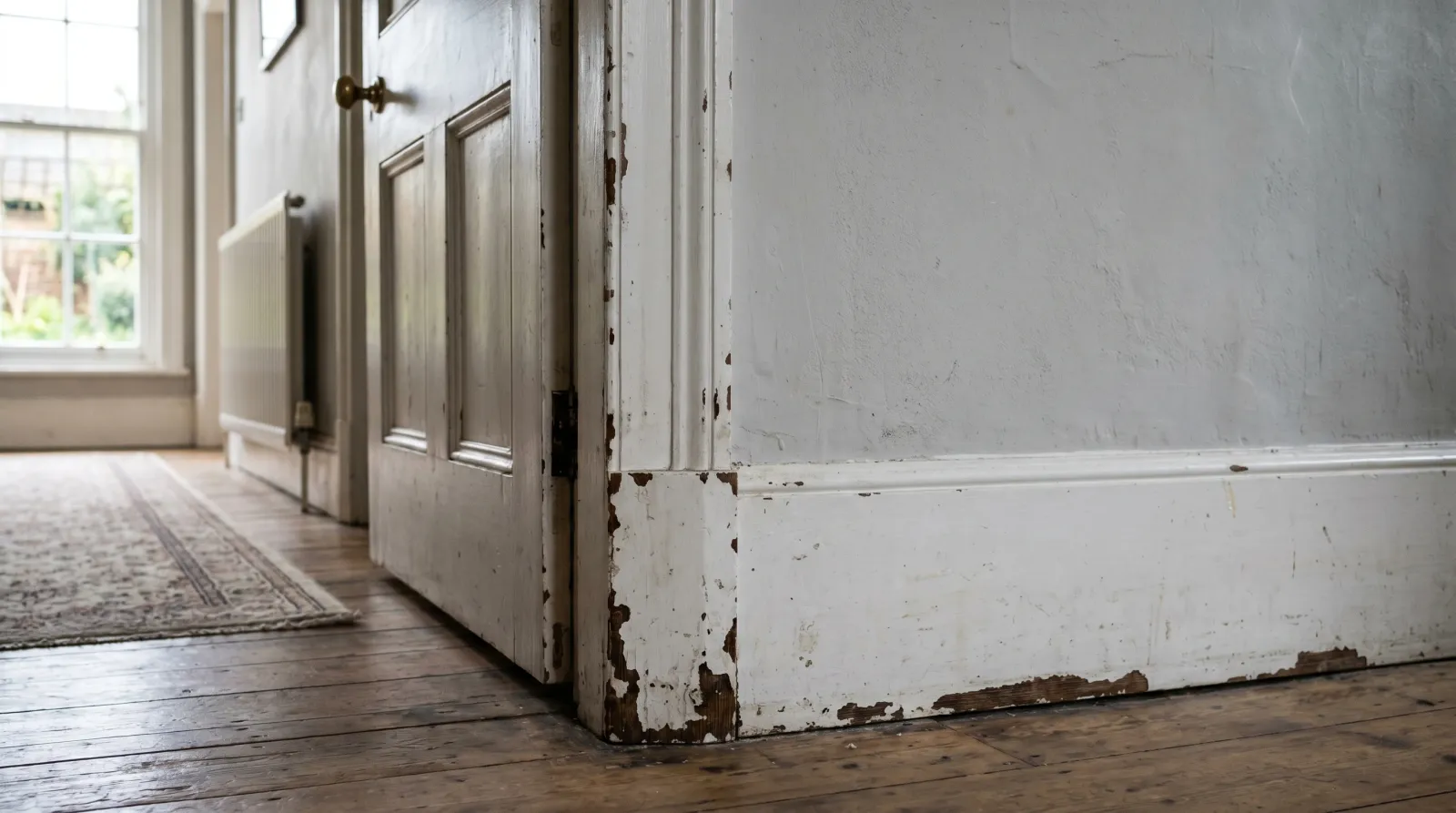
Yes, you can paint wood with emulsion, and the short answer most people are after is that it will go on and cover fine. The longer answer is the one that saves you a repaint. Wall emulsion is engineered to bond to porous drywall and plaster, not to wood, so without a primer it scuffs, chips at the edges, peels off sealed surfaces, and on bare wood it can let brown stains bleed up through the film. The fix is not a different brand of emulsion. It is the layer underneath.
Does This Match What You’re Seeing?
The trouble with emulsion on wood shows up in a few distinct ways, and which one you have tells you what went wrong.
- Paint chipping or flaking at edges and corners. The classic adhesion failure. Emulsion couldn’t key into a slick or sealed surface, so it lifts where the film is thinnest and most stressed.
- Color that scuffs or marks the moment anything brushes it. Emulsion stays a soft, porous film. It has no abrasion resistance, so a chair back or a passing sleeve burnishes it.
- Smears or dissolves when you try to wipe it clean. Wall emulsion, especially matte, isn’t washable the way trim paint is. Water and a cloth take the color off with the dirt.
- Brown, amber, or pink staining rising through white or light paint. That’s tannin or knot resin bleeding through, common on pine, oak, and cedar. The emulsion didn’t fail. The wood pushed color through it.
- Dull, patchy, uneven sheen across the board. Bare wood drinks emulsion unevenly, so the film forms thin and starved in the thirsty spots and reads blotchy.
If the paint is soft and tacky rather than dry, that’s a curing problem and a different fix; see why painted wood stays tacky. Everything else on this list traces back to the same root: emulsion on wood with nothing to bond to.
How Serious Is This?
Cosmetic and recoverable. Nothing here threatens the wood or the structure. The honest ladder:
- A low-traffic shelf or a decorative piece nobody touches: emulsion alone may last for years. If it looks fine and stays put, leave it.
- Trim, doors, skirting, a tabletop, anything that gets handled or cleaned: the emulsion will fail on a timescale of weeks to a couple of seasons. Plan to prime and topcoat properly.
- Bare or knotty wood showing bleed: the stain won’t stop on its own and won’t hide under another coat of the same emulsion. You need a stain-blocking primer in the stack.
The reason this is low severity is that the wood underneath is sound. You’re correcting a finish, not repairing damage.
Why This Is Happening (the Chemistry)
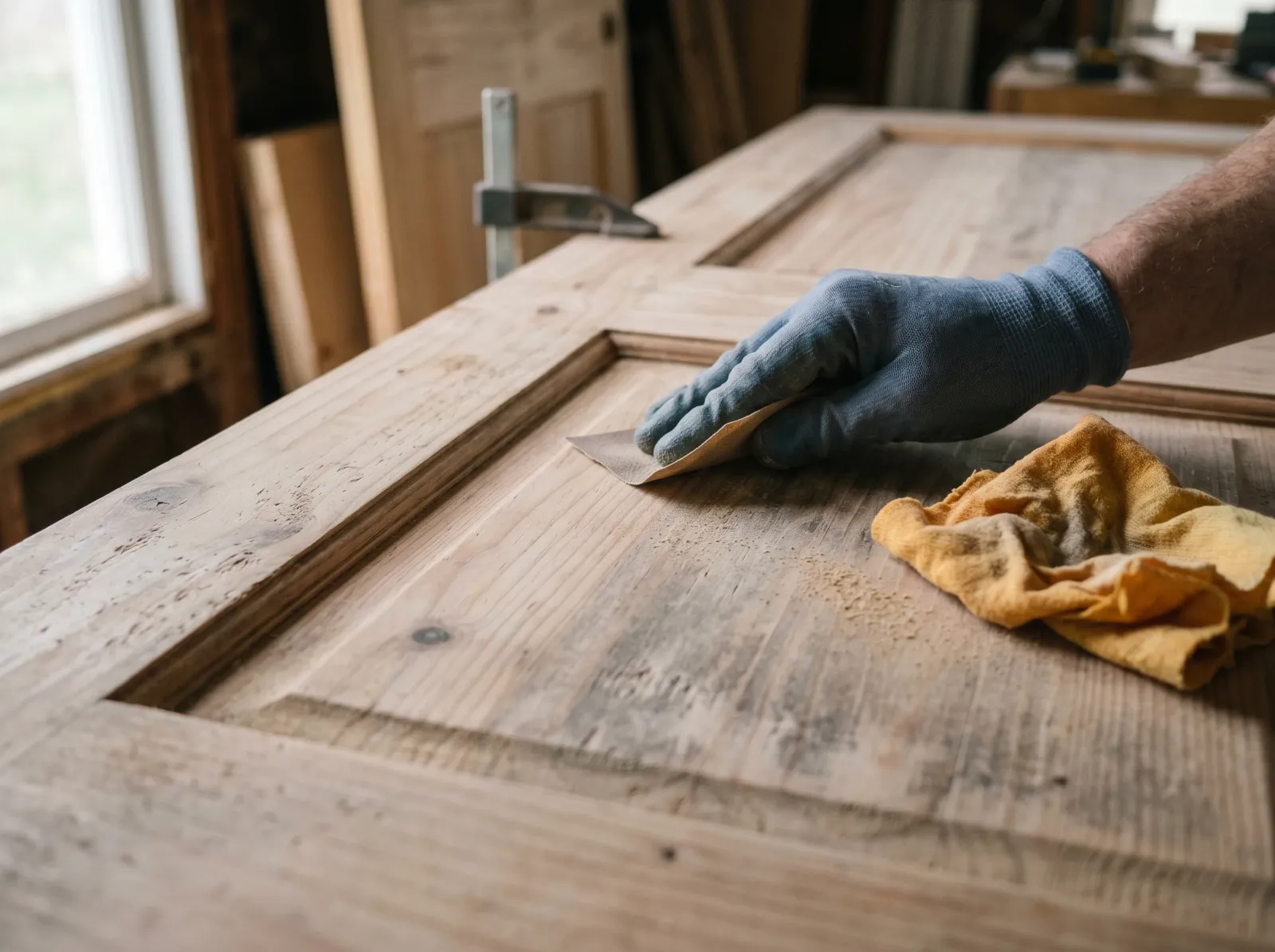 Bare or sealed wood gives emulsion almost nothing to grip; scuff-sanding and priming is what creates the bond.
Emulsion and wood paint are built for different jobs, and the difference is in the binder. Emulsion is a water-based wall paint: a vinyl or acrylic resin carrying pigment in water, with a high pigment volume concentration so it covers cheaply and dries to a flat, breathable, porous film. That porosity is a feature on drywall. The paint soaks slightly into the gypsum face and locks in mechanically, and the matte film hides wall imperfections. None of that helps on wood.
Wood asks three things of a coating that emulsion can’t give.
First, adhesion. A latex film bonds to a substrate two ways: it keys mechanically into surface texture, and it forms a physical grip as the binder particles coalesce. Drywall is porous and toothy, so emulsion grabs. Sealed, varnished, glossy, or even smooth planed wood is none of those things. The binder has nothing to coalesce against, so the dried film sits on the surface like a sticker and shears off at any stressed edge. This is the same mechanism behind paint lifting off trim, covered in the adhesion failure on trim fix.
Second, durability. Trim and furniture get touched, knocked, and wiped. Wood paints are formulated with harder binders, tighter cross-linking as the film cures, and a higher sheen that resists abrasion and washing. Emulsion’s soft, open film has none of that build. It marks and burnishes because the binder was never designed to take contact.
Third, on bare wood, stain blocking. Cedar, redwood, oak, and pine knots hold water-soluble extractives called tannins. Emulsion is water-based, so the water in it re-wets those extractives and carries them up into the drying film as an amber stain. The deeper version of that story is in how to block tannin bleed. Emulsion has no mechanism to seal them.
Take those three together and the picture is clear. Emulsion isn’t a bad paint. It’s the right paint pointed at the wrong substrate, and the gap between what wood needs and what emulsion offers is exactly what a primer is for.
The Fix
Work in order. The whole strategy is to give the emulsion (or a better topcoat) something it can actually bond to.
Step 1. Clean and Scuff-Sand the Wood
Wipe the wood free of grease, wax, and dust. On a kitchen or furniture piece, a quick wash with a degreaser or sugar-soap solution lifts the invisible film that stops paint sticking; rinse and let it dry. Then scuff-sand to give the surface a mechanical key. On glossy, varnished, or previously painted wood, this matters most. Use 120 to 150 grit, sand until the sheen goes uniformly dull, and wipe off the dust with a tack cloth. You’re not stripping the wood, just breaking the slick so primer can bite.
If the home predates 1978, treat existing paint as lead until tested with 3M LeadCheck swabs, and follow EPA RRP practice: wet methods, containment, HEPA cleanup, no dry sanding.
Step 2. Prime for Adhesion (and Bleed, if Bare)
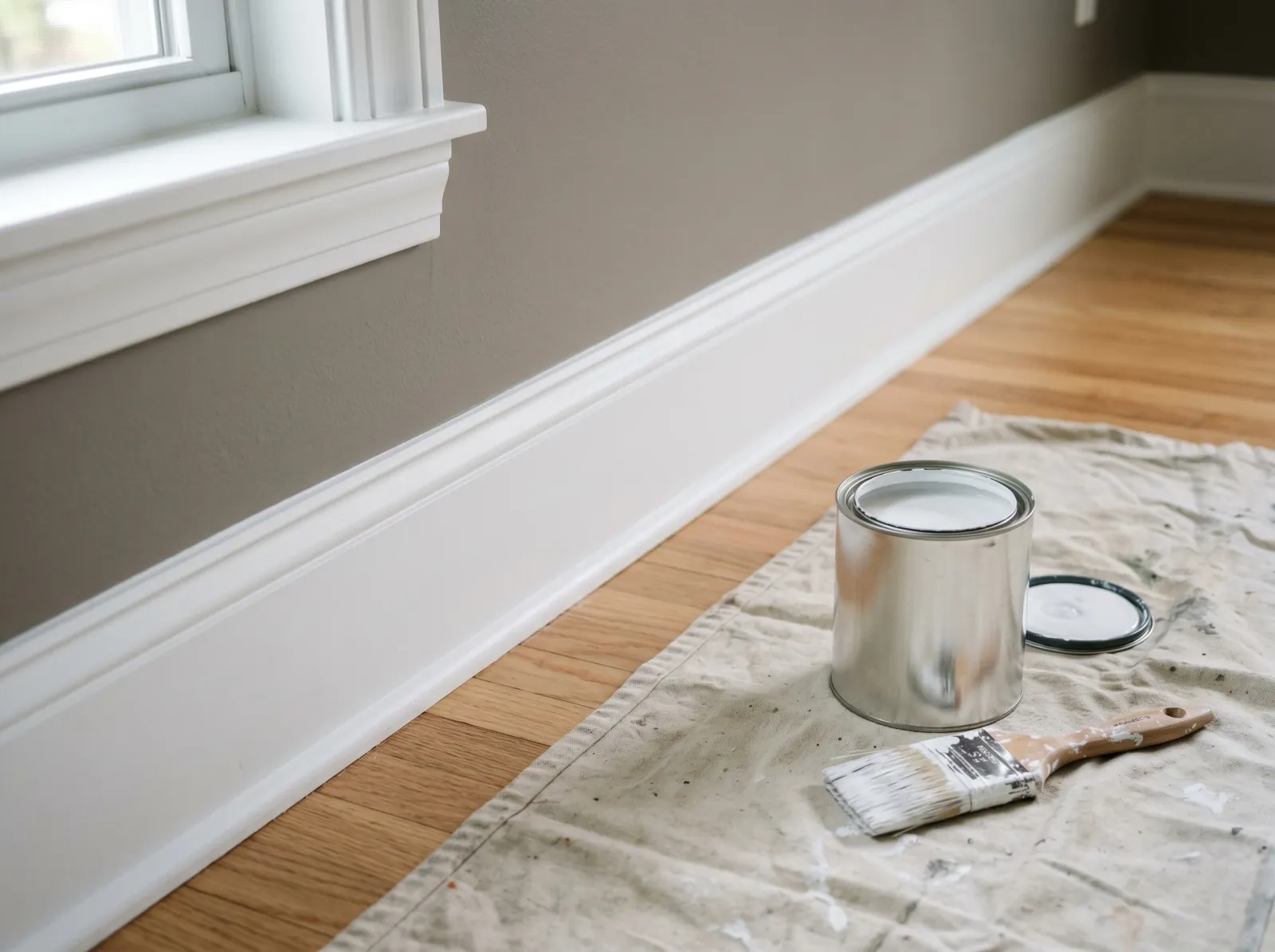 A bonding or stain-blocking primer is the layer that makes emulsion viable on wood. It supplies the grip and seals extractives.
This is the step that does the work. Match the primer to the wood:
- Glossy, varnished, laminate, or hard-to-stick surfaces: a bonding primer such as INSL-X STIX or Zinsser BIN Advanced. These are engineered to grip slick substrates and present a porous, paint-ready face on top. One coat, brushed or rolled. Recoat times run roughly 1 to 4 hours depending on the product; check the label. For what this layer actually does, see what a bonding primer is.
- Bare wood with knots or tannin-rich species (pine, cedar, oak): an oil-based or shellac stain-blocking primer such as Zinsser Cover Stain (oil) or Zinsser BIN (shellac). The non-water carrier won’t mobilize the extractives, so the bleed stops under the film. Cover Stain recoats in about 2 hours, BIN in about 45 minutes.
- Clean, dull, previously well-painted wood in sound condition: a standard water-based primer or a quality bonding primer is enough. You mainly need the key.
Prime the whole surface, not just the bad spots. A continuous primer film is what gives the topcoat an even base to form on.
Step 3. Topcoat (and Be Honest About What You’re Using)
You now have a choice. If you only have wall emulsion and the piece is low-wear, you can topcoat the primed wood with your emulsion and it will bond properly and last far longer than it would have on bare wood. The primer fixed the adhesion and the bleed. What it can’t fix is emulsion’s soft film, so the surface still won’t take heavy scrubbing or daily knocks.
For trim, doors, skirting, cabinets, or any furniture that gets used, switch to a paint built for wood: a water-based acrylic trim or furniture paint, or an acrylic-alkyd hybrid enamel. These cure harder and hold a washable satin or semi-gloss sheen. Two coats, sanded lightly between with 220 grit. For the binder-by-binder trade-offs, see oil-based vs water-based paint, and for tested picks on furniture, the best furniture paint round-up.
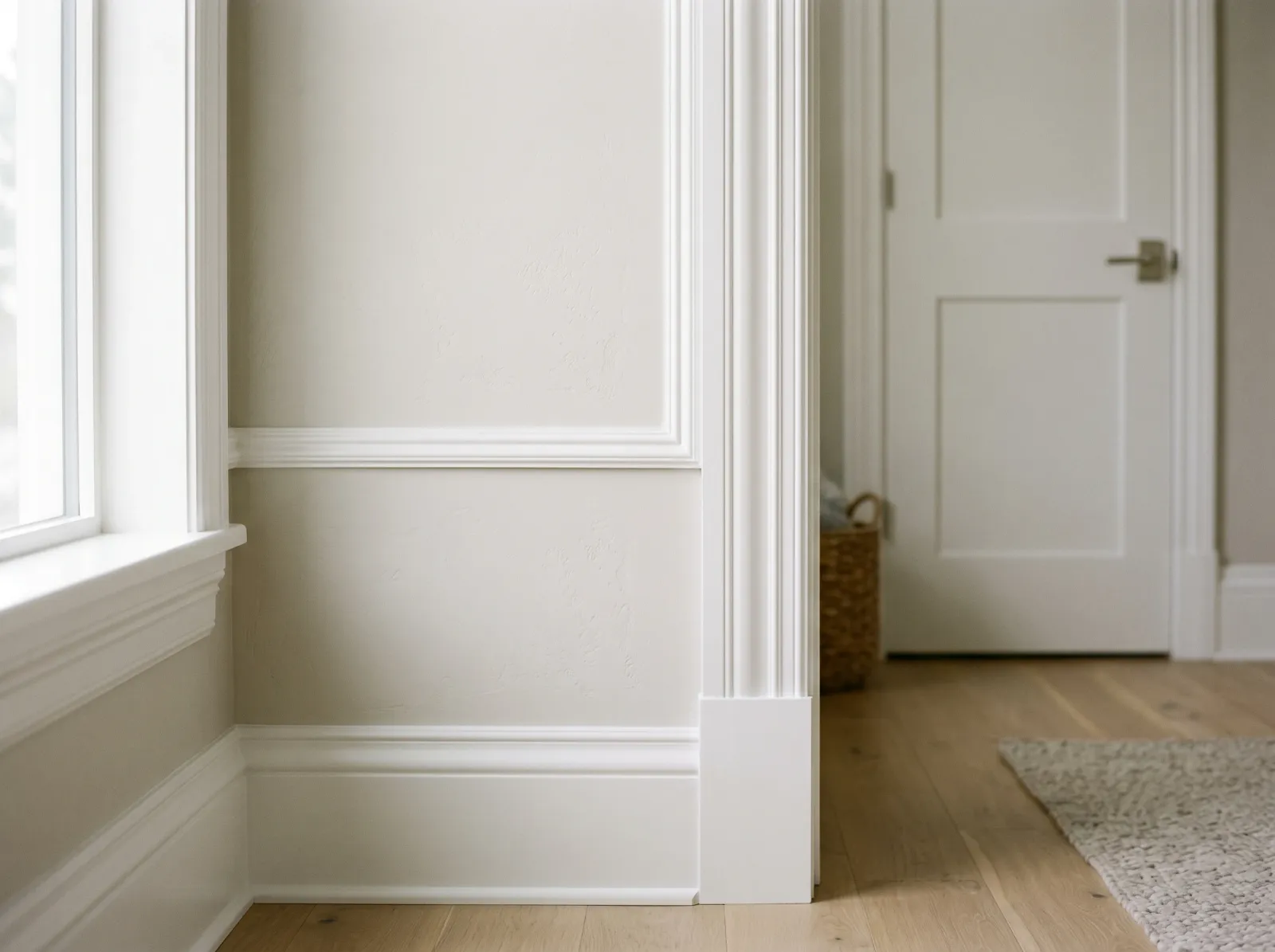 Over primer, a durable wood topcoat cures to an even, washable film that emulsion alone can’t deliver.
Step 4. Cure Before You Use It
A latex or acrylic film is dry to touch in an hour but keeps cross-linking and hardening for days to two weeks. Emulsion and trim paint both go through this. Leave drawers slightly open, don’t stack books on a fresh shelf, and give a tabletop a week before it earns real use. Rushing the cure is a common reason a properly painted piece still marks early.
Safety
Bonding, oil, and shellac primers run high in solvents and VOCs. Cross-ventilate, wear an organic-vapor respirator in any enclosed room, and keep them away from ignition sources. Gloves and eye protection for sanding and degreasers. Never mix bleach with vinegar, ammonia, or hydrogen peroxide if you’re cleaning mildew off wood first; that combination produces toxic chlorine or chloramine gas. Rinse any cleaner fully and let the wood dry before priming.
Common Mistakes
- Skipping the primer because emulsion “covered fine.” Coverage isn’t adhesion. The failure shows up weeks later at the edges.
- Painting over glossy or varnished wood without sanding. Even bonding primer grips better on a dulled surface. The scuff is two minutes that saves the job.
- Using emulsion straight on knotty pine or cedar. The tannin bleeds through. Seal with oil or shellac primer first.
- Expecting matte wall emulsion to be washable. It isn’t, on any surface. If you need to wipe it, you need a trim paint or a clear topcoat over the emulsion.
- Topcoating before the primer is recoatable. Check the label dry time. Trapping solvent under a fresh coat causes wrinkling and soft spots.
Prevention
Next time, pick the coating to the substrate from the start and the failure never happens.
- Use a wood paint on wood. A water-based acrylic trim or furniture paint costs little more than emulsion and is built for the abrasion and washing wood sees. Save the emulsion for walls and ceilings.
- Always prime bare, glossy, or sealed wood. A bonding primer for adhesion, a stain blocker for knots and tannin. This single layer prevents the three failures in this article.
- Test stickiness on hidden wood first. Prime and paint a hidden corner, let it cure a few days, then scratch it with a fingernail. If it lifts, your prep or primer is wrong before you commit the whole piece.
- If you must use leftover emulsion on wood, prime it and seal it. Bonding primer underneath, a clear acrylic varnish on top to supply the durability the emulsion lacks. It’s a workaround, and it works on low-wear pieces.
When to Call a Pro
- A pre-1978 home where stripping or sanding old painted wood would disturb lead paint.
- Wood that’s soft, dark, or punky over a wide area, which is rot rather than a finish problem and needs the board replaced.
- Bleed that keeps returning after a correct oil or shellac prime, pointing to a moisture source feeding the wood.
- A large run of cabinetry or trim where a sprayed, properly cured finish is worth the equipment and skill.
Ask a Question