How to Fix Mold Under Paint
Mold under paint means spores survived behind the film. Learn why painting over mold fails, how to kill it, seal it, and recoat so the stain does not bleed back through.

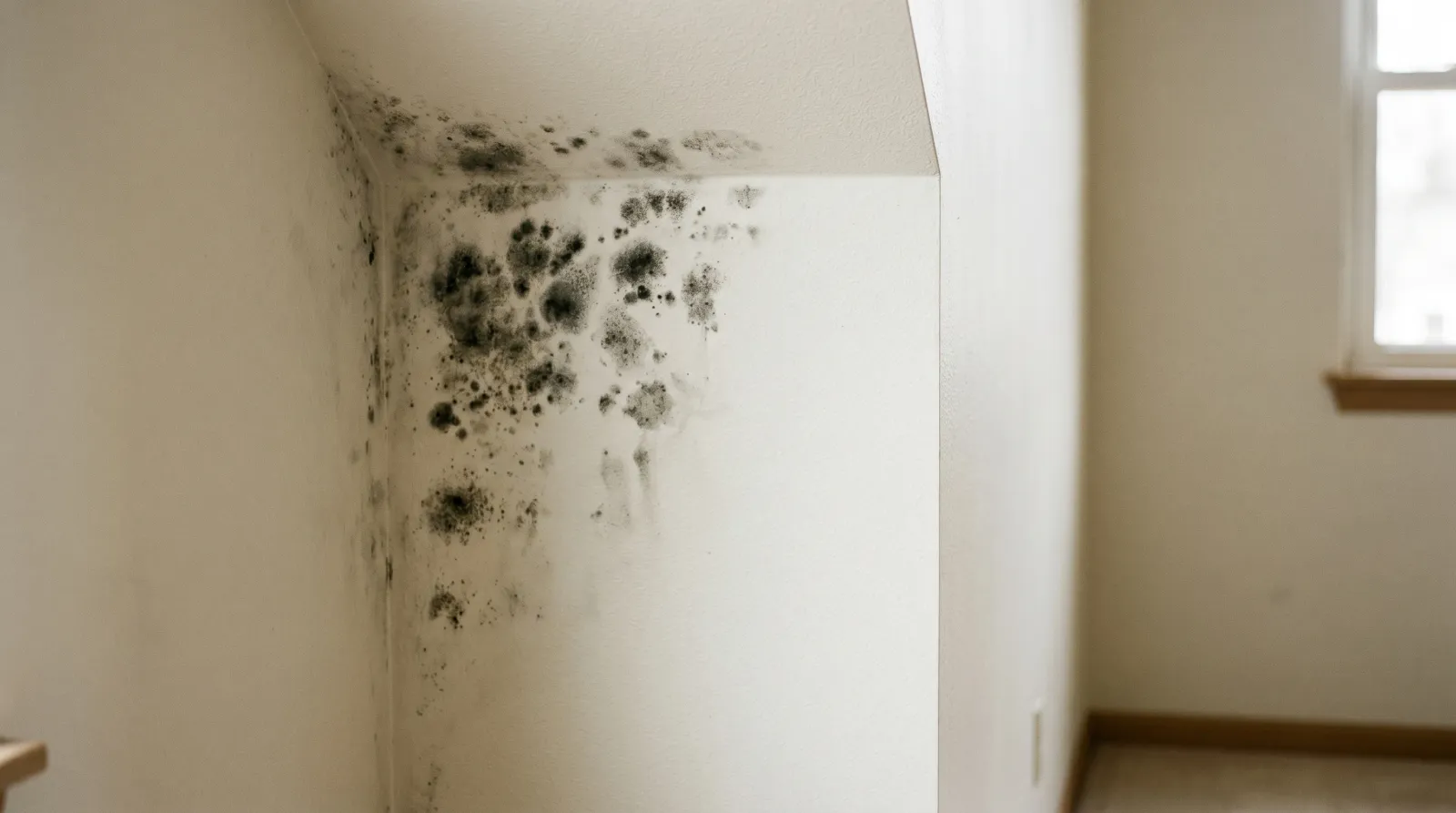
Most people meet this problem twice. The first time, they see a dark spot, paint over it, and feel done. A few weeks later the spot is back, fainter at first, then darker than before. That return is the part worth understanding, because it tells you mold under paint is a biology problem wearing a paint problem’s clothes.
Does This Match What You’re Seeing?
Confirm what’s underneath before you treat it. The fix changes depending on which of these you have.
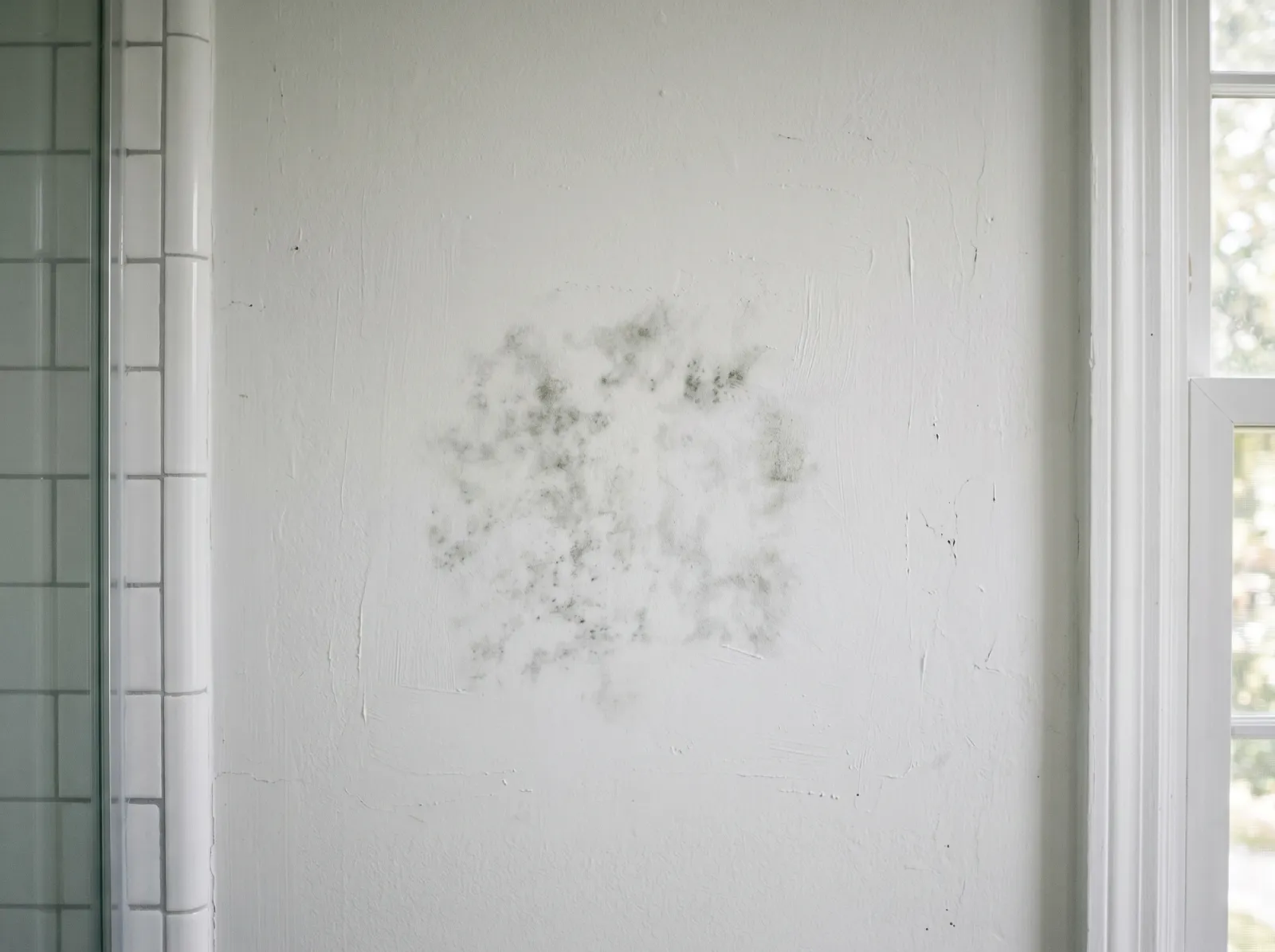 Ghosting through a fresh coat means the colony underneath is still alive and feeding on the film.
- Dark blotches bleeding up through intact paint: a live colony under the film, or staining that was painted over without sealing. Most common in bathrooms, behind furniture on exterior walls, around windows.
- Fuzzy, raised, or slimy growth on the surface: active mold sitting on top of the paint. Wipe a test spot with diluted bleach. If the color lifts, it’s surface mildew. If it stays dark, it’s growing into the substrate.
- Black speckling along a cool corner or ceiling line: condensation-driven growth where the wall surface drops below the dew point. This is a moisture problem, not a paint problem.
- White or crystalline powder, not fuzzy: that’s efflorescence, mineral salts, not mold. Different fix entirely. See how to fix efflorescence on brick.
- A pinkish or tan film in a shower: usually a bacterium (Serratia), not mold. It cleans off the surface and doesn’t bleed through.
If a spot is fuzzy and three-dimensional, it’s alive. If it’s flat and stained into the film, the colony may be dead but the discoloration is still migrating. Both need sealing. Only one needs killing.
How Serious Is This?
A patch smaller than a dinner plate in a well-ventilated room is a same-weekend fix. The reason for that is simple: small colonies haven’t reached the framing behind the drywall yet.
Three signals push this to high severity.
- More than 10 square feet of growth. The EPA’s own threshold. Past this, spore counts during removal climb high enough that DIY containment usually fails.
- Soft, dark, or spongy drywall. Water is in the gypsum core. Paint won’t save a substrate that’s already breaking down. Cut it out and replace it.
- Growth that returns within months of a proper fix. The moisture source is still active. Stop painting and start investigating.
Why This Is Happening (root Cause)
Mold is a colony of fungal cells feeding on an organic surface. It needs three things: a food source, moisture, and a surface to anchor to. Paint quietly supplies two of them.
Here’s the chemistry. A dried latex film is a network of acrylic or vinyl binder holding pigment. To mold, that binder is carbon, and carbon is food. Cheaper paints often carry small amounts of cellulose thickeners and surfactants, which are even easier for fungal enzymes to break down. So the film isn’t a wall against mold. It’s a buffet with a roof.
The moisture is the trigger. Spores are everywhere in indoor air, dormant and harmless until liquid water or sustained high humidity gives them what they need to germinate. A bathroom wall that stays damp for a few hours after every shower, a north-facing corner that drops below the dew point on cold nights, a slow leak behind drywall, any of these keep the surface wet long enough for a spore to take hold. Once it does, the colony spreads under the film and lifts it slightly as it grows.
Now the part that explains the return. The dark color you see isn’t only mold cells. It’s also melanin-rich pigments and metabolic byproducts the colony excretes. Those compounds are small and somewhat oil-soluble, which means they move through a porous water-based film the way a coffee ring wicks across a napkin. Paint a standard latex primer over them and the stain migrates up into the new coat over days or weeks. The colony doesn’t even have to be alive for this to happen. Dead mold still stains. That’s why killing the mold and sealing the stain are two separate jobs, and why people who do only the first one still see the spot come back.
The Fix
Safety First
Never mix bleach with vinegar, ammonia, or hydrogen peroxide. Those combinations produce chlorine or chloramine gas, which can put you in the hospital. Use one product at a time, rinse between products, and ventilate the whole time.
Wear an N95 or better, nitrile gloves, and eye protection. Disturbing a colony throws spores into the air. Open a window, run a fan pointed out of the room, and seal the doorway with plastic if the patch is more than a square foot.
Step 1. Find and Stop the Moisture
No treatment holds while the wall stays wet. Check the obvious source first: a bathroom fan that can’t pull a sheet of toilet paper against the grate, a window that sweats, a stain that tracks down from a pipe chase. Run a hygrometer for a few days if you can’t see the source. Indoor relative humidity sitting above 60% is itself the cause.
Let the substrate dry for at least 24 hours after you’ve stopped the water before anything else. For chronic condensation on cold walls, see how to fix condensation on walls.
Step 2. Kill the Colony
Use a dedicated antimicrobial. Concrobium Mold Control is a mineral-salt solution that dries into a thin film and crushes the spores mechanically as it cures. Spray it on, let it dwell until dry, no rinse needed. For nonporous surfaces, an EPA-registered cleaner like RMR-86 or a 1:10 household bleach solution (one part bleach to ten parts water) kills surface growth on contact. Bleach has a real limit, though: it stays on the surface and doesn’t penetrate porous drywall or plaster, so on those substrates a penetrating product like Concrobium does more.
Dwell time matters. Give a bleach solution 10 minutes of contact before wiping. Give Concrobium the full dry time the label specifies, usually a couple of hours. Then let the area dry another 24 hours.
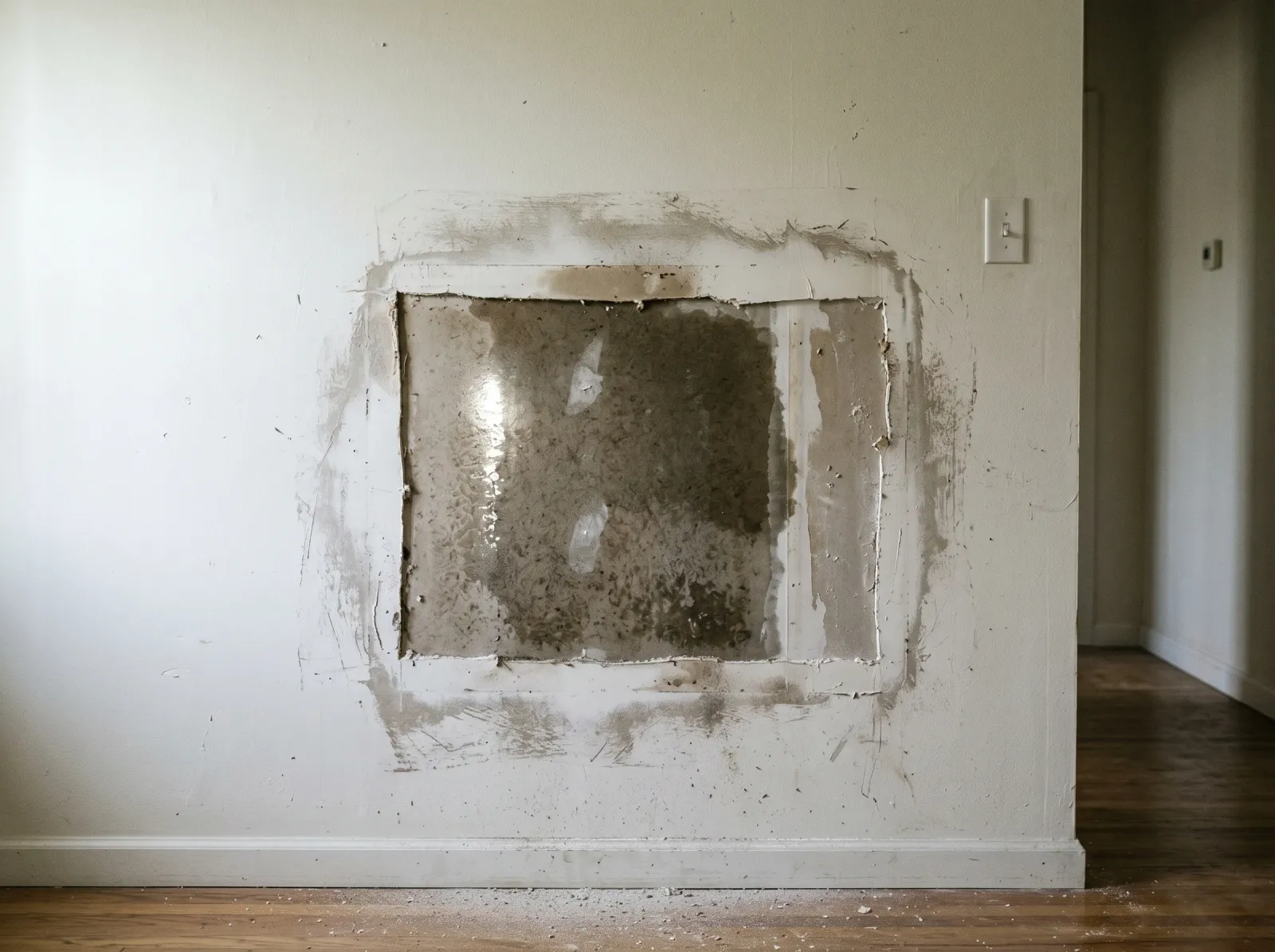 Dead mold still stains. Remove the loose growth and feather the surrounding paint before you seal.
Step 3. Remove Dead Growth and Feather the Edges
Killing the colony doesn’t make it disappear. Scrub off the dead growth with a stiff brush or a scouring pad, then vacuum the debris with a HEPA-filtered vacuum if you have one. A standard shop vac spreads spores rather than capturing them.
Where the paint film has lifted or blistered over the colony, scrape it back to a sound edge and sand the transition with 120 grit until your fingertip can’t feel the step. A clean, feathered substrate is what lets the next coats lie flat. On bare drywall, see how to prep and paint drywall for handling the exposed gypsum and paper.
Step 4. Seal With a Stain-Blocking Primer
This is the step that stops the return. A water-based primer is porous to the colored byproducts mold leaves behind, so the stain wicks through within days. You need a solvent- or shellac-based stain blocker.
Zinsser BIN (shellac) is the gold standard here. It locks tannin, smoke, water rings, and mold staining behind a film nothing migrates through, and it dries to recoat in about 45 minutes. One coat covers most mold staining; a deep, dark blotch may want two. For larger areas where shellac fumes are a concern, Zinsser Cover Stain (oil-based) is the slower-drying alternative. Skip a plain PVA or all-purpose latex primer here. It won’t hold the stain. (For what a primer is doing chemically, see what primer actually does.)
Step 5. Repaint With a Mold-Resistant Topcoat
Once the stain is sealed, the topcoat is your long-term defense. Use a paint with a dry-film fungicide built in. Zinsser Perma-White is formulated for exactly this and carries a mold-resistance warranty. Bathroom-and-kitchen enamels from the major lines work too. Two coats, satin or semi-gloss. A glossier sheen sheds surface moisture faster, which gives spores less standing water to work with.
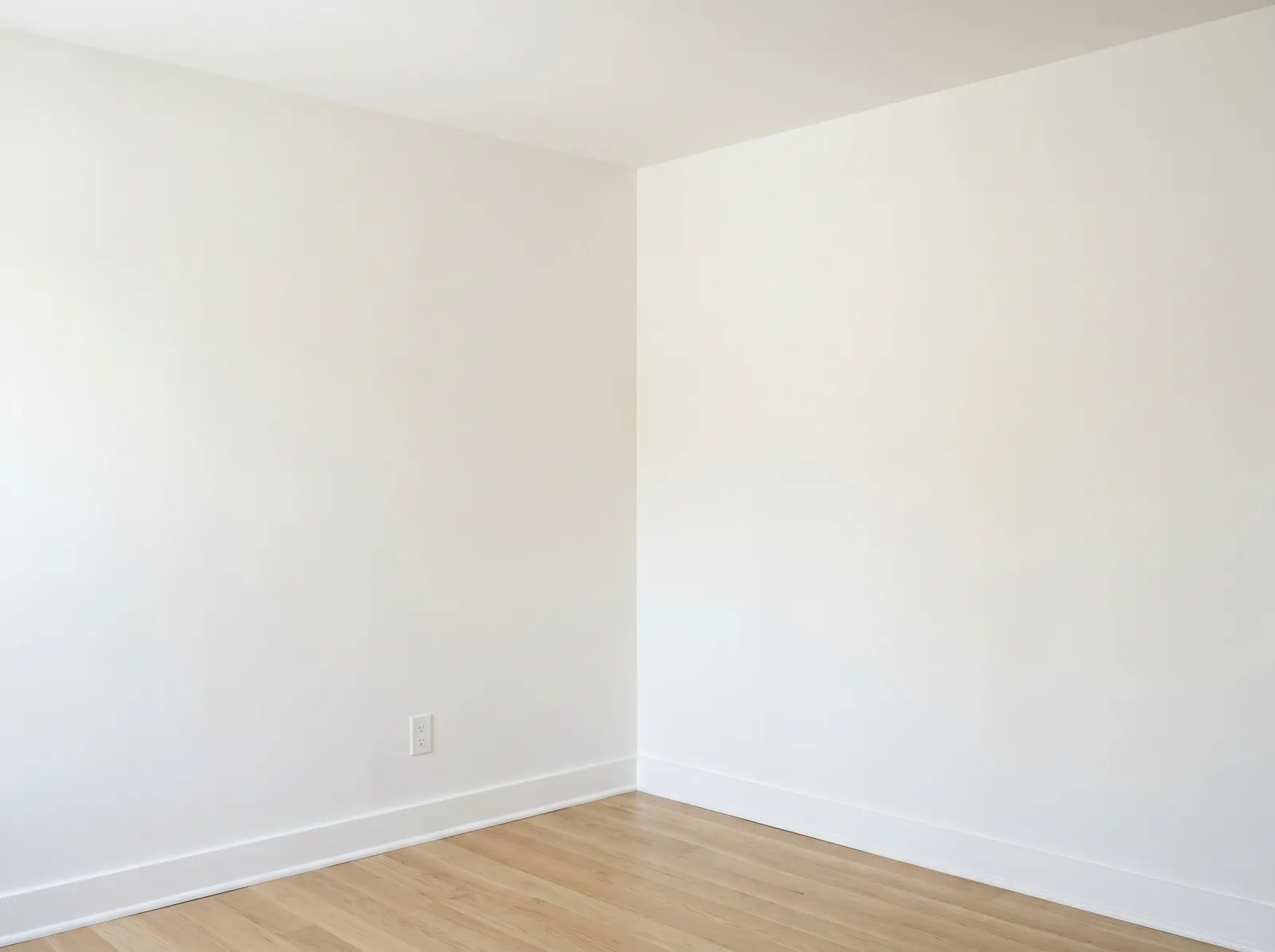 Killed, sealed, and recoated. The stain stays buried only because all three steps happened.
For the full comparison of fungicidal topcoats, see the best mold-resistant paint round-up.
Prevention
Paint is the last layer, not the cure. Everything that keeps mold from returning happens behind it.
- Move the moisture out. Run the bathroom fan during the shower and for 20 minutes after. Target 1 CFM per square foot of room. If the fan can’t hold a sheet of paper against the grate, replace it.
- Warm the cold surfaces. Condensation mold grows where a wall drops below the dew point. Insulate cold corners, keep furniture a few inches off exterior walls so air moves behind it.
- Hold indoor humidity under 50%. A dehumidifier in a basement or a damp bathroom does more than any paint additive.
- Fix leaks fast. A weeping supply line or a failed shower seal feeds a colony continuously. The fungicide in the paint can’t outrun running water.
Common Mistakes
- Painting over live mold. The most common one. The colony keeps eating the binder and pushes back through. Kill it first.
- Sealing with latex primer. Porous to the staining byproducts. Use shellac or oil.
- Bleach on porous drywall. It sterilizes the surface but leaves living roots in the gypsum. Use a penetrating antimicrobial on porous substrates.
- Treating the spot and ignoring the fan. The moisture comes back, so the mold comes back. Ventilation is half the fix.
- Calling mold-resistant paint a remediation product. Its fungicide protects the film. It does not kill what’s already living on the wall.
When to Call a Pro
- Mold covering more than 10 square feet (the EPA’s DIY ceiling).
- Growth tied to sewage, flooding, or a hidden plumbing leak inside the wall cavity.
- Soft, crumbling, or water-damaged drywall or plaster that needs cutting out and replacing.
- A pre-1978 home where disturbing painted surfaces means a lead test comes first.
- Anyone in the house with asthma, a compromised immune system, or a mold allergy.
What This Comes Down To
Kill it, remove it, seal it, recoat it, and fix the water. Skip the killing and the colony feeds through your fresh paint. Skip the sealing and the dead stain wicks up anyway. Skip the moisture fix and you’ll be reading this page again next season. The paint isn’t the problem and it isn’t the solution. It’s the layer that finally stays clean once the four steps under it are done right.
Ask a Question