Fusion Mineral vs Dixie Belle: Furniture Paint Showdown
Fusion vs Dixie Belle on durability, finish, cost, prep, and topcoat. A tester's verdict on which furniture paint to buy for cabinets, dressers, and high-use pieces.

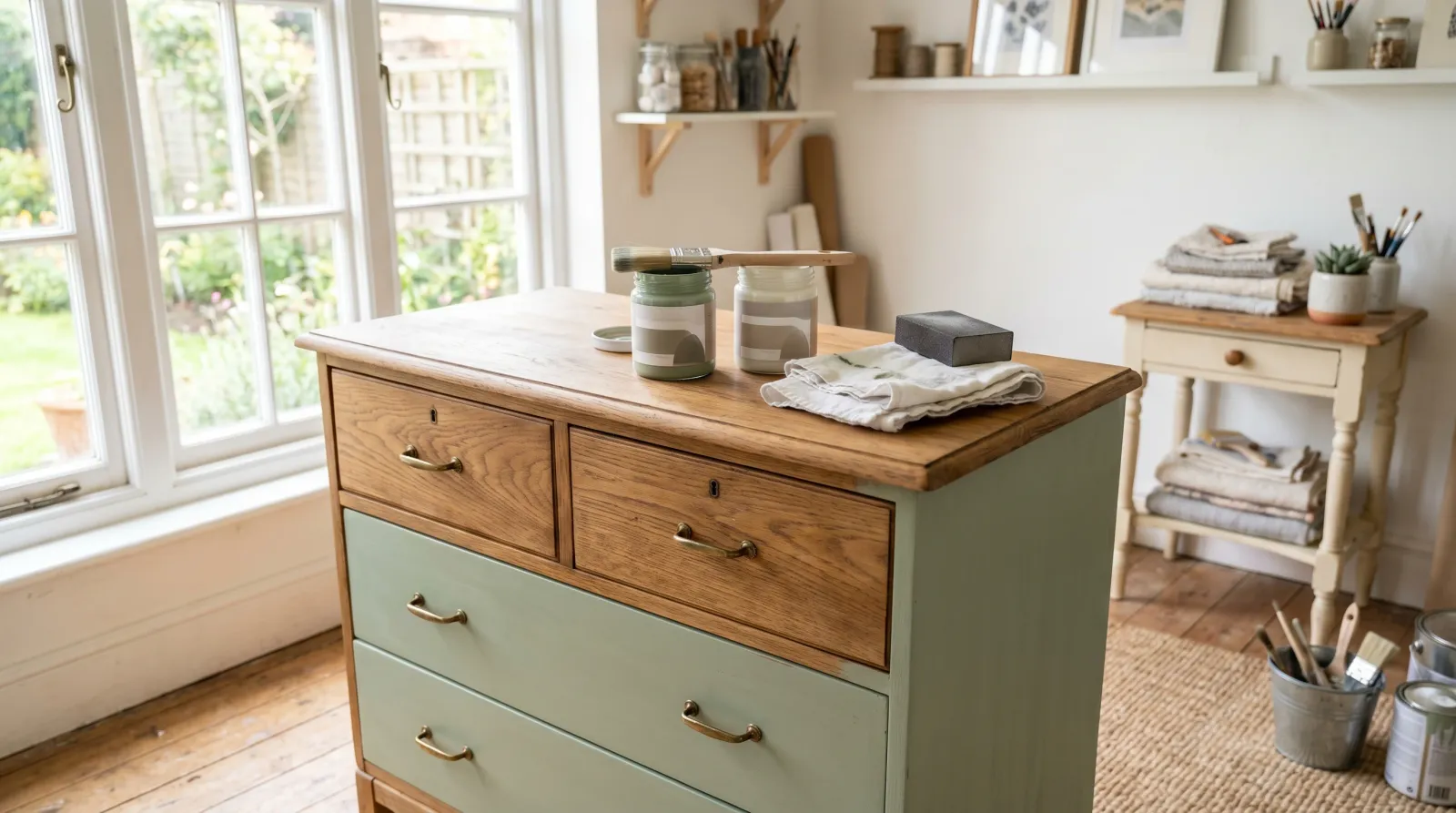
The 30-Second Answer
Buy Fusion for the piece you’ll touch every day. The sealer is built into the paint, so a cabinet door or a kid’s dresser is done in two coats with no wax and no poly step. That’s the whole pitch, and it holds.
Buy Dixie Belle for the big project on a budget and for layered, distressed looks. A quart costs less than a Fusion pint and covers more, the color deck runs deep, and the chalkier film sands and distresses beautifully. The catch is the topcoat. Dixie Belle needs one on anything you handle, and that’s extra money, extra time, and an extra decision.
So: high-touch and low-fuss, Fusion. Big, decorative, budget-driven, Dixie Belle.
At a Glance
| Fusion Mineral Paint | Dixie Belle Chalk Mineral Paint | |
|---|---|---|
| Built-in sealer | Yes (acrylic + mineral) | No, topcoat required |
| Topcoat needed | Tabletops & wet surfaces only | Anything you touch |
| Finish out of the jar | Low matte, slight eggshell | Flat chalk matte |
| Coats to cover | 2 (light over dark) | 2–3 (light over dark) |
| Color deck | ~50 curated colors | 60+ colors, deeper range |
| Distressing | Harder, denser film | Easy, sands clean |
| Price | ~$23 pint / ~$40 quart | ~$23–35 quart |
| Coverage | ~75 sq ft / pint | ~150 sq ft / quart |
| Cleanup | Soap and water | Soap and water |
| Smell / VOC | Very low | Very low |
| Topcoat menu | Tough Coat, Wax | Clear Coat, Wax, Gator Hide, Easy Peasy |
How to Tell Which One a Piece Already Has
Walk up to a thrifted piece that someone already painted and you can usually read the brand off the surface.
Rub a damp cotton rag hard across a hidden spot. If color lifts onto the rag and the spot dulls, you’re on bare, unsealed chalk paint, and that’s the Dixie Belle pattern when nobody added a topcoat. If the rag stays clean and the surface wipes to a faint satin, it’s either Fusion’s built-in seal or a chalk paint that got waxed or clear-coated. Drag a fingernail across an edge. A dense, plastic-feeling film that resists the nail is Fusion or a sealed surface. A soft, powdery edge that scratches to white is bare chalk. None of this changes your repaint plan much, since both brands take a fresh coat over a scuff-sand, but it tells you whether you’re fighting an unsealed surface that’ll keep marking until you lock it down.
Durability Without a Topcoat
This is the headline split, and it’s not close.
Fusion is built to stand on its own. The acrylic resin and mineral pigments carry a sealer in the can, so the cured film resists water, light handling, and fingerprints without anything on top. I’ve left bare Fusion on a bookshelf and a window bench for over a year of normal use with no burnishing, no marking, no soft spots. That’s the product’s entire reason to exist, and it delivers on bedroom furniture, shelving, frames, and low-traffic cabinets.
Dixie Belle out of the jar is porous. The chalk-mineral film looks gorgeous and dead-flat, but it drinks up water rings and hand oils until you seal it. Set a sweating glass on bare Dixie Belle and you’ll get a ring. That’s not a defect; it’s how chalk paint works, and it’s why every Dixie Belle tutorial ends with a clear coat or a wax. Sealed properly with their Clear Coat or Gator Hide, the durability climbs to match Fusion and, on a wet surface like a bathroom vanity, Gator Hide arguably beats bare Fusion. The bare-paint number is what loses here.
Full cure matters for both. Fusion cures hard in about 21 days; Dixie Belle’s sealed system wants a similar window before heavy use. Rushing either one is how you get a dent in week one.
Winner: Fusion. On bare durability it’s not a contest.
Finish and Color Depth
Pull the lids and you’re looking at two different finishes.
Fusion dries to a low matte with a whisper of eggshell once cured, especially after light handling buffs it. It reads modern and clean, the look you want on a repainted cabinet or a sleek mid-century dresser. The color deck is curated to about 50 shades, heavy on muted neutrals, soft sages, and warm whites. It’s a tasteful range, but it is a range, and if you want a saturated jewel tone you may not find it here.
Dixie Belle goes fully flat and chalky, the classic farmhouse matte. That dead-flat surface is what makes distressing sing, because sanded-through edges and layered colors read as authentic age. The color deck is deeper and bolder: more than 60 colors with real saturated options, true blacks, clean whites, and richer mid-tones than Fusion offers. If your project is a layered, distressed, color-forward piece, the Dixie Belle deck gives you more to work with.
Neither yellows the way old oil paint does. Both stay color-stable on whites, which is where cheap furniture paint usually fails.
Winner: Dixie Belle on color range and distressing. Fusion if you want a sleek modern matte with no topcoat sheen-shift.
Cost Per Project
Run the math on a real piece, not on the sticker.
A six-drawer dresser takes roughly a pint of either paint for two coats. Fusion’s pint runs about $23 and finishes the dresser with nothing else, since a dresser is low-touch. Total: about $23.
Dixie Belle’s quart runs $23 to $35 and covers far more square footage, so one quart could do that dresser plus a nightstand plus a couple of frames. On paint alone, Dixie Belle is the clear value, especially across multiple pieces. The topcoat is the asterisk. A clear coat or wax adds $20 to $30, but one container seals several projects, so the per-piece topcoat cost drops the more you paint.
Where the gap closes is a single high-touch surface. On one kitchen table, both brands need a sealer, so you’re buying Fusion paint plus Tough Coat against Dixie Belle paint plus Clear Coat, and the totals land within a few dollars. Where Dixie Belle wins hardest is volume: a whole room of furniture on a budget, all decorative or low-touch enough that one topcoat container covers the lot.
Winner: Dixie Belle on multi-piece and budget projects. Fusion on a single low-touch piece where the built-in sealer means you buy nothing else.
Ease of Use
Both are friendlier than old-school chalk paint, and both clean up in water.
Fusion has a heavier body and self-levels well, so brush marks soften as it dries. It’s a thicker paint, which means a little goes far but also that a too-thick coat can leave ridges; thin coats are your friend. The big ease win is the skipped topcoat step on most pieces. Paint, paint again, cure, done. Fewer steps means fewer ways to mess it up.
Dixie Belle is thinner and spreads easily, and it’s the more beginner-coached brand by a mile. The company built a whole troubleshooting ecosystem: their Easy Peasy spray, Best Dang Wax, deglossers, and a wall of video tutorials for every problem you’ll hit. If you like having a tool for every situation and a video to match, Dixie Belle is the more supported experience. The trade is more steps. You’re managing paint plus a topcoat plus the dry time between them.
Both bond to slick surfaces better than basic chalk paint, but neither is truly no-prep on a glossy or greasy piece. For painting laminate furniture, scuff-sand and use a bonding primer with either brand. Skip that and you’ll peel within months regardless of the label.
Winner: Fusion for fewest steps. Dixie Belle for hand-holding and tools.
Cleanup and Re-Do
Water cleans both up, and that’s a real perk over the wax-heavy paints of a decade ago.
Wet brushes rinse out under the tap for both. Where they differ is undoing a mistake. Bare Dixie Belle is easy to sand back, recolor, or distress because the film stays workable and powdery, which is exactly why layered looks are its strength. A do-over on Dixie Belle is forgiving. Fusion’s denser, harder film is tougher to sand once cured, so a Fusion mistake means more elbow grease or a scuff-and-recoat rather than a clean sand-back.
Stripping either one later is the same story as any acrylic furniture paint: a chemical stripper or a lot of sanding. Neither comes off in sheets, which is good for durability and annoying for a future redo.
For the wax-versus-poly topcoat question that both brands eventually raise, wax vs polycrylic for furniture walks through which sealer survives daily use and which one you re-wax every year.
Winner: Dixie Belle for easy do-overs and distressing. Fusion holds up better but fights you on a redo.
Verdict by Use Case
- Pick Fusion if: the piece gets touched daily and you want one product (cabinets, a kid’s dresser, a desk, shelving), you’d rather skip the topcoat step entirely, you want a sleek modern matte, or you’re a beginner who wants the fewest ways to go wrong.
- Pick Dixie Belle if: the project is a big dresser or several pieces on a budget, you want a distressed or layered farmhouse look, you want a deeper and bolder color deck, or you like having a tool and a tutorial for every step and don’t mind sealing on top.
- It’s basically a tie when: the piece is a single high-touch surface like a kitchen table or a vanity. Both need a topcoat there, the costs converge, and the call comes down to whether you want Fusion’s built-in base under Tough Coat or Dixie Belle’s color deck under Gator Hide.
Top Picks by Side
Going with a mineral-paint approach? Fusion is the headliner in the best furniture paint round-up, where it competes against Country Chic and the rest of the no-wax field. For the chemistry behind why these paints seal harder than chalk, see what mineral paint actually is.
Leaning chalk and distressing? Dixie Belle sits in the best chalk paint round-up against Annie Sloan and Rust-Oleum’s chalked line. If you’re still deciding between the two paint families before you even pick a brand, chalk paint vs mineral paint is the upstream decision to make first.
FAQ
Do I need a topcoat over Fusion? For most pieces, no. The sealer is built into the paint, so a dresser or shelf is done after two coats and a cure. Add Tough Coat or wax on tabletops, kitchen tables, and anything that sees standing water. Everywhere else, bare cured Fusion handles normal use on its own.
Does Dixie Belle always need a topcoat? On anything you touch, yes. It dries to a porous matte that absorbs hand oils and water marks without a sealer. Seal it with Clear Coat, wax, or Gator Hide for wet pieces. A purely decorative item nobody handles can skip it, but that’s a narrow case.
Which one covers in fewer coats? Close, with Fusion slightly ahead going light over dark or red-toned wood, where its heavier body hides in two coats. Over raw oak or pine, prime first with either brand or tannin bleed will haunt you for days.
Related
- Best furniture paint round-up: every no-wax and chalk option ranked
- What is mineral paint?: the chemistry behind the harder film
- Chalk paint vs mineral paint: the paint-family decision under the brand decision
- Best chalk paint round-up: where Dixie Belle ranks against Annie Sloan
- How to paint laminate furniture: prep that keeps either brand from peeling