Wax vs Polycrylic Top Coat
A chemist's head-to-head on wax vs polycrylic: how each one protects chalk-painted furniture, which yellows, which scrubs, and a clear verdict by piece.


The 30-Second Answer
For anything that gets used, pick polycrylic. Tabletops, dressers, nightstands, kids’ furniture, bathroom vanities. It cures into a continuous plastic film that shrugs off water, fingerprints, and a damp cloth.
Pick wax for low-traffic decorative pieces, heavily detailed carvings where a brushed film would pool, and any look where you want a soft hand-rubbed glow you don’t mind re-buffing once a year. Wax never forms a hard film. It sits in the surface as a soft barrier, and that’s both its charm and its limit. The two are not interchangeable, and you can’t layer polycrylic over wax, so choose before you open the can.
At a Glance
| Wax | Polycrylic | |
|---|---|---|
| Film type | Soft, non-curing barrier | Hard, continuous acrylic film |
| Water resistance | ✓ (beads, but transient) | ✓✓ |
| Stain / ring resistance | ✗ (water rings, marks) | ✓✓ |
| Scrub resistance | ✗ | ✓✓ |
| Yellowing | ✓✓ (clear wax stays neutral) | ✓✓ (engineered clear) |
| Sheen | Soft, hand-rubbed satin | Matte to gloss, your choice |
| Reapplication | Every 6–12 months on use surfaces | Rarely, once cured |
| Application | Rag-and-buff, forgiving | Brush or wipe, watch brush marks |
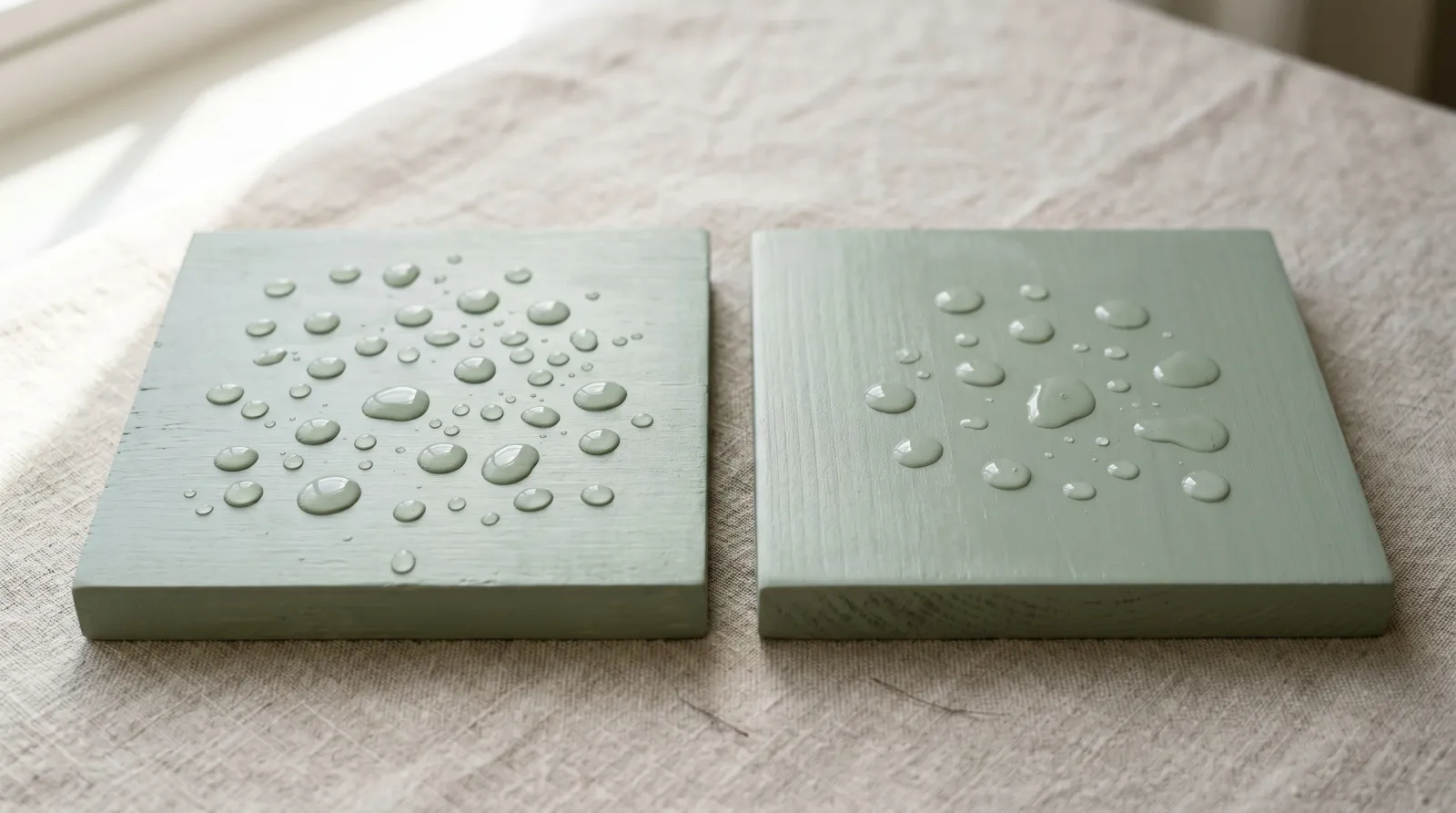 Water beads on both finishes the first day. The difference shows up after the bead sits for an hour: wax lets a faint ring through, polycrylic doesn’t.
How to Tell Which One’s Already on a Piece
Most people inherit a finish without knowing what it is, and it changes how you recoat. Run a fingernail across an inconspicuous edge. Wax gives slightly and leaves a faint smudge that you can buff back with body heat. A cured acrylic film stays hard and shows nothing.
Second test: drop a bead of water and wait ten minutes. Wax beads at first, then the water starts to dull the surface or leave a ghost ring once it sits. Polycrylic holds the bead with no mark.
Last one: dab a hidden spot with a rag and a little mineral spirits. Wax softens and transfers a waxy residue to the cloth. Polycrylic doesn’t budge. If the rag picks up wax, you cannot topcoat over it until it’s stripped.
Film Type and Protection
Here’s the chemistry, because it explains everything downstream. Polycrylic is a waterborne acrylic dispersion. When you apply it, water and a small amount of coalescing solvent evaporate, and the acrylic resin particles fuse into a continuous film. That’s film formation. The binder cross-links into a single sealed sheet sitting on top of your paint, and that sheet is what takes the abuse.
Wax does none of that. Paste furniture wax is a blend of soft waxes (carnauba, beeswax) carried in a solvent. You rub it into the surface, the solvent flashes off, and you’re left with wax molecules sitting in and on the porous chalk-paint surface. There’s no curing, no cross-linking, no continuous film. It’s a soft barrier that fills the porosity and adds slip. The reason chalk paint takes wax so well is the same reason it needs a topcoat at all: a high pigment volume concentration leaves the dried paint chalky and open, so wax soaks in and grabs.
Two protective mechanisms. One is a hard shell over the paint. The other is a soft fill within the paint. The shell wins on protection. The fill wins on feel.
Winner: Polycrylic.
Water and Stain Resistance
This is where the film-versus-fill difference gets practical. Set a sweating glass on a freshly waxed dresser and walk away for an hour. The water works past the wax, reaches the porous paint underneath, and you get a faint ring. Wax repels water for minutes, not hours, because it isn’t a sealed membrane. It’s a hydrophobic layer the water eventually finds its way around.
Polycrylic is a true barrier. Three thin coats on a tabletop will hold a water glass, a coffee cup, and a wet plate without a mark, because the acrylic film doesn’t let liquid reach the paint. Spills wipe up. That’s the entire reason to choose it on a surface that meets food, drinks, or kid hands.
Wax can be maintained, and a well-kept waxed piece in a low-use room stays fine for years. But “maintained” means re-waxing, and it means no standing water. On a dining table, that’s not a finish, it’s a chore.
Winner: Polycrylic.
Durability and Scrub Resistance
A cured acrylic film takes abrasion. That’s what the polymer is for. You can wipe a polycrylic-sealed dresser with a damp cloth and mild cleaner indefinitely, and the film holds. It’s the same family of binder chemistry that gives a quality satin wall paint its scrub rating: more continuous binder at the wear surface means more cycles before the film breaks.
Wax has no scrub life worth measuring. Rub it with a wet cloth and you’re slowly removing the wax. Wax is sacrificial by design. It protects by giving itself up, which is why furniture-wax instructions tell you to reapply every six to twelve months on anything you touch. On a low-traffic accent piece that almost never gets handled, that maintenance cycle stretches out and the trade is fine. On a daily-use surface, you’re refinishing the protection constantly.
There’s a real upside to wax being soft: it self-heals scuffs. A scratch in wax buffs out with a fingertip and a little fresh wax. A scratch through polycrylic needs a scuff-sand and a recoat. So wax is more forgiving of minor cosmetic dings even though it’s far weaker overall.
Winner: Polycrylic.
Appearance and Yellowing
Both finishes can stay color-true, which surprises people who’ve watched oil-based polyurethane go amber over a white piece. Clear paste wax is essentially color-neutral and adds a soft, slightly warm depth. Quality water-based polycrylic is engineered to stay clear with no amber shift, so it’s safe over white and pale chalk-painted furniture. If you’ve read the polyurethane vs polycrylic breakdown, the yellowing villain there is oil-based poly, not the water-based acrylic.
Where they part ways is sheen and hand-feel. Wax gives a low, hand-rubbed satin that you can buff up or leave soft, and it has a tactile quality (warm, slightly slick) that no film coat replicates. Designers reach for wax specifically for that look on chalk-painted antiques. Polycrylic comes in matte, satin, semi-gloss, and gloss, so you pick your sheen, but even the matte reads as a film sitting on top rather than a finish in the surface.
One caution on sheen with polycrylic: the matte version carries flatting agents (fine matte particles) that can leave a faint cloudy or milky cast if you lay it on thick, especially over dark or deeply colored paint. Thin coats fix it. Over dark furniture, satin is the safer pick than matte.
Winner: Tie. Clear versions of both stay color-honest. Choose on the look you want, not on yellowing.
Application and Recoat
Wax is the more forgiving thing to apply. You wipe it on with a rag or a round wax brush, let the solvent haze off for a few minutes, then buff with a clean cloth. There’s no wet edge to chase, no brush marks to worry about, and you can stop and start without lap marks. The labor cost shows up later, in the reapplication cycle.
Polycrylic is less forgiving in the moment and more forgiving over the life of the piece. It dries fast, which means brush marks lock in if you flood it on or overwork it, the same trap that bites people with any fast-drying waterborne coat. The fixes are simple: use a quality synthetic brush or a wipe-on rag, lay it thin, work in one direction, and don’t go back over a section that’s started to skin. Two to three coats, light scuff with worn 320-grit between them, full recoat window each time. Done right, it’s the last topcoat that piece needs for years.
If brush marks worry you, thin polycrylic about 10% with water and wipe it on, or spray it. Spraying lays it cleaner than any brush.
Winner: Wax on ease of the first application. Polycrylic on never having to touch it again.
Verdict by Use Case
- Pick wax if: the piece is decorative and low-traffic (a hall console, a bookshelf, a bedroom dresser that holds picture frames), or it has heavy carved detail where a brushed film would pool, or you specifically want that soft hand-rubbed feel and you don’t mind re-waxing once a year.
- Pick polycrylic if: the piece gets used. Tabletops, working dressers, nightstands with water glasses, kids’ furniture, bathroom vanities, anything that meets a damp cloth. This is most furniture.
- It’s basically a tie when: you’re sealing a low-use accent piece purely for looks and you care more about the surface feel than about protection. Then it comes down to whether you want a soft waxed hand or a clean film, and either holds up fine in light service.
Common Mistakes
Topcoating polycrylic over a waxed piece. The number-one failure. Water-based coats can’t wet out over wax, so they bead and peel. If a piece is already waxed and you want a durable film, strip the wax with mineral spirits and a clean rag first, let it flash off, and confirm with a damp-cloth test before you coat.
One thick coat of polycrylic instead of two or three thin ones. A heavy coat traps solvent, stays gummy, and is where most cloudiness and brush-mark complaints come from. Thin and patient wins.
Treating wax as a one-and-done sealer on a use surface. Wax is sacrificial. It protects by wearing away. On a dining table it’s gone in months. Either accept the maintenance or use a film.
Matte polycrylic laid thick over dark paint. The flatting agents cloud. Switch to satin over dark colors, or keep the matte coats thin.
Top Picks by Side
Going with polycrylic? Pair it with a paint built for furniture. See the best furniture paint round-up for the lines that take a clear top coat cleanly, and the best chalk paint guide if you’re starting from a chalk base.
Going with wax? Stick with a clear paste furniture wax over chalk paint, and read up on the base coat first in what chalk paint actually is. For pieces you’ll repaint and reuse, the furniture repaint walkthrough covers prep that makes either topcoat last.
FAQ
Can you put polycrylic over wax? No. Polycrylic is water-based and wax is a non-polar barrier, so the coat can’t bond and it peels in sheets. Strip the wax with mineral spirits first, let it flash off, and damp-test before you topcoat.
Can you put wax over polycrylic? Yes, and it’s harmless, but it only changes the feel and sheen slightly. The polycrylic is already a sealed film doing the real protection. Wax on top is decoration.
Which one yellows, wax or polycrylic? Neither, in their clear forms. Clear paste wax is color-neutral and quality water-based polycrylic stays clear. The amber-shift reputation belongs to oil-based polyurethane, not polycrylic.
How many coats of polycrylic over chalk paint? Two to three thin coats, three on tabletops and wet areas. Scuff lightly with worn 320-grit between coats and respect the full recoat window each time.