Chalk Paint vs Mineral Paint
Chalk paint vs mineral paint, compared on finish, durability, prep, and cost. A finish-first verdict on which one belongs on your dresser, table, or cabinets.

The 30-Second Answer
If you want a soft, dead-flat, distressed cottage look and you don’t mind sealing afterward, pick chalk paint. If you want a piece you can wipe down and live with, a kitchen table or a set of cabinets, pick mineral paint and skip the topcoat entirely. Chalk paint gives you the look and the layering. Mineral paint gives you the durability and the shorter to-do list. That single trade, finish character versus built-in toughness, decides most of these projects.
At a Glance
| Chalk paint | Mineral paint | |
|---|---|---|
| Finish & look | ✓✓ velvety dead-flat, chalky | ✓ smooth, soft low-sheen |
| Durability before topcoat | ✗ porous, stains easily | ✓✓ self-sealing, washable |
| Prep needed | ✓✓ grips almost anything | ✓ light scuff + degrease |
| Topcoat required | ✗ yes (wax or poly) | ✓✓ none |
| Distressing / sanding back | ✓✓ sands back beautifully | ✓ harder to distress |
| Cost per quart | $$ ($$$ with wax) | $$$ |
How to Tell Which One You’ve Got
Run a damp cloth over a hidden corner of the painted piece. Mineral paint shrugs off the water and stays put. Unsealed chalk paint goes slightly tacky and may leave a faint chalky smear on the cloth, because the surface is still porous. If the finish has a soft waxy slip under your fingertip, someone sealed chalk paint with wax. A surface that feels like cured plastic with a quiet sheen and no drag is mineral paint or a poly-sealed chalk finish. The water test settles it in under a minute.
Finish & Look
This is where the two paints part ways before durability even enters the picture. Chalk paint dries to a true dead-flat, velvety matte that reads almost like soft suede in north-facing light. It has zero sheen and a chalky depth that sits beautifully on a vintage dresser or a French-country sideboard. In a quiet room it looks calm and a little powdery, in the loveliest sense.
Mineral paint dries smoother and a touch warmer, landing at a soft low-sheen rather than dead flat. It self-levels under the brush, so brush marks settle out and the surface reads even and modern. Against linen and brass it looks contemporary where chalk paint looks aged.
So the question is what the piece should do in the room. A layered, lived-in farmhouse look wants chalk paint. A clean, current piece that sits quietly against the wall wants mineral paint.
Winner: Chalk paint for character and that flat cottage finish. Mineral paint for a smooth, modern surface.
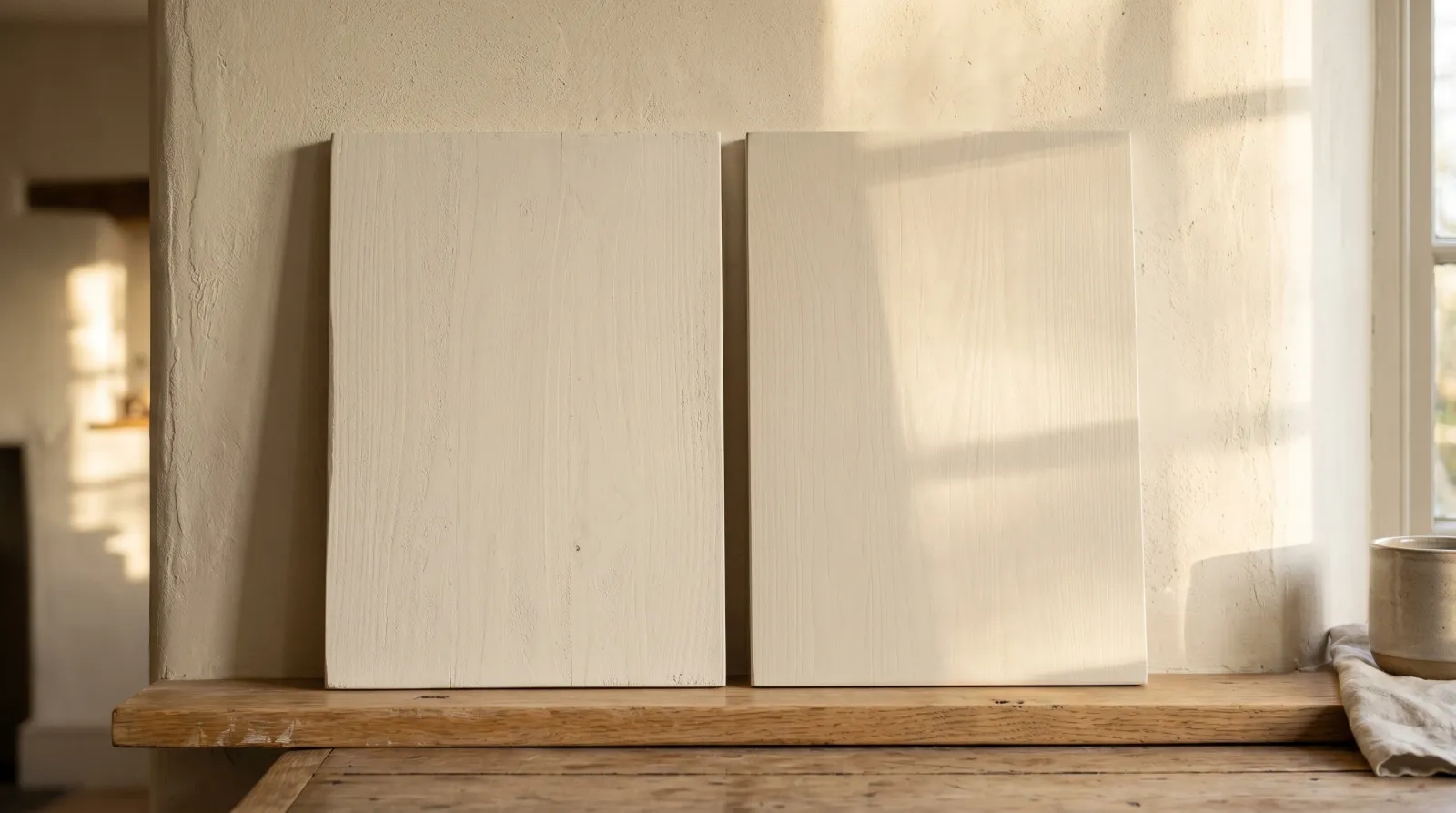 The same warm white in both paints: chalk on the left scatters light evenly and reads dead-flat, mineral on the right holds a quiet directional sheen.
Durability
Here the verdict flips hard. Unsealed chalk paint is porous. It drinks up water rings, hand oils, and red wine like blotting paper, which is why every chalk paint project ends with a wax or polyurethane step. Sealed properly, it holds up fine on a low-traffic accent piece. Skip the sealer on anything that gets touched and you’ll see marks within weeks.
Mineral paint cures to a sealed, washable film on its own. No wax, no poly, no waiting. That self-sealing chemistry is the whole reason it exists, and it’s why mineral paint survives a kitchen table, a bathroom vanity, or a set of kitchen cabinets where chalk paint would need babying. It resists water and household cleaners straight out of the can once cured.
For anything that gets daily hands on it, mineral paint wins before you’ve opened the wax.
Winner: Mineral paint.
Prep & Topcoat
Both paints lean on a low-prep promise, and both promises have fine print. Chalk paint famously grips almost anything, raw wood, old varnish, laminate, even melamine, with little more than a wipe-down. Mineral paint wants a slightly more honest surface: a light scuff with 220-grit and a degrease, especially on anything glossy or previously waxed. Neither one bonds to a high-gloss lacquer without a scuff, no matter what the marketing says.
The real divide is the topcoat. Chalk paint isn’t finished when the color goes on. You still owe it a wax (soft, warm, but it needs re-waxing over the years) or a water-based polyurethane (tougher, but it can slightly flatten the chalky look). That’s an extra product, an extra day, and an extra learning curve.
Mineral paint is done when the second coat dries. No topcoat, no decisions about wax versus poly.
Winner: Mineral paint for the shorter, simpler path. Chalk paint edges ahead only on raw grip over odd surfaces.
Distressing
If you came for the distressed, time-worn look, chalk paint is built for it. Once dry, it sands back with the lightest touch, peeling away at edges and high points to reveal wood or an underlayer of a different color. Layer two chalk colors and sand through, and you get that soft, organic wear that defines the cottage and vintage styles. It’s forgiving and genuinely fun.
Mineral paint can be distressed, but it fights you. The harder, more plastic film doesn’t sand back into that soft chalky edge. It tends to gum or scratch rather than feather, so the worn look reads harsher and less natural.
Winner: Chalk paint, clearly.
Cost & Coverage
Per quart, mineral paint usually runs a little higher than chalk paint at the shelf, often landing in the $25 to $40 range against chalk paint’s $20 to $35. But the sticker price misleads, because chalk paint isn’t done at the color coat.
Add a tin of finishing wax (another $15 to $30) and a brush to apply it, and a chalk paint project frequently costs more all-in than the same piece in mineral paint, where the can is the whole purchase. Coverage is comparable: both stretch roughly 120 to 150 square feet per quart, enough for a small dresser in two coats.
Winner: Mineral paint on total project cost, once you count the wax.
Verdict by Use Case
- Pick chalk paint if: you want a dead-flat, distressed, vintage look, you’re layering colors and sanding back, and the piece lives somewhere low-traffic. An accent dresser, a guest-room nightstand, a decorative shelf.
- Pick mineral paint if: the piece gets daily use and you want to skip the topcoat. Kitchen tables, bathroom vanities, cabinets, and any furniture that earns a damp wipe-down.
- It’s basically a tie when: you’re doing a low-traffic accent piece and you genuinely enjoy the wax step. Both will look lovely on a small painted side table that nobody eats off of.
Common Mistakes
Skipping the topcoat on chalk paint. The single most common regret. The flat finish looks finished, so people stop there, and three weeks later there’s a water ring from a coffee mug. Chalk paint is not done until it’s sealed.
Over-prepping mineral paint, or under-prepping it. People either sand a perfectly good matte surface down to bare wood for no reason, or they brush mineral paint straight onto glossy lacquer and watch it peel. A light scuff and a degrease is the right middle.
Expecting chalk-paint distressing from mineral paint. The harder film won’t feather softly. If a distressed edge is the goal, that decision points you to chalk paint from the start.
Brushing mineral paint like chalk paint. Mineral paint self-levels, so overworking it leaves lap marks that lock into the harder film. Lay it on, tip it off, leave it alone.
Top Picks by Side
Going with chalk paint? See the best chalk paint round-up for the brands that sand back cleanly and the topcoats worth buying.
Going with mineral paint? Start with the best furniture paint guide, which weighs the self-sealing lines against the rest.
FAQ
Do I need to seal mineral paint like I seal chalk paint? No, and that’s the headline difference. Most mineral paints cure to a sealed, washable finish on their own, so you can skip wax and topcoat. Chalk paint stays porous until you seal it with wax or a water-based polyurethane. Put chalk paint on a kitchen table without a topcoat and water rings and hand oils sink straight in.
Can I use chalk paint and mineral paint over each other? Mineral paint goes over cured, sealed chalk paint fine once you scuff the surface for tooth. Chalk paint sits over mineral paint without much trouble because it grips almost anything. If a piece is already in good mineral paint, the simplest move is to recoat in mineral paint.
Which one is easier for a first furniture project? Chalk paint, by a small margin, because it forgives sloppy prep and sands back cleanly if you change your mind. Mineral paint asks for a steadier hand at the brush, but rewards you by skipping the wax step. For a beginner who wants a distressed look, start with chalk paint.
Does mineral paint really not need sanding first? On clean, dull, sound surfaces, both chalk and mineral paint grip without full sanding. Glossy, oily, or previously waxed surfaces still need a scuff and a degrease, whichever you choose. The no-prep promise is for ordinary raw or matte-painted wood, not a high-gloss lacquered dresser.