Zinsser BIN vs Zinsser 1-2-3: Shellac vs Water-Based Primer
Zinsser BIN vs Zinsser 1-2-3 head-to-head. Shellac chemistry, stain-blocking by stain type, cleanup, smell, and a decision tree by substrate from a working contractor.

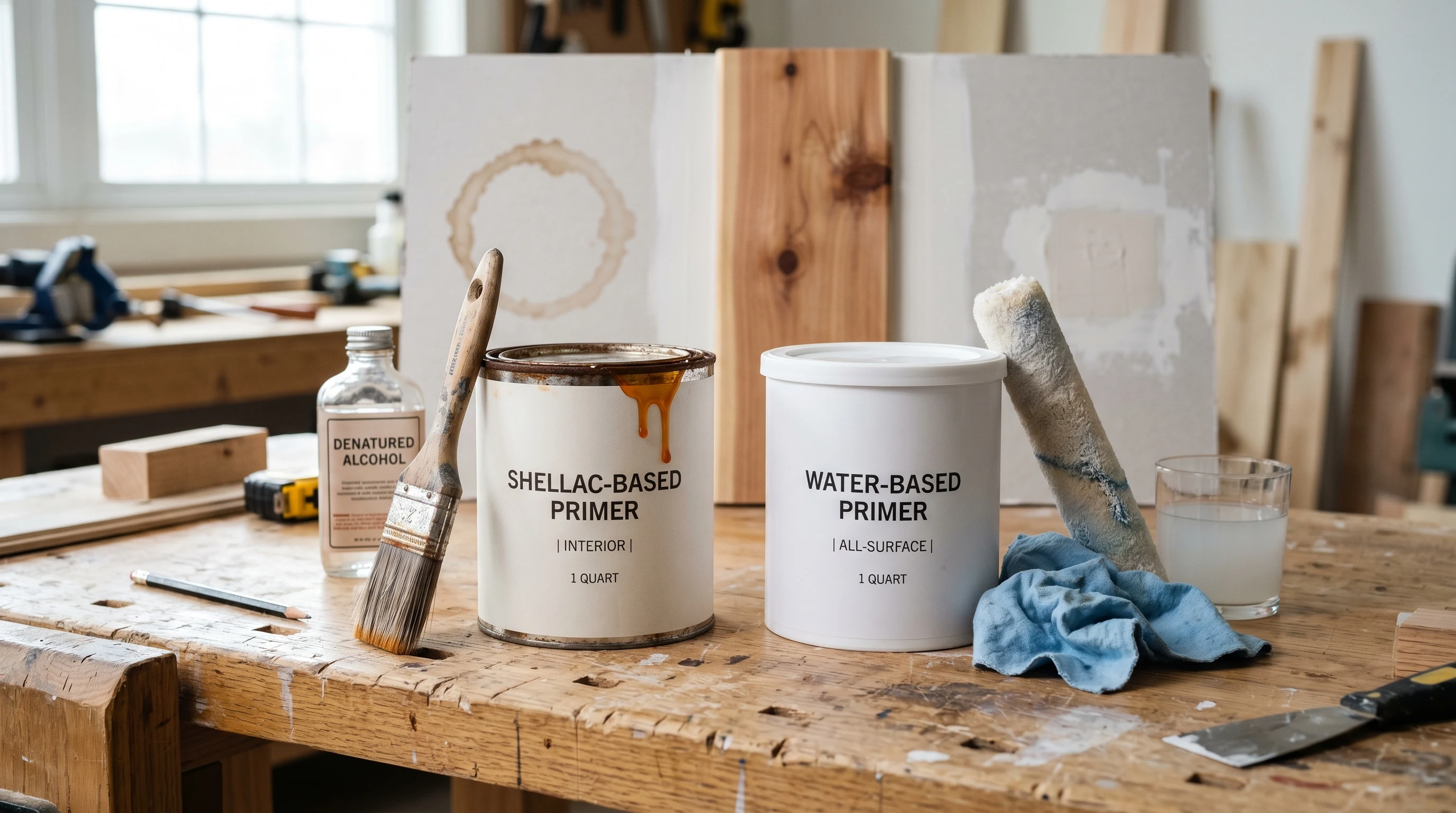
The 30-Second Answer
BIN is shellac in alcohol. 1-2-3 is acrylic in water. Same brand, different jobs.
Smoke ceiling, nicotine walls, knot bleed on cedar, glossy oil trim you don’t want to sand: BIN. Fresh drywall, patched walls, mild stains, exterior siding, a whole-house repaint where you need a gallon-a-room pace: 1-2-3. If the stain dissolves in water, BIN. If you just need a primer that bonds and gets out of the way, 1-2-3. Don’t reach for shellac because the can looks tougher. Reach for it when nothing else will hold the stain down.
At a Glance
| Zinsser BIN | Zinsser 1-2-3 | |
|---|---|---|
| Resin | Dewaxed shellac | Acrylic latex |
| Solvent | Denatured alcohol | Water |
| Touch-dry | 45 minutes | 30 minutes |
| Recoat | 1 hour | 1 hour |
| Smoke / nicotine | 🟢 Best in class | 🔴 Bleeds through |
| Knot bleed | 🟢 Best in class | 🟡 Mild only |
| Water rings | 🟢 Locks them down | 🟡 Light rings only |
| Bare drywall | ⚪ Overkill | 🟢 What it’s built for |
| Glossy oil trim | 🟢 No sanding needed | 🟡 Scuff-sand first |
| Exterior use | 🔴 Indoors only | 🟢 Rated exterior |
| Cleanup | Denatured alcohol | Soap and water |
| Smell | Sharp, flashes fast | Mild, low-VOC |
| Price (qt) | ~$22 | ~$10 |
How to Tell What’s Already on the Wall
Painters inherit jobs. Before you pick a primer, figure out what’s under the existing finish.
Cotton ball, denatured alcohol, rub a hidden spot for ten seconds. If the cotton picks up color and the surface goes tacky, that’s shellac or an old water-based finish. If it doesn’t budge, it’s a cured alkyd or a fully-cured acrylic. A second pass with mineral spirits tells you alkyd if the surface softens. None of these tests are fancy. They tell you whether you can roll over the existing film with 1-2-3 (cured acrylic, deglossed alkyd) or whether you need BIN’s bite to make the new coat stick (glossy oil, old shellac, smoke residue).
Stain-Blocking Strength
The single biggest reason to pick between these.
BIN locks down stains nothing else on the consumer shelf will touch. Smoke residue, nicotine, marker, crayon, food splatter, mildew shadow, knot bleed on cedar and pine, water-damage rings after the leak is fixed. Shellac is polar; the water-soluble pigments in those stains can’t dissolve through the cured film, and they can’t migrate out into the topcoat. Two coats over a fire-damage ceiling and the ghost is gone for good.
1-2-3 is a different animal. It handles mild stains: a light water ring, a faded marker, a patch over old drywall mud. Anything heavier and the water in the primer reactivates the stain and pulls it into the film. Painters who try to save money by priming a yellowed bathroom ceiling with 1-2-3 see the ghost come back within ten days. It’s the wrong tool. Use 1-2-3 where the substrate is the problem (bare drywall, patches, weathered siding), not where the stain is the problem.
Winner: BIN. Decisively, on every meaningful stain class.
Dry and Recoat Speed
Both cans say one-hour recoat. Both are honest about it.
BIN flashes off in 45 minutes. The alcohol leaves, the shellac sets, and you can topcoat on the hour. No oxidative cure to wait on. Prime a popcorn ceiling at 9, roll latex at 11.
1-2-3 dries in 30 minutes under good conditions and recoats at the hour. The acrylic coalesces as the water evaporates. Cool and humid days stretch the window, but it’s still the fastest water-based primer on the shelf. For a whole-house repaint where you’re moving wall to wall, 1-2-3 keeps up.
Winner: tie. Both are fast enough that the topcoat schedule isn’t the limiter.
Smell and Cleanup
BIN smells like industrial alcohol. Sharp, brutal, gone in an hour. You don’t want to be in a sealed bathroom with an open can, but the smell flashes off with the solvent and the room is breathable by the time the recoat is dry. Cleanup is denatured alcohol. Pour a splash in a jar, work the bristles, rinse, hang to dry.
1-2-3 barely smells. Low-VOC, water-based, faintly chemical. You can prime a kid’s bedroom with the door open and a fan running and nobody notices. Cleanup is soap and warm water at the utility sink. Brushes wash out in two minutes.
For a small bathroom, BIN’s fast-and-done smell beats the lingering chemical fade of an oil primer, but 1-2-3 wins outright on every comfort measure. If the homeowner is in the house while you work, 1-2-3 is the friendlier can.
Winner: 1-2-3. Easier to live with, easier to clean up.
Adhesion to Glossy Substrate
Here’s where BIN earns its place on the truck.
Shellac bonds to cured oil paint, varnish, and high-gloss alkyd trim without sanding. The alcohol carrier wets the glossy surface and the shellac keys in as the alcohol leaves. For a 1920s house with original oil trim the homeowner won’t let you sand, BIN is the only primer that holds. Roll it, brush it, top with latex enamel.
1-2-3 won’t do this. Put it over glossy oil trim straight and you’ll be scraping it off in six months. Scuff-sand with 220-grit first and it bonds fine, but the sanding is the work. If you’re going to sand anyway, 1-2-3 is cheaper and easier. If you can’t sand, BIN.
Winner: BIN. No real competition on this one.
Topcoat Compatibility
BIN takes anything. Latex, oil, alkyd, even another coat of shellac. The cured film is inert to whatever you put over it, and the timing doesn’t matter past the first hour. That’s why it shows up under so many topcoats — the primer never fights the finish.
1-2-3 takes latex and waterborne enamels cleanly. Oil topcoats work too, but the bond is mechanical and you want the primer fully dry before the alkyd goes on. Quick recoat with latex is the usual move.
One color note: BIN dries dead-white but cures with a slight warm cast under thin topcoats. 1-2-3 is dead-flat-white and stays neutral. Under one thin coat of bright-white ceiling paint, BIN can ghost a hair warm. Two topcoats and you don’t see it.
Winner: BIN on flexibility. 1-2-3 if you’re going waterborne and the substrate is uncomplicated.
Verdict by Use Case
- Pick BIN if: the stain is smoke, nicotine, knot bleed, water-damage ring, or marker; the substrate is glossy oil trim you can’t sand; the surface is popcorn texture (use the aerosol); the job is small and the recoat is the same morning.
- Pick 1-2-3 if: the substrate is bare or patched drywall; the topcoat is latex; the stains are mild or absent; the job is exterior; the homeowner is in the house and you can’t gas the room with alcohol fumes; the surface is large enough that gallon-pricing matters.
- It’s basically a tie when: the wall is interior drywall in good shape with a light old water ring you’ve already cut out and patched. Either primer covers it. Pick on whichever can is open on the truck.
Top Picks by Side
Going with shellac? See the Zinsser BIN product page for specs, and grab a quart for spot work or a gallon for whole-room priming. The aerosol can is the right answer for popcorn ceilings and tight spots; the brush-grade gallon is what you want everywhere else.
Going with water-based? See the Zinsser 1-2-3 product page for specs. Gallon scale, $10 a quart, $30 a gallon. For the broader primer landscape — bonding primers, masonry primers, exterior wood primers — see the best primer round-up.
If the choice is really shellac versus oil rather than shellac versus water, the Cover Stain vs BIN breakdown is the next read.
Related
- Best primer round-up: every primer class and where it belongs
- Cover Stain vs BIN: the other Zinsser head-to-head
- Water stains on ceiling: diagnosis and the right primer to seal them
- Yellowing trim: what’s bleeding through and how to lock it down
- Primer vs paint-and-primer-in-one: when the marketing claim doesn’t hold
Frequently asked questions
Can I use 1-2-3 over a smoke-damaged ceiling?+
Will BIN work on bare drywall and patches?+
Can I topcoat BIN with latex the same day?+
Do I need to sand glossy trim before 1-2-3?+
Which one belongs on exterior siding?+
- Best primer round-up: every primer class and where it belongs
- Oil primer vs shellac primer: Cover Stain vs BIN, by substrate and stain
- Water stains on ceiling: diagnosis and the right primer to seal them
- Yellowing trim: what's bleeding through and how to lock it down
- Primer vs paint-and-primer-in-one: when the marketing claim doesn't hold