Acrylic Pool Paint: Specifier's Guide (2026)
Acrylic pool paint compared by DFT, recoat, and service life against epoxy and chlorinated rubber. Substrate prep by ICRI CSP, VOC limits, and the contractor path.

Disclosure: Affiliate links to retailers and manufacturer-direct programs. Recommendations are spec-driven, not commission-driven.
Use Case
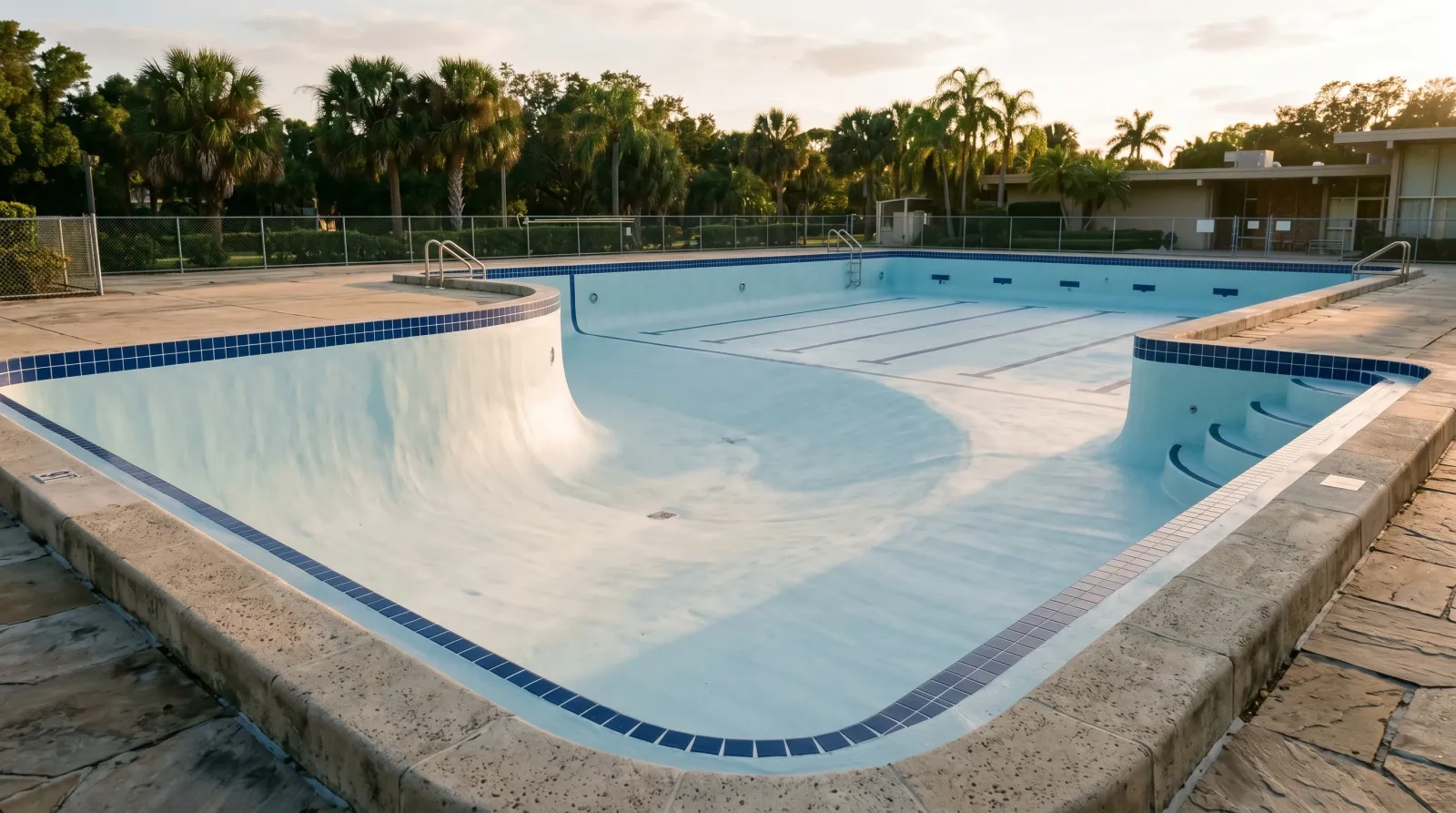
Acrylic pool paint is the recoat coating for swimming pool shells where downtime and budget matter more than maximum service life. The asset is the submerged interior surface of a concrete, plaster, gunite, or fiberglass pool: the floor, walls, and steps below the waterline tile. The job is to seal the porous shell, hold a uniform color underwater, resist constant chlorine and the pH swings of treated water, and survive the freeze-thaw cycle on any pool that drains for winter.
Three coating chemistries compete for this surface. Epoxy carries the longest service life and the highest cost. Chlorinated rubber is the legacy solvent-borne option, now phased out in most VOC-regulated states. Acrylic is the water-based class that the spec calls for when the owner needs the pool back in service fast and accepts a shorter recoat cycle in exchange.
Service life expectations frame the whole decision. Water-based acrylic delivers 2 to 3 swim seasons. Solvent-borne acrylic stretches to 3 to 5. Epoxy runs 5 to 8 years on the same shell. Acrylic does not win on longevity, and a specifier should not pretend otherwise in a procurement meeting. It wins on three things: it goes over a damp substrate, it returns the pool to service in a fraction of the time, and its recoat cost per cycle is low enough that the total cost of ownership stays competitive with epoxy on a high-traffic municipal or HOA pool.
The typical specified asset is a municipal pool with a tight reopening window, an HOA amenity pool repainted on a fixed seasonal calendar, a hotel pool that cannot stay drained through peak occupancy, or an older plaster shell already coated in acrylic where a like-over-like recoat is the only reliable path. New gunite construction and high-end commercial natatoriums usually spec epoxy from the start. Acrylic earns its slot on the recoat, on the schedule-driven job, and on the damp shell that will not dry in time.
Spec Requirements
The spec block before any product name. Numbers vary by manufacturer; the categories do not.
| Spec | Value |
|---|---|
| Dry film thickness (DFT) | 4–8 mils total system; 2–4 mils per coat over two coats |
| Coverage @ DFT | 150–250 sq ft / gal first coat (porous plaster), 250–350 sq ft / gal second coat |
| VOC | <100 g/L water-based (CARB / SCAQMD Rule 1113 compliant); 250–340 g/L solvent-borne acrylic |
| Standards | ASTM D4541 (adhesion), ASTM D4060 (abrasion), ASTM D2243 (freeze-thaw stability), ASTM D6695 (weathering) |
| Substrate prep — concrete / plaster | Acid etch or abrasive blast to ICRI CSP 2–3; muriatic acid etch acceptable on pool plaster (unlike industrial floors) |
| Substrate prep — bare metal trim | SSPC-SP2 / SP3 hand or power tool clean on ladder anchors and fittings |
| Moisture condition | Damp (not puddled) acceptable for acrylic; this is the class advantage |
| Service temp | 35°F to 95°F water; survives a drained freeze-thaw winter when properly cured |
| Cure to service | 5–7 days air cure before filling; balance water and let coating equilibrate before swimmer load |
| Dew point / humidity | Substrate ≥5°F above dew point during application; avoid coating with rain in the forecast inside the cure window |
| Anti-slip (deck only) | OSHA 1910.22 applies to the pool surround, not the shell; spec a separate anti-slip deck coating |
Acid etching is the one place this spec departs from an industrial floor guide. On a structural warehouse slab a chemical etch is too weak to specify. On pool plaster, a muriatic acid etch followed by a thorough rinse and neutralize is standard and gives the acrylic the open, slightly toothed CSP 2–3 profile it needs to grip. The reason is the substrate: pool plaster is softer and more porous than power-troweled industrial concrete, and the etch opens the pore structure without the cost of bringing a shotblaster into a below-grade bowl.
The damp-tolerance line is the headline. An in-ground concrete pool can take a week to dry to the moisture ceiling epoxy demands. Acrylic skips that wait, which on a schedule-driven municipal job is the difference between reopening on the Fourth of July and reopening in August.
System Chemistry Compared
Before naming products, pick the chemistry class. Four options touch the pool shell.
| Chemistry | Recoat window | Substrate moisture | Service life | UV / color hold | $/sq ft installed | Best for |
|---|---|---|---|---|---|---|
| Water-based acrylic (this guide) | 2–4 h between coats | Damp OK | 2–3 seasons | Good; mild chalking late | $1.00–$2.00 | Fast-turnaround municipal, HOA, damp shells |
| Solvent-borne acrylic | 4–8 h | Dry preferred | 3–5 seasons | Good | $1.50–$2.50 | Where state VOC rules still allow; longer cycle |
| Epoxy | 12–24 h | Dry, measured ceiling | 5–8 years | Fair; chalks and fades | $2.50–$5.00 | New construction, long-cycle commercial |
| Chlorinated rubber | 4–8 h | Dry | 3–5 years | Good underwater | $1.50–$2.50 | Legacy recoats only; banned under many state VOC limits |
Acrylic wins on schedule and on damp substrate. Epoxy wins on years between recoats. Chlorinated rubber is the legacy chemistry that solvent-VOC regulation has pushed off most spec sheets in California, the Northeast OTC states, and a growing list of others. A specifier choosing acrylic is choosing low downtime and low per-cycle cost over the longest possible interval. State that trade openly to the owner; it is the honest frame.
The compatibility rule overrides the performance table: a recoat must go over the same chemistry it replaces, or over bare substrate. Acrylic over cured epoxy peels. Acrylic over chlorinated rubber lifts. The first job on any repaint is to identify the existing film, not to pick the best new one.
Recommended Systems
Three full two-coat acrylic stacks at different price-performance points. Acrylic pool systems are genuinely two-coat: a thinned, penetrating first coat that seals the porous shell, then a full-build second coat that carries the color and the wear surface. Do not single-coat a pool. Verify the current product page and color availability before bid; the lines below are real and widely stocked.
System a — Ramuc Type EP Acrylic (the Specifier Standard)
| Layer | Product | DFT |
|---|---|---|
| Prime / first coat | Ramuc Type EP Acrylic, first coat (thinned per TDS on bare plaster) | 2–3 mils |
| Topcoat | Ramuc Type EP Acrylic, full second coat | 2–4 mils |
| Total | 4–7 mils |
Service life 2–3 seasons, longer on a shaded indoor pool. Ramuc (made by Kelley Technical Coatings) is the most widely specified pool-coating line in North America and publishes a clear chemistry-compatibility chart, which matters more on a repaint than the topcoat itself. The Type EP acrylic goes over a damp shell, recoats in 2 to 4 hours, and returns the pool to fill in 5 days. Ramuc pool paint product line.
System B — Rust-Oleum / Zinsser Water-Based Acrylic (value, Low VOC)
| Layer | Product | DFT |
|---|---|---|
| First coat | Rust-Oleum Water-Based Acrylic Pool Paint, first coat | 2–3 mils |
| Topcoat | Rust-Oleum Water-Based Acrylic Pool Paint, second coat | 2–3 mils |
| Total | 4–6 mils |
Service life 2–3 seasons. The Rust-Oleum water-based line lands under 100 g/L VOC, which keeps it compliant in CARB and SCAQMD jurisdictions without a variance. It is the value pick for HOA and residential amenity pools where the recoat is on a fixed seasonal calendar and the owner replaces it on schedule regardless of wear. Rust-Oleum Industrial.
System C — Krylon / H&C Acrylic Pool Coating (regional Availability)
| Layer | Product | DFT |
|---|---|---|
| First coat | Acrylic pool coating, first coat | 2–3 mils |
| Topcoat | Acrylic pool coating, second coat | 2–3 mils |
| Total | 4–6 mils |
Service life 2–3 seasons. A third sourcing option where Ramuc and Rust-Oleum distribution is thin. Confirm current availability and color range with the local rep before specifying; acrylic pool-coating SKUs move in and out of regional catalogs more than the industrial floor lines do.
Systems Compared
| System | Total DFT | $/sq ft installed | Service life | Best for |
|---|---|---|---|---|
| A — Ramuc Type EP | 4–7 mils | $1.25–$2.00 | 2–3 seasons | Municipal, commercial, repaint over acrylic |
| B — Rust-Oleum Water-Based | 4–6 mils | $1.00–$1.75 | 2–3 seasons | HOA, residential amenity, CARB/SCAQMD jobs |
| C — Krylon / H&C | 4–6 mils | $1.00–$1.75 | 2–3 seasons | Where A and B distribution is thin |
Cost includes acid etch or light blast, rinse and neutralize, both coats, and contractor labor on a typical residential-to-mid-commercial shell. Self-applied on a small pool drops the figure by roughly 40%, with the prep work and chemistry identification carrying the risk. Compare against an epoxy repaint at $2.50–$5.00 per square foot with a 5-to-7-day dry-out before coating: epoxy costs more per cycle and takes the pool out of service longer, but recoats half as often.
Application & Contractor Path
Acrylic is the one pool-coating class where a self-applied job is defensible. It is single-component, water-based, brushes and rolls without a sprayer, and tolerates the damp shell that defeats epoxy. A trained facility maintenance crew can repaint a small residential or amenity pool over a weekend drain.
The line moves at commercial scale and at the repaint. Spec a pool-coating contractor when the shell is over 5 years old with an unidentified existing coating, when the pool is municipal or HOA-owned with liability exposure, or when the surface area pushes the prep beyond hand-etching. The contractor’s value is identification and prep, not application skill: a solvent rub test to confirm the existing film, an acid etch and neutralize done to spec, and a documented cure window before fill.
For commercial and public pools, confirm the contractor carries any health-department-required NSF/ANSI 50 product listing and follows the local recreational-water-facility reopening protocol. No specialized SSPC or NACE coating certification is standard for pool work the way it is for tank linings, but the contractor should be able to name the existing coating, describe the etch-and-neutralize step, and commit to the manufacturer’s fill-and-balance schedule before swimmers return. The Ramuc and Rust-Oleum rep networks both provide free chemistry-compatibility review on a repaint; use it before the pool is drained, not after.
Failure Modes & How to Prevent Them
- Recoating over the wrong chemistry. Acrylic over cured epoxy peels in sheets; acrylic over chlorinated rubber lifts and wrinkles. Prevention: identify the existing film before quoting. Acetone softens chlorinated rubber and lacquer and beads off epoxy; when in doubt, blast to bare substrate and start fresh. This is the single most common acrylic repaint failure.
- Inadequate etch / profile. A sealed or under-etched plaster surface gives the acrylic no tooth, and the coating chalks loose underwater. Prevention: acid etch to ICRI CSP 2–3, rinse thoroughly, and neutralize the residual acid. Test the rinse water pH before coating.
- Filling before full cure. An under-cured acrylic film chalks into the water and clouds the pool, and the early water load drags color off the walls. Prevention: hold the full 5-to-7-day air cure before filling, then balance the water before swimmer load.
- Freeze-thaw cracking on a drained winter pool. Water trapped behind an under-bonded film expands and lifts the coating over winter. Prevention: confirm freeze-thaw-rated acrylic (ASTM D2243), drain to below the coating before hard freeze, and address shell cracks before they wick water behind the film.
- Chalking and color loss from chlorine and UV. All pool coatings chalk eventually; over-chlorinated water and direct southern sun accelerate it. Prevention: hold free chlorine in the recommended range, keep pH balanced, and budget the recoat on the acrylic cycle (2–3 seasons) rather than treating early chalking as a defect. See the chalking diagnosis and fix for the mechanism.
- Blistering from substrate moisture vapor. Even damp-tolerant acrylic blisters if hydrostatic pressure pushes vapor through the shell faster than the film can breathe. Prevention: confirm the pool’s hydrostatic relief valve is working before draining, and do not coat a shell with active water seepage. The blistering failure analysis covers the vapor-drive mechanism.
Where to Buy / Spec
| Channel | Best for | Link |
|---|---|---|
| Manufacturer-direct (Ramuc, Rust-Oleum) | Spec’d repaints, chemistry-compatibility review, color match | Ramuc pool paint · Rust-Oleum Industrial |
| Pool-supply distributor | Bulk, contractor accounts, regional color stock | (regional pool-supply dealer) |
| Pro retail (Sherwin-Williams, BM Pro) | Smaller jobs, local pickup, contractor pricing | (store locator) |
| Amazon Business | Small residential pools, fleet stocking | (search by manufacturer) |
Manufacturer-direct is the recommended channel on any repaint, because the compatibility review and color-match service are worth more than a retail discount. The wrong color underwater reads completely different from the chip in air; confirm the underwater shade with the rep before committing a commercial shell.