Marine Paint: Specifier's Guide to Hull, Bottom & Topside Systems (2026)
A marine paint guide for fleet and yard buyers. Bottom paint, barrier coat, and topside systems compared by DFT, biocide type, VOC, ASTM standards, and substrate prep.

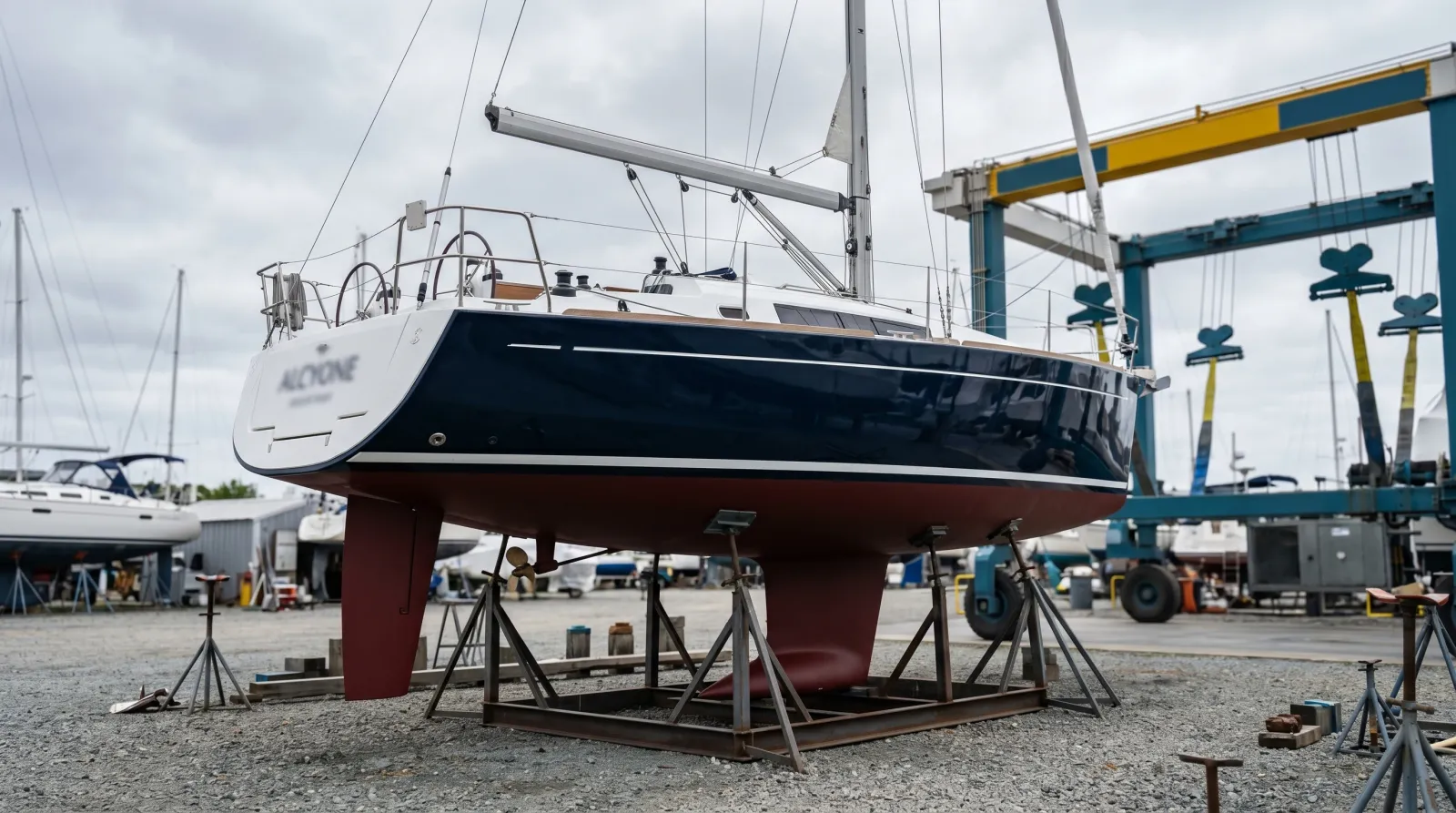
Disclosure: Affiliate links to retailers and manufacturer-direct programs. Recommendations are spec-driven, not commission-driven.
Use Case
Marine paint is three different jobs on one hull, and the recurring spec error is treating it as one. Below the waterline, the coating fights biological fouling and osmotic water absorption for a season or two between haul-outs. At the waterline, the boottop takes the worst of UV, abrasion against docks, and the scum line. Above the waterline, the topside coating is a cosmetic and weather-barrier finish that has to hold gloss against salt spray and sun for five to ten years. Each zone wants a different chemistry, and the layer that holds the others together (the epoxy barrier or anticorrosive primer) is the one owners skip to save a day.
The spec gets written for recreational sailboats and powerboats hauled annually, charter and commercial passenger fleets under USCG Subchapter T or K, workboats, and the steel and aluminum commercial hulls that live in the water year-round. Substrate drives the system. Fiberglass is the common recreational case and needs an epoxy barrier coat under antifouling to stop blistering. Steel needs an SSPC-blasted anticorrosive epoxy stack. Aluminum needs the same idea with one hard rule: no copper biocide, because copper against bare aluminum drives galvanic corrosion that will pit the hull.
Service life splits by zone. Antifouling runs one to three seasons depending on biocide load, water temperature, and how much the boat actually moves. A barrier coat is a 10-plus year layer. A two-part polyurethane topside holds 5 to 10 years before it loses gloss. The whole-hull number that matters to a fleet buyer is the haul-out interval, because the labor to pull, block, pressure-wash, and relaunch dwarfs the cost of the paint in the can. The coating that buys an extra season between haul-outs pays for itself several times over.
Zoned Recommendation Matrix
A hull is not monolithic. The spec maps a system to each zone, not one product to the whole boat.
| Zone | Exposure | Recommended system | Why |
|---|---|---|---|
| Bottom (below waterline) | Constant immersion, fouling, osmosis | Epoxy barrier + copper ablative or hard antifouling | Biocide release plus moisture barrier |
| Boottop / waterline | UV, abrasion, scum line, intermittent wet | Hard antifouling or a tough waterline-rated stripe | Highest wear band on the hull |
| Topsides (above waterline) | UV, salt spray, impact, cosmetic | Two-part polyurethane over epoxy primer | Gloss retention and color hold |
| Deck (walking surface) | Foot traffic, wet, glare | Polyurethane with nonskid aggregate | COF and crew safety |
| Bilge / interior tankage | Standing water, fuel, chemical | High-solids epoxy (Macropoxy-class) | Chemical and immersion resistance |
| Running gear (props, shafts) | Immersion, cavitation, dissimilar metal | Specialized prop/metal-primer antifouling | Adhesion to bronze and stainless |
For a single fiberglass recreational hull, the practical spec collapses to two systems: a barrier-plus-antifouling stack below the waterline and a polyurethane-over-primer stack above it. Commercial steel and aluminum hulls carry the full envelope because the corrosion protection is the asset, not the cosmetics.
Spec Requirements
The spec block before any product name. Numbers vary by manufacturer and substrate; the categories do not.
| Spec | Value |
|---|---|
| Antifouling DFT | 4–8 mils dry per coat; 8–16 mils total over 2–3 coats |
| Epoxy barrier coat DFT (fiberglass) | 10–12 mils dry, built in multiple thin coats |
| Anticorrosive epoxy primer DFT (steel) | 10–16 mils dry across primer + tie coat |
| Topside polyurethane DFT | 3–5 mils dry, 2 coats |
| Coverage @ DFT | Antifouling 350–500 sq ft/gal at spec; topside 400–500 sq ft/gal |
| VOC | Antifouling under 330 g/L; topside 2K polyurethane 340–420 g/L under SCAQMD Rule 1106 marine category |
| Standards | ASTM D3623 (antifouling raft), D4541 (adhesion), D870 (immersion), B117 (salt spray, steel) |
| Certifications | EPA FIFRA pesticide registration (biocidal antifoulings); ABYC; USCG Subchapter T/K commercial |
| Substrate prep — fiberglass | Dewax, then sand to a uniform matte (220–80 grit per system); no gloss left for barrier coat |
| Substrate prep — steel | SSPC-SP10 near-white blast for new work; SSPC-SP6 commercial blast minimum for maintenance |
| Substrate prep — aluminum | SSPC-SP1 solvent clean + abrade; etch primer; never copper antifouling on bare aluminum |
| Moisture (fiberglass) | Hull moisture meter reading stable and low before barrier; blistered hulls dried weeks to months |
| Application ambient | 50°F to 90°F; relative humidity under 85%; substrate 5°F above dew point |
| Recoat / launch window | Antifouling launch window per data sheet, often 24–48 hr min and a max before relaunch (ablatives) |
| Cure to service | Topside 2K polyurethane 5–7 days to full hardness; antifouling cures in service |
Three numbers govern a bottom job: the barrier-coat DFT (under-built barrier lets water into the laminate), the antifouling total build (thin antifouling exhausts its biocide a season early), and the moisture state of a fiberglass hull at barrier time. Trapping water under a fresh barrier coat is the fastest way to manufacture the blistering the barrier was supposed to prevent.
System Chemistry Compared
Antifouling chemistry is the first decision below the waterline, before any brand. Topsides are a separate chemistry call above it.
| Chemistry | Mechanism | Recoat / haul behavior | Service life | $/sq ft band | Best for |
|---|---|---|---|---|---|
| Hard antifouling (modified epoxy) | Insoluble film, biocide leaches from a fixed matrix | Builds up over years; needs occasional strip | 2–3 seasons | $$ | Fast boats, racers, frequent haul, trailer-launched |
| Copolymer ablative (self-polishing) | Film wears away with water flow, exposing fresh biocide | Wears clean; minimal buildup; easy recoat | 1–2 seasons | $$ | Cruisers, most recreational hulls |
| Copper-free ablative | Zinc/organic biocide, no copper | Same wear behavior; for restricted waters and aluminum | 1 season | $$$ | Aluminum hulls, copper-restricted jurisdictions |
| Epoxy barrier / anticorrosive | High-solids two-part epoxy, no biocide | 10+ year layer under antifouling | 10–15 years | $$ | Moisture and corrosion protection, all hulls |
| Two-part polyurethane (topside) | Aliphatic isocyanate cure, UV-stable gloss | 5–10 year cosmetic; recoat by prep + scuff | 5–10 years | $$$ | Above-waterline finish, gloss-critical |
Copolymer ablative is the default for most recreational cruising hulls because it wears clean and recoats without the multi-year buildup that eventually forces a hard-paint strip. Hard antifouling earns its place where the hull moves fast or gets burnished, since the film can be wet-sanded smooth and doesn’t slough. The copper-free decision is forced by two things only: an aluminum hull, or a jurisdiction that caps copper leach rate. Topside polyurethane is a different conversation entirely, and the gap between a two-part polyurethane and a one-part “polyurethane” enamel is real. The two-part holds gloss for years; the one-part chalks in two.
Recommended Systems
Three full multi-coat stacks at different substrate and price points. Pettit and Interlux are the two dominant recreational-marine lines in the US; the Sherwin-Williams Protective & Marine system is the commercial-steel answer. Verify the current product against your substrate before bid; antifouling formulations change with EPA registration cycles.
System A — Pettit Protect + Trinidad SR (Fiberglass, Hard Antifouling)
| Layer | Product | DFT |
|---|---|---|
| Barrier coat | Pettit Protect 4700/4701 high-build epoxy | 10–12 mils dry (2–3 coats) |
| Antifouling coat 1 | Trinidad SR copper hard antifouling | 4–6 mils dry |
| Antifouling coat 2 | Trinidad SR (second coat, extra at waterline) | 4–6 mils dry |
| Total | 18–24 mils |
Service life 2–3 seasons on the antifouling, 10-plus on the barrier. Trinidad SR is a high-copper hard antifouling that can be wet-sanded and burnished, which is why racers and fast powerboats spec it. The hard film builds up over years, so plan a soda-blast strip every several seasons before the buildup cracks. Pettit Trinidad SR product page.
System B — Interlux InterProtect + Micron CSC (Fiberglass, Ablative + Topside)
| Layer | Product | DFT |
|---|---|---|
| Barrier coat | Interlux InterProtect 2000E epoxy barrier | 10 mils dry (multiple 2-mil coats) |
| Antifouling coat 1 | Micron CSC copolymer ablative | 4–5 mils dry |
| Antifouling coat 2 | Micron CSC (extra coat at waterline) | 4–5 mils dry |
| Topside (above waterline) | Interlux Perfection two-part polyurethane | 3–4 mils dry over epoxy primer |
| Total (bottom) | 18–20 mils |
Service life 1–2 seasons on the ablative, which wears clean and recoats without buildup. This is the standard recreational cruising spec: InterProtect 2000E is the most widely specified fiberglass barrier in the US, and Micron CSC is the forgiving ablative that an owner can apply and relaunch with a wide window. Perfection above the waterline holds gloss 7 to 10 years. Interlux Micron CSC product page.
System C — Sherwin-Williams Macropoxy + SeaVoyage (Steel Commercial Hull)
| Layer | Product | DFT |
|---|---|---|
| Primer | Macropoxy 646 high-solids epoxy | 5–8 mils dry |
| Tie coat | Macropoxy 646 (second coat) | 5–8 mils dry |
| Antifouling coat 1 | SeaVoyage copper antifouling | 4–6 mils dry |
| Antifouling coat 2 | SeaVoyage (second coat) | 4–6 mils dry |
| Total | 18–28 mils |
Service life on the epoxy anticorrosive system is the asset here; the antifouling is the consumable on top. Macropoxy 646 is the workhorse high-solids marine and industrial epoxy, and it goes over an SSPC-SP10 near-white blast on new steel or an SP6 commercial blast on maintenance work. This is the commercial-vessel and workboat answer, not a recreational fiberglass spec. Sherwin-Williams Protective & Marine.
Systems Compared
| System | Total DFT | $/sq ft installed | Service life | Best for |
|---|---|---|---|---|
| A — Pettit Protect + Trinidad SR | 18–24 mils | $4–8 | 2–3 seasons (antifouling) | Fast hulls, racers, burnished bottoms |
| B — Interlux InterProtect + Micron CSC | 18–20 mils | $3.50–7 | 1–2 seasons (antifouling) | Recreational cruisers, owner-applied |
| C — SW Macropoxy + SeaVoyage | 18–28 mils | $6–12 | 10–15 years (corrosion), antifouling consumable | Steel commercial and workboat hulls |
Pricing assumes a hauled hull through a boatyard with prep, materials, and labor on a 30-plus foot vessel. Owner-applied antifouling drops the per-square-foot number to the material cost (roughly $1.50–3.00/sq ft) but adds a weekend and a respirator. Commercial steel work runs higher because SSPC blast prep is the cost driver, not the paint.
Application & Contractor Path
The honest call splits by substrate. A fiberglass recreational hull on a copolymer ablative is owner-applicable. The barrier coat over a sound, dry, dewaxed hull is within reach for a careful owner who follows the InterProtect or Protect data sheet, respects the recoat windows, and keeps a wet-film gauge on the roller. The work is tedious, not technical.
Steel and aluminum commercial hulls are a yard job. The surface prep alone (SSPC-SP10 near-white blast, dust and chloride checks, recoat before flash rust) is not owner-grade, and aluminum carries the dissimilar-metal trap where a copper antifouling against bare metal pits the hull within a season. Specify a yard or applicator with:
- AMPP (formerly NACE/SSPC) coating-inspector capability for steel and aluminum work, ideally a CIP-certified inspector on the blast-and-prime stage.
- Demonstrated history with the specific antifouling line; biocide loading and overcoat windows vary enough between Pettit, Interlux, and Sherwin-Williams that experience does not transfer blindly.
- For USCG Subchapter T or K commercial passenger vessels, coordination with the vessel’s marine surveyor so the coating spec matches the inspection regime.
The manufacturer-rep path is real on all three lines. Pettit and Interlux both run technical-service desks that will confirm compatibility between an unknown existing bottom paint and a proposed new one, which is the question that saves a full strip. Sherwin-Williams Protective & Marine reps do pre-job substrate and DFT review on commercial steel scopes. Use the desk before you commit the hull; a compatibility miss on a 40-foot bottom is a strip-and-rebuild, not a touch-up.
Failure Modes & How to Prevent Them
Five failures cover most marine-coating warranty calls and premature haul-outs.
- Osmotic blistering on fiberglass. Cause: water absorbed into the laminate, either from no barrier coat or from a barrier applied over a hull that was still wet. Prevention: dry the hull to a stable low moisture-meter reading before barrier, then build the barrier to a full 10–12 mils. A blistered hull needs grinding, drying for weeks to months, and a rebuilt barrier. See the paint blistering diagnosis for the moisture mechanism.
- Antifouling delamination from the layer below. Cause: hard paint over an ablative it can’t key into, incompatible chemistries, or a glossy unsanded surface. Prevention: scuff-sand between coats, confirm compatibility with the manufacturer’s desk, and run a tape-adhesion check per ASTM D3359 on a test patch before committing the whole bottom.
- Galvanic pitting on aluminum. Cause: copper biocide against bare aluminum, or a barrier breach that exposes the metal to a copper layer above it. Prevention: copper-free ablative on aluminum hulls, an intact epoxy isolation coat, and zinc anodes sized and maintained for the running gear.
- Topside gloss loss and chalking. Cause: a one-part “polyurethane” enamel sold as equivalent to a two-part, or a two-part applied over a contaminated or under-cured primer. Prevention: spec the two-part aliphatic polyurethane (Interlux Perfection, Pettit Easypoxy’s two-part lines) over a properly cured epoxy primer, and don’t overcoat past the recoat window. The oxidation and chalking fix covers the same UV mechanism on metal.
- Antifouling exhausted a season early. Cause: under-built film, so the biocide reservoir runs out before the haul interval. Prevention: two full coats minimum, a third at the waterline and leading edges where flow strips the ablative fastest, and a haul-and-wash interval matched to the local fouling season.
The blistering failures are the expensive ones because the fix is grind, dry, and rebuild on a schedule the water dictates, not the yard. The compatibility failures are the avoidable ones; a phone call to the manufacturer’s technical desk closes that gap before paint touches the hull.
Where to Buy / Spec
| Channel | Best for | Path |
|---|---|---|
| Manufacturer-direct (Pettit, Interlux technical desk) | Compatibility checks, recreational spec, data sheets | Pettit · Interlux |
| Sherwin-Williams Protective & Marine rep | Commercial steel and aluminum hulls, DFT review | SW Protective & Marine |
| Marine chandlery / distributor (West Marine, Defender, Fisheries Supply) | Recreational quart-to-gallon stocking, antifouling | Local or online chandlery account |
| Boatyard / applicator account | Spec’d haul-out jobs, blast-and-prime steel work | Yard with AMPP-capable prep crew |
Manufacturer-direct is the recommended channel whenever the existing bottom is unknown or the substrate is metal. The technical desks at Pettit and Interlux exist to keep you from a compatibility-driven strip, and on commercial steel the Sherwin-Williams rep’s substrate and DFT review is worth more than any discount on the pail.
FAQ
See the frontmatter for the full buyer Q&A.