Anti-Condensation Paint for Commercial Buildings: Specifier's Guide (2026)
Anti-condensation paint specified for metal roof decks, HVAC plant, and cold-store soffits. DFT, ASTM standards, dew-point limits, multi-coat systems, and the contractor path.

Disclosure: Affiliate links to retailers and manufacturer-direct programs. Recommendations are spec-driven, not commission-driven.
Use Case
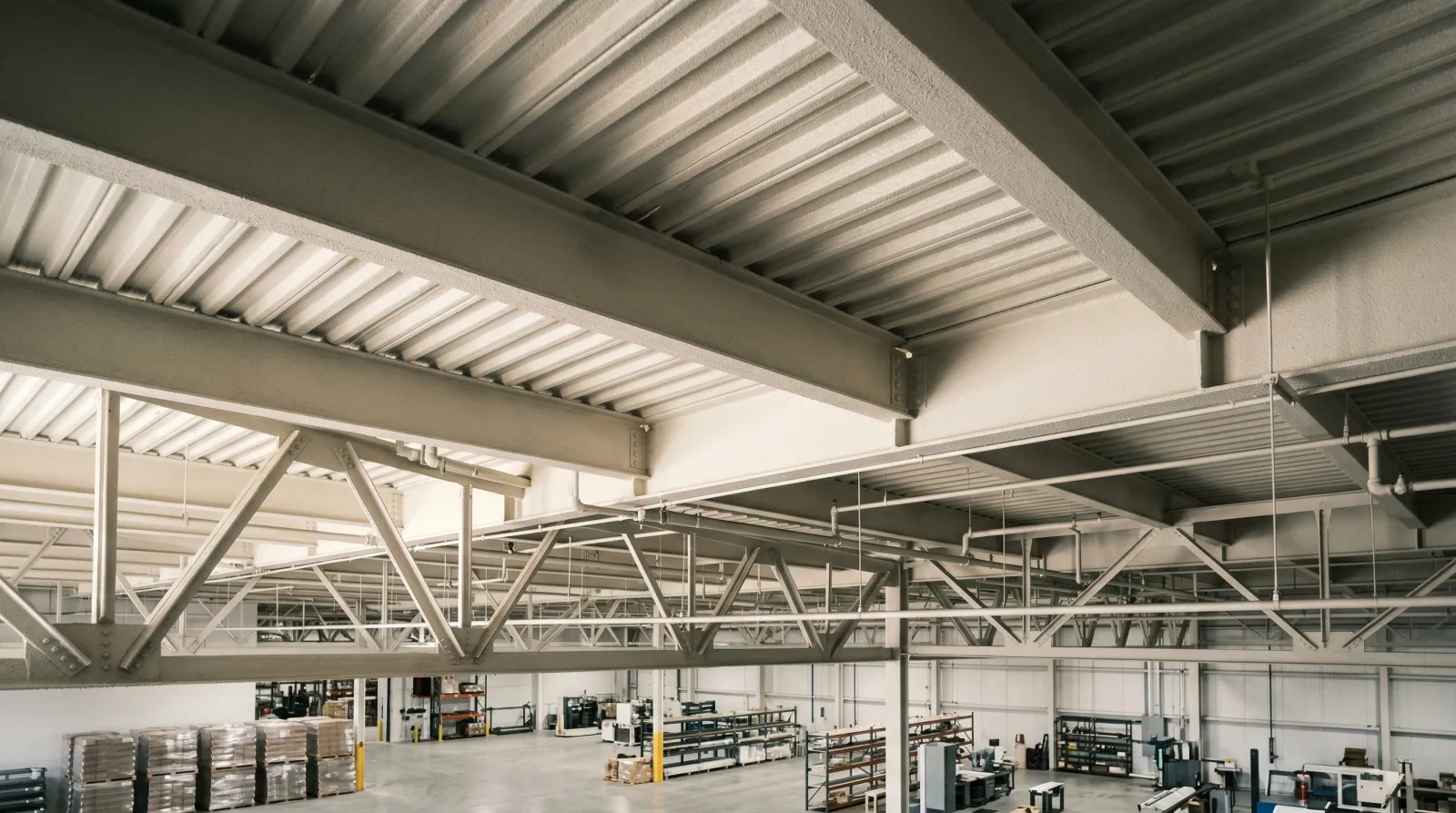
Anti-condensation paint gets specified for the cold inside surface that sweats. A single-skin metal roof deck, an uninsulated steel purlin run, the soffit over a cold store, the shell of a chilled-water tank, ductwork carrying conditioned air through a warm plant room. In every case warm humid air meets a surface sitting below its dew point, the vapor condenses, and the water either drips onto product and floor or it tracks down the steel and starts corrosion. The coating is an insulating, vapor-absorbing film built thick enough to hold the painted surface above the dew point of the air touching it. Hollow ceramic or glass microspheres in a waterborne acrylic binder give the film its thermal resistance; a fungicidal package keeps the damp surface from growing mold.
The asset list is consistent across markets. Warehouses and distribution centers with single-skin metal roofs that rain inside on the first cold morning of autumn. Food-processing and cold-storage plants where ceiling condensation is a contamination point an auditor will write up. Agricultural and equestrian buildings. Indoor pool and natatorium plant rooms. Marine and dockside steel structures. Sewage and water-treatment plant rooms where the air is saturated. Any sheet-metal or steel surface where the building cannot economically be re-insulated and the owner needs the dripping to stop this season.
Service life runs 8 to 15 years on interior conditioned overhead surfaces, less in a saturated wash-down environment where the film takes constant moisture and cleaning chemistry. The coating does not replace ventilation or dehumidification; it raises the surface temperature and buffers the moisture so the air-side problem stops showing up as drips. Premature failure traces to three causes every time: the film applied too thin to insulate, the steel prepped poorly so the system delaminates with the rust beneath it, or application over a surface already wet because the crew ignored the dew point.
Zoned Recommendation Matrix
A single building rarely needs one coating across every cold surface. The exposure changes by zone, and the right system changes with it. The spec for a chilled distribution center with a mix of dry storage and cold rooms:
| Zone / surface | Recommended system | Why |
|---|---|---|
| Single-skin metal roof deck, dry storage | System A (premium insulating build) | High thermal load, large area, drip onto racking; needs full DFT |
| Exposed purlins and steel framing | System A or System B | Same dew-point problem; rust-tolerant primer if the steel is corroded |
| Cold-room and freezer-store soffit | System A with hygiene topcoat | Constant cold surface; auditor-visible; cleanable finish required |
| HVAC plant room ductwork and chilled lines | System B (mid-tier build) | Localized sweating; accessibility limited; cleanable surface helps |
| Wash-down processing ceiling | System C-class hygiene build | USDA-acceptable, ASTM D3273 mold rating, fully cleanable over the insulating coat |
| Office and welfare overhead | Standard interior paint, no anti-condensation coat | No dew-point problem; do not over-spec |
For a single-zone asset (one metal-roofed warehouse, one tank exterior), skip the matrix and write one system across the whole surface. Multi-zone is the rule once a building mixes dry storage, cold rooms, and a wet processing area under one roof.
Spec Requirements
The spec block, before any product name. The numbers vary by manufacturer; the categories do not.
| Spec | Value |
|---|---|
| Dry film thickness (DFT) — anti-condensation coat | 40–80 mils dry; the insulating film is where the performance lives |
| DFT — primer | 2–4 mils on prepared metal |
| DFT — finish / hygiene topcoat (optional) | 1.5–4 mils where a cleanable surface is specified |
| Coverage at spec’d DFT | 12–25 sq ft/gal per coat on the insulating build (low; that is the cost driver) |
| VOC limit | <100 g/L waterborne anti-condensation coats (SCAQMD Rule 1113 industrial maintenance); solvent-borne metal primers run higher, confirm CARB SCM if California |
| Standards | ASTM E96 water vapor transmission; ASTM D3273 mold resistance; ASTM E84 Class A surface burning on rated interior SKUs; ASTM D4541 pull-off adhesion |
| Substrate prep — sound metal | SSPC-SP1 solvent clean to remove grease, then SSPC-SP2/SP3 hand or power tool clean |
| Substrate prep — rusted metal | SSPC-SP3 power tool minimum; SSPC-SP6 commercial blast where rust is heavy |
| Substrate prep — concrete / masonry soffit | ICRI CSP 2 profile; remove laitance, efflorescence, and chalk before coating |
| Service temperature (cured) | -10°F to 200°F continuous on the common acrylic builds |
| Cure to recoat | 4–16 hours per coat at 70°F, 50% RH; the thick film extends this |
| Cure to service | 24–72 hours; full cure of the insulating build before the space returns to cold operation |
| Ambient at application | 50°F to 95°F; relative humidity <85%; substrate at least 5°F above the dew point |
| Dew-point control | Continuous monitoring; do not apply to a surface already condensing |
Three numbers govern the result. The DFT relative to the thermal load (too thin and it still sweats), the surface prep on the metal (rust under the film fails the whole system), and the dew point at application (a wet surface never gets a sound film). Miss any one and the coating drips inside the first cold season.
System Chemistry Compared
A handful of chemistries cover almost every anti-condensation spec. They are not interchangeable; the choice follows the exposure and the cleanability requirement.
| Chemistry | DFT range | Cleanability | Mold resistance | UV / exterior | $/sq ft installed | Best for |
|---|---|---|---|---|---|---|
| Insulating acrylic w/ microspheres | 40–80 mils | Moderate | 🟢 with fungicide | 🔴 interior; chalks outdoors | $2.50–5.50 | Metal roof decks, purlins, general overhead |
| Elastomeric acrylic (Noxyde-class) | 20–40 mils | Moderate | 🟢 | 🟢 holds outdoors | $3.50–6.50 | Exterior steel, tanks, dock structures, flex over rust |
| Waterborne hygiene epoxy/acrylic topcoat | 2–4 mils (over build) | 🟢 fully cleanable | 🟢 | ⚪ interior | +$1.50–3.00 | Food / pharma wash-down ceilings over the insulating coat |
| Cork-based spray insulation | 80–160 mils | 🔴 textured | 🟢 | 🟢 | $6–12 | Heavy thermal-bridge zones, exterior, sound control |
Insulating acrylic is the workhorse for interior overhead steel and the lowest cost per square foot. Elastomeric acrylic earns its place on exterior steel and on surfaces that flex or carry tight residual rust. The hygiene topcoat is not a standalone product; it goes over the insulating build where the surface has to be cleanable. Cork spray buys the most thermal resistance and the most acoustic benefit, at the highest cost and a texture you cannot wipe down.
Recommended Systems
Three full multi-coat stacks at different price-performance points. Anti-condensation coatings are systems, not single cans. The insulating coat carries the performance; the primer carries the adhesion and the rust control; the optional topcoat carries cleanability. Verify the current product names and SDS against the manufacturer before bid, because these industrial lines reformulate and re-brand.
System A — International / AkzoNobel Insulating Acrylic (Premium Roof-Deck Build)
| Layer | Product | DFT |
|---|---|---|
| Primer (bare / rusted steel) | Intergard 269 epoxy or compatible rust-tolerant primer | 2–4 mils |
| Anti-condensation coat | Insulating water-based acrylic, hollow-microsphere filled | 40–80 mils |
| Finish (wet / wash-down zones) | Waterborne acrylic hygiene topcoat | 1.5–2.5 mils |
| Total | 43.5–86.5 mils |
Service life 10–15 years on interior conditioned overhead. The microsphere build is the answer for a large single-skin metal roof where the whole deck rains on the first cold morning. AkzoNobel’s protective and marine network supports the spec with a site survey and a dew-point and thermal review before bid; use it on any deck above a few thousand square feet. International Paint protective coatings.
System B — Rust-Oleum Industrial / Elastomeric Build (Mid-Tier, Rust-Tolerant)
| Layer | Product | DFT |
|---|---|---|
| Primer | Rust-Oleum 769 Damp-Proof Red Primer (rusted steel) or DTM epoxy | 2–4 mils |
| Anti-condensation / build coat | Insulating acrylic anti-condensation coating, two passes | 40–60 mils |
| Topcoat (cleanable surface) | Waterborne acrylic finish | 1.5–3 mils |
| Total | 43.5–67 mils |
Service life 8–12 years. This is the spec for steel that already carries tight surface rust and a budget that cannot fund a full blast. The 769 Damp-Proof Red primer wets out and binds residual rust so the insulating build sits on a sound base, and the elastomeric character tolerates the thermal movement of a metal roof better than a hard film. Available through Rust-Oleum Industrial direct and the distributor network. The full Rust-Oleum industrial line review covers their primer range in detail.
System C — Sherwin-Williams Pro Industrial Hygiene Build (Food / Pharma Overhead)
| Layer | Product | DFT |
|---|---|---|
| Primer | Pro Industrial Pro-Cryl Universal Acrylic Primer | 2.5–3.5 mils |
| Anti-condensation coat | Insulating ceramic-microsphere acrylic build | 40–70 mils |
| Hygiene topcoat | Pro Industrial Pre-Catalyzed Waterbased Epoxy | 2–4 mils |
| Total | 44.5–77.5 mils |
Service life 10–14 years. This stack pairs the insulating build with a cleanable, mold-resistant Pre-Catalyzed Waterbased Epoxy topcoat for the one zone an auditor inspects hardest: the ceiling and overhead steel over a food or pharma production line. Specify a coating set with a documented ASTM D3273 mold rating and confirm USDA acceptability before it goes over product. Sherwin-Williams Pro Industrial coatings.
Systems Compared
| System | Total DFT | $/sq ft installed | Service life | Best for |
|---|---|---|---|---|
| A — International insulating acrylic | 43.5–86.5 mils | $3.00–6.00 | 10–15 years | Large metal roof decks, dry-storage overhead |
| B — Rust-Oleum elastomeric build | 43.5–67 mils | $2.75–5.50 | 8–12 years | Rusted steel, tanks, dock structures, fixed budget |
| C — SW Pro Industrial hygiene build | 44.5–77.5 mils | $4.00–7.50 | 10–14 years | Food / pharma wash-down ceilings, audit-critical zones |
Installed pricing assumes overhead spray application by an industrial contractor on a scope above 5,000 square feet, with prep and access included. Small scopes, hard access, and heavy rust prep run 40 to 100 percent higher per square foot. Over a 12-year horizon the insulating system competes on total cost of ownership against the alternative, which is re-roofing or adding insulation to stop the condensation. Where re-insulation is not economic, the coating is the cheapest path to a dry interior.
Application and Contractor Path
This is not a residential job and, above a few hundred square feet of overhead, not an in-house one. The film thickness is the entire performance basis of the product, and reaching 40 to 80 mils dry overhead means airless spray, staging or a lift, and wet-film gauge checks coat by coat to confirm the build. An under-applied coat looks finished and still drips on the first cold morning. Spec a contractor with SSPC-QP1 certification for industrial coatings, and confirm they own and use a sling psychrometer or surface thermometer.
Three contractor-qualifying questions before you sign:
- What is the dew-point protocol during application? The substrate must sit at least 5°F above the dew point, and on a cold metal deck that window can be narrow. A contractor who cannot describe how they monitor and document it should not be on the bid list.
- How is the film thickness verified? Wet film with a notched gauge during each pass, dry film after cure. The build is the spec; a contractor who sprays to coverage rate instead of measured thickness will hand you a thin coat.
- What is the rust-prep grade and how is chloride checked? On a corroded deck the prep grade and a salt-contamination check (a chloride test on the cleaned steel) decide whether the system lasts a decade or blisters in a season.
Small accessible wall areas and touch-up are within reach of a trained in-house maintenance crew with a roller and a good primer. Draw the line at overhead spray. Where the building is a food or pharma plant, the manufacturer rep on every major line will run a free pre-bid survey covering the thermal load, the dew-point math, and the hygiene-topcoat selection. That survey is worth more than any discount on the can, because it catches the under-build problem at the drawing stage instead of after the floor is wet.
Failure Modes
Five failures account for nearly every anti-condensation warranty claim. Prevent these and the system delivers its rated life.
- Film applied too thin to insulate. Cause: the crew sprayed to a coverage rate instead of a measured dry-film thickness, and the build came in under spec. Prevention: wet-film gauge checks every pass, dry-film readings after cure, and a target keyed to the thermal load of the zone. The drip returns the instant the insulating film is too thin to hold the surface above the dew point.
- Delamination with the rust beneath it. Cause: the system went over flaking rust, mill scale, or chloride-contaminated steel. Prevention: prep to SSPC-SP3 minimum, SP6 on heavy rust, wash off salts, and use a rust-tolerant primer on tight residual rust. The coating is only as sound as what it is gripping.
- Application over a condensing surface. Cause: the crew ignored the dew point and sprayed onto steel that was already sweating. Prevention: continuous dew-point monitoring; the substrate at least 5°F above dew point before and during application. A film cast over water never bonds and traps the moisture under it.
- Mold growth through the film. Cause: a formulation without a fungicidal package on a constantly damp surface, or the insulating coat left without the cleanable topcoat in a wash-down zone. Prevention: specify an ASTM D3273-rated coating and the hygiene topcoat in food and pharma zones. The whole reason the surface needs coating is that it is the cold damp surface mold finds first.
- The air problem was never solved. Cause: the coating was specified as the entire fix for a space with a ventilation or dehumidification deficit. Prevention: treat the coating as the surface half of the solution. In an indoor pool plant room or a saturated wash-down area, pair it with the air-side change. The paint buys margin; it does not rewrite the psychrometrics of a saturated room.
The thin-film failure and the rust-prep failure produce the bulk of the claims I review. Both are decided in the specification and the prep, not in the can.
Where to Buy / Spec
| Channel | Best for | Path |
|---|---|---|
| Amazon Business | Small touch-up scopes, in-house wall areas, primer stocking | Business account pricing on Rust-Oleum and acrylic primers |
| Manufacturer-direct (AkzoNobel / International, SW Pro Industrial) | Spec’d roof-deck and plant scopes, rep survey, system warranty | International Paint · SW Pro Industrial |
| Industrial distributor | Bulk insulating build, mixed-system contractor accounts | Distributor account with project-specific pricing |
| Pro retail (SW / BM Pro store) | Local pickup, contractor pricing, primer and topcoat | Walk-in, account-holder pricing |
Manufacturer-direct is the recommended channel on any scope above 5,000 square feet of overhead. The rep network includes the pre-bid thermal and dew-point survey, the system-warranty path, and the hygiene-topcoat selection for food and pharma zones. For small in-house wall touch-ups, Amazon Business and the local pro store cover the material without the survey overhead.
FAQ
The frequently asked questions are answered in the structured FAQ block above: whether the coating stops dripping or only slows it, whether in-house crews can apply it, what surface prep the spec calls for on a rusted deck, whether it is mold-resistant for food plants, and what the warranty covers.
Related
- Fix condensation with anti-condensation paint covers the diagnosis and the residential-scale fix.
- Stopping condensation on walls for the wall-side moisture problem behind overhead sweating.
- How to prep and paint a corrugated metal roof for the substrate prep on the most common deck.
- Prepping galvanized steel for the purlin and ductwork surfaces that need a tie-coat.
- Rust-Oleum industrial line review for the primer range behind System B.
- Best mold-resistant paint round-up for the fungicidal-package conversation.