Sherwin-Williams Tricorn BlackvsBenjamin Moore Wrought Iron
Tricorn Black is black with no opinion. Wrought Iron is a near-black that keeps a whisper of green-gray and turns deep charcoal in direct sun. The whole decision comes down to how you want the color to behave outside at noon.

Built from our full reviews of both colors — same measured data, same real-room photos. About the testing process →
The Numbers
Wrought Iron is slightly lighter (LRV 8 vs 3, 5-point delta).
The Real Difference on a Wall
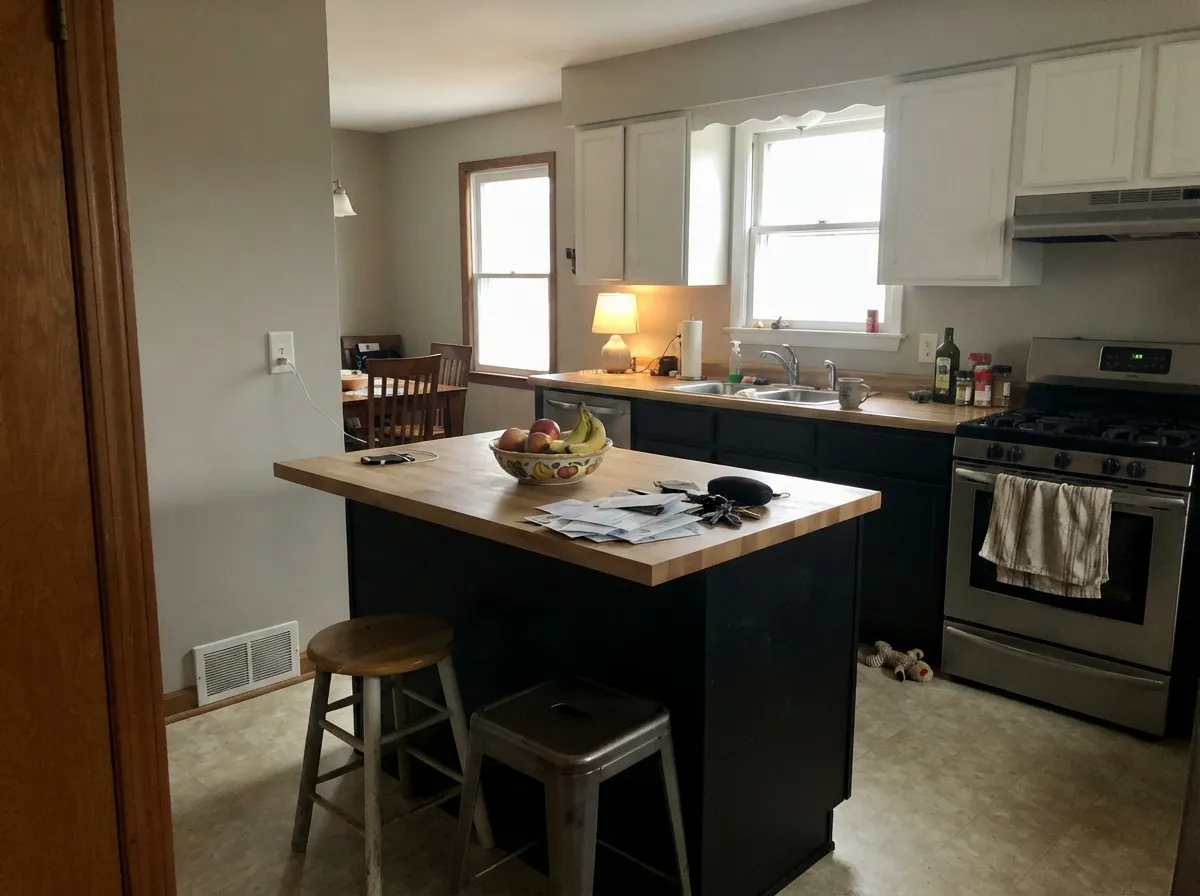
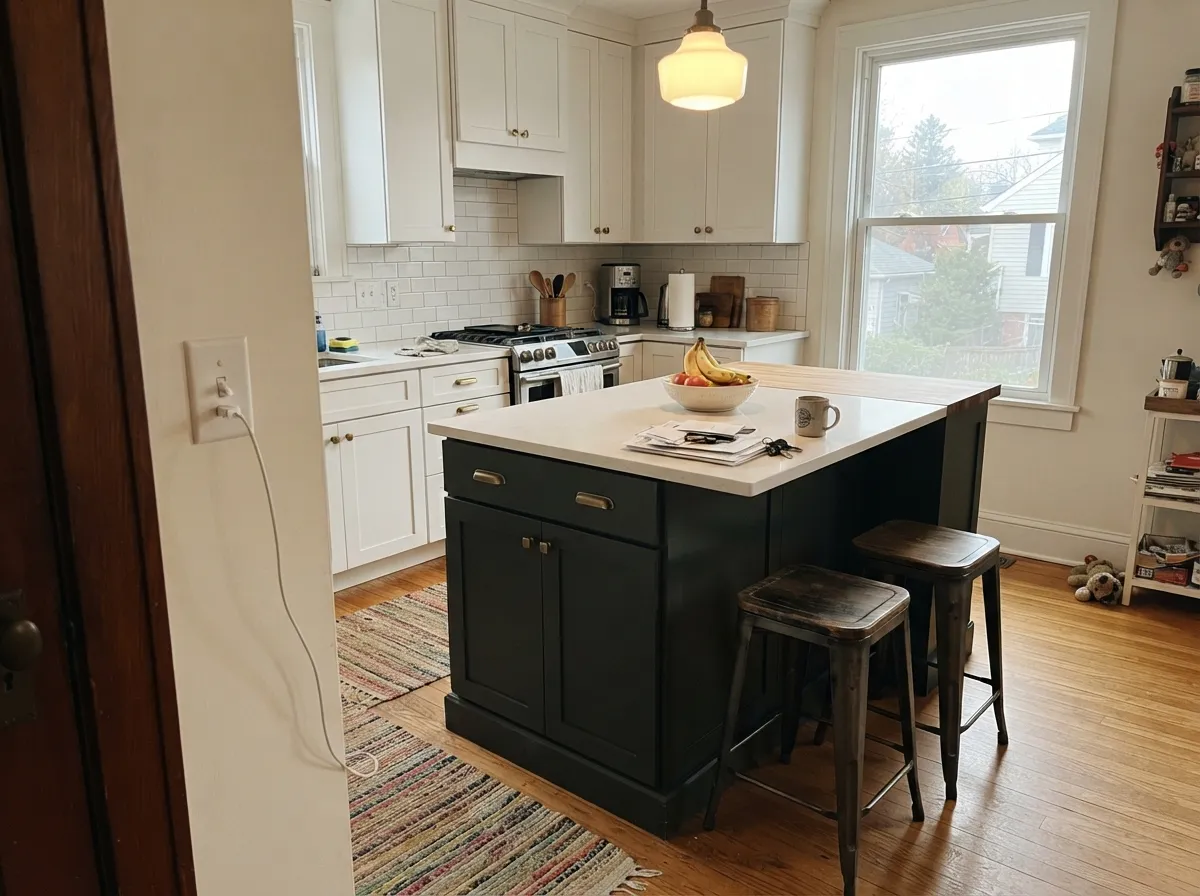
Indoors, under lamps, on a door or an island or a run of built-ins, most people could not tell these two apart in a lineup. Both read black. Both make white trim look crisp, both make brass look expensive, both give a room the anchor it was missing. If your project is an interior island or interior doors and you are agonizing over which one, that is genuinely a small decision.
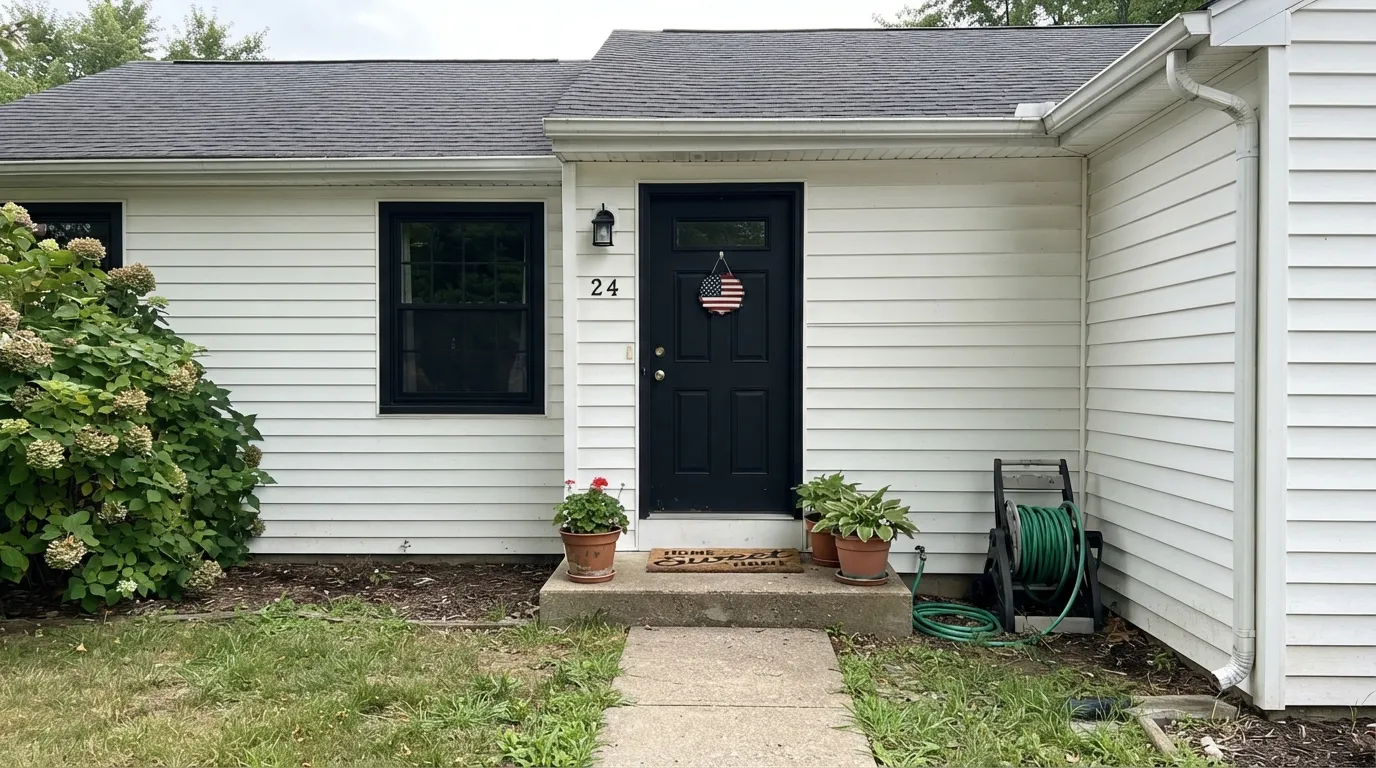
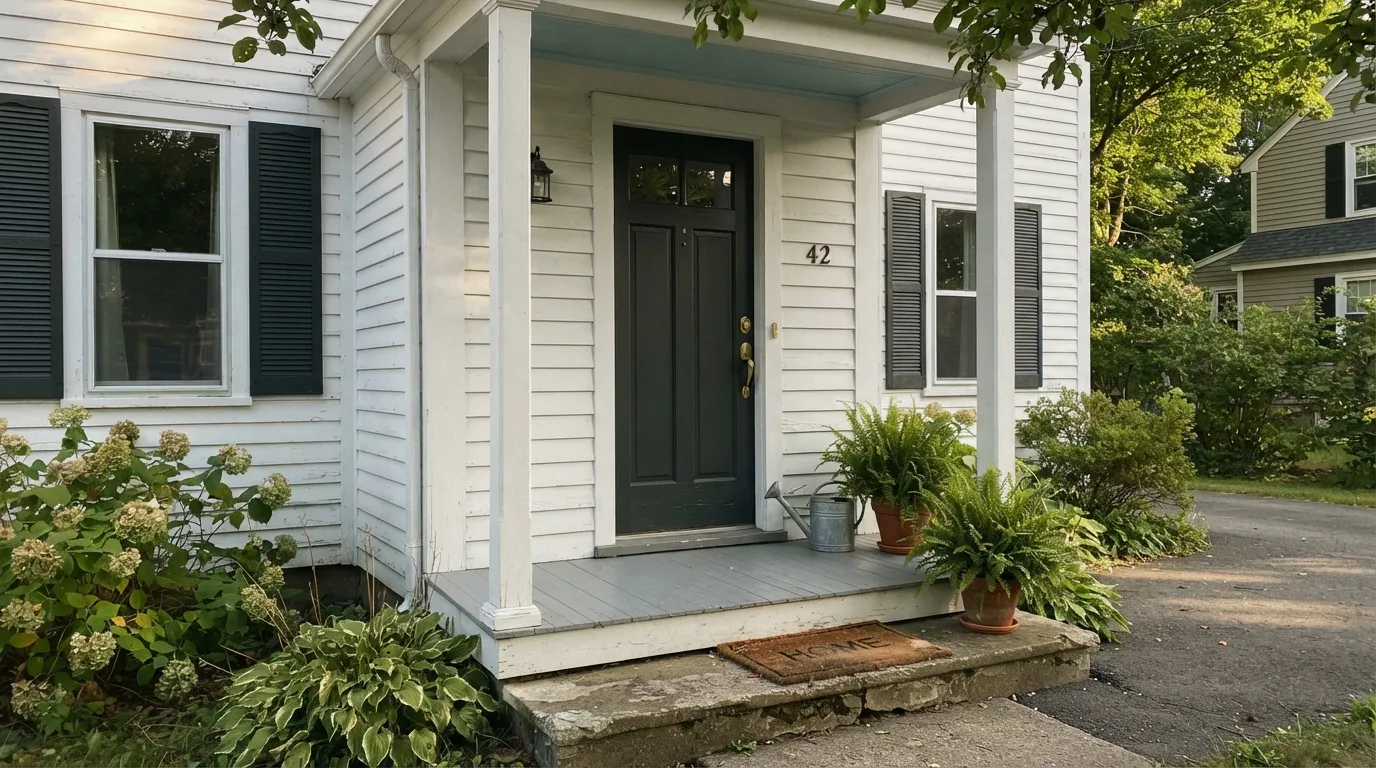
Sunlight is where they stop being the same color. Tricorn Black gives back almost nothing, so it stays black at noon, on a south door, in July. Wrought Iron gives back enough that direct sun reads it as a deep charcoal gray, often with a cool cast picked up from the sky. That single behavior is both the number one complaint about Wrought Iron and the number one reason people choose it. If you want depth and softness on a front door, it is a feature. If you wanted a door that photographs black, it is a problem.
The other place they separate is next to metal. Black-framed windows, matte black handles, black gutters, black appliances: put Wrought Iron beside any of them and it looks slightly washed out, like the paint faded a year early. Tricorn matches that hardware and holds its own. Wall to wall in a small dim room, both are risky in the same way. There is nothing left to bounce, corners go solid, and the room reads unfinished rather than moody. And both punish the same things: wavy drywall, matte sheens, and touch-ups, which flash a different sheen almost every time.
Neither of these goes purple or green in a normal room, so undertone flash is not the risk here. The pair-specific risk is Wrought Iron reading charcoal gray instead of black in direct midday sun, and looking dusty and faded beside true-black windows or hardware.
What Each Color Really Is
A black with no story. Most "blacks" in a fan deck are really very dark something — a very dark brown, a very dark navy, a very dark green-gray — and they show it the moment sunlight lands on them. Tricorn Black carries almost no color pigment steering it anywhere, so it does not perform in the light. That sounds boring until you have lived with a black door that turns eggplant at 5 p.m. Choosing a color with no undertone is a real design decision, not a lack of one: it means the black stays the frame and lets your siding, counter, or wood do the talking.
At LRV 3 it is about as dark as mixed house paint gets. The useful comparison is Iron Ore (SW 7069) at LRV 6 — on paper a small gap, in a room a big one. Iron Ore reflects roughly twice as much light and reads as charcoal in daylight, softening on siding and on a full wall. Tricorn Black does not soften. It holds the same depth at noon and at dusk, which is the whole point on trim and doors and the whole problem on four walls of a dark room.
A near-black that is almost, but not quite, neutral. At only 4 percent saturation there is no real color in it — just a faint green-gray cast that keeps it off the hard, factory-black end of the scale. This is why people argue about it online: some see green, some are certain it goes navy, and both camps are describing the same paint. A color this close to neutral has almost nothing of its own to show, so it borrows from whatever is around it. Warm brick and brass pull the green forward. Cool gray stone, a blue sky reflecting off a glossy door, or a photo taken in open shade all push it toward blue.
LRV 8 sounds like black, and indoors it behaves like black. Outdoors it does not. A true black such as Sherwin-Williams Tricorn Black sits at LRV 3 and stays black in full sun; Wrought Iron has twice as much light to give back, and midday sun collects it. That is the gap that surprises people: on the paint chip and in the hallway it is black, and on a south-facing door at noon it is clearly dark charcoal gray. Against Benjamin Moore Onyx (2133-10) or Black (2132-10) indoors you can just see it lighten and soften.
Specs Side by Side
| Spec | Tricorn Black | Wrought Iron |
|---|---|---|
| Brand | Sherwin-Williams | Benjamin Moore |
| SKU | SW 6258 | 2124-10 |
| Hex | #2F2F30 | #494A4B |
| RGB | 47, 47, 48 | 73, 74, 75 |
| LRV | 3 | 8 |
| Undertone | true neutral | true neutral |
| Family | Black | Gray |
How Light Changes Them
Cool even light makes it look its most velvety and matte. Beautiful on doors, heavy on four walls.
Strong sun lifts the sheen and reveals brush marks and roller texture. Spray or lay off carefully.
Warm 2700K bulbs keep it inky and soft. Away from a lamp it flattens into a solid shape with no depth.
Reads slightly lifted and chalkier over the years, and the surface runs hot. Satin and a quality exterior line matter here.
Cool even light keeps it deepest and most solid. Indoors this is where it reads truest black.
Strong sun lifts LRV 8 into charcoal. Beautiful, but it is no longer black.
2700K bulbs bring back the soft green-gray. Cool 4000K LEDs flatten it to hard, dull black.
The one to sample outdoors, at noon, on the actual door. This is where buyers get surprised.
Both Colors in Real Rooms
Photos from our full reviews — the same rooms and captions, so you can judge each color where it actually lives, not on a chip.
When to Pick Which
Choose Tricorn Black if you need the color to stay black in every light. It is the right call for a front door in full sun that you want reading black at noon, for any house with black-framed windows or matte black hardware to match, and for anyone who wants zero color drift. Pick it when the black is meant to be graphic, not atmospheric.
Choose Wrought Iron if hard black feels harsh to you. It is the better front door on a white or light-sided house where you want depth rather than a cut-out, the better island in a warm kitchen, and the better small cocoon room. Pick it if the rest of your house is already on the Benjamin Moore deck.
No comparison page can see your light. Upload one photo of your room and try both colors on the same walls, seconds apart.
Tricorn Black vs Wrought Iron FAQ
Can I paint a whole north-facing room in either of these?
You can, but go in with your eyes open. In cool north light Wrought Iron loses the green-gray softness that makes it interesting and the walls go flat and featureless. Tricorn does the same thing harder. If the room is small and has one north window, step lighter to Kendall Charcoal HC-166 or Chelsea Gray HC-168, which keep shadow and shape.
Which one is better for a kitchen island or cabinets?
Wrought Iron is the more forgiving island because the slight softness keeps the base from looking like a black hole under pendant lights. Tricorn is better if your appliances and hardware are true black and you want everything to line up. Whichever you use, specify satin, not matte, or you will be wiping fingerprints off it every day.
Which is safer on a front door in full sun?
Wrought Iron holds up better visually, since it was never trying to be dead black, but it will read charcoal at midday. Tricorn stays black and looks sharper, with one real caution: black absorbs almost all the solar energy hitting it, and on a wood door in full south or west sun that heat can blister, crack or warp the slab. Many wood door warranties exclude dark colors for exactly this reason, so use fiberglass or steel if the entry is unshaded.
What trim white goes with each?
Both are happy with almost any white, which is part of their appeal. Tricorn Black pairs cleanly with Pure White SW 7005 or Extra White SW 7006 for a crisp graphic edge. Wrought Iron sits more naturally with White Dove OC-17 or Chantilly Lace OC-65, depending on whether you want the contrast soft or sharp.
Which one is easier to touch up later?
Neither is easy, and that is worth knowing before you commit. Dark paint shows every sheen difference, so spot touch-ups almost always leave a visible patch and the real fix is recoating the full door or panel. Wrought Iron's slight gray hides dust film a little better between cleanings. Keep the leftover can, note the sheen, and plan to redo whole surfaces rather than dabbing.
Ask a Question