Sherwin-Williams Iron OrevsBenjamin Moore Wrought Iron
Why this comparison: The two most-specified soft blacks in America, one from each brand. Iron Ore and Wrought Iron are very close (ΔE 3.06). The difference shows up most in side-by-side comparison and under specific light.

Built from our full reviews of both colors — same measured data, same real-room photos. About the testing process →
The Numbers
LRV is essentially equal (6 vs 8) — both reflect light the same.
What Each Color Really Is
It is a near-black charcoal that is only barely a color at all. Saturation sits at 7 percent — a hair away from pure gray — with the hue at 210 degrees, which is the blue part of the wheel. That means you will almost never look at an Iron Ore wall and think "blue." What you notice instead is what is missing: there is no brown in it. Put it beside a warm charcoal and Iron Ore looks scrubbed clean and a little steely. This is also why people argue about it online — one person swears theirs went green, the next swears theirs went navy. Both are right. A color this close to neutral has almost nothing of its own to show, so it borrows from whatever is bouncing into it: a lawn pushes it green, a bright sky pushes it navy, a warm bulb pushes it soft and inky.
LRV 6 means it reflects about six percent of the light that hits it and absorbs the rest. The useful comparison is Tricorn Black (SW 6258) at LRV 3. Three points sounds like nothing; on a wall it is the whole difference. Tricorn is a flat hole in the room — light goes in and nothing comes back. Iron Ore keeps just enough reflectance that in a sunbeam or under a picture light you can still see it is charcoal, with the edges of trim and panel molding readable instead of dissolved. It is black with dimension left in it, which is exactly why it beat every other black on cabinets and facades.
A near-black that is almost, but not quite, neutral. At only 4 percent saturation there is no real color in it — just a faint green-gray cast that keeps it off the hard, factory-black end of the scale. This is why people argue about it online: some see green, some are certain it goes navy, and both camps are describing the same paint. A color this close to neutral has almost nothing of its own to show, so it borrows from whatever is around it. Warm brick and brass pull the green forward. Cool gray stone, a blue sky reflecting off a glossy door, or a photo taken in open shade all push it toward blue.
LRV 8 sounds like black, and indoors it behaves like black. Outdoors it does not. A true black such as Sherwin-Williams Tricorn Black sits at LRV 3 and stays black in full sun; Wrought Iron has twice as much light to give back, and midday sun collects it. That is the gap that surprises people: on the paint chip and in the hallway it is black, and on a south-facing door at noon it is clearly dark charcoal gray. Against Benjamin Moore Onyx (2133-10) or Black (2132-10) indoors you can just see it lighten and soften.
Specs Side by Side
| Spec | Iron Ore | Wrought Iron |
|---|---|---|
| Brand | Sherwin-Williams | Benjamin Moore |
| SKU | SW 7069 | 2124-10 |
| Hex | #434341 | #494A4B |
| RGB | 67, 67, 65 | 73, 74, 75 |
| LRV | 6 | 8 |
| Undertone | true neutral | true neutral |
| Family | Black | Gray |
How Light Changes Them
Cool weak light kills the charcoal and it reads flat black. Fine on cabinets, heavy on walls.
Strong light lifts it to a real dark charcoal — this is where you see it as a color, not a void.
2700K bulbs soften it into an inky soft black. It genuinely looks better at night.
Sky and lawn bounce straight into it. Expect the shaded side and the sunny side to disagree.
Cool even light keeps it deepest and most solid. Indoors this is where it reads truest black.
Strong sun lifts LRV 8 into charcoal. Beautiful, but it is no longer black.
2700K bulbs bring back the soft green-gray. Cool 4000K LEDs flatten it to hard, dull black.
The one to sample outdoors, at noon, on the actual door. This is where buyers get surprised.
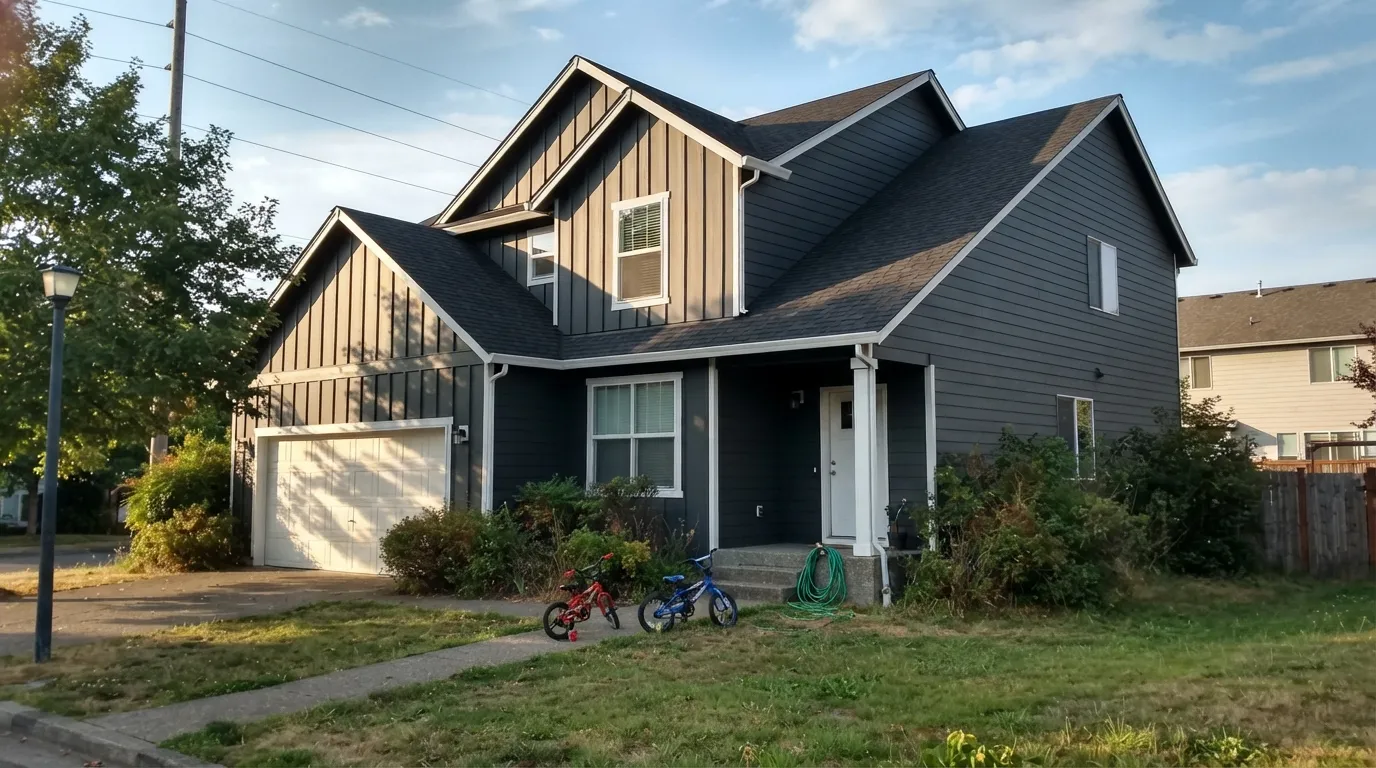
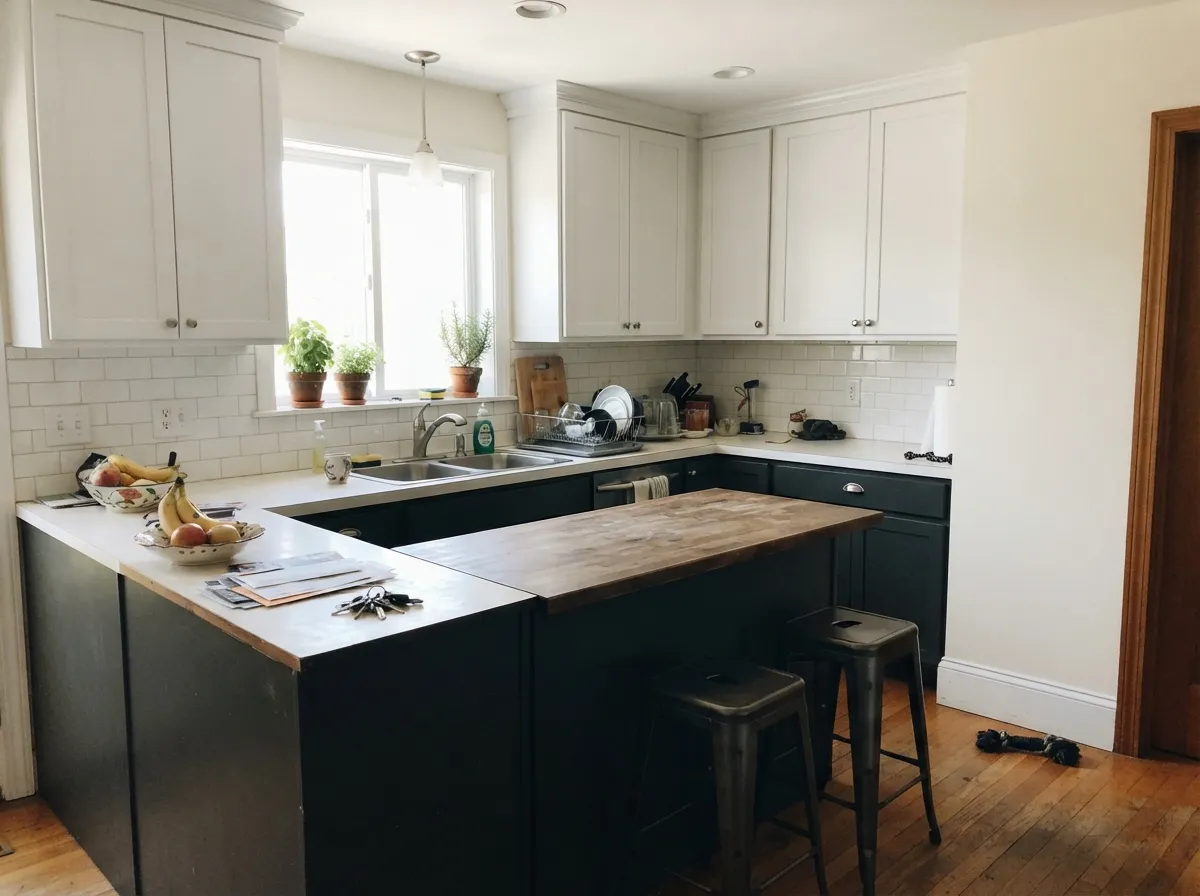
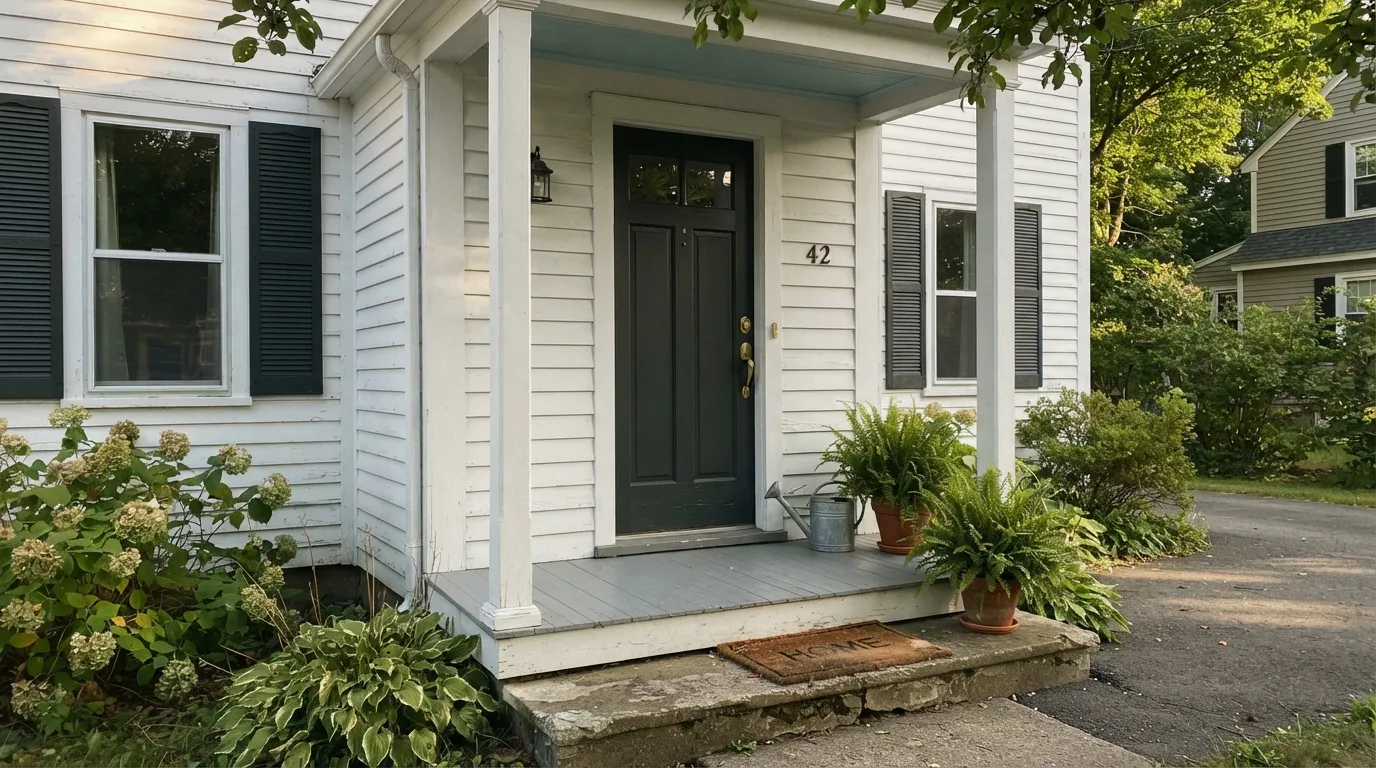
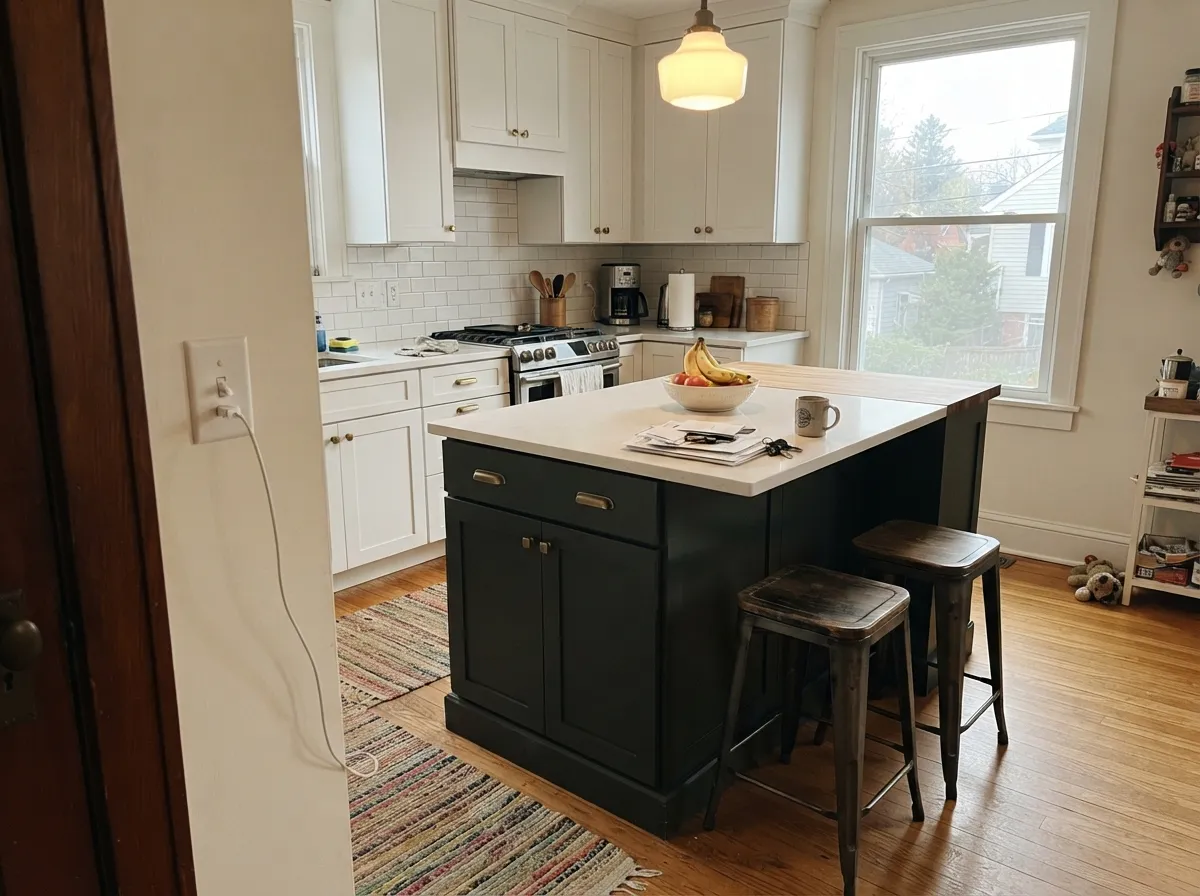
Both Colors in Real Rooms
Photos from our full reviews — the same rooms and captions, so you can judge each color where it actually lives, not on a chip.
When to Pick Which
Whole exteriors, siding and shutters · front doors against light siding · kitchen islands, cabinets and built-ins · a study, library or powder room you want to feel enveloping
The room is small, dim and north-facing · your windows, gutters or roof are already true black · you are painting vinyl siding · you actually want a warm, cozy dark
Front doors and shutters against white or light siding · Kitchen islands and built-ins that need a dark base · Interior doors and millwork under light walls · Small cocoon rooms — study, den, powder room
You want hard, true black · The room is dim and faces north · Your windows and hardware are already true black · You need wall paint you can touch up invisibly
No comparison page can see your light. Upload one photo of your room and try both colors on the same walls, seconds apart.
Iron Ore vs Wrought Iron FAQ
Which is lighter, Iron Ore or Wrought Iron?
They are practically the same lightness — LRV 6 vs 8. Neither will make the room brighter than the other.
Which is warmer, Iron Ore or Wrought Iron?
They share the same undertone family — both read true neutral. The difference between them is lightness and depth, not temperature.
How similar are Iron Ore and Wrought Iron?
Iron Ore and Wrought Iron are very close (ΔE 3.06). The difference shows up most in side-by-side comparison and under specific light. The only reliable test is seeing both in your own room and light — a side-by-side on a screen or chip flattens the difference.
Can I use Iron Ore and Wrought Iron together in one house?
Not in the same room, and be careful in the same house. At ΔE 3.06 they are so close that two walls in each will read as a tinting mistake, not a design choice. Pick one, or keep them on different floors where they are never seen together.
Ask a Question