Product review · Rust-Oleum · Updated August 7, 2026
TarmacoatRust-Oleum paint review
8.0/10Next-morning vehicle traffic on exterior paving. Nothing slower competes, and nothing about it belongs in a garage.
Touch dry in 30 minutes, walkable in 1 hour, light vehicle traffic in 24. On a lot you cannot close for a week, that timeline is the whole specification — as long as the asset is not a garage.

Robert Vega · Commercial Coatings Editor · Updated August 7, 2026
Robert spent twelve years in facility engineering specifying coatings for school districts, light industrial sites, and municipal water assets before moving to editorial. Car park and playground recoats scheduled around a single weekend closure were a standing line item on his budgets. About the testing process →
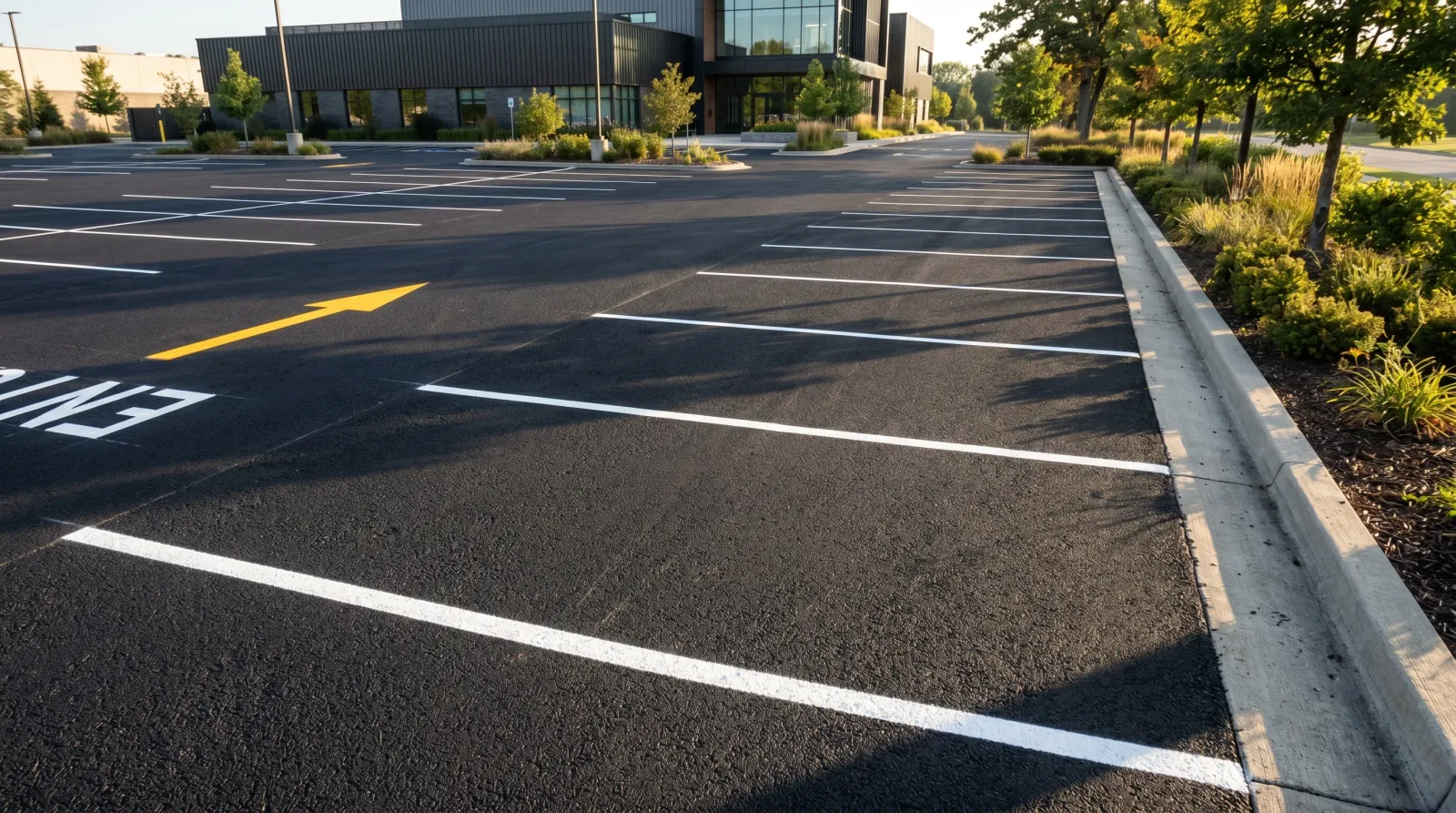
Rust-Oleum Tarmacoat1 sheen
Coverage4–8 m²/L depending on porosity
Recoat / walkable1 hr, rainproof at the same point
VOC40 g/L, water-based, low odor
Cure to serviceLight traffic 24 hr
Sheens Matte only
Read this first
The Fast Verdict
For exterior asphalt, tarmac, paving, or tired old concrete that has to take vehicles again the next day, yes. It is a single-pack waterborne acrylic at 40 g/L VOC, touch dry in 30 minutes, walkable and rainproof in 1 hour, and light traffic in 24, which nothing slower can match on a lot you cannot close for a week. It is not worth it for a garage slab, hot-tire pickup, or standing water — Rust-Oleum's own data sheet rules the garage out.
Best for
Exterior asphalt and tarmac · Car park bays and line marking · Tennis courts and playgrounds · Tired old exterior concrete · Assets that reopen the next day · RAL traffic colors
Skip if
Garage slabs and enclosed vehicle bays · Hot-tire pickup · Standing water · Below 10°C / 50°F, or rain or frost in the forecast · A US buyer who just wants a driveway refreshed
What it's good at
- Cure to service — touch dry 30 minutes, walkable at 1 hour, light traffic at 24, which nothing slower matches
- Single-pack simplicity: no mixing ratio, no induction wait, no pot-life clock on a mixed batch
- Low VOC at 40 g/L, workable around occupied buildings, playgrounds, and courts, with water cleanup
- Genuine self-priming on sound asphalt and old concrete, with no separate primer line item
- UV and weathering hold — Traffic White and Traffic Yellow stay legible well into the second season
- Touching up without lap marks, with a matte finish that hides repairs at distance
What it's not good at
- Garage floors and enclosed vehicle bays — the data sheet rules them out
- Hot-tire pickup and power-steering scuff, which show as black marks and lifting within a season
- Standing water, which it cannot go under at all
- Cold and wet application: nothing below 10°C / 50°F, and no rain or frost in the forecast
- High-traffic entrance lanes and turning radii, which need a scheduled maintenance recoat
- US availability — 5-liter EU cans with no domestic shelf under this name
Same shelf, different cans
Which Floor Coating Are You Actually After?
Floor coating covers a lot of ground and Rust-Oleum sells across the whole range. Tarmacoat is the exterior asphalt and paving member of that family. If your asset is different, the right product is different.
Tarmacoat (this review)
BaseSingle-pack waterborne acrylic, 40 g/L VOC
SheensMatte only (10–12% gloss at 60 degrees)
Recoat1 hr; light traffic 24 hr, heavy 48 hr
Buy it if
The asset is exterior asphalt, tarmac, paving, or old concrete and it has to take vehicles again the next day.
Avoid if
The floor is enclosed, sees hot tires, or holds standing water.
Rust-Oleum EpoxyShield (garage)
BaseTwo-part epoxy system
Buy it if
The asset is an enclosed garage slab that needs hot-tire resistance.
Avoid if
You need next-day service — a two-pack takes prep and a longer cure.
Rust-Oleum EpoxyShield Blacktop Coating
BaseWater-based asphalt emulsion driveway sealer
Buy it if
You are a US homeowner refreshing residential blacktop off a big-box shelf.
Avoid if
You need crisp RAL traffic colors or court lines — this is a sealer, not a marking paint.
CombiColor or a two-pack industrial floor system
BaseAlkyd enamel or two-component floor coating
Buy it if
The asset is metal, or a high-wear industrial floor.
Avoid if
The job is open exterior paving where speed to service is the driver.
Numbers, not adjectives
Spec Sheet
- Coverage
- 4–8 m²/L depending on porosity; roughly 160–325 sq ft per US-gallon equivalent
- Sheen
- Matte only (10–12% gloss at 60 degrees)
- Touch dry
- 30 min
- Recoat / walkable
- 1 hr, rainproof at the same point
- Cure to service
- Light traffic 24 hr; occasional heavy traffic 48 hr
- VOC
- 40 g/L, water-based, low odor
- Primer
- Self-priming; one-pack primer and topcoat on sound surfaces
- Application
- Square brush or roller; thin the first coat about 20% on porous asphalt
- Conditions
- Above 10°C / 50°F, with no rain or frost in the forecast
- Surfaces
- Asphalt, tarmac, bitumen, old concrete, paving, car park bays, courts, playgrounds
- Sizes
- 5-liter cans in RAL traffic colors, EU/UK distribution
- Price
- About $75–110 per 5-liter can landed in the US
Application Settings That Work
- Brush
- Square brush or roller. No induction step and no pot life, so a crew can open the can, stir, and start. The 1-hour recoat keeps the crew moving instead of standing around waiting between coats.
- Thinning
- Water only. On very porous or rough asphalt, thin the first coat about 20 percent so it keys into the surface, then apply the second coat at full strength. On sound, tight-graded surfaces one full-strength coat does the work.
- Primer
- Self-priming — it is its own one-pack primer and topcoat on sound, clean asphalt or old concrete. There is no separate primer line item to budget. Oily or contaminated substrates need degreasing first, not a primer.
Cure to Service
Cure to service is the number that justifies the specification, so separate it from dry time. Touch dry at 30 minutes. Rainproof and walkable at 1 hour, which is also the recoat point, so a crew can second-coat the same shift. Light traffic — a bicycle, a single car — at about 24 hours. Regular or occasional heavy traffic at 48. That is the schedule that lets a school lot, a municipal car park, or a court close Friday evening and reopen Monday morning, and no solvent line paint or two-pack floor system gives you next-morning vehicle traffic. What the schedule does not survive is the wrong conditions. Do not apply below 10°C (50°F) or with rain or frost in the forecast, and do not put it anywhere water sits constantly. In the northern US that closes the application window to a real season, so book the work inside it.
Mid-project panic
When It Goes Wrong, and How to Fix It
Black tire marks and lifting on a garage slab
Why it happens. It is not a garage-floor coating, and Rust-Oleum's data sheet says so in plain text. The film does not take hot-tire pickup or the twisting scuff a car puts down when it parks and turns the wheel at a standstill. Enclosed slabs also trap solvent and oil.
The fix. There is no rescue for a coated garage slab — strip it and re-coat with a two-part epoxy or polyaspartic system. That is the correct specification for an enclosed vehicle bay.
The first coat disappeared into the asphalt
Why it happens. Coverage runs 4 to 8 m²/L because asphalt porosity runs that wide. New tight-graded asphalt sits near the top of the range; old, open, weathered tarmac drinks the first coat and lands near the bottom.
The fix. On porous or rough asphalt, thin the first coat about 20 percent with water so it keys into the surface, then apply a full-strength second coat. Order material off the rough end of the range, not the optimistic end.
Wear showing in the entrance lane after one season
Why it happens. A single-pack acrylic wears. Entrance lanes and turning radii take the most abrasion on any lot, and a two-pack would hold longer there.
The fix. Budget a scheduled maintenance recoat of the worn zones rather than treating it as set-and-forget. The 1-hour recoat makes that cheap — a lane can be re-coated and back in service the same day.
The coating failed shortly after application
Why it happens. Applied outside the window. Below 10°C (50°F), or with rain or frost arriving before it is rainproof at the 1-hour mark, the film never forms properly. Oily or contaminated substrate does the same thing.
The fix. Apply above 10°C with a clear forecast, and degrease contaminated areas first — a primer will not fix contamination. Keep it off any surface that holds standing water at all.
Side by side
Tarmacoat vs EpoxyShield Blacktop Coating vs a Two-Pack Floor System
Three ways to deal with a paved surface. The asset type decides this, not the price: exterior paving, residential driveway, or enclosed vehicle bay.
| Tarmacoat | EpoxyShield Blacktop Coating | Two-pack epoxy or polyaspartic | |
|---|---|---|---|
| What it is | Single-pack waterborne acrylic coating and traffic marking paint. | Water-based asphalt emulsion driveway sealer. | Two-component floor system. |
| Cure to vehicle traffic | Light traffic 24 hr, heavy 48 hr. | Follow the product's own schedule for a residential drive. | Longer, with real surface prep before it. |
| Traffic colors and line marking | Yes — RAL traffic colors, bays, courts, playgrounds. | No. It is a black sealer, not a marking paint. | Depends on the system; not its purpose. |
| Hot-tire pickup | No. Rust-Oleum rules out garage floors outright. | Not a garage product either. | Yes. This is the correct system for enclosed bays. |
| VOC and odor | 40 g/L, low odor, workable around occupied buildings. | Water-based emulsion. | Higher, with mixing and pot-life handling. |
| US availability | No US shelf under this name; EU/UK distribution, 5-liter cans. | Big-box shelves across the US. | Widely available as kits. |
| Where it wins | Exterior paving that must reopen the next day, in traffic colors. | A US residential blacktop refresh with no import math. | Anything with hot tires or an enclosed slab. |
What it is
TarmacoatSingle-pack waterborne acrylic coating and traffic marking paint.
EpoxyShield Blacktop CoatingWater-based asphalt emulsion driveway sealer.
Two-pack epoxy or polyasparticTwo-component floor system.
Cure to vehicle traffic
TarmacoatLight traffic 24 hr, heavy 48 hr.
EpoxyShield Blacktop CoatingFollow the product's own schedule for a residential drive.
Two-pack epoxy or polyasparticLonger, with real surface prep before it.
Traffic colors and line marking
TarmacoatYes — RAL traffic colors, bays, courts, playgrounds.
EpoxyShield Blacktop CoatingNo. It is a black sealer, not a marking paint.
Two-pack epoxy or polyasparticDepends on the system; not its purpose.
Hot-tire pickup
TarmacoatNo. Rust-Oleum rules out garage floors outright.
EpoxyShield Blacktop CoatingNot a garage product either.
Two-pack epoxy or polyasparticYes. This is the correct system for enclosed bays.
VOC and odor
Tarmacoat40 g/L, low odor, workable around occupied buildings.
EpoxyShield Blacktop CoatingWater-based emulsion.
Two-pack epoxy or polyasparticHigher, with mixing and pot-life handling.
US availability
TarmacoatNo US shelf under this name; EU/UK distribution, 5-liter cans.
EpoxyShield Blacktop CoatingBig-box shelves across the US.
Two-pack epoxy or polyasparticWidely available as kits.
Where it wins
TarmacoatExterior paving that must reopen the next day, in traffic colors.
EpoxyShield Blacktop CoatingA US residential blacktop refresh with no import math.
Two-pack epoxy or polyasparticAnything with hot tires or an enclosed slab.
Specify Tarmacoat when the asset is exterior paving, you need traffic colors or line marking, and the area has to come back into service the next day — that is the case nothing slower can serve. For a US residential driveway, EpoxyShield Blacktop Coating gets you a refreshed black surface off a shelf without the shipping math, and it costs far less landed. For a garage slab, a turning lane, or anything with hot-tire pickup, the answer is a two-part epoxy or polyaspartic, full stop. That is the job people most often buy Tarmacoat for, and it is the one job it cannot do.
If not this one
Honest Alternatives
RO
Rust-Oleum EpoxyShield Blacktop CoatingBig-box shelf price, far below imported Tarmacoat
The US driveway counterpart. A water-based asphalt emulsion sealer that refreshes and protects residential blacktop. It is a sealer, not a traffic-marking paint, so no crisp RAL colors or court lines. The right call for a US homeowner who wants a black driveway refreshed before winter.
TP
Two-part epoxy or polyaspartic floor systemVaries by system
For an enclosed garage, a turning lane, or anywhere with hot-tire pickup, step up to a two-component system. It costs more in material and labor and demands real surface prep and a longer cure, but it survives the abuse Tarmacoat is not rated for.
SW
Sherwin-Williams Setfast or Rust-Oleum 2300 traffic paintVaries by supplier
If the job is pure line striping on a high-traffic lot to a DOT-type spec, a dedicated waterborne traffic paint is the tighter fit. Apply 12 to 15 mils wet, expect 5 to 7 mils dry, and recoat at roughly 12-month intervals on busy lots. Built for striping throughput, not area color coating.
Questions people actually ask
Tarmacoat Questions, Answered
Is Rust-Oleum Tarmacoat worth it?
For exterior asphalt, tarmac, paving, or tired old concrete that has to take vehicles again the next day, yes. It is a single-pack waterborne acrylic at 40 g/L VOC, touch dry in 30 minutes, walkable and rainproof in 1 hour, and light traffic in 24, which nothing slower can match on a lot you cannot close for a week. It is not worth it for a garage slab, hot-tire pickup, or standing water, and Rust-Oleum's own data sheet rules the garage out.
Can I use Tarmacoat on my garage floor?
No. Rust-Oleum explicitly says not to apply Tarmacoat on garage floors. The film does not hold up to hot-tire pickup, power-steering scuff, or trapped solvent and oil. For an attached garage slab, use a two-part epoxy or polyaspartic system. Tarmacoat is built for open exterior asphalt and paving, not enclosed vehicle bays.
Does Tarmacoat need a primer?
Not on sound, clean asphalt or old concrete. It is self-priming and works as a one-pack primer and topcoat. On very porous or rough asphalt, thin the first coat about 20 percent with water so it keys into the surface, then apply a full-strength second coat. Oily or contaminated substrates need degreasing first, not a primer.
How soon can cars drive on it?
Light traffic such as a bicycle or a single car at about 24 hours. For regular or occasional heavy traffic, hold off 48 hours. It is touch dry in 30 minutes and rainproof and walkable in 1 hour, but cure to service is the number that matters before you open a lot or driveway to vehicles.
Is Tarmacoat sold in the United States?
Not under the Tarmacoat name. It is a Rust-Oleum EU/UK product sold in 5-liter RAL-color cans through European distributors. US buyers either import it or pick a domestic equivalent. For a US driveway, Rust-Oleum EpoxyShield Blacktop Coating is the easiest counterpart on the shelf at most big-box stores.
How much area does a 5-liter can cover?
Four to 8 m² per liter, which is roughly 160 to 325 sq ft per US-gallon equivalent, one coat. The spread is wide because asphalt porosity is wide. New tight-graded asphalt sits near the top; old weathered tarmac drinks the first coat. Plan material off the rough end of the range or you will run short on the back half of a lot.
What temperature can I apply it at?
Above 10°C, which is 50°F, with no rain or frost in the forecast. It is rainproof at the 1-hour mark, so you need at least that much clear weather after application. In the northern US that limits the season, so schedule the work rather than assuming a window will appear.
How often will it need recoating?
Depends entirely on the zone. Open bays and low-traffic paving hold well with strong UV resistance. Busy entrance lanes and turning radii wear faster than a two-pack would and need a scheduled maintenance recoat of those areas. The 1-hour recoat makes that cheap, but it is planned maintenance, not an option.
Can I use it for line marking?
Yes, that is one of its intended jobs. It is sold in RAL traffic colors, and Traffic White and Traffic Yellow stay legible well into the second season. For pure high-volume striping to a DOT-type spec, a dedicated waterborne traffic paint applied at 12 to 15 mils wet is the tighter fit.
Keep exploring
Rust-Oleum brand guide and product reviewsBest concrete floor paint, testedDry time vs cure time, explained
We may earn a commission when you buy through the retailer link above. It never changes the score or the verdict.
Ask a Question