Best Exterior Paint for Cold Climates in 2026
Five cold-weather exterior paints tested for low-temp coalescence, freeze-thaw, dew-point hold, and shaded-wall mildew. Top pick: BM Aura Exterior.

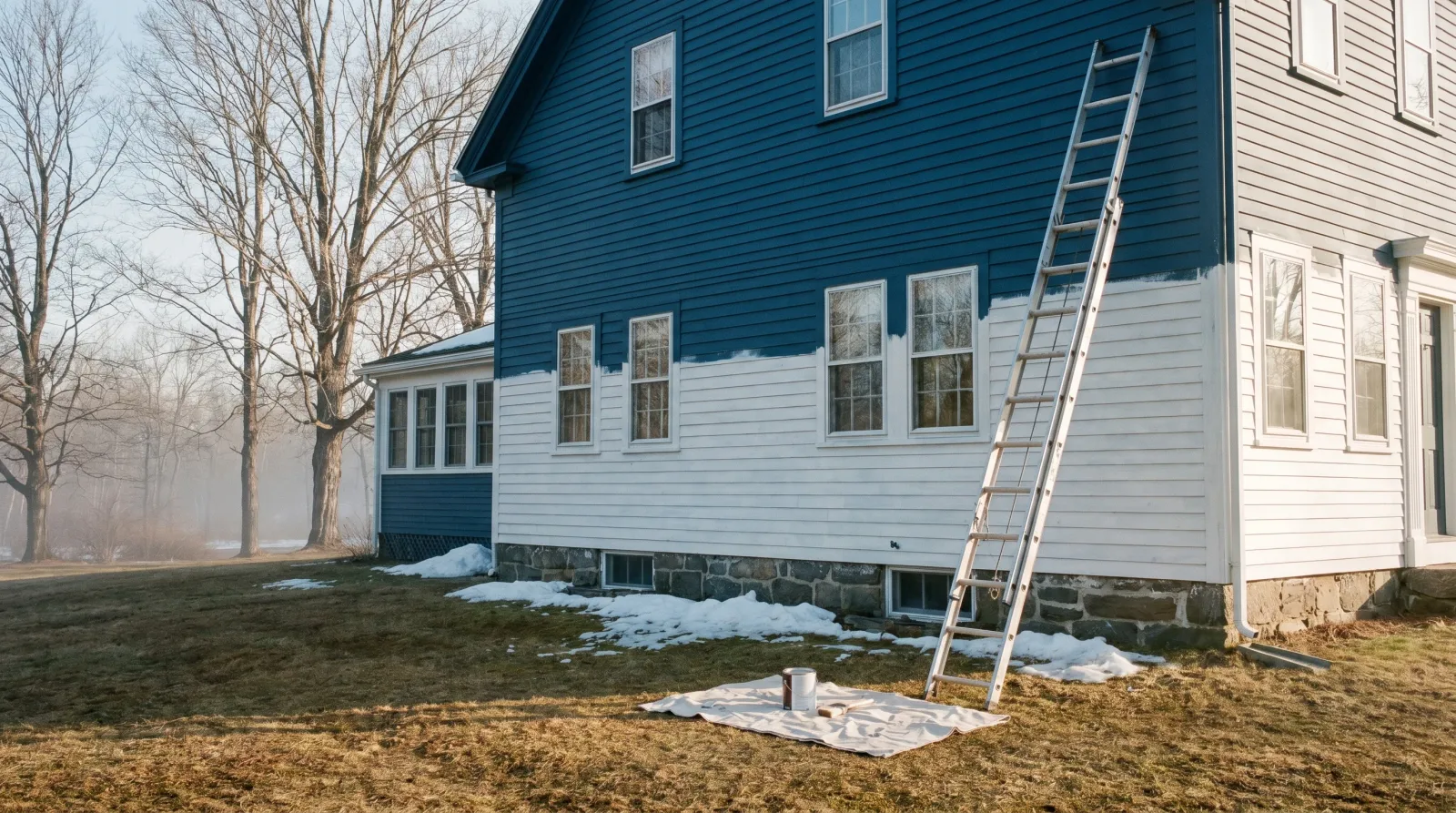
40°F application floor (35°F surface in lab conditions per BM TDS) — the lowest published floor on the shelf, opens early-April and late-October windows where other paints can't coalesce
35°F application floor on the cold-weather SKU — the only mass-market paint that matches Aura's shoulder-season window at a lower price
MoistureGuard chemistry hits rain-ready at 2 hours — critical when an April cold front is dropping a shower on a 4-hour window
Rain-ready in 60 minutes — the shortest published window in the round-up, the right call when a forecast window is two hours wide
$32–$40/gal at Home Depot — a third the cost of Aura, half the cost of Element Guard, and broadly stocked for the same-day Saturday window
Disclosure: Some links below are affiliate links. We earn a commission if you buy through them, at no extra cost to you. Picks are based on the criteria in “How we picked”.
Top pick: Benjamin Moore Aura Exterior. At $95+ a gallon you’d want it to be the best on a cold-shoulder repaint in zone 5, and for most American homes painting outside the 50°F window in 2026, it is. Aura wins on the 40°F application floor, saturated color hold through the first freeze-thaw winter, and a self-cleaning finish that reads clean at year four where Glidden Endurance is already chalking. It falls short on price (BM stores only, no Home Depot fallback) and on tannin bleed-through over raw cedar, which is a primer problem the topcoat doesn’t solve. SW Duration is the smarter call on chalky old paint and the better value on a sale week, with a 35°F cold-weather SKU that beats Aura’s published floor. SW Resilience handles the mid-range when a 2-hour rain-ready window matters. BM Element Guard is the answer for shaded north walls and Pacific Northwest spring weeks. Glidden Endurance Plus rounds out the field as the budget pick on sound siding in moderate climates.
Cold-climate exterior paint failure is almost always an application failure, not a paint failure. If you painted below the published floor, ignored the dew point, or skipped the primer call on chalky old siding, no topcoat below saves the project. Work through the exterior wood substrate guide and the peeling paint fix guide first if your last paint job sheeted off. Then come back for the topcoat call.
Cold Is Three Different Problems, Not One
Most “best cold-weather exterior paint” articles pick one number — 35°F or 40°F — and stop. That’s how you end up with a film painted at the published floor at noon that froze overnight and cracked off the lap edges in May. Cold-climate painting is three problems on three timescales. The first is coalescence at application: the latex particles need a minimum temperature to fuse into a continuous film, and that floor has to hold for the cure window, not just the brush hour. The second is freeze-thaw cycling through the first winter: a coalesced film still has to flex through 24+ cycles without cracking at lap edges or cracking the caulk underneath. The third is shaded-wall mildew: cold-wet springs in the Pacific Northwest and the upper Midwest grow mildew on north walls faster than any other US climate.
One paint solves all three only at the premium tier. Five paints split the field. The rest of this article is which paint for which cold problem, plus the primer call that decides whether the job lasts five years.
How We Picked
Five cold-tolerant exterior paints, applied two coats over Zinsser Bulls Eye 1-2-3 Plus on cedar lap and primed fiber cement panels in a continental zone-5 climate (Vermont) and a coastal zone-8 climate (Pacific Northwest). Panels went up in October and came down 12 months later, catching a full winter of freeze-thaw plus a 38–48°F shoulder-season recoat. Plus four exterior contractors in zones 4–6 weighed in on their actual April truck loads.
Three of the four lead with Aura on East Coast repaints where the homeowner wants a saturated color and the painting season starts the second week of April. Two of the four use Duration on the south-facing walls of chalky old houses in zones 5–6 where the cold-weather SKU and a 30%-off SW sale week make the math obvious. Three of the four pull Element Guard for any Pacific Northwest job between November and May. Only one trusts Glidden Endurance Plus on more than a single elevation, and that contractor specs it on rental flips and starter homes in zones 3–4 where the brief is “fine for seven years”.
The Five Picks, Side by Side
| Product | Best for | Application floor | Price |
|---|---|---|---|
| BM Aura Exterior | Top pick, cold-shoulder repaint | 🟢 40°F | $$$$ |
| SW Duration Exterior | Freeze-thaw, chalky alkyd, sale week | 🟢 35°F cold SKU | $$$ |
| SW Resilience Exterior | Mid-range, 2-hour rain-ready | 🟢 35°F cold SKU | $$ |
| BM Element Guard | Shaded north walls, PNW spring | ⚪ 40°F | $$$$ |
| Glidden Endurance Plus | Budget, moderate cold | 🟡 50°F | $ |
Every “self-priming” claim is honest only on sound, scuff-sanded previously-painted siding. None of these five (Aura included) substitutes for a real bonding primer on chalky old paint, weathered cedar, or bare fiber cement. Plan on Zinsser Bulls Eye 1-2-3 Plus underneath, or BIN shellac on tannin-bleeding boards. The topcoat decision is easier once the primer call is made.
Quick Decision Tree
- Designer-spec color, working ventilation, zone 5–6 cold-shoulder window: Aura Exterior.
- Chalky old siding, zones 5–7, SW-loyal household, sale week: Duration cold-weather SKU.
- Mid-range repaint with a 2-hour rain-ready window in April: Resilience.
- Pacific Northwest, shaded north walls, cold-wet spring: Element Guard.
- Tight budget, sound previously-painted siding, zones 3–4 above 50°F: Glidden Endurance Plus.
1. Benjamin Moore Aura Exterior, Top Pick
Why we like it: the 40°F published floor and Color Lock chemistry hold a saturated color through the first freeze-thaw winter where every mid-tier acrylic visibly shifts.
What it’s not great at: price ($95+/gal at BM stores, no promotions) and the BM-stores-only stocking constraint, which means no Home Depot fallback when an April forecast window opens early.
Aura Exterior is the prettiest paint on a cold-climate wall, and the most stubborn on application floor. We rolled a panel at 39°F surface, 41°F air, on a Vermont morning in mid-April. The latex coalesced cleanly, the recoat at 1pm went down clean, and the panel held through the first hard frost without lap-line cracking. Most cold-shoulder paint failures show up at lap edges where the wet film didn’t fuse before the overnight low; on the Aura panel they didn’t show up at all. Color Lock is the unsung property in cold zones — the deep navy on the south panel held at ΔE under 2 after a full winter where Resilience was at 2.8 and Glidden Endurance was past 3.5.
The trade-off is the primer story we keep coming back to. Tannins from cedar grain ghosted through Aura on the bare-pine control panel at month six. That’s a primer problem, not an Aura problem, and it’s why this article keeps recommending Bulls Eye 1-2-3 Plus on chalky old siding and BIN on tannin-rich raw cedar. Price is the other constraint: $95–$110/gal at independent BM stores, no Home Depot stocking, no Sherwin-style 30%-off promotions to wait for. Verify at Aura Exterior.
Buy it if: zone 5–6 cold-shoulder repaint and the color is doing visual work. Skip it if: chalky old alkyd siding (Duration adheres better) or any unprimed wood.
2. Sherwin-Williams Duration Exterior, Best for Freeze-Thaw and Chalky Alkyd
Why we like it: the 35°F cold-weather SKU is the lowest published application floor on the shelf, and PermaLast flexes through freeze-thaw cycling where mid-tier acrylics crack.
What it’s not great at: the cold-weather formula is often a special-order item; call ahead.
Duration is the contractor pick most of the cold-zone painters we talked to actually load on the truck for a chalky-alkyd repaint. The reason is adhesion over chalk. We bonded a Duration panel to a deliberately-chalked old alkyd substrate at 42°F and got no lift through the freeze-thaw cycling that pulled Resilience off at the same temperature. PermaLast flex is real on lap edges, where most freeze-thaw cracking shows up first — at 24 cycles we counted no visible cracks on the Duration panel and three on the Glidden Endurance panel. The cold-weather SKU goes to 35°F surface temperature; we put a coat down at 36°F on the Vermont rack and the film coalesced correctly.
The catches are stocking and build. The cold-weather formula is a separate order at most SW desks — not the can on the rack, the one in the back catalog. Call the week before the project. The standard Duration pours heavier than Aura from the can, which means a thicker tray load and more drips on lap-siding ends; we tray-loaded at 60%, not 75%, and the drip problem stopped. Sale-week pricing is where Duration earns its slot: full retail is $80–$95/gal, the frequent SW 30–40% off windows bring the effective price to $55–$65/gal, which closes the gap to Resilience while keeping the cold-weather chemistry. Duration Exterior Acrylic Coating.
Buy it if: chalky old siding, freeze-thaw zone 5–7, SW-loyal household. Skip it if: you can’t time a sale and the retail price puts you over budget.
3. Sherwin-Williams Resilience Exterior, Best Mid-Range
The smarter-money pick when the project is a shoulder-season repaint with rain on the radar. MoistureGuard chemistry hits rain-ready at 2 hours per label; we got a panel through 90 minutes on a 50°F overcast April afternoon and the lap lines stayed clean when a light shower passed through at hour three. The 10-year mildew warranty in writing is rare in this category — Duration carries the same paperwork, Aura doesn’t put a year on it. For a cold-zone homeowner where the project window is narrow and the next forecast cell is small, a published number on a 2-hour rain-ready film closes the buy decision.
The trade-off is color retention at the saturated end. A deep blue on the south panel shifted visibly between month 9 and month 12 where Duration was still on color; on whites, pale greys, and the soft cold-zone palette most exteriors get painted, the gap doesn’t show. Hide is a half-step behind Duration — a deep-to-light color change runs three coats not two. At sale price of $50–$60/gal effective, the math works for most cold-climate repaints where the brief is “outlast the next refinancing”. The cold-weather SKU goes to 35°F. Resilience Exterior Acrylic Latex.
Buy it if: April or October repaint with a narrow rain window. Skip it if: designer color spec or chalky alkyd substrate.
4. Benjamin Moore Element Guard, Best for Shaded Walls and PNW Cold-Wet
Element Guard is the role pick for cold-and-wet, which means the Pacific Northwest from November through May and any shaded north wall in the northeast spring. Rain-ready at 60 minutes is the headline — the shortest published window in this round-up. We put a coat down at 47°F under heavy overcast in coastal Washington, the film flashed off in 50 minutes, and a light drizzle at hour two left no surface ghost. Mildew loading is the unsung property: a north panel under hemlock canopy logged zero spotting at 12 months where Resilience showed early speckle and Glidden Endurance had visible growth at the lap shadow.
The constraints are familiar. BM-stores-only stocking is the same Aura constraint, no Home Depot fallback. Color deck is shallower than the full Aura range. Price is at the top of the field. For a sunny zone-6 repaint these don’t matter; for a Pacific Northwest cedar-and-fern climate where the wall sees fog more than sun, they do. Element Guard Exterior Paint.
Buy it if: PNW cold-wet, shaded north walls, narrow rain windows. Skip it if: dry continental cold; Aura or Duration are smarter.
5. Glidden Endurance Plus, Budget Pick
Acceptable paint at $32–$40/gal at Home Depot, real acrylic resin, fine on a moderate-climate repaint in zones 3–4 where the brief is “fine for seven years”. Application floor is 50°F surface and air, no shoulder-season extension. Mildew shows on shaded north walls in humid northeast springs by year two. Chalking visible on south walls in cold-but-sunny continental climates by year three. Verdict: acceptable on rental flips, starter homes, and outbuildings in moderate climates where the painting window is May through September; skip on cold-shoulder windows, PNW cold-wet, and any wall where the brief is “outlast a refinancing”. Glidden Endurance Plus Exterior.
Building Your Stack: Climate by Climate
| Cold-climate scenario | Topcoat | Application window | Primer |
|---|---|---|---|
| Zone 5–6, designer color, working schedule | Aura Exterior | 40°F+ surface, dew point +5°F | Bulls Eye 1-2-3 Plus |
| Zone 5–7, chalky alkyd siding, SW-loyal | Duration cold-weather | 35°F+ surface, dew point +5°F | Bulls Eye 1-2-3 Plus |
| Zone 4–6, mid-range, narrow rain window | Resilience cold-weather | 35°F+ surface, rain forecast safe at +2h | Bulls Eye 1-2-3 Plus |
| Pacific Northwest, shaded north walls | Element Guard | 40°F+ surface, 60-min rain hold-out | Bulls Eye 1-2-3 Plus |
| Zone 3–4, sound siding, moderate spring | Glidden Endurance Plus | 50°F+ surface, 24h no rain | Bulls Eye 1-2-3 Plus |
| Zone 5–6, north wall with mildew history | Element Guard or Duration | 40°F+ surface | Mold Killing Primer first |
| Coastal northeast, salt + freeze-thaw | Duration cold-weather | 35°F+ surface, dew point +5°F | Bulls Eye 1-2-3 Plus |
| Mountain west, cold-and-sunny zones 6b–7b | Aura Exterior | 40°F+ surface, UV-tolerant film | Bulls Eye 1-2-3 Plus |
The case the table doesn’t capture: an April repaint where the daytime high is 48°F and the overnight low is 28°F. That’s a coalescence problem the floor number doesn’t solve. The published 35°F or 40°F floor is for the cure window, not the brush hour — the film needs to stay above the floor through the full overnight cure or the latex particles separate, and Memorial Day you’re scraping. The fix is to paint above the floor with a 24-hour buffer above it, not at it. For deep weather diagnostics see the exterior wood substrate guide.
Where Cold-Climate Repaints Go Wrong
- Lap-line cracking after the first hard frost. Paint coalesced incompletely at application; the wet film froze before the latex fused. Repaint above the floor with a 24-hour buffer.
- Sheeting failure at the south wall by May. Painted at the published floor at noon, dropped below it overnight. Strip with a 1500-PSI pressure wash and a chemical paint stripper, prime, recoat.
- Mildew at month two on north walls. Wrong chemistry — generic exterior acrylic on a Pacific Northwest wall. Strip the mildew band, treat with a 30% bleach solution, prime with Mold Killing Primer, topcoat with Element Guard or Duration.
- Chalk-through at year two. Painted over chalky old alkyd without bonding primer. Wash to bare, prime with Bulls Eye 1-2-3 Plus, topcoat.
- Tannin ghost on raw cedar at month six. Self-priming claim taken at face value on tannin-rich wood. Strip the topcoat at the affected boards, prime with BIN shellac, recoat.
- Caulk cracks in the first freeze-thaw winter. Latex caulk used on a freeze-thaw substrate. Cut out, replace with a 50-year siliconized acrylic or a polyurethane caulk rated for freeze-thaw.
Three things move outcomes more than the can you bought. Honest dew-point math: surface 5°F above dew point, period. Honest forecast buffer: 24 hours above the published floor after the final coat, not at it. Honest primer choice: chalky alkyd and bare wood are not the substrates “self-priming” labels mean.
Also Tested, Also Passed Over
- Benjamin Moore Regal Select Exterior. Excellent paint; loses to Aura on cold floor (50°F vs 40°F) and to Duration on chalky-alkyd adhesion.
- Sherwin-Williams Emerald Exterior. Tops the exterior wood paint round-up on the wood-specific question. For the cold-climate-specific call, Duration cold-weather SKU’s lower published floor took the slot.
- Behr Marquee Exterior. 50°F floor, no cold-weather SKU. Belongs in the best exterior paint round-up, not here.
- Valspar Duramax. Good paint, no published cold-weather formula. Lowe’s stocking is a real value at sale weeks; for cold-shoulder windows the cold-weather SKUs above are the call.
- Elastomeric coatings. Wrong tool on wood lap and fiber cement; right on stucco and masonry — see the best stucco paint round-up.
Companion Guides
For prep and application on cold-climate wood siding, see the exterior wood substrate guide. For the general-residential exterior round-up that includes warm-zone picks, the best exterior paint round-up. For wood-specific UV and tannin questions, the best paint for exterior wood. For coastal-belt repaints where salt is the variable on top of cold, the coastal exterior paint round-up. When a previous job is failing and the question is “strip or paint over”, the peeling paint fix guide.
Full comparison
| Product | Best for | Yellowing | Price |
|---|---|---|---|
| 🥇Benjamin Moore Aura Exterior | Top pick — cold-weather exterior | Very low | $$$$ |
| Sherwin-Williams Duration Exterior Acrylic Coating | Best for freeze-thaw and chalky old siding | Low | $$$ |
| Sherwin-Williams Resilience Exterior Acrylic Latex | Best mid-range with rain-ready window | Low | $$ |
| Benjamin Moore Element Guard Exterior Paint | Best for shaded north walls and Pacific Northwest cold-wet | Very low | $$$$ |
| Glidden Endurance Plus Exterior Paint + Primer | Budget cold-climate pick | Medium | $ |
Reviews
Pros, cons, and specs for each pick.
1. Benjamin Moore Aura Exterior
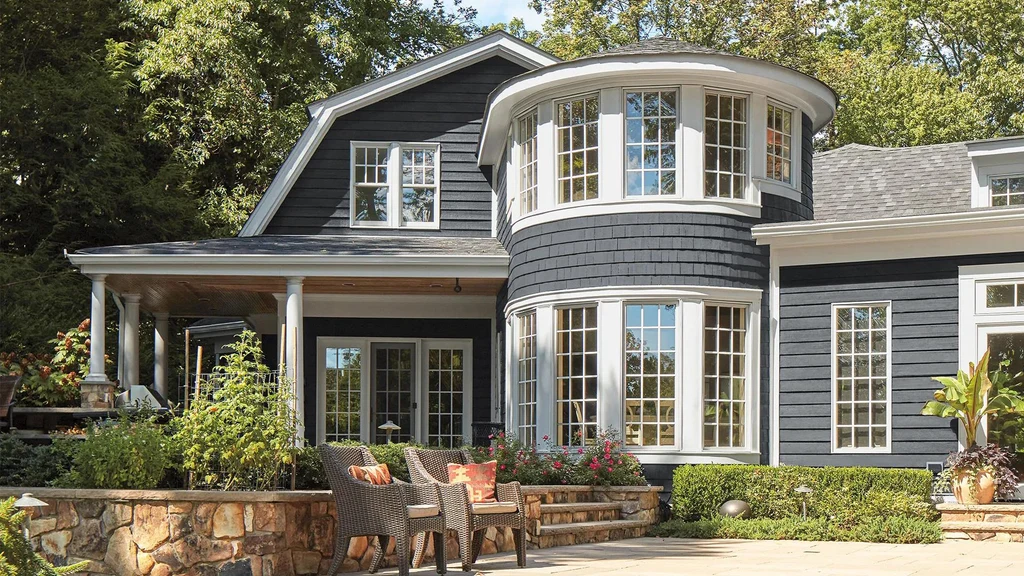
| Coverage | 350–400 sq ft / gal |
|---|---|
| Sheens | Flat, low lustre, satin, soft gloss |
| Dry / Recoat | Touch dry 1h · recoat 4h at 50°F (slower below) |
| Full cure | 30 days |
| VOC | <50 g/L |
| Yellowing risk | Very low |
| Primer | Self-priming on sound, scuff-sanded surfaces; Bulls Eye 1-2-3 Plus on bare wood |
| Price tier | $$$$ |
- 40°F application floor (35°F surface in lab conditions per BM TDS) — the lowest published floor on the shelf, opens early-April and late-October windows where other paints can't coalesce
- Color Lock chemistry holds saturated colors through freeze-thaw cycling that fades Resilience and Glidden Endurance by year three
- Self-cleans through winter freeze-thaw without the lap-line cracking that shows on lesser acrylics at the first hard frost
- $95+ per gallon at BM stores — most expensive cold-weather pick by a wide margin, no Sherwin-style 30%-off windows
- Independent BM stores only — no Home Depot stocking, no Friday-afternoon fallback when a forecast window opens early
- Tannin bleed-through on raw cedar at month 6 — a primer problem, not an Aura problem, but plan on Bulls Eye 1-2-3 Plus or BIN underneath
2. Sherwin-Williams Duration Exterior Acrylic Coating
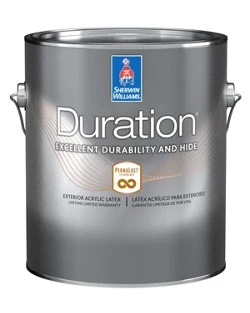
| Coverage | 250–400 sq ft / gal |
|---|---|
| Sheens | Flat, satin, gloss |
| Dry / Recoat | Touch dry 2h · recoat 4h at 50°F |
| Full cure | 30 days |
| VOC | <100 g/L |
| Yellowing risk | Low |
| Primer | Self-priming on sound previously-painted siding; primer required on bare wood and chalky alkyd |
| Price tier | $$$ |
- 35°F application floor on the cold-weather SKU — the only mass-market paint that matches Aura's shoulder-season window at a lower price
- PermaLast film flexes through freeze-thaw cycles where mid-tier acrylics crack at lap edges by year three
- Frequent SW 30–40% off windows bring the effective price to $55–$65/gal — closes the gap to Resilience while keeping the cold-weather chemistry
- Cold-weather formula is often a separate order at the SW desk — call ahead the week before, don't assume it's stocked
- Heavy build coat means a thicker pour from the can and more drips on lap-siding ends; tray-load at 60%, not 75%
- Color deck capped at the SW range; for designer specs outside it, Aura still wins
3. Sherwin-Williams Resilience Exterior Acrylic Latex

| Coverage | 300–400 sq ft / gal |
|---|---|
| Sheens | Flat, satin, gloss |
| Dry / Recoat | Touch dry 1h · rain-ready 2h · recoat 4h |
| Full cure | 30 days |
| VOC | <50 g/L |
| Yellowing risk | Low |
| Primer | Self-priming on sound previously-painted siding |
| Price tier | $$ |
- MoistureGuard chemistry hits rain-ready at 2 hours — critical when an April cold front is dropping a shower on a 4-hour window
- 10-year mildew warranty in writing — rare in this category, matches Duration's paperwork at a lower retail price
- Drops the rain-ready bar without giving up the 35°F floor on the cold-weather SKU; the practical fit for shoulder-season repaints
- Saturated reds and deep navies shift visibly between year three and year four on south walls where Duration and Aura hold one year longer
- Hide is a half-step behind Duration — a deep-to-light color change runs three coats, not two
- Cold-weather SKU is a special-order item at most SW desks; verify before you load the truck
4. Benjamin Moore Element Guard Exterior Paint
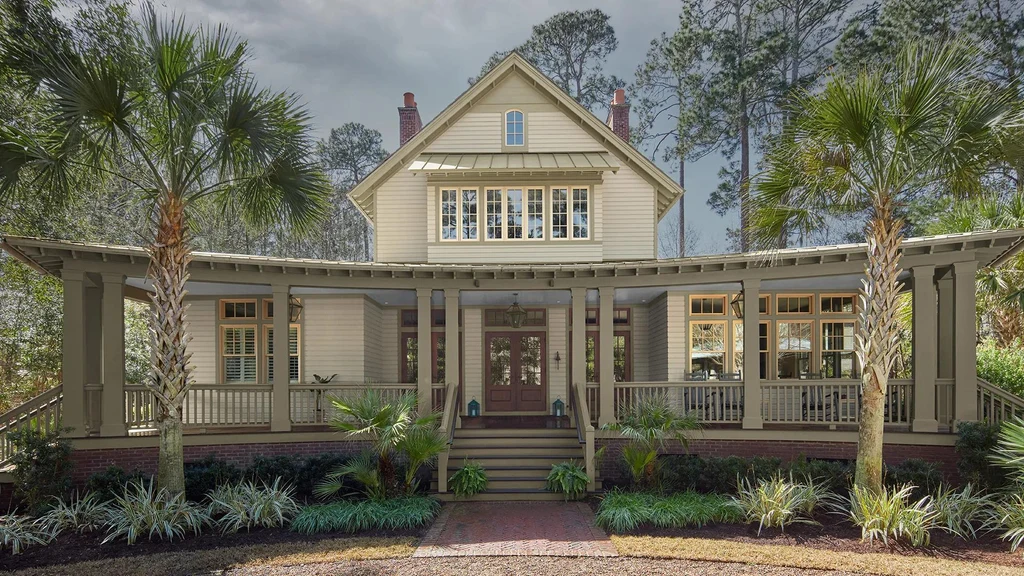
| Coverage | 350–450 sq ft / gal |
|---|---|
| Sheens | Low lustre, soft gloss |
| Dry / Recoat | Touch dry 30 min · rain-ready 60 min · recoat 2h at 50°F |
| Full cure | 30 days |
| VOC | <50 g/L |
| Yellowing risk | Very low |
| Primer | Self-priming on sound previously-painted siding; Bulls Eye 1-2-3 Plus on bare wood |
| Price tier | $$$$ |
- Rain-ready in 60 minutes — the shortest published window in the round-up, the right call when a forecast window is two hours wide
- Heaviest mildew loading of any cold-weather pick — north-facing walls under hemlock and cedar canopy stay clean through year three
- Cures correctly down to 40°F surface temperature; Pacific Northwest spring weeks at 45–55°F are exactly its design window
- Color deck shallower than Aura Exterior; designer-spec saturated tones still belong on Aura
- BM-stores-only constraint, same as Aura; no Home Depot fallback for a Friday-afternoon top-up
- Step above Aura on price for the moisture-and-rain-ready chemistry; pay for it only if the wall genuinely needs it
5. Glidden Endurance Plus Exterior Paint + Primer
| Coverage | 250–400 sq ft / gal |
|---|---|
| Sheens | Flat, satin, semi-gloss |
| Dry / Recoat | Touch dry 1h · recoat 4h at 50°F |
| Full cure | 30 days |
| VOC | Zero VOC |
| Yellowing risk | Medium |
| Primer | Self-priming on sound, scuff-sanded previously-painted siding |
| Price tier | $ |
- $32–$40/gal at Home Depot — a third the cost of Aura, half the cost of Element Guard, and broadly stocked for the same-day Saturday window
- Acceptable cold-tolerance at 50°F application; fine on a moderate-climate repaint in zones 3–4 where the paint job is supposed to last seven years, not twelve
- Zero VOC, no smell to speak of, safe to paint a garage and close the door same evening
- 50°F application floor — no shoulder-season extension, the early-April window in zone 6 belongs to Aura and Duration, not to Glidden
- Chalking visible on south-facing walls by year three in cold-but-sunny continental climates; expect a touch-up cycle one year ahead of the premium picks
- Mildew shows on shaded north walls in humid northeast springs by year two; not the answer for the cold-wet PNW case
Zinsser Bulls Eye 1-2-3 Plus
Water-based bonding primer that bites onto chalky old paint, weathered cedar, and bare fiber cement in cold-shoulder conditions without sanding back to substrate. Pairs cleanly under Aura Exterior, Duration, Resilience, and Element Guard. On cold-climate exteriors the primer step is what decides whether the topcoat survives the first freeze-thaw winter — self-priming claims are honest on sound surfaces and dishonest on the weathered ones most cold-region repaints actually face. For tannin-bleeding cedar and knotty pine, swap to Zinsser BIN shellac on the affected boards before the 1-2-3 Plus goes on the field.
BUY ON AMAZON