Product review · Rust-Oleum · Updated August 7, 2026
7200 System FloorCoat PURust-Oleum paint review
7.2/10A genuinely tough one-can PU floor paint carrying a name that promises epoxy chemistry it does not have.
The most useful sentence in this review is a correction: the 7200 is a single-pack polyurethane floor paint, not the two-pack epoxy the name implies. Judged as what it is, it earns its keep.

Robert Vega · Commercial Coatings Editor · Updated August 7, 2026
Robert spent twelve years in facility engineering specifying coatings for school districts, light industrial sites, and municipal water assets before moving to editorial. He writes the pieces that have to survive a procurement meeting. About the testing process →
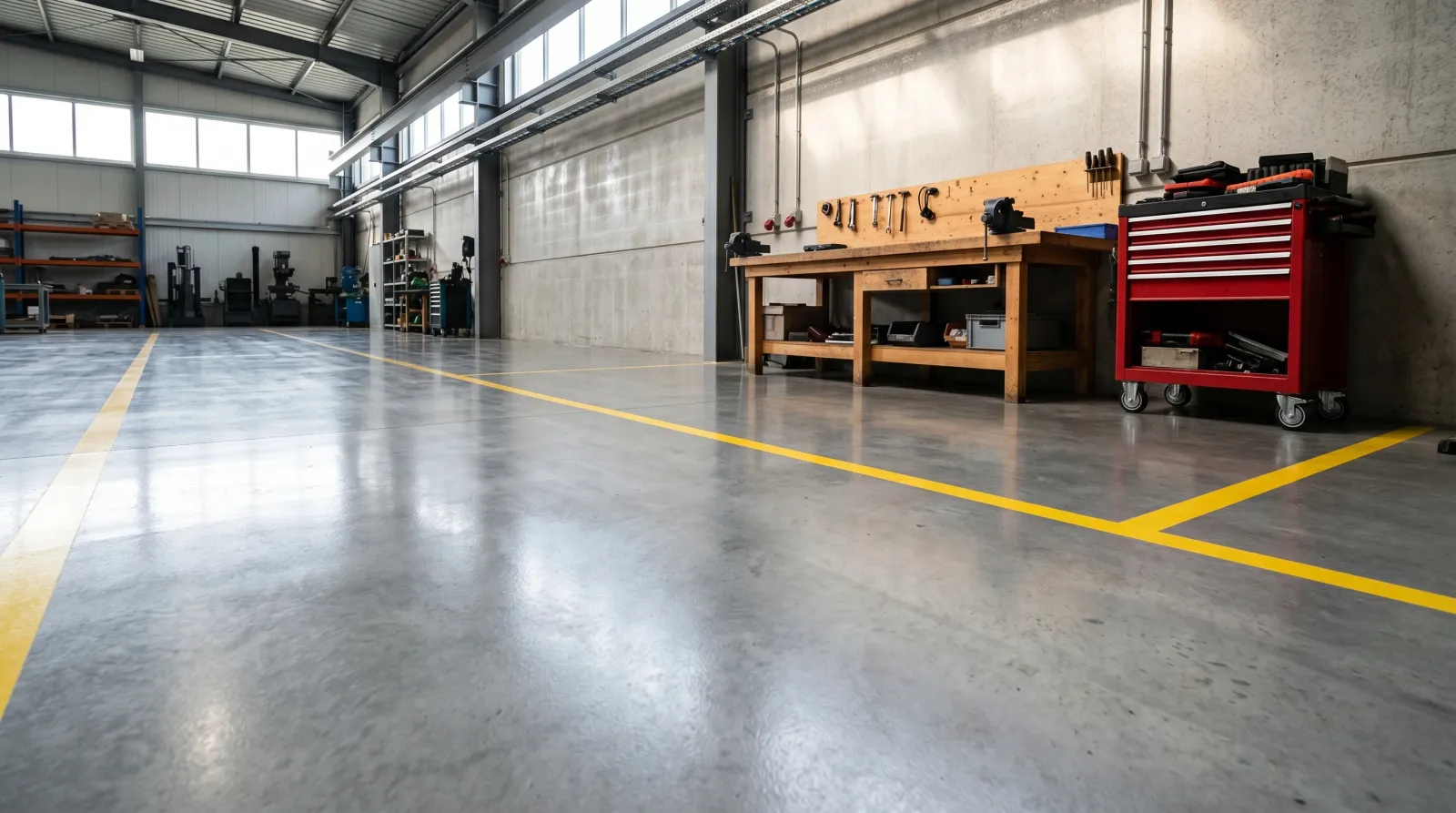
Rust-Oleum 7200 System FloorCoat PU3 sheens
CoverageAbout 9 sq m per liter
Recoat24 hours
Sheens Glosssatinsmooth or anti-slip
Read this first
The Fast Verdict
Specify it for interior or covered concrete carrying foot traffic, hand carts, and light wheeled loads. One can, no ratio to measure, no pot life running against you, and a 24-hour recoat that closes a two-coat floor over a weekend. It is the wrong product if the spec sheet says epoxy, if vehicles park on the slab, if the floor sees fuels or wash-down chemicals, if low-VOC is required at 450 g/L, or if you are a US buyer who wants a gallon off the shelf this weekend.
Best for
Warehouses and workshops · Storerooms and plant rooms · Line marking · Foot traffic and hand carts · Floors you can ventilate during application · Jobs that need a next-day recoat
Skip if
The spec calls for epoxy · Vehicles park on the slab · Fuels, solvents, or wash-down chemicals · Occupied spaces during application · Low-VOC requirements · US buyers who need retail availability
What it's good at
- Abrasion resistance on foot-traffic floors — boots, pallet jacks, and dropped tools mark it slower than a plain alkyd
- One-can simplicity with no resin-to-hardener ratio and no pot life running against you
- A 24-hour recoat that closes a two-coat floor over a weekend on an occupied facility
- Substrate flexibility across concrete, wood, masonry, and pre-painted floors, inside or out
- Finish flexibility — gloss or satin, smooth or anti-slip, plus line-marking duty
- Tinting to a deep color deck, so one product covers most of a facility floor map
What it's not good at
- Being the epoxy the name implies — it is single-pack and will not meet an epoxy spec
- Chemical exposure; it handles neutral detergents and incidental spills, not fuels, hot solvents, or wash-down chemicals
- Film build, since a single-pack coating does not lay down the mils of a 100% solids epoxy in one pass
- VOC compliance at 450 g/L, with a strong odor and a real ventilation requirement
- Vehicle floors, where the PU film softens at hot tire contact patches
- US availability — metric tins through industrial distributors, not a big-box shelf
Same shelf, different cans
Which Rust-Oleum Floor Product Are You Actually After?
Several Rust-Oleum floor coatings get cross-shopped under the same search, and the chemistry behind the names is not the same. This review covers the single-pack 7200 FloorCoat PU. If your floor is a different job, one of the siblings is the correct SKU.
7200 FloorCoat PU (this review)
Base1-pack solvent-based, polyurethane-fortified
SheensGloss and satin; smooth or anti-slip
Recoat24 hours
Buy it if
Foot-traffic and light-cart concrete floors, line marking, and a job that does not justify a two-pack mix.
Avoid if
The spec calls for epoxy, vehicles park on the slab, or the space cannot be ventilated.
Rust-Oleum 6500 / 6700 System
Base2-pack 100% solids epoxy
Buy it if
High-traffic industrial floors and real chemical exposure, where the build and resistance justify a mixed system.
Avoid if
You want a one-can product with no pot life discipline.
Rust-Oleum 9100 System
Base2-pack high-build epoxy mastic
Buy it if
Steel and concrete in severe environments where the spec demands high build.
Avoid if
The asset is an ordinary workshop slab. This is more system than the job needs.
EpoxyShield Garage Floor Kit
Base2-pack water-based epoxy, US retail
Buy it if
You are a homeowner coating a garage slab and want a product on the shelf in gallon-equivalent format.
Avoid if
The floor is an industrial asset needing a specified DFT and a datasheet on file.
7200 Anti-Slip variant
BaseSame 1-pack PU with aggregate added
SheensSlip-rated textured finish
Buy it if
Ramps, wet-process floors, and walkways where a smooth gloss floor is a safety problem.
Avoid if
The floor gets wet-mopped often. The aggregate makes cleaning harder.
Numbers, not adjectives
Spec Sheet
- Chemistry
- Single-pack, solvent-based, polyurethane-fortified
- Coverage
- About 9 sq m per liter, roughly 350–365 sq ft per gallon at spec thickness
- Sheens
- Gloss and satin; smooth or anti-slip
- Touch dry
- About 4 hours
- Recoat
- 24 hours
- Return to service
- Light foot traffic in about 24 to 48 hours; full cure over several days
- VOC
- 450 g/L; no GREENGUARD or CARB low-VOC certification
- Primer
- Self-priming seal coat on sound concrete; metal needs a compatible Rust-Oleum primer
- Surfaces
- Concrete, wood, masonry, and pre-painted floors, interior and exterior
- Application
- Brush, roller, or air-atomized spray
- Sizes
- 2.5-liter and 5-liter tins; no US quart or gallon SKU
- Price
- About $80–110 per 5-liter tin through industrial distributors
Application Settings That Work
- Brush
- Brush, roller, or air-atomized spray all work. On bare concrete, lay a slightly thinned first coat as a seal coat to get penetration, then follow with a full-build coat at 24 hours. There is no pot life, so a single applicator can work a large floor at their own pace and stop for the day without wasting material.
- Thinning
- Thin the first coat slightly to make it a penetrating seal coat on bare concrete. The build coat goes on unthinned. Follow the datasheet that ships with your batch for the thinner and the ratio, because formulations shift by region and revision.
- Primer
- Self-priming on clean, sound, dry concrete via the thinned seal coat. Metal substrates, previously failing paint, and burnished power-troweled slabs all need work first: a compatible Rust-Oleum primer on metal, mechanical profiling on a slab that will not take penetration. Skip the prep and it peels in sheets.
Dry Times in the Real World
Touch dry runs about 4 hours and recoat is 24 hours at room temperature, which is the scheduling advantage on an occupied facility — a two-coat floor closes over a weekend instead of a week. Light foot traffic returns in roughly 24 to 48 hours and full cure takes several days beyond that. Cold or damp conditions stretch every one of those figures, and a solvent-based coating slows down sharply below about 50F. Do not coat an unheated slab in winter and expect next-day traffic. Plan the shutdown around the 24-hour recoat, not around the 4-hour touch dry.
Mid-project panic
When It Goes Wrong, and How to Fix It
The coating peels off in sheets
Why it happens. Prep. Bare concrete has to be clean, dry, and free of curing compounds and laitance. A power-troweled slab burnished smooth will not let the coating penetrate, and neither will old failing paint.
The fix. Mechanically profile the slab — a light grind or acid etch — before the first coat. On metal, on failing paint, or on any burnished surface, prime with a compatible Rust-Oleum primer first. Then lay a thinned seal coat and follow with a full-build coat.
The film blows off in disks
Why it happens. Moisture vapor emission from below. A slab pushing water up through the film lifts it in circles, and this is a hydrostatic problem, not a coating problem.
The fix. Test the slab before you coat. If it reads wet, fix the source or specify a moisture-tolerant system. No topcoat schedule and no extra coat solves a moisture drive from underneath.
Lifting at the tire contact patches
Why it happens. A single-pack PU film softens under sustained hot tire contact more than a 100% solids two-pack epoxy. On a slab where cars park daily off a hot road, the coating gives up at the patches over time. This is a chemistry limit, not a prep failure.
The fix. There is no application trick that fixes it. Specify a two-pack epoxy or a polyaspartic for any floor that parks vehicles, and keep the 7200 on foot-traffic and light-cart floors where it performs.
Coverage falls short of the 9 sq m per liter figure
Why it happens. That rate is the manufacturer's theoretical number. A porous broom-finished slab drinks the first coat into the surface and practical coverage drops well below it.
The fix. Budget a thinned seal coat plus one full-build coat, and order 20 to 30 percent over the theoretical figure for a first job on bare concrete. Convert the metric rate before you order, since the tins are 2.5 and 5 liters.
Side by side
7200 FloorCoat PU vs a 2-Pack Epoxy vs EpoxyShield
The whole buying decision here is chemistry against duty. One of these is a one-can paint, one is a specified industrial system, and one is a retail kit. Cross-shopping them on the word epoxy is what causes the returns.
| 7200 FloorCoat PU | Rust-Oleum 6500 / 9100 System | EpoxyShield Garage Kit | |
|---|---|---|---|
| Chemistry | Single-pack solvent PU, cures by evaporation and oxidation | Two-pack epoxy, cures by resin and hardener reaction | Two-pack water-based epoxy |
| Mixing and pot life | None. Open, stir, coat | Strict mix ratio and pot-life discipline | Bucket mix, roughly two-hour pot life |
| Film build | Modest for a coating called high-build | High build, the reason the spec calls for it | Thin consumer build |
| Chemical resistance | Neutral detergents and incidental spills only | Real resistance to fuels, solvents, and wash-down | Good against garage fluids once cured |
| Vehicle traffic | Not a first choice; softens at hot tire patches | Handles it | Handles it after a 3-day cure, within its film limits |
| VOC | 450 g/L, ventilation required | Varies by system; check the datasheet | About 53 g/L, water-based |
| Sizes and channel | 2.5 L and 5 L tins, industrial distributors | Industrial distributors | Retail kits at big-box stores |
| Recoat | 24 hours | Per system datasheet | Single coat, no recoat step in the standard kit |
Chemistry
7200 FloorCoat PUSingle-pack solvent PU, cures by evaporation and oxidation
Rust-Oleum 6500 / 9100 SystemTwo-pack epoxy, cures by resin and hardener reaction
EpoxyShield Garage KitTwo-pack water-based epoxy
Mixing and pot life
7200 FloorCoat PUNone. Open, stir, coat
Rust-Oleum 6500 / 9100 SystemStrict mix ratio and pot-life discipline
EpoxyShield Garage KitBucket mix, roughly two-hour pot life
Film build
7200 FloorCoat PUModest for a coating called high-build
Rust-Oleum 6500 / 9100 SystemHigh build, the reason the spec calls for it
EpoxyShield Garage KitThin consumer build
Chemical resistance
7200 FloorCoat PUNeutral detergents and incidental spills only
Rust-Oleum 6500 / 9100 SystemReal resistance to fuels, solvents, and wash-down
EpoxyShield Garage KitGood against garage fluids once cured
Vehicle traffic
7200 FloorCoat PUNot a first choice; softens at hot tire patches
Rust-Oleum 6500 / 9100 SystemHandles it
EpoxyShield Garage KitHandles it after a 3-day cure, within its film limits
VOC
7200 FloorCoat PU450 g/L, ventilation required
Rust-Oleum 6500 / 9100 SystemVaries by system; check the datasheet
EpoxyShield Garage KitAbout 53 g/L, water-based
Sizes and channel
7200 FloorCoat PU2.5 L and 5 L tins, industrial distributors
Rust-Oleum 6500 / 9100 SystemIndustrial distributors
EpoxyShield Garage KitRetail kits at big-box stores
Recoat
7200 FloorCoat PU24 hours
Rust-Oleum 6500 / 9100 SystemPer system datasheet
EpoxyShield Garage KitSingle coat, no recoat step in the standard kit
If the spec sheet says epoxy, buy the 6500 or 9100 and accept the mix discipline — nothing about the 7200 meets that requirement, whatever the catalog files it under. If you are a US homeowner coating a garage, EpoxyShield is the closer match, it is a genuine two-component epoxy, and it is on a shelf near you. The 7200 wins on the floor in between: an interior or covered slab carrying feet and hand carts, where one can, no pot life, and a 24-hour recoat are worth more than chemical resistance you will never call on.
If not this one
Honest Alternatives
RO
Rust-Oleum EpoxyShield Garage Floor Kit$85–130 / kit
A water-based two-pack epoxy sold at US retail, lower VOC, and far easier to source than a metric tin. It is a genuine two-component epoxy where the 7200 is not, which makes it the better honest answer for a home garage. Trade-off: a running pot life and a fussier mix.
RO
Rust-Oleum 6500 / 9100 System 2-Pack EpoxyQuoted through industrial distributors
When the floor actually justifies epoxy chemistry, step up to a 100% solids two-pack from the industrial line. Higher build, real chemical and impact resistance, and the service life a heavy-traffic or chemically loaded slab needs. It demands strict mix and pot-life discipline.
RO
Rust-Oleum 7200 Anti-Slip variantSame tier as the smooth version
The same base coating with aggregate added, for ramps, wet-process areas, and walkways that need a slip-rated surface. Specify it where a smooth gloss floor would be a safety problem. The aggregate makes cleaning harder, so use it only where slip resistance is the priority.
Questions people actually ask
7200 System FloorCoat PU Questions, Answered
Is the Rust-Oleum 7200 actually an epoxy?
No. Despite the FloorCoat name being filed under epoxy in some catalogs, the 7200 is a single-pack, solvent-based polyurethane-fortified floor coating. It does not mix from two components and it does not build the film thickness or chemical resistance of a two-pack epoxy like the 6500 or 9100 System. If a spec calls for epoxy, this product does not meet it.
Is the Rust-Oleum 7200 FloorCoat worth it?
It is worth it for an interior or covered concrete floor carrying foot traffic, hand carts, and light wheeled loads, where the one-can format and the 24-hour recoat are real advantages. It is not worth it if the spec says epoxy, if vehicles park on the slab, if you need a low-VOC product, or if you are a US buyer who wants a gallon off the shelf.
Does the 7200 need a primer?
On clean, sound, dry concrete the first coat self-primes; you thin it slightly as a seal coat and follow with a full-build coat. On metal, on previously failing paint, or on power-troweled slabs that will not take penetration, you need a compatible primer first. Skip the prep and it peels in sheets, same as any floor coating.
Can I use the 7200 on a garage floor with hot tire pickup?
Not as a first choice. A single-pack PU softens under hot tire contact more than a 100% solids two-pack epoxy. For a home garage that parks daily-driven cars, a two-pack epoxy or a polyaspartic resists hot tire pickup better. The 7200 suits foot-traffic and light-cart floors more than parked vehicles.
How long before I can walk on it?
Touch dry runs about 4 hours and recoat is 24 hours at room temperature. Light foot traffic returns in roughly 24 to 48 hours, and full cure takes several days. Cold or damp conditions stretch all of those. Solvent-based coatings slow down below about 50F, so do not coat an unheated slab in winter and expect next-day traffic.
Where do I buy the 7200 in the US?
It is mainly a European and UK industrial SKU sold in 2.5 and 5-liter tins through coatings distributors, not stocked at big-box stores. US buyers chasing the same job are usually better served by Rust-Oleum's domestic floor lines. Confirm availability and the current datasheet with a distributor before you spec it into a US project.
How much do I need for my floor?
The published rate is about 9 sq m per liter, roughly 350 to 365 sq ft per gallon at spec thickness, and that is a theoretical figure. A porous broom-finished slab drinks the first coat, so budget a thinned seal coat plus one full-build coat and order 20 to 30 percent over the theoretical number for a first job on bare concrete.
Can it be used outdoors?
Yes. Concrete, wood, masonry, and pre-painted floors are all listed, interior and exterior. The practical limits are the same ones that apply indoors: it is not a vehicle-parking coating, and it will not stand up to fuels or aggressive chemicals. Ventilation is easier outside, which helps with the 450 g/L solvent load.
Is there a low-VOC version?
Not in this product. At 450 g/L this is a heavy solvent load with a strong odor, and it will not pass on a job that specifies a low-VOC or certified product. If low VOC is a requirement, a water-based system is the direction to look, which is part of why the water-based garage kits exist.
Can I use it for line marking?
Yes, line marking is one of its listed duties, and it tints to a deep color deck. That flexibility is a genuine reason to keep one product on a facility floor map: the same coating handles the field, the walkway, and the markings, in gloss or satin, smooth or anti-slip.
Keep exploring
Rust-Oleum brand hub and full product reviewsBest concrete floor paint, testedWhy painted floors scratch and wear, and how to stop it
We may earn a commission when you buy through the retailer link above. It never changes the score or the verdict.
Ask a Question