Product review · Cabot · Updated August 7, 2026
Wood Toned Deck & Siding StainCabot paint review
7.6/10The cheapest honest way to seal bare cedar and keep the grain — as long as you accept an 18 to 24 month deck cycle.
A one-coat transparent oil that keeps bare cedar looking like bare cedar. It also grays out on a sunny deck inside two years, and the standard can runs 550 g/L VOC.

Mark Thompson · Pro Contractor & Field Editor · Updated August 7, 2026
22 years running residential and light commercial repaints across the Midwest, with a long side habit of decks, fences, and cedar siding. Mark has run this stain off the same gallon onto rough-sawn fence and smooth PT boards, and keeps the recoat dates on a calendar. About the testing process →
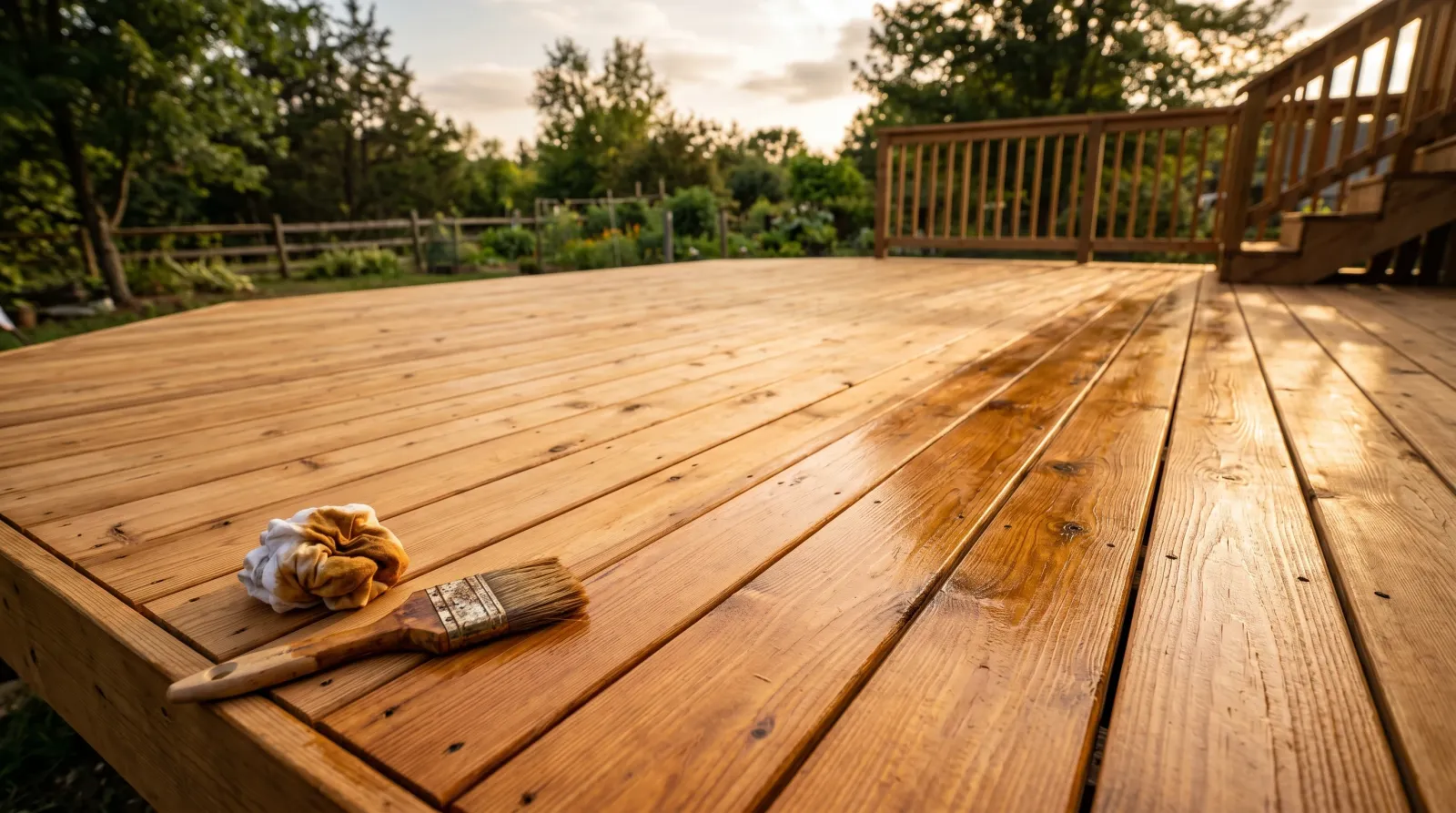
Cabot Wood Toned Deck & Siding Stain2 sheens
Coverage200–600 sq ft / gal
Dry / cureTouch dry several hours
VOC550 g/L standard
Dry / cureTouch dry several hours
Sheens Flattransparent opacity only
Read this first
The Fast Verdict
Buy it if you want bare cedar to still look like bare cedar and you will actually recoat every couple of years. One coat, no primer, $52 to $60 a gallon, and it beads water the same day on open-grain wood. There is no film, so nothing peels — it wears by fading and thinning. Skip it if you want color that lasts, because a transparent oil grays out on a sunny deck inside 18 to 24 months, and skip it if the 550 g/L smell is a problem.
Best for
Bare or freshly stripped cedar · Redwood and pressure-treated pine · Rough-sawn siding and fences · Cedar shakes and shingles · Homeowners who keep a recoat schedule · The natural-wood look with no sheen
Skip if
You want a set-and-forget deck · You are VOC-sensitive · The wood already has a film on it · The deck has gone gray and needs pigment · You want color to hold past two years
What it's good at
- Soaking into bare open-grain cedar and PT pine, and beading water the same day
- Covering the job in one coat with no primer and no second pass
- Keeping the wood reading as wood — the grain carries the look, not the finish
- Never peeling, because there is no film on top to let go
- Making the recoat honest: clean, dry, brush on more oil, no scraping
- Lasting three to four years on fences, siding, and shakes
- Staying cheap enough at $52 to $60 a gallon to actually keep the cycle
What it's not good at
- Holding color on a sunny deck — 18 to 24 months and it grays
- Low odor. At 550 g/L the smell carries indoors for a day on an attached deck
- Vertical work without drips, and horizontal work without lap marks if you stop mid-board
- Going over any film — a water-based stain, a solid, or paint
- Hiding a deck that has already aged gray
- Batch-to-batch consistency, by the account of longtime pros since the reformulations
Same shelf, different cans
Which Wood Toned Are You Buying?
The Wood Toned name covers more than one can, and grabbing the wrong one off the shelf is a common miss. This review is the standard oil. Where you live decides more of this than you think — in a VOC-restricted state the standard can will not be on the shelf at all.
Cabot Wood Toned Stain & Sealer (this review)
BaseOil-based penetrating stain and sealer, 550 g/L VOC
SheensTransparent, flat
RecoatOne coat only; keep dry 24 to 48 hours before rain
Buy it if
You can buy the standard can in your state. It is the easier of the two to work with and it soaks into open-grain wood well.
Avoid if
You are VOC-sensitive, or the deck is attached to the house and the smell will carry indoors for a day.
Wood Toned Stain & Sealer Low VOC
BaseReformulated to clear CARB and OTC state limits
SheensTransparent, flat
RecoatOne coat only; dries a touch slower than the standard can
Buy it if
You live in California, New York, or another VOC-restricted state. It is what you will get by default there, and it works.
Avoid if
You have a choice and the wood is dense — some users find the low-VOC version sits on the surface more.
Transparent Wood Toned Stain + Sealer
BaseNear-identical transparent oil under regional naming
SheensTransparent, flat
RecoatOne coat only
Buy it if
It is the can in front of you. Same family, same job, same expectations.
Avoid if
You were hunting a different opacity — this is not a step up the ladder, just a different label.
Numbers, not adjectives
Spec Sheet
- Type
- Oil-based penetrating stain and sealer
- Opacity / sheen
- Transparent, flat
- Coverage
- 200–600 sq ft / gal — rough wood soaks more, smooth less
- Coats
- One coat only
- Colors
- Natural, Cedar, Heartwood, Pacific Redwood
- Dry / cure
- Touch dry several hours; keep dry 24 to 48 hours before rain
- VOC
- 550 g/L standard; Low VOC sibling in restricted states
- Primer
- None — bare or reconditioned wood only
- Surfaces
- Decks, siding, fences, trim, shakes, shingles, log homes
- Cleanup
- Mineral spirits
- Sizes
- Quart, gallon, 5-gallon
- Price
- $24–28 / qt, $52–60 / gal at Lowe's
Application Settings That Work
- Brush
- Brush it on board by board, edge to edge, and do not stop in the middle of a board. It is thin, so it lays out easily and it also drips easily — load lighter on vertical fence boards and siding than you would on a deck floor. One coat is the whole job. Cleanup is mineral spirits, because this is an oil.
- Primer
- No primer, ever. It is a penetrating oil, so the prep is the primer. New smooth lumber needs to weather a few weeks or get sanded to open the grain. Old wood needs a deck cleaner, an oxalic-acid brightener, and a full dry-out. Stain a damp board and the oil beads on top and wicks away.
Dry Times, the Rain Window, and the Real Recoat Clock
Two clocks matter on this product and only one of them is on the can. The short one: it is touch dry in several hours, and it needs 24 to 48 hours of dry weather before rain hits it. Check the forecast before you open the gallon, because a shower inside that window lands on oil that has not set into the wood. There is no recoat step here — it is a one-coat product, and a second coat on a penetrating oil sits on top and stays tacky. The long clock is the one that bites. On horizontal deck boards in real sun, plan on 18 to 24 months before the color fades and water stops beading. Vertical surfaces — fences, siding, shakes — go three to four years because they shed water and never take foot traffic. Put the month-20 recoat on the calendar the day you finish. A clean-and-recoat at month 20 is an afternoon. A full strip at year four is a weekend you will hate.
Mid-project panic
When It Goes Wrong, and How to Fix It
The oil beads on top of new lumber instead of soaking in
Why it happens. New smooth lumber carries a mill glaze the oil cannot get through. Damp wood does the same thing for a different reason — the water is already in the pores, so there is nowhere for the oil to go. Either way it sits on the surface and wicks off in the first rain.
The fix. Let new smooth boards weather a few weeks, or sand them to open the grain. On old wood, run a deck cleaner to lift the gray, follow with an oxalic-acid brightener to even the tone, then let it dry fully before you brush. Bare, clean, dry — all three, or the oil has nothing to grab.
The finish stays tacky and never hardens off
Why it happens. Almost always a second coat. This is a penetrating oil, not a film build, and the wood only takes what it can absorb. Once the pores are full, extra oil has nowhere to go, so it lies on the surface and stays gummy.
The fix. One coat, and mean it. The label says one coat because that is all the wood will take. If you already put a second one on, wipe back what you can while it is fresh and give it air. Coverage is your gauge — rough wood drinks closer to 200 sq ft a gallon, smooth boards stretch past 400.
Lap marks across the deck and runs down the fence
Why it happens. This is a runny oil. On horizontal boards it shows a lap line the second you stop in the middle of a board, and on a vertical fence or siding it wants to run. You usually will not see either one until the next morning's low sun rakes across it.
The fix. Work board by board and follow each one edge to edge. Never stop mid-board. Keep a wet edge and load lighter on verticals so nothing curtains. Check the run under raking light while it is still wet, not tomorrow.
It fails over the deck's existing finish
Why it happens. A penetrating oil only works on bare wood or the same oil chemistry. Over a water-based semi-transparent, a solid stain, or paint, there is a film in the way — the oil cannot get into the wood, so it sits on the surface and lets go.
The fix. Over an old coat of Wood Toned or Australian Timber Oil, clean it, dry it, recoat. Over any film, strip to bare wood first, or change plans and use a solid stain that bonds to the film instead.
The deck grayed out on the sunny side inside two years
Why it happens. Transparent carries the least pigment, and pigment is the only thing standing between the boards and the sun. That is physics, not a bad can. A south-facing deck loses the warm tone and stops beading water first.
The fix. Accept the cycle or buy more pigment. Clean and recoat at month 20 to stay ahead of it, or step up the ladder — semi-transparent, semi-solid, or Australian Timber Oil for the best UV hold Cabot makes. On an aged gray deck, a transparent oil just makes gray wood look like wet gray wood.
Side by side
Wood Toned vs Semi-Solid vs Australian Timber Oil
Three Cabot cans, three rungs on the opacity ladder. Pigment is the variable that decides all of it: less pigment shows more grain and fades faster, more pigment hides more and lasts longer. Pick the rung by how gray the deck already is and how often you are willing to be out there with a brush.
| Cabot Wood Toned | Cabot Semi-Solid | Cabot Australian Timber Oil | |
|---|---|---|---|
| Opacity | Transparent, flat — the bottom of the ladder | Semi-solid, roughly twice the pigment of a transparent | Penetrating oil with more pigment than Wood Toned |
| How much grain shows | All of it. The wood reads as wood. | Hides about 70 percent of the grain texture. | Grain still shows; more color than Wood Toned without going opaque. |
| Recoat cycle on a deck | 18 to 24 months in real sun; 3 to 4 years on verticals | 3 to 4 years | Noticeably longer than Wood Toned on a sunny deck |
| Street price per gallon | $52–60 | $55–62 | $60–75 |
| Where it wins | Bare or freshly stripped cedar, fences, rough-sawn siding, shakes | A 5-to-10-year-old deck that has gone gray but is not ready for solid color | Cedar, redwood, and exotic hardwoods like ipe on a deck that takes real sun |
Opacity
Cabot Wood TonedTransparent, flat — the bottom of the ladder
Cabot Semi-SolidSemi-solid, roughly twice the pigment of a transparent
Cabot Australian Timber OilPenetrating oil with more pigment than Wood Toned
How much grain shows
Cabot Wood TonedAll of it. The wood reads as wood.
Cabot Semi-SolidHides about 70 percent of the grain texture.
Cabot Australian Timber OilGrain still shows; more color than Wood Toned without going opaque.
Recoat cycle on a deck
Cabot Wood Toned18 to 24 months in real sun; 3 to 4 years on verticals
Cabot Semi-Solid3 to 4 years
Cabot Australian Timber OilNoticeably longer than Wood Toned on a sunny deck
Where it wins
Cabot Wood TonedBare or freshly stripped cedar, fences, rough-sawn siding, shakes
Cabot Semi-SolidA 5-to-10-year-old deck that has gone gray but is not ready for solid color
Cabot Australian Timber OilCedar, redwood, and exotic hardwoods like ipe on a deck that takes real sun
New or freshly stripped wood you want to keep light, on a fence or siding where the cycle stretches to three or four years: Wood Toned, and it is the cheapest can of the three. A deck in full sun where the color has to hold: pay up for Australian Timber Oil, because the extra pigment and UV package buy back the recoat weekends. A deck that has already aged gray: Semi-Solid, because a transparent oil on gray wood just makes gray wood look wet.
If not this one
Honest Alternatives
OM
Olympic Maximum Waterborne$40–48 / gal
The cheaper, low-odor route. Water cleanup, a broader color deck including modern grays, and it goes on in cooler weather down near 35°F. It is a film-former, so it holds color a little longer than a transparent oil. It does not penetrate as deep on dense wood, and once it is down you cannot put an oil over it.
CA
Cabot Australian Timber Oil$60–75 / gal
Same penetrating-oil idea with more pigment and a tuned UV package. It holds color noticeably longer on a sunny deck and it is the can most pros reach for on cedar, redwood, and exotic hardwoods like ipe. Costs more per gallon, but it stretches the recoat cycle enough to pay for itself in real sun.
Full review →CS
Cabot Semi-Solid Stain & Sealer$55–62 / gal
The middle ground for a deck that has already aged. Roughly twice the pigment, hides about 70 percent of the grain texture, and runs a three to four year cycle. Right for a 5-to-10-year-old deck you are not ready to take all the way to a solid color.
Questions people actually ask
Wood Toned Deck & Siding Stain Questions, Answered
Is Cabot Wood Toned worth it over Australian Timber Oil?
Different jobs. Wood Toned is the budget, one-coat, transparent option for bare wood you want to keep light. Australian Timber Oil costs more, carries more pigment and UV resistance, and holds color longer on a deck that gets sun. If you want the cheapest natural-look seal on new cedar and you will re-do it in two years, Wood Toned. If you want the color to last on a south-facing deck, pay up for ATO.
Does Cabot Wood Toned stain need a primer?
No. It is a penetrating oil, not a film, so it soaks into bare or freshly stripped wood. No primer, ever. The catch is the prep: the wood has to be bare, clean, and dry. New smooth lumber should weather or be sanded to open the grain, or the oil sits on top and wicks off in the first rain.
How long does Cabot Wood Toned last on a deck?
On horizontal deck boards in real sun, plan on 18 to 24 months before the color fades and water stops beading. Vertical surfaces like fences, siding, and shakes go longer, three to four years, because they shed water and dodge foot traffic. Transparent stains always fade fastest. More pigment buys more time, which is why solid and semi-solid last longer.
Can I use Cabot Wood Toned over an old stain?
Only over the same oil chemistry, and only after a real clean. Over an old coat of Wood Toned or Australian Timber Oil, clean it, let it dry, recoat. Over any film-forming product — a water-based semi-transparent, a solid stain, or paint — it will not penetrate and it will sit on the surface and fail. Strip to bare wood first, or switch to a solid stain that bonds to the film.
What is the difference between Cabot Wood Toned and the Low VOC version?
Mostly where you are allowed to buy it. The standard Wood Toned runs about 550 g/L VOC. The Low VOC sibling is reformulated to clear CARB and OTC state limits. The low-VOC version dries a touch slower and some users find it sits on the surface more on dense wood. If your state sells the standard can, it is the easier one to work with.
How many coats of Cabot Wood Toned do you need?
One. The label says one coat and it means it. A penetrating oil only takes what the wood can absorb, so a second coat sits on top and stays tacky. Coverage tells you when you have enough: rough-sawn wood drinks closer to 200 sq ft a gallon, smooth boards stretch past 400.
How long before it can rain on fresh Cabot Wood Toned?
Give it 24 to 48 hours of dry weather. It is touch dry in several hours, but the oil needs that window to set into the wood. Check the forecast before you open the gallon. Rain inside the window lands on oil that has not settled in, and you will see it in the finish.
Does Cabot Wood Toned peel?
No, because there is no film to peel. It wears by fading and thinning instead of flaking, which is the honest advantage of a penetrating oil. That also makes the recoat simple: clean the wood, let it dry, brush on more oil. No scraping and no sanding off a failed film.
Is Cabot Wood Toned better on a fence than on a deck?
Yes, and it is not close. Vertical surfaces shed water and never take foot traffic, so a fence, siding, or shakes go three to four years between coats. A deck floor in sun is back to gray in 18 to 24 months. If you are buying one gallon for both, the fence is where this product earns the money.
How bad is the smell at 550 g/L?
Bad enough to plan around. The standard can is one of the highest-VOC products on the consumer shelf in 2026, and on a deck attached to the house the odor carries indoors for a day. Open windows are not enough near a door. Wear a respirator, not a paper mask. If you are VOC-sensitive, use the Low VOC sibling or a water-based stain.
Keep exploring
Cabot stain brand guideBest deck stain round-upDeck stain opacity guideTransparent vs semi-transparent stain
We may earn a commission when you buy through the retailer link above. It never changes the score or the verdict.
Ask a Question