Transparent vs Semi-Transparent Stain
Transparent vs semi-transparent stain, head-to-head: UV protection, lifespan, how much grain shows, and a clear pick for decks, fences, and cedar siding.

The 30-Second Answer
Anything that takes real sun gets semi-transparent. Decks, fences, cedar siding, a south-facing rail. The pigment is what blocks UV, and UV is what kills wood finishes. Pick transparent only when the wood is the showpiece — fresh tight-grain hardwood, a new cedar door, furniture you’ll keep under a porch roof — and you’re fine recoating every year. Grain shows beautifully under clear stain. It just doesn’t last.
At a Glance
| Transparent | Semi-transparent | |
|---|---|---|
| UV / weather protection | ✗ (minimal pigment) | ✓✓ |
| Grain visibility | ✓✓ (full grain, near-clear) | ✓ (muted, color added) |
| Lifespan on a deck | ✗ (about 1 year) | ✓✓ (2-3 years) |
| Application & maintenance | ~ (frequent recoats) | ✓ (less often) |
| Cost per gallon | $ | $ |
How to Tell Which One’s Already on Your Wood
Look at the color first. Transparent leaves the wood looking like wood with a faint warm glow and every grain line sharp. Semi-transparent reads as a color — cedar tone, redwood, a brown — with the grain showing through but softened.
Then test the protection. Drip water on the surface. If it beads up, the finish is still working. If it soaks in and the spot goes dark, the stain is worn out and due for a recoat. That water test matters more than the label. A semi-transparent that’s three years gone protects about as well as nothing.
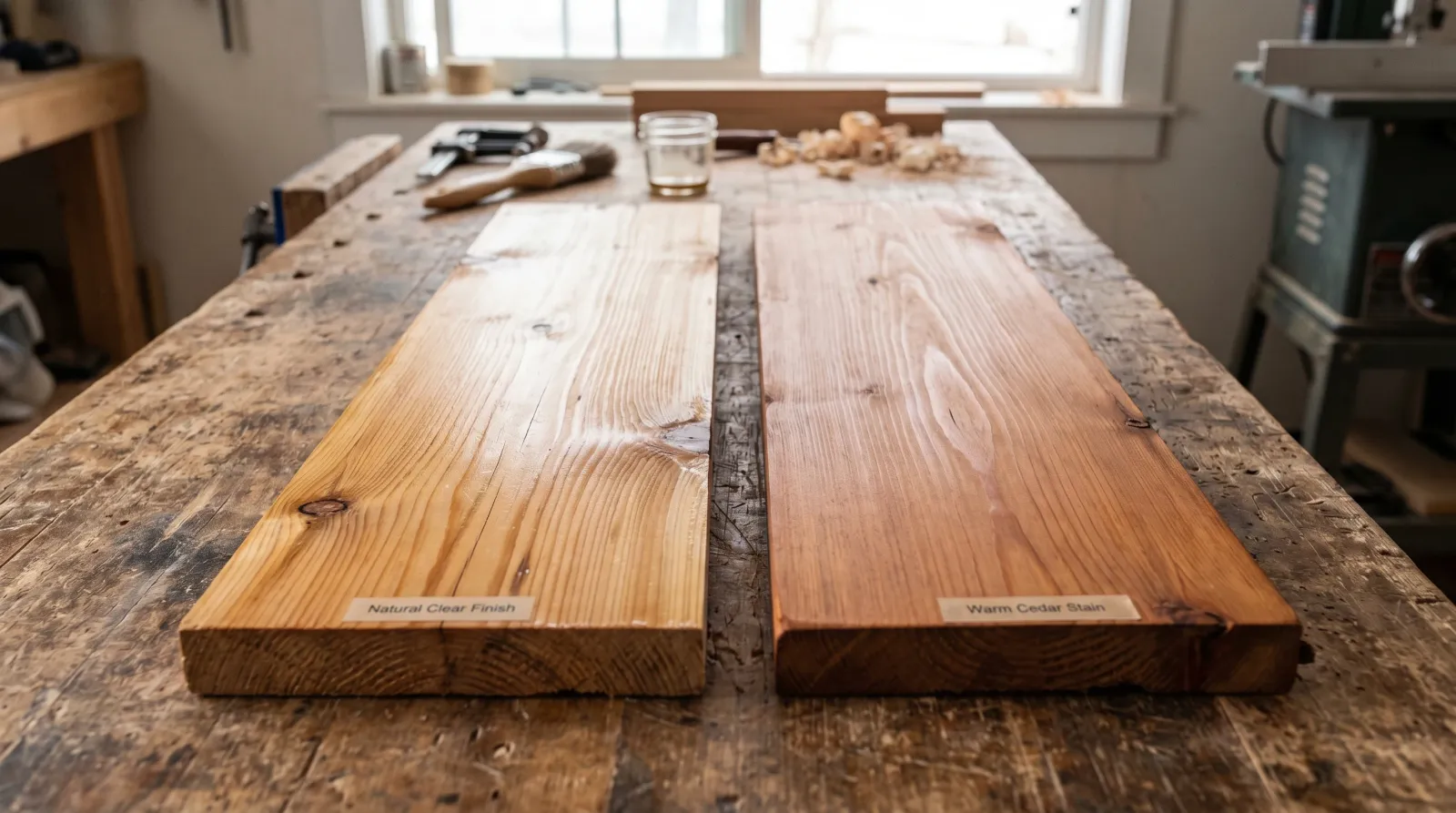 Same cedar, two finishes. The clear coat on the left shows bright grain. The semi-transparent on the right adds tone and hides UV damage you’ll get later.
UV / Weather Protection
This is the whole ballgame, so I’ll be blunt. Pigment blocks ultraviolet light. Transparent stain has almost none. Semi-transparent has enough to throw real shade on the wood underneath.
Sun breaks down the lignin in wood. That’s the glue holding the fibers together. Strip the UV protection and the surface grays, then checks, then the fibers lift and the board feels fuzzy. A clear-stained deck in full sun starts graying inside a season. The same deck in semi-transparent holds its color two or three years.
Rain matters too, but rain follows sun. Once UV opens the surface, water gets in, freezes, and pops the grain. The pigment is the front line.
Winner: Semi-transparent. It isn’t close.
Grain Visibility
Here’s the one thing transparent wins, and it wins it clean. A clear penetrating stain lets the full grain read. On rift-sawn oak, ipe, or a fresh cedar door, that’s the entire reason you stained instead of painted. You can see the wood.
Semi-transparent adds color, so the grain reads through a tint. You still see it. It’s just muted, and the wood now looks like “cedar” or “redwood” rather than this specific board. The more pigment, the more the individual character flattens out toward a uniform tone.
If the wood is plain or already weathered, you won’t miss much. If it’s a showpiece species, you’ll see the difference.
Winner: Transparent.
Lifespan / Recoat Cycle
Lifespan tracks pigment, which means it tracks UV protection, which means semi-transparent again.
| Surface | Transparent | Semi-transparent |
|---|---|---|
| Deck floor (full sun, foot traffic) | ~1 year | 2-3 years |
| Fence / vertical siding | 1-2 years | 3-5 years |
| Furniture under cover | 2-3 years | 4+ years |
Vertical surfaces always last longer than horizontal ones. A fence sheds rain and takes glancing sun. A deck floor holds puddles and takes the sun straight down at midday. That’s why the same can lasts twice as long on the cedar siding job as it does on the deck.
Penetrating stains don’t peel, which is the good news. They wear thin and fade. So a recoat is cleaning and re-applying, not stripping and starting over. But “doesn’t peel” doesn’t mean “lasts” — a worn transparent finish stops protecting long before it looks gone.
Winner: Semi-transparent.
Application & Maintenance
Both go on the same way: clean wood, thin coats, wipe the excess, don’t let it puddle. Penetrating stain that pools on the surface dries sticky and shiny, and that gloss is the first thing to flash and fail. Work a board to its full length and keep a wet edge to avoid lap marks.
Where they split is the calendar. Transparent puts you back on your knees every spring on a sunny deck. Semi-transparent buys you a year or two off. Less product over time, less weekend.
Maintenance for both is a wash-and-recoat, not a strip. Use a deck cleaner, let the wood dry two or three days, knock down any raised grain with a sanding pad, and recoat. For the wear surfaces under your feet, see the best deck stain round-up for products that survive traffic.
Winner: Semi-transparent (fewer cycles for the same look longevity).
Cost & Coverage
Per gallon, they’re the same money. Same base, the semi-transparent just carries more pigment. Coverage runs 150-300 square feet per gallon on smooth wood, less on rough or thirsty boards. New wood and weathered wood both drink more on the first coat.
The real cost is time. Transparent’s shorter cycle means more gallons and more weekends over a deck’s life. Over ten years, the clear finish costs more even at the same shelf price.
Winner: Semi-transparent (lower lifetime cost).
Common Mistakes
Putting clear stain on a sunny deck because you like the look. You’ll like it for ten months. Then it grays in patches where the sun hits hardest, and patchy is worse than uniform. If you want maximum grain on a deck, accept the spring recoat or step to a light-tinted semi-transparent.
Over-applying to “get more protection.” Penetrating stain only protects what soaks in. The excess sits on top, dries glossy, and peels off in sheets the next season. Wipe the surplus within 15 minutes. Two thin coats beat one thick one.
Skipping the cleaning before a recoat. Mill glaze, dirt, and old gray fibers block penetration. The new coat sits on top and fails early. Clean and let it dry fully. Damp wood won’t take stain.
Mixing transparent and semi-transparent across one surface. The two fade at different rates and you’ll see the seam. Pick one for the whole deck.
Verdict by Use Case
- Pick transparent if: the wood is a showpiece (tight-grain hardwood, new cedar, a feature door), the surface is shaded or under cover, and you’ll commit to a yearly recoat. Grain over longevity.
- Pick semi-transparent if: it’s a deck, fence, or exterior cedar or pine siding that takes sun. This is the right answer for almost every outdoor horizontal surface.
- It’s basically a tie when: the wood lives fully under a porch roof out of direct sun. No UV, so the pigment buys you little, and you can choose on looks alone.
Top Picks by Side
Going with semi-transparent? See the best deck stain round-up for products that hold up under foot traffic.
Staining vertical siding or a fence? See the best exterior stain picks.
FAQ
Can I put semi-transparent stain over transparent stain? Yes, and it’s the normal upgrade path. Clean the wood, let it dry, apply the semi-transparent over the worn clear coat. The added pigment hides uneven fading. Going the other way does nothing.
How can I tell which stain is on my deck now? Color tells you. Near-natural wood with a faint warm tone and sharp grain is transparent. A uniform cedar or brown tone with muted grain is semi-transparent. The water-bead test tells you if either one is still protecting.
Which stain lasts longer outdoors? Semi-transparent, by roughly double. Pigment blocks UV, UV destroys the finish. Transparent on a sunny deck wears in about a year; semi-transparent holds 2-3 years.
Do I need to strip before recoating? Usually no. Penetrating oil stains wear thin instead of peeling. Clean, sand rough spots, recoat. Strip only when there’s a film-forming product on top or you’re going much lighter.