Product review · Cabot · Updated August 7, 2026
Solid Color Decking StainCabot paint review
7.6/10Excellent hide on wood you look at. Wrong product class for wood you walk on.
It hides mismatched gray boards better than most solid stains, and it still lifts at the edges on a deck floor in two or three years. Here is the job it is right for, the job it is wrong for, and why.

Mark Thompson · Pro Contractor & Field Editor · Updated August 7, 2026
22 years of residential and light commercial work across the Midwest, most of it outside. Mark has put solid stain on more fences, decks, and cedar siding than he cares to count, and still takes side jobs to keep the numbers honest. About the testing process →
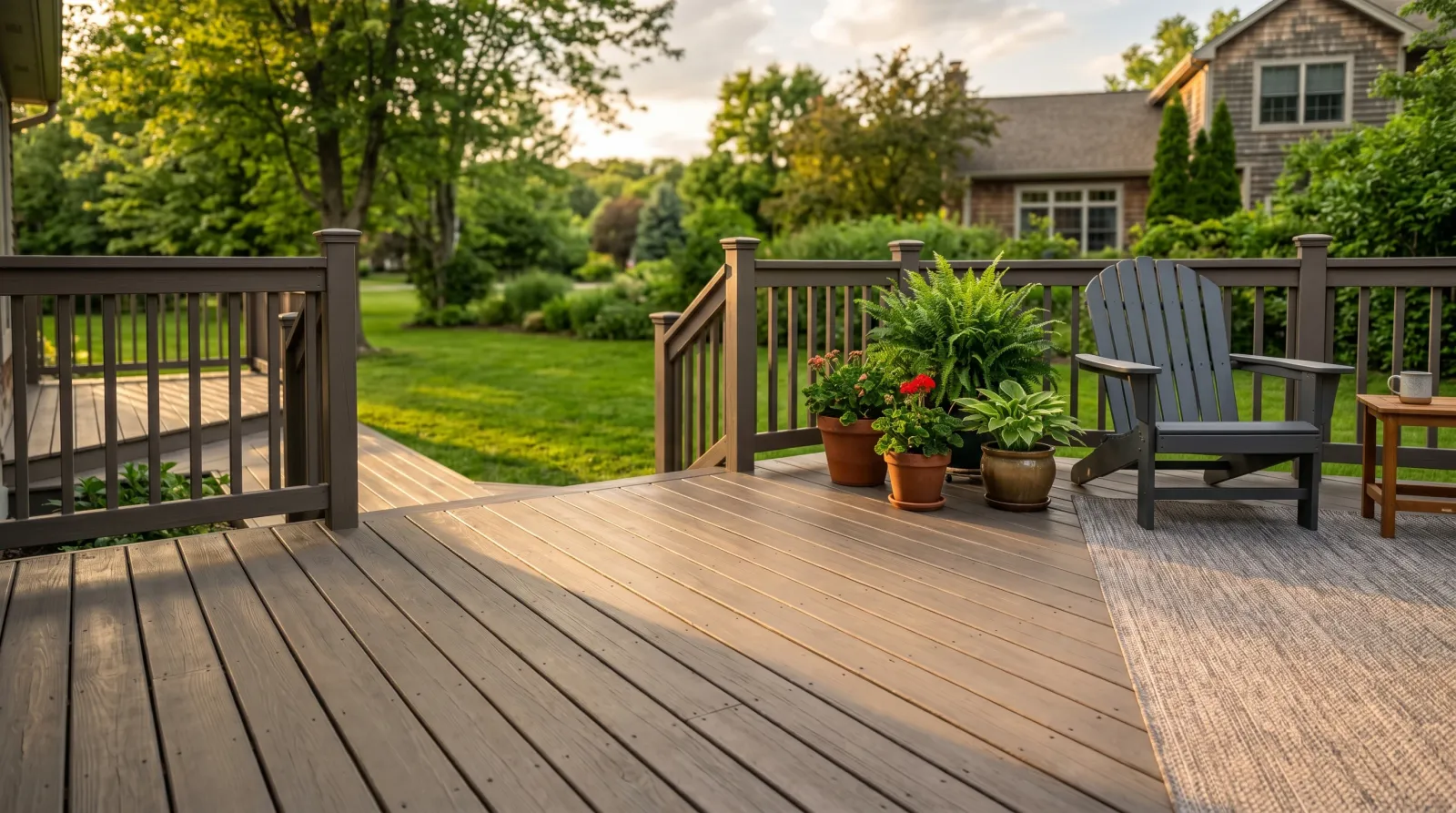
Cabot Solid Color Decking Stain2 sheens
Coverage200–500 sq ft / gal on smooth wood
Recoat6 hr
VOCLow-VOC compliant version under 50 g/L
Sheens Solid opacitylow-sheen finish
Read this first
The Fast Verdict
Buy it for a fence, shed, garage door, railing, or siding too far gone for semi-transparent. Two coats bury mismatched gray boards, it resists chalking, it cleans up with water, and it runs 6 to 8 years for $40 to $52 a gallon. On a deck floor it is the wrong class: the film takes standing water, sun, and foot traffic and lifts at the board edges in 2 to 3 years. Go penetrating there, or use a resurfacing coating built for traffic.
Best for
Fences and sheds · Wood siding · Porch railings and garage doors · Weathered or mismatched boards · Pressure-treated lumber · Water cleanup
Skip if
Deck floors in full sun · Decks that drain poorly · You will not do the prep · You want a finish that soaks in instead of filming
What it's good at
- Genuine opacity — two coats over a 15-year-old gray fence hide the old boards and the new repair pieces alike
- Holding color without chalking; two years on a south-facing fence a wet rag comes back clean
- Staying flexible as siding swells and shrinks through wet and dry seasons
- Water cleanup — brushes rinse in the sink, no solvent
- Self-priming on the green-treated lumber most decks and fences are built from
- Resetting a deck that has gone past the point where semi-transparent looks right
- Custom tinting at the counter, deeper than the shelf cans show
What it's not good at
- Deck floors — film lift and edge-peel at 2 to 3 years is the recurring failure
- Forgiving prep; skip the cleaning and stripping and it peels in a season
- Rolling out cleanly — it is thick and it splatters
- Back-brushing rough pressure-treated boards without real labor
- Bare cedar and redwood without a stain-blocking primer under a light color
- Holding dark colors dead-on past about year five in full south sun
Same shelf, different cans
Which Cabot Solid Stain Are You Looking At?
Cabot sells more than one solid color product and the names blur together on a shelf. Match the can to the job before you match it to the color. This review covers the water-based acrylic line.
Solid Color Acrylic Stain + Sealer (this review)
BaseWater-based acrylic, opaque, water cleanup
Buy it if
The do-everything pick. Decks, fences, siding. The film stays flexible as wood swells and shrinks, and brushes rinse in the sink.
Avoid if
Your deck is dark and sits in full overhead sun and bare feet are the complaint. Look at the heat-reducing version instead.
Solid Color Oil Stain
BaseAlkyd oil, opaque, harder initial film
Buy it if
Vertical siding and trim, where film flexibility matters less than hardness.
Avoid if
Deck floors. Oil solids look good year one and go brittle and crack by year four.
O.V.T. Solid Color Oil Stain
BaseOil, marketed for maximum hide and scuff resistance
Buy it if
Heavy-wear vertical work — garage doors, fences, anything that gets brushed against.
Avoid if
Deck floors, same as the other oil solid. Hardness is not what a horizontal board needs.
Heat-Reducing Solid Stain with Cool Feel
BaseAcrylic solid formulated to run cooler underfoot
Buy it if
Dark colors on a deck in full sun where surface heat is the problem you are solving.
Avoid if
You expect it to fix peeling. It is still a solid film stain and the deck-floor physics do not change.
Numbers, not adjectives
Spec Sheet
- Coverage
- 200–500 sq ft / gal on smooth wood; 150–350 on rough or weathered wood
- Sheen
- Solid opacity, low-sheen — slight luster, between flat and satin
- Touch dry
- 4–6 hr
- Recoat
- 6 hr
- Foot traffic
- 24–48 hr
- VOC
- Low-VOC compliant version under 50 g/L; standard base runs higher — check the can for your state
- Primer
- Self-priming on pressure-treated; spot-prime bare cedar and redwood against tannin bleed
- Surfaces
- Pressure-treated lumber, cedar, redwood, cypress, pine, fir — decks, fences, siding, railings
- Cleanup
- Soap and water
- Sizes
- 1/2-pint, quart, gallon, 5-gallon
- Price
- $40–52 / gal street, sale dips to $36
Application Settings That Work
- Brush
- Thick body, so it splatters off a roller. Roll and back-brush rather than trying to roll it out on its own, and back-brush hard into deep-grain pressure-treated boards — that is real labor and you will feel it by board fifty. Two thin coats, recoat at 6 hours. On rough or weathered wood, work the material into the grain instead of laying it on top.
- Primer
- Self-priming on pressure-treated pine and over sound previously stained wood, so you can go straight to two coats and save a coat and a day. Bare cedar and redwood are the exception: spot-prime for tannin bleed first. And nothing bonds through dirt, mildew, or old failing finish, so clean and strip to bare clean wood before any of it.
Dry Times in the Real World
Plan the job around the recoat, not the touch dry. It is touch dry in 4 to 6 hours and takes the second coat at 6, so two thin coats fit in one long day if you start early. Foot traffic waits 24 to 48 hours, and so does the patio furniture — set a table back down on a film that has not hardened and you press dirt straight into it. Two thin coats beat one heavy coat every time, and a heavy coat is what stays soft longest. Full color and film performance settle in over the first couple of days. On rough or weathered wood, budget more material than the can math suggests: 150 to 350 sq ft a gallon, not the 500 you get on smooth boards.
Mid-project panic
When It Goes Wrong, and How to Fix It
Peeling and edge-lift on a deck floor
Why it happens. A solid stain builds a film on the surface. On a horizontal board that film takes standing puddles after every rain, full overhead sun, and the grind of feet and furniture. It loses adhesion at the weakest point, usually a board edge or an end grain that wicked water, and once one spot lifts the peel spreads. This is not a Cabot defect. Every solid stain on the market does it on a deck floor.
The fix. Pick your path honestly. Accept a 3 to 5 year maintenance cycle and touch up as it goes. Or step to a thick deck-resurfacing coating built for foot traffic. Or go the other direction to a penetrating semi-transparent that soaks in instead of filming. On a fence or siding, the same product runs 6 to 8 years and none of this applies.
It peels within a season, everywhere
Why it happens. Bond failure, not product failure. Solid stain only lasts as long as its bond, and it will not bond through dirt, mildew, or an old failing finish. This product punishes a rushed prep harder than a forgiving wall paint does.
The fix. Clean and strip back to bare clean wood, let it dry, then two thin coats. If you are unsure what is under there, buy a quart and test color and adhesion on one cleaned board before you commit the whole job.
Brown bleeding through a light color on cedar or redwood
Why it happens. Tannin. Cabot calls the stain self-priming, and on pressure-treated pine that holds. On bare cedar and redwood the wood's natural tannins bleed brown through a lighter solid color within a few months. The can soft-pedals this.
The fix. Spot-prime knots and bleed-prone boards with a stain-blocking primer before the first coat. On a light color over bare cedar or redwood, prime the whole surface rather than gambling on which boards will bleed.
Thin spots that fail first after one coat
Why it happens. The can suggests one coat is enough on smooth new wood. On weathered or pressure-treated boards, one coat leaves thin spots, and thin spots are where the failure starts. Rough grain drinks material unevenly.
The fix. Two coats, both thin, recoat at 6 hours. Back-brush every pass into the grain on rough lumber so the material sits in the wood instead of bridging over it. Two thin coats beat one heavy coat every time.
Side by side
Cabot vs Olympic Elite vs Arborcoat Solid
Three solid acrylic stains for the same vertical work, at three price points. They separate on hide, color choice, and how far you have to drive — not on deck-floor durability, where all three do the same thing.
| Cabot Solid Color Decking Stain | Olympic Elite Solid Stain | Benjamin Moore Arborcoat Solid | |
|---|---|---|---|
| Street price per gallon | $40–52, sale dips to $36 | $35–42 | $55–70 |
| Hide on weathered, mismatched boards | Genuinely opaque. Buries gray and repair boards in two coats. | Comparable opacity, but the hide on badly mismatched boards is not as clean in one pass. | Premium solid acrylic with a cleaner finish off the brush. |
| Finish quality up close | Good, but thick-bodied — it splatters off a roller and needs back-brushing. | Decent track record on fences and siding. | Better leveling; the finish reads well at arm's length. |
| Color choice | Tinted at the counter, deeper custom colors than the shelf cans show. | Smaller color deck. | Deeper color library. |
| Where you buy it | Home Depot, Ace Hardware, Amazon. | Lowe's. | Benjamin Moore dealer — a drive. |
| On a deck floor | Edge lift and peel in 2 to 3 years. | Same film class, same limit — every solid stain does this. | Same deck-floor limitation as every solid stain. |
| Best job for it | Fences, sheds, garage doors, railings, wood siding. | Vertical work when budget is the constraint. | A high-visibility front porch or fence where the finish reads up close. |
Street price per gallon
Cabot Solid Color Decking Stain$40–52, sale dips to $36
Olympic Elite Solid Stain$35–42
Benjamin Moore Arborcoat Solid$55–70
Hide on weathered, mismatched boards
Cabot Solid Color Decking StainGenuinely opaque. Buries gray and repair boards in two coats.
Olympic Elite Solid StainComparable opacity, but the hide on badly mismatched boards is not as clean in one pass.
Benjamin Moore Arborcoat SolidPremium solid acrylic with a cleaner finish off the brush.
Finish quality up close
Cabot Solid Color Decking StainGood, but thick-bodied — it splatters off a roller and needs back-brushing.
Olympic Elite Solid StainDecent track record on fences and siding.
Benjamin Moore Arborcoat SolidBetter leveling; the finish reads well at arm's length.
Color choice
Cabot Solid Color Decking StainTinted at the counter, deeper custom colors than the shelf cans show.
Olympic Elite Solid StainSmaller color deck.
Benjamin Moore Arborcoat SolidDeeper color library.
Where you buy it
Cabot Solid Color Decking StainHome Depot, Ace Hardware, Amazon.
Olympic Elite Solid StainLowe's.
Benjamin Moore Arborcoat SolidBenjamin Moore dealer — a drive.
On a deck floor
Cabot Solid Color Decking StainEdge lift and peel in 2 to 3 years.
Olympic Elite Solid StainSame film class, same limit — every solid stain does this.
Benjamin Moore Arborcoat SolidSame deck-floor limitation as every solid stain.
Best job for it
Cabot Solid Color Decking StainFences, sheds, garage doors, railings, wood siding.
Olympic Elite Solid StainVertical work when budget is the constraint.
Benjamin Moore Arborcoat SolidA high-visibility front porch or fence where the finish reads up close.
For most fences, sheds, and siding, Cabot is the fair-priced middle and the hide is the reason to pay it. Drop to Olympic Elite when budget decides the job and the work is vertical. Step up to Arborcoat when the surface is a front porch or a fence people stand next to, and you can live with the extra $15 to $25 a gallon and the drive to a dealer. None of the three is the answer for a deck floor — that is a penetrating stain or a resurfacing coating built for traffic.
If not this one
Honest Alternatives
OE
Olympic Elite Solid Stain$35–42 / gal
The budget pick, sold at Lowe's a few dollars under Cabot. Comparable opacity and a decent track record on fences and siding. The color deck is smaller and the hide on badly mismatched boards is not quite as clean in one pass. Right call when budget is the constraint and the job is vertical.
BM
Benjamin Moore Arborcoat Solid$55–70 / gal
Benjamin Moore's premium solid acrylic. Better leveling, a deeper color library, and a cleaner finish off the brush. You pay $15 to $25 more a gallon and you have to drive to a dealer. Worth it on a high-visibility front porch or fence. It has the same deck-floor limitation as every solid stain.
BP
Behr Premium Deck Over$45–55 / gal
Not a stain. It is a thick resurfacing coating built to fill cracks and survive foot traffic on a tired deck floor. If a deck is the actual project and you want an opaque finish, this is the honest product for that job. It is heavier to apply and harder to ever remove.
Questions people actually ask
Solid Color Decking Stain Questions, Answered
Is Cabot solid color stain worth it?
On vertical work — fences, sheds, siding, garage doors, porch railings — yes. At $40 to $52 a gallon it hides mismatched and gray boards in two coats, resists chalking, cleans up with water, and runs 6 to 8 years before a recoat. On a deck floor it is the wrong product class: the film takes standing water, sun, and foot traffic, and it lifts at the board edges in 2 to 3 years. For a deck, use a penetrating semi-transparent or a resurfacing coating built for traffic.
Does Cabot solid color stain peel on a deck floor?
It can, and it is the number one complaint. Solid stains build a film, and film on a horizontal board takes standing water, sun, and foot traffic that vertical siding never sees. On a deck that drains poorly or did not get prepped right, you will see lift at the board edges in 2 to 3 years. On a fence or siding, the same product runs 6 to 8 years easily. No solid stain on the market beats this.
How many coats does Cabot solid stain need?
Two. The can suggests one is enough on smooth new wood, but one coat on weathered or pressure-treated boards leaves thin spots, and thin spots fail first. Two thin coats beat one heavy coat every time. Recoat at 6 hours, keep each pass thin, and back-brush it into the grain on rough lumber.
Do I need to prime bare cedar or redwood first?
Yes, if you want to stop tannin bleed. Cabot calls the stain self-priming, and on pressure-treated pine that is mostly true. On bare cedar and redwood, the natural tannins bleed brown through a light solid color within a few months. Spot-prime knots and bleed-prone boards with a stain-blocking primer first, or prime the whole surface if the color is light.
Is the acrylic or the oil version better for a deck?
For a deck floor, the acrylic. Cabot sells a solid oil version too, but oil-based solid stains on horizontal wood go brittle and crack as they age. The water-based acrylic stays a little more flexible, sheds water well, and cleans up without solvent. Save the oil solid stain for vertical work where flexibility matters less.
How long does it last on a fence?
6 to 8 years before a recoat on vertical work. A fence never gets walked on and it does not hold standing water, so the film has an easy life compared with a deck board. Color holds well with low chalking through that stretch. Dark colors fade some by about year five on a full south exposure.
How much do I need, and what size should I buy?
Do the math at 200 to 500 sq ft a gallon on smooth wood and 150 to 350 on rough or weathered wood, then buy for the lower number if your boards are old. For most fences and decks the 5-gallon is the move once the numbers are in front of you. Get it tinted at the counter, since Cabot mixes deeper custom colors than the shelf cans show.
Can I stain over an old finish, or do I have to strip it?
Strip it if it is failing. Solid stain only lasts as long as its bond, and it will not bond through dirt, mildew, or an old finish that is already letting go. Clean back to bare clean wood, let it dry, then coat. If you are not sure, buy a quart and test adhesion on one cleaned board before you commit the whole job.
How long before I can walk on it or put the furniture back?
Touch dry runs 4 to 6 hours and the second coat goes on at 6. Foot traffic waits 24 to 48 hours after the last coat, and so does the patio furniture. Dropping a table onto a film that has not hardened presses grit straight into the finish. Give it the full window if the weather is cool or damp.
Is it hard to apply on rough pressure-treated boards?
It is work. The material is thick, so it splatters off a roller and needs back-brushing into deep grain rather than rolling out on its own. On a big deck or a long fence you will feel it in your shoulder by board fifty. Roll and back-brush as a two-step rhythm, keep both coats thin, and the finish holds where a lazy pass would not.
Keep exploring
We may earn a commission when you buy through the retailer link above. It never changes the score or the verdict.
Ask a Question