Product review · Cabot · Updated August 7, 2026
Semi-Transparent Deck & Siding StainCabot paint review
8.2/10The best-penetrating oil stain in its price tier on cedar and pine — as long as you can give it two dry days and one thin coat.
Two different cans wear this name at the same store, and only one of them is real oil. Here is which series to buy, what the 24-to-48-hour dry window really costs you, and why almost every "it won't dry" complaint is the applicator's fault.

Mark Thompson · Pro Contractor & Field Editor · Updated August 7, 2026
22 years running residential and light commercial repaints across the Midwest. Mark has put this stain on cedar fence boards, shingle walls, and more sun-baked deck floors than he wants to count, and still takes side jobs to keep the numbers honest. About the testing process →
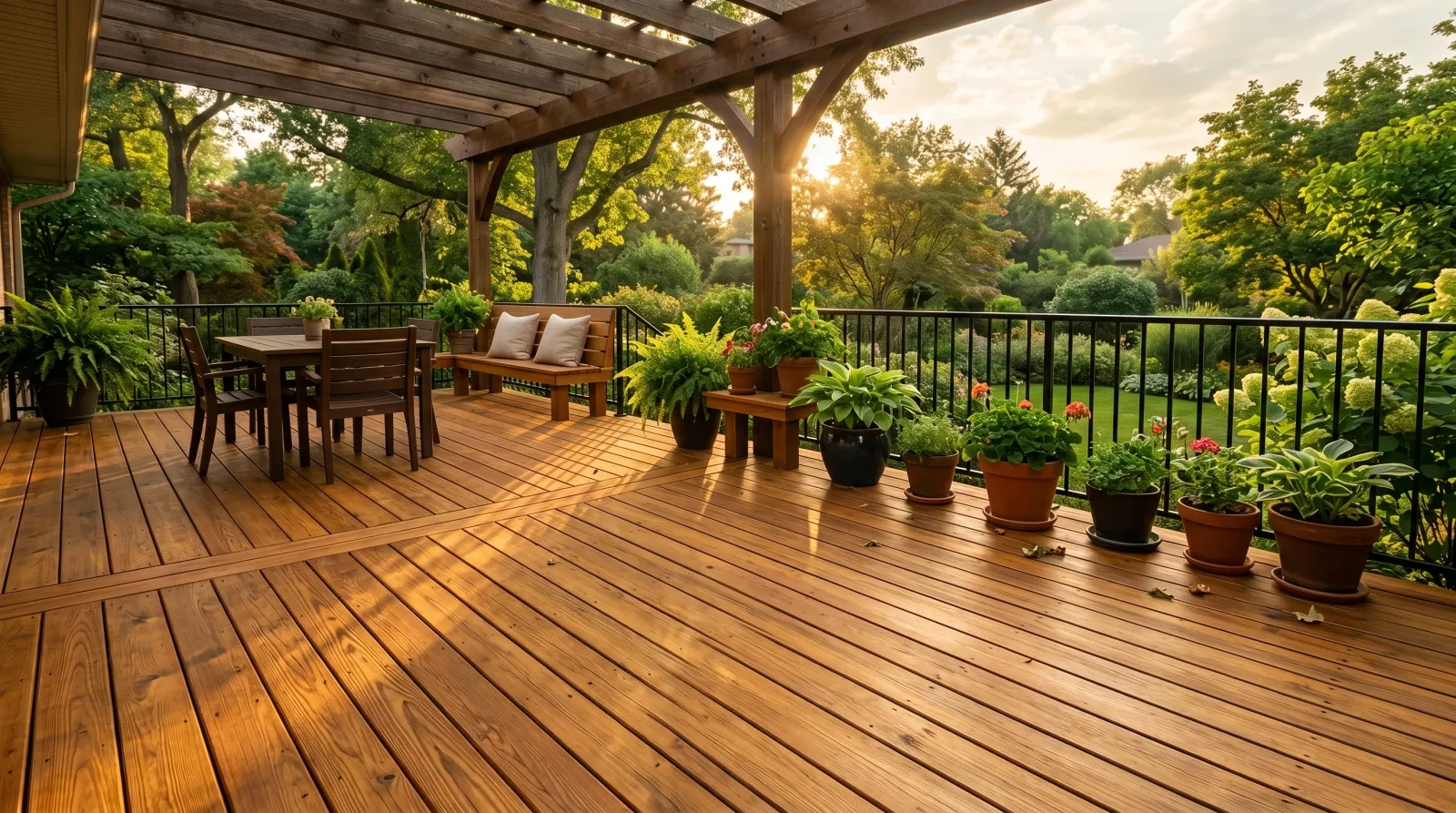
Cabot Semi-Transparent Deck & Siding Stain2 sheens
Coverage450–650 sq ft / gal on smooth wood
VOCUnder 550 g/L on the 0300 data sheet
Sheens Flatnatural matte
Read this first
The Fast Verdict
On cedar siding, shakes, and fences, buy it. The oil 0300 base soaks into the grain instead of sitting on top, the earth-tone pigments hold tone for 3 to 5 years on vertical wood, and it covers 450 to 650 sq ft a gallon on smooth boards at $55 to $66. On a sun-baked deck floor it works, but you are signing up to recoat every 1 to 2 years. The real price is time: 24 to 48 hours to dry, one coat only, and no night under 50 F inside that window.
Best for
Cedar and pine siding · Fences · Shakes and shingles · Rough-sawn wood · Decks you don't mind maintaining · Grain that should still show
Skip if
You need a fast turnaround · Old solid stain or paint you won't strip · You want maximum opacity · You expect 5-plus years on a deck floor · The forecast is shaky
What it's good at
- Soaking into thirsty wood — on rough-sawn cedar a gallon disappears into the grain
- Wearing thin instead of flaking, because it bonds inside the wood rather than filming on top
- Letting the grain read through on cedar shingle walls and clear-grade siding
- Holding earth-tone color on vertical wood without going chalky — 3 to 5 years on a fence
- Refreshing with no sanding and no primer: clean, brighten, dry, recoat
- Beading water on horizontal boards for the first couple of seasons, which is what keeps them from cupping
- Real coverage on smooth wood — 450 to 650 sq ft a gallon, close to the claim
What it's not good at
- Fast turnaround — 24 to 48 hours to touch dry, and a pop-up shower inside that window ruins the coat
- Forgiving over-application; flood the boards and the surplus stays tacky for days
- Deck floors in full sun, which burn through it in 1 to 2 years
- Hiding lap marks if you stop mid-board
- Anything already sealed under old solid stain or paint you are not willing to strip
- Cold-weather scheduling — a 44-degree night inside 48 hours is a failed job
- Maximum opacity or 5-plus years on a deck, which is semi-solid territory
Same shelf, different cans
Which Cabot Semi-Transparent Are You Buying?
The name "Semi-Transparent" hangs on more than one can, and they do not behave the same. Read the series number on the back label, not the label art. This review is the oil 0300 series. If your can says water cleanup, you are holding something else. And if your wood is worn out or it is a dense tropical hardwood, the answer is a different Cabot product entirely — Semi-Solid for more hide and more years on tired decks, Australian Timber Oil for IPE, mahogany, and teak.
Semi-Transparent Stain + Sealer, 0300 series (oil) — this review
BaseRefined natural linseed oil vehicle, aliphatic petroleum distillate solvent. 40% solids by weight, 32% by volume. Mineral-spirits cleanup.
SheensFlat, natural matte. No gloss version.
RecoatOne coat only. Maintenance recoat at 1 to 2 years on decks, 3 to 5 on vertical wood.
Buy it if
Horizontal decks, fences, cedar and pine siding, shakes, shingles, and anywhere you want the deepest penetration. Rough-sawn wood drinks it.
Avoid if
You need soap-and-water cleanup, or your state restricts VOC over 100 g/L.
Semi-Transparent Acrylic Siding Stain, 1300 / 16300 series
BaseWater-borne oil-modified resin — an alkyd emulsion. Water cleanup.
SheensFlat, natural matte.
RecoatSold as the fast-turnaround option; this review's field numbers do not apply to it.
Buy it if
Vertical siding and shingles, and you want to clean up at the sink instead of with mineral spirits.
Avoid if
You came here for the oil. This is the can that makes half the internet swear the product is water-based.
Semi-Transparent Stain + Sealer Low VOC
BaseSame job as the 0300, reformulated under 100 g/L for restricted states.
SheensFlat, natural matte.
RecoatExpect to recoat sooner than the standard 0300.
Buy it if
California or another restricted state forces your hand.
Avoid if
You have a choice. The thinner solvent load sits shallower in the wood.
Numbers, not adjectives
Spec Sheet
- Coverage
- 450–650 sq ft / gal on smooth wood; 200–300 on rough or weathered
- Finish
- Flat, natural matte — no gloss
- Coats
- One coat only, per the data sheet
- Dry time
- 24–48 hr depending on temperature and humidity; full weather cure 72 hr-plus
- Base / solvent
- Refined natural linseed oil vehicle, aliphatic petroleum distillate solvent
- VOC
- Under 550 g/L on the 0300 data sheet; separate Low VOC variant under 100 g/L
- Cleanup
- Mineral spirits. Combustible — see the oily-rag warning
- Primer
- Self-priming. Clean and brighten bare wood. Never over painted or sealed wood
- Surfaces
- Decks, fences, cedar and pine siding, shakes, shingles, roofs, log homes, trim
- Sizes
- Neutral Base 306 in quart, gallon, 5-gallon; ready-mixed colors in gallons only; half-pint samples direct from Cabot
- Life claim vs field
- Cabot: 2–5 yr decks, 4–8 yr siding. Field: 1–2 yr decks, 3–5 yr vertical
- Price
- $55–66 / gal street, sale dips to $50
Application Settings That Work
- Brush
- Brush or pad it on and work it into the grain. Run the full length of each board and keep a wet edge — stopping mid-board is how you get laps. Then wipe back any standing surplus within 30 minutes. One thin coat only. Cleanup is mineral spirits, not soap and water, and the rags go in a sealed metal container filled with water.
- Thinning
- Do not thin it. Not with mineral spirits, not with anything. The formula is balanced to soak in as sold. Do not intermix it with other stains or other Cabot lines either.
- Primer
- Self-priming — no primer, ever. Clean the wood first to strip the gray, the mildew, and any failing finish, then brighten it with an oxalic-acid wood brightener so the stain takes uniformly. Let it dry: 24 to 48 hours after a wash, 3 to 5 days on brand-new wood, and under 15 percent moisture before you start. Never apply over previously painted or sealed wood.
The 48-Hour Dry Window
Plan the job around this number, not around your Saturday. Touch dry is 24 to 48 hours depending on temperature and humidity, and full weather cure is 72 hours-plus. That is not the couple of hours an acrylic gives you. Cabot says stain only when no rain is expected for 24 hours; if the forecast has any wobble in it, stretch that to the full 48. A shower on a coat that has not set does not just spot it, it lifts and streaks the stain, and the fix is scrubbing back and starting over. Cold nights take down more jobs than rain does and almost nobody sees it coming. The rule is not "don't stain when it's cold" — it is do not apply if the air or surface is under 50 F, or could fall under 50 F within 48 hours after you apply. A 70-degree October afternoon with a 44-degree night behind it is a failed job. Working range is 50 to 90 F, out of direct blazing sun and off hot boards. Light foot traffic once it is dry to the touch, but wait a full 24 hours minimum before the furniture, the grill, and the planters go back on, and put nothing down that traps moisture underneath until the weekend is over. Wet wood underneath is its own clock: after washing or stripping, give the boards 24 to 48 hours of open air; brand-new wood wants 3 to 5 days.
Mid-project panic
When It Goes Wrong, and How to Fix It
Still tacky two days later
Why it happens. You over-applied. This is a penetrating stain, not a film coat. The wood drinks what it can hold and no more, so surplus stain has nowhere to go and it sits on the surface staying sticky for days, sometimes weeks. Every "Cabot won't dry" complaint I have seen traces back to somebody who flooded the boards out of paint habit.
The fix. Wipe standing surplus back within 30 minutes of application — that window is the whole discipline. If it has already been days, scrub the excess off with a rag and mineral spirits, then let it cure. One thin coat beats two heavy ones every time. Drop the oily rags in a sealed metal container filled with water; linseed-oil rags generate heat as they cure and can catch fire on their own.
Lap marks showing up once the sun hits
Why it happens. You stopped mid-board and reloaded. Stain shows laps worse than paint does because there is no opaque film to hide the overlap — you are looking straight at two different soak-in densities meeting in the middle of a board.
The fix. Keep a wet edge and run the full length of every board, end to end, before you stop. Do not work in direct blazing sun either; hot boards flash the stain before it can soak in and that gives you the same striping. If a lap is already set, the only real fix is cleaning and brightening that section and recoating like-on-like.
Stain sitting on top instead of soaking in
Why it happens. Two causes, same symptom. Either the wood is sealed — old solid stain, paint, a leftover sealer, or mill glaze on new boards — and a penetrating stain cannot reach fiber through a film. Or the wood is still damp from a wash and the pores are full of water.
The fix. Strip any film coat first; there is no way around it. On bare wood, clean it, then brighten it with an oxalic-acid wood brightener to open the grain and even the tone. Check moisture before you start: wood under 15 percent, and 24 to 48 hours of open air after a wash. New wood needs 3 to 5 days.
Glossy, sagging patches after a second coat
Why it happens. You laid a second coat down the next morning out of habit. The data sheet says one coat only, and it means it. There is nowhere for the second coat to go on wood that is already saturated, so it skins on the surface and gives you gloss, sag, and tack — exactly the failures Cabot warns about.
The fix. One coat. If the color looks light, that is the wood's porosity, not a missing coat — which is why you test-patch on a spare board first. Do not thin it, with mineral spirits or anything else, and do not intermix it with other stains or other Cabot lines to stretch a gallon or fake a color. A maintenance recoat two or three years from now is a different thing entirely.
Deck graying and cracking a year in
Why it happens. Horizontal boards in full sun burn pigment out of any penetrating stain, and standing puddles work water into the coating and the end grain. Prep is the other half of it — stain that went over gray fiber or mill glaze was failing on day one. That is why the field numbers read 1 to 2 years on decks against 3 to 5 on vertical wood.
The fix. Look at the finish every spring and splash a cup of water on it. Beads, you have another season. Soaks straight in and darkens the board, clean it and recoat before the wood grays. Waiting until it looks bad is what turns a wash-and-recoat weekend into a stripping job. If you want 5-plus years on a deck floor, this is the wrong opacity — step up to semi-solid.
Side by side
Cabot Semi-Transparent vs Valspar One-Coat
These two get cross-shopped constantly, and there is a reason: Sherwin-Williams owns both brands and both cans sit in the same aisle at Lowe's. Shoppers see two semi-transparent stains twenty dollars apart and want to know what the twenty dollars buys.
| Cabot Semi-Transparent 0300 | Valspar One-Coat Stain & Sealer | |
|---|---|---|
| Base and cleanup | Oil — linseed oil vehicle, mineral-spirits cleanup | Water-based, soap-and-water cleanup |
| Street price | $55–66 / gal | $38–45 / gal |
| Claimed coverage | 450–650 sq ft / gal smooth, 200–300 rough | 250–350 sq ft / gal |
| Real-world coverage | Close to the claim on smooth wood | Field tests came in at 100–150 sq ft / gal |
| Penetration | Deep — this is its whole job | Testers found it applied blotchy and did not soak in well |
| UV and color hold | Holds tone, fades gradually | Faster UV wear; reports of peeling after one season |
| Turnaround | Slow — 24 to 48 hr dry, solvent cleanup | Fast — same-day cleanup at the sink |
Base and cleanup
Cabot Semi-Transparent 0300Oil — linseed oil vehicle, mineral-spirits cleanup
Valspar One-Coat Stain & SealerWater-based, soap-and-water cleanup
Claimed coverage
Cabot Semi-Transparent 0300450–650 sq ft / gal smooth, 200–300 rough
Valspar One-Coat Stain & Sealer250–350 sq ft / gal
Real-world coverage
Cabot Semi-Transparent 0300Close to the claim on smooth wood
Valspar One-Coat Stain & SealerField tests came in at 100–150 sq ft / gal
Penetration
Cabot Semi-Transparent 0300Deep — this is its whole job
Valspar One-Coat Stain & SealerTesters found it applied blotchy and did not soak in well
UV and color hold
Cabot Semi-Transparent 0300Holds tone, fades gradually
Valspar One-Coat Stain & SealerFaster UV wear; reports of peeling after one season
Turnaround
Cabot Semi-Transparent 0300Slow — 24 to 48 hr dry, solvent cleanup
Valspar One-Coat Stain & SealerFast — same-day cleanup at the sink
Cabot wins on penetration and color retention. Valspar wins on price and convenience. If you are staining a deck you intend to keep up for years, the deeper soak-in is worth the extra twenty dollars a gallon, because coverage that lands at 100 to 150 sq ft per gallon eats the price advantage the moment you buy the second and third can. The part neither brand puts on a shelf talker: Consumer Reports parks both near the bottom of its semi-transparent category, though Cabot does better on first-year appearance. This is not a fight over which stain is great. It is a fight over which one is the better version of a category where nothing lasts as long as the label implies. Between the two, Cabot.
If not this one
Honest Alternatives
OM
Olympic Maximum Semi-Transparent$35–45 / gal
The cheaper play, sold at Lowe's, water-based, soap-and-water cleanup instead of mineral spirits. It does not penetrate cedar as deep as Cabot's oil base, so it leans more on surface film. Right call when the budget is tight and the wood is vertical siding or fence, not a hard-use deck floor.
CA
Cabot Australian Timber Oil$60–80 / qt–gal
Cabot's premium penetrating oil, built for dense exotic hardwoods like IPE, mahogany, and teak that ordinary stain cannot soak into. Overkill and pricey on soft cedar, but on a hardwood deck it is the finish that actually works. Costs more and ships in smaller cans.
Full review →DE
Defy Extreme Semi-Transparent$50–60 / gal
A zinc-nanoparticle water-based stain built for UV resistance, popular for high-altitude and brutal-sun decks. Lower VOC than the oil, easier cleanup, and the zinc holds color longer in punishing sun. Choose it when UV is the enemy and you do not want a solvent stain.
CS
Cabot Semi-Solid Deck Stain$$ tier
Same family, more hide. It covers more of the grain, builds slightly more film, and holds up longer on worn or weathered boards. Step here when the deck is aging and you want more years between recoats than the 1 to 2 a semi-transparent gives a sunny floor.
Questions people actually ask
Semi-Transparent Deck & Siding Stain Questions, Answered
Is Cabot semi-transparent stain worth it?
On cedar or pine siding, shakes, and fences, yes. The oil 0300 base penetrates deeper than the water-based stains in its tier, covers 450 to 650 sq ft a gallon on smooth wood, and holds color 3 to 5 years on vertical surfaces at $55 to $66 a gallon. On a sun-baked deck floor it is a 1-to-2-year finish, so buy it only if you accept that recoat cycle. The other cost is time: it takes 24 to 48 hours to dry, so you need a two-day clear-weather window or the coat streaks.
Is Cabot Semi-Transparent Stain + Sealer oil-based?
The 0300 series is genuinely oil-based. The technical data sheet lists refined natural linseed oil as the vehicle and aliphatic petroleum distillates as the solvent, with mineral-spirits cleanup and 40 percent solids by weight. The lookalike 16300 series sold under the same name at big boxes is a water-cleanup oil-modified resin formula, which is why the internet gives you both answers. Check the series number on the can, not the label art.
How long does Cabot semi-transparent last on a deck?
Cabot's own data sheet claims 2 to 5 years on decks and 4 to 8 years on siding and fences. In the field I plan on 1 to 2 years for a sun-baked deck floor and 3 to 5 years on vertical fence boards and siding. The spread is real: it comes down to sun exposure, water pooling on horizontal boards, and how well the wood was cleaned first. Cabot itself says to look at the finish every spring and recoat when it stops shedding water.
Do I need to strip old stain before applying Cabot?
If the old coat is the same semi-transparent oil stain and it is just faded, no. Clean it, brighten it, let it dry, and recoat like-on-like. If you have peeling solid stain or paint on there, yes, strip it first. A penetrating stain cannot soak into wood that is sealed under a film — it sits on top and fails.
Why is my Cabot stain still tacky two days later?
You over-applied. This is a penetrating stain, not a film coat, and the wood can only drink so much. Wipe off any puddled excess within 30 minutes of application. If it has been days and it is still tacky, scrub the surplus off with a rag and mineral spirits, then let it cure. One thin coat beats two heavy ones every time.
How long before rain can Cabot semi-transparent get wet?
Cabot says to stain only when no rain is expected for at least 24 hours, and the stain itself takes 24 to 48 hours to dry depending on temperature and humidity. I stretch that to the full 48 if the forecast has any wobble in it. Just as important: do not apply if the temperature could drop below 50 F within 48 hours after application. Cold nights stall the cure the same way rain ruins it.
Does Cabot semi-transparent need two coats?
No. The technical data sheet says apply one coat only. A second coat has nowhere to soak in on a penetrating stain and causes the exact failures Cabot warns about: a glossy look, sagging, and a surface that stays tacky. If the color looks light, that is the wood's porosity, not a missing coat. Test-patch on a spare board first so you know what you are getting.
Does Cabot stain have a warranty?
Yes. Cabot backs it with a Satisfaction Guarantee Lifetime Limited Warranty covering product replacement or a refund, with claims handled at 1-800-US-STAIN. It covers the product, not your labor, so it will not pay to strip and redo a failed deck. If the deck fails you get a gallon back, not a weekend back. That is one more reason prep and a thin coat matter more than the guarantee does.
Can I tint Cabot semi-transparent to a custom color?
Only from the Neutral Base 306, and it takes a maximum of 12 fl oz of universal colorant per gallon. The ready-mixed colors cannot be tinted, so you cannot have the counter nudge a stock color a shade darker. Neutral Base comes in quart, gallon, and 5-gallon; ready-mixed colors are gallons only. Half-pint samples are sold through cabotstain.com, and on a semi-transparent stain a sample is worth the money because your wood species and age move the final color more than the color name does.
How dangerous are the rags after staining?
This is the most dangerous part of the product and it has nothing to do with how the deck looks. Linseed-oil rags generate heat as they cure and can catch fire on their own. Do not ball them up in the trash and do not drape them over a railing. Drop them in a sealed metal container filled with water, then dispose of them per your local rules. The stain itself is combustible too, with a flash point over 100 F.
Keep exploring
Cabot stain brand guide — full lineBest deck stain — tested round-upTransparent vs semi-transparent stainValspar One-Coat Stain and Sealer review
We may earn a commission when you buy through the retailer link above. It never changes the score or the verdict.
Ask a Question