Product review · Cabot · Updated August 7, 2026
GoldCabot paint review
7.0/10The best-looking finish Cabot makes — on anything you don't walk on.
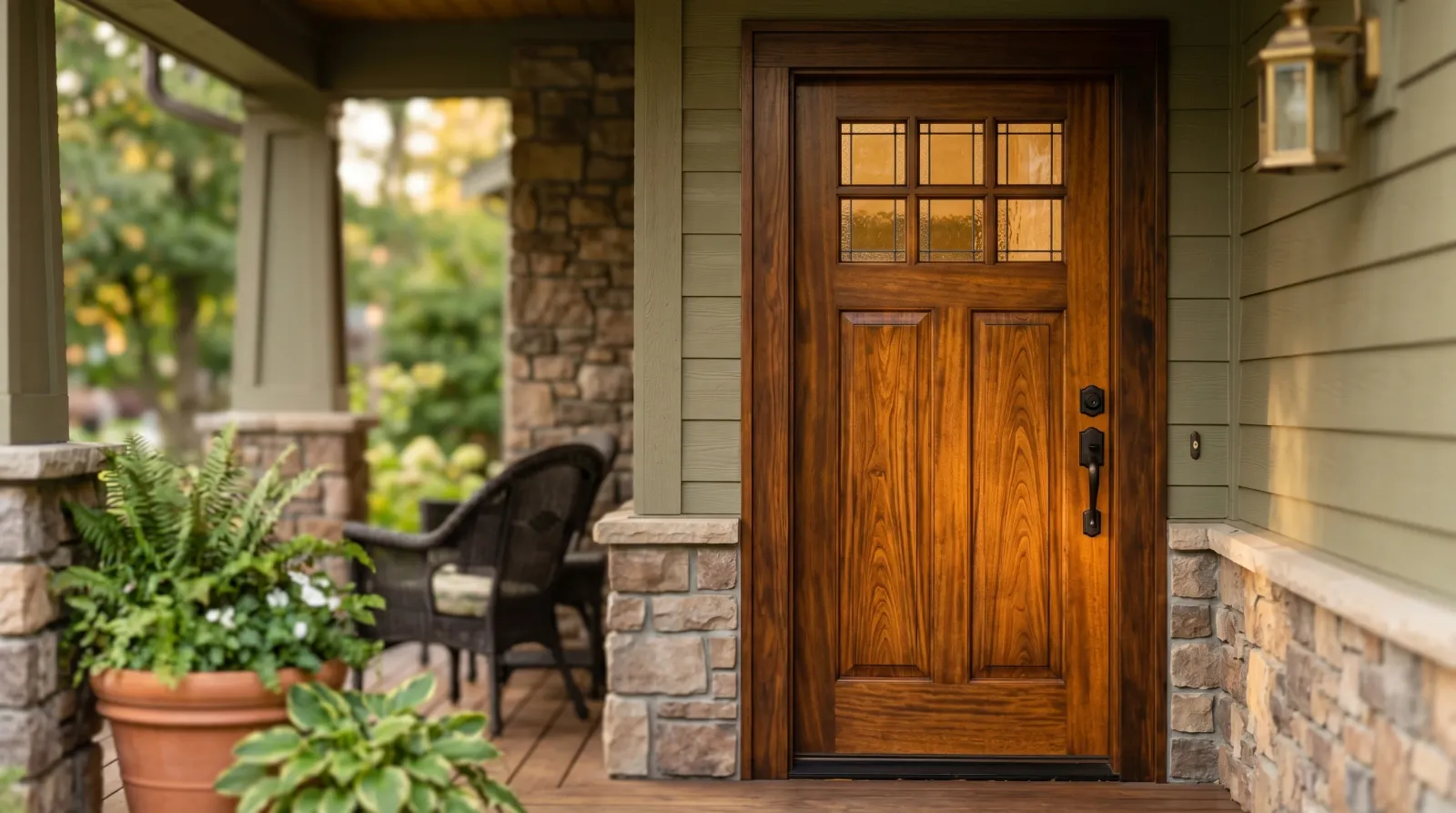
Two coats on a wood front door and the grain reads three-dimensional under the satin. Put the same finish on a deck floor and the film shears off at the traffic lanes inside two years.

Mark Thompson · Pro Contractor & Field Editor · Updated August 7, 2026
22 years running residential and light commercial repaints across the Midwest. Mark has put Cabot Gold on craftsman entry doors, fence runs, and deck railings, and has sanded enough failed deck floors to know where the line is. About the testing process →
Cabot Gold1 sheen
Coverage250–400 sq ft / gal
Recoat24 hr, and not past 7 days
VOCHigh on the oil version
Full cureSeveral weeks
Sheens Satin
Read this first
The Fast Verdict
On a wood front door, a garage door, siding, a fence face, deck railings, or outdoor furniture, buy it. At $45 to $58 a gallon the satin glow over two coats reads like an interior hardwood floor, and it goes straight onto bare or weathered wood with no primer. On a deck floor, skip it. Gold lays a coat on the surface, that coat shears off at the traffic lanes, and the fix is sanding the whole floor flat. It is not a bad product. It is a misfiled one.
Best for
Wood front doors · Garage doors · Vertical siding · Fence faces · Deck railings and balusters · Outdoor furniture · Bare or weathered wood with no primer
Skip if
Deck floors and anything you walk on · You can't give it two dry days · You want matte or gloss · Strict low-VOC states, unless you buy the Low VOC version · You don't want solvent cleanup
What it's good at
- The look on a wood door — honey, walnut, or mahogany with the grain reading three-dimensional under the satin
- Furniture, pergola posts, and deck railings, where the film has nothing to fight
- Going straight over bare or weathered wood with no separate primer step
- Holding color against sun better than a clear sealer; a south-facing door keeps its tone
- Maintenance on the right surface — scuff it and lay another coat, no stripping
- Sealing out water on caps, balusters, and benches
What it's not good at
- Deck floors — the film peels at traffic lanes, scoring 3 out of 10 in our sub-scores
- Coverage on rough wood; 250 sq ft a gallon means an old gray fence drinks it
- Speed — 24 to 48 hours to touch dry and a full day before the second coat
- Bad weather; dew or a shower inside the dry window makes it blush
- Water cleanup — it is oil, so mineral spirits and careful rag disposal
- Sheen choice. Satin or satin.
Same shelf, different cans
Which Cabot Gold Are You Buying?
Two things sell under the Gold name, and the shelf tag does not make the difference obvious. Grab the wrong one and you either break a local air-quality rule or pay for a formula you did not need. This review covers the standard oil-based Gold.
Cabot Gold (oil-based)
BaseOil / solvent; mineral spirits cleanup
SheensSatin, one option
Recoat24 hr, not past 7 days
Buy it if
Default pick. Doors, garage doors, siding, fence faces, railings, and furniture where you want the satin glow and the grain showing through.
Avoid if
You live in California or a low-VOC northeast state. It is high-VOC and may not be legal to sell to you there.
Cabot Gold Low VOC
BaseReformulated to meet tight air-quality limits
SheensSatin
Recoat24 hr, not past 7 days
Buy it if
You are in California or a northeast state with strict VOC rules. On the wood the two look close enough that fighting the regulation buys you nothing.
Avoid if
Nothing forces it if the regular oil version is legal where you live.
Numbers, not adjectives
Spec Sheet
- Coverage
- 250–400 sq ft / gal — smooth wood goes far, rough or old wood drinks it
- Sheen
- Satin, one option
- Opacity
- Transparent; grain shows fully
- Colors
- Sun-Drenched Oak, Sunlit Walnut, Moonlight Mahogany, Starlit Gray
- Touch dry
- 24–48 hr
- Recoat
- 24 hr, and not past 7 days
- Full cure
- Several weeks
- Base
- Oil / solvent; clean up with mineral spirits
- Primer
- None needed; goes on bare or weathered wood
- VOC
- High on the oil version; a separate Cabot Gold Low VOC formula meets stricter rules
- Surfaces
- Doors, vertical siding, fences, railings, outdoor furniture; horizontal deck boards only with your eyes open
- Price
- $45–58 / gal at Lowe's; quart and gallon sizes
Application Settings That Work
- Brush
- Brushes and wipes on without a fight. The discipline is the wet edge: work one board or one panel at a time and do not stop in the middle of it, or you will read lap marks the first sunny morning. Two coats — the first soaks into the wood, the second builds the satin and seals it. One coat looks thin and protects worse.
- Thinning
- It is oil, so cleanup is mineral spirits, not water. Handle the rags properly: oily rags can self-heat, so lay them flat to dry or bag them in water before they go out.
- Primer
- None. It goes straight onto bare or weathered wood, and the first coat is the primer as far as this system is concerned. No sanding to bare either, unless the old finish is failing or is a different type — then strip it, because Gold will not bond over a peeling coating.
Dry Times in the Real World
Plan this as a multi-day job and watch the forecast the whole time. Gold runs 24 to 48 hours to touch dry, and you cannot lay the second coat before a full day has passed. That is the front half of the window. The back half matters just as much: do not let the first coat sit past 7 days before you recoat, or it cures too hard for the second coat to bite. So the sweet spot is coat one, wait a day, coat two, and be done inside the week. Full cure takes several weeks after that. The weather is the real risk. Catch a dew overnight or a surprise shower inside the dry window and the finish blushes. Two clear days is the minimum you should start with, and on a fence run or a big siding section give yourself more.
Mid-project panic
When It Goes Wrong, and How to Fix It
Peeling flakes on a deck floor
Why it happens. Gold penetrates and lays a coat on the surface. That coat is the glassy hardwood-floor depth people buy it for, and it is also the thing that fails. Foot traffic shears it off at the lanes first — the path from the door to the stairs, the spot in front of the grill. Water gets under the thinned edge, the film lifts, and now you have flakes next to still-intact finish. Scott Paul, restoring wood since 1993, will not put a filming glossy coating on a deck floor at all.
The fix. There is no recoat out of this. Sand the whole floor back to bare wood and refinish with a penetrating stain that will not film — Cabot's own Australian Timber Oil costs about the same and wears thin instead of lifting. Keep Gold for the railings, the caps, and the balusters, where nothing walks on it.
Lap marks across a big flat panel
Why it happens. It brushes and wipes on fine, but on a wide garage door or a run of siding you can outrun yourself. Stop in the middle of a board or a panel, come back to it, and the overlap shows once the sun hits it sideways.
The fix. Keep a wet edge and do not stop mid-board. Work one full board, one full panel, or one full stile at a time and carry the wet edge to a natural break. Feather the edge where two sections meet.
The second coat sits on top and will not bite
Why it happens. You waited too long. The recoat window closes at about 7 days. Past that the first coat has cured hard enough that the second one has nothing to grab, and it sits there looking uneven instead of building the satin sheen.
The fix. Recoat at 24 hours and get both coats on inside the same week. If you already blew the window, scuff the surface to knock the sheen down before the second coat instead of laying it on a cured film.
Blushing or a finish that never dries right
Why it happens. Touch dry runs 24 to 48 hours, which is a long time to be exposed. A dew overnight or a shower inside that window puts moisture into a finish that has not set, and it blushes.
The fix. Start only when you have two clear dry days in the forecast, and start early enough that the surface is dry before evening dew. If a section blushed, let it dry out fully before you judge it, then sand that area and recoat when the weather cooperates.
It will not bond over an old finish
Why it happens. Gold only goes over an old coating if that coating is sound and the same type. Over peeling or incompatible finish it will not bond, and you trap the old failure underneath your new one.
The fix. Strip or sand to clean, dry wood. Test a small spot first, let it dry a full day, and check adhesion before you commit the whole door or fence run.
Side by side
Cabot Gold vs Australian Timber Oil vs Sikkens ProLuxe Cetol
These three come up together because they all promise a rich finish on exterior wood. They are not really competing. One films for looks, one penetrates for decks, and one is the premium door-and-window film. Pick by the surface, not by the shelf tag.
| Cabot Gold | Cabot Australian Timber Oil | Sikkens ProLuxe Cetol Door & Window | |
|---|---|---|---|
| How it works | Penetrates and lays a coat on the surface. The film is the depth and the failure point. | True penetrating oil. Soaks in, no film to lift. | Film finish, built to be one. |
| Look on a door | Best in Cabot's catalog. Satin glow, grain reads three-dimensional. | Flatter, more natural matte-satin tone. Less of the glassy hardwood look. | Deep, furniture-grade sheen, the same idea as Gold. |
| Deck floors | No. Peeling starts at the traffic lanes inside about two years. | Yes. The right tool for decks and dense hardwoods. | Not what it is for. It is a door-and-window finish. |
| Maintenance | Scuff and recoat on vertical surfaces. Sand to bare once a floor peels. | Clean and recoat, never a sand-to-bare. | Holds up longer and recoats cleaner over the years. |
| Price | $45–58 / gal | $45–58 / gal | $60–75 / qt |
| Where it wins | Doors, garage doors, siding, fence faces, railings, furniture. | Any horizontal surface you walk on, plus dense hardwoods. | A statement front door where you want the best film and will pay for it. |
How it works
Cabot GoldPenetrates and lays a coat on the surface. The film is the depth and the failure point.
Cabot Australian Timber OilTrue penetrating oil. Soaks in, no film to lift.
Sikkens ProLuxe Cetol Door & WindowFilm finish, built to be one.
Look on a door
Cabot GoldBest in Cabot's catalog. Satin glow, grain reads three-dimensional.
Cabot Australian Timber OilFlatter, more natural matte-satin tone. Less of the glassy hardwood look.
Sikkens ProLuxe Cetol Door & WindowDeep, furniture-grade sheen, the same idea as Gold.
Deck floors
Cabot GoldNo. Peeling starts at the traffic lanes inside about two years.
Cabot Australian Timber OilYes. The right tool for decks and dense hardwoods.
Sikkens ProLuxe Cetol Door & WindowNot what it is for. It is a door-and-window finish.
Maintenance
Cabot GoldScuff and recoat on vertical surfaces. Sand to bare once a floor peels.
Cabot Australian Timber OilClean and recoat, never a sand-to-bare.
Sikkens ProLuxe Cetol Door & WindowHolds up longer and recoats cleaner over the years.
Price
Cabot Gold$45–58 / gal
Cabot Australian Timber Oil$45–58 / gal
Sikkens ProLuxe Cetol Door & Window$60–75 / qt
Where it wins
Cabot GoldDoors, garage doors, siding, fence faces, railings, furniture.
Cabot Australian Timber OilAny horizontal surface you walk on, plus dense hardwoods.
Sikkens ProLuxe Cetol Door & WindowA statement front door where you want the best film and will pay for it.
Vertical wood on a normal budget: Cabot Gold, and it will look better than the price suggests. A deck floor or anything else that takes feet: Australian Timber Oil, same brand, about the same money, and it never asks you to sand back to bare. A statement front door where the finish is the point and quart pricing does not scare you: Sikkens ProLuxe Cetol Door & Window, which builds the same kind of depth and holds it longer. The mistake is not picking the wrong brand. It is putting a filming finish on a floor.
If not this one
Honest Alternatives
CA
Cabot Australian Timber Oil$45–58 / gal
Same brand, similar price, and the right tool for a deck. It is a penetrating oil, so it wears thin instead of peeling and maintenance stays a clean-and-recoat. Less of the glassy hardwood look, more of a natural matte-satin tone. The smarter pick for any horizontal surface you walk on.
Full review →SP
Sikkens ProLuxe Cetol Door & Window$60–75 / qt
The reference film finish for wood doors and windows. It builds a deep furniture-grade sheen like Gold, but holds up longer and recoats cleaner over the years. Sold by the quart and it is not cheap, so save it for a statement front door.
PV
Penofin Verde / Hardwood penetrating oil$55–70 / gal
For dense tropical hardwood — ipe, mahogany decking, teak — where you need an oil that actually soaks into oily wood. It will not film and will not peel. Use it when the surface is a dense hardwood deck and you want zero peel risk.
Questions people actually ask
Gold Questions, Answered
Is Cabot Gold worth it?
On a wood door, garage door, siding, fence face, railing, or outdoor furniture, yes. At $45 to $58 a gallon it is the best-looking finish Cabot makes, and the satin glow over two coats reads like an interior hardwood floor. On a deck floor, no. Gold leaves a coat on the surface, that coat shears off at the traffic lanes inside about two years, and then you are sanding the whole floor instead of recoating. Match it to a vertical or low-traffic surface and it earns the money.
Is Cabot Gold any good on a deck?
On a low-traffic deck, fine for a season or two. On a deck you actually walk on, the film wears through at the traffic lanes and starts peeling, and the only fix from there is sanding the floor flat. It shines on doors, rails, and furniture instead. For the deck floor itself, buy a penetrating stain that will not film.
How many coats of Cabot Gold do I need?
Two. The first coat soaks into the wood and the second builds the satin sheen and seals it. One coat looks thin and protects worse. Recoat at 24 hours, and do not let the first coat sit past 7 days before the second one, or it cures too hard for the second coat to bite.
Does Cabot Gold come in a low-VOC version?
Yes. There is a standard oil-based Gold and a separate Cabot Gold Low VOC. They look close on the wood. If you live somewhere with tight air-quality rules, meaning California and a few northeast states, buy the Low VOC one, because the regular oil version may not be legal to sell there.
How is Cabot Gold different from Australian Timber Oil?
Australian Timber Oil is a true penetrating oil. It wears thin and never peels. Gold adds a film for the glassy hardwood-floor look, which is prettier but can peel under traffic. Want looks on a vertical surface, buy Gold. Want a deck floor that stays easy to maintain, buy Australian Timber Oil. They cost about the same, so this is a surface decision, not a budget one.
Can I put Cabot Gold over an old stain?
Only if the old finish is sound and the same type. Over peeling or incompatible coatings it will not bond, and you trap the old failure underneath the new one. Strip or sand to clean, dry wood first. Test a small spot, let it dry a full day, and check adhesion before you commit the whole surface.
How long does Cabot Gold last?
On a vertical surface like a door or a fence, a couple of seasons before it dulls and wants a maintenance coat. On a deck floor, expect peeling to start inside two years at the traffic lanes. Vertical use is where the longevity holds up. Horizontal traffic surfaces are where it falls apart.
Does Cabot Gold need a primer?
No. It goes straight onto bare or weathered wood, and the first coat is what soaks in and does the priming job. There is no separate primer step and no sanding to bare unless the old finish is failing or is a different type. If the surface is flaking, strip it first, because Gold will not bond over a peeling coating.
How much Cabot Gold do I need?
Coverage runs 250 to 400 sq ft a gallon, and where you land depends entirely on the wood. Smooth, newer wood goes toward the top of that range. An old gray cedar fence or a rough-sawn pergola will drink it and put you at 250. Buy more than the math says, especially for the first soaker coat. A quart is the right size for a door or a piece of furniture; the gallon only makes sense for a fence run or a big siding section.
What colors does Cabot Gold come in?
Four: Sun-Drenched Oak, Sunlit Walnut, Moonlight Mahogany, and Starlit Gray. All of them are transparent, so the grain shows fully and the wood underneath drives a lot of the final tone. There is one sheen, satin, so the color is the only choice you make. Lowe's is where the line lives and where the four colors are reliably in stock.
Keep exploring
The full Cabot stain line, rankedBest finishes for an exterior doorStain opacity, plain EnglishHow to deal with peeling exterior finish
We may earn a commission when you buy through the retailer link above. It never changes the score or the verdict.
Ask a Question