Best Textured Paint and Texture Additives
Six texture additives and textured paints tested on drywall, stair treads, and furniture panels for grit, hide, and roller behavior. Top pick: Homax Sand.

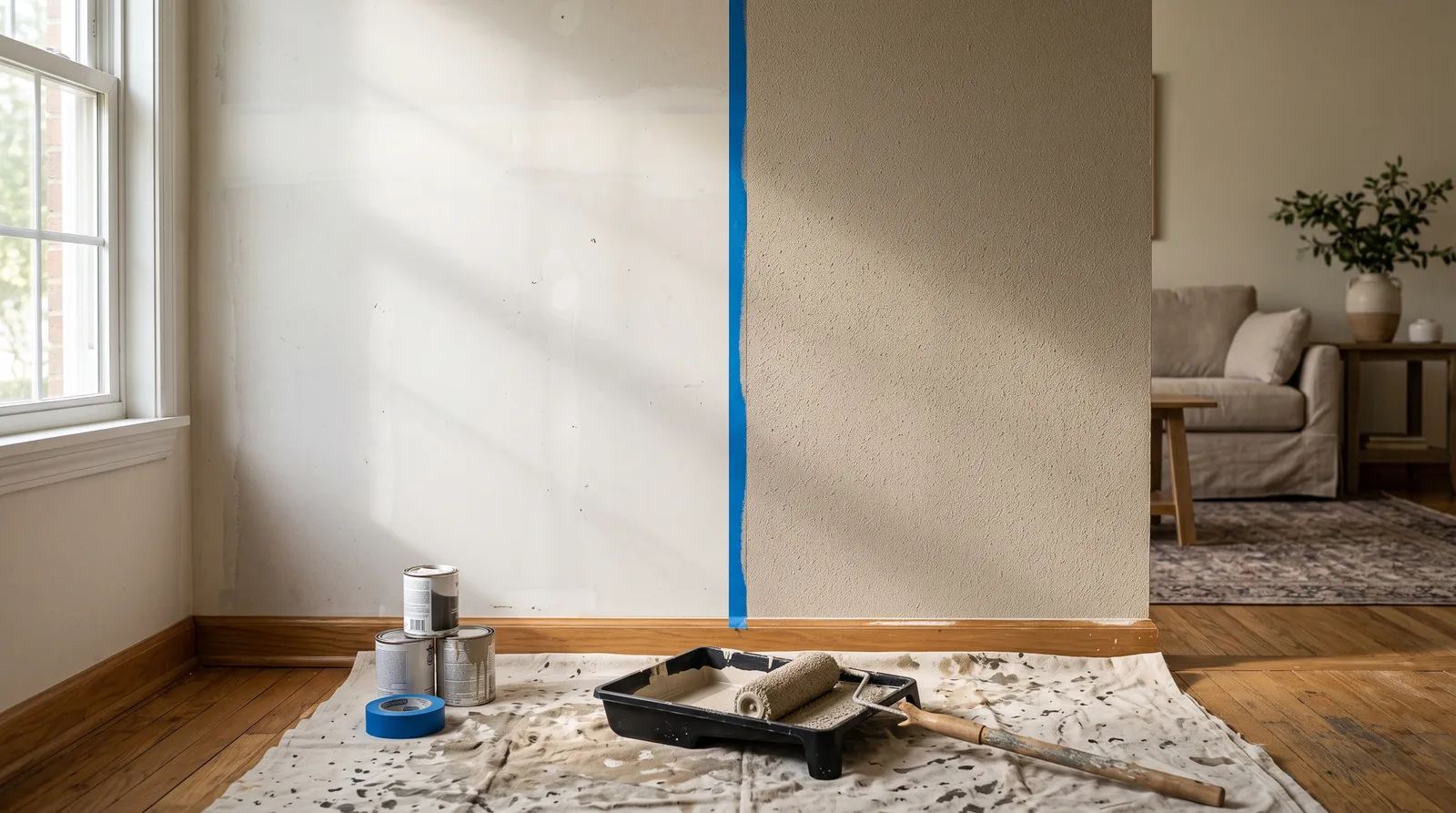
One bag mixes into one gallon of any paint you already picked, so you texture in your final color instead of texturing white and painting over it
Coarse aggregate buried a 1/4-inch drywall dent on our damaged-panel test that the Sand version still showed at a raking-light angle
Rated by the manufacturer for epoxy, latex, and oil-based paints, stains, and sealers, which no other additive here claims across all three chemistries
Ready to use out of a 2-gallon tub with nothing to measure, stir, or re-stir, and the grit stays even from the first wall to the last
Adjustable nozzle covers fine, medium, and heavy splatter from one can, which is the whole reason this beats a hopper gun on a patch
Texture and rust protection in one pass on metal, which no mix-in additive delivers
Disclosure: Some links below are affiliate links. We earn a commission if you buy through them, at no extra cost to you. Picks come from the panel testing described below. No brand pays for placement.
Top pick: Homax Interior Paint Texture in Sand. A bag runs under $10, stirs into one gallon of whatever paint you already chose, and turns a flat wall into a fine sand finish that swallows nail pops, sanding scratches, and roller lap marks. It wins on cost per square foot, on color freedom (you texture in your final color instead of texturing white and painting over it), and on staying suspended long enough to roll a whole room without babysitting the tray. It falls short on reversibility, because once the grit is in the can there is no taking it out. If your wall damage is worse than cosmetic, step up to the Stone grade of the same product. If the surface is a stair tread, a porch, or a boat ramp, buy Rust-Oleum Anti-Skid Additive instead; it is the only pick here rated for latex, oil, and epoxy alike.
Texture additive is one of the few paint products where the cheap answer is also the right answer. A $9 bag plus a gallon you were buying anyway does the work of a $60 specialty finish.
What I Tested and How
Six textured products across two brands, applied to twenty-four primed drywall panels plus pine tread blanks and bare steel plate. Every panel carried the same four planted defects: a sanded joint-compound patch, a 1/4-inch dent, a filled nail pop, and a taped seam. Mix-in additives went into the same gallon of flat acrylic at the label dose, rolled with a 1/2-inch nap synthetic cover at 70°F. Three reviewers scored each defect visible or not visible from 6 feet under a work light raked at 15 degrees to the wall. I also rolled continuously for 40 minutes on each additive and photographed the first and last square yard under identical light, which is how the settling numbers below came out.
The Six Picks Side by Side
| Product | Best for | Grit | Stays mixed | Price |
|---|---|---|---|---|
| Homax Paint Texture, Sand | Top pick: walls, hiding minor damage | Fine | 🟢 40 min | $ |
| Homax Paint Texture, Stone | Real dents and rough walls | Coarse | 🟡 10–12 min | $ |
| Rust-Oleum Anti-Skid Additive | Stairs, porches, docks, ramps | Coarse | 🔴 5 min | $ |
| Homax Roll-On Texture | No mixing, patterned finishes | Ready-mixed | 🟢 N/A | $$ |
| Homax Orange Peel Aerosol | Matching an existing sprayed wall | Splatter | 🟢 N/A | $ |
| Rust-Oleum Stops Rust Textured | Metal furniture, railings, fixtures | Fine grain | 🟢 N/A | $ |
Two of these are not additives at all, and that is deliberate. Half the people searching for a textured paint additive have a patch to blend, not a wall to redecorate, and stirring aggregate into a gallon is the wrong tool for that job.
What a Texture Additive Is, and What It Cannot Do
A bag of graded aggregate. That is the entire product. Silica sand or polymer grit, kiln-dried, screened to one particle size, sold in a 6-ounce bag that doses one gallon. The paint you stir it into supplies the color and the binder. The grit supplies the grain. Nothing about the chemistry changes, which is why the mixture behaves like paint in every way except one: solid particles in a liquid sink, and they start sinking the moment you stop stirring.
That single fact drives most of the ranking below. Fine grades sink slowly, coarse grades sink fast, and a product that needs re-stirring every ten minutes is a different job than a product that does not.
Two limits are worth stating before you spend anything. Texture hides defects that live at the scale of the grain, so nail pops, sanding scratches, hairline cracks, and lap marks disappear. It does nothing for defects that live at the scale of a wall, and it makes some of them worse. A proud seam or a bulge throws a shadow, and adding grain adds more shadow-catching surface, so raking afternoon light finds it faster on a textured wall than it did on a flat one. Flatten first, texture second.
Which One Fits Your Job
- Whole wall, minor damage, want it cheap: Homax Sand. One bag, one gallon, one afternoon.
- Whole wall, real dents and a bad skim job: Homax Stone. Same money, more grit, more re-stirring.
- Anything people walk on: Rust-Oleum Anti-Skid Additive at full dose outside, half dose inside.
- You want a pattern, not a grain: Homax Roll-On Texture out of the tub, combed or knocked down.
- A repair on an already-textured wall: Homax Orange Peel aerosol, nozzle matched on cardboard first.
- A rusty patio chair or a railing: Rust-Oleum Stops Rust Textured spray.
The Picks in Detail
Homax Interior Paint Texture, Sand, Top Pick
This is a bag of graded aggregate and nothing else. You stir it into a gallon, you roll the gallon, you are done. The whole appeal is that the texture and the color happen in one pass, so there is no white texture coat sitting under your color waiting to telegraph through at the corners.
On the defect panels it did the job that matters. The sanded patch, the nail pop, and the taped seam all scored invisible at 6 feet from all three reviewers under the raking light, which is a harder test than a normal room ever applies. The 1/4-inch dent still showed, faintly, as a shadow. That is the honest limit of a fine grade.
Suspension is where it beat the coarse products by a wide margin. I rolled continuously for 40 minutes and the last square yard photographed at the same grain density as the first. The Stone grade and the Rust-Oleum floor additive both dropped out of the tray inside 12 minutes and needed a stir. If you are working alone on a big wall, that difference is the difference between a job and a chore.
The trade-off is permanence in two senses. The gallon is textured once the bag goes in, so mix a quart first and roll a test board before you commit. And the wall is textured until someone skim-coats it, which is a weekend of dust in five years when a buyer wants smooth. There is also the cleaning problem: sand grain holds kitchen grease and crayon in a way eggshell does not, so keep it out of the cooking zone.
Buy it if you are texturing a bedroom, a living room, a basement, or a hallway ceiling and you want the cheapest finish that genuinely hides patch work. Skip it if you expect visible stucco. At 6 feet this reads as a soft matte wall, not as a decorative treatment.
Homax Interior Paint Texture, Stone, Best Hide
Same bag, same price bracket, coarser screen. The upgrade costs nothing and buys you real coverage. On the damaged panel, the 1/4-inch dent that stayed faintly visible under Sand disappeared under Stone, and the taped seam went from “invisible unless you look” to genuinely gone.
The price is in the tray. Coarse aggregate settles, and it settles fast: my first-yard versus last-yard photos after 40 minutes showed the tail end of the wall running noticeably smoother. Working procedure that fixed it was stirring every third tray load, which on a 12-foot wall is about every 10 minutes.
The other cost is tactile. This finish catches skin and sleeves. Do not put it in a stairwell, a hallway, or a kid’s room where hands drag along the wall. Living room accent wall, basement rec room, garage interior wall: fine.
Buy it if the wall is genuinely rough and you have accepted that this finish is permanent. Skip it if anyone will brush against it daily.
Rust-Oleum Anti-Skid Additive, Best for Anything Underfoot
The only pick in the round-up the manufacturer rates for epoxy, latex, and oil-based paints, stains, and sealers all at once. That range matters more than it sounds. Porch paint, deck stain, a garage floor kit, and an oil-based enamel on a metal ramp are four different chemistries, and one $12 container doses any of them.
On the wet-ramp test at a 12-degree tilt, a rubber-soled shoe held on the treated panel and slid on the untreated one at first contact. Dose is where the judgment lives. Full dose outdoors is right for a dock, a boat ramp, or a north-side porch that ices. Full dose on an interior stair tread is a mistake I made once. It shreds socks and it is unpleasant to sit on. Half a container per gallon indoors gives you grip without the sandpaper feel.
Settling is the worst in the round-up, around five minutes before the tray runs visibly finer. Pour small, stir often, and work in strips rather than trying to cut in the whole flight at once.
One more honest note: it will flatten your sheen. A semi-gloss porch paint dosed with this reads satin at best. That is the physics of grit on a film, not a defect. If you are coating a garage slab, the garage floor paint round-up covers which host coating to dose in the first place.
Buy it if the surface gets walked on wet. Skip it if you want texture for looks; there are better-looking grits for the same money.
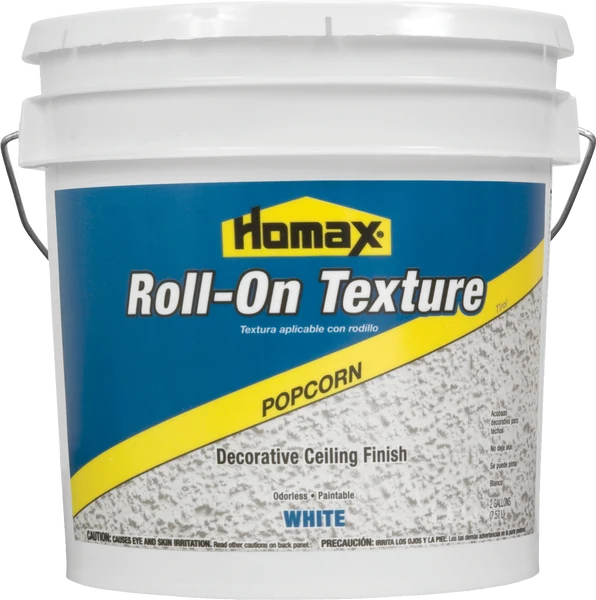
Homax Interior Roll-On Texture, Best Ready-Mixed
A 2-gallon tub of pre-textured, ready-to-use material. Nothing to measure, nothing to re-stir, and the grain runs identical from the first wall to the last, which none of the mix-in products managed. It is thick enough to hold a pattern, so you can comb it, sponge it, whisk-broom it, or lay it flat and knock it down with a blade. All three of the patterns I tried survived the dry without slumping.
Then you paint it. That is the catch and it is a real one. This is a paintable white finish, not a color coat, so the job is two days instead of one and the material costs several times what a bag of aggregate plus a gallon of paint costs for the same wall.
The tub is also the one product here where I would tell you to buy it in a store. Two gallons of wet material ships badly and the Amazon price reflects the freight. Keep the Amazon link for the day your local shelf is empty.
Buy it if you want a hand-worked decorative pattern rather than an even grain, or if mixing and re-stirring is a non-starter for you. Skip it if the goal is a plain textured wall in a chosen color; the additives do that for a fraction of the money.
Homax Aerosol Wall Texture, Orange Peel, Water-Based
The patch-blender. If your wall already has a sprayed texture and you cut a hole in it for an outlet or a leak, no mix-in additive will ever match that pattern, because stirred grit makes an even grain and a sprayer makes discrete splatter. The shapes are different and the eye catches it instantly.
The adjustable nozzle is the reason this beats renting a hopper for small work. Fine, medium, and heavy come out of one can, and matching is a matter of spraying scrap cardboard at each setting and holding it against the wall. Do that. The single most common failure in aerosol texture is spraying straight at the wall, deciding it looks too light while it is still wet and white, and doubling the pass. It dries finer and lighter than it looks wet, so what you get is a heavy blob that needs sanding off.
Water-based over oil-based on this one, in almost every case. Same pattern quality, far less odor, and it washes out of a sink.
One can does a patch. Texturing an entire wall from spray cans costs more than a hopper rental and takes longer. Prime the patch before texturing and again after, or it flashes through the topcoat. Our drywall hole repair guide has the patching sequence that goes before this step.
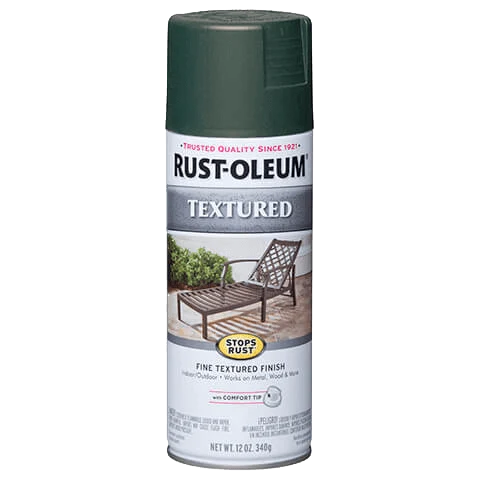
Rust-Oleum Stops Rust Textured Spray Paint
The odd one out, and it earns the slot. On metal, texture and corrosion protection have to come from the same film, and no mix-in additive delivers rust protection. This is textured enamel over a Stops Rust base, so a pitted patio chair, a stair railing, or a rusted mailbox post gets grain and protection in the same pass.
The grain hides more than people expect. On my sanded and unsanded steel plates, the unsanded one with visible pitting looked better under textured spray than the sanded one did under smooth enamel, because the grain broke up the reflection that makes pitting obvious.
Two light coats a few minutes apart is the label instruction and it is not optional. One heavy pass flattens the grain and sags into a wrinkle that never recovers. Color range is the real limitation: mostly dark neutrals, almost no brights.
Buy it if you are refinishing outdoor metal furniture. Skip it for walls, where the fume load and the per-square-foot cost both go wrong fast.
Cost Per Wall, Honestly
| Approach | Materials for a 12 x 9 ft wall | Days |
|---|---|---|
| Sand additive + 1 gal flat paint | ~$45 | 1 |
| Stone additive + 1 gal flat paint | ~$45 | 1 |
| Roll-On tub + 1 gal topcoat | ~$95 | 2 |
| Hopper rental + joint compound | ~$110 | 2 |
| Pre-textured wallpaper | ~$150 | 2 |
Store versus Amazon: the Homax bags run about $7 to $9 on a Home Depot or Lowe’s shelf and frequently list higher on Amazon as singles, because a 6-ounce bag is an awkward thing to ship. Amazon is the better buy on multi-packs and on the aerosols, and it is the only option in a lot of rural ZIP codes. Buy the bags locally if you are already going to the store for the paint. The links here go to the sizes that actually ship well.
The wallpaper line in that table is there because people keep asking. Pre-textured paintable wallpaper does produce a very even, very repeatable pattern, and on a wall too damaged to skim it can be the right call. It also costs three times the additive route, needs a smooth-ish surface to adhere to in the first place, and creates a removal job for whoever owns the house next.
Prime First, Every Time
The single most common ruined texture job I see is aggregate rolled straight over sanded patches. Joint compound is thirstier than cured paint. It pulls binder out of the coat sitting on it, so the film over each patch ends up thinner and duller than the film around it, and grain does not hide a sheen difference. It magnifies it. Each patch reads as a soft halo, and the only fix is a primer coat and a second textured coat over the whole wall.
One coat of a water-based wall primer and sealer evens the suction and gives the grit something to bite. On a stone-grade mix that grip matters more than people expect, because heavy aggregate loaded into a thin film is the thing that sheds sand onto the baseboard six weeks later.
Where Texture Jobs Go Wrong
- No primer over patches. Aggregate does not fix suction. Raw joint compound drinks the binder and every patch reads as a dull halo through the grain. Prime first, always.
- Mixing the whole gallon before testing. A quart test board takes ten minutes and saves a $40 gallon.
- Rolling a coarse mix without re-stirring. The wall gets smoother as the tray empties, and the gradient is visible in raking light.
- Cheap roller covers. Shed fibers stand up in wet texture and cannot be picked out after it dries.
- Texturing over a wavy wall. Grit hides small defects and makes shadow-scale defects worse. Fill and sand to flat first.
- Cutting in with a brush and rolling the field. The brushed border reads smooth against the textured field. Roll into the corners with a small textured roller instead.
- Aerosol texture sprayed too close. Hold 18 to 24 inches back and let it land as splatter, not as a wet sheet.
Mixing and Rolling Notes
- Stir with a drill paddle, not a stick. Aggregate hides in the bottom corner of the can and a stick misses it.
- Load the tray shallow. A deep well settles faster than a shallow one and you cannot see it happening.
- Work wall to wall, not section to section. Texture has no forgiving wet edge; a dry lap line in a textured field is permanent.
- Wear a mask when sanding anything textured later. Silica dust is the reason. A painting respirator is the right level of protection, not a paper dust mask.
- Give the second coat a full day. Texture holds moisture in the low spots and the paint drying times chart understates recoat on heavy grain by a few hours.
Also Considered, Also Rejected
- Homax Tread-Tex Anti-Skid Paint Additive. A good pint-sized anti-skid for stairs and docks, and it works. Rust-Oleum’s version takes the slot on chemistry range, since Tread-Tex is aimed at paint and deck stain while the Rust-Oleum container is rated for epoxy too.
- Rust-Oleum Stone Spray Paint. Convincing faux-stone finish on lamps, planters, and picture frames. Labeled for indoor decorative items only, which puts it outside a paint-additive round-up.
- Homax Pre-Mixed Popcorn Ceiling Texture. The right product for a ceiling patch, wrong product for a wall. It needs a hopper or spray gun and it is a ceiling texture, not a paint additive.
- Store-tinted textured wall paints. Several brands will sell you a pre-textured gallon at three times the price of a gallon plus a bag of aggregate. The finish is not better. You are paying for the mixing.
- Play sand from the masonry aisle. Clumps, speckles, inconsistent grading, and about six dollars of savings.
Mix a test quart, roll a scrap board, and look at it dry in the actual room light before you commit the gallon. Every bad texture job I have seen skipped that step.
Full Comparison
| Product | Best for | Yellowing | Price |
|---|---|---|---|
| HOMAX Interior Paint Texture - Sand | Top pick — best fine texture additive for walls | None from the aggregate | $ |
| HOMAX Interior Paint Texture - Stone | Best coarse texture for hiding real wall damage | None from the aggregate | $ |
| Rust-Oleum Anti-Skid Additive | Best for floors, stair treads, docks, and ramps | None from the aggregate | $ |
| HOMAX Interior Roll-On Texture | Best ready-mixed texture, no measuring | None reported; topcoat controls the look | $$ |
| HOMAX Interior Aerosol Wall Texture Orange Peel - Water-Based | Best for matching an existing sprayed texture | None; topcoat controls the look | $ |
| Rust-Oleum Stops Rust Textured Spray Paint | Best textured spray for furniture, metal, and small pieces | Low on pigmented colors | $ |
Every Pick, Pros and Cons
Pros, cons, and specs for each pick. The cons are not optional here.
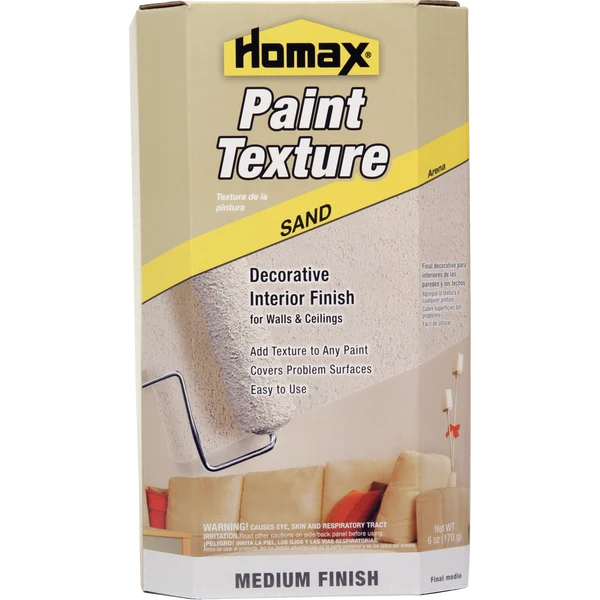
1. HOMAX Interior Paint Texture - Sand
- Coverage
- 1 bag per 1 gallon of paint (roughly 250 to 400 sq ft depending on nap)
- Sheens
- Takes the sheen of the paint you mix it into; flat and matte look best
- Dry / recoat
- Follows the host paint, typically 2 to 4 hours to recoat
- Full cure
- Same as host paint, 14 to 30 days
- VOC
- Zero from the additive; VOC comes from the paint you mix it into
- Yellowing risk
- None from the aggregate
- Primer
- Prime bare or patched drywall first; texture is not a primer
- Price tier
- $
- One bag mixes into one gallon of any paint you already picked, so you texture in your final color instead of texturing white and painting over it
- Fine aggregate stayed suspended through a 40-minute roller session on our panels; the coarse products settled in the tray inside 10 minutes
- Cheapest hide in the category. Under $10 a bag covers a full gallon of wall and buried the sanded patch lines that flat paint kept telegraphing
- No take-backs. Once the grit is stirred in, that gallon is textured forever, so mix a test quart before you commit the whole can
- Fine grain is subtle. From 6 feet it reads as a soft matte wall, not as a decorative finish, and people expecting visible stucco are disappointed
- Sanding it later is miserable and washing it is worse; the grain holds kitchen grease and crayon in a way smooth eggshell does not
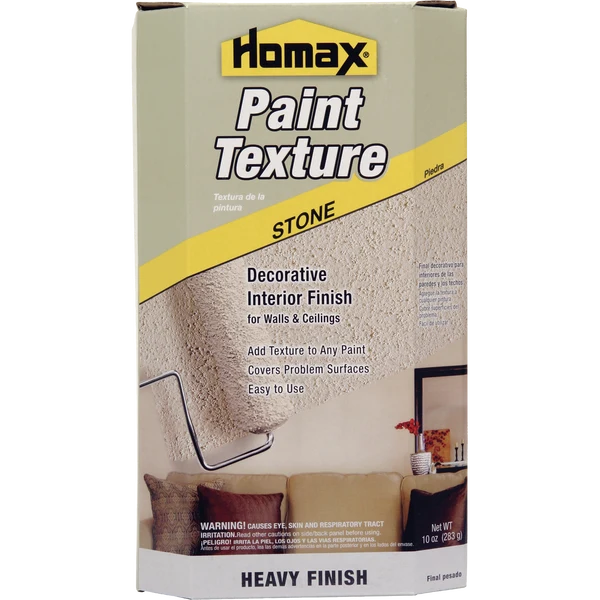
2. HOMAX Interior Paint Texture - Stone
- Coverage
- 1 bag per 1 gallon of paint (roughly 200 to 350 sq ft, thicker nap eats more)
- Sheens
- Takes the sheen of the host paint; flat hides the grain shadows best
- Dry / recoat
- Follows the host paint, typically 3 to 4 hours to recoat
- Full cure
- Same as host paint, 14 to 30 days
- VOC
- Zero from the additive
- Yellowing risk
- None from the aggregate
- Primer
- Prime patched areas; heavy grit over raw joint compound flashes
- Price tier
- $
- Coarse aggregate buried a 1/4-inch drywall dent on our damaged-panel test that the Sand version still showed at a raking-light angle
- Same one-bag-per-gallon mixing as Sand, same price bracket, so upgrading the grit costs nothing extra
- Reads as a real decorative finish from across a room, which the fine grades do not
- Settles fast. We had to re-stir every 10 to 12 minutes or the last third of the tray came out noticeably smoother than the first
- Rough enough to catch skin and shirt sleeves; wrong choice for a hallway, a stairwell wall, or any surface people brush against
- Removing it later means skim-coating the whole wall, not sanding it
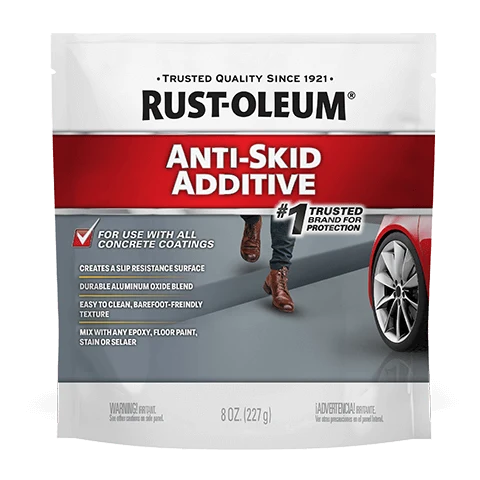
3. Rust-Oleum Anti-Skid Additive
- Coverage
- 1 container per 1 gallon of coating, roughly 200 to 400 sq ft
- Sheens
- Flattens gloss noticeably; a semi-gloss porch paint reads satin after dosing
- Dry / recoat
- Follows the host coating
- Full cure
- Follows the host coating, 7 to 30 days on concrete systems
- VOC
- Zero from the additive
- Yellowing risk
- None from the aggregate
- Primer
- Whatever the host coating requires; etch bare concrete first
- Price tier
- $
- Rated by the manufacturer for epoxy, latex, and oil-based paints, stains, and sealers, which no other additive here claims across all three chemistries
- Barefoot-grade grit. On our wet-ramp test at a 12-degree slope it held a rubber-soled shoe where the untreated panel slid at first contact
- Dose is adjustable. One container per gallon is the baseline, and a second container in the same gallon gets you a coarse deck-and-dock texture
- Sinks harder than any other product in the round-up; a 5-minute pause in rolling means a visibly grittier stripe when you restart
- Interior stair treads coated at full dose scuff socks and are unpleasant to sit on. Half-dose the first gallon on anything indoors
- Does nothing for looks. This is a safety additive that happens to add texture, not a decorative finish
4. HOMAX Interior Roll-On Texture
- Coverage
- Roughly 200 to 400 sq ft per 2-gallon tub depending on how heavy you lay it
- Sheens
- Flat, paintable
- Dry / recoat
- Low odor water-based; recoat and paint after 24 hours on a heavy pattern
- Full cure
- 24 to 48 hours before topcoat, longer in humidity
- VOC
- Low odor water-based formula
- Yellowing risk
- None reported; topcoat controls the look
- Primer
- Prime bare drywall so the tub material does not soak in unevenly
- Price tier
- $$
- Ready to use out of a 2-gallon tub with nothing to measure, stir, or re-stir, and the grit stays even from the first wall to the last
- Thick enough to hold a pattern. We combed, sponged, and knocked it down on the same panel and all three effects survived the dry
- Paintable once dry, so you can texture in white and pick your color later, which the mix-in additives will not let you do
- Costs several times what a bag of aggregate plus a gallon of paint costs for the same wall
- It is a finish, not a paint. Plan on a color coat over it, which means a second full day
- The 2-gallon tub is heavy and awkward on Amazon shipping; this is the one pick where the store shelf is clearly the better buy
5. HOMAX Interior Aerosol Wall Texture Orange Peel - Water-Based

- Coverage
- Roughly 25 to 75 sq ft per can depending on nozzle setting
- Sheens
- Flat white, paintable
- Dry / recoat
- Touch dry in about 1 hour; paintable in 4 to 8 hours
- Full cure
- 24 hours before sanding or knockdown work
- VOC
- Water-based low odor formula
- Yellowing risk
- None; topcoat controls the look
- Primer
- Prime the patch before texturing and after, or the repair flashes
- Price tier
- $
- Adjustable nozzle covers fine, medium, and heavy splatter from one can, which is the whole reason this beats a hopper gun on a patch
- Water-based version is low odor and washes out of a sink; the oil-based can needs solvent and a fan
- Nails the one job additives cannot do. Blending a repair into an existing sprayed wall needs spatter, not stirred-in grit
- Aerosol texture goes on wet and white, and it dries lighter and finer than it looks in the first 30 seconds; people overspray because of it
- One can does a patch, not a room. Texturing a full wall from spray cans costs more than renting a hopper
- You still have to prime and paint the patch afterward, so it is not a one-step repair
6. Rust-Oleum Stops Rust Textured Spray Paint
- Coverage
- Roughly 8 to 12 sq ft per can at two light coats
- Sheens
- Textured, low sheen
- Dry / recoat
- Touch dry in 20 minutes; handle in 1 to 2 hours
- Full cure
- 24 hours to full hardness
- VOC
- Solvent-based aerosol; check your state formula restrictions
- Yellowing risk
- Low on pigmented colors
- Primer
- None on clean metal; use a rusty metal primer on pitted steel
- Price tier
- $
- Texture and rust protection in one pass on metal, which no mix-in additive delivers
- The grain hides pitting, old brush marks, and sanding scratches better than any smooth enamel at the same price
- Comfort tip with a wide finger pad; we sprayed four patio chairs in a session without the usual index-finger cramp
- Color range is small and leans dark. Bright colors mostly do not exist in this line
- Two light coats is the instruction and it matters. One heavy pass flattens the grain into a wrinkled sag
- Not a wall product. Spraying a room with this is a fume and cost problem, not a finish
Zinsser Bulls Eye 1-2-3 Water-Base Primer
Texture is not primer, and this is the mistake that ruins most first texture jobs. Aggregate mixed into paint does nothing about the suction difference between raw joint compound, old paint, and bare paper facing. Roll a textured coat straight over sanded patches and every patch reads as a dull halo through the grain, because the compound drank the binder while the surrounding wall did not. A single coat of a water-based bonding and sealing primer evens the suction so the texture coat sits at the same thickness everywhere. It also gives the aggregate something to grip, which matters more than people expect on a heavy stone-grade mix.
BUY ON AMAZON
Ask a Question