Best Paint for Outdoor Furniture in 2026
Five outdoor furniture paints tested on metal, wood, plastic, and resin. Top pick: Rust-Oleum Universal All-Surface — the only all-in-one that bonds to all four substrates.

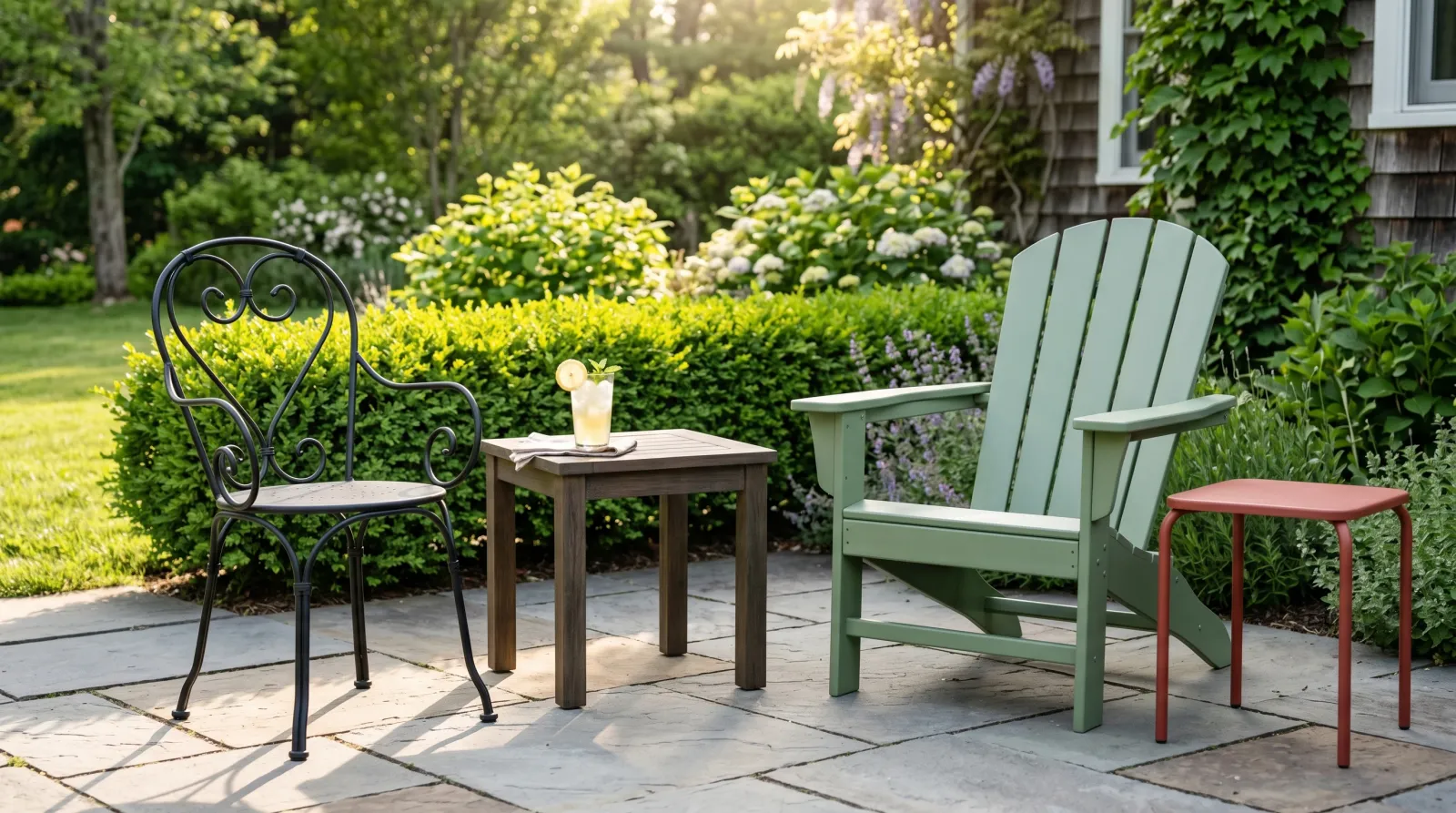
Only all-in-one in the round-up that passed a 7-day cross-hatch tape pull on wood, metal, plastic, and resin without a separate primer
Strongest adhesion promoter in the round-up on release-coated plastic — the substrate every resin Adirondack and most patio side tables are made of
Custom-tint base — match the saturated color of an old Adirondack or repaint a teak bench to a designer chip Behr's deck supports
Actual rust-inhibitor chemistry — bonds over light surface rust without sandblasting to bare metal, the only pick that does this honestly
Thickest body in the round-up — bridges casting flaws and weld stipple on cast aluminum and wrought iron without pooling into the detail
Top pick: Rust-Oleum Universal All-Surface Enamel. At about $20 a quart it’s the only pick that bonded to all four common patio substrates — wood, metal, plastic, resin — without a separate primer step at the 7-day tape test. Universal wins on substrate range, on cured-film hardness, and on the dual brush-and-aerosol availability that lets one chemistry handle a whole mixed patio. It falls short on brush self-leveling and on color deck. For plastic and resin furniture specifically, Krylon Fusion All-In-One is the sharper adhesion call. Behr Premium Plus Exterior Hi-Gloss is the answer when wood furniture has to match a custom designer chip. Rust-Oleum Stops Rust is the right pick for steel and iron with light surface rust. Modern Masters Front Door Paint earns the premium slot for cast aluminum and wrought iron where finish quality is the priority.
A heads-up. This article is about repainting outdoor furniture. If the metal furniture has deep pitted rust below the surface or the wood has structural rot, no paint is the answer; scrap or strip back to bare and rebuild. For light surface rust, scattered flaking, and weathered wood, the picks here are the right starting line.
A Patio Set Is Four Substrates, Not One
Most “best outdoor furniture paint” articles pick one can and stop. That’s how you end up with a beautifully painted iron bistro chair next to a plastic side table that’s already peeling. A real patio set is wood, metal, plastic, and resin in some combination. Each substrate fails differently. Wood swells and contracts with humidity; the wrong paint cracks at the joints. Metal flashes light surface rust within a season; soft paints lift off in sheets. Plastic and resin shed release agents from the molding process; most paints simply don’t bond. Wicker and rattan add a fifth case that behaves like none of the others: the weave flexes, so the film has to flex with it, and no brush can reach into it. One can rarely handles all of that well. The rest of this article is which paint for which substrate, and where one chemistry can stretch across the whole set.
How We Picked
Five outdoor-furniture-appropriate paints applied to identical test pieces — brushed steel chair frames, planed pine seat slats, white HDPE plastic panels, gloss black HPL laminate side tables, and a cast-aluminum bistro chair. Mounted on a south-facing patio for 12 months and tracked for cross-hatch tape adhesion at 7 days, cured-film hardness at 30 days, UV-driven color shift at 90 days and 365 days, rain shed, and chipping at contact points after a stacked-chair test. Plus three patio-furniture refinishers interviewed; the pick-specific finding lives in each review below.
The Picks at a Glance
| Product | Best for | Substrate range | Price |
|---|---|---|---|
| Rust-Oleum Universal All-Surface | Top pick — mixed patio set | 🟢 All four | $$ |
| Krylon Fusion All-In-One | Plastic and resin furniture | 🟢 All four | $ |
| Behr Premium Plus Hi-Gloss | Wood furniture, custom colors | ⚪ Wood, sound metal | $$ |
| Rust-Oleum Stops Rust Gloss | Rusted steel and iron | ⚪ Metal-focused | $ |
| Modern Masters Front Door Paint | Premium iron and aluminum | ⚪ Metal-focused | $$$$ |
The table reads by substrate. Universal and Fusion overlap on plastic and resin; the split is delivery format and brush-grade availability. Behr Hi-Gloss is the wood answer when designer color is the brief. Stops Rust and Modern Masters compete on metal: Stops Rust on rusted steel where chemistry matters, Modern Masters on smooth cast aluminum and wrought iron where finish quality matters. Read this as “pick the chemistry that fits the worst substrate on your patio, and stretch it across the rest if it can.”
The Universal Pick
1. Rust-Oleum Universal All-Surface Enamel — Top Pick
Universal earns the top slot by passing the test that decides the category. Cross-hatched at day 7 on planed pine, brushed steel, white HDPE, and gloss black HPL: no paint on the tape, four for four. The only pick in the round-up that did. Cured-film hardness at day 30 was the second strongest, behind only Stops Rust. On a brushed-steel chair frame cycled through 90 days of patio drag-and-stack abuse, no chipping at the contact points. That’s the failure mode most contractors see on patio refinish projects, and Universal sidesteps it.
The chemistry comes in two formats. The aerosol can is the one readers grab off the Home Depot rack; the brush-grade quart is the same chemistry in a lid-and-handle. For a mixed patio (wrought iron chair frames, wood tabletop, plastic Adirondack), you can spray the frames and brush the tabletop without buying two product lines. Self-leveling from a quart-and-brush is the headline weakness; tip-off with a synthetic angled sash and you get a clean finish, but lay it on heavy and brush marks show under raking light. The aerosol self-levels cleanly.
Soft-cure is 5–7 days to scrubbable. Don’t put cushions back on a chair at day 2; the film prints under a wet drink coaster until full cure. Color deck is about 40 ready-mix shades (satin, gloss, hammered, textured, metallic) with no custom-tint base. The Rust-Oleum Universal product page has the full color list.
Buy it if: a mixed-substrate patio set where one paint should handle all of it. Skip it if: you need a designer-spec color outside the ready-mix deck.
The Plastic and Resin Specialist
2. Krylon Fusion All-In-One — Best for Plastic and Resin
Fusion is the can on the laminate aisle for a reason. The adhesion promoter in the chemistry is the strongest in the round-up on release-coated plastic, resin Adirondacks, melamine, and PVC trim. Cross-hatched at day 7 on the HPL panel and tape-pulled clean. Universal also passed; Fusion passed more emphatically. Under a magnifier the film edges were sharper on the Fusion panel, with no halo of paint dust. On the substrate Fusion was engineered around, it wins.
Five-minute touch-dry on plastic is the practical headline. Spray coat one, spray coat two from the same session, dining set done in an afternoon. Trigger fatigue is real on can number six, though. A full patio set of six chairs burns through 8–10 cans, and your finger feels it by halfway. The 12-oz can covers about 15 sq ft for two coats; budget eight cans for a four-chair-plus-table refinish.
The honest gap: no brush-grade Fusion. If the project has a flat wood tabletop you’d rather brush than spray, you’re either buying a separate brush-grade product or spraying that piece too. Color deck is narrower than Universal; pastels and saturated mid-tones are well covered, deep navy and oxblood are out of range. Verify on the Krylon Fusion All-In-One product page.
Verdict: the resin-Adirondack and plastic-planter answer. For the rest of a mixed patio set, pair with Universal brush-grade.
The Wood-Furniture Custom-Color Pick
3. Behr Premium Plus Exterior Hi-Gloss
The pick for a teak bench, a wood Adirondack, or a wood dining table where the color match to an interior accent or a designer chip is the brief. Behr’s custom-tint base supports thousands of colors, including the Marquee curated palette, and Home Depot tints the gallon in store while you wait. The hi-gloss sheen sheds rain and pollen in a way satin enamels don’t; a quick hose-down brings a year-old patio chair back to clean. On a planed-pine bench-seat panel we tested over 12 months on the south wall, the saturated forest green held within ΔE 2.5 — meaningful color hold for an exterior latex.
The hi-gloss is also the trap. Every brush mark, every roller divot, every drip telegraphs under sunlight on a flat surface. Prep is non-negotiable: sand to 220, vacuum the dust, brush with a quality bristle into the panel detail and roll the flats with a short-nap mohair plus 5–10% Floetrol. The soft-film window through the first 30 days is the second caveat: don’t stack cushions, don’t drag the chair across the patio, don’t pressure-wash. The self-priming claim is the same conditional story as the rest of the Premium Plus line — honest on sound previously-painted wood, dishonest on bare cedar or chalky old paint. Cover Stain first on those substrates. The Behr Premium Plus Exterior product page has the full sheen list.
Buy it if: wood furniture that needs a custom designer color or has to match an existing trim chip. Skip it if: plastic, resin, or rusted metal — wrong product class.
The Rust-Inhibitor Pick
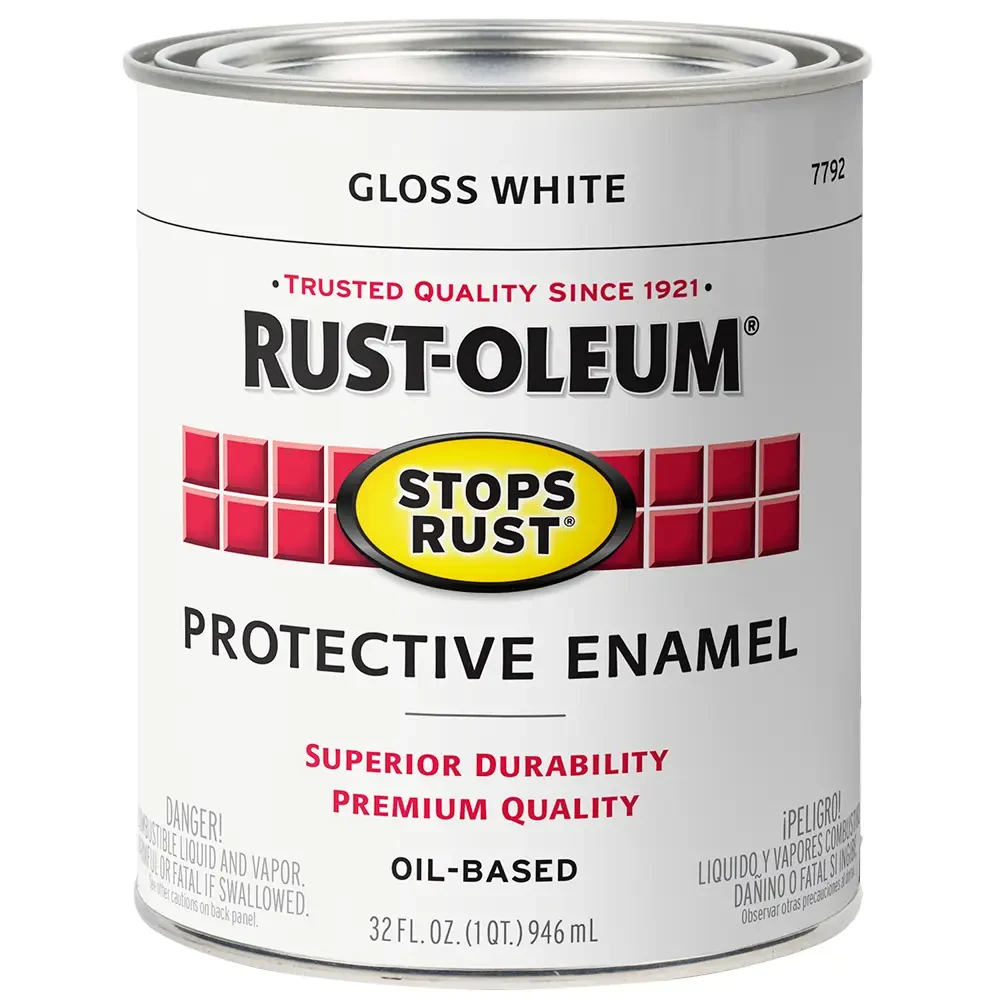
4. Rust-Oleum Stops Rust Protective Enamel Gloss
Stops Rust is the answer for the substrate that defeats every waterborne pick in this round-up: lightly rusted steel. A 15-year-old wrought-iron bistro chair, a steel patio table whose underside flashed rust over the last winter, an aluminum railing where the powder coat finally lifted at the joints — Stops Rust bonds over the rust without sandblasting to bare metal. The oil-based chemistry chemically reacts with the surface rust and binds it under the cured film. Cured hardness at day 30 was the strongest in the round-up; survives a winter outside without chalking on charcoal and bronze bases.
The trade-offs are the trade-offs of solvent-borne oil. The smell is strong; paint outside and never in a closed garage. Touch-dry is 2–4 hours, recoat is “under 4 hours or after 48” — the trap is the dead zone between hour 4 and hour 48, where a second coat applied lifts the first. The film yellows on whites and pastels over 12–18 months in direct sun; specify a saturated tint, not a white. On a south-facing test panel in a charcoal we ran for a full year, the cured film was visibly stronger than any waterborne pick; the same chemistry in a white had picked up a faint ivory cast by month nine. Rust-Oleum Stops Rust is at every paint store and most hardware aisles.
Buy it if: the metal furniture already has light surface rust. Skip it if: white or pastel color, or you can’t paint outdoors today.
The Premium Finish Call
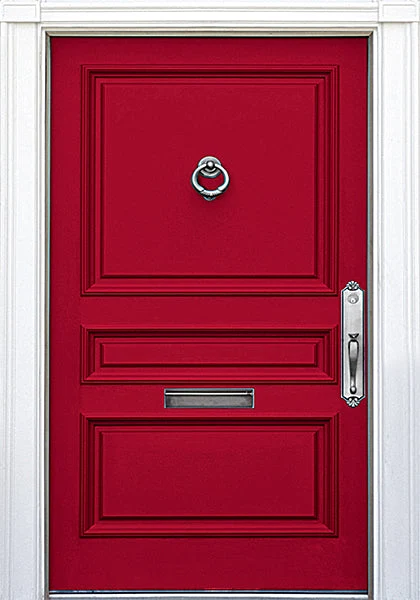
5. Modern Masters Front Door Paint
The dark-horse pick for cast aluminum and wrought iron where finish quality is the priority. Modern Masters runs a higher solids load than Universal or Stops Rust and brushes like a soft cake batter: heavier on the brush, slower to release, more visible body in the wet film. On a smooth surface that thickness reads as a slight orange-peel; on a cast-aluminum bistro chair with weld lines and casting flaws, that body bridges the texture and reads as a factory finish.
The satin sheen is a half-step softer than gloss enamels; in flat north-facing patio light it photographs better than gloss does. The pre-tinted deep matte black and aged bronze are noticeably truer than Rust-Oleum’s ready-mix equivalents. We compared a Modern Masters matte black against Universal satin black side by side on identical iron chair panels and the Modern Masters read deeper and warmer at one foot under afternoon sun. The 6-hour recoat is generous; the cured film stays soft for the first week, so don’t drag the chair across the patio at day 3. Stocking is uneven outside specialty decorative-paint shops; Amazon is the realistic buy channel. Verify on the Modern Masters Front Door Paint product page.
Buy it if: cast aluminum, wrought iron, or any metal furniture where finish quality justifies the $45 quart. Skip it if: custom color match outside the Modern Masters palette, or a four-chair-plus-table project where the quart math breaks the budget.
Building Your Stack: Mixed Patio Sets
| Patio scenario | Frames | Tabletop / wood | Plastic / resin |
|---|---|---|---|
| Wrought iron bistro set with wood table | Modern Masters or Stops Rust | Behr Hi-Gloss | — |
| Steel chairs, light surface rust, wood tabletop | Stops Rust gloss | Behr Hi-Gloss + Cover Stain | — |
| Resin Adirondacks plus matching plastic side table | Krylon Fusion | — | Krylon Fusion |
| Cast-aluminum dining set, no rust | Modern Masters or Universal | — | — |
| Mixed (iron frames, wood top, plastic side) | Universal brush-grade across all three | Universal brush-grade | Universal aerosol |
| Designer color spec on wood, neutral metal | Universal satin black | Behr Hi-Gloss custom tint | — |
| Budget single-can refinish of plastic chairs | — | — | Krylon Fusion |
| Inherited teak bench, full strip and repaint | — | Behr Hi-Gloss + Cover Stain | — |
| Wicker or rattan set (resin weave) | Krylon Fusion aerosol | — | Krylon Fusion aerosol |
| Natural wicker or cane, sound and dry | Universal aerosol | — | — |
Wicker and Rattan
Wicker is the substrate most round-ups skip, and it’s on more patios than resin Adirondacks are. Two rules decide it. Spray, never brush: a brush can’t get down into the weave, so it bridges the gaps with a skin of paint that cracks the first time the weave flexes under someone’s weight. And thin passes, not heavy ones — several light aerosol coats from 8 to 12 inches out, letting each flash off, so the film stays flexible where the strands move against each other.
Which can depends on what the wicker actually is. Most modern outdoor “wicker” is extruded resin over an aluminum frame, and that’s Krylon Fusion’s home substrate — the adhesion promoter is doing exactly the job it was built for. Natural wicker, rattan, and cane take Rust-Oleum Universal aerosol well, provided the strands are dry and sound; brittle, splitting cane is a repair job before it’s a paint job. Budget generously either way. An open weave has roughly one and a half to two times the surface area of the flat panel the coverage number on the can was measured on, so a chair the label says is two cans is realistically three or four.
The case the table doesn’t capture: outdoor furniture stored uncovered through winter. No paint solves a chair left in snow and freeze-thaw cycles. If the patio set lives outside year-round, double the cure window before service and accept that the finish gets a five-year story, not a ten-year one.
Sheen by Substrate, Not by Style
The patio is three sheens, not one.
- Metal frames: satin or hammered. Hides casting flaws and weld stipple; gloss telegraphs every imperfection under direct sun.
- Wood tabletops and seat slats: hi-gloss or semi-gloss. Sheds rain and pollen; cleans with a hose. Satin works on north-facing covered patios where rain isn’t the daily input.
- Plastic and resin: matte or satin. The substrate’s molding texture reads better under softer sheens; gloss on a textured Adirondack looks like wet plastic.
Hi-gloss on a wrought iron chair under noon sun is the wrong call; every casting flaw becomes a focal point. Satin on a wood tabletop in a rainy climate is the wrong call; the cleanup story breaks. The sheen guide has the deep version.
Best Colors for Outdoor Furniture
Outdoors, color choice is a maintenance decision as much as a design one. Three things move it: how fast the color shows dirt and pollen, how the tint holds under a full summer of UV, and how hot the piece gets to the touch. Our own panel data settles the second one — saturated mid-tone tints held inside ΔE 3 at 12 months, while pastels and whites drifted visibly and chalked first. Whatever family you land in, pick the deeper version of it.
Grey: The Default Answer
Grey is the color to choose if you want one decision that keeps working. It hides the film of dirt and pollen that lands on every patio between cleanings, it reads contemporary next to both greenery and stone pavers, and on metal seating in a south-facing yard it stays meaningfully cooler under the hand than black does. The off-the-shelf routes from the picks above: Rust-Oleum Universal in its satin and hammered greys, which are also the sheens that hide weld stipple on iron; Stops Rust Smoke Gray for rusted steel; Krylon Fusion’s greys for resin and wicker. If the brief is a specific designer chip rather than a ready-mix shade, Behr Premium Plus custom tint is the only pick here that will match it. To shortlist before you buy, the grays and greiges collection is sorted by LRV and undertone, and charcoals covers the darker end.
The Rest of the Palette
- White. Brightens a small or shaded patio like nothing else, and it’s the highest-maintenance color on this list. It shows every leaf print and every drink ring, and in our testing it’s the color that chalks first and — in oil-based enamels like Stops Rust — yellows first. If white is the brief, use a waterborne pick and plan on a refresh coat sooner.
- Black. The classic on wrought iron, and it makes casting detail read as intentional. The caveat is heat: a black metal seat in full afternoon sun gets genuinely uncomfortable. For seating in a south-facing yard, a satin or hammered mid-grey gives you the same graphic look without the surface temperature. Blacks and charcoals has the range.
- Browns, beiges, and greiges. The natural choice on wood, because they let the grain and the weathering read instead of erasing them. They also hide dirt nearly as well as grey does.
- Coastal blues and greens. Sage, olive, and soft slate blues sit into planting rather than fighting it, which is why they photograph so well on garden furniture. Deeper versions hold color better than pale ones — see greens, blues, and sage.
How to Paint Outdoor Furniture
The picks above decide durability. The eight steps below decide whether you get that durability. Nothing here is optional on a piece that lives outside.
- Wash it. Mild detergent, warm water, a soft brush into the joints and the underside of the seat. Mildew comes off with a diluted bleach solution — kill it now or it grows back through the new paint. Rinse and let the piece dry fully; on wood that means a day or two, not an hour.
- Sand. Wood gets 100–150 grit with the grain to cut back the old finish and the grey weathered fibers. If the topcoat is going to be hi-gloss, finish with a 220-grit pass — gloss telegraphs every scratch you leave. Metal and plastic take a fine grit, just enough to break the surface sheen. Wipe the dust off with a damp cloth and let it dry.
- Or skip the sanding. On a piece with a sound finish that only needs a color change, a liquid deglosser does the same job chemically. Wet the surface, let it sit for the time on the label, wipe it off with a clean rag. It won’t fix rough or flaking wood; it will get you a paintable surface on a slick one.
- Prime the substrate that needs it. Sound metal, plastic, and resin: no primer, every pick above self-primes. Lightly rusted steel: Stops Rust Clean Metal Primer. Bare cedar or weathered teak: Zinsser Cover Stain, which also blocks the oil bleed. Factory-finished iron with the baked enamel intact: Insl-X Stix. The full matrix is in the primer note above.
- Two to three thin coats, never one thick one. A thick coat traps solvent and moisture in the film, stays soft for weeks, and prints under the first cushion you set on it. Between brushed coats on wood, a light 220-grit scuff knocks down the raised grain and the dust nibs.
- Spray technique, if you’re spraying. Can 8 to 12 inches from the surface, moving before you press the trigger and still moving when you release it, overlapping each pass by about a third. Thin sweeping layers. Holding still to “get coverage” is how runs happen on a chair leg.
- Pick the day. Dry, mild, low humidity, out of direct hot sun. Paint baking on a hot metal frame skins over before the film has levelled, and high humidity stretches the recoat window on waterborne picks past what the label says.
- Topcoat, only if the finish needs it. See the next section — most of the picks here don’t.
Then wait. This is the step the how-to guides skip and it’s where finishes actually die. Touch-dry is not service-dry: cushions go back on at day 7, not day 1, and stacking or dragging chairs across the patio waits until day 30 on the 30-day-cure picks. A patio set repainted in a single weekend and put to work on Monday will look wrong by August.
Do You Need a Clear Coat?
The standard advice is to finish every outdoor project with a coat of exterior polyurethane. On the picks in this round-up, that advice is mostly wrong. Stops Rust, Universal All-Surface, and Modern Masters are enamels — they cure into their own weatherproof film, and a clear coat over them adds a second layer that can yellow, can fail on its own schedule, and buys nothing in protection. Skip it.
There are two places the sealer step genuinely earns its keep. The first is over chalk and ultra-matte finishes, which are not weatherproof on their own; outdoors they need a proper exterior clear, and never wax — wax softens in summer heat and washes off in the rain. The second is a brushed wood tabletop that takes standing water: rain that puddles on a flat surface and sits there is a harder ask than rain that runs off a chair frame. On both, an oil-based spar urethane in satin is the call. Varathane’s is the widely stocked one at about 190 sq ft per quart with an 8-hour dry, so a tabletop is a weekend rather than an afternoon. Two thin coats, sanded lightly between.
Paint or Solid Stain on Wood Furniture?
If the piece is bare or weathered wood and you haven’t committed to a color yet, solid stain deserves a look before the paint aisle does. Stain penetrates instead of forming a film, and that changes the failure mode completely: as it ages it fades and wears thin rather than peeling off in sheets, which means the refresh is a wash-and-recoat instead of a strip-and-start-over. It also leaves the grain and texture visible, which is the whole point on a cedar bench or an oak garden table. Coverage runs about 200–300 sq ft per gallon on a solid color stain, and it dries fast enough — under an hour — to get two coats done in a day.
The trade-offs are real. The color range is a fraction of what a tinted paint deck offers, there’s no hard scrubbable film for a dining tabletop that sees plates and spills, and it does nothing at all for metal, plastic, or resin. So: stain the weathered garden bench you want to keep looking like wood, paint the mixed set where the metal frames and the wood top have to match. For the stain side of that decision, the exterior stain round-up covers the field and the deck stain round-up has the picks that hold up to standing water and foot traffic.
Garden Furniture and the Chalky Matte Look
“Garden furniture paint” usually means something narrower than a patio set: a wooden bench, a pair of planters, a slatted table under a tree. The look that goes with it is a chalky, low-sheen matte rather than the hard gloss that suits metal — flat enough that the piece reads as part of the planting instead of a shiny object in it. Muted sages, soft slate blues, and dusty charcoals are where this palette lives.
Two honest US routes get you there. Rust-Oleum Chalked Ultra Matte gives the true chalky look and a wide enough color deck, but it is a decorative finish and it is not weatherproof by itself — outdoors it needs the exterior spar urethane topcoat from the section above, in a matte or satin sheen so you don’t undo the look you paid for. That topcoat step is not optional, and any guide that says otherwise is describing an indoor project. The simpler route is a flat or matte exterior acrylic, tinted to whatever you want: less of the powdery chalk texture, but it’s built for weather from the start and needs nothing over it. For the decorative-finish side of that choice, the chalk paint round-up covers what each formula does.
For a garden bench specifically, the sequence is the same one that works on teak: clean, sand back the grey fibers, Cover Stain on anything bare or oily, then the finish. A bench is a flat-slat piece, which means it brushes well and doesn’t need spraying — the one piece of outdoor furniture where a brush is genuinely the better tool.
Where Outdoor-Furniture Repaints Go Wrong
- Peeling paint at month two on a plastic Adirondack. Wrong chemistry on release-coated resin. Strip and repaint with Krylon Fusion.
- Rust ghosting through a freshly painted iron chair at month four. Painted over rust without a Clean Metal Primer step. Sand the rust spots back to clean steel, prime with Clean Metal Primer, recoat with Stops Rust.
- Brush marks visible on a hi-gloss tabletop. Skipped the Floetrol step, or tipped-off after the film started to set. Sand to 220, recoat with Floetrol-extended Hi-Gloss using a mohair short-nap.
- Yellow tinge on a freshly painted white chair after one summer. Oil-based enamel on a white in direct sun; the chemistry yellows. Repaint with a waterborne pick (Universal aerosol or Behr Hi-Gloss) and accept the cure-time trade-off.
- Chipping at the leg joints after one winter. Painted before full cure, then stacked the chairs. Wait 30 days before storing or stacking.
- Bare cedar bleeding tannin through a fresh waterborne coat. Skipped the Cover Stain primer. Strip back, prime with Cover Stain, recoat.
- Cracked paint in the weave of a wicker chair after one season. Brushed instead of sprayed, so the film bridged the gaps and split when the weave moved. Strip what’s loose and respray in thin aerosol passes.
- A chalk-painted garden bench going powdery and blotchy by mid-summer. Chalk paint left unsealed outdoors, or sealed with wax instead of a clear. Scuff, recoat, and finish with an exterior spar urethane.
Three things move outcomes more than the can you bought. Clean the substrate before paint, every time: a power-wash plus a mineral-spirits wipe on metal, a sand-to-220-plus-vacuum on wood, a denatured-alcohol wipe on plastic. Two thin coats, not one thick; thick coats trap moisture in the wet film. Cover the furniture for the first 30 days regardless of pick, because every paint in this round-up has a soft-film window that bites if you skip it.
Companion Guides
For the deeper multi-substrate test, the multi-surface paint round-up covers wood, metal, plastic, and laminate in more detail. For exterior wood furniture that’s really a siding-class project (a built-in bench, a wood pergola, a planter wall), the exterior wood paint round-up is the better starting line. For front doors and high-impact paint colors, the front door paint round-up. For sheen calls, the sheen guide. If the wood should stay looking like wood, the exterior stain round-up and the deck stain round-up cover the penetrating side of the decision, and the chalk paint round-up covers the chalky-matte garden-furniture look.
Full Comparison
| Product | Best for | Yellowing | Price |
|---|---|---|---|
| Rust-Oleum Universal All-Surface Enamel | Top pick — all substrates | Low | $$ |
| Krylon Fusion All-In-One | Best for plastic and resin furniture | Low | $ |
| Behr Premium Plus Exterior Paint & Primer Hi-Gloss | Best for wood furniture in saturated colors | Low on tinted bases · medium on white in low light | $$ |
| Rust-Oleum Stops Rust Protective Enamel Gloss | Best for rusted metal furniture | Medium on whites in sun; low on tinted bases | $ |
| Modern Masters Front Door Paint | Best premium finish for iron and aluminum | Very low | $$$$ |
Every Pick, Pros and Cons
Pros, cons, and specs for each pick. The cons are not optional here.
1. Rust-Oleum Universal All-Surface Enamel
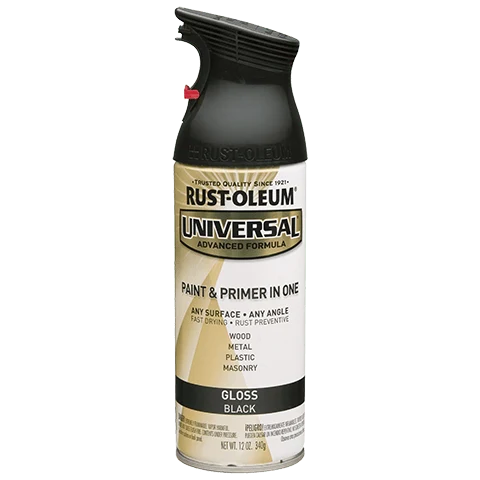
- Coverage
- 100 sq ft / quart (brush-grade); 12-oz aerosol covers ~15 sq ft for two coats
- Sheens
- Satin, gloss, hammered, textured, metallic
- Dry / recoat
- Touch dry 30 min · recoat 1h or after 48h
- Full cure
- 5–7 days to scrubbable · 30 days to peak hardness
- VOC
- <450 g/L (solvent-borne)
- Yellowing risk
- Low
- Primer
- Self-priming on sound wood, metal, plastic, resin; Stops Rust Clean Metal Primer on pitted or rusted steel
- Price tier
- $$
- Only all-in-one in the round-up that passed a 7-day cross-hatch tape pull on wood, metal, plastic, and resin without a separate primer
- Available in brush-grade quart and aerosol — one chemistry handles a mixed patio set (wood table, metal chairs, plastic side tables) without switching product lines
- Hammered and textured sheens hide casting flaws and weld lines on iron furniture that gloss enamels telegraph under sun
- Brush self-leveling on flat surfaces is weak — tip-off carefully with a synthetic angled sash or you'll see strokes under raking light
- Color deck is narrow (about 40 ready-mix shades, no custom tint base); designer-spec colors aren't on the menu
- Soft film for the first 5–7 days; don't stack cushions on a freshly painted chair until day 10
2. Krylon Fusion All-In-One
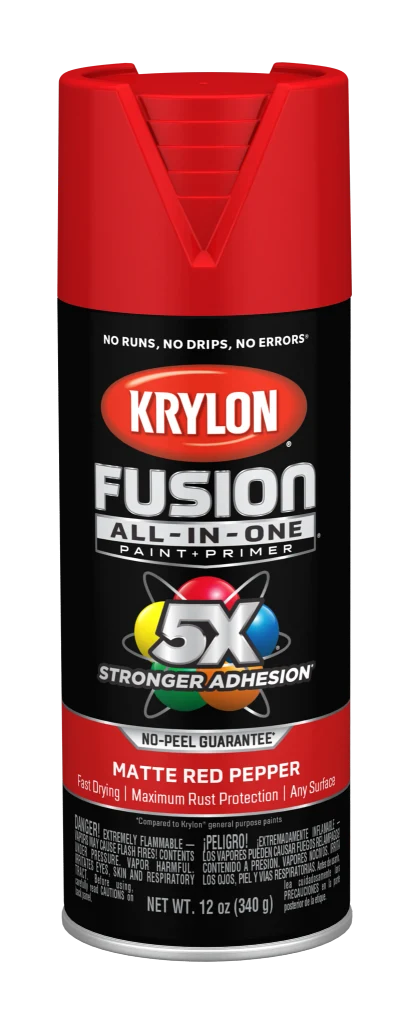
- Coverage
- ~15 sq ft per 12-oz can (two coats)
- Sheens
- Matte, satin, gloss, metallic
- Dry / recoat
- Touch dry 5 min · handle 1h · recoat any time
- Full cure
- 7 days
- VOC
- <450 g/L (solvent-borne aerosol)
- Yellowing risk
- Low
- Primer
- Self-priming on plastic, resin, metal, wood, laminate
- Price tier
- $
- Strongest adhesion promoter in the round-up on release-coated plastic — the substrate every resin Adirondack and most patio side tables are made of
- 5-minute touch-dry on plastic; spray coat one, spray coat two from the same session, dining set done in an afternoon
- About $8–$9 per 12-oz can at any Home Depot or Lowe's — the cheapest pick in the round-up by unit count
- Aerosol only — no brush-grade quart for the wood table that came with the resin chairs
- Color deck heavy on pastels and saturated mid-tones; deep navy, true oxblood, and designer charcoals aren't in range
- Trigger fatigue is real past can six; a full patio set of six chairs burns through 8–10 cans
3. Behr Premium Plus Exterior Paint & Primer Hi-Gloss
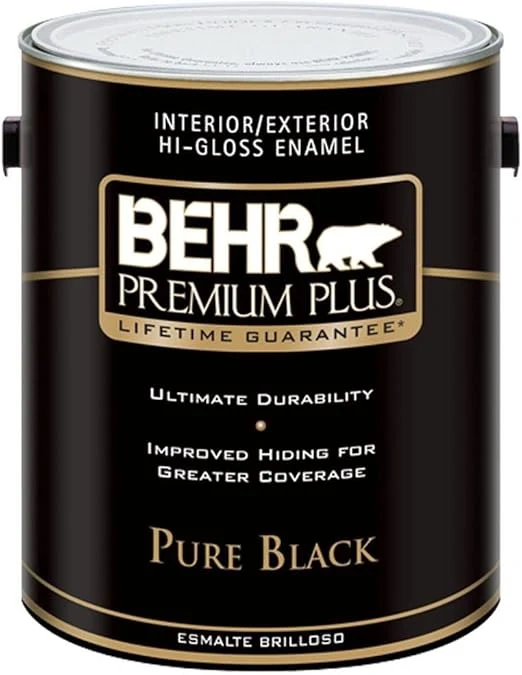
- Coverage
- 250–400 sq ft / gal
- Sheens
- Flat, satin, semi-gloss, hi-gloss
- Dry / recoat
- Touch dry 1h · recoat 4h
- Full cure
- 30 days
- VOC
- <50 g/L
- Yellowing risk
- Low on tinted bases · medium on white in low light
- Primer
- Self-priming on sound surfaces; Cover Stain on bare or chalky wood
- Price tier
- $$
- Custom-tint base — match the saturated color of an old Adirondack or repaint a teak bench to a designer chip Behr's deck supports
- Hi-gloss film sheds rain and pollen better than satin enamels; a quick hose-down brings a year-old patio chair back to clean
- Stocked at every Home Depot and tinted in store while you wait — same-day stocking story no specialty brand matches
- Hi-gloss telegraphs every brush mark and roller divot; the prep on a weathered teak surface is non-negotiable (sand to 220, vacuum, brush-and-tip-off)
- Soft film for the first 30 days — direct-sun chalking on whites and pastels at 24 months is meaningfully more than a Rust-Oleum oil-based enamel
- Self-priming claim holds on sound previously-painted wood; on bare cedar or chalky old paint, prime with Cover Stain first
4. Rust-Oleum Stops Rust Protective Enamel Gloss
- Coverage
- 100 sq ft / quart
- Sheens
- Gloss, satin, semi-gloss, flat, hammered
- Dry / recoat
- Touch dry 2–4h · recoat ≤4h or after 48h
- Full cure
- 30 days
- VOC
- <450 g/L (solvent-borne)
- Yellowing risk
- Medium on whites in sun; low on tinted bases
- Primer
- Self-priming on lightly rusted clean steel; Stops Rust Clean Metal Primer on bare or pitted steel
- Price tier
- $
- Actual rust-inhibitor chemistry — bonds over light surface rust without sandblasting to bare metal, the only pick that does this honestly
- Hardest cured film at day 30 of any pick except Modern Masters; survives a winter outside without chalking on charcoal and bronze bases
- Stocked at Ace, True Value, Home Depot, Lowe's, and every paint store on the east coast in quart and aerosol
- Solvent smell is strong — paint outside, downwind of the house, never in a closed garage with the family in the kitchen above
- Slow dry: touch-dry at 2–4 hours, recoat at 24 hours or after 48 (the 'recoat window' trap that lifts the first coat if you hit it between 4 and 24)
- Oil-based film yellows on whites and pastels over 12–18 months in direct sun; specify a saturated tint, not a white
5. Modern Masters Front Door Paint
- Coverage
- 75–100 sq ft / quart (one bistro set, two coats)
- Sheens
- Satin (primary), semi-gloss available in select colors
- Dry / recoat
- Touch dry 1h · recoat 6h
- Full cure
- 7–14 days
- VOC
- <50 g/L
- Yellowing risk
- Very low
- Primer
- Self-priming on sound metal; Stix or BIN on factory-finished iron
- Price tier
- $$$$
- Thickest body in the round-up — bridges casting flaws and weld stipple on cast aluminum and wrought iron without pooling into the detail
- Satin sheen reads softer than gloss enamels in flat north-facing patio light; doesn't telegraph every brush mark the way Behr Hi-Gloss does
- Pre-tinted designer colors land cleanly on metal furniture; the deep matte black and aged-bronze are noticeably better than Rust-Oleum's ready-mix equivalents
- Color deck is the Modern Masters palette of ~30 pre-tinted door colors; custom-match to a BM or SW chip isn't on the menu
- Quart-only, $40–$45 per quart — most expensive per square foot in this round-up by a wide margin
- Amazon and specialty decorative-paint shops are the realistic buy channels; Home Depot and Lowe's don't stock it
Rust-Oleum Stops Rust Clean Metal Primer
Most outdoor metal furniture comes to a repaint with light surface rust at the joints, the bottoms of the legs, and wherever the seat meets the frame. Clean Metal Primer bonds over that rust without sandblasting to bare steel, and pairs cleanly under Stops Rust gloss, Universal All-Surface, or Modern Masters. For factory-finished iron with no rust, swap to Insl-X Stix — same call we make in the [front door paint round-up](/best/front-door-paint/). For bare cedar or weathered teak, skip the metal primer and use Zinsser Cover Stain on the wood before topcoating. For plastic and resin, no primer needed; Krylon Fusion has the adhesion promoter built in.
BUY ON AMAZON
Ask a Question