Best Clear Topcoats for Painted Furniture
Six clear coats tested over white and navy painted panels for yellowing, blocking, water rings, and hardness. Top pick: Minwax Polycrylic Protective Finish.

Water-white and non-ambering. After 8 weeks on a south-facing sill my Polycrylic panel over white paint measured a delta-b of 0.4, where the oil-based control had gone to 3.9 and read visibly cream
Hardest film in the round-up at 3H pencil hardness after 21 days, and the only pick that shrugged off a wet glass left overnight on the navy panel
Rust-Oleum names painted wood on the product page, which most polyurethanes quietly avoid; adhesion over a 30-day-cured alkyd enamel came back 5B on cross-hatch
Keeps the chalky look. My Chalked panel gained about 3 gloss units after two coats, where Polycrylic Matte added 9 and Varathane Matte added 14
1 to 5 gloss units, the flattest film I measured. Over a deep navy it reads like unsealed clay rather than like a coated surface
One coat, no intercoat sanding, normal use at 24 hours. Nothing else here gets a nightstand back into the bedroom that fast
Disclosure: Some links below are affiliate links. We earn a commission if you buy through them, at no extra cost to you. Our picks come out of the test protocol in “How I Tested,” and no brand pays for placement.
Top pick: Minwax Polycrylic Protective Finish. It’s the 16-dollar quart on every Home Depot shelf in America, and after eight weeks on a south-facing sill my Polycrylic panel over warm white had shifted a delta-b of 0.4 while the oil-based control had gone to 3.9 and read visibly cream. Polycrylic wins on non-yellowing, on sheen choice, and on being buyable at 8 p.m. on a Sunday. It falls short on hardness, at 2H where General Finishes High Performance hit 3H. If the piece is a dining table, a desk, or a run of cabinet doors, pay the extra 20 dollars for the General Finishes. If it’s a chalk-painted dresser you want to stay chalky, Rust-Oleum Chalked Protective Topcoat is the 12-dollar answer.
One thing to settle before you buy anything: if you painted the piece with a waterborne alkyd like BM Advance or SW Emerald Urethane, you may not need a topcoat at all. Those enamels cure to a hard film on their own. Clear coats earn their keep over soft, porous paint. Chalk paint, milk paint, mineral paint, and any latex wall paint someone talked you into using on a nightstand.
What a Clear Coat over Paint Has to Survive
Topcoating painted furniture is a different problem from topcoating stained wood, and most of the advice online is written for the second one.
Over stain, the topcoat is the only film on the piece and it sits on rigid wood. Over paint, you’re stacking a hard clear film on top of a softer colored film, and the two have to move together through every humidity swing your house takes. That stack is why adhesion over cured paint matters more here than raw hardness does. It’s also why the yellowing question is so much louder: a topcoat that ambers over walnut looks richer, and the same topcoat over Simply White looks like a nicotine stain.
Then there’s blocking. Blocking is the failure nobody warns you about, and it’s the one I see most in reader photos. You finish a dresser, wait two days, put a lamp on it, and three weeks later the felt pad has welded itself to the surface. Lift the lamp and a disc of finish comes with it. That’s an uncured film under sustained pressure, and no amount of extra coats fixes it. Only time does.
The fourth thing is sheen honesty. A lot of “matte” topcoats are not matte. Painting a piece in a flat color and then coating it with something that adds 14 gloss units means you painted a matte dresser and ended up with a satin one, and by then the only fix is to recoat the whole thing with something flatter.
How I Tested Six Clear Coats
Six topcoats, brushed onto matched 12 x 12 inch poplar and MDF panels painted three ways: BM Advance in a warm white, BM Advance in a deep navy, and Rust-Oleum Chalked Ultra Matte for the chalk-paint case. Paint cured 30 days at 70F before any clear coat went on, because topcoating uncured paint is its own separate failure and I wanted it out of the variables.
Every product got its label-specified coat count with a 2-inch synthetic sash brush. Yellowing measured with a colorimeter at week 0 and week 8 on a south-facing sill in Zone 6. Blocking at day 7 under a 5-lb weight on a felt furniture pad for 24 hours. Pencil hardness per ASTM D3363 at day 21. Cross-hatch adhesion per ASTM D3359. Gloss read at 60 degrees before and after, which is how I caught how much sheen the “matte” products actually add. Pick-specific results live in each review below.
The Six Picks Side by Side
| Product | Best for | Sheen range | Hardness at 21 days | Price |
|---|---|---|---|---|
| Minwax Polycrylic | Top pick: dressers, bookcases, most flips | Ultra Flat to Gloss | ⚪ 2H | $ |
| GF High Performance | Tabletops, desks, cabinet doors | Dead Flat to Gloss | 🟢 3H | $$$ |
| Varathane Ultimate WB | Gallon jobs, spindle chairs (aerosol) | Matte to Gloss | 🟢 3H | $$ |
| Rust-Oleum Chalked Topcoat | Chalk paint, budget, keeping it chalky | Matte only | 🟡 HB | $ |
| GF Flat Out Flat | Decorative pieces that must read dead flat | Very flat only | 🟡 F | $$$ |
| Minwax Polycrylic Max | Fast turnaround, one coat, back in use tomorrow | Ultra Flat to Gloss | ⚪ 2H | $$ |
Two of these are cheaper in a store than shipped. Polycrylic and the Chalked topcoat are both under 18 dollars a quart at any Home Depot, and paying Amazon shipping on a single quart of either makes no sense. Buy those locally and keep the Amazon link for gallons or for the multi-pack, which does ship well. The General Finishes cans are online-or-specialty either way.
Pick Yours in Ten Seconds
- Painted a dresser, nightstand, or bookcase and want it done right: Minwax Polycrylic, three coats, satin or matte.
- Painted a dining table, a desk, or kitchen cabinet doors: General Finishes High Performance. The 3H film and the water-ring result decide it.
- Doing a whole set of chairs or a big piece and buying by the gallon: Varathane Ultimate Water-Based. Grab the aerosol for the spindles.
- Chalk-painted anything and want it to still look chalky: Rust-Oleum Chalked Protective Topcoat.
- Deep color, decorative piece, want zero sheen: General Finishes Flat Out Flat.
- Selling the piece Saturday and painting it Thursday: Minwax Polycrylic Max.
Every Pick, Reviewed
Minwax Polycrylic Protective Finish, Top Pick
Polycrylic has been the default answer for painted furniture for twenty years, and the testing didn’t dislodge it. Water-based acrylic-urethane, water-white in the can and water-white on the panel, five sheens, 125 sq ft to the quart, and stocked in three sizes at every big box and hardware store in the country.
The yellowing number is the reason it’s here. Delta-b of 0.4 over warm white after eight weeks of direct sun, against 3.9 for the oil-based control that I ran alongside as a sanity check. On the panel itself, the Polycrylic half and the bare paint half were indistinguishable at arm’s length. Adhesion over the cured alkyd came back 5B, no lifting at the cross-hatch.
Where it gives ground is hardness. 2H at day 21, one full step under General Finishes and Varathane. On a dresser top that’s fine, because a dresser top holds a jewelry tray and a lamp. On a desk where someone writes with a ballpoint through a single sheet of paper, 2H shows the writing.
The brush-out has a rhythm you have to learn. Polycrylic starts grabbing at about 45 seconds. Load the brush, lay it on, tip it off in one direction, and walk away from that section. Go back to smooth a spot at 90 seconds and you’ll drag a ridge into the film that stays there. My second white panel has one, right across the middle, from exactly that mistake.
Three coats, not two. The label says three, and the blocking test explains why: my two-coat panel printed under the weight at day 7, my three-coat panel didn’t. Sand at 320 between coats, tack off the dust, keep the coats thin.
Buy it for dressers, bookcases, nightstands, dining chairs, and any piece painted in chalk or milk paint. Skip it for dining tables and desks; that’s General Finishes territory.
General Finishes High Performance, Best for Tabletops and Cabinet Doors
The one that actually stands up to a household. 3H pencil hardness at day 21, and the only topcoat in the round-up that came through the water ring test clean. I left a glass of ice water on a day-21 navy panel for twelve hours. Polycrylic left a faint white blush that took two days to fully disappear. Varathane left a ghost. General Finishes left nothing.
It brushes better than it has any right to. Self-leveling enough that a 2-inch synthetic sash brush leaves no lap marks on a cabinet door, and thin enough to spray through a 1.1 mm HVLP tip with no thinning. If you’re doing a kitchen’s worth of doors, that matters more than the price does. The Dead Flat sheen is a real dead flat, under 5 gloss units, which means you can put a genuinely durable film over a matte-painted piece without turning it satin.
Two honest problems. It isn’t in a home center, so you’re ordering it and waiting, and it’s 30 to 38 dollars a quart against Polycrylic’s 16. The other is the 21-day cure, which General Finishes publishes plainly and which people ignore plainly. Light use at 7 to 10 days means you can put the drawers back. It does not mean you can set a planter on it.
Buy it for dining tables, desks, coffee tables, and cabinet doors. Skip it if you need the finish this afternoon.
Varathane Ultimate Water-Based Polyurethane, Best Value by the Gallon
The gallon math is the whole argument. Around 55 to 65 dollars for 500-plus sq ft against roughly 120 dollars of Polycrylic quarts to cover the same ground. Same 3H hardness as General Finishes on my panels, and Rust-Oleum is one of the few manufacturers that names painted wood on the product page instead of pretending furniture is always stained.
The aerosol is the reason it stays in the round-up even for small jobs. Spindle chairs, turned legs, carved trim, anything where a brush parks a run in an inside corner you won’t find until it cures. Four spray coats to match three brushed ones, which is Rust-Oleum’s own instruction and worth respecting.
The Matte sheen is the weak spot. Measured 14 gloss units over my chalk-painted panel, which is a low satin, not a matte. Over a flat-painted piece that reads as a plastic film sitting on top of the color. Use Varathane in satin or gloss where you want sheen, and use something else where you don’t.
Do not shake the can. The label says it, I did it anyway on the first panel, and the bubbles cured in.
Rust-Oleum Chalked Protective Topcoat, Best over Chalk Paint
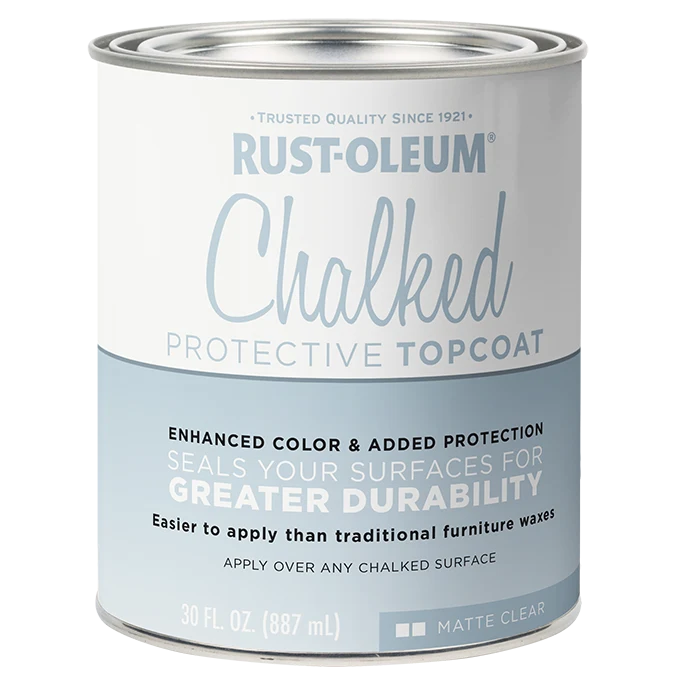
The narrow-purpose pick that nails its purpose. It’s a matte-only clear coat built to go over Rust-Oleum’s Chalked Ultra Matte paint, and the number that justifies it is 3. That’s how many gloss units two coats added on my chalk panel. Polycrylic Matte added 9 on the same paint. Varathane Matte added 14.
For a chalk-painted dresser, that difference is the whole project. You picked chalk paint for the powdery flat look, and a topcoat that turns it satin has undone the reason you bought the paint.
What you’re giving up is protection. HB pencil hardness, the softest film here by a wide margin, and it blocked at 24 hours under the weight test. Treat it as fingerprint and dust insurance on a vertical or low-traffic surface. It will not save a chalk-painted table from a sweating glass.
At 11 to 14 dollars a quart it’s also the cheapest thing in the round-up, sitting on the same endcap as the paint. Buy it for chalk-painted casegoods. Skip it for anything horizontal that takes drinks.
General Finishes Flat Out Flat, Best Dead-Flat Finish
For the person who wants the wax look without the wax maintenance. 1 to 5 gloss units, the flattest film I measured, and over deep navy it reads like unsealed clay instead of like a coated surface. That’s a specific aesthetic and this is the product that hits it.
General Finishes says in their own documentation it’s for medium to low-use surfaces, not kitchen cabinets or tabletops. That’s an unusually honest thing for a manufacturer to print, and my hardness result (F, between the Chalked topcoat and Polycrylic) backs it up. The heavy matting load also costs clarity. Over black paint, three coats left a faint milky haze that showed up in raking light.
An accent cabinet, a headboard, a painted armoire. Not a table.
Minwax Polycrylic Max, Best for a One-Weekend Flip
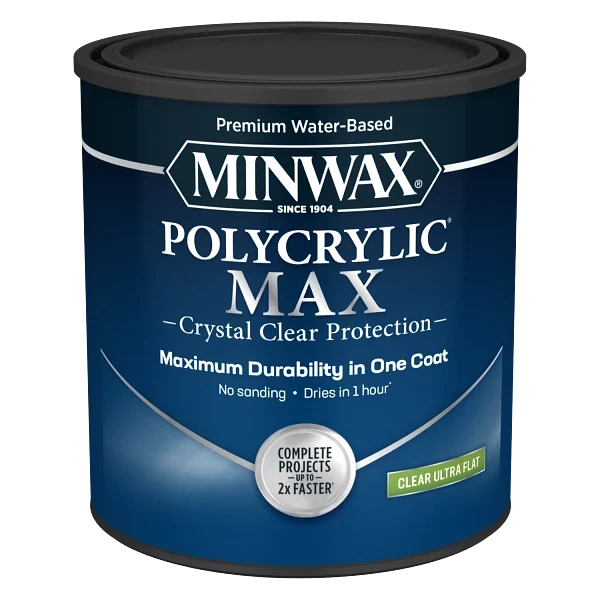
One coat, no sanding between coats, normal use at 24 hours. If you’re painting Thursday and delivering Saturday, that timeline is the pick, and nothing else here comes close to it.
The film tests the same 2H as standard Polycrylic, so you’re buying speed rather than durability at roughly 25 to 30 dollars a quart. It’s also noticeably thicker in the can, which is how it builds in one pass and also how it sags on a vertical drawer front if you load the brush the way you would with the regular stuff. Lighter passes, more of them.
Stocking is still patchy since it’s the newer product on the shelf. Buy it for a deadline. Skip it if you have three days, because standard Polycrylic costs half as much and ends up in the same place.
The Yellowing Question, Settled
Oil-based polyurethane ambers. It always has, it always will, and over white paint the result looks like the piece has been sitting in a smoking section. My oil-based control went from delta-b 0 to 3.9 in eight weeks of window sun, and the shift was obvious to anyone who walked past the bench, not something you needed an instrument to see.
Every pick in this round-up is water-based, and every one stayed under 1.0 in the same test. That’s not a close call, it’s a category rule. Over white, cream, gray, sage, blush, or any pastel, use water-based. Oil-based poly is a good product in the wrong place here; save it for stained wood where the warm cast is the reason you bought it.
The other half of the myth is that water-based clears are weak. They were, in 1995. The current acrylic-urethane and self-crosslinking chemistries hit 3H, which is harder than most oil-based poly gets on a furniture-scale film. For the chemistry side of it, our polyurethane versus Polycrylic breakdown goes deeper than this page needs to.
Wax Is Not a Topcoat
Wax gets recommended constantly for painted furniture, and it’s the right answer maybe a quarter of the time. It gives a hand-rubbed depth that no poly copies, it’s forgiving to apply, and on a decorative piece nobody touches it looks better than any clear coat here.
It’s also a 6-to-12-month maintenance item, it melts under a warm mug, and it’s a one-way door. Once wax is on a piece, no water-based topcoat will bond to it until you strip the wax off with mineral spirits and confirm it’s gone. People find this out after they’ve waxed a table, watched it fail, and tried to poly over the top.
If you like the wax look, buy Flat Out Flat instead and get 90 percent of it permanently. If you want real wax, read our wax versus poly comparison first and go in knowing the upkeep.
Getting It On without Ruining the Paint
- Let the paint cure, not just dry. Chalk paint wants 24 to 48 hours, waterborne alkyd wants a week minimum. Topcoating soft paint traps solvent and you get a soft stack that never hardens.
- Sand between coats where the label asks for it, at 320 grit. Polycrylic and Varathane both want it; Polycrylic Max doesn’t. See our sandpaper grit picks for what to buy.
- Use a synthetic brush, 2 inches, and don’t overwork it. Natural bristle swells in water-based finish. Lay it on, tip it off once, move on. If you’re already fighting texture, the brush marks fix guide covers the recovery.
- Never shake a can of clear coat. Stir, then let it stand 10 minutes so the bubbles you did make can rise out.
- Do the underside or the back of a drawer first. Every finish behaves slightly differently over your specific paint, and finding that out on a drawer back costs nothing.
- Felt pads and a week of patience. The blocking failure is the most common one in this category and it’s entirely preventable by not putting anything on the surface for seven days.
Full prep sequence in our furniture repainting project guide, including what to do when the piece is laminate rather than wood.
What I Left Out and Why
- Minwax Wipe-On Poly, oil-based. Lovely on stained wood, ambers over paint. Wrong tool.
- Shellac and dewaxed shellac. Excellent barrier coat and a fine sealer under paint, not a wearing surface over it.
- Hemp oil and hard wax oils. Built for penetrating into bare wood. Over a paint film they sit on top and stay soft.
- Two-part conversion varnish and pre-cat lacquer. Genuinely harder than anything here and genuinely not a homeowner product. Spray equipment, a booth, and a respirator you’d better know how to fit.
- Spray-can acrylic “clear coats” from the craft aisle. Thin, inconsistent film build, and half of them are lacquer that will lift a fresh latex paint job.
- Polyurethane in a wipe-on water-based version. Fine product, but on painted furniture it takes five coats to reach the film thickness three brushed coats give you.
- Dixie Belle Gator Hide. Popular with furniture flippers and probably deserves a slot; their product pages moved during a site migration and I don’t publish a pick I can’t link to a live manufacturer page.
Buy the Polycrylic quart if you painted a dresser. Buy the General Finishes if you painted something people will eat off. Everything else on this page is a narrower version of one of those two answers.
Full Comparison
| Product | Best for | Yellowing | Price |
|---|---|---|---|
| Minwax Polycrylic Protective Finish | Top pick — best all-round clear coat for painted furniture | Very low (water-white acrylic) | $ |
| General Finishes High Performance Water Based Polyurethane Topcoat | Best for tabletops, desks, and cabinet doors | Very low | $$$ |
| Varathane Ultimate Water-Based Polyurethane | Best value by the gallon, and the best spray can | Very low | $$ |
| Rust-Oleum Chalked Protective Topcoat | Best over chalk paint, and the budget pick | Very low | $ |
| General Finishes Flat Out Flat Water Based Top Coat | Best dead-flat finish on decorative pieces | Very low | $$$ |
| Minwax Polycrylic Max Protective Finish | Best for a one-weekend flip | Very low | $$ |
Every Pick, Pros and Cons
Pros, cons, and specs for each pick. The cons are not optional here.
1. Minwax Polycrylic Protective Finish
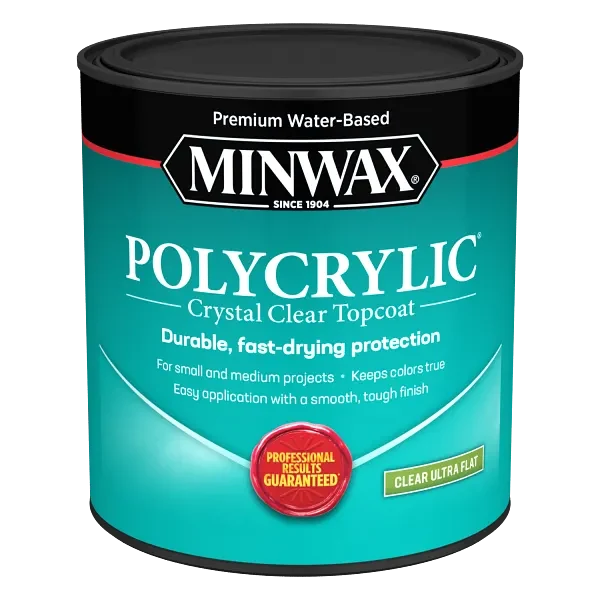
- Coverage
- 125 sq ft per quart
- Sheens
- Ultra Flat, Matte, Satin, Semi-Gloss, Gloss
- Dry / recoat
- Dry to touch 3h at 77F · recoat 2h
- Full cure
- About 21 days to full hardness; light use at 72h
- VOC
- Low, water-based; see the can for your state-compliant SKU
- Yellowing risk
- Very low (water-white acrylic)
- Primer
- None. Goes straight over cured paint
- Price tier
- $
- Water-white and non-ambering. After 8 weeks on a south-facing sill my Polycrylic panel over white paint measured a delta-b of 0.4, where the oil-based control had gone to 3.9 and read visibly cream
- Five sheens (Ultra Flat, Matte, Satin, Semi-Gloss, Gloss) so you can keep a flat-painted piece looking flat instead of forcing it glossy
- Sold in 8-ounce, quart, and gallon at Home Depot, Lowe's, Ace, and Amazon; a quart runs about 14 to 18 dollars and covers 125 sq ft
- Softest film of the brush-on picks at 2H pencil hardness. Fine on a dresser, thin protection for a dining table that takes plates and elbows
- Gummy under a brush if you overwork it. It grabs at about the 45-second mark, so long strokes in one direction or you get drag marks
- Three coats is the label spec, not two. People who stop at two get a soft film that blocks under a lamp base
2. General Finishes High Performance Water Based Polyurethane Topcoat
- Coverage
- 125–150 sq ft per quart; 500–600 sq ft per gallon
- Sheens
- Dead Flat, Flat, Satin, Semi-Gloss, Gloss
- Dry / recoat
- Touch dry 30 min · recoat 2h
- Full cure
- Light use 7–10 days; full cure 21 days
- VOC
- Under 175 g/L (Dead Flat under 225 g/L)
- Yellowing risk
- Very low
- Primer
- None over cured paint; GF sanding sealer only on bare wood
- Price tier
- $$$
- Hardest film in the round-up at 3H pencil hardness after 21 days, and the only pick that shrugged off a wet glass left overnight on the navy panel
- Five sheens including a genuine Dead Flat under 5 gloss units, so a matte-painted piece can get real durability without turning shiny
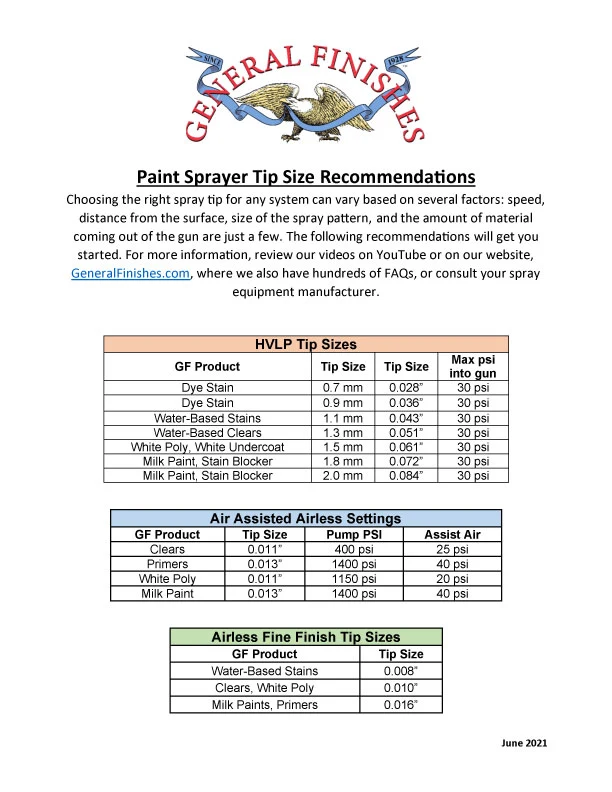
- Self-leveling enough to brush without lap marks; the same can sprays through a 1.1 mm HVLP tip with no thinning
- Not on a home center shelf. It's Amazon, Woodcraft, Rockler, and independent finish suppliers, so no Saturday-morning rescue run
- About 30 to 38 dollars a quart, roughly double Polycrylic for the same 125 to 150 sq ft
- 21-day cure is real. Put a lamp on the dresser at day 4 and the felt pad prints into the finish
3. Varathane Ultimate Water-Based Polyurethane
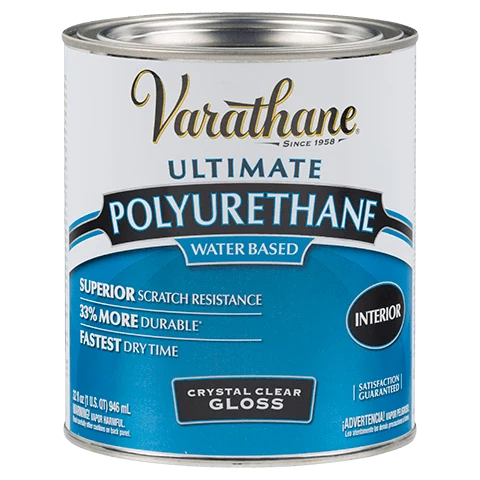
- Coverage
- About 125 sq ft per quart; 500+ sq ft per gallon
- Sheens
- Matte, Satin, Semi-Gloss, Gloss
- Dry / recoat
- Recoat at 2h
- Full cure
- Light use 3 days; full hardness about 30 days
- VOC
- Low, water-based
- Yellowing risk
- Very low
- Primer
- None over cured paint
- Price tier
- $$
- Rust-Oleum names painted wood on the product page, which most polyurethanes quietly avoid; adhesion over a 30-day-cured alkyd enamel came back 5B on cross-hatch
- The gallon is the cheapest hard film here per square foot, around 55 to 65 dollars for 500-plus sq ft
- The aerosol version is the cleanest way to coat spindle chairs and carved trim, where a brush leaves runs in every corner
- Brush-on bubbles if you shake the can, and the label says so. Stir it, then wait 10 minutes before you start
- Four coats on the spray version to match three brushed coats, per the manufacturer's own instruction
- The Matte sheen is closer to a low satin than a true flat; over a chalk-painted piece it reads slightly plasticky
4. Rust-Oleum Chalked Protective Topcoat
- Coverage
- About 150 sq ft per quart
- Sheens
- Matte only
- Dry / recoat
- Dry to touch 30 min · recoat 1h
- Full cure
- About 7 days before normal use
- VOC
- Low, water-based
- Yellowing risk
- Very low
- Primer
- None; designed over Chalked Ultra Matte Paint
- Price tier
- $
- Keeps the chalky look. My Chalked panel gained about 3 gloss units after two coats, where Polycrylic Matte added 9 and Varathane Matte added 14
- Cheapest pick in the round-up at roughly 11 to 14 dollars a quart, on the same home center endcap as the chalk paint
- Thin and forgiving under a brush. It doesn't grab the way a thicker poly does, so a beginner gets a clean pass on a drawer front
- Least protective film here. It's dust and fingerprint insurance for a dresser, not a defense against a wet glass
- Matte only, so it's useless if you wanted a satin or gloss finish
- Blocked in my test at 24 hours under a 5-lb weight. Give it a week before anything sits on that surface
5. General Finishes Flat Out Flat Water Based Top Coat

- Coverage
- 125–150 sq ft per quart; 500–600 sq ft per gallon
- Sheens
- Very Flat only (1–5 gloss units)
- Dry / recoat
- Touch dry 30 min · recoat 2h
- Full cure
- Light use 7–10 days; full cure 21 days
- VOC
- Under 250 g/L
- Yellowing risk
- Very low
- Primer
- None over cured paint
- Price tier
- $$$
- 1 to 5 gloss units, the flattest film I measured. Over a deep navy it reads like unsealed clay rather than like a coated surface
- Gives a matte-painted piece the look of a wax finish with a fraction of the upkeep and none of the annual re-waxing
- Same 2-hour recoat and brush-or-spray handling as the High Performance line, so it behaves predictably if you already use GF
- General Finishes says outright it's for medium to low-use surfaces, not kitchen cabinets or tabletops. Believe them
- The matting agents cut clarity. Three coats over black paint added a faint milky haze in raking light on my panel
- About 30 dollars a quart for the least durable film of the three water-based polys here
6. Minwax Polycrylic Max Protective Finish
- Coverage
- Up to 100 sq ft per quart; 400 sq ft per gallon
- Sheens
- Ultra Flat, Satin, Semi-Gloss, Gloss
- Dry / recoat
- Dry 1h · recoat 2h
- Full cure
- Normal use at 24h
- VOC
- Low, water-based
- Yellowing risk
- Very low
- Primer
- None over cured paint
- Price tier
- $$
- One coat, no intercoat sanding, normal use at 24 hours. Nothing else here gets a nightstand back into the bedroom that fast
- Four sheens including Ultra Flat, so the speed doesn't cost you the matte look
- Builds thicker per pass than standard Polycrylic, which means fewer chances to leave a lap mark
- Thicker body means it sags on vertical surfaces if you load the brush the way you would with regular Polycrylic
- Newer product with patchy shelf stocking; the sheen you want may only be online
- Roughly 25 to 30 dollars a quart, close to General Finishes money for a softer film
Ask a Question