Wax vs Polyacrylic: Sealing Painted Furniture
Wax vs poly for sealing painted furniture, explained. Which topcoat lasts on a dresser, why poly can yellow over white, and how to choose for the piece you have.

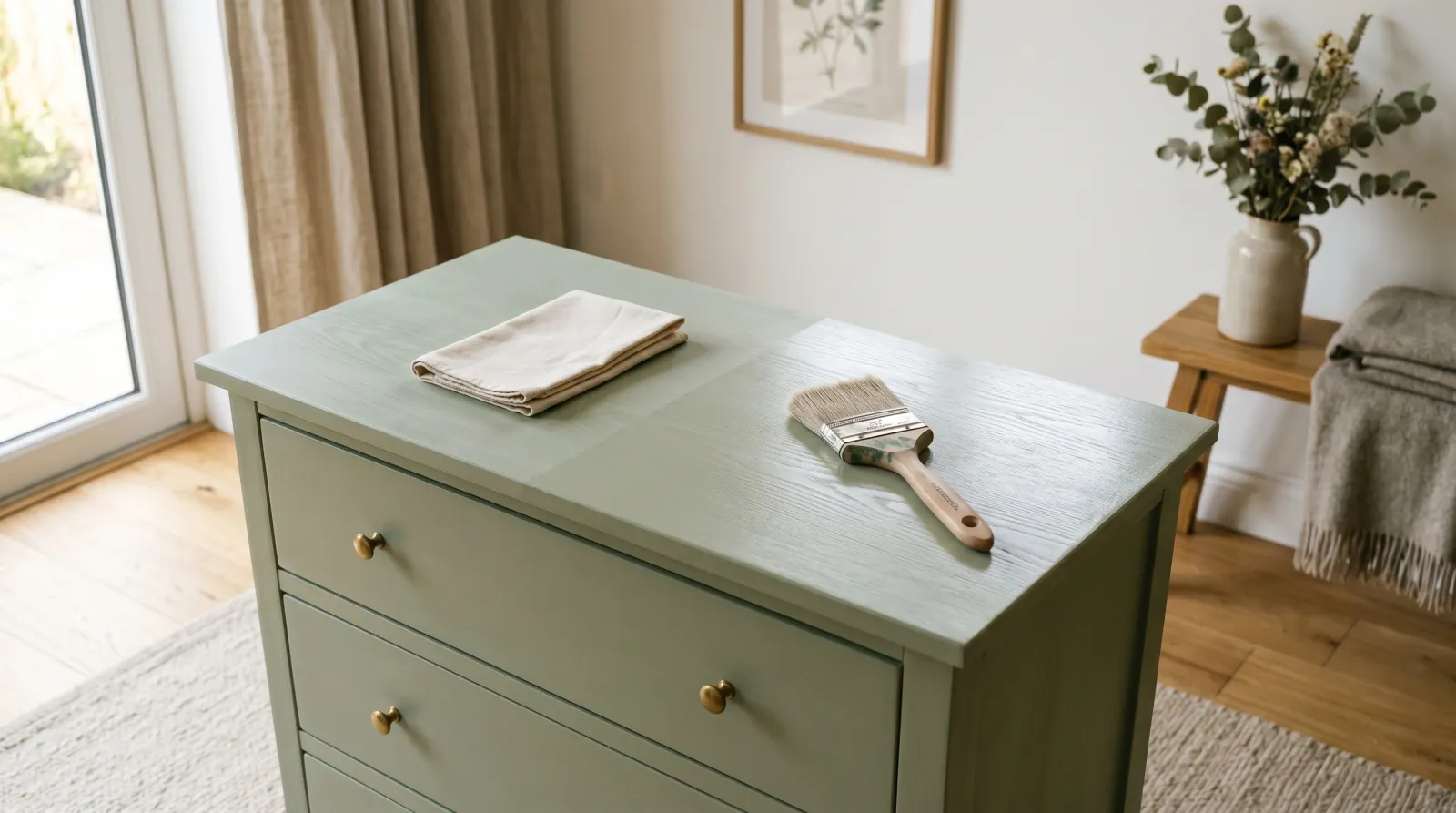
Wax and polyacrylic are the two clear topcoats most people reach for to seal painted furniture, and they protect a piece in opposite ways. Wax is a soft paste you rub on and buff off; it sinks into the paint, leaves a low, hand-rubbed sheen, and needs re-doing every 1 to 2 years. Polyacrylic is a water-based liquid you brush on in 2 to 3 thin coats; it dries to a hard, wipe-clean shell that resists water and lasts for years without redoing. Wax is for looks and gentle use. Poly is for furniture that gets touched, wiped, and lived on.
The choice isn’t really about which is “better.” It’s about what the piece has to survive. A linen-press in a guest room and a kitchen island take very different abuse, and the topcoat should answer the abuse, not the paint can.
When to Use Wax
Wax earns its place on pieces you want to look soft and feel hand-finished, and on the chalk-style paints it was made to partner with.
Reach for wax when:
- The piece is low-traffic. A bedroom dresser, a hall console, a decorative cabinet, a headboard.
- You painted with chalk paint or mineral paint and want that powdery, old-world matte to stay matte. Poly would gloss it up.
- You want a finish you can repair in five minutes. A scuff on waxed paint buffs out or takes a fresh dab of wax with no visible patch line.
- You’re after a specific look. Clear wax deepens the color slightly; dark wax settles into carved edges and crevices to age a piece on purpose.
Wax gives a finish you feel as much as see. It sits close to the paint, warms the color half a step, and catches light in a quiet, almost candle-soft way that no plastic coat reproduces.
When NOT to Use Wax
Wax is the wrong call the moment a surface has to be cleaned, gets wet, or carries weight.
Skip wax for:
- Tabletops, desks, and dining surfaces. Wax can’t take plates, laptops, or a wet glass ring, and water will mark it.
- Kitchen and bathroom pieces. Humidity and splashes soften and cloud a wax finish over time.
- Anything kids or pets use hard. Wax scuffs, and it won’t take a scrub.
- Pieces you don’t want to maintain. Wax is a relationship, not a one-time job. It wants re-buffing every year or two to keep its water resistance.
- High-gloss looks. Buffed wax tops out at a satin glow. If you want shine, that’s a poly job.
If a surface will ever meet water, heat, or a damp cloth, wax is fighting a losing battle from day one.
When to Use Polyacrylic
Polyacrylic (Minwax Polycrylic is the name most people know, though it’s a brand, not the category) is the water-based clear coat that does the heavy lifting.
Reach for poly when:
- The piece works for a living. Tabletops, desks, dressers in a kid’s room, kitchen islands, bathroom vanities.
- You painted over white or a cool pale color and need a clear coat that won’t amber. Water-based poly is the safest clear over white you can buy.
- You want to seal it once and forget it. Two or three coats and the finish holds for years with no maintenance.
- You want to choose a sheen. Poly comes in matte, satin, semi-gloss, and gloss, so you control how much it shines.
The trade is feel and repairability. Poly reads slightly more plastic up close than wax, and a deep scratch is harder to fix invisibly because the patch can flash a different sheen.
How Wax and Poly Compare
| Wax | Water-based polyacrylic | Oil-based polyurethane | |
|---|---|---|---|
| Durability | Low to medium | High | Highest |
| Water resistance | Poor | Good | Excellent |
| Yellowing over white | None | Very slight cool haze | Ambers within a year |
| Sheen | Soft satin glow only | Matte to gloss, your choice | Satin to gloss |
| Maintenance | Re-wax every 1–2 years | None | None |
| Repairability | Excellent, spot-fixes invisibly | Fair | Poor |
| Cure time | 2–3 weeks | 24 hours to firm, ~7 days full | 30 days |
| Best for | Low-traffic, decorative, chalk paint | Tables, kids’ furniture, kitchens | Floors, workbenches, hard-use wood |
Oil-based polyurethane is the toughest of the three, but it yellows, smells strong, and is the wrong choice over any white or pale paint. For most painted furniture, the real decision is wax versus water-based poly. For a deeper read on when a finish is truly hardened versus just dry to the touch, see dry time versus cure time, because rushing a topcoat is the single most common way these finishes fail.
Common Mistakes
- Brushing poly on too thick. Thick coats dry milky, streaky, and slow. Use 2 to 3 thin coats, sand lightly with 400-grit between them once dry, and the finish levels glass-smooth instead of cloudy.
- Putting poly over wax. Poly won’t bond to a waxed surface. It beads, peels, and stays tacky for days. If a piece was ever waxed, strip it or use a barrier primer before any poly goes on.
- Using a cheap brush or a foam applicator on poly. Foam leaves bubbles; stiff bristles leave tracks. A soft synthetic brush or a fine microfiber pad lays it down flat.
- Putting weight on wax before it cures. Wax buffs to a sheen in an hour but doesn’t fully harden for 2 to 3 weeks. Set a lamp on it too soon and you’ll find a permanent dent or print.
- Reaching for oil poly over white. It looks crisp the day you brush it and reads as warm cream within a year. Over white, water-based poly only.
What It Looks Like
Side by side, the difference is mostly in how each catches light. Wax gives a soft, even, low glow that seems to come from inside the paint, with no surface reflection to speak of. Polyacrylic sits on top as a thin clear film, and depending on the sheen you chose it can read dead-flat matte or bounce light like glass. Over a deep color the two look nearly identical at first; the wax just warms it a touch. Over a cool white, hold a clear coat up to the light before you commit, because poly can leave a faint cool haze that a warm wax never would.
Where to Buy and What to Look For
For wax, you want a clear furniture or finishing paste wax (the chalk-paint brands all sell one, and a plain hardware-store paste wax works too); add a dark wax only if you want an aged, settled-into-the-grooves look. For a hard topcoat, buy a water-based polyacrylic and choose your sheen: satin is the safe default, matte for a paint-still-looks-like-paint finish, semi-gloss or gloss for a tabletop you want to shine.
Match the topcoat to the paint, too. The paint underneath matters as much as the coat over it, so start from a furniture paint built to take a clear coat. The best furniture paint round-up sorts the options by how they wear and which topcoats they like.
Pick wax for the pretty pieces you’ll baby a little. Pick water-based poly for everything that has to work for a living, and put three thin coats on the top.