Room Colors · White Staircase
8 Best White Staircase Paint Colors for 2026
ideas, combinations, and real rooms
8 curated picks from real white staircases — with the exact colors, honest reasons why, and the combinations that hold the room together.

Former interior stylist who can spot a green undertone from across a room. Jessica writes the color and mood pieces — what to choose, what pairs, and why your "white" looks pink.
The Fast Answer
Don't want to read 8 picks? These four are the safe answers.

Top Picks for the White Staircase
Tap a shade to see the white staircase in it, then try it on your own room.
White Staircase Color Trends 2026 — What's In, What's Out


- Stark Cool White Everywhere — Bright, blue-undertone whites used on every stairwell surface feel clinical next to 2026's move toward warmer, creamier whites.
- Zero Color Contrast — An all-white stair hall with no tonal contrast between walls, trim, and risers is reading flat and unfinished in 2026.
- High-Gloss White Risers — Glossy bright-white risers on every step are giving way to softer sheens and warmer whites for a calmer, less stark stairwell.
The 8 Best White Staircase Paint Colors
Every pick below is a real rendered white staircase, not a chip. The lead color first; the swatches are the full scheme in the photo — walls, furniture, textiles, accent.

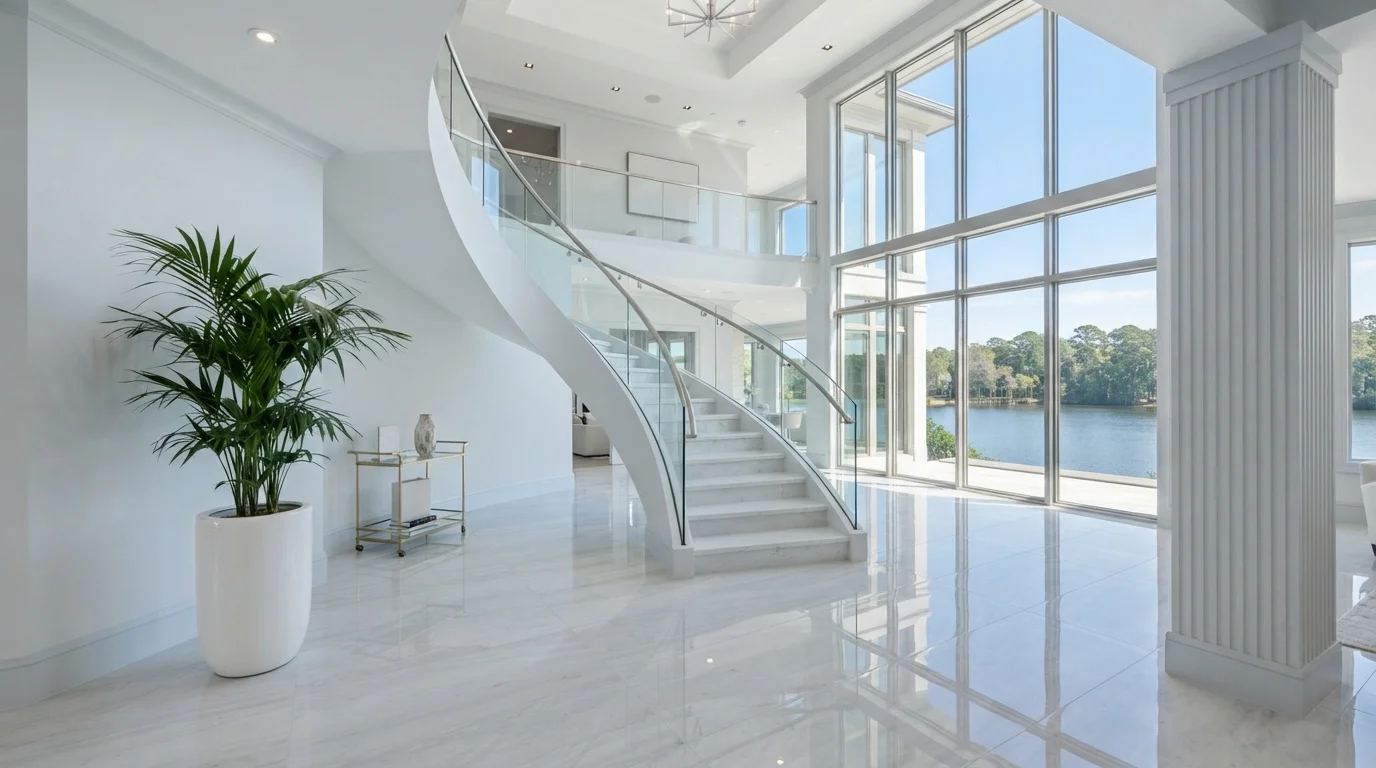
Sunlit glass and sweeping white marble create a breathlessly bright, tranquil sanctuary open to serene water views.
Bright crisp white is a clean, luminous architectural neutral. In this photo, crisp white wraps the walls, ceilings, and ribbed decorative columns, allowing the sweeping marble spiral staircase and glass railings to steal the show. The space feels wonderfully airy, serene, and full of pure daylight. Keeping the surfaces entirely light works because the seamless monochrome color lets the outdoor greenery and soft floor reflections provide natural color. It is ideal for lovers of contemporary luxury who want a modern, open retreat.
SEE CALLA LILY ON YOUR WALLS →
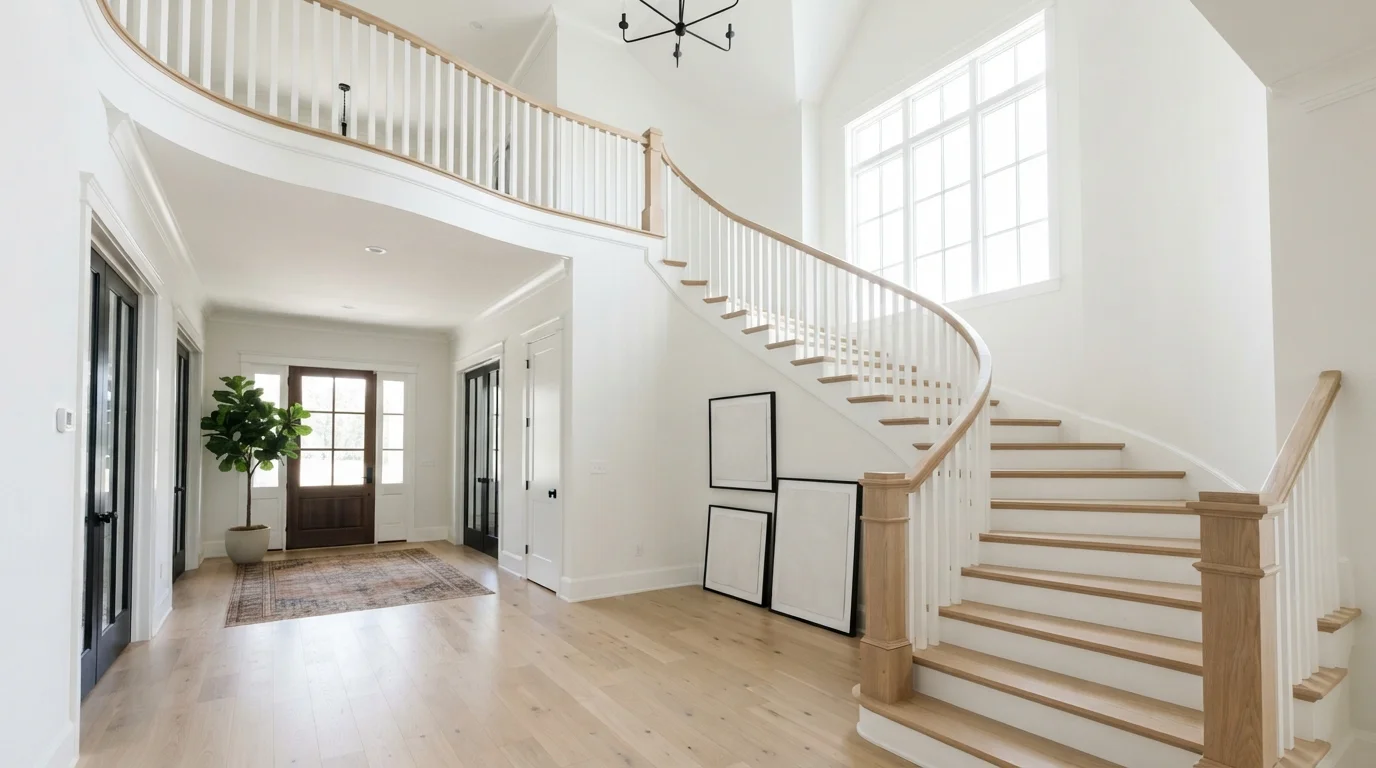
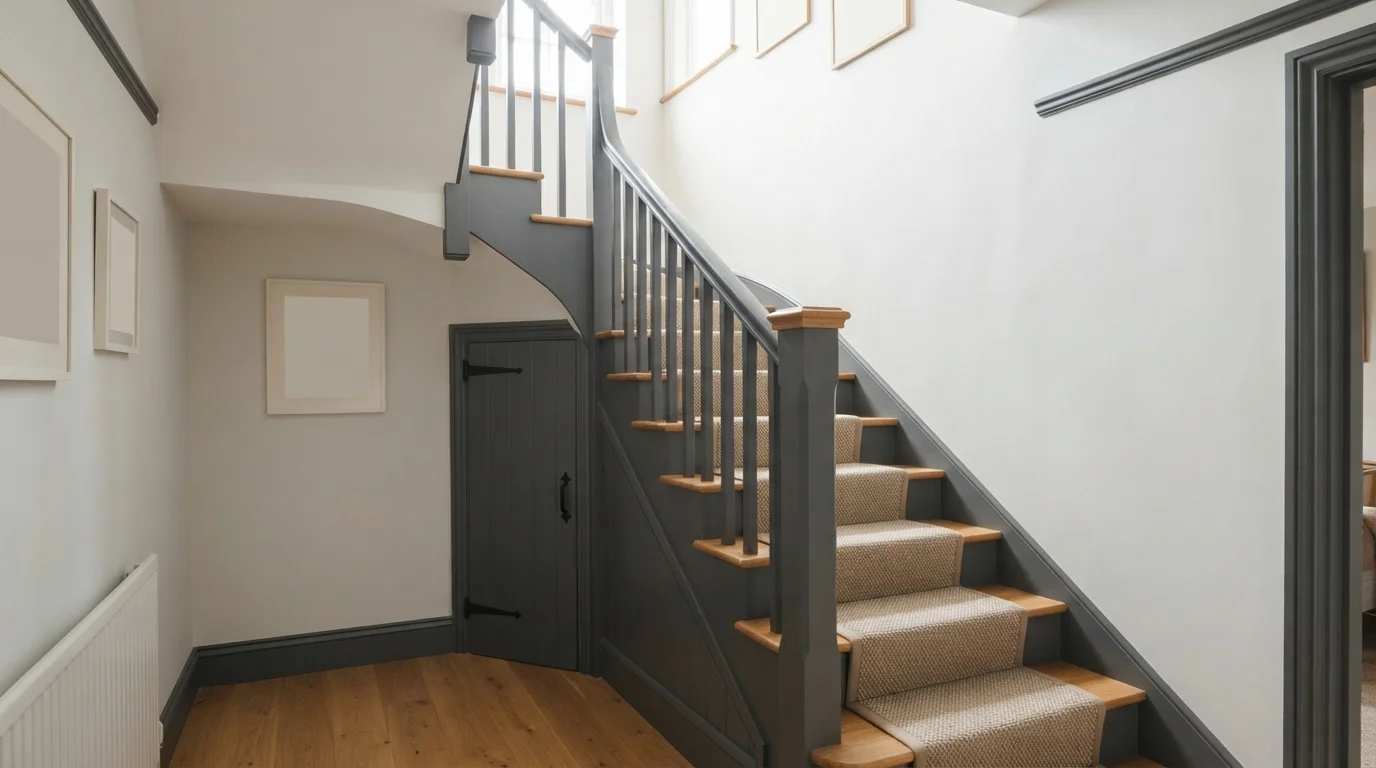
Sunlight streams down the curved staircase, highlighting soft white walls, pale oak steps, and an open, airy entrance.
Soft warm white is a glowing, gentle off-white with just a touch of cream. In this foyer, soft white covers the soaring two-story walls, matched with crisp white balusters and light natural oak stair treads. The whole entryway feels remarkably breezy, bright, and calm. The combination works because clean white surfaces bounce natural sunlight freely while pale timber brings organic warmth. This look is perfect for anyone who loves a fresh, modern Scandinavian style with effortless elegance.
SEE NANO WHITE ON YOUR WALLS →
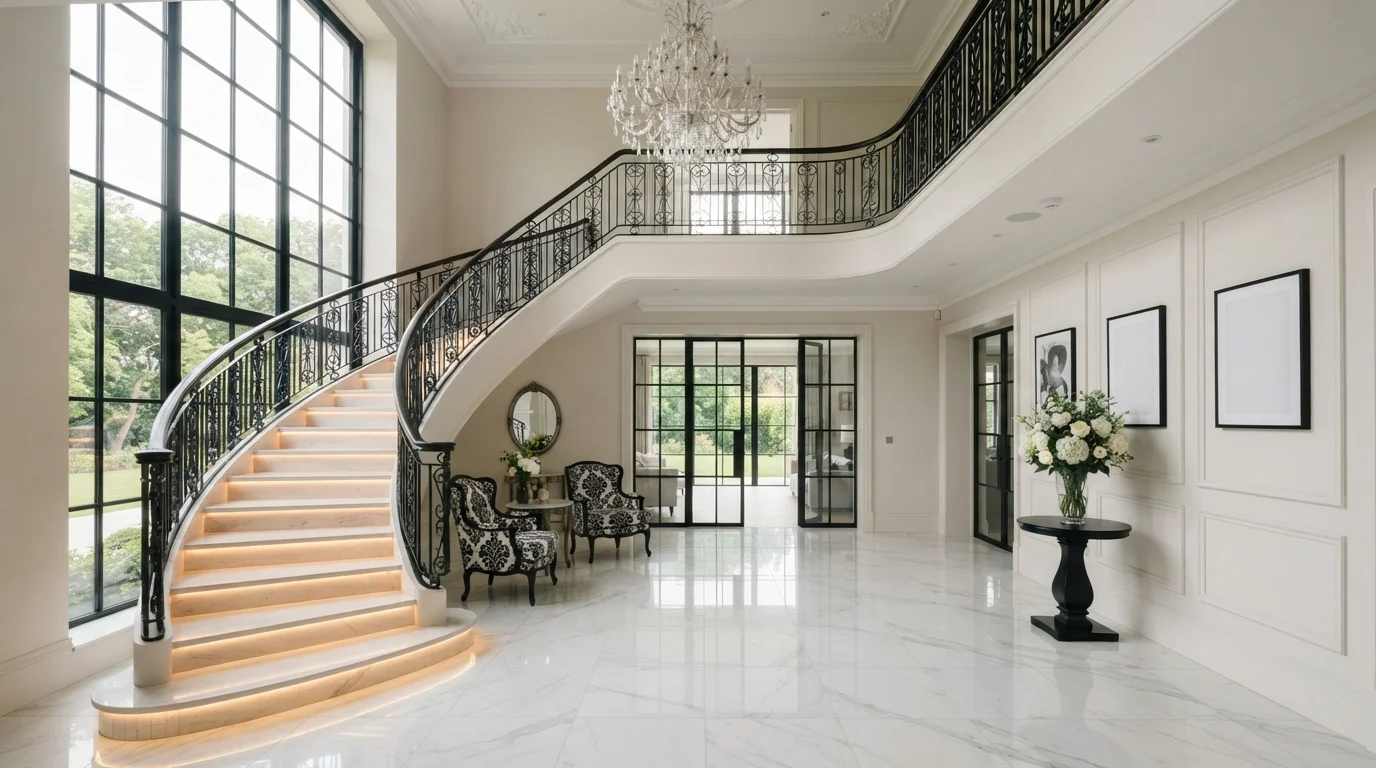
Step into soaring ceilings where luminous illuminated stairs and soft ivory walls create a breathtaking, graceful welcome.
Soft ivory is a warm, luminous off-white that makes large spaces glow. In this grand foyer, soft ivory covers the soaring panelled walls, sculptural stair structure, and classic ceiling mouldings, while black iron railings and damask chairs add sharp contrast. The entire entrance feels majestic, airy, and inviting. The combination works because the light walls reflect the gentle under-stair lighting and giant windows, keeping the dramatic black accents crisp and balanced. This look is for anyone who loves timeless luxury and wants an unforgettable first impression.
SEE COCONUT ON YOUR WALLS →
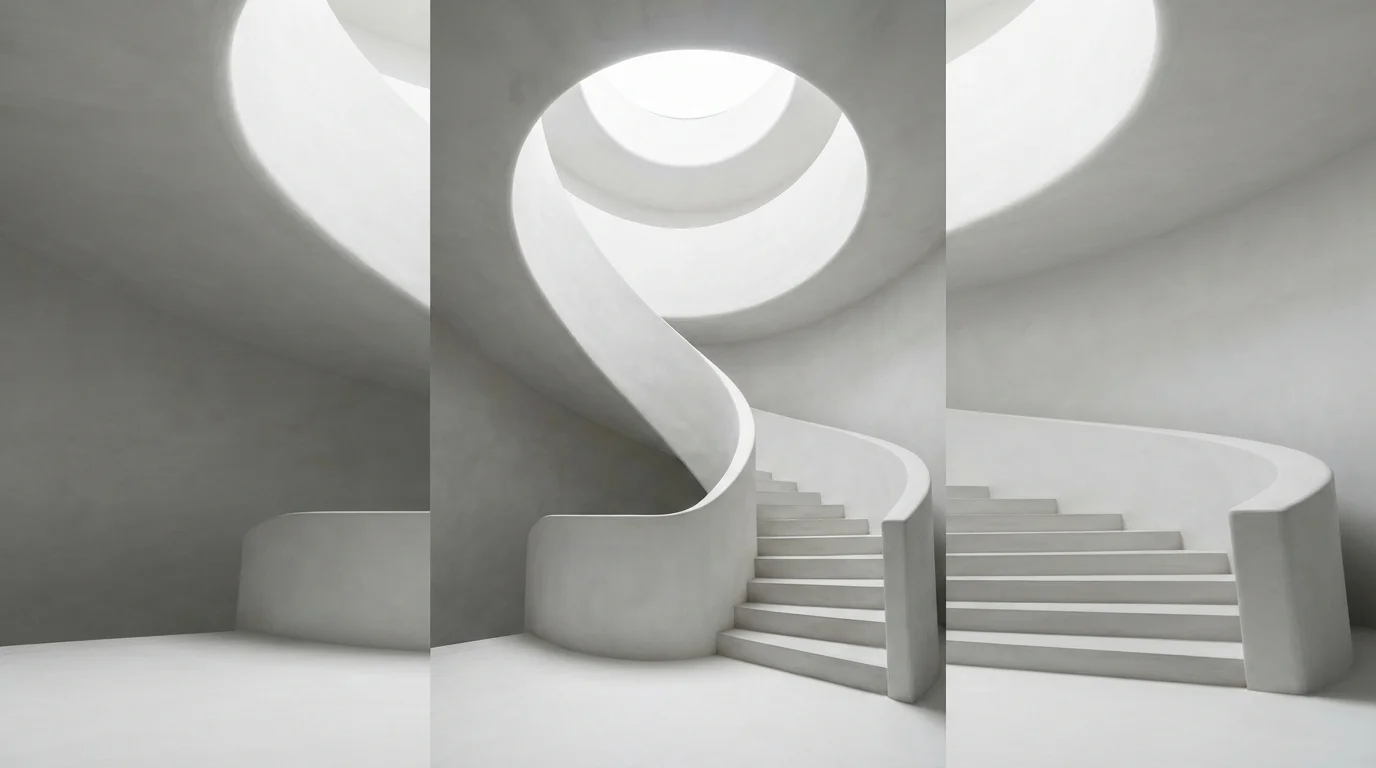
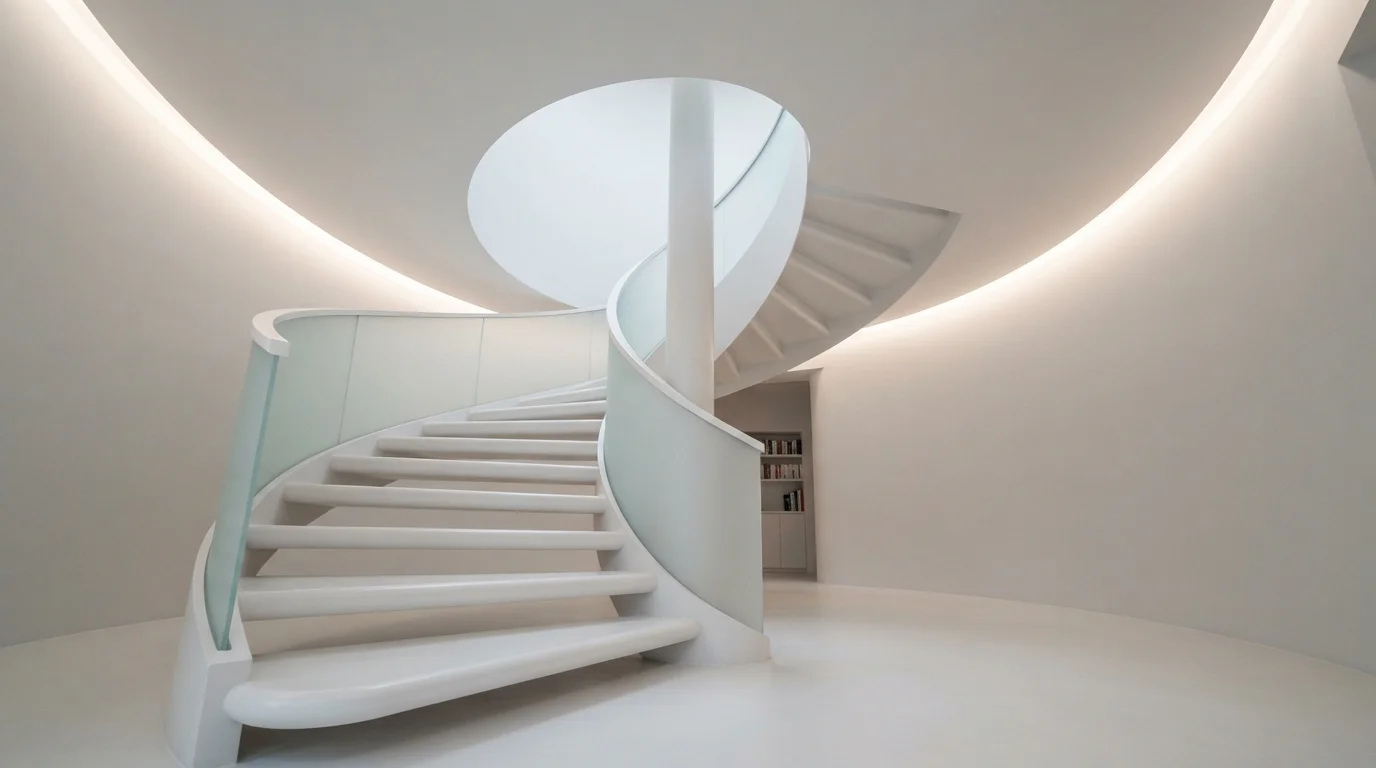
Soft curves and brilliant bright white light create a serene, sculptural space that feels completely weightless.
Pure white is a crisp, clean neutral that reflects maximum light. In this space, bright white covers the sweeping curved staircase, seamless floor, and undulating walls from bottom to top. The whole space feels peaceful, airy, and open like a modern sculpture museum. Sticking to one unbroken shade lets the gentle curves and soft shadows define the room without any visual clutter. It is a striking choice for lovers of ultra-modern, gallery-inspired minimalism.
SEE AMBIENCE WHITE ON YOUR WALLS →
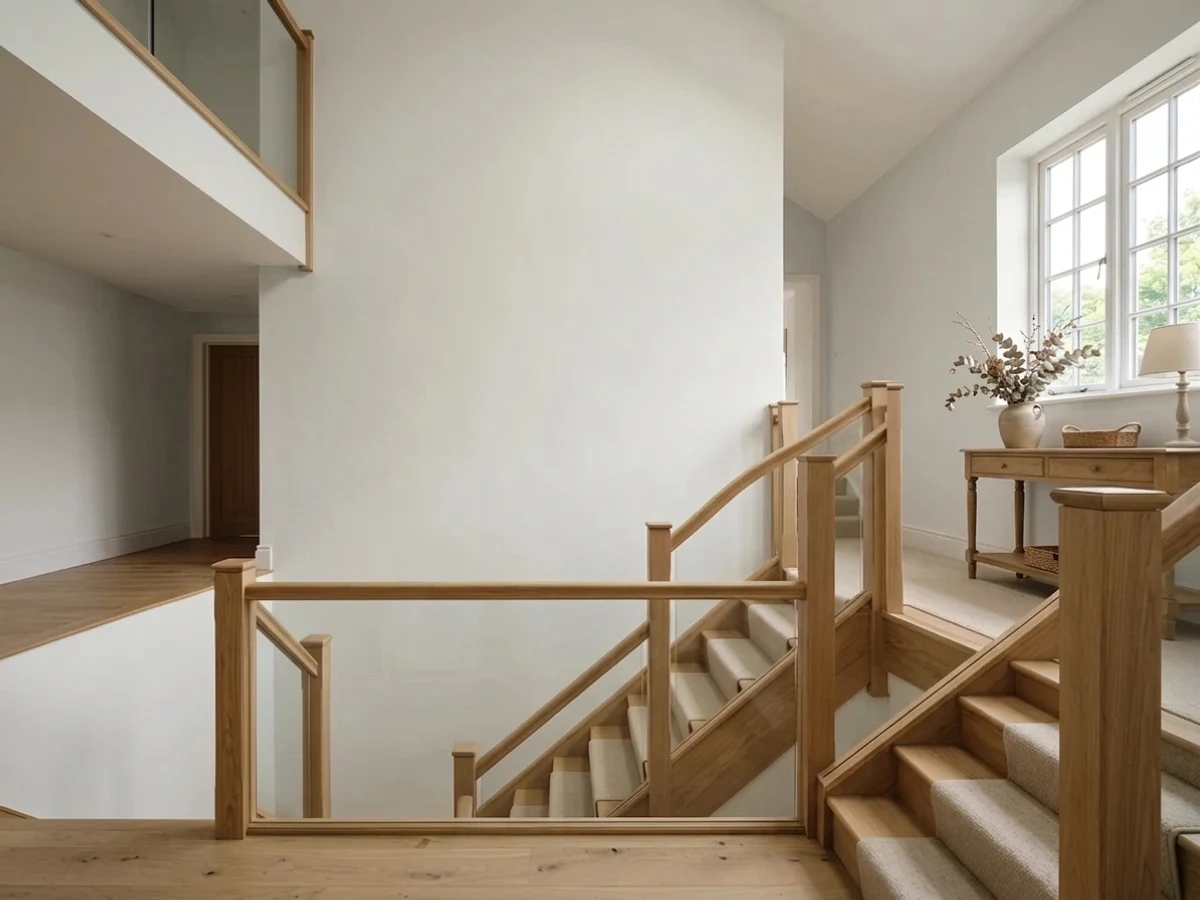
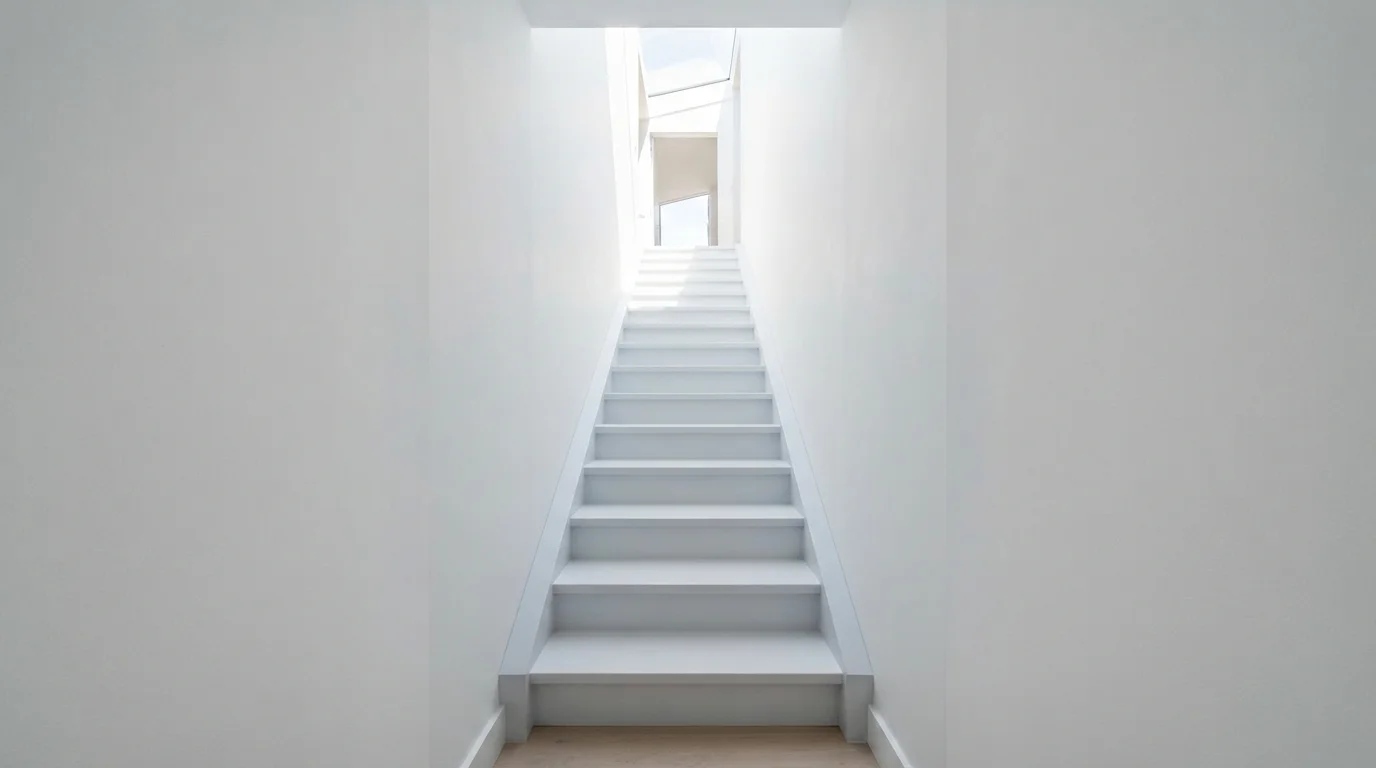
Flooded with intense overhead sunlight, this seamless white stairwell feels completely weightless, clean, and peaceful.
Pure white is an ultra-clean, luminous shade with a crisp modern edge. In this minimalist stairwell, every surface—from the soaring flanking walls to the steep stair treads—is drenched in bright, uniform white. The space feels breathtakingly airy, open, and tranquil. This monochrome treatment works wonderfully because it lets natural sunlight and subtle geometry take center stage without any visual clutter. It is the dream look for anyone who loves radical simplicity and modern architectural style.
SEE WHITE GLOVE ON YOUR WALLS →
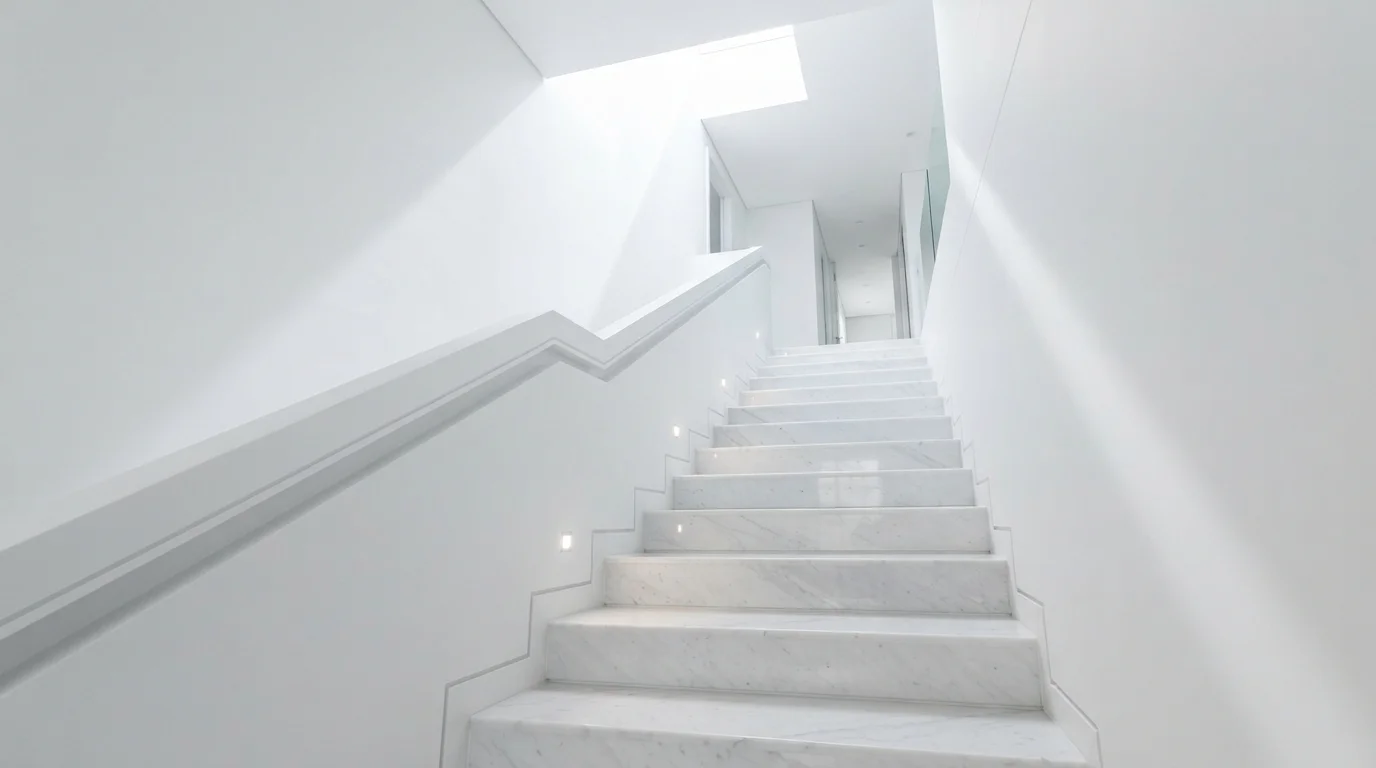
Crisp, bright white walls pair with polished marble treads to create an airy, sculpture-like sanctuary.
Gallery white is a crisp, clean, and radiant neutral. In this space, luminous white covers every wall and the geometric stepped balustrade, seamlessly catching daylight. The area feels amazingly peaceful, open, and weightless. This look works because the all-white surfaces eliminate visual clutter and draw attention to the sharp architectural lines and elegant marble steps. It is perfect for modern minimalists who crave a quiet, museum-inspired home.
SEE LINEN WHITE ON YOUR WALLS →
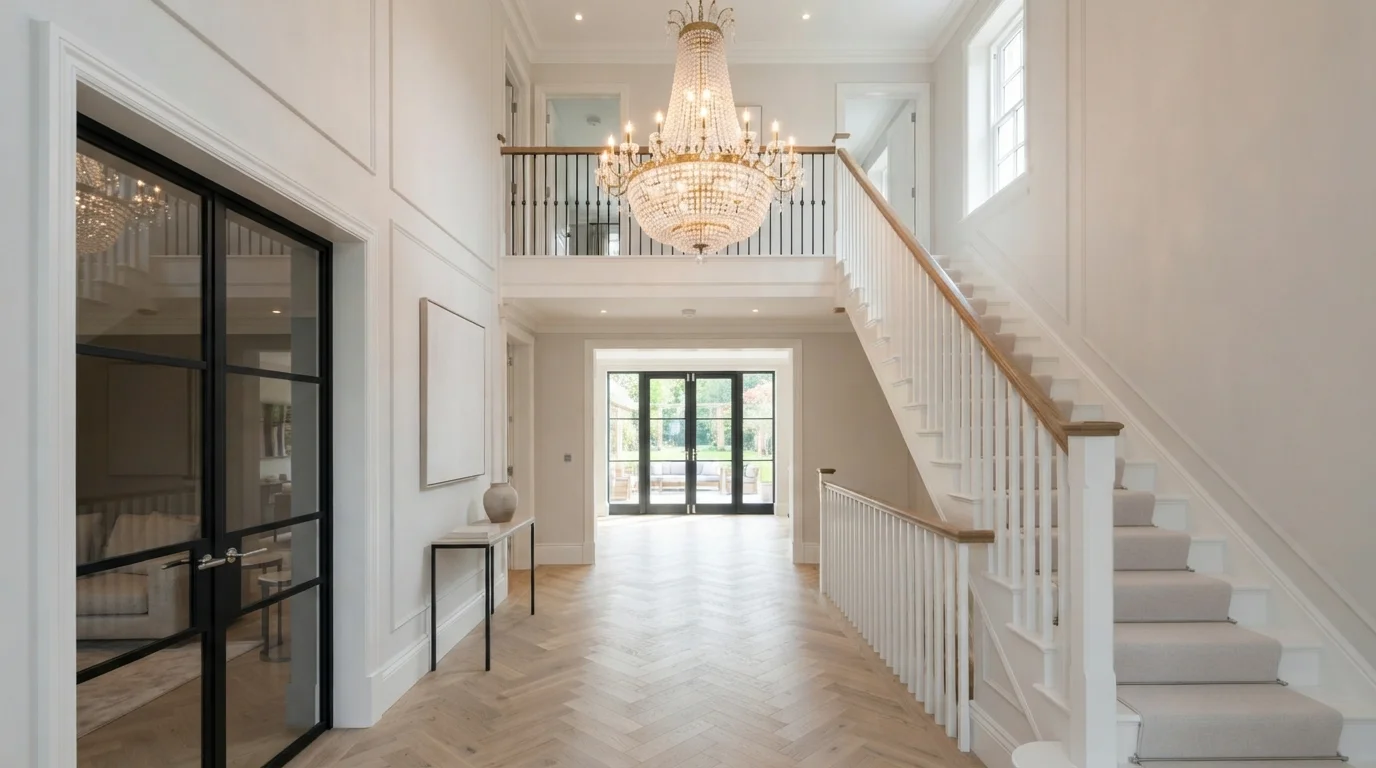
Dazzling crystal and soft white walls create a breathtakingly bright entrance grounded by rich herringbone oak floors.
Soft white is a luminous, gentle shade of clean cream. In this grand entryway, bright white covers the soaring walls, baseboards, and sweeping traditional staircase. The space feels breathtakingly open, airy, and quietly luxurious. Pairing crisp white surfaces with natural wood herringbone flooring adds instant warmth so the open foyer never feels stark or cold. It is the perfect choice for anyone who loves timeless architecture, sun-filled rooms, and an unforgettable first impression.
SEE NATURAL WHITE ON YOUR WALLS →
Smooth white curves and hidden glowing light wrap around a floating spiral staircase for an ethereal, futuristic retreat.
Pure white is a crisp, brilliant shade with an airy feel. In this space, an all-over bright white covers the curving walls, ceiling, and spiral steps without any interruption. The whole room feels strikingly calm, peaceful, and almost weightless. Sticking to a single clean tone lets the sweeping curves and glowing cove lights take center stage. It is an ideal look for modern minimalists who love sculptural design, quiet spaces, and lots of soft light.
SEE PALE BUD ON YOUR WALLS →White Staircase Wall Color Combinations
A wall color never works alone. These are the full schemes from the rooms above — the lead color first, then the supporting colors that make the photo work.
Sunlit glass and sweeping white marble create a breathlessly bright, tranquil sanctuary open to serene water views.
TRY THIS PALETTE →Sunlight streams down the curved staircase, highlighting soft white walls, pale oak steps, and an open, airy entrance.
TRY THIS PALETTE →Step into soaring ceilings where luminous illuminated stairs and soft ivory walls create a breathtaking, graceful welcome.
TRY THIS PALETTE →Soft curves and brilliant bright white light create a serene, sculptural space that feels completely weightless.
TRY THIS PALETTE →The biggest combination decision on a staircase isn't wall-to-wall, it's wall-to-wood and wall-to-metal, because a staircase almost always has a handrail, balusters, and often exposed treads competing with the wall color. Chantilly Lace or Superwhite against a natural wood handrail and treads is the classic pairing — the crisp white keeps the walls from disappearing into the wood tone, and it's bright enough to hold its own next to a dark stained rail. If the balusters or rail are painted black or dark bronze, pair them with a warmer wall like Navajo White or Alabaster rather than the coolest whites; the warmth keeps the contrast from feeling stark and hotel-like.
When the staircase connects two floors visually — an open rail looking down into an entry or a landing you can see from the living room — the wall color should carry through both levels rather than change partway up. Silver Satin was picked here specifically because it reads consistent under the mixed lighting a stairwell has (daylight at the top, artificial at the bottom), so it doesn't shift undertone between floors the way some warmer whites can. Keep the trim, baseboards, and any wainscoting in the same white family at a higher sheen so the wall color and the woodwork don't fight for attention on a surface this narrow.
More Staircase Color Ideas
Set on a color family already? Each page has its own real rooms and picks.
Light or Dark White Staircase Colors?
Go Light (LRV 60+) If…
The room is small, faces north, or has to work at every hour. Light warm colors make it feel bigger and stay calm in evening light — the light you actually live in.
Go Dark (LRV Under 20) If…
You want the cocoon effect and the room has real daylight. Dark works best on one feature wall — or fully color-drenched in a large room with good windows.
On a staircase, the light-vs-dark decision is really about how much natural light actually reaches the stairwell, not personal taste. If the staircase has no window on the run itself — just borrowed light from a door at the bottom or a hallway at the top — stay at the top of the white range: Chantilly Lace (LRV 92) or Superwhite will pull the most out of whatever light is available and keep a boxed-in stairwell from feeling like a shaft. This matters more here than in almost any other room, because a staircase can't add a lamp partway up the flight the way a bedroom can.
If the staircase already gets good light — a landing window, a skylight, or an open rail to a bright room below — you can drop down toward Navajo White (LRV 78) or Silver Satin (LRV 75) without losing brightness, and you'll gain something the highest-LRV whites don't offer: warmth that reads less sterile under a single overhead fixture, and a shade that shows scuffs and shoe marks less obviously than a stark white does. First Star (LRV 69) is the low end of this list and still reads as white, not off-white, so it works for anyone who wants the warmth without the room ever looking cream or beige.
See It. Love It.
Paint It.
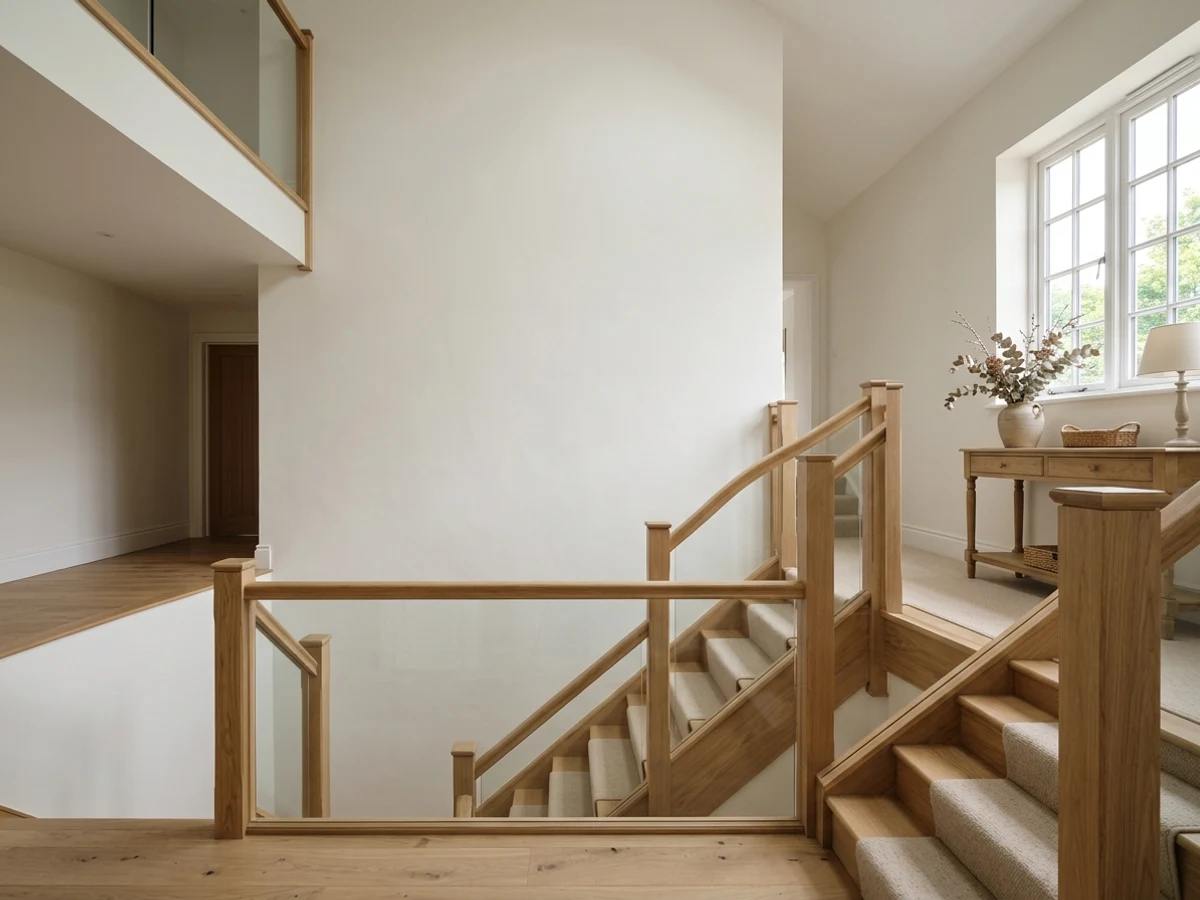
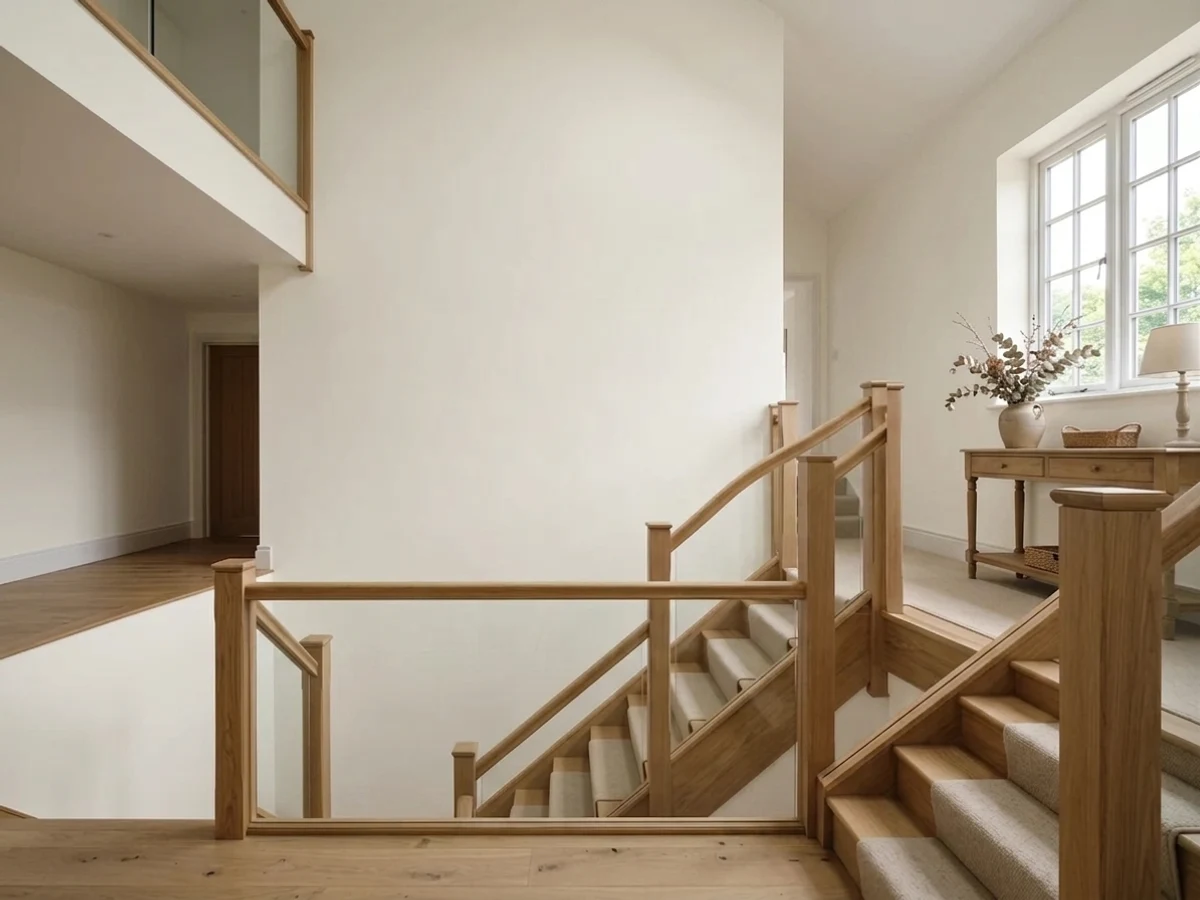
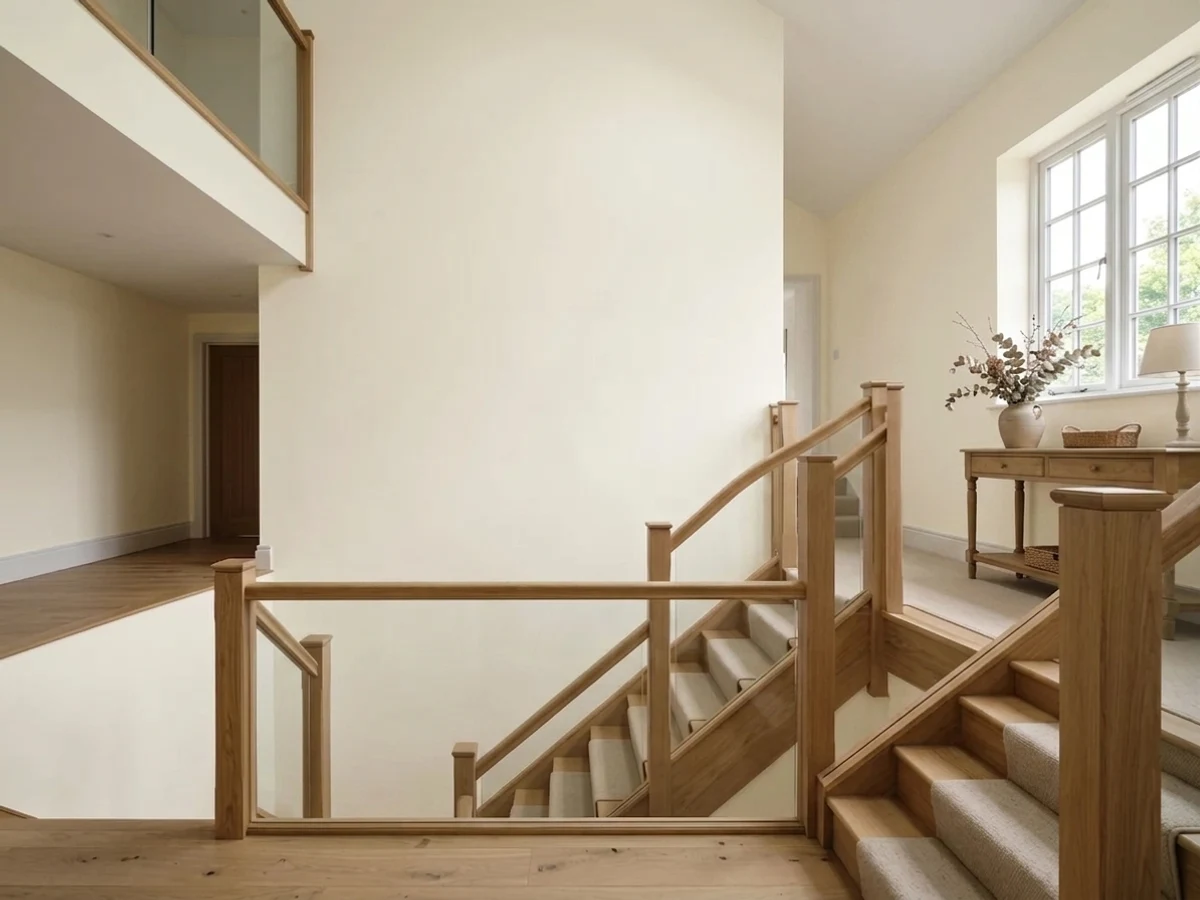
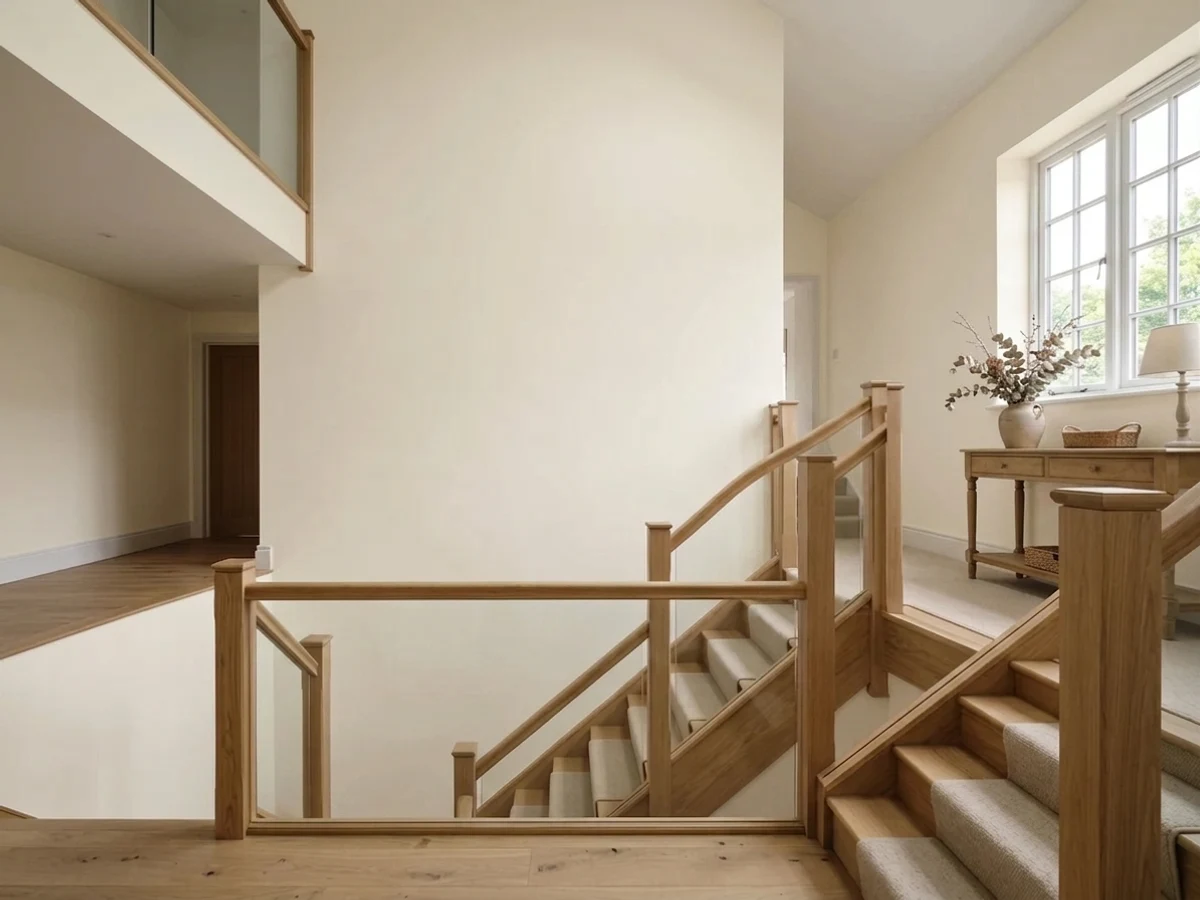
Upload one photo of your white staircase and try every color on this page on your own walls — in your own light, before you buy a drop of paint.

AlabasterBeforeBest Sheen For Stair Walls And Risers
Staircases take more physical contact than almost any other wall in the house — shoulders brush the wall on the way up, bags swing into it, kids drag their hands along it. A flat or matte finish that would be fine in a bedroom shows every one of those marks permanently on a staircase. Go satin at minimum on stairwell walls, and semi-gloss on anything within reach of hands or shoes: the handrail, the risers, and the lower few feet of wall near the baseboard.
On the risers specifically, homeowners report dark scuff marks appearing on nearly every white-painted riser within weeks of a repaint, and a Magic Eraser only holds the line temporarily before the marks come back. If risers get painted white, use a durable trim or floor-rated enamel rather than standard wall paint — Benjamin Moore's Scuff-X line was built for exactly this kind of high-contact, high-traffic surface and is worth the upcharge on risers even if the walls above use a standard wall paint like Chantilly Lace or Mountain Peak White.
Where White Shows Wear Fastest
Before picking a shade, know where a white staircase actually shows dirt first: the wall directly beside the handrail (hand oil and grip marks), the risers (shoe scuffs), and any spot where the wall turns a corner on a landing (furniture and luggage corners). Warmer whites like Navajo White and Silver Satin hide this everyday wear better than the coolest, brightest whites — a fingerprint or scuff shows up starker against a 92-LRV white than against a 75-LRV one.
That's not a reason to avoid the brightest whites on a dim staircase — sometimes the light problem is bigger than the maintenance problem — but it's worth matching the shade to the household. A staircase used constantly by kids or dogs holds up better in Navajo White or Silver Satin; a rarely-touched stairwell in a light-starved corner of the house can go all the way to Chantilly Lace without the wear becoming an issue.
Connecting The Staircase To Hallways And Landings
A staircase almost never stands alone — it's the hinge between an entry, a hallway, and an upstairs landing, and painting it in isolation from those spaces is one of the most common mistakes on this kind of page. If there's no clear break (a doorway, a different ceiling height, a change in flooring) between the stairwell and the hallway it feeds into, carry the same white the whole way through rather than stopping the color at the bottom step.
This is also where a gallery-wall staircase benefits from a specific choice: Alabaster's slightly warmer, softer white doesn't compete with black-and-white photo frames the way a stark white can, which is why it works well on stairs that double as the family photo wall. If the staircase is genuinely its own enclosed space with doors at both ends, it can take a slightly different white than the hallway — just keep it in the same family (warm-white with warm-white, cool-white with cool-white) so the transition doesn't read as a mismatch.
About White Staircase Paint Colors
A staircase is usually the tightest, most enclosed box in the house — a narrow shaft that only borrows light from an entry window or a skylight above the landing, then has to bounce it down the whole flight. White solves that specific problem better than any other family. Chantilly Lace (Benjamin Moore OC-65, LRV 92) is about as bright as paint gets, reflecting nearly all the light that reaches it, which is why it shows up so often in stairwells that only get a sliver of window light from above. Mountain Peak White (Benjamin Moore 2148-70, LRV 91) does almost the same job with a soft cream base instead of a stark one, so the walls don't feel clinical under a bare stairwell fixture.
For stairs that are genuinely dim — no window on the run, just a hallway light at the top — go for the whites built to maximize reflectance. Behr White (52, LRV 88) covers a lot of ground cheaply, which matters on a staircase because you're usually painting the stairwell walls and an upstairs landing together, not one small room. Superwhite (Sherwin-Williams) and First Star (Sherwin-Williams SW 7646, LRV 69) both lean toward a cooler, more modern white that reads crisp under artificial light, which is the light a windowless staircase runs on most of the day.
If the staircase gets decent daylight already, you don't need the brightest white in the fan deck — you can afford some warmth. Navajo White (Benjamin Moore 947, LRV 78) and Silver Satin (Benjamin Moore 856, LRV 75) both keep the room feeling open without the slightly cold cast a 90-plus LRV white can have on a north-facing stairwell. Alabaster (Sherwin-Williams SW 7008) is the softer, warmer choice worth knowing if the staircase doubles as a photo gallery wall — it doesn't compete with black-and-white frames the way a stark white can.

The Questions Everyone Asks
What color should I paint my white staircase?
If you want one answer, start with the safe picks above — Nano White, Calla Lily, Coconut, Ambience White. They read well in any light and survive furniture changes. Then check the light: strong afternoon sun wants a step cooler, a north-facing room wants a step warmer.
what color should i paint a stairwell
For a dim stairwell with little natural light, go with the brightest white you can find — Chantilly Lace (Benjamin Moore OC-65, LRV 92) or Superwhite (Sherwin-Williams) both maximize whatever light reaches the walls. If the staircase already gets decent daylight, a warmer shade like Navajo White (Benjamin Moore 947) or Mountain Peak White (Benjamin Moore 2148-70) keeps it bright without feeling sterile, and hides everyday scuffs better than the starkest whites.
should the staircase be the same color as the hallway
Yes, if the staircase and hallway flow into each other with no clear break — a doorway, a change in ceiling height, or different flooring. Carrying one white, like Chantilly Lace or Silver Satin, up the stairs and through the connected hallway reads as one cohesive space instead of a patchwork. Only break from the hallway color if the staircase is its own enclosed room with doors separating it from the rest of the floor.
what sheen should i use for stair walls
Satin at minimum for the walls, since shoulders and bags brush against stairwell walls constantly and a flat finish shows every mark. Go semi-gloss or a durable trim enamel on the handrail and risers specifically — those get the most direct contact. For risers painted white, a floor or trim-rated enamel like Benjamin Moore Scuff-X holds up far better than a standard wall paint against daily shoe traffic.
how do i keep white stairs from showing scuff marks
Scuffs on white stair risers are close to unavoidable with standard wall paint — homeowners report dark marks appearing within weeks even after cleaning with a Magic Eraser. Use a durable enamel rated for floors or high-traffic trim on the risers themselves, and consider a warmer, slightly lower-LRV white like Navajo White (LRV 78) or Silver Satin (LRV 75) on the walls, since scuffs and hand marks show less against them than against a stark 90-plus LRV white.
will white paint make a narrow staircase look wider
Yes — a high-LRV white like Chantilly Lace (LRV 92) or First Star (Sherwin-Williams SW 7646, LRV 69) bounces available light back into a narrow stairwell instead of absorbing it, which is what actually makes a tight space read as open rather than boxed-in. The effect is strongest when the trim and handrail stay in the same light family as the walls, since a dark rail against a bright white wall keeps the eye moving up the flight instead of stopping on a contrast line.
What two-color combination works best in a white staircase?
The reliable pattern is a quiet main color plus one deep accent on a single wall. Keep trim and ceiling in one warm white so the two colors are the only event in the room — the combination cards above show complete schemes from real rooms.
What colors make a white staircase look bigger?
High-LRV, slightly warm colors — LRV 60–75 is the sweet spot. Paint the walls and trim close to the same light color so the corners blur, and keep the ceiling white. Stark cool white actually works against you; it creates hard shadows that show the room's edges.

Ask a Question