Room Colors · Blue Porch Ceiling
8 Best Blue Porch Ceiling Paint Colors for 2026
ideas, combinations, and real rooms
8 curated picks from real blue porch ceilings — with the exact colors, honest reasons why, and the combinations that hold the room together.

Former interior stylist who can spot a green undertone from across a room. Jessica writes the color and mood pieces — what to choose, what pairs, and why your "white" looks pink.
The Fast Answer
Don't want to read 8 picks? These four are the safe answers.

Top Picks for the Blue Porch Ceiling
Tap a shade to see the blue porch ceiling in it, then try it on your own room.
Blue Porch Ceiling Color Trends 2026 — What's In, What's Out

- Pale, Chalky Sky Blue — Very light, cool-toned porch-ceiling blues are reading faded and dated next to warmer, more saturated haint-blue choices.
- Glossy Porch Ceiling Paint — High-gloss ceiling finishes are losing favor to flatter sheens that hide imperfections in older porch ceilings better.
- Blue Ceiling, No Connection To House Color — A porch ceiling blue chosen with no relation to the siding or trim color is reading like an afterthought next to fully coordinated exteriors.
The 8 Best Blue Porch Ceiling Paint Colors
Every pick below is a real rendered blue porch ceiling, not a chip. The lead color first; the swatches are the full scheme in the photo — walls, furniture, textiles, accent.

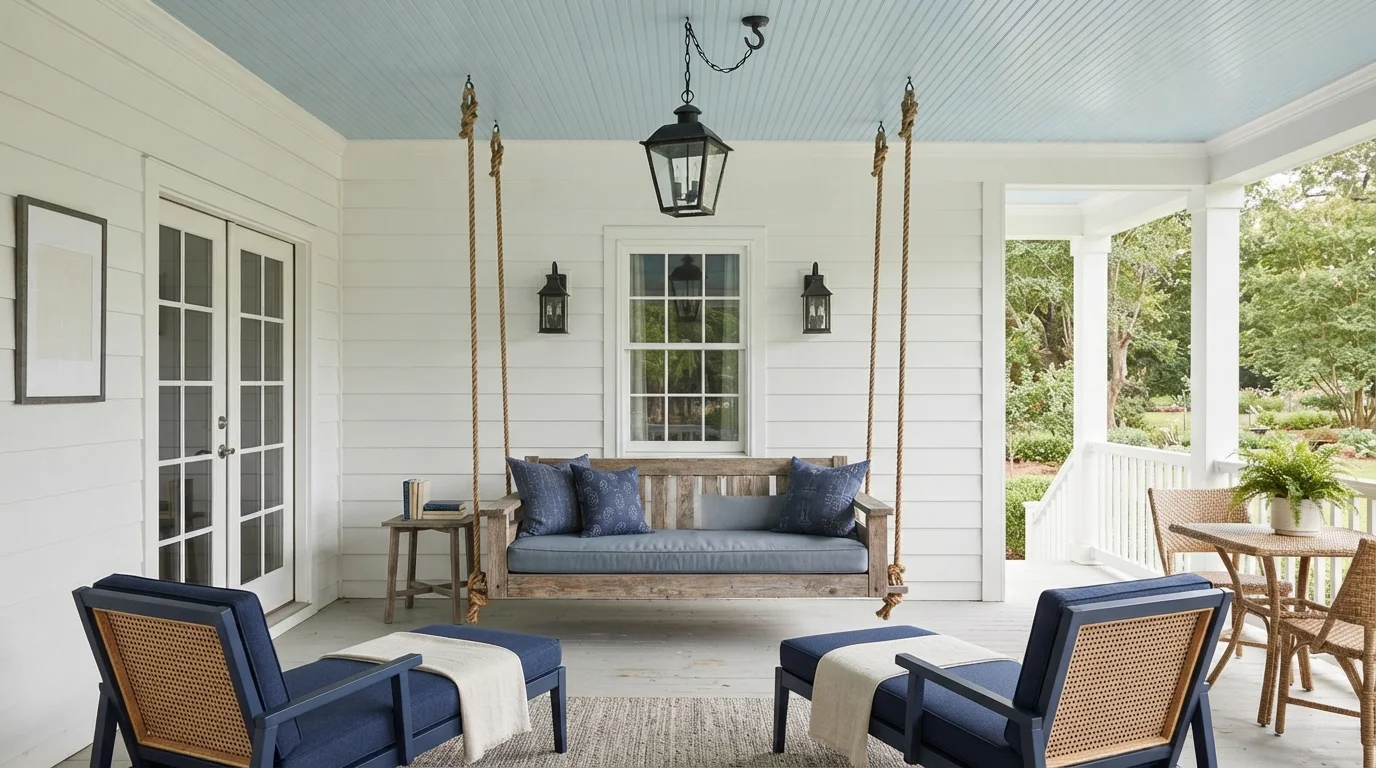
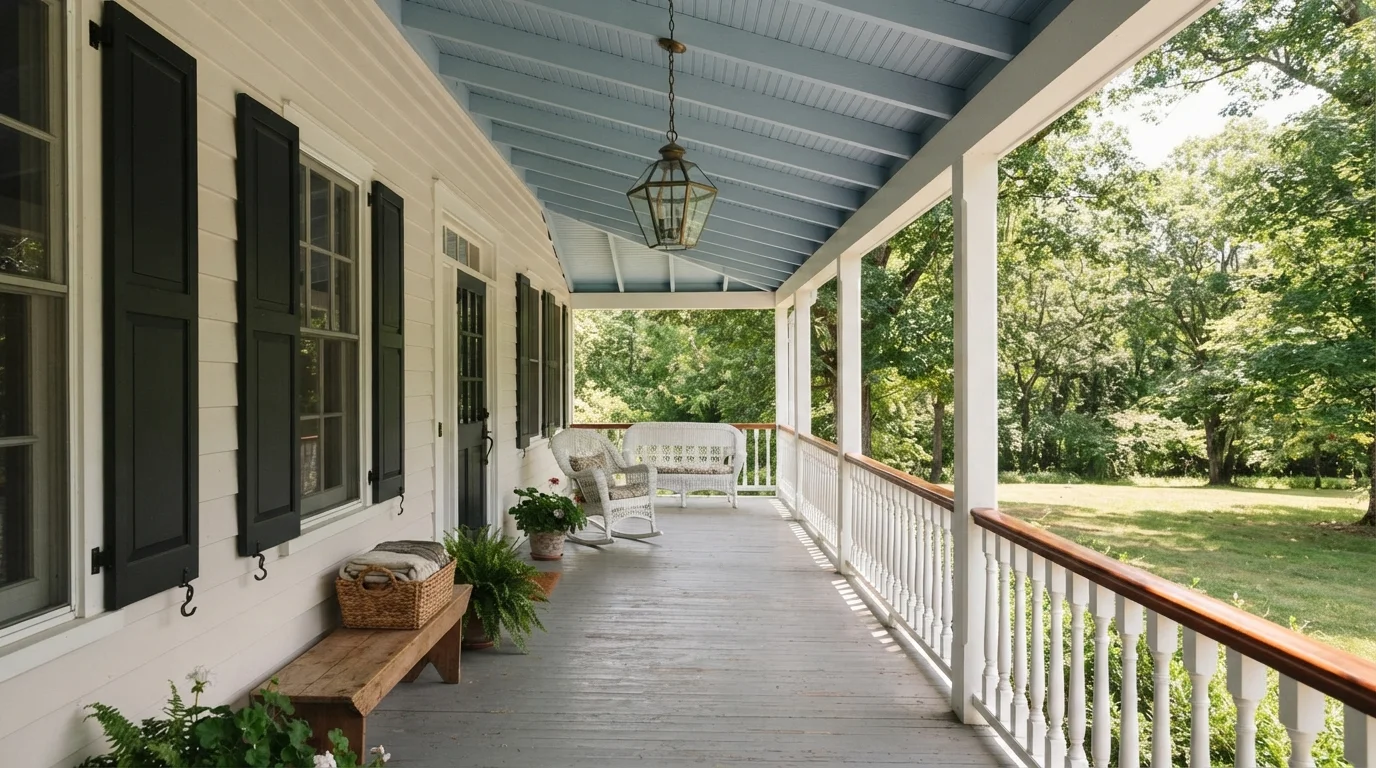
A soft sky blue ceiling brings breezy coastal charm to crisp white porch walls and relaxed seating.
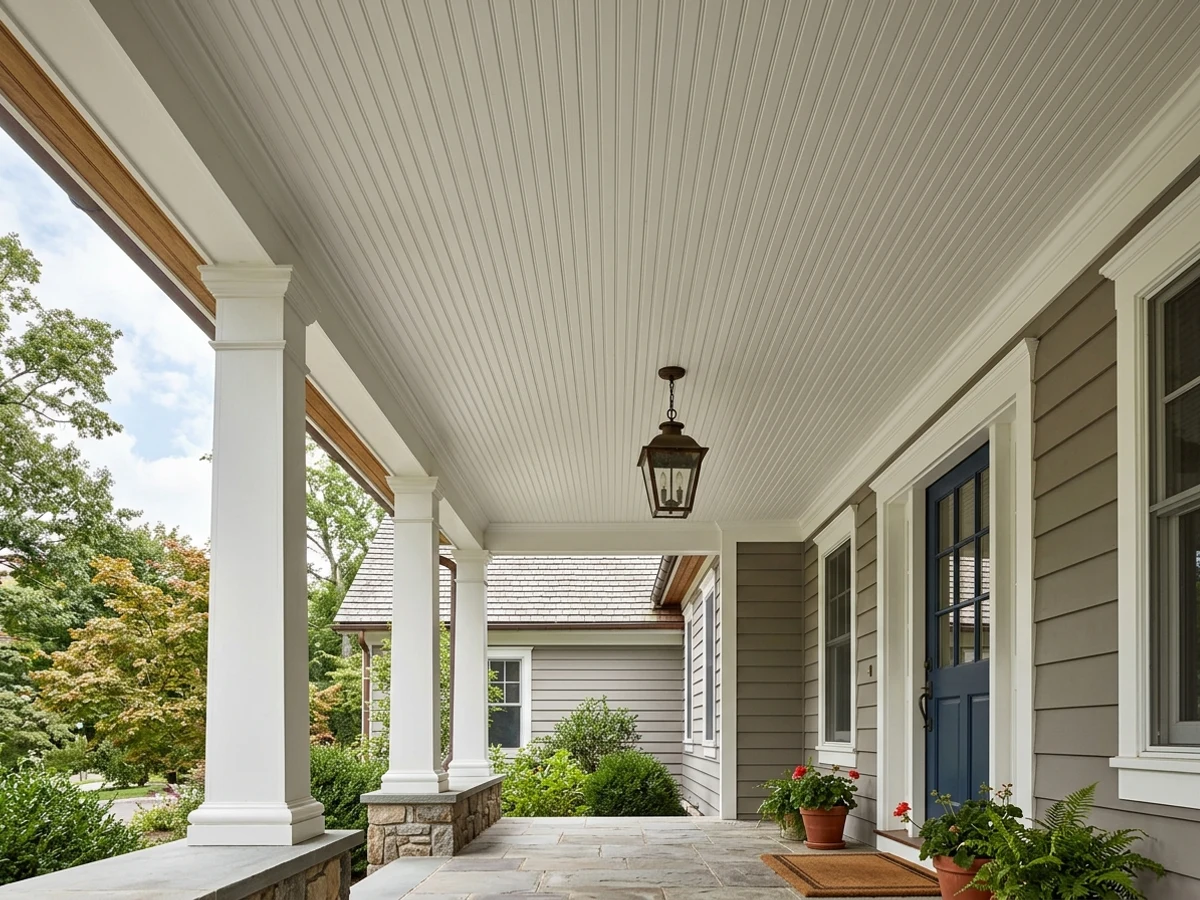
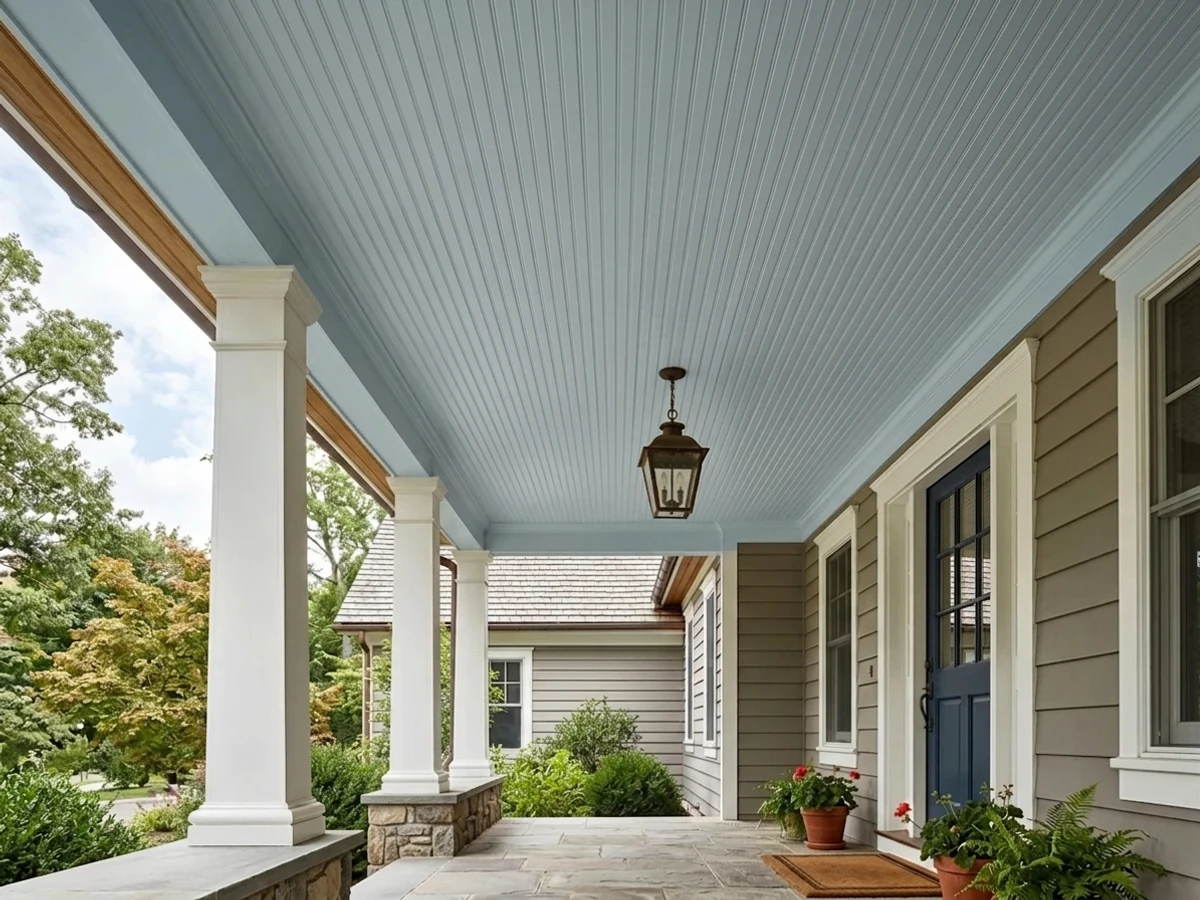
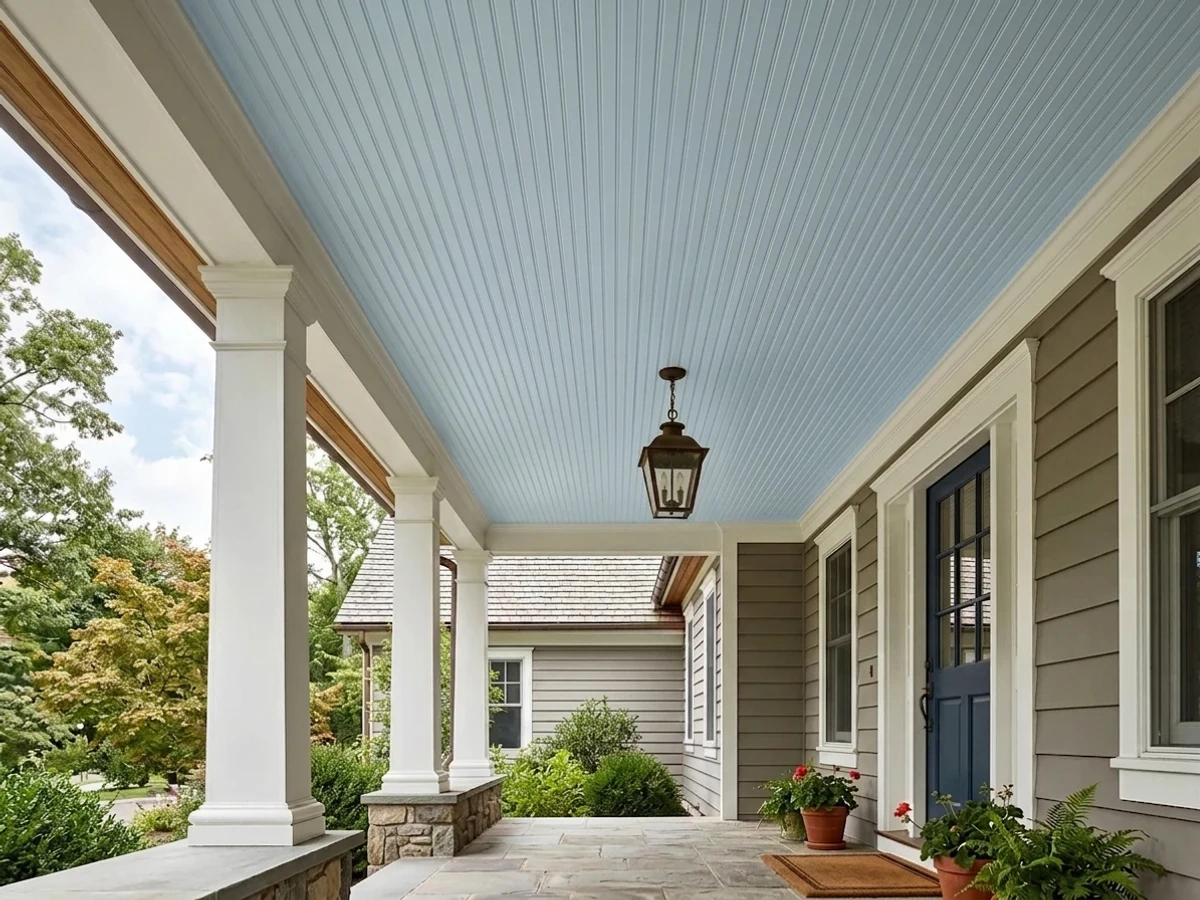
Haint blue is a soft, airy sky blue that feels cool and refreshing. In this space, it coats the beadboard ceiling while crisp white covers the siding and window trim. Deep navy blue frames the armchairs alongside patterned accent pillows and natural wood textures. The space feels calm, breezy, and effortlessly welcoming. The combo works because the light blue mimics an open sky, making the covered porch feel taller and brighter. It is for anyone who loves classic Southern tradition and easy outdoor living.
SEE IT ON YOUR WALLS →
A soft sky-blue ceiling and crisp white siding create a breezy, timeless porch made for lazy afternoons.
Soft sky blue is a gentle, airy pastel with a soothing gray tone. In this porch space, that tranquil blue covers the exposed beam ceiling while creamy off-white brightens the clapboard walls and baluster railings. The entire area feels breezy, calm, and effortlessly welcoming. This look works because the sky-tinted ceiling visually lifts the overhead space, connecting the sheltered porch directly to the open air. It is perfect for anyone who loves timeless Southern charm and relaxed outdoor living.
SEE RIDGE VIEW ON YOUR WALLS →
Give your porch an airy feel that mimics a peaceful, clear sunny sky.
SEE BLUE HYDRANGEA ON YOUR WALLS →
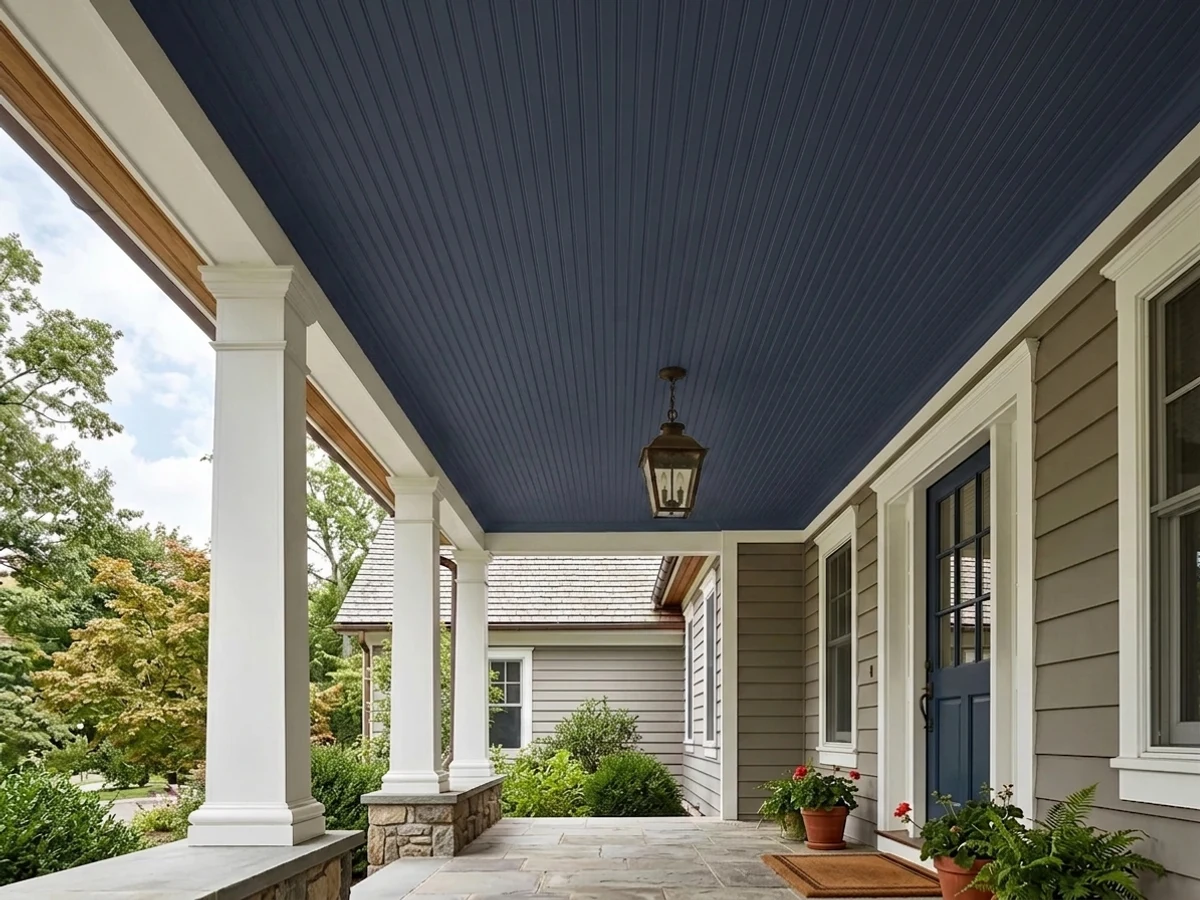
This deep navy mimics a starry night, making your porch feel incredibly cozy.
SEE NIGHTLIFE ON YOUR WALLS →Soft pale blue — the warmer-leaning haint family.
SEE CAPRI SEA ON YOUR WALLS →Blue Porch Ceiling Wall Color Combinations
A wall color never works alone. These are the full schemes from the rooms above — the lead color first, then the supporting colors that make the photo work.
A soft sky blue ceiling brings breezy coastal charm to crisp white porch walls and relaxed seating.
TRY THIS PALETTE →A soft sky-blue ceiling and crisp white siding create a breezy, timeless porch made for lazy afternoons.
TRY THIS PALETTE →A bold five-color scheme pairing vivid cobalt blue with a warm flame orange, balanced by soft cream and a smoky charcoal — every color matched to real paint you can buy.
TRY THIS PALETTE →A four-color scheme pairing a deep bay blue with a glowing copper orange, softened by oatmeal and slate — every color matched to real paint you can buy.
TRY THIS PALETTE →Blue Hydrangea and Lost in the 80s both sit well against white or cream trim and pale gray or greige siding — the classic pairing is white porch columns and railings with the blue ceiling as the one color note, plus a natural wood porch floor or gray-stained decking underneath. Capri Sea's warmer lean makes it the better match next to brick, cedar shake, or warm-white siding where a true blue would look slightly cold by comparison.
Nightlife and Time's Current read as accent colors more than background ones, so they pair best with a simpler palette below: white or black trim, a stained or painted wood floor, and dark bronze or black porch light fixtures and ceiling fans rather than brushed nickel. Both also work as a match to a dark front door — Nightlife especially, since a navy door and navy ceiling read as one intentional move rather than two separate decisions.
Light or Dark Blue Porch Ceiling Colors?
Go Light (LRV 60+) If…
The room is small, faces north, or has to work at every hour. Light warm colors make it feel bigger and stay calm in evening light — the light you actually live in.
Go Dark (LRV Under 20) If…
You want the cocoon effect and the room has real daylight. Dark works best on one feature wall — or fully color-drenched in a large room with good windows.
Covered porches lose a lot of daylight compared to open rooms, especially under a deep overhang or a second-story roofline, so LRV matters more here than almost anywhere else on the house. Blue Hydrangea's LRV of 62 is bright enough to bounce real light back onto the porch floor and keep a shaded porch from feeling like a cave; Lost in the 80s and Capri Sea sit a shade lower but still read as sky rather than shadow. These are the safer default for a small or deeply covered porch, a north-facing porch, or anyone who wants the classic haint blue look.
Nightlife and Time's Current only work with real daylight reaching the ceiling — an open porch, a west-facing one with evening sun, or a porch that's lit at night and used after dark. On a dim, heavily shaded porch a deep navy ceiling like Nightlife can look almost black and erase the sense of a sky overhead entirely, so save the darker picks for porches with some open sky above them or good porch lighting installed.
See It. Love It.
Paint It.
Upload one photo of your blue porch ceiling and try every color on this page on your own walls — in your own light, before you buy a drop of paint.

Lost in the 80sBeforeWhy Porch Ceilings Get Painted Blue
The tradition started with the Gullah Geechee communities of coastal South Carolina, Georgia, and Florida, who painted porch ceilings, window frames, and shutters a pale blue-green they called haint blue. The belief was that haints (spirits) couldn't cross water, and the blue was meant to look like it from below. Homeowners also noticed the color seemed to discourage wasps and dirt daubers from building nests, since some insects don't recognize the color as sky the way birds and bugs recognize an open ceiling.
The practical reasons are why the look outlasted the folklore. A blue ceiling visually raises a covered porch, makes a shaded space feel less closed-in, and gives a plain white or gray house one confident color decision instead of none. That's true whether you go with a true haint blue-green like Capri Sea or a more modern straight blue like Lost in the 80s.
Sheen And Finish For A Porch Ceiling
Porch ceilings need exterior-rated paint even on a covered porch, since humidity, temperature swings, and UV bounce still reach the wood or beadboard up there. Satin or eggshell is the standard choice — enough sheen to wipe off spiderwebs and dust without looking plasticky overhead. Flat or matte is worth considering only on an older porch where the wood or ceiling boards have visible flaws, since flat hides texture that satin would show off.
Avoid true gloss on a porch ceiling. It reflects too much light back at an angle people are standing under, and it telegraphs every seam in tongue-and-groove boards. If the porch gets direct rain under wind-driven storms, ask for a paint labeled for exterior trim and siding rather than an interior ceiling paint tinted to the same color — the pigment can match, but the binder needs to handle weather.
Common Mistakes With A Blue Porch Ceiling
The biggest mistake is going too dark on a heavily shaded porch. A deep navy like Nightlife needs real light reaching it to read as blue rather than black; under a low roofline with no direct sun it can just look like an unfinished, dirty ceiling. Test the actual color in place, at the actual time of day the porch gets used, before committing to a full gallon.
The second mistake is using leftover interior ceiling paint because it's the same color as the porch ceiling pick. Interior flat paint isn't built for moisture and UV and will chalk or peel within a season or two outdoors. The third is ignoring the siding and trim color already on the house — Capri Sea's warm lean clashes with cool gray siding the same way Blue Hydrangea's cooler, brighter blue can look off against warm brick, so match the ceiling's undertone to what's already on the walls before buying.
About Blue Porch Ceiling Paint Colors
A blue porch ceiling is one of the oldest paint traditions in the South. In the Lowcountry, the Gullah Geechee painted porch ceilings, shutters, and doors a pale blue-green called "haint blue" to mimic water, since folklore held that haints (spirits) couldn't cross it. Two hundred years later people still pick blue overhead for the same visual effect even if they've never heard the word haint: it reads as sky, it bounces light back down onto the porch floor, and it keeps the space from feeling like an unfinished attic.
The picks on this page cover the full range people actually search for. Blue Hydrangea by Benjamin Moore (2062-60, LRV 62) is the bright, airy choice — high enough LRV that it genuinely looks like a clear sky rather than a tinted ceiling. Lost in the 80s is the most literal sky-blue interpretation, a straightforward mid-tone that reads as blue from the street, not gray or green. Capri Sea leans warmer and softer, closer to the traditional pale haint blue-green than a true blue. Nightlife by Portola Paints and Time's Current by Valspar go the other direction entirely — deep navy and twilight blue meant for a porch that gets used at dusk and after dark, where a pale ceiling would just look dim.
What makes any of these work is that a porch ceiling is seen from below, in shifting outdoor light, next to siding, trim, and often brick or wood decking that the wall paint in a normal room never has to compete with. Pick by how the porch is actually used — a bright plant-and-coffee porch wants Blue Hydrangea or Lost in the 80s; a porch that's really an evening living room wants Nightlife or Time's Current.

The Questions Everyone Asks
What color should I paint my blue porch ceiling?
If you want one answer, start with the safe picks above — Charcoal Blue, After Rain, Blue Hydrangea, Lost in the 80s. They read well in any light and survive furniture changes. Then check the light: strong afternoon sun wants a step cooler, a north-facing room wants a step warmer.
why are southern porch ceilings painted blue?
The tradition comes from the Gullah Geechee communities of the coastal South, who painted porch ceilings, shutters, and window frames a pale blue-green called haint blue. The belief was that haints, or spirits, couldn't cross water, and the blue was meant to mimic it. Today most people paint a ceiling blue for the visual effect — it makes a covered porch feel more open — using picks like Capri Sea or Lost in the 80s rather than for the folklore.
what is haint blue paint?
Haint blue isn't one specific paint color — it's any pale blue-green used the traditional way, on a porch ceiling. Capri Sea on this page is the closest match to a classic haint blue: soft, pale, and leaning slightly green rather than true blue. Lost in the 80s is a more modern, straighter sky-blue take on the same idea, and both work as the historically accurate choice.
what sheen should i use for a porch ceiling?
Satin or eggshell in an exterior-rated formula is standard for a porch ceiling — enough sheen to clean off dust and cobwebs, not so much that it glares back at people standing under it. Choose flat only if the porch ceiling boards are older and show real texture or damage you want to hide. Skip full gloss; it shows every board seam overhead.
does a blue porch ceiling keep bugs away?
It's an old belief tied to haint blue, and some people report fewer wasp and dirt-dauber nests after painting a ceiling blue, but there's no solid proof any specific blue repels insects. What blue reliably does is make a shaded porch look brighter and less like a nesting spot to a passerby, which is likely part of why the reputation stuck.
how do i choose between a light blue and a dark blue porch ceiling?
Match it to how much daylight actually reaches the ceiling and when you use the porch. A shaded or deeply covered porch needs a lighter pick like Blue Hydrangea (LRV 62) or Lost in the 80s to avoid looking dim. An open porch used mostly in the evening can carry a deep navy like Nightlife or a twilight blue like Time's Current, since those read as intentional there instead of dark and flat.
What two-color combination works best in a blue porch ceiling?
The reliable pattern is a quiet main color plus one deep accent on a single wall. Keep trim and ceiling in one warm white so the two colors are the only event in the room — the combination cards above show complete schemes from real rooms.
What colors make a blue porch ceiling look bigger?
High-LRV, slightly warm colors — LRV 60–75 is the sweet spot. Paint the walls and trim close to the same light color so the corners blur, and keep the ceiling white. Stark cool white actually works against you; it creates hard shadows that show the room's edges.
Ask a Question