How to Paint Stairwell Walls
Painting a stairwell safely: how to reach the high wall over the stairs, build a stable platform, cut in the tall corners, and roll two even coats.

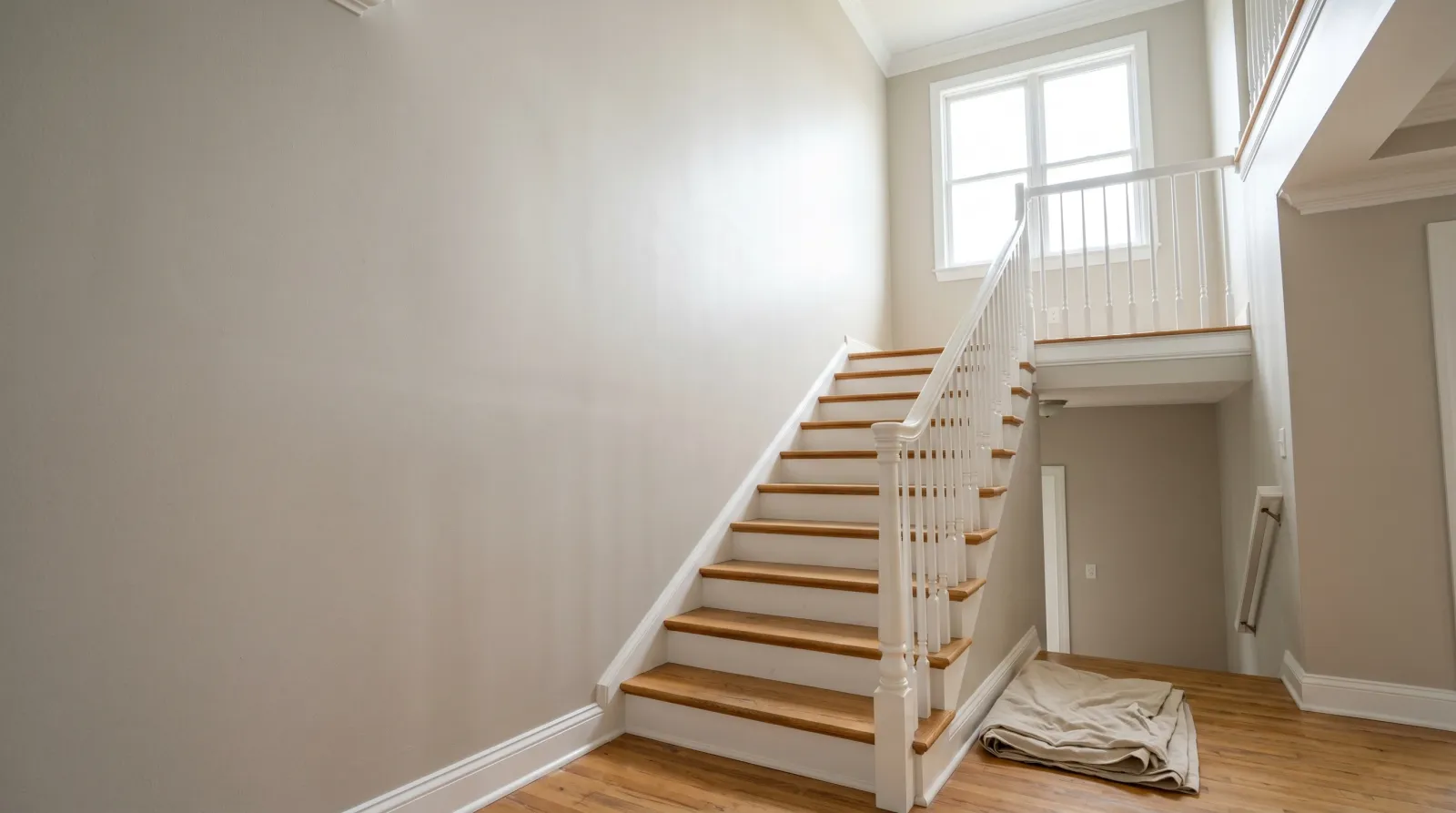
Okay, so the stairwell is the wall you’ve been avoiding. The side walls are fine, those are just regular walls. It’s the tall one over the stairs that you can’t reach without balancing a ladder on a step with one leg in the air. Don’t do that. It’s the only part of this project that can actually hurt you, and there’s a safe way to do it that takes the fear right out.
Here’s the thing about a stairwell: most of the work is normal wall painting. The only difference is access. Solve the access first, and the rest is the same two-coat job you’d do in any room.
What You’ll Get
A bright, freshly painted stairwell, the tall wall and both side walls, in one weekend. The grubby line where everyone trails a hand along the wall is gone, and the whole space feels taller and cleaner.
Honest Take on Difficulty and Time
I’m calling this medium, not easy, and the reason is the height. The painting itself is beginner-level. The setup is where you slow down. Getting a level, stable platform over the stairs takes patience, and rushing it is the one mistake that matters.
A standard two-story stairwell is about 8 working hours over a weekend. Day one: set up the ladder, clean the hand-line, patch, tape, and cut in the high corners. Day two: two coats with dry time between.
Afraid of heights? You can do most of this from the floor with an extension pole. The only thing that requires the ladder is cutting in the top corners and the ceiling line, which is maybe 20 minutes of ladder time per coat.
What You’ll Need
Paint and Primer
A 1-gallon can of wall paint in eggshell (a soft low-shine finish that wipes clean, the right pick for a wall people touch all day). A standard two-story stairwell takes about a gallon for two coats. Buy the full gallon even if you think you’ll use less. Leftovers are how you fix the inevitable scuff next year.
You probably don’t need primer. Skip it if the old paint is sound and you’ve cleaned the hand-grime. The one exception is the smudge band along the handrail. If hand oil won’t wash off, spot-prime just that band with stain-blocking primer (Zinsser BIN or KILZ Original). Going dark-to-light? Then prime the whole wall.
See the sheen guide if you’re stuck between eggshell and satin, and the drywall painting guide if the wall is bare or freshly patched.
Tools
The one tool that matters here is the ladder. An adjustable multi-position ladder (Little Giant, Werner) lets you set one set of legs shorter so the ladder sits level across the stairs. Rent it for about $20 a day if you don’t own one. That rental is the best money you’ll spend on this project.
Everything else is standard. A 2.5-inch angled brush for cutting in (brushing the clean edge along trim and ceiling that the roller can’t reach), a 9-inch roller frame, two 3/8-inch microfiber sleeves, a tray, and an extension pole so you can roll the high wall from the floor without leaning. Painter’s tape, a canvas drop cloth, spackle, and a damp rag round it out.
Don’t cheap out on the brush. A $4 brush sheds bristles into your cut line; a $14 Wooster or Purdy holds a clean edge. Roller picks live in the paint rollers round-up.
Step 1 — Set Up a Safe Platform Over the Stairs
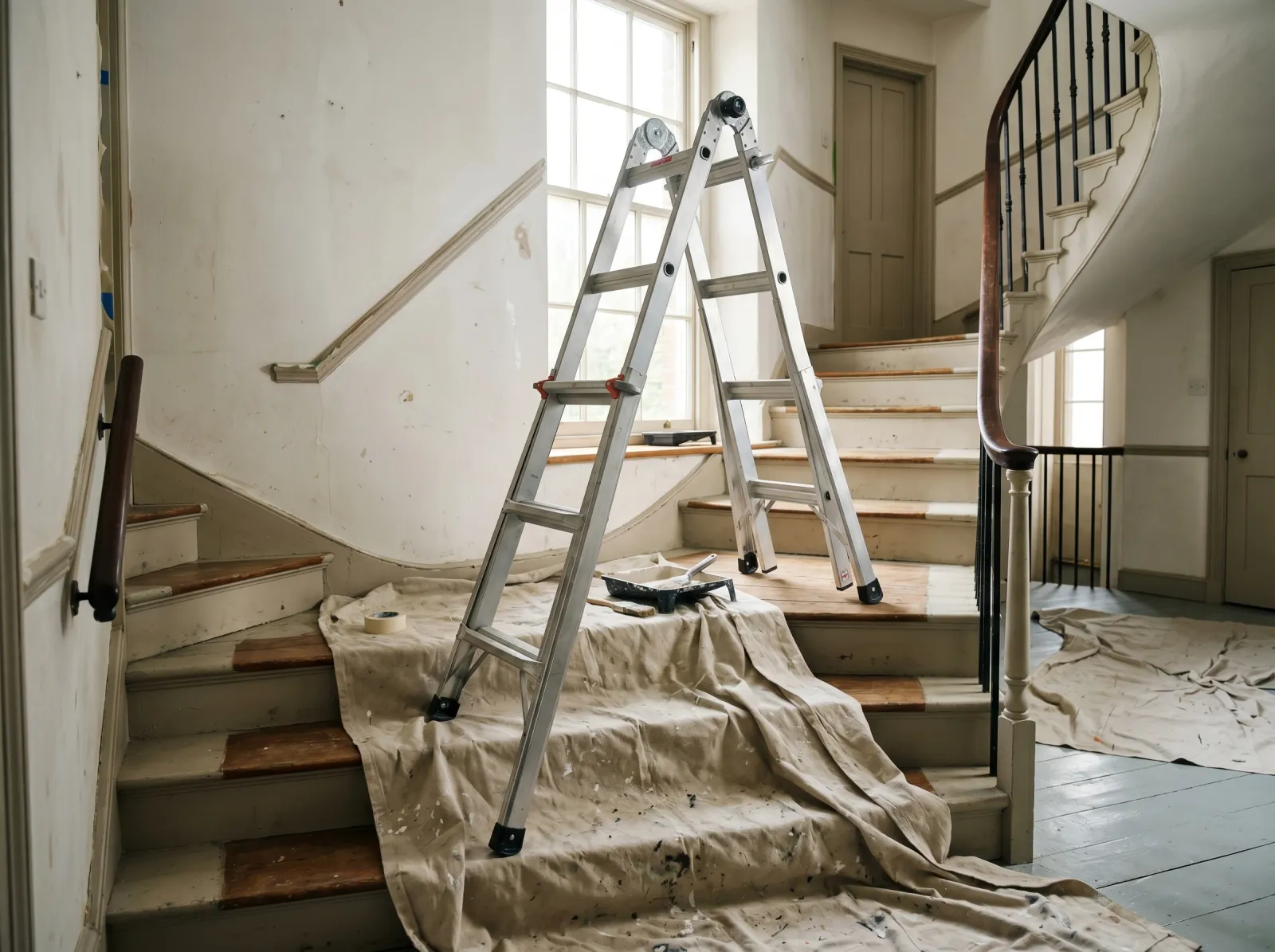
Drop cloth down the stairs, an adjustable ladder set up across the steps to reach the tall wall safely.
Cover the treads with a canvas drop cloth and tape it down so it can’t slide under your foot. Drape old bedsheets over the rail and any wall art you didn’t take down.
Now the ladder. Set the adjustable ladder in stair mode: extend the downhill legs longer so the top sits dead level. Test it by leaning your weight on it before you climb. Using an extension ladder and a plank instead? Run the plank level between a sturdy step and a stepladder on the landing, and make sure it’s rated for your weight.
Watch out for the temptation to lean. Keep your belt buckle between the ladder rails. If you have to reach past that, climb down and move the ladder. Reaching is how ladders tip on stairs.
Step 2 — Clean the Hand-Line, Patch, and Tape
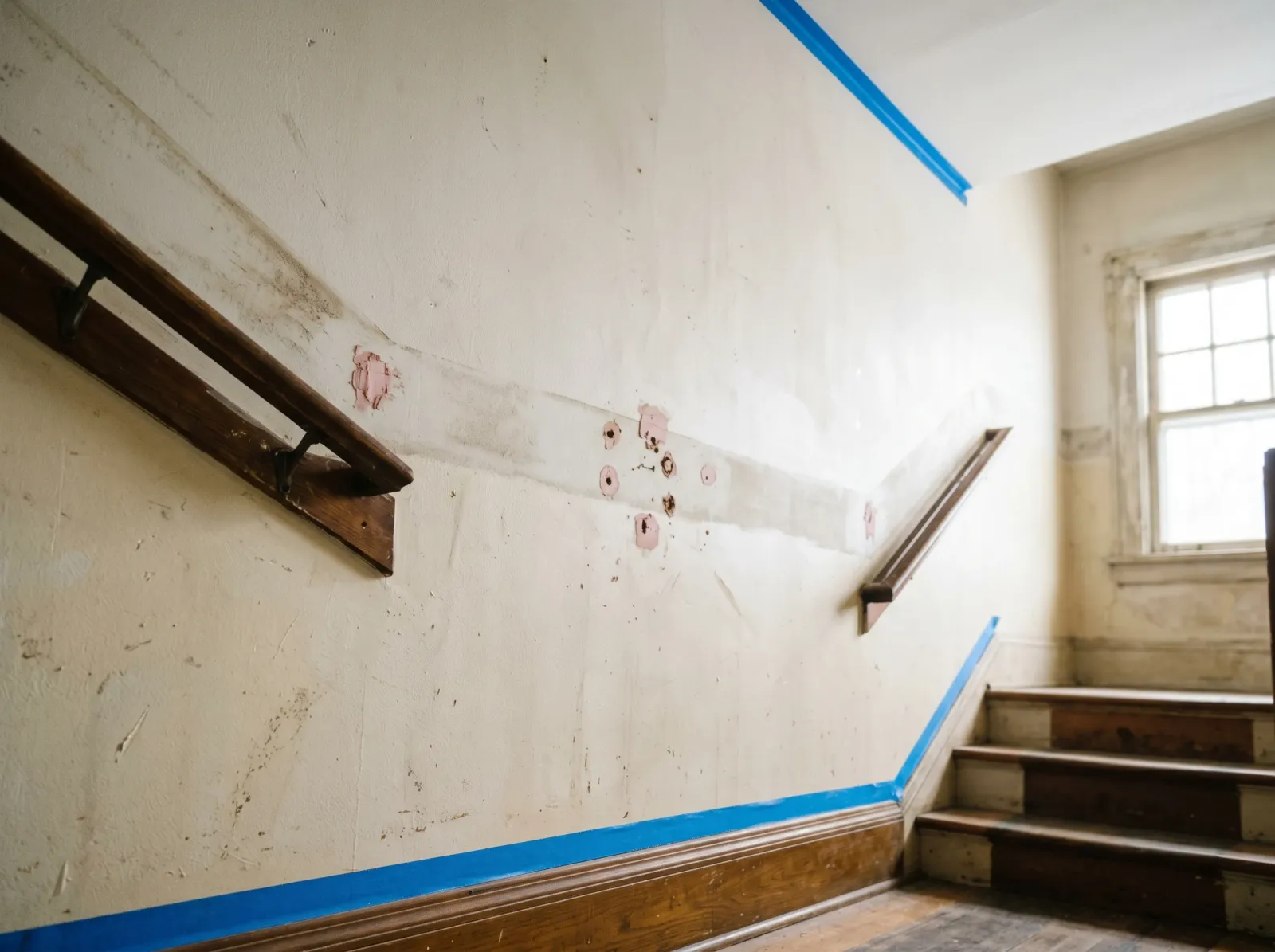
The grimy band along the handrail wiped clean, nail holes spackled, painter’s tape along the trim and ceiling line.
There’s a band of grime at handrail height where everyone runs a hand as they climb. You can’t always see it, but paint won’t stick to hand oil. Wipe that band with a damp sponge and a little dish soap, or a magic eraser, then rinse and let it dry.
Patch nail holes and dings with spackle, scrape flush, let dry 30 minutes, and sand smooth with the 220-grit sponge. Then tape along the baseboard, around a landing window, and at the ceiling line. Press the tape edge down hard with your thumbnail so paint doesn’t bleed (sneak under and leave a fuzzy line).
Watch out for the top ceiling corner on the tall wall. It’s the hardest spot to tape and the easiest to rush from a ladder. Take your time pressing that edge. It’s the line everyone sees from the bottom of the stairs.
Step 3 — Cut In the Tall Corners First
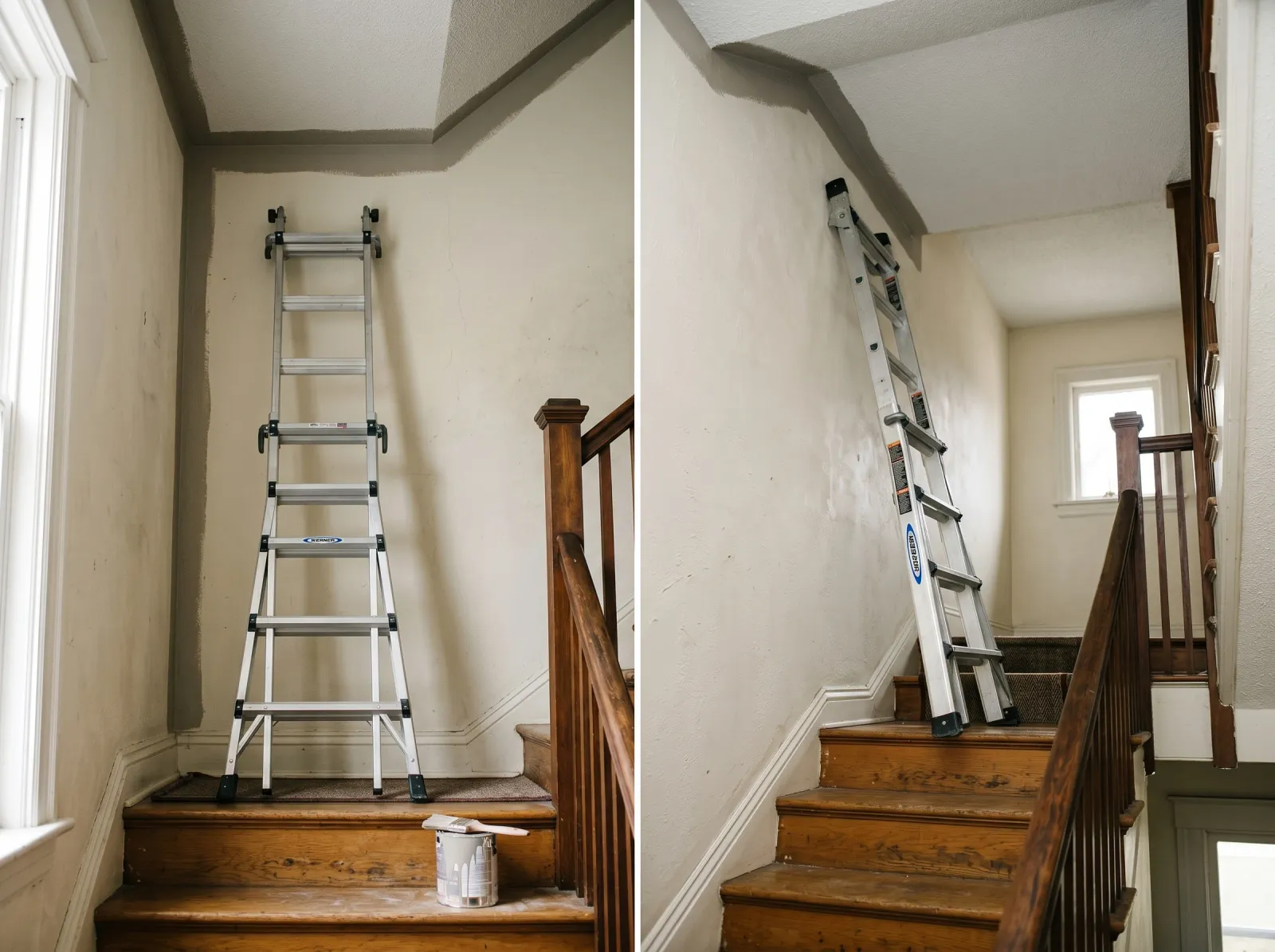
The high corners and the ceiling line brushed in first, from the ladder, before any rolling.
Do all your ladder work in one go, while the platform is set, so you only climb once per coat. From the ladder, cut in the top corners, the full ceiling line, and down the vertical corner where the tall wall meets the side wall. Brush a 2- to 3-inch band.
Load the brush only a third of the way in and tap off the excess. A loaded brush drips, and a drip from up high lands on a stair tread or the rail below.
Then climb down and cut in everything you can reach from the floor and the stairs: the baseboard line, around the window, the lower corners. Now the only thing left is rolling the big flats.
Watch out for the cut-in drying before you roll. On a tall wall that takes a while to roll, the cut-in band can dry and leave a faint picture-frame line of different sheen. Work one wall section at a time so the cut-in is still wet when the roller reaches it.
Step 4 — Roll the First Coat With the Extension Pole
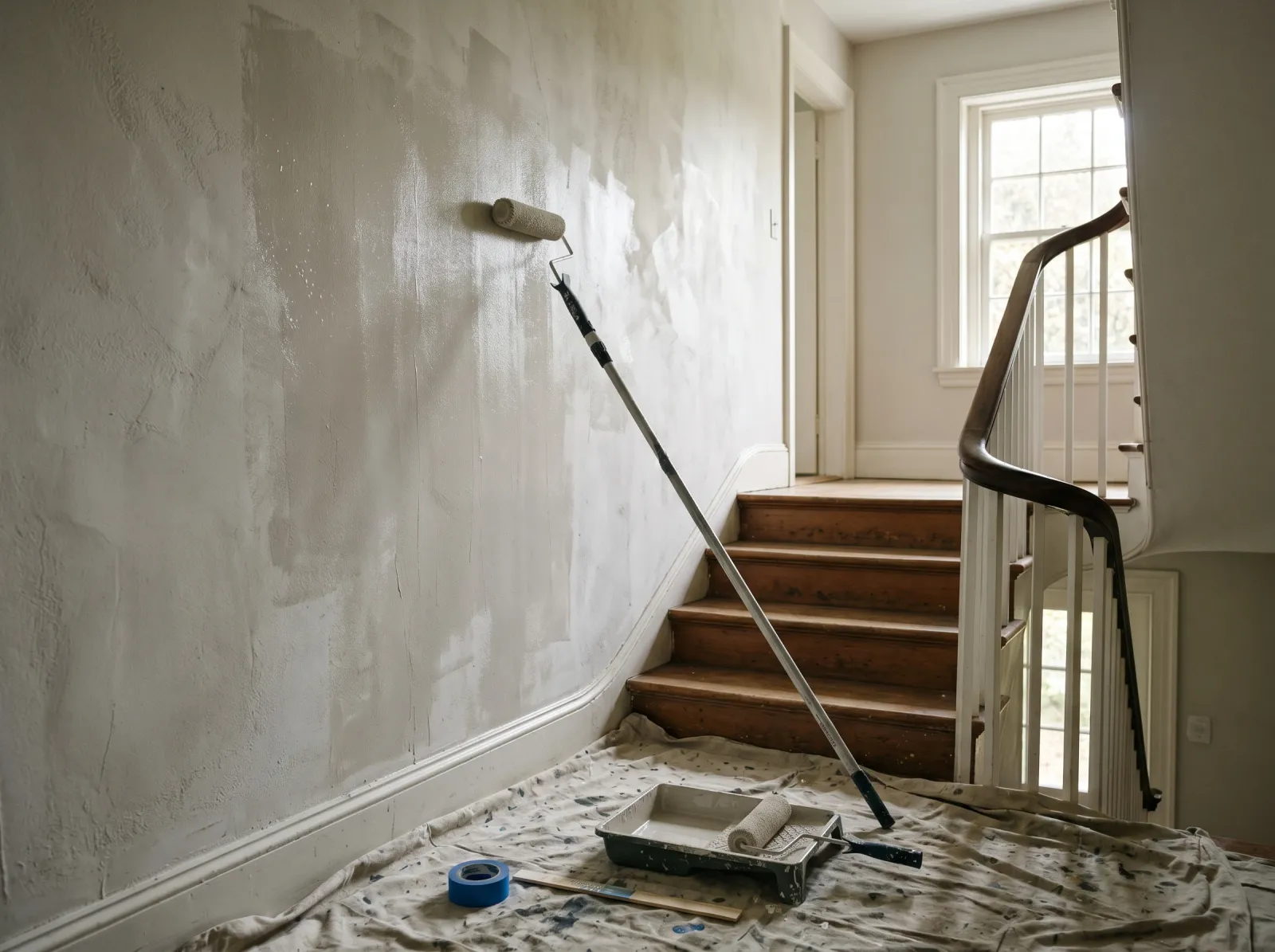
The big flat wall rolled in W-shapes from the floor using an extension pole, no leaning required.
Screw the extension pole onto the roller frame. This keeps you off the ladder for the bulk of the work. Standing on a lower stair, you can reach surprisingly high with a 4- to 6-foot pole.
Pour paint into the tray a third up, load the roller, and roll off the excess on the tray ramp until it’s even (not dripping, not dry). Roll the wall in big W-shapes about 3 feet wide, then fill them in, overlapping each pass into the wet edge by a few inches. Start at the top and work down so any drips roll into wet paint, not dry.
The first coat will look patchy and thin. That’s normal. You will need a second coat. Don’t go back over half-dry spots trying to fix it; you’ll leave roller marks. Get an even first coat down and walk away.
Step 5 — Second Coat, Then Pull the Tape
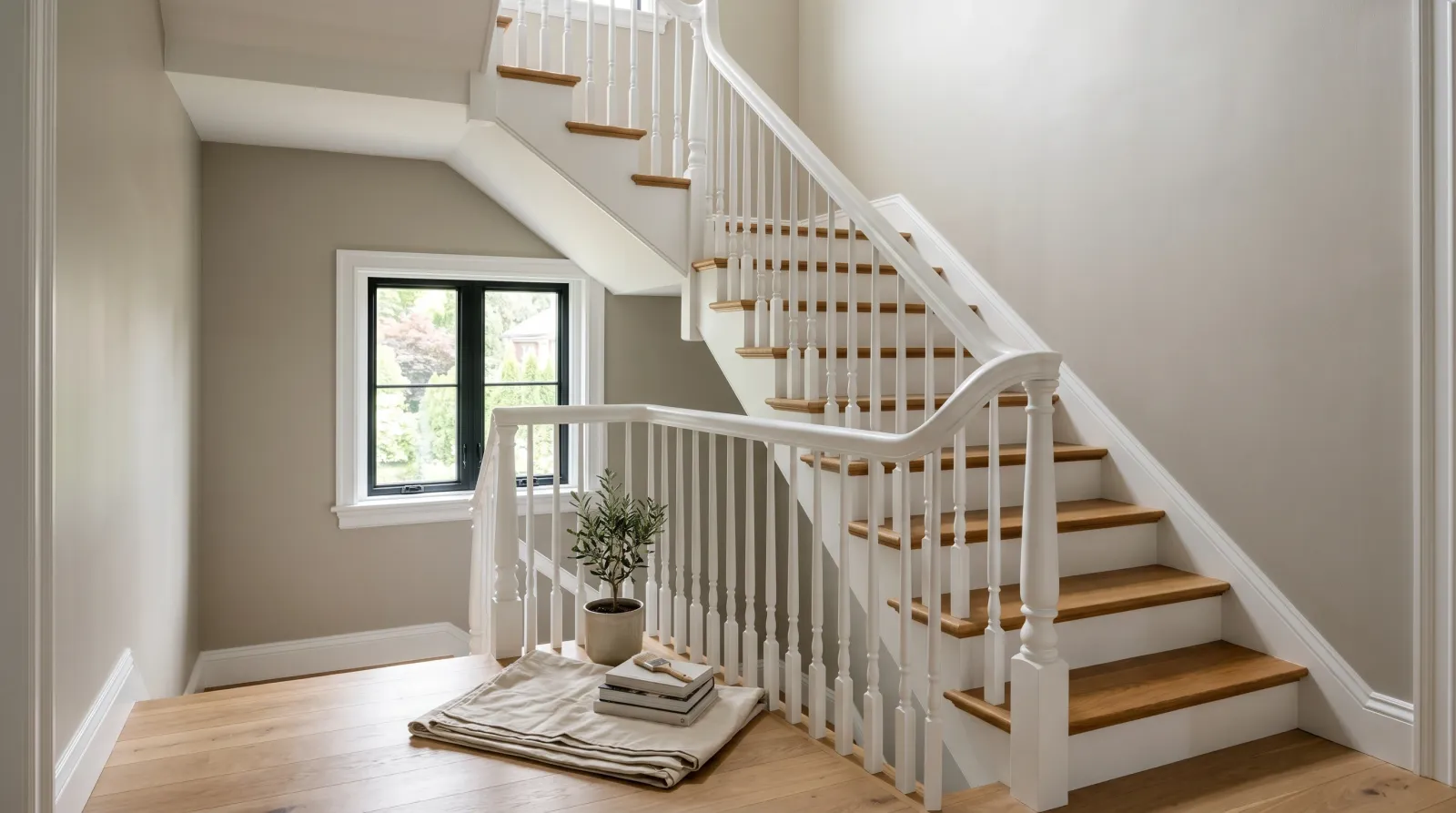
Second coat dry, tape pulled, drop cloth folded, the tall wall smooth and even.
Wait the recoat window on the can, usually 4 hours for water-based paint at room temperature. Touch the wall with a knuckle; if it’s dry and not tacky, you’re good.
Second coat goes down the same way: climb once to redo the cut-in corners, then roll the flats from the floor with the pole. This is the coat where the color fills in and evens out. You’ll know it when you see it; the patchiness disappears.
Pull the tape while the second coat is still slightly tacky, about an hour after you finish, at a 45-degree angle. If you wait until it’s bone dry, the cured film can crack along the tape edge and lift in a ragged line. Pull slow and steady.
Common Mistakes
- Balancing a stepladder on the stairs. One leg on a tread, one leg in the air, you reaching sideways. This is the actual danger in this project. Use an adjustable ladder set level, or an extension ladder and a rated plank. Rent the ladder if you have to.
- Skipping the hand-line cleanup. The grime band at rail height is invisible until your new paint won’t stick there or the old smudge ghosts through. Wipe it with soap and water before anything else.
- Cutting in from the ladder over and over. Climbing up for every little touch-up wastes time and tempts you to lean. Do all your high cut-in work in one trip up per coat, then roll the rest from the floor.
- Rolling bottom-up on a tall wall. Drips run down onto dry paint and dry as ridges. Start at the top, work down, and the drips land in wet paint where you roll them out.
- One coat to save a trip up the ladder. A stairwell wall reads thin and streaky in the side light from a landing window. Two coats. The first one always looks bad; don’t judge it until the second is dry.
Cure Schedule
| Time after the second coat | What’s safe |
|---|---|
| 1 hour | Pull the painter’s tape |
| 4 hours | Touch dry, don’t lean anything against it |
| 24 hours | Normal use, rehang art |
| 7 days | Wipe scuffs with a damp cloth |
| 30 days | Full cure, scrubbable along the rail line |
Maintenance and Touch-Ups
An eggshell stairwell wall holds up for 7 to 10 years, but the band along the handrail grimes up faster from all the hand traffic. Wipe it with a damp microfiber cloth and a drop of dish soap a couple of times a year and it stays clean between repaints.
For a scuff or scratch, dab leftover paint with a small piece of roller sleeve (not a brush, which leaves a different texture). Keep a labeled quart with the brand, color name, and code from the lid sticker so you can match it years later.
Cost Breakdown
| Item | $ |
|---|---|
| Wall paint, 1 gallon eggshell | $40 |
| Adjustable ladder, 1-day rental | $20 |
| Brush, roller, tray, sleeves, pole | $45 |
| Tape, drop cloth, spackle | $25 |
| Total | $130 |
Numbers assume mid-tier paint and a rented ladder. Skip the rental if you own one and it drops to about $110. Top-shelf paint (BM Aura, SW Emerald) pushes it toward $180.
Ask a Question