How to Test Wall Colors Against Existing Trim
How to test paint against trim before you commit a gallon. Sample on the wall beside the molding, check it in morning and night light, and read the undertones.

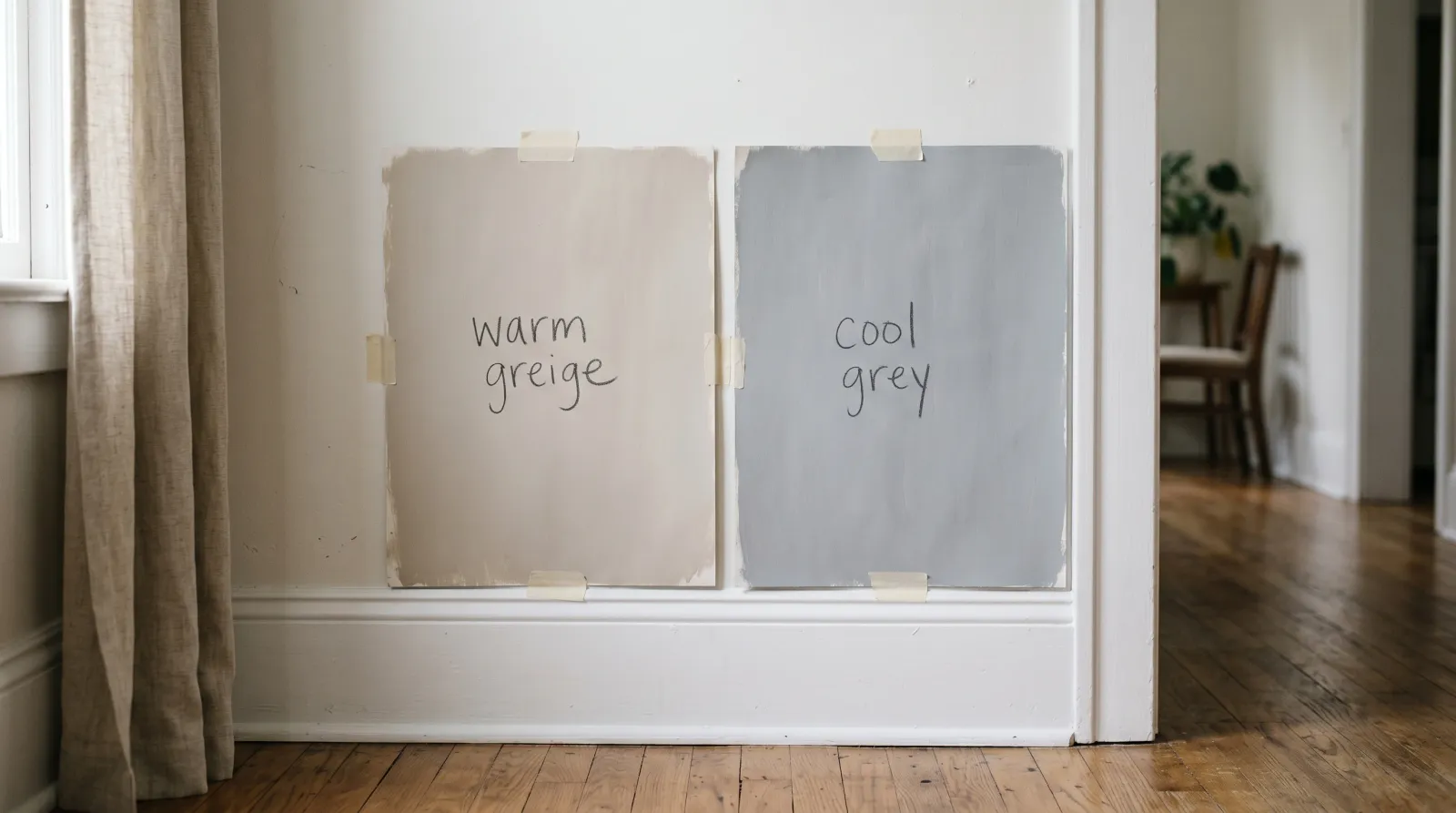
Testing paint against trim means painting a large sample of your new wall color and judging it right where it meets the molding you are keeping, in your own light, before you commit a gallon. The trim is the fixed thing. The wall color is the variable. So you read the wall color by how it sits against the trim, not on its own little chip. Paint two coats onto a poster board, tape it flush against the baseboard or door casing, and look at it across a full day. A color that looks lovely floating alone can go faintly green or grey the moment it lands next to white-painted trim, and that shift is what you are sampling for.
Most people skip this step and choose the wall color first, then wonder why the room feels slightly off once it dries. The wall almost always wins on square footage, so it gets all the attention. But the trim is the line your eye follows around every doorway, window, and floor edge, and it quietly judges every wall color you put beside it.
Why You Test Against the Trim First
Existing trim is a constraint you have already paid for. Unless you plan to repaint every baseboard and casing in the room, the trim color is fixed, and a good wall color has to make peace with it.
Here is the part people miss. White trim is almost never neutral white. It has an undertone, same as any other paint, and old oil-based trim ambers over the years until a baseboard that read crisp white in 2010 now reads warm cream. Hold a sheet of pure printer paper against your trim in daylight. If the trim looks yellow, buttery, or slightly pink next to the paper, that is the undertone your wall color will have to live with. A cool grey-blue wall against warm-cream trim makes the trim look dingy and the wall look cold, and nobody in the room can say why it feels wrong. They just feel it.
The fix is to read the trim’s temperature first, then shop wall colors that sit on the same side of the line. For the whole undertone picture, the undertones explainer walks through warm versus cool and how to spot it.
How to Run the Test
Do this:
- Paint two coats of the wall color onto a white poster board or foam board. Two coats, so you are reading the true color and not the board showing through.
- Tape the dry board flat against the wall, flush against the trim, so the two colors touch with no gap.
- Look at it in morning light, at midday, and again under your evening bulbs. Trim looks different at every hour and so will the wall against it.
- Test two or three colors at most, side by side, each one touching the trim.
- Leave the boards up for two full days before you decide. First impressions in store fluorescents lie.
Skip these shortcuts:
- Don’t judge from the chip alone. The chip is two inches wide, lit by store lighting, and nowhere near your trim.
- Don’t sample on bare primer or a freshly patched wall. Bright primer skews the color cooler, the same way pure paper exposes an undertone.
- Don’t paint the sample on the wall a foot away from the molding. The colors have to touch for your eye to read the relationship.
When to Repaint the Trim Instead
Sometimes the trim is the problem, not the wall. Test against it, and if every wall color you try looks wrong, the honest answer is that the trim has aged out.
- The trim has ambered. Old alkyd trim turns yellow-cream with age, and that warm cast fights most modern cool greys and clean whites. A pure white paper test makes this obvious.
- You want a cool, contemporary palette. Cool blue-greys and crisp whites need cool-white trim. Warm old trim will undercut every cool wall you pair with it.
- The trim sheen is dead or chalky. A flat, chalked baseboard reads grey-dirty next to fresh wall paint no matter the color.
If you land here, repainting the trim a clean white frees you to choose any wall color. The best interior trim paint round-up sorts the durable trim enamels by how their whites actually read in real light.
Wall-and-Trim Pairings That Work
| Existing trim | Reads | Wall color that sits well | Wall color that fights it |
|---|---|---|---|
| Warm white / cream | Cozy, slightly yellow | Warm whites, greige, soft sage | Cool blue-grey, stark white |
| Cool / bright white | Crisp, clean | Cool greys, blues, true whites | Warm tan, gold-beige |
| Natural wood (oak, walnut) | Warm, honeyed | Warm greige, muted green, off-white | Pink-based whites, cool lavender-grey |
| Aged oil-based (ambered) | Strong yellow-cream | Warm whites only, or repaint trim | Any cool color |
The pattern is steady across the table. Match the temperature, and the room settles. Cross it, and something looks off. For why the same trim shifts through the day, the light-direction explainer covers how north, south, and west light pull undertones forward.
Common Mistakes
- Choosing the wall color before checking the trim. The trim is fixed and the wall is not, so the wall has to adapt. Reverse the order and you save yourself a repaint.
- Assuming white trim is neutral. Almost no trim is true white. Hold pure paper against it and read the real undertone before you shop walls.
- Sampling away from the molding. A board taped a foot from the trim tells you nothing about the relationship. The colors must touch.
- Testing once, in one light. A wall that agrees with the trim at noon can clash under warm LEDs at dinner. Check morning, midday, and night.
- Forgetting the floor. Trim sits between the wall and the floor, so a greige that loves your white casing can still go green next to honey-oak boards. Judge the sample against both.
What to Look For
 Two wall samples against the same white trim. The warm greige on the left settles into the molding; the cooler grey on the right makes the trim read faintly yellow and tired.
You are watching for one thing: does the wall color make the trim look better or worse? Good pairings let the trim recede into the architecture, clean and quiet. Bad ones drag a yellow or grey cast out of the trim that you never noticed before.
Where to Start
You do not need new paint to start testing. Buy two or three sample pots of the wall colors you are weighing, paint a poster board with two coats each, and tape them against the trim you are keeping. Live with them for two days. The color that lets the trim disappear, at every hour you use the room, is the one to buy a gallon of.
If you decide the trim has to go warm-to-cool or just needs freshening, choose the trim enamel first and the wall second. Either way, pick for the hour you live there, and let the trim and the wall agree before you open a full can.
Ask a Question