How to Paint Resin Wicker
How to paint resin wicker patio furniture so it sticks: degloss, the right plastic-bonding primer, spray technique on the weave, and the cure that survives summer.

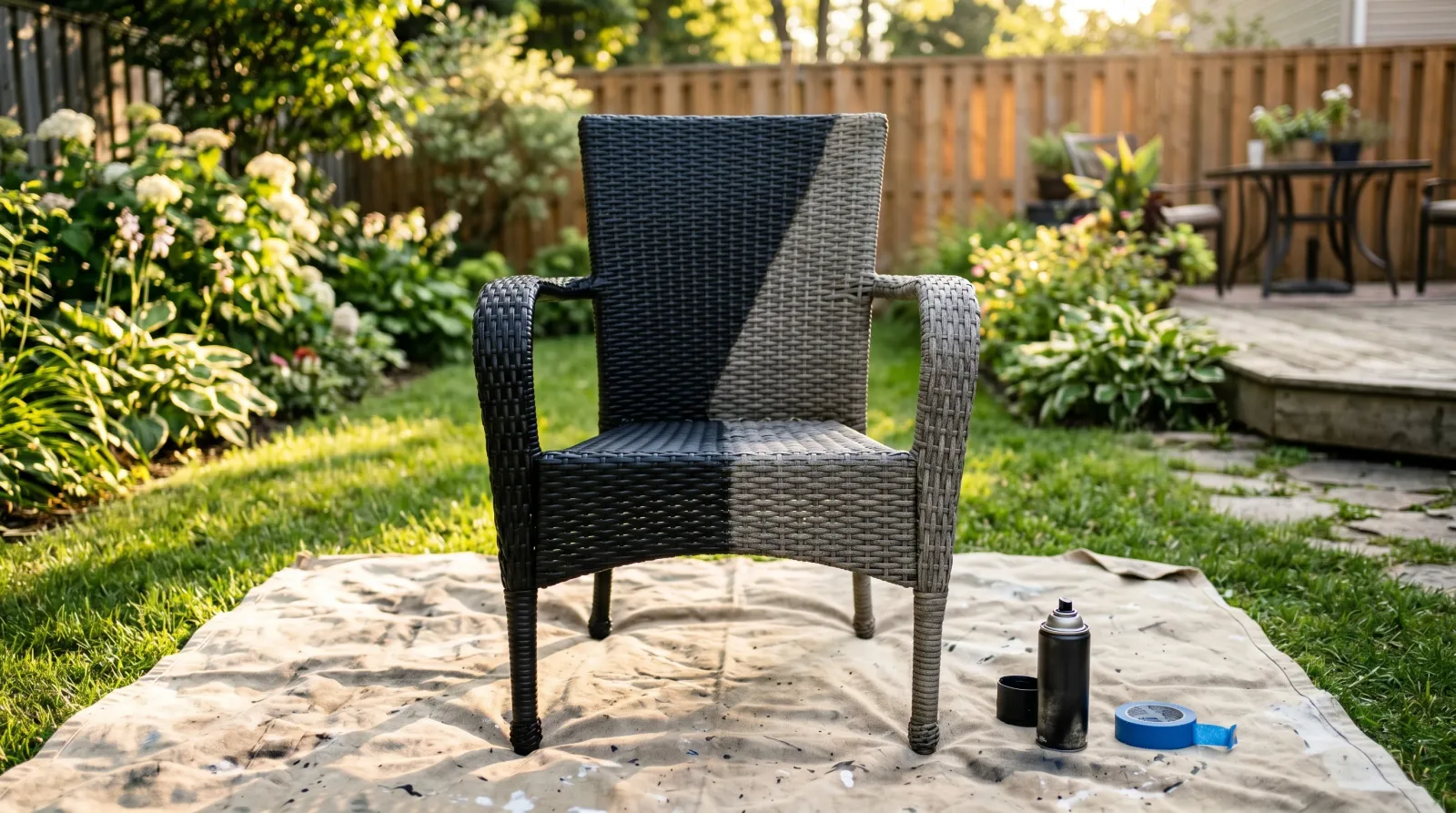
Resin wicker is plastic pretending to be a basket. Paint it like wood and the coat peels off the high points of the weave the first hot week. The whole job is getting paint to bond to a slick synthetic, and that comes down to two steps most people skip.
TL;DR
- Clean: soap and water, soft brush into the weave, dry fully
- Scuff: gray pad or 220-grit to knock the gloss off the strands
- Prime: plastic-bonding primer, or use a self-priming plastic spray paint
- Paint: spray paint rated for plastic and outdoor use, two to three thin coats
- Method: spray only. A brush can’t reach the undersides of the weave
- Cure: 48 hours before normal use, a week before hard wear
- Skill: easy. The prep is the whole job
What Resin Wicker Actually Is
Resin wicker is a synthetic strand woven over a metal or rattan frame to mimic natural wicker. The strand is plastic, usually HDPE (high-density polyethylene) on the good stuff and PVC on the cheap stuff. Both are extruded, dyed through, and woven by machine.
It’s built for the patio. It shrugs off rain, doesn’t rot, and doesn’t unravel the way natural rattan does. The catch is the same thing that makes it weatherproof: the plastic is slick and chemically inert, which is exactly what paint hates to stick to.
Why Resin Wicker Fights Paint
HDPE and PVC are low-surface-energy plastics. Paint grips a surface two ways, mechanically (it keys into texture) and chemically (the film bonds to the substrate). On bare resin you get neither. The strand is glossy, so there’s no tooth, and the plastic is inert, so ordinary paint binders have nothing to grab.
That’s why the failure mode is so ugly. The paint doesn’t fade or chalk first. It releases. You get a clean peel off the high points of the weave where hands and sun hit hardest, and it comes off in flakes that look like the can was the problem. The can wasn’t the problem. The bond was.
Resin also moves with heat. A black chair in July sun runs 40°F hotter than the air, and the plastic expands. A rigid, poorly bonded film cracks at the strand crossings and lifts. So you want a flexible film and a real bond underneath it.
Step 1: Wash the Weave
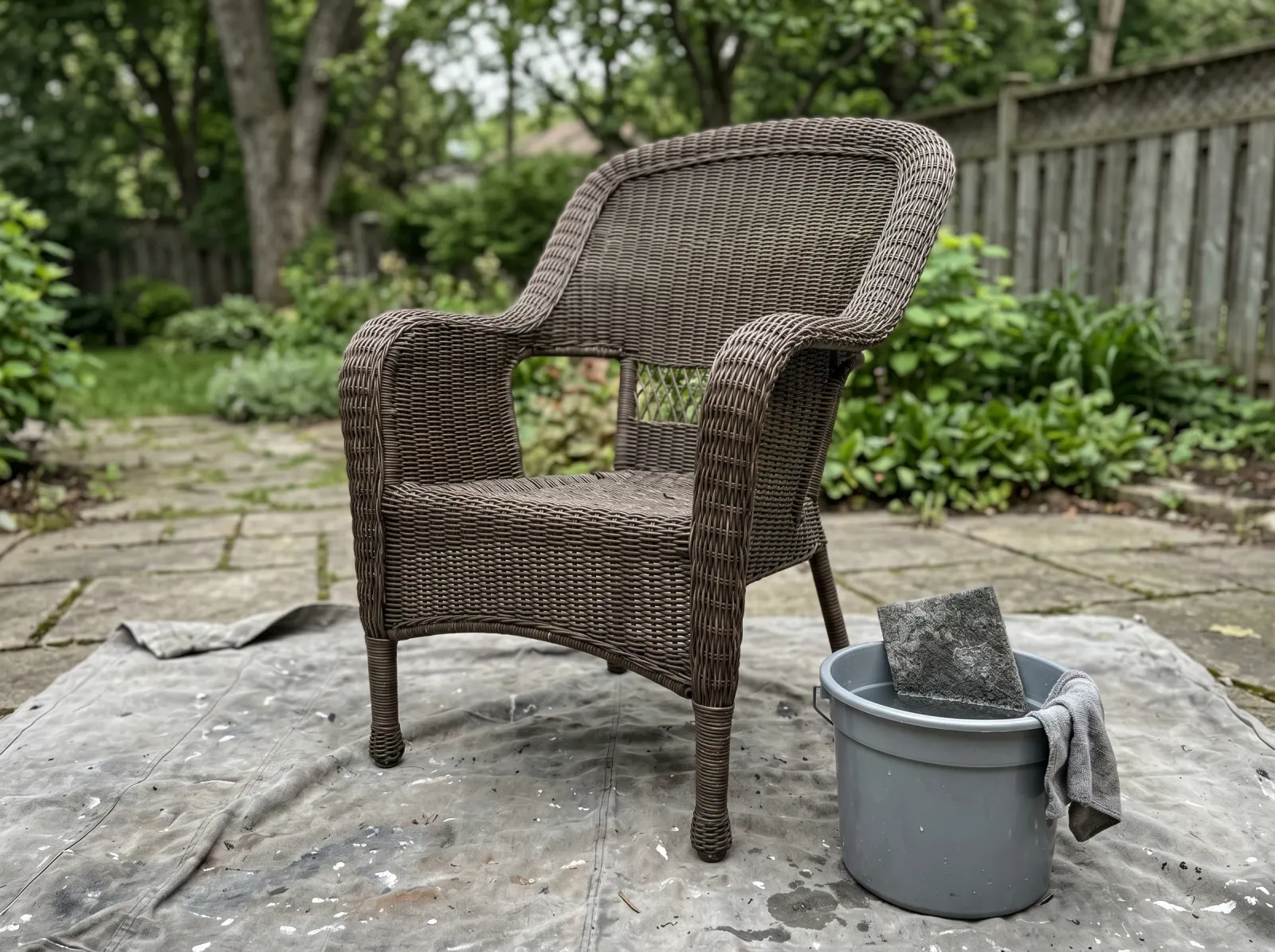
Soap, water, a soft brush into the weave, then a scuff with a gray pad. Slick plastic doesn’t hold paint.
Patio furniture is filthy in ways you don’t see until you wash it. Pollen, body oil from arms and hands, sunscreen residue, mildew in the shaded crooks of the weave. Any of it under the paint is a bond failure waiting to happen.
Mix dish soap or a TSP substitute in warm water. Work it into the weave with a soft scrub brush, get into the crossings where grime hides, then rinse with a hose. For mildew in shaded spots, hit it with a 3:1 water-to-bleach mix, let it dwell ten minutes, rinse.
Then let it dry. Fully. Resin doesn’t absorb water, but the weave traps it in the strand gaps and the frame joints. Give it a sunny afternoon. Paint over trapped water and you’ll see blisters by the next warm day.
Step 2: Scuff the Gloss
This is the step people skip, and it’s half the bond. New or glossy resin has a slick factory finish with zero tooth. A light scuff gives the paint a mechanical key on top of whatever chemical bond the primer provides.
Run a gray Scotch-Brite pad or 220-grit over the whole weave. You’re not removing material. You’re dulling the shine until the surface goes from glossy to matte. On a tight weave the pad reaches the high points the paint will touch first, and those are exactly the spots that peel if you leave them slick.
Wipe the dust off with a tack cloth or a damp microfiber. Let it dry again before primer.
Step 3: Prime or Use a Fusion Paint
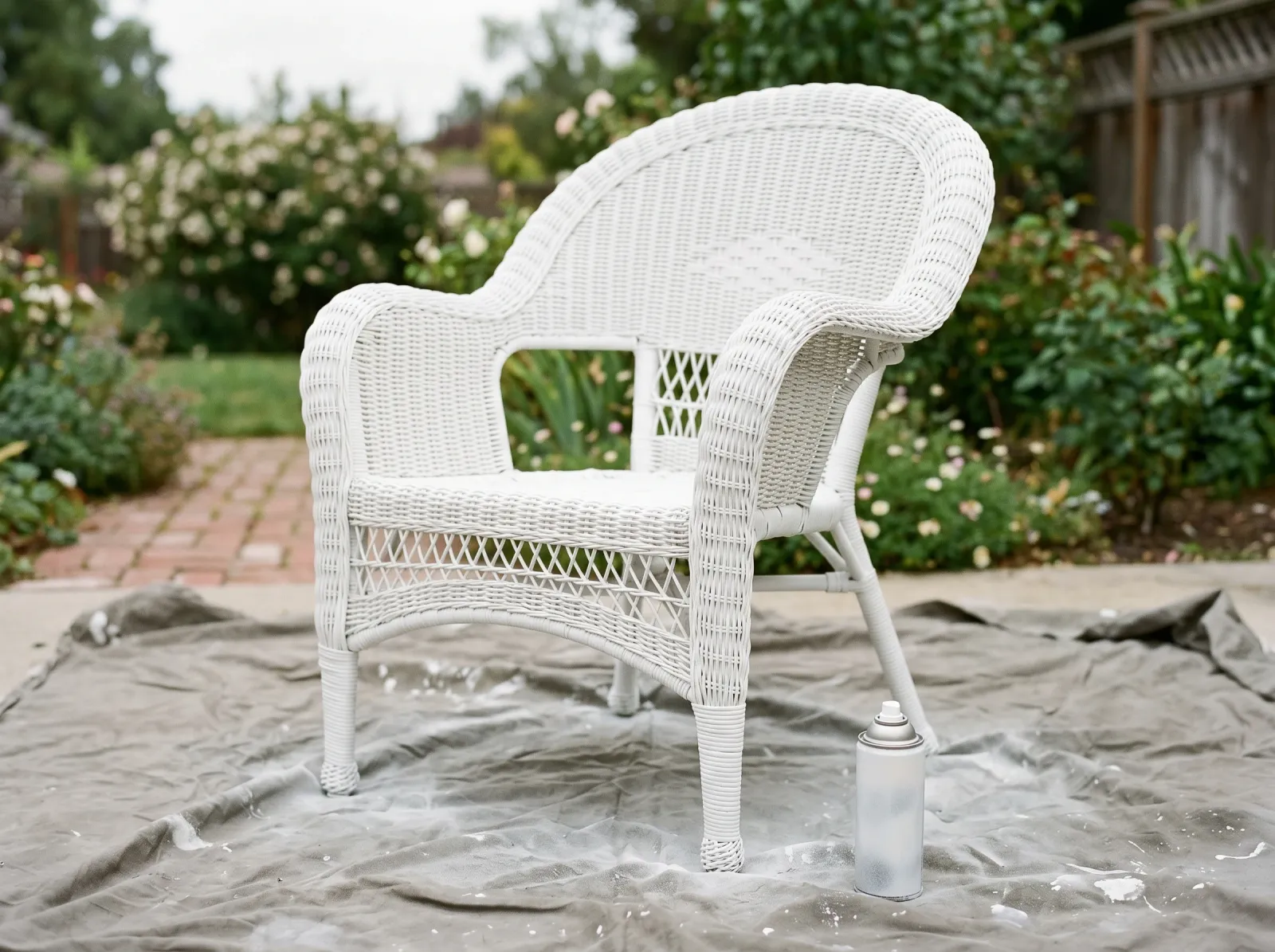
Light passes of a plastic-bonding spray primer, into the weave from two angles. Thin coats, not one wet flood.
You’ve got two paths, and both work.
Path one: bonding primer plus topcoat. A plastic-bonding spray primer like Rust-Oleum Plastic Primer lays down a film that bites into HDPE and PVC and gives your color coat something to grip. This is the more durable route on furniture that gets sat on, leaned on, and rained on. One light coat, let it flash off per the can.
Path two: self-priming plastic paint. Krylon Fusion All-In-One and Rust-Oleum 2X are built to bond to bare plastic without a separate primer. For a chair that lives on a covered porch, this is enough, and it’s faster. The fusion chemistry is doing the bonding work the primer would otherwise do.
My call for outdoor furniture that sees real weather: scuff, bond-prime, then topcoat. The fusion paints are good, but a dedicated primer plus a quality plastic-rated color coat outlasts the all-in-one on a chair that takes daily contact. Don’t reach for ordinary spray paint with no bonding step at all. That’s the version that peels.
Spray primer in thin passes, into the weave from two angles so the undersides of the strands get coated, not just the tops. One wet flood coat runs and pools in the crossings. Several light passes don’t.
Step 4: Spray the Color Coat
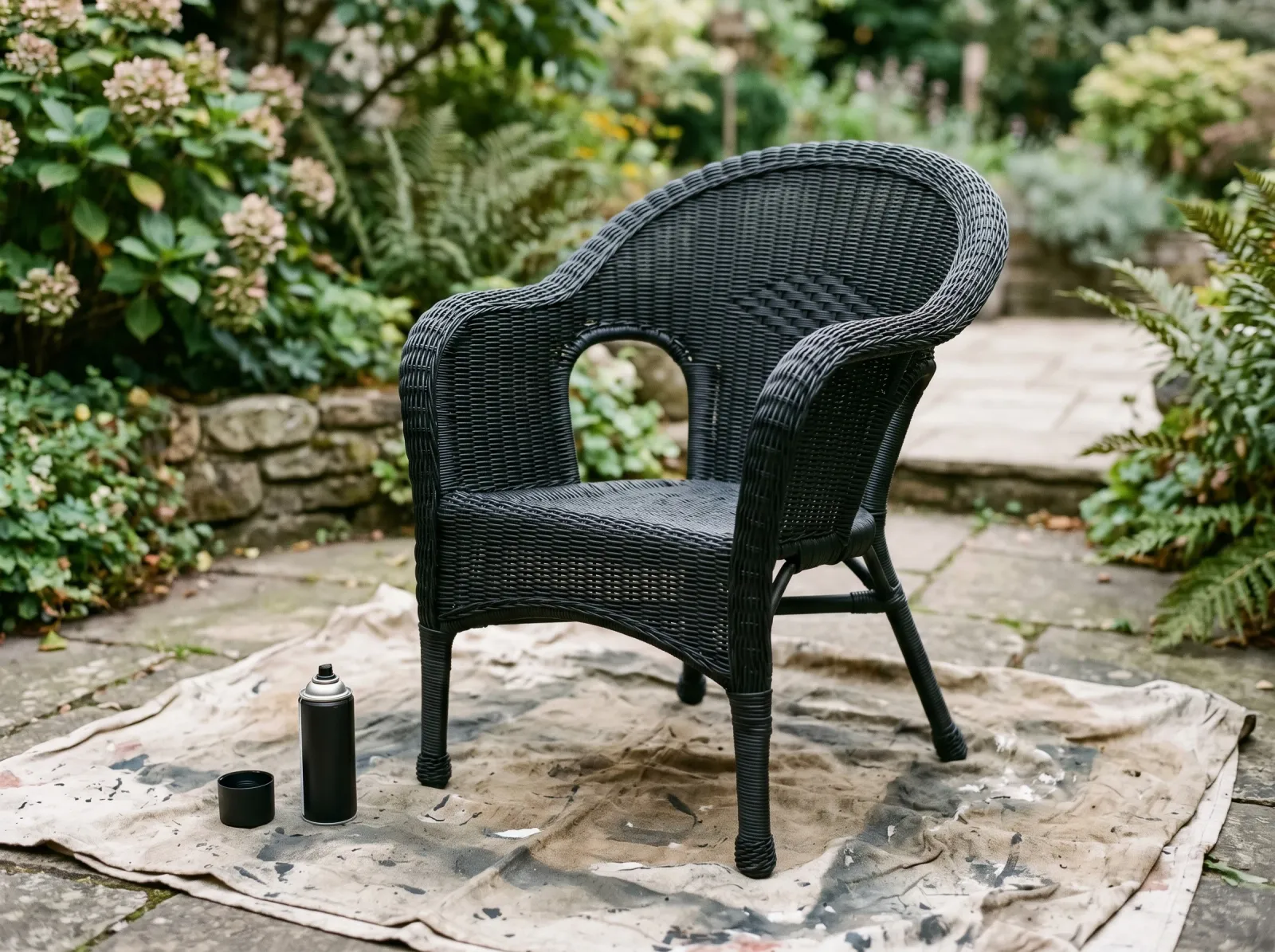
First color coat catching the weave from every angle. The undersides of the strands are where most people leave holidays.
Spray is the only method that works here. A brush drags across the high points of the weave and never reaches the recesses. A roller does the same. The whole point of paint on wicker is even color through a three-dimensional surface, and only an aerosol or a sprayer gets into the gaps.
Shake the can two minutes past when you think it’s mixed. Hold it 8 to 10 inches off the surface and keep it moving. Spray in thin passes, overlapping each by half, and work the piece from multiple angles: straight on, then from below to catch the strand undersides, then from above. The undersides are where everyone leaves holidays, and a holiday on a chair shows the second the light rakes across it.
Two to three thin coats beat one heavy one every time. Heavy coats run, sag in the crossings, and dry with a thicker, more brittle film that cracks when the resin moves in the heat. Thin coats level clean and flex with the plastic. Let each coat flash to touch-dry before the next, usually 10 to 20 minutes in warm dry air. Read the can.
If the chair has a glass tabletop, metal feet, or fabric straps, tape and paper those off before you start. Overspray on glass scrapes off; overspray on a strap is there for good.
Step 5: Optional Clear Coat, Then Cure
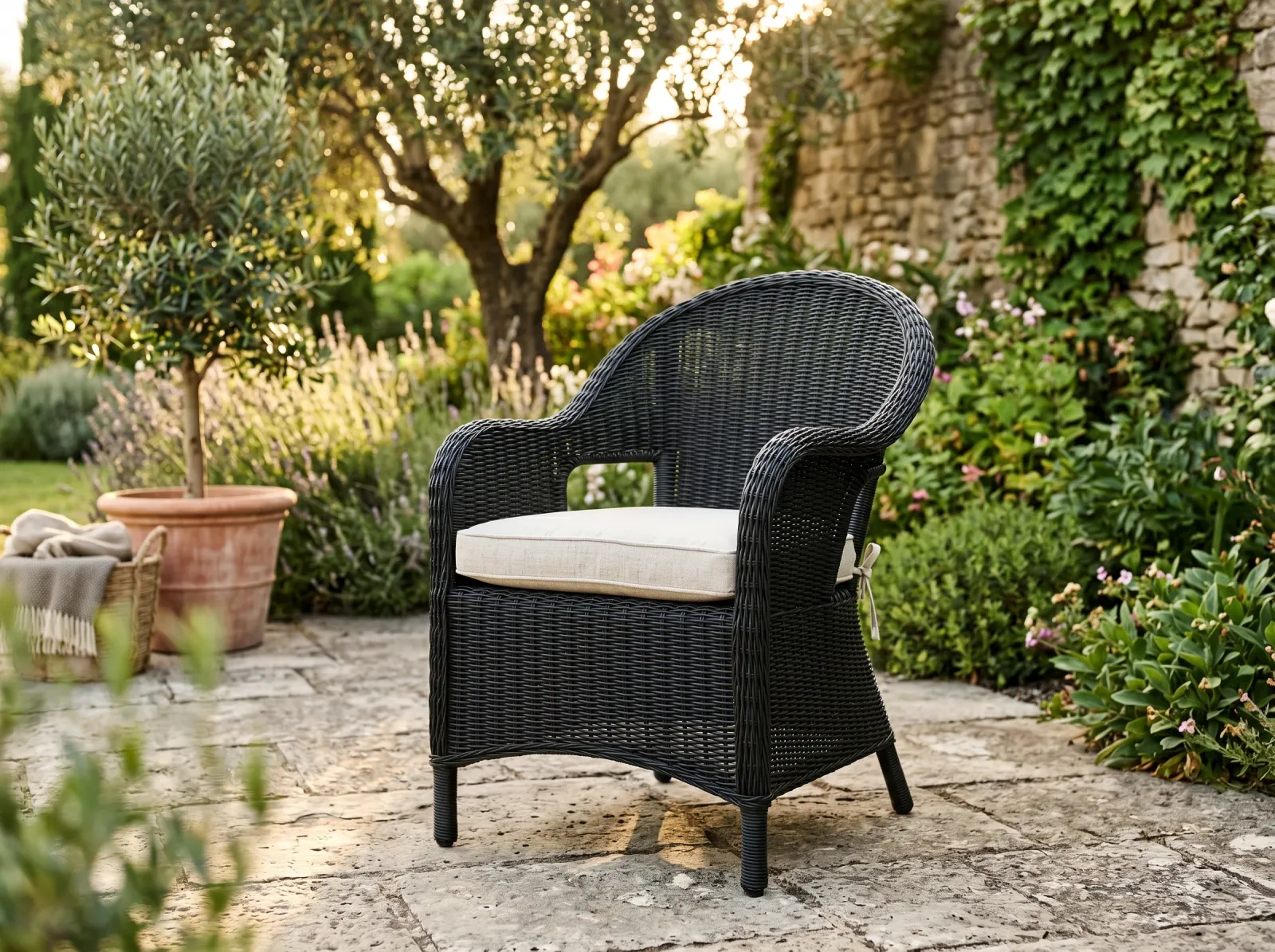
Two coats, full cure, back on the patio. Even sheen, no bare strand undersides.
For furniture in full sun, a spray-on UV-resistant clear coat over the color buys you time. UV is what kills both the paint film and the resin underneath, and a clear topcoat takes the first hit. Skip it on a covered porch; it’s worth it on an exposed deck.
Then cure. Touch-dry comes in 20 minutes to an hour. Handle-dry, meaning you can move the piece, in a few hours. But the film keeps hardening for days. Give it 48 hours before normal sitting and a full week before hard wear (kids climbing, a dog jumping up, dragging it across pavers). Set a wet cushion on a soft film and it’ll print the weave of the cushion into the paint.
Don’t rush this part on a hot weekend. The temptation is to use the chairs at the party Saturday night. A film that hasn’t cured marks up, and you’ll be touching up Monday.
Common Mistakes
- Skipping the scuff. Result: paint peels off the glossy high points of the weave by midsummer. Fix is a gray pad over the whole surface before priming.
- Ordinary spray paint, no bonding step. Result: clean peel in sheets the first hot week. Use a plastic-bonding primer or a fusion-type plastic paint.
- One heavy coat instead of three thin ones. Result: runs and pooling in the crossings, a brittle film that cracks when the resin heats up. Thin passes, flash between.
- Painting over trapped water. Result: blisters by the next warm day. The weave holds water in the gaps; dry it a full sunny afternoon.
- Using a brush or roller. Result: bare strand undersides and recesses, uneven color the light catches. Spray only.
- Using the chairs before cure. Result: cushion weave printed into a soft film, hand marks on the armrests. 48 hours minimum, a week for hard use.
Maintenance & Longevity
Painted resin wicker holds two to four years on a covered porch, less in full sun. The armrests, seat front, and the top edge of the back fail first because that’s where hands land and sun hits. Wipe the furniture down a few times a season with soap and water, no pressure washer, since a hard stream lifts a thin outdoor film off the weave.
When it starts to wear, you don’t strip and start over. Wash, scuff the worn spots, and shoot a fresh coat over the whole piece. Cover or store the furniture over winter and you’ll roughly double the life of the paint job. Bare resin left out in zone 5 winters goes brittle and chalky on its own, paint or no paint.
FAQ
Can you paint resin wicker furniture? Yes. Resin wicker is woven plastic, so it takes paint if you prep it like plastic: wash it, scuff the gloss off, and use a plastic-bonding primer or a self-priming plastic spray paint. Skip the scuff and the bonding step and the paint peels off in sheets the first hot week. Spray is the only practical method on a tight weave.
What kind of paint do you use on resin wicker? A spray paint rated for plastic and outdoor use. Krylon Fusion All-In-One and Rust-Oleum 2X are the two common ones. Both bond to slick synthetics without a separate primer, though a dedicated plastic-bonding primer underneath makes either one last longer on furniture that gets handled and rained on. Brush-on paint won’t reach into the weave.
Do you need to prime resin wicker before painting? Either prime with a plastic-bonding primer or use a self-priming plastic spray paint. Resin is HDPE or PVC, both low-surface-energy plastics that ordinary paint can’t grip. A bonding primer or a fusion-type paint chemically bites into the plastic, and the scuff-sand before it adds the mechanical grip.
Can you spray paint resin wicker without sanding? You can with a true self-priming plastic paint like Krylon Fusion, but it lasts longer if you scuff first. The scuff gives the paint a mechanical key on top of the chemical bond. On glossy resin, skipping the scuff is the most common reason a repaint flakes off the high points of the weave by midsummer.
How long does painted resin wicker last? Two to four years on a covered porch, less in full sun. UV breaks down both the paint film and the resin underneath. A UV-resistant clear coat and covering the furniture over winter push it toward the high end. The armrests and seat front go first, since those take the most hand contact.