How to Paint Plastic
How to paint plastic so it actually sticks: the plastic types that fight paint, why you need adhesion primer, and the scuff-and-degrease step everyone skips.

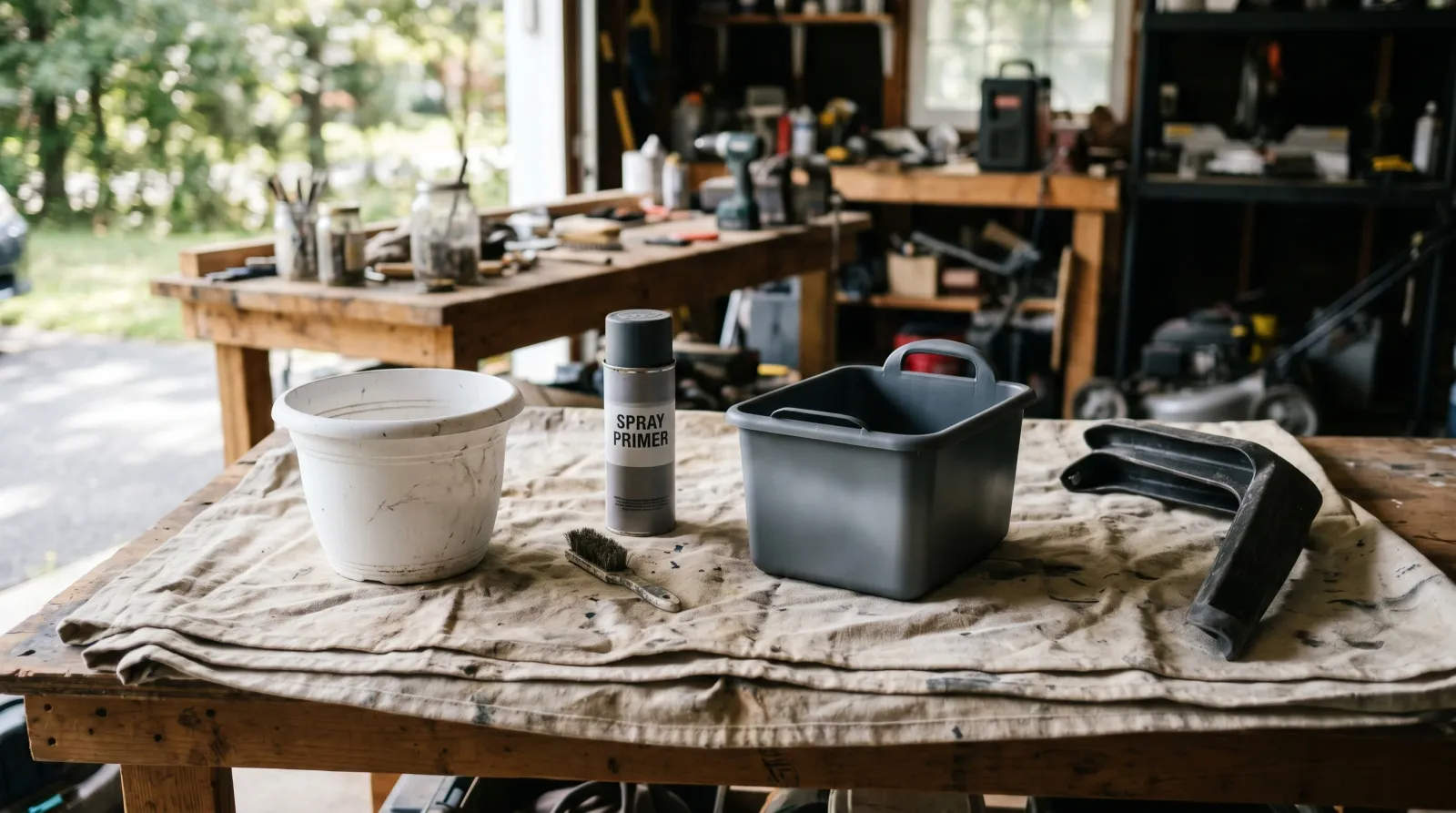
Paint peels off plastic for one reason: nothing gave it a grip. The plastic is slick, the factory left a waxy film on it, and ordinary paint has nothing to bite into. Fix the grip and the rest is easy.
TL;DR
- Clean: dish soap and water, then wipe with isopropyl alcohol to kill the grease and mold-release
- Scuff: gray scuff pad over the whole surface until the gloss is dead
- Primer: plastic adhesion primer (Krylon Fusion, Rust-Oleum 2X Plastic, or Bulldog) — non-negotiable on slick plastic
- Paint: spray paint rated for plastic, or acrylic/enamel over the adhesion primer; thin coats
- Cure: 24 hours to handle, a full week before hard use
- Skill: easy. The whole job is the prep
What Counts as Plastic Here
Plastic is any molded synthetic polymer: patio chairs, planters, storage bins, shutters, toys, mailboxes, light fixtures, model parts, automotive trim. They all share one trait that matters for paint. They’re non-porous and chemically slick, so paint can’t soak in the way it does on wood or drywall.
What kind of plastic you have changes how hard the job is. Flip the piece over and look for the recycling number molded into the bottom. Numbers 2, 4, and 5 (HDPE, LDPE, polypropylene) are the waxy, paint-hating ones. Numbers 1, 3, 6, and ABS take paint far easier.
Why Plastic Is Different From Drywall
Drywall and wood are porous. Paint sinks into the surface and anchors mechanically. Plastic gives you none of that. The surface is glassy, the polymer is chemically inert, and most of it comes out of the mold coated in a release agent that helped it pop free of the machine. That release agent is basically a thin grease layer, and paint slides right off it.
So you can’t rely on the paint soaking in. You have to manufacture grip. That means killing the gloss so the surface has a tooth, removing the grease so nothing comes between the paint and the plastic, and laying down a primer chemically built to bond to slick polymer. Miss any one of the three and the film peels.
There’s a second issue: movement. A plastic chair flexes every time someone sits in it. A bin flexes when you stuff it full. A rigid paint film over a flexing part cracks and chips. That’s why a flexible acrylic or a plastic-rated spray beats a hard enamel on anything that bends.
Step 1 — Clean and Degrease
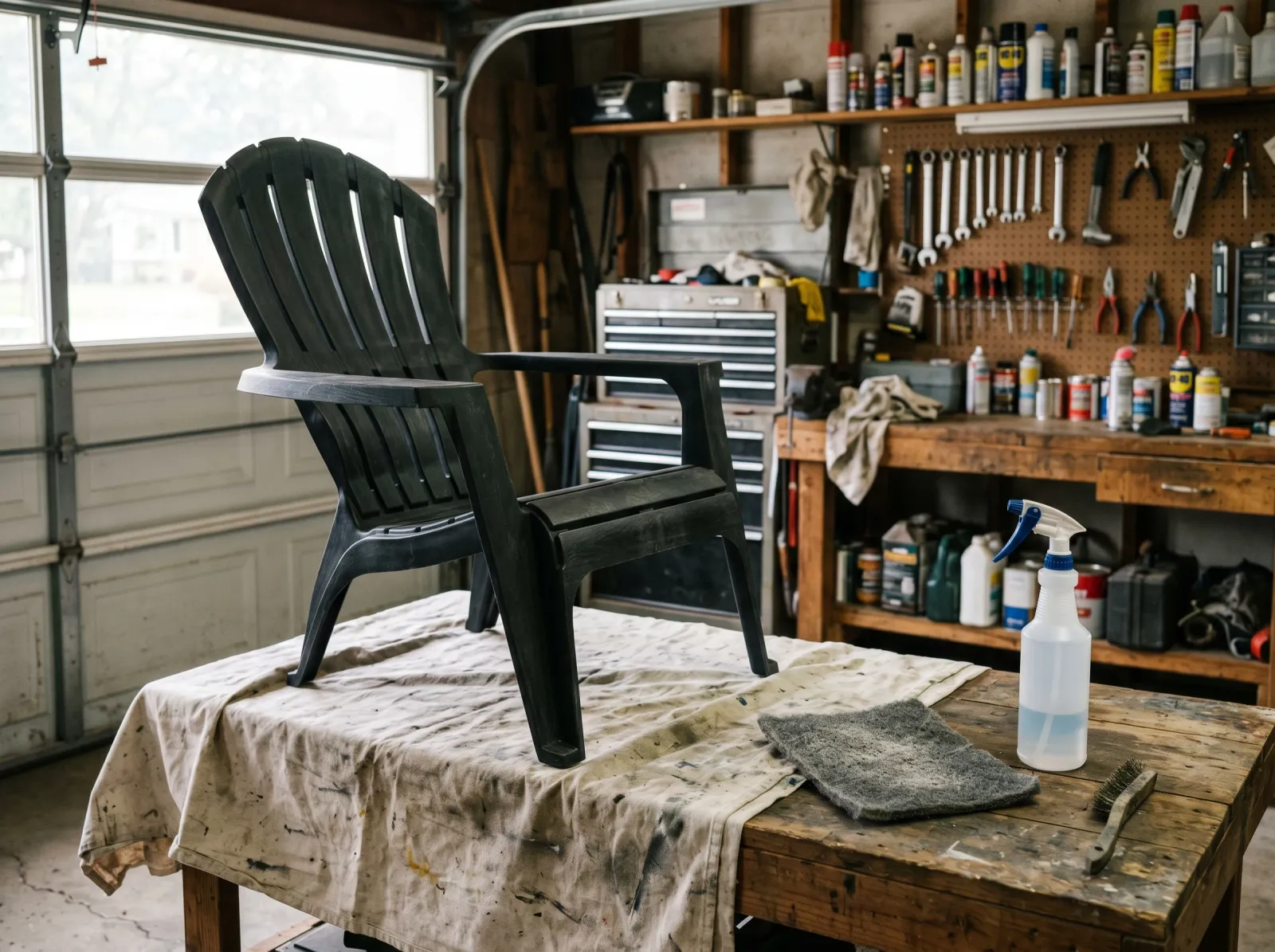
Dish soap and water first, then a wipe with isopropyl alcohol. Scuff the whole face with a gray scuff pad until the sheen is gone.
Wash the piece with warm water and dish soap. Get into every crease and corner. Outdoor plastic carries pollen, mildew, and a chalky UV film; indoor plastic carries skin oil and dust. Rinse and let it dry.
Then the step everyone skips: wipe the whole surface with isopropyl alcohol (70% or higher) on a clean rag. This pulls the mold-release agent and any leftover grease the soap missed. On greasy automotive or kitchen plastic, a plastic-safe degreaser does it better. Don’t use a wax-and-grease remover meant for metal on soft plastics; some of those solvents craze or melt the surface. Test a hidden spot first.
This is where most failed plastic paint jobs are born. The surface looks clean, the paint goes on fine, and three weeks later it sheets off because a film of release agent sat under it the whole time.
Step 2 — Scuff the Gloss
Take a gray Scotch-Brite scuff pad and dull the entire surface. You’re not removing material. You’re knocking the factory shine off so the primer has a tooth to grab. Work until the gloss is uniformly gone and the surface looks flat and hazy.
On flat panels you can use 220-grit instead. On molded curves and detail, the scuff pad gets into shapes sandpaper can’t. After scuffing, wipe the dust off with a tack cloth or a fresh alcohol wipe.
If you can still see shiny spots after scuffing, the primer will skip those spots later. Go back and dull them.
Step 3 — Prime With a Plastic Adhesion Primer
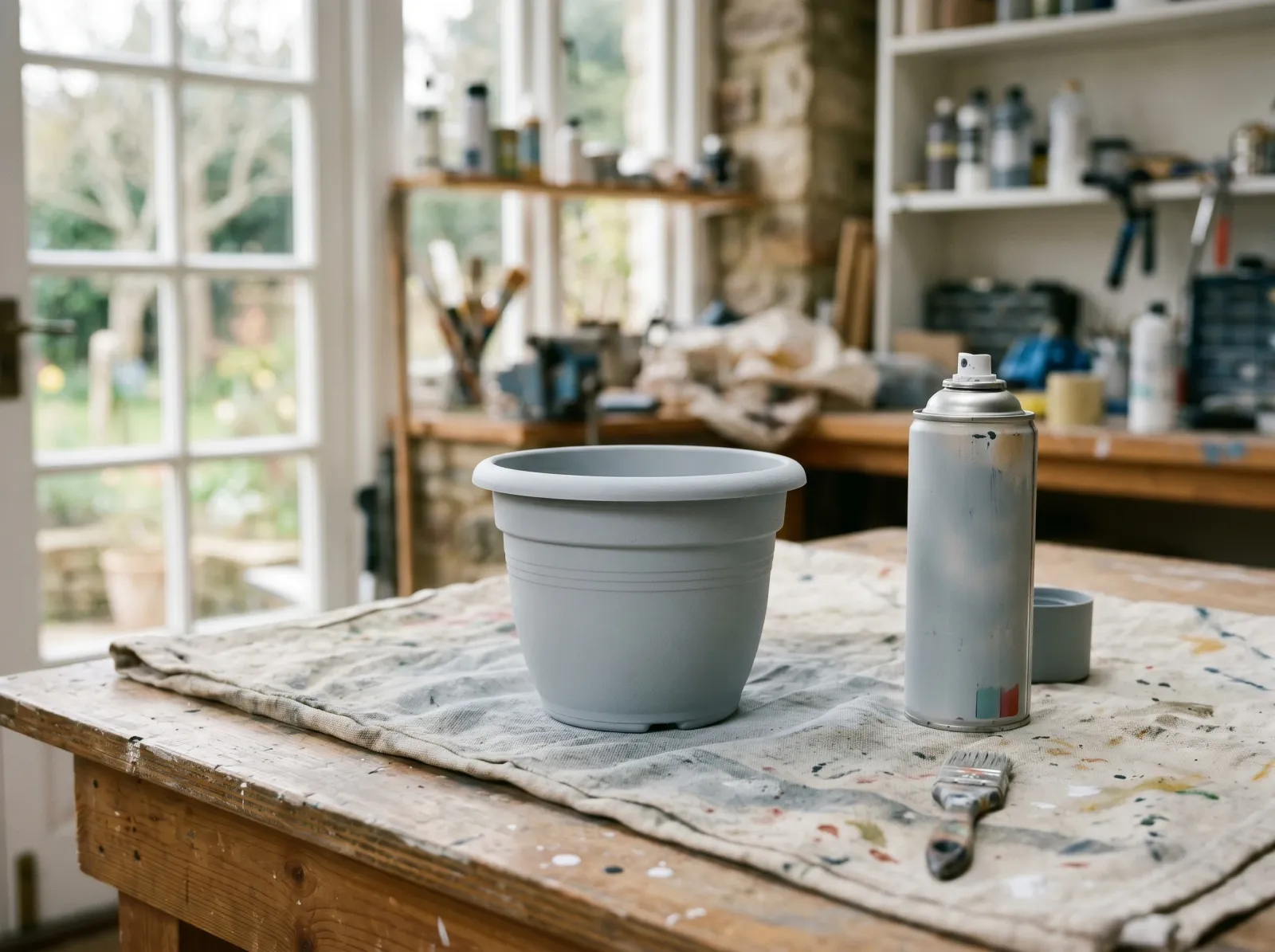
Two thin coats of plastic adhesion primer, ten minutes apart. The gray haze means the bond layer is on.
This is the part that makes the job hold. A plastic adhesion primer is chemically formulated to bond to slick polymer and to give your topcoat a porous, paint-friendly surface. Standard wall primer and PVA won’t do it.
Three solid choices:
- Krylon Fusion and Rust-Oleum 2X for Plastic are all-in-one sprays. They bond and color in one product, so on easy plastics (ABS, PVC, polystyrene) you can skip a separate primer entirely. Easiest path for furniture and planters.
- Rust-Oleum Plastic Primer or Krylon adhesion primer as a dedicated spray primer, then any topcoat over it. Use this when you want a brush-on or specialty color the all-in-ones don’t carry.
- Bulldog Adhesion Promoter is the heavy hitter. On polypropylene and polyethylene (those recycling 2, 4, 5 plastics), it’s the only thing that reliably bites. Lay it down, then prime and paint normally.
Spray two thin coats, ten to fifteen minutes apart. Light passes, can kept moving, 8 to 10 inches off the surface. Don’t try to cover in one heavy pass; a thick coat runs and stays soft. Let the primer flash to the touch before color.
For the deeper version of why a bonding primer beats paint-and-primer-in-one on a surface like this, see the breakdown of primer versus paint-and-primer-in-one.
Step 4 — Apply the Color
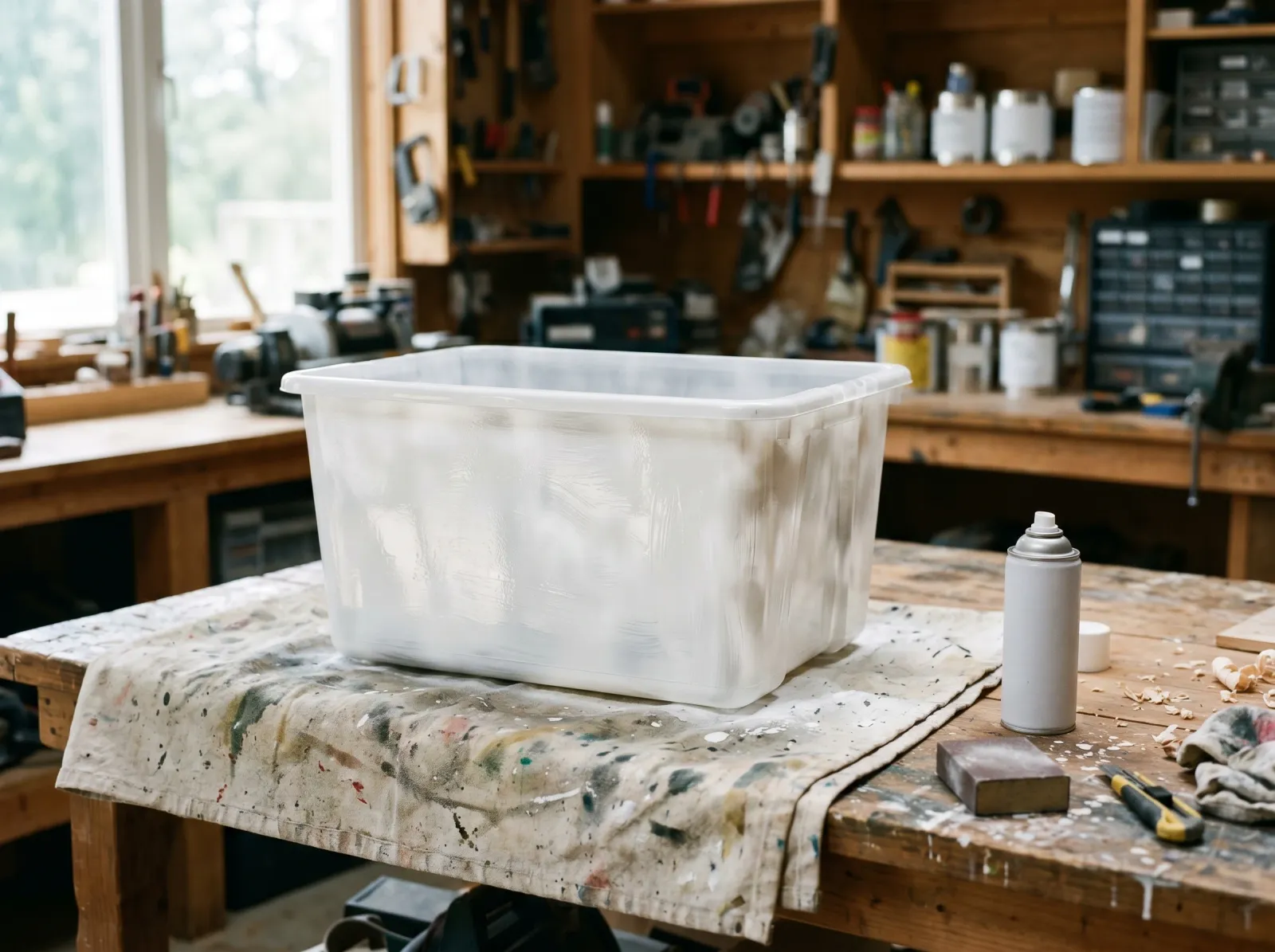
Light passes, slightly overlapping, keeping the can moving. Thin coats beat one heavy coat that runs.
Spray is the right tool for most plastic. It lays a thin even film with no brush marks, and it gets into molded detail a brush can’t reach. Use a paint rated for plastic, or any quality acrylic/enamel spray over the adhesion primer you just laid.
Two to three thin coats, each one flashed dry before the next. The instinct to load it on heavy is what causes runs, sags, and a soft film that fingerprints for days. Build the color in layers.
Brushing plastic works on flat trim, shutters, and larger pieces where overspray is a problem. Use a fine synthetic-bristle brush or a foam brush and a flexible acrylic. Keep the coats thin and don’t overwork the wet film. Expect more visible texture than a spray gives you.
For high-touch or outdoor pieces, finish with a clear topcoat once the color cures. It takes the abrasion that would otherwise wear the color off the arms of a chair or the lip of a planter.
Color choice on plastic follows the same sheen logic as any surface. Lower sheen hides molding seams and surface waviness; gloss shows every flaw. The sheen guide covers the trade-offs.
Step 5 — Dry, Recoat, Cure
Two to three thin color coats, then a week of cure before it goes back into daily use.
Spray paint on plastic is touch-dry in 20 to 30 minutes and recoatable inside an hour on most cans. Read the label, because there’s a trap: most aerosols give you a recoat window of either under one hour or after 48 hours, with a dead zone in between. Recoat inside the hour or wait two full days. Hit it during the dead zone and the new coat wrinkles the one under it.
Handle-dry comes at 24 hours. Full cure is a week. During that week the film is still hardening, so don’t stack things on it, scrub it, or put a painted chair back into daily rotation. Plastic doesn’t breathe, so cure on it runs a touch slower than on porous surfaces because the solvent can only leave from the top.
Common Mistakes
- Skipping the degrease. Mold-release agent sits invisible under the paint and the whole film sheets off in weeks. Wipe with isopropyl alcohol after washing, every time.
- No adhesion primer on slick plastic. Regular paint won’t bond. Use a plastic-rated spray or a dedicated adhesion primer, or it peels at the first flex.
- Not scuffing the gloss. A glassy surface has nothing for the primer to grab. Dull the whole thing with a scuff pad first.
- One heavy coat instead of three thin ones. Thick coats run, stay soft, and stay tacky for days. Build thin layers and let each flash.
- Painting polypropylene or polyethylene like normal plastic. Recycling 2, 4, and 5 reject standard primer. Use Bulldog or a true adhesion promoter first, or don’t bother.
- Recoating in the dead zone. Aerosols wrinkle if you recoat between the early window and the 48-hour mark. Recoat fast or wait two days.
Maintenance & Longevity
Indoor painted plastic holds almost forever as long as you used an adhesion primer. Wipe it with a damp cloth, skip abrasive cleaners that scratch the film, and it stays put.
Outdoor plastic furniture and planters run three to five years before the color starts wearing thin at the high-touch spots: chair arms, seat edges, planter lips. UV and flex are what kill it, not paint failure as such. A clear topcoat over the color adds a couple of years. When wear shows, scuff the worn areas, re-prime the bare spots, and recoat. The bond underneath is still sound, so you’re refreshing, not stripping. If the paint is peeling in sheets rather than wearing thin, the prep failed and the fix is to strip and start over. See how to fix peeling paint for the strip-and-recoat sequence.
FAQ
Do I need to prime plastic before painting?
Almost always, yes. Most house and craft paints won’t bond to slick plastic and peel off the first time you flex or scratch the piece. A dedicated plastic adhesion primer bites into the surface and gives the topcoat something to grab. The exception is an all-in-one plastic spray like Krylon Fusion or Rust-Oleum 2X for Plastic, which carries its own bonding agent and skips the separate primer.
What kind of paint sticks to plastic?
Spray paints labeled for plastic are the easiest because they’re built to bond and flex with the material. For a brush job, use an acrylic latex or an enamel over a plastic adhesion primer. Regular wall paint and most craft acrylics won’t hold on bare plastic without that primer underneath.
Why does paint peel off plastic?
Three reasons, in order: no adhesion primer, a greasy or glossy surface the paint couldn’t grip, and mold-release agent left on from the factory. Plastic is non-porous, so paint can only lock to it if you scuff the gloss off and prime. Skip the scuff or the degrease and the film lifts at the first flex.
Can I paint plastic without sanding?
You can skip heavy sanding, but not scuffing. A gray scuff pad over the whole surface kills the factory gloss and gives the primer a tooth. Five minutes of work, and it’s the difference between paint that lasts years and paint that flakes in a month. For flat panels, 220-grit works too.
How long does paint last on plastic outdoors?
Three to five years on outdoor furniture or planters with an adhesion primer and a UV-stable topcoat, less on a south-facing piece that bakes all summer. A clear topcoat buys a couple more years. Indoor plastic holds almost indefinitely.
Ask a Question