How to Paint Cinder Block
Painting cinder block the right way: block filler, not regular primer, and a breathable masonry topcoat. Full prep-to-cure guide for walls indoors and out.

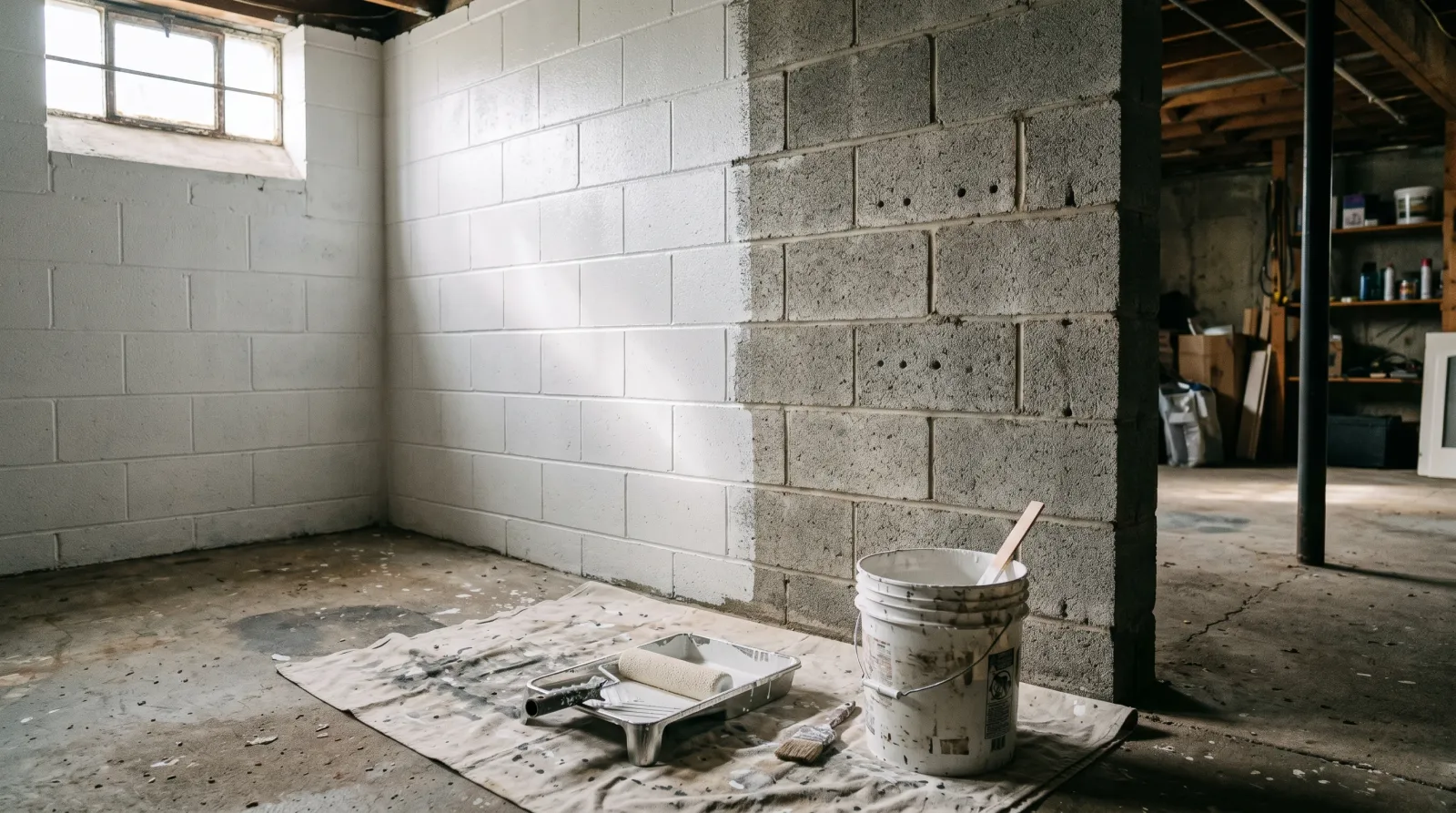
Cinder block is a sponge with a chemistry problem. It drinks paint through a thousand tiny pinholes and it’s alkaline enough to eat the wrong paint off the wall. The trick isn’t the topcoat. It’s the block filler underneath, and the moisture you can’t see.
TL;DR
- Cure first: new block needs 30 to 60 days before any paint
- Clean: wire brush, TSP, full dry-down. No paint over dust or damp block
- Fill, don’t just prime: block filler (Loxon Block Surfacer) closes the pinholes
- Topcoat: 100% acrylic masonry paint, two coats. Elastomeric on cracking exterior walls
- Never: oil-based paint on bare masonry. The lime saponifies it
- Moisture: fix the water source before you paint a basement wall, not after
- Skill: medium. The filler step and the moisture check are the whole job
What Cinder Block Actually Is
Cinder block is a concrete masonry unit, a CMU in the trade. It’s molded from concrete, sometimes with coal cinders or fly ash mixed in to lighten it, then stacked and bonded with mortar. The result is a wall that’s hard, gray, and full of holes.
Those holes are the point. Two kinds. There are the obvious mortar joints between blocks, and there are the thousands of microscopic pinholes across the face of every block, left behind as air escaped the wet mix in the mold. The pinholes are what make bare block almost impossible to paint cleanly.
Why Cinder Block Fights Paint
Three things make block different from drywall, and all three break a normal paint job.
It’s porous. The face is riddled with pinholes that swallow the first coat and leave the surface looking pockmarked. You can roll three coats of regular paint and still see open pores in raking light.
It’s alkaline. Concrete is full of lime, and fresh masonry runs a pH north of 12. That high pH attacks the binder in oil-based and some latex paints in a reaction called saponification. The paint turns soft, gummy, and starts sliding off. Wait out the cure and the pH drops, but it never reads neutral.
It moves water. Block wicks groundwater and rain like a wick in a lamp. A basement wall pulls moisture from the soil behind it; an exterior wall takes it from rain and dew. Trap that moisture under a film-forming paint and you get blisters, peeling, and the white crusty bloom called efflorescence. I see this every spring on basement walls that got painted with bargain wall paint over a wet foundation.
Step 1: Clean the Wall
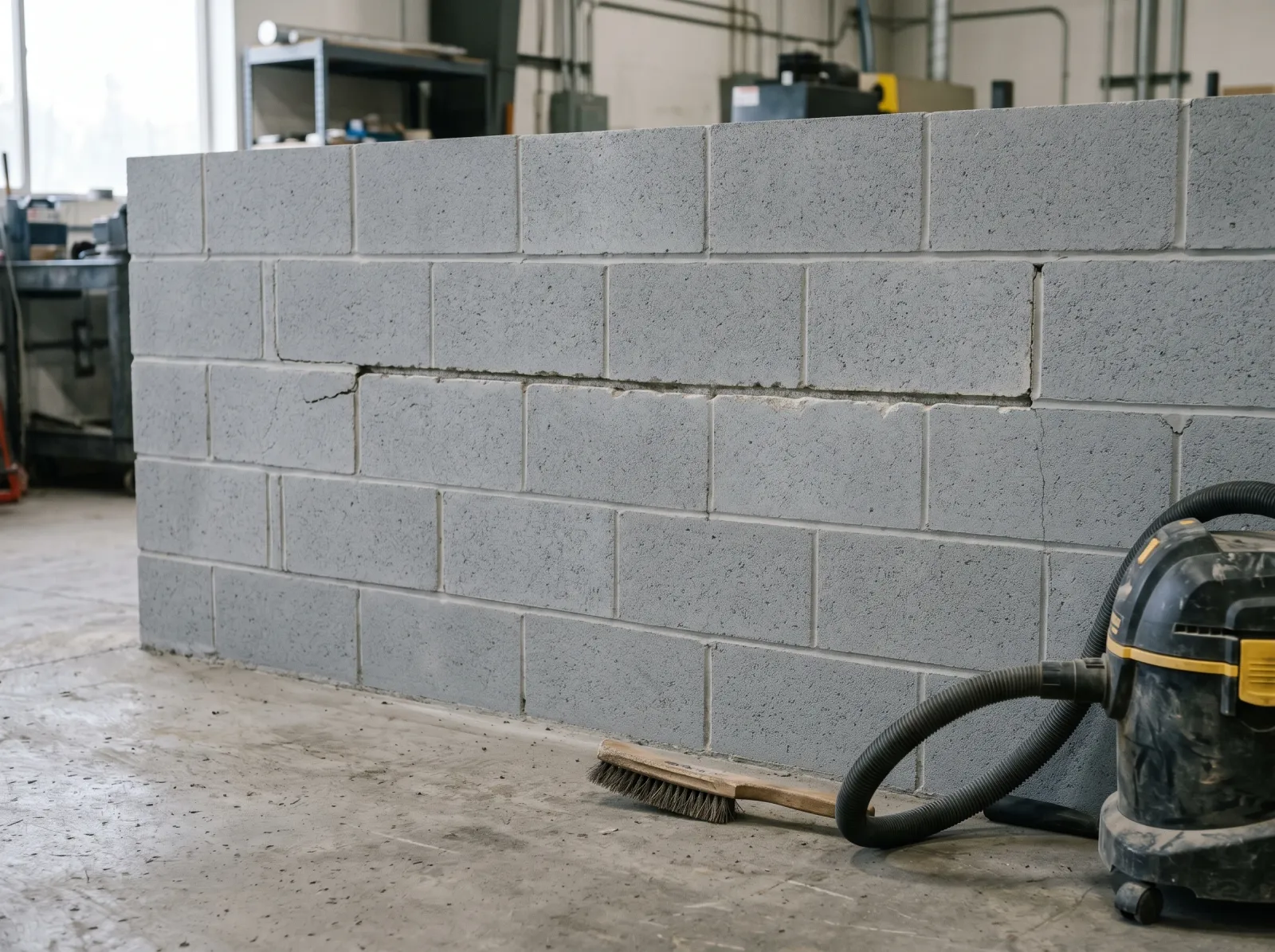
Wire-brushed, vacuumed, and dry. Cracks chased out with a cold chisel before any filler goes in.
Block holds dust deep in its pores. Hit the whole wall with a stiff wire brush to knock off loose grit, chalk, old flaking paint, and any surface efflorescence. Then vacuum it. A shop vac with a brush head pulls more out of the pinholes than a broom ever will.
For grease or old grime, scrub with TSP at half a cup per gallon, then rinse clean. On a previously painted wall that’s glossy or very dense, you may need to etch with a concrete etcher or diluted muriatic acid so the filler can bite. Acid is a last resort. Mask your skin, ventilate hard, neutralize and rinse after.
If you see white powder, that’s efflorescence, and brushing alone won’t stop it from coming back. Salts are migrating out with moisture. See the full treatment in the efflorescence on brick and block guide. Address the water before you paint, or it returns through your fresh coat.
Then let it dry. New block needs 30 to 60 days of cure. A washed wall needs a full day or two depending on humidity. Bare block looks dry on the surface long before the core is. Tape a square of plastic to the wall overnight; if there’s condensation under it in the morning, the wall is still releasing moisture. Don’t paint yet.
Step 2: Repair Cracks and Joints
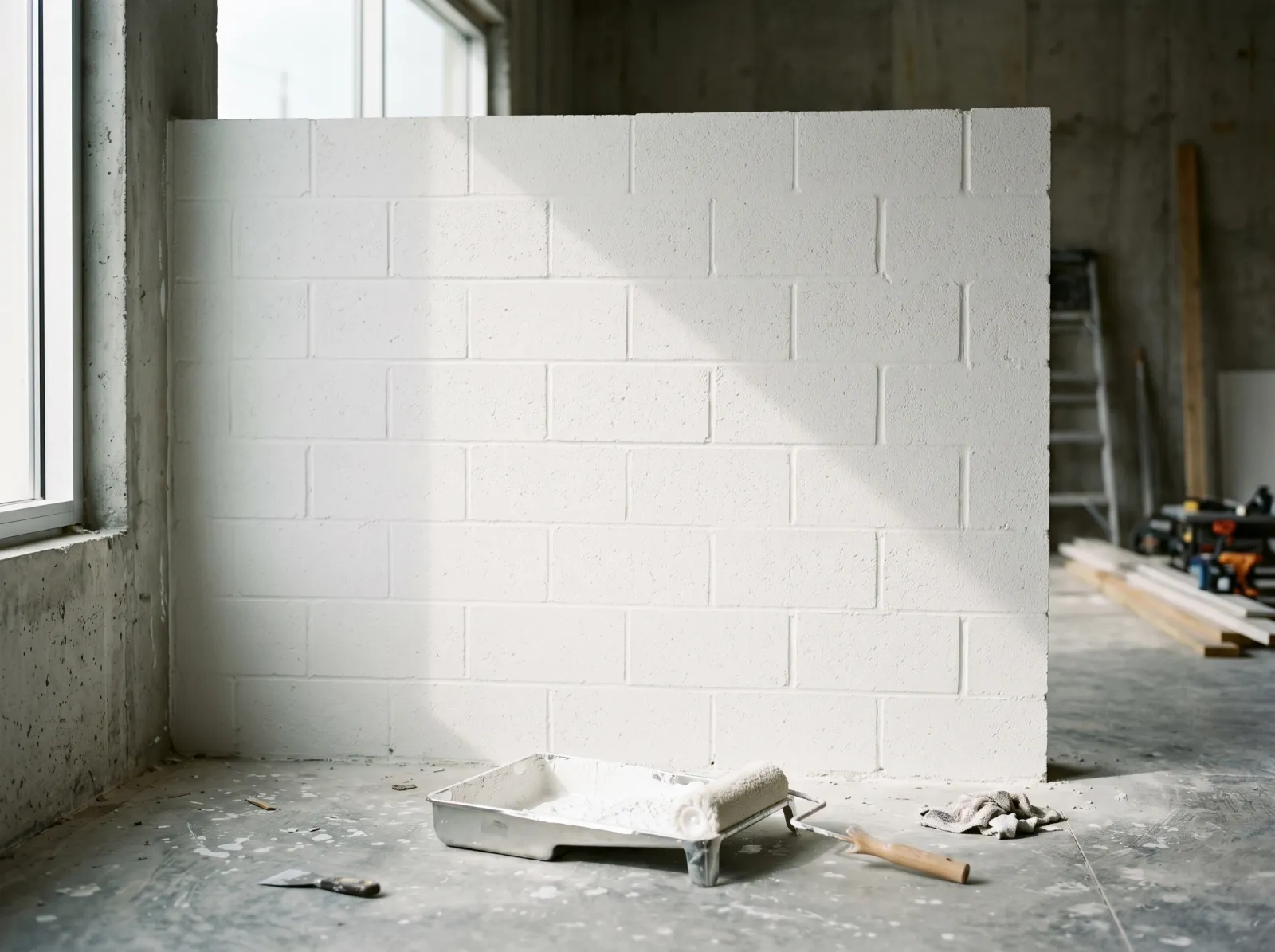
Thick block filler worked into every pinhole and mortar joint with a heavy nap. The pores close before any paint goes on.
Two repair jobs before filler.
Cracks first. Chase any crack open with a cold chisel until it’s wider at the back than the face, an inverted V. That gives the patch something to key into. Pack it with hydraulic cement or a masonry patch compound, tool it flush, let it cure per the label. A skim of patch over a tight hairline pops back out the first cold snap. Open it up.
Then the moving joints. Where the block meets a window frame, a door, or a different material, the gap moves with temperature and settling. Rigid patch cracks there. Use a paintable masonry caulk instead, tooled flat with a wet finger.
Now the filler itself. Block filler is not regular primer. It’s a thick, high-solids masonry surfacer built to fill pinholes, not just coat them. Sherwin-Williams Loxon Block Surfacer is the standard; Behr’s Concrete and Masonry Bonding Primer and similar block fillers work too. Load a 3/4-inch nap roller heavy and work the filler into the pinholes, going back and forth across the texture to push material into the holes. One thick coat usually closes the pores. In raking light you’ll see whether any pinholes are still open. Hit those again.
For a deeper look at why filler is doing a different job than topcoat, see what primer actually does.
Step 3: Seal Against Moisture (If Needed)
This step is conditional. Skip it on a dry, above-grade interior wall.
On a basement wall, a below-grade exterior, or any block that’s shown efflorescence or damp, the block filler alone won’t stop water pressure from behind. You need a masonry waterproofing primer first: Zinsser Watertite or UGL Drylok, both designed to take hydrostatic pressure. Brush the first coat into the pores hard, then roll the second. These products go under the block filler, or in some systems replace it; read the label, because some waterproofers want a bare wall and some accept a filler over the top.
Understand the limit. No coating fixes a wet basement on its own. If water is coming through, the real fix is outside: grading the soil away from the foundation, clearing gutters, sometimes interior drainage. Paint is the last line, not the first. Paint a wall that’s actively leaking and the film peels off in sheets within a season.
Step 4: Topcoat
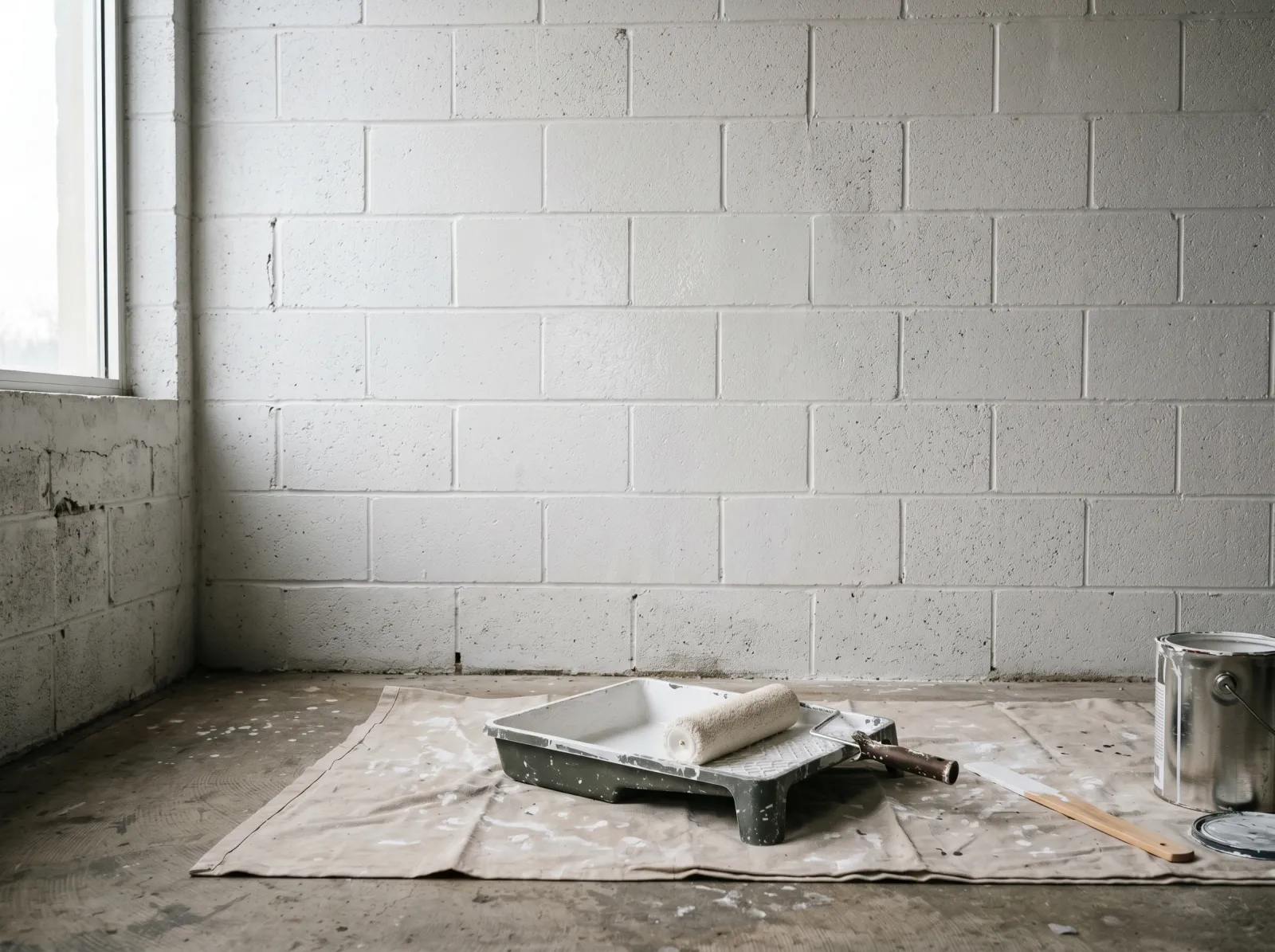
First coat of masonry paint rolled over the cured filler. Even sheen, no pinholes telegraphing through.
100% acrylic masonry paint is the default. Acrylic breathes, which matters on block more than on any other surface. A breathable film lets water vapor pass through and escape instead of building pressure behind the paint. That’s why oil-based paint is wrong here. Beyond the saponification problem, oil films are too tight; they trap moisture and blow off.
For exterior block that cracks with the seasons, step up to an elastomeric coating. Elastomeric is a thick, high-build acrylic that bridges hairline cracks and flexes with the wall. It’s overkill indoors and on sound walls, but on a weathered exterior block wall it earns its keep.
For SKU picks across both categories, see the best masonry paint round-up. Garage and basement block floors are a different animal; an epoxy or floor coating handles abrasion that wall paint can’t, covered in the concrete floor painting guide.
Roll the first coat with a 3/4-inch nap to get into whatever texture remains after the filler. Cut in the corners and edges first with a 2.5-inch masonry brush, then roll while the cut-in is still wet so you don’t flash a lap line. Don’t stop in the middle of a wall.
Step 5: Second Coat and Cure
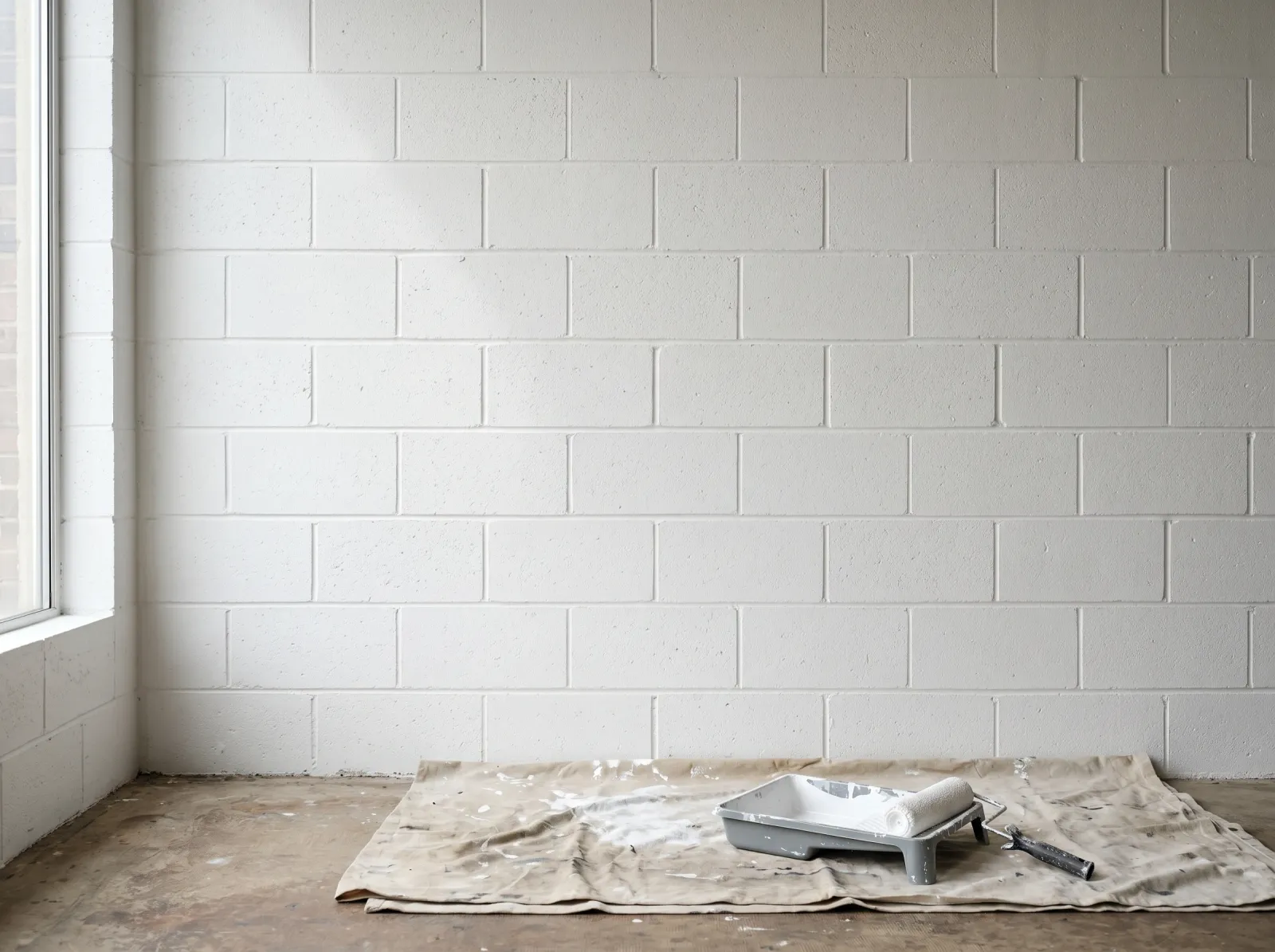
Two coats over filler. The block texture still reads, but the surface is sealed and uniform.
Two coats. Always two coats. One coat of masonry paint over filler looks fine the day you finish and reveals every thin spot a month later. The second coat builds the mil thickness and evens the sheen. Drop to a 1/2-inch nap on the second coat for a slightly tighter finish.
Recoat times run 4 to 6 hours on most acrylic masonry paint at room temperature, longer in a cool damp basement. Read the can. Acrylic that recoats slow because of low temperature or high humidity will trap solvent if you rush it, and the film stays soft.
Full cure is 7 to 14 days before you scrub or hang anything heavy against the wall. Elastomeric cures slower, up to 30 days to full hardness. During cure, keep the space ventilated and don’t run a humidifier near a fresh basement wall.
Common Mistakes
- Skipping block filler and using regular primer. Result: pinholes telegraph through every coat of paint, visible in raking light for years. Fix is to roll a real block filler into the pores before any topcoat.
- Painting new block before it cures. Result: high pH saponifies the binder and trapped moisture peels the film inside a season. Wait 30 to 60 days and pH-test under 10 before you start.
- Oil-based paint on bare masonry. Result: the lime turns the film gummy and it slides off the wall. Use 100% acrylic, which the alkalinity doesn’t attack.
- Painting over efflorescence. Result: the white salt bloom keeps migrating out and pushes your paint off from behind. Remove it, find the moisture source, and treat it before repainting.
- Sealing a wet basement wall and calling it waterproofed. Result: water pressure peels the coating off in sheets. Fix the grading, gutters, and drainage outside first; paint is the last layer, not the cure.
- One coat over filler. Result: thin spots and uneven sheen show up within a month. Two coats, every time.
Maintenance and Longevity
Interior painted block in a dry basement or garage holds its finish 8 to 12 years. Exterior block with a quality acrylic or elastomeric coating runs 7 to 10 years depending on exposure and how well the moisture is managed. Wash it with mild soap and a soft brush; the texture grabs dirt and cobwebs more than a smooth wall does.
Watch the bottom courses and any spot near grade for the first sign of efflorescence or blistering. That’s your early warning that water is getting in again. Caulk any joint that opens up. If you see hairline cracks spreading on an exterior wall, that’s the cue for an elastomeric refresh coat before they widen and let water behind the film.
The wall will bite you in two years if you painted over hidden moisture or skipped the cure on new block. Get the water and the filler right and the coating holds for a decade. For high-traffic garage walls, see the best garage floor paint round-up for the abrasion-rated coatings that also work on lower block courses.
FAQ
Do I need a special primer for cinder block? Yes. Regular wall primer sits on top and leaves the pinholes open. You want block filler, a thick high-solids masonry surfacer that fills the pores instead of coating them. Sherwin-Williams Loxon Block Surfacer is the standard. One coat closes the pinholes, then two coats of masonry topcoat go over it. Skip the filler and pinholes telegraph through your paint for years.
Can I paint cinder block without primer? Not if you want it to last. Bare block is porous and alkaline. Paint straight to it drinks unevenly, leaves pinholes, and can saponify from the lime. Block filler is the primer step here. The only skip is a previously painted, sound, sealed wall, where a bonding primer or fresh topcoat works.
How long does new concrete block need to cure before painting? Thirty days minimum, ideally sixty. Fresh masonry is highly alkaline and full of moisture. Paint it early and the high pH burns the binder while trapped moisture peels it. Wait the full cure, test pH under 10, and check moisture first. New construction is where most early failures start.
Why does paint keep peeling off my basement block wall? Almost always moisture from behind. Block wicks groundwater, and a film-forming paint traps it, so the paint blisters and peels. Fix the water first with grading, gutters, and drainage. Then use a breathable masonry coating, not hardware-store wall paint. White powder under the peeling paint is efflorescence and needs its own treatment first.
What kind of paint is best for cinder block? 100% acrylic masonry paint, or elastomeric on exterior walls that crack. Acrylic breathes enough to let moisture vapor escape and flexes with the block. Avoid oil-based paint; the alkalinity saponifies it. For floors or high-abrasion garage block, an epoxy or dedicated floor coating beats wall paint.
Ask a Question