How to Paint Over Chrome
Can you paint over chrome? Yes, with prep. How to prepare chrome for paint, which self-etching primer to use, and how plated metal differs from chrome-look plastic.

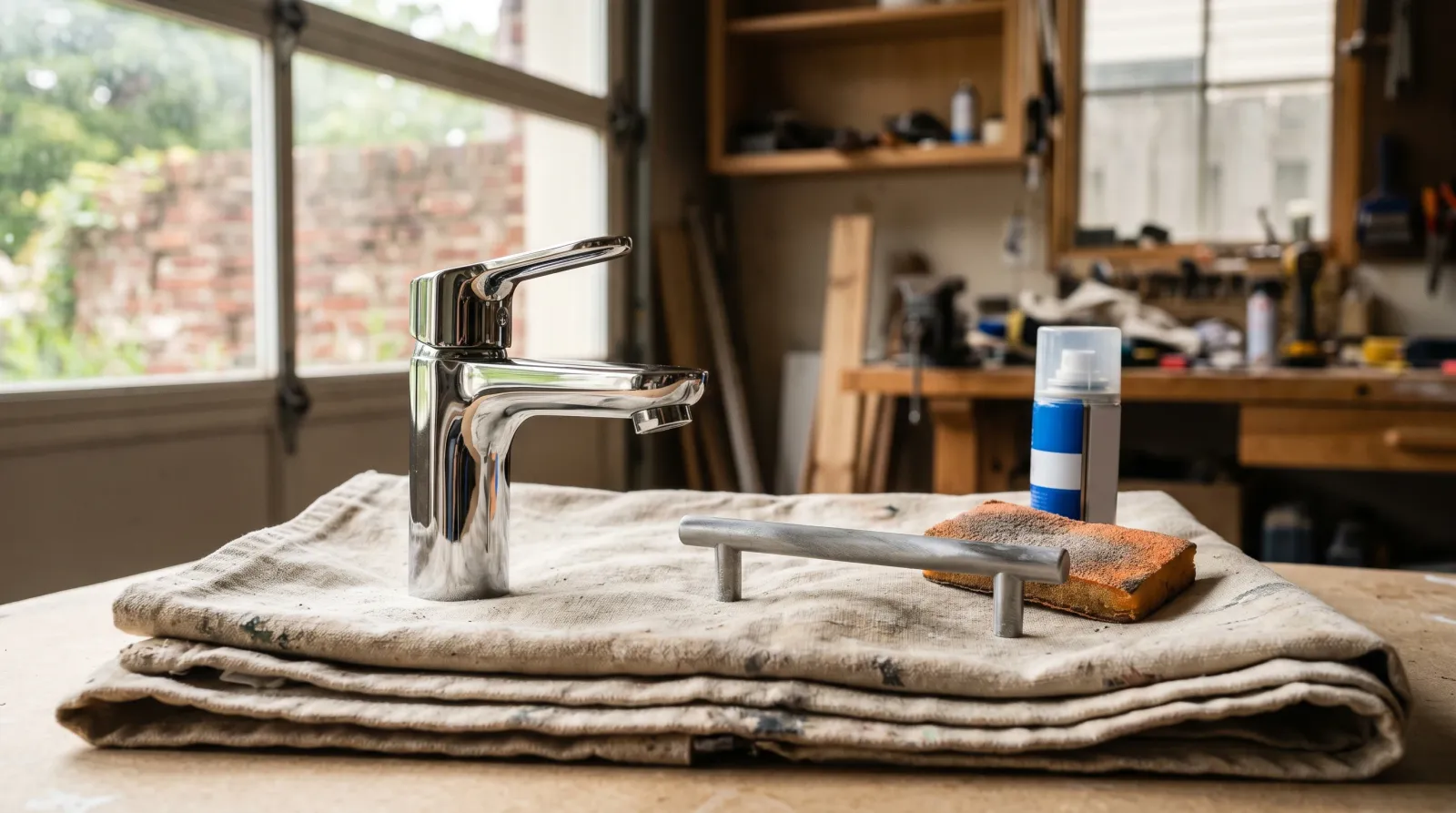
Chrome is the slickest thing in your house, and paint hates it. The metal is mirror-hard and non-porous, so nothing grips it on chemistry alone. Get the prep wrong and your fresh color peels off the day someone grabs the handle.
Can You Paint Over Chrome?
Yes, you can paint over chrome, but not straight out of the can. Scuff the mirror gloss to a uniform dull gray with 320-grit, degrease with acetone, and lay down a self-etching primer first. Do those three things and the paint holds for years. Skip any one of them and it peels.
That’s the whole answer. Everything below is the how and the why.
The reason it works at all is that self-etching primer solves a problem sanding can’t finish on its own. Chrome is too hard to give you real tooth with sandpaper, so the primer brings a mild acid that bites into the chromium and the nickel underneath. Sanding gets you mechanical grip, the etch primer gets you chemical grip, and you need both.
And yes, you can paint over chrome plating without stripping it. The plating stays; you’re just giving it something to hold. The one time that’s not true is plating that’s already pitted, flaking, or bubbling. Those flaws telegraph straight through the new color, and loose plating peels off carrying your paint with it. Sand back to a sound edge or replace the part.
The catch nobody mentions on the first page of results: chrome lives on things you touch. That means the finish has a shelf life, and it means invisible hand grease is the number one reason these jobs fail. Both of those get their own sections below.
TL;DR
- Clean: dish soap, then acetone or denatured alcohol right before primer
- Scuff: 320-grit until the mirror gloss goes uniformly dull gray
- Check first: magnet sticks = plated metal (self-etch). No magnet, feels light = chrome-look plastic (adhesion promoter instead)
- Primer: self-etching primer (Rust-Oleum or Dupli-Color), 2 light coats
- Brush-on option: INSL-X Stix or Krylon Fusion bonding primer if you can’t spray
- Paint: acrylic enamel or urethane, light coats; clear coat on high-wear parts
- Cure: 7 full days before the part goes back into service
- Skill: medium. The prep is easy to do and easy to skip
What Chrome Actually Is
Chrome isn’t a solid metal part. It’s a plating. Under that mirror surface sits a base of steel, zinc, or pot metal, then a layer of copper, then nickel, then a thin flash of chromium on top. The chromium is what gives it the shine and the hardness. It’s also what makes it slick.
That top layer is dense and non-porous, polished smooth at the molecular level. Paint sticks to most surfaces by sinking into pores or reacting with the surface. Chrome offers neither. There’s nothing to soak into and nothing to grab. Adhesion has to be built mechanically, by roughing the surface, and chemically, with a primer that bites.
You find chrome on faucets, cabinet pulls, towel bars, light fixtures, appliance trim, car bumpers and wheels, and the bright accents on old furniture. Same prep on all of it, with one exception, and it’s the exception that quietly ruins a lot of these projects.
Real Chrome Plating or Chrome-Look Plastic?
Half the shiny trim sold since about 2005 isn’t plated metal at all. It’s plastic with a vacuum-metallized coating, and it looks close enough to real chrome that you can’t call it by eye. Modern faucet escutcheons, appliance handles, car grille surrounds, mirror caps, and most bathroom accessories from a big-box store are this stuff.
It matters because self-etching primer’s acid needs metal to etch. On chrome-look plastic there’s nothing for it to bite, so the etch does nothing useful and you’re relying on a thin acid film to hold your color. That’s how a job that looked fine on day one comes off in flakes at the edges.
Three ways to tell them apart before you spend a Saturday on it:
| Test | Real chrome plating | Chrome-look plastic |
|---|---|---|
| Magnet | Sticks (steel base under the plating) | Nothing, and it feels light for its size |
| Weight | Heavy, cold to the touch | Noticeably light, warms up in your hand fast |
| Failure pattern | Pits, rusts, peels in patches | Dulls, hazes, and flakes at the edges |
The magnet test isn’t perfect on its own. A chrome-plated zinc pot-metal pull or a stainless piece won’t grab a magnet either, but both of those are dense and cold in the hand the way plastic never is. Magnet plus weight together will tell you what you have every time.
If it’s plastic, the prep changes at one step. You still wash, still scuff (fine sanding sponge or a maroon abrasive pad, not aggressive paper, because you can cut through a metallized coating in seconds), and still degrease. But instead of a self-etching primer you use a plastic adhesion promoter or a bonding primer. SEM and Dupli-Color both sell adhesion promoters aimed at trim, and Krylon Fusion All-In-One is the one-can option that carries its own bonding chemistry. Our guide to painting plastic covers the full sequence, including the plastics that fight paint hardest.
If it’s plated metal, keep reading. Self-etch is your primer.
Why Chrome Is Different From Other Metal
Bare steel has surface oxide for a primer to lock into. Even glossy painted trim has a film with some tooth once you scuff it. Galvanized steel has a zinc layer that needs its own primer, but at least it’s reactive. Chrome is the worst case: hard, slick, inert, and usually on something that gets handled.
That last part matters more than people think. Chrome lives on the parts of a house you touch constantly. Faucet handles, drawer pulls, the grab bar in the shower. Skin oil, soap scum, and hand cream build up on those surfaces in a film you can’t see. Prime over that film and the primer bonds to the grease, not the metal. It peels in a sheet.
Chrome parts also flex and get torqued. A faucet handle twists. A cabinet pull gets yanked. A car bumper vibrates and flexes. A rigid coating over a flexing slick part cracks at the stress points and then lifts. So the topcoat needs some flexibility, and the bond underneath needs to be real.
Two enemies, then. The gloss and the grease. Beat both or don’t bother.
How to Prepare Chrome for Paint
Prep is wash, scuff, degrease, in that order, and it takes about an hour on a fixture. Every failure mode with chrome traces back to one of those three being rushed. Four numbered steps below; none of them are optional.
1. Remove the Part if You Can
Take the part off. A faucet, a cabinet pull, a towel bar, a bumper trim piece. Anything you can unscrew, unscrew it.
Off the wall, you can lay it flat, hit every face evenly, and hang it to dry without runs pooling in the curves. You also keep overspray off the sink, the counter, and the drywall behind it. Self-etching primer overspray travels and it doesn’t wipe off porous surfaces clean.
If the part can’t come off, like a built-in handrail or a window crank, mask hard. Painter’s tape and masking paper over everything within two feet, because etching primer drifts.
2. Wash Off the Grime and Soap Film
Wash first with dish soap and warm water to cut the heavy grime and soap film. Scrub the knurled grips and the threaded areas where gunk hides. Rinse and dry.
That’s the first pass. The real degrease comes after sanding, right before primer. Hold that thought.
3. Scuff the Gloss Flat
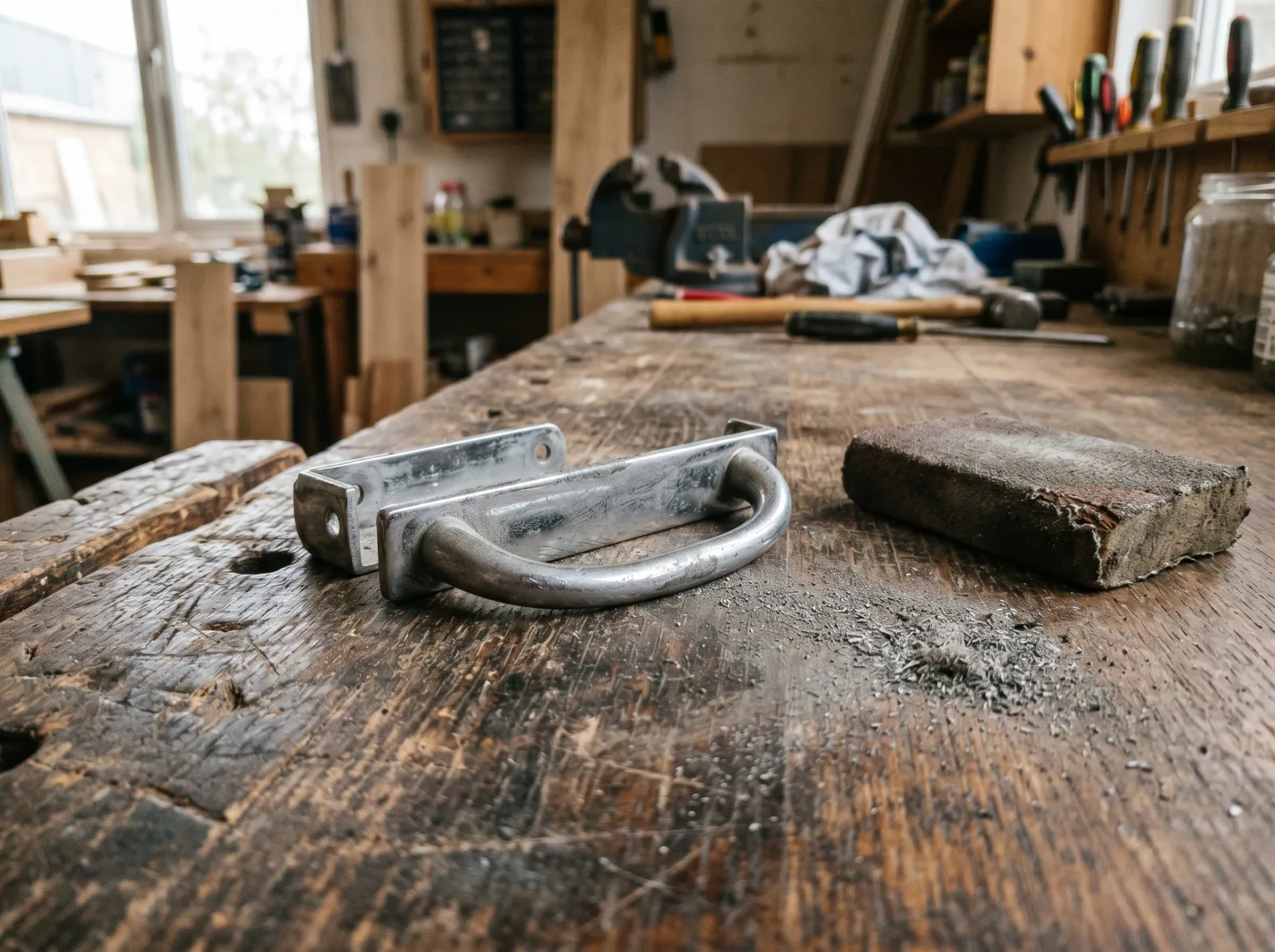
320-grit until the mirror shine goes uniformly dull gray. No bright spots left, or the primer lets go there first.
This is the step that decides the job. Scuff-sand the entire chrome surface until the mirror shine is gone and the metal reads a uniform dull gray.
Use 320-grit wet/dry, or a fine sanding sponge for the curves and detail. Wet-sanding cuts cleaner and keeps the chrome dust down (that dust is metal, wear gloves and a mask). Get into every recess. The bottom of a curved spout, the inside of a handle loop, the back of a bracket. Any spot you leave bright is a spot the primer can’t grip, and that’s where peeling starts.
You’re not trying to grind through the chrome. You’re knocking the polish off so the surface has tooth. When the whole part looks evenly hazy gray with no shiny patches, you’re done. Sand too little and the primer skates. There’s no upside to leaving gloss anywhere. For the why behind grit choices on slick surfaces, see the sanding vs deglosser breakdown. On chrome, sand. Liquid deglosser alone doesn’t give chrome enough tooth.
A word on grit, because the automotive guides and the household guides disagree and both are right. Body shops usually scuff chrome finer, 400 to 600 grit or a maroon Scotch-Brite pad, because they’re building high-build primer over the top and block-sanding it flat anyway, so a coarse scratch pattern would only cost them extra filling. On a faucet or a cabinet pull going straight from etch primer to color, 320 kills the polish faster and leaves a scratch pattern the primer keys into. Neither number is a rule. The rule is that the shine is gone everywhere. If you only own a fine sanding sponge, use it and just work longer.
While you’re sanding, look at the plating itself in raking light. Pitting, bubbling, or edges where the chrome is already lifting won’t paint out. Every one of those flaws telegraphs through the color, and loose plating drags your finish off with it when it finally lets go. Sand the bad area back until you hit plating that’s tight, feather the edge, and accept that it may show as a slight step under gloss. If half the part is flaking, replacing it beats painting it.
4. Degrease Right Before Primer
Tack-cloth the sanding dust off, then wipe the whole part down with acetone or denatured alcohol on a lint-free rag. This is the degrease that counts. It pulls off the sanding residue and any oil your hands left while you worked. From this point, handle the part by the edges or with gloves. One fingerprint on the bare scuffed metal is enough to fail the bond under it.
How to Paint Over Chrome, Step by Step
With the part scuffed dull and wiped clean, the painting itself is three steps: etch primer, color, cure. Nothing here is hard. The only way to lose it now is heavy coats or impatience.
5. Self-Etching Primer
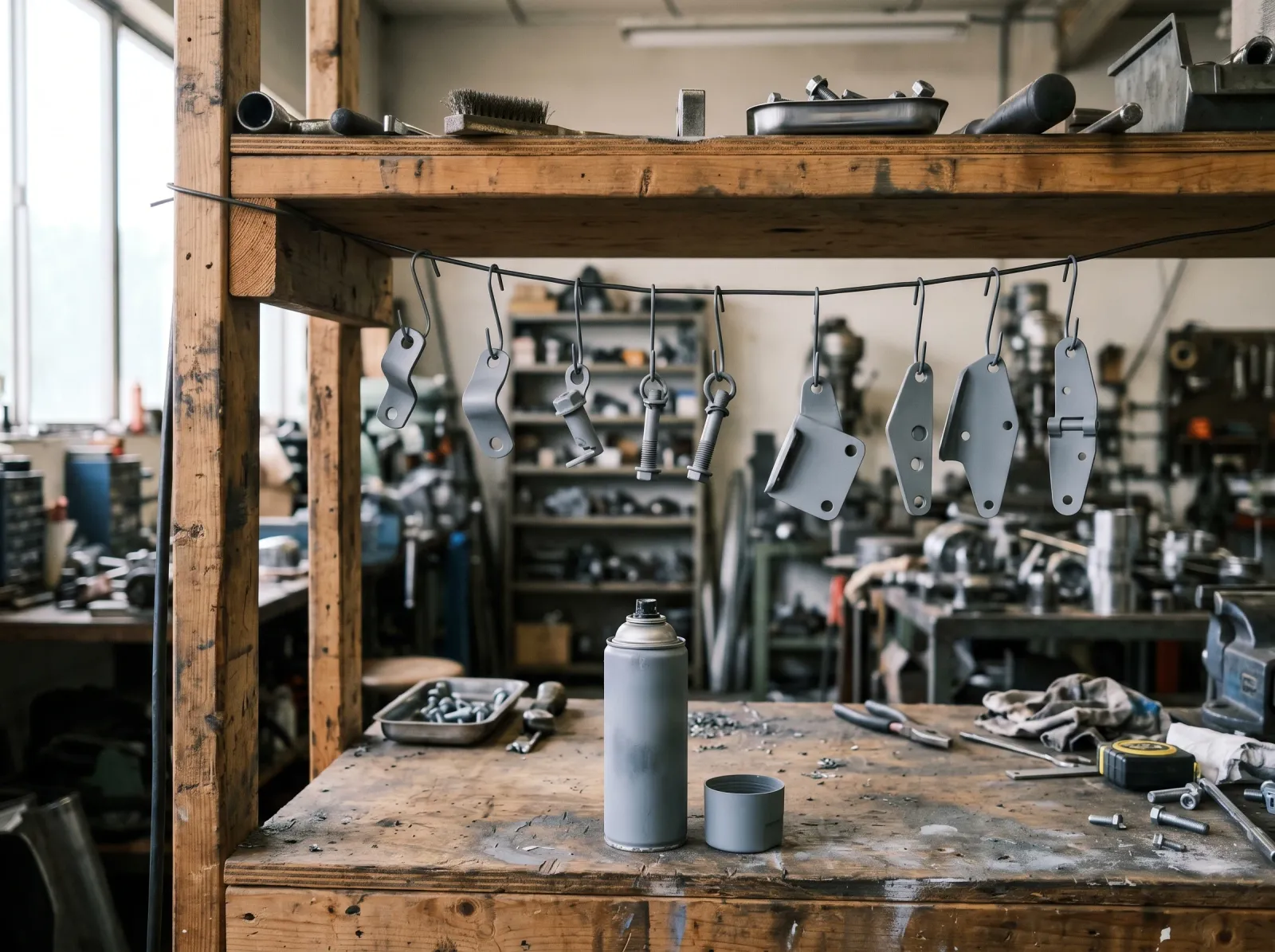
Two light passes of self-etching primer from 10 inches. Thin and even, not one wet coat. The primer is the whole job.
Self-etching primer is the default for chrome. It carries a mild phosphoric acid that etches into the chromium and the nickel below, building a chemical bite on top of the mechanical tooth from sanding. Rust-Oleum Self Etching Primer and Dupli-Color Self Etching Primer both come in rattle cans and both work. This is a spray product. There’s no brush-on self-etch worth using.
Spray two light coats from about 10 inches, 10 minutes apart. Light coats. The whole point is a thin, even etch layer, not a thick build. A heavy wet coat runs on the curves and the acid doesn’t etch any better for being thick. Wear an organic-vapor respirator. Self-etching primer is nasty to breathe.
If you genuinely can’t spray (an indoor part, no ventilation, a rental), the fallback is a bonding primer brushed on: INSL-X Stix or Krylon Fusion. These grip slick surfaces without the acid etch. They bond well, but on chrome the scuff-sanding does even more of the work than it does with self-etch. Sand harder if you’re going the brush-on route. For the full primer landscape, including which bonding and etching products hold up, see the primer round-up.
Two things about self-etch that trip people up. First, it is a thin tie-coat, not a build coat, so don’t expect it to hide a scratch or fill a pit. Its whole job is 0.5 to 1 mil of acid-primed grip. Second, it doesn’t like sitting around. Most cans want the topcoat on within a day or so, and if you leave a part in etch primer for a week the surface oxidizes and you should scuff it lightly with 400-grit before color.
Let the etch primer flash and dry per the can, usually an hour before topcoat. On a smooth household fixture you can go straight to color from there. If you’re doing show-finish automotive work, this is where the extra layer goes in: 2 to 3 coats of high-build sandable primer over the etch, glazing putty into any pinholes, then block-sand it flat and wipe it down before color. That step buys you a mirror-flat panel. On a towel bar it’s wasted film that only gives you something extra to chip.
6. Topcoat
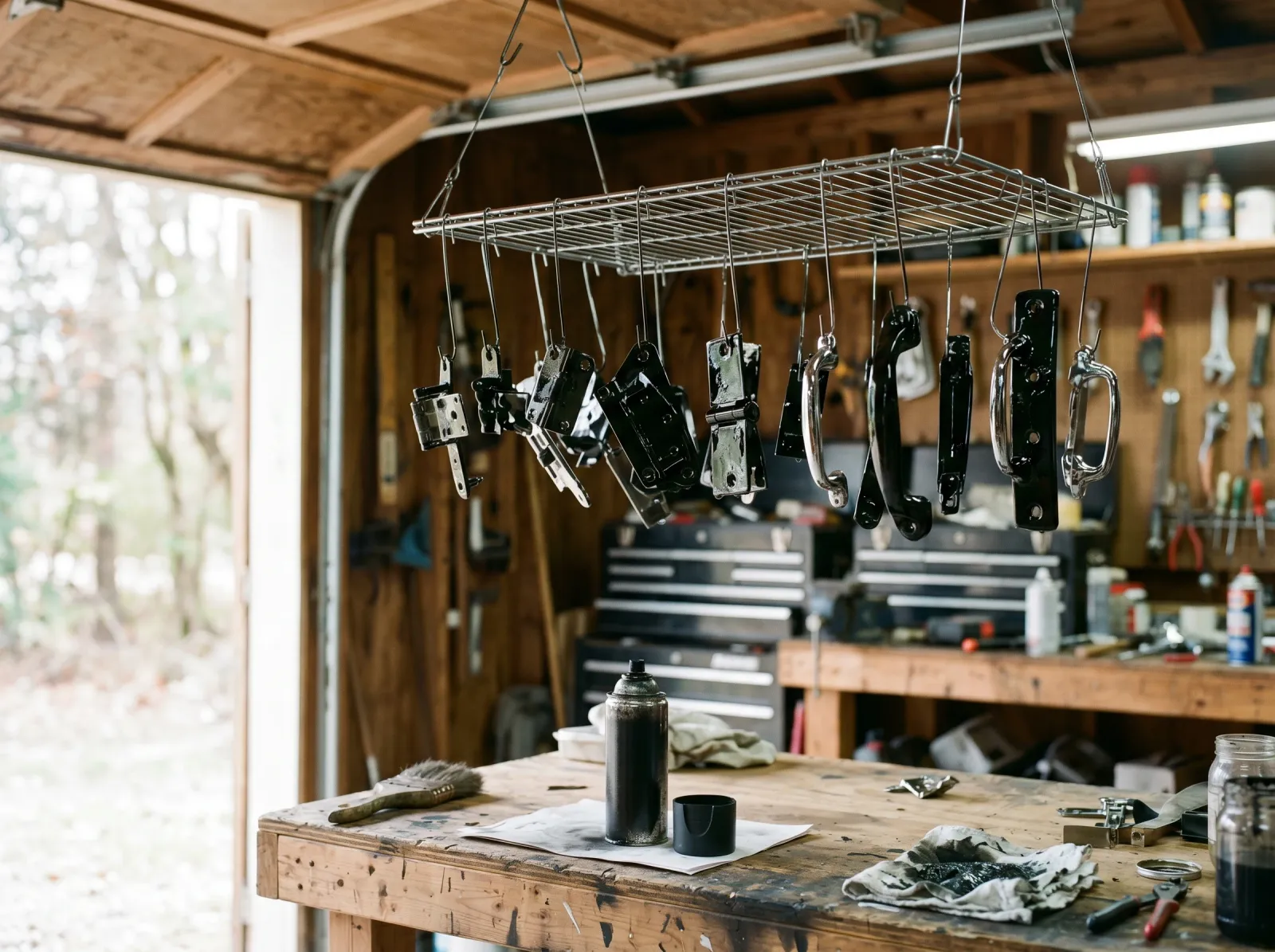
Light coats, 10 minutes apart in the same session. Build the color slow. Heavy passes run on the curves.
Over a self-etching primer, you’ve got options. Acrylic enamel in a rattle can is the easy path for fixtures and trim. Rust-Oleum’s enamels and the automotive acrylic lacquers both lay down smooth over etch primer. For a faucet or anything that takes daily abuse, step up to a urethane, and on wheels or bumpers a 2K urethane (the two-part kind with a hardener) is the only thing that survives long term.
Sheen is your call. Matte black over a chrome faucet is the popular look right now. Gloss black reads more like factory. If you’re unsure how the finish will wear and clean, the sheen guide lays out which sheens hold up to wiping. Higher sheen cleans easier and shows wear less on handled parts.
Spray light coats, 10 minutes apart, all in the same session while the previous coat is still tacky. Three light coats beat one heavy one every time. Heavy coats run on every curve a fixture has, and chrome parts are all curves. Build the color slow.
On anything that gets handled or sees weather, finish with a clear coat. Two light coats of clear urethane over the color seals the edges and takes the abrasion that would otherwise wear the color off. The clear is what makes a painted faucet last four years instead of one.
7. Dry, Recoat, and Cure
Touch-dry comes fast, 30 minutes to an hour. Recoat windows on rattle-can enamel are tight: either within the first hour, or after 48 hours of full dry. The in-between zone is where you get wrinkling, because the solvent in the new coat lifts the half-cured one under it. Read the can and respect that window.
Full cure is the number people skip. Seven days before the part goes back into normal service. The film is dry to the touch in an hour but it’s soft for a week, and a soft film on a handle picks up dents, fingerprints, and edge wear that lock in permanently. A faucet you reinstall and start gripping on day two will show wear at the grip by month two.
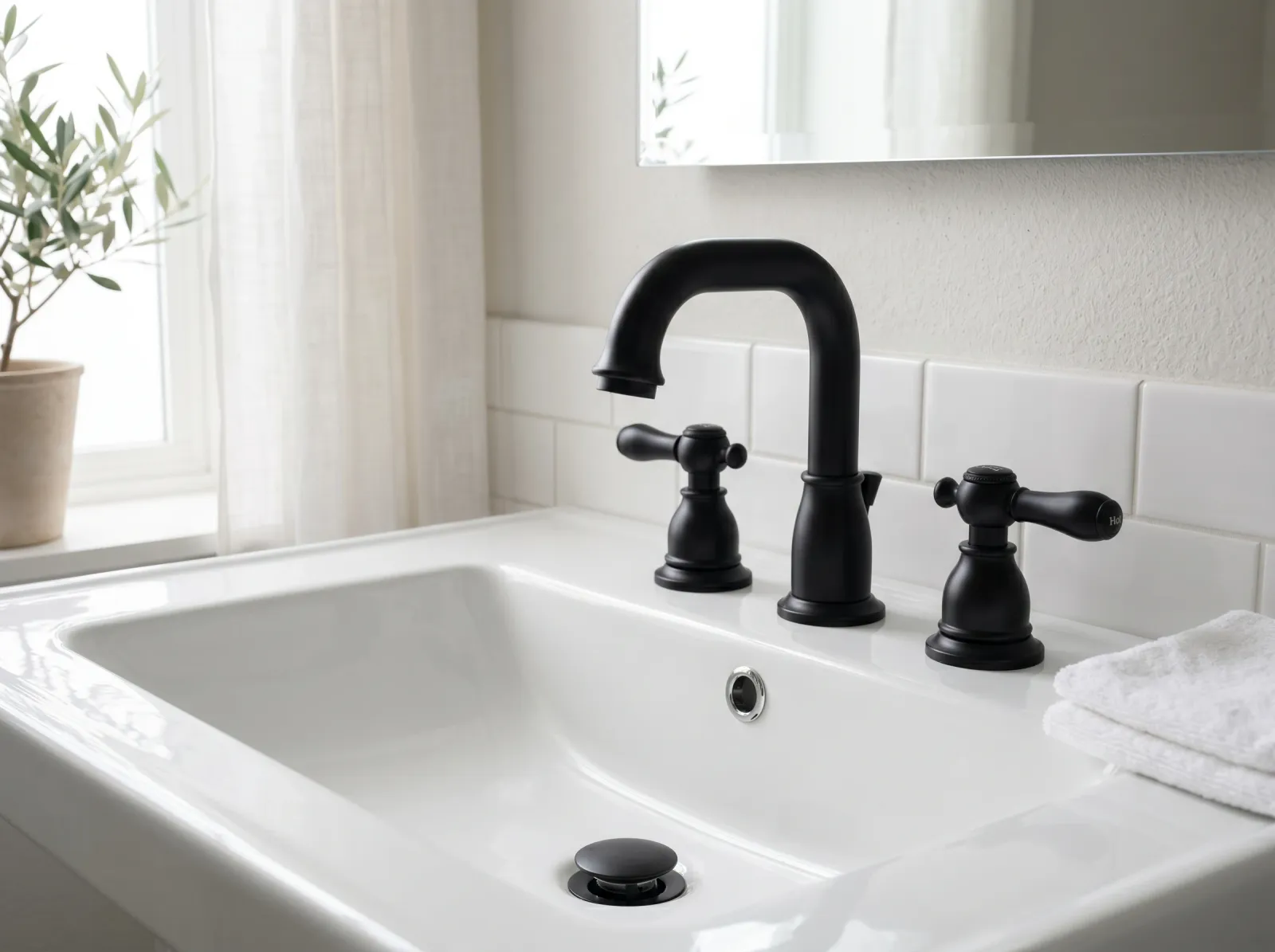
Seven days before it goes back into service. Matte black faucet reinstalled, even color, no peel at the edges.
If the part has to go back early, handle it by the parts you didn’t paint and keep water off it. Painted chrome in a wet zone, like a shower fixture, needs the full cure plus a clear coat or the water creeps under the edges.
What Primer and Paint to Use on Chrome
Self-etching primer for plated metal, adhesion promoter or bonding primer for chrome-look plastic, and a hard enamel or urethane on top. That’s the shortlist. Everything else is a variation on those three slots.
| Job | What to reach for | Notes |
|---|---|---|
| Primer on plated metal | Self-etching primer (Rust-Oleum, Dupli-Color) | Spray only. Two light coats. The default choice. |
| Primer on chrome-look plastic | Plastic adhesion promoter (SEM, Dupli-Color) | Acid etch does nothing on plastic. Promoter, then color. |
| Brush-on alternative | Rust-Oleum Super Adhesion Primer, INSL-X Stix | No spray booth needed. Scuff harder to make up for the missing etch. |
| One-can shortcut, low-wear parts | Krylon Fusion All-In-One | Bonding chemistry built into the color. Still scuff first on chrome. |
| Topcoat, fixtures and trim | Acrylic enamel or automotive acrylic lacquer | Easy, forgiving, rattle-can. |
| Topcoat, wheels and high-wear | 2K urethane (two-part, with hardener) | Twice the life on parts that get gripped or driven. |
| Clear coat | Clear urethane, 2 light coats | Non-negotiable on handled or outdoor parts. |
We don’t have a favorite brand here and we don’t get paid to name one. Rust-Oleum and Dupli-Color self-etch cans perform close enough that price and what’s on the shelf decide it. If you want the wider comparison, our primer round-up covers etching and bonding products side by side, what bonding primer actually does explains the difference in plain terms, and the best spray paint for metal round-up covers topcoats that survive outdoors.
One product category to skip: “paint and primer in one” on chrome. Those are formulated for surfaces that already have tooth. On mirror plating they have nothing to key into, and no amount of marketing on the label fixes that.
Common Mistakes
- Spraying color straight onto bright chrome. No etch, no scuff, no grip. It peels off in a sheet the first time the part is touched. Scuff to dull gray and self-etch first, always.
- Priming over an invisible grease film. The primer bonds to the skin oil and soap scum, not the metal. Degrease with acetone right before primer and don’t touch the bare metal after.
- Leaving bright spots in the curves. Hard-to-reach recesses get under-sanded, the primer skates there, and peeling starts at those spots. Use a sanding sponge and check every recess in raking light.
- Heavy coats to “save time.” Thick passes run and sag on every curve and stay soft for weeks underneath. Light coats, more of them.
- Putting the part back into service before cure. A faucet handle gripped on day two wears at the grip by month two. Seven days, no shortcuts.
- Skipping the clear coat on handled or outdoor parts. Bare color wears through at the touch points and water lifts the edges. Clear urethane roughly doubles the lifespan on anything that gets gripped or rained on.
What It Costs and How Long It Takes
Figure 50 to 200 dollars in materials and 4 to 8 hours of hands-on work for a DIY job, spread across a weekend because of the dry times. The money is mostly consumables you’ll use again: a can of self-etch, a can or two of color, a can of clear, abrasives, acetone, and a respirator if you don’t own one. The clear coat is the one line item people cut, and it’s the one that decides whether you’re doing this again next year.
The clock is the harder cost. Active work on a set of bathroom fixtures is maybe 3 to 4 hours. Then the part sits: an hour after primer, a day or two through recoat windows, and 7 days of cure before it goes back into service. Plan around a faucet being out of commission for a week, or paint a spare and swap.
Handing it to a shop runs roughly 150 to 600 dollars for small parts and fixtures with a 1 to 3 day turnaround. Full-vehicle chrome delete in paint is its own category, commonly 500 to 1,500 dollars depending on how much trim the car carries.
When Painting Chrome Isn’t the Right Call
Paint isn’t always the answer, and the honest version of this guide says so.
- Vinyl wrap (chrome delete). For car trim, window surrounds, and badges. Roughly 75 to 400 dollars in DIY supplies, or around 300 dollars installed. It’s reversible, which paint is not, and it goes on in an afternoon. It’s also unforgiving of curves. Beginners commonly spend 4 to 8 hours and still end up with bubbles or chrome peeking at the edges. No usable equivalent exists for household fixtures.
- Powder coating. Send the part out, get back a finish far harder than anything from a rattle can. Good for wheels, brackets, and railings that come off easily. Not an option for anything that can’t survive an oven, which rules out most faucets with cartridges and seals inside.
- Replacement. Matte black and brushed brass fixtures are cheap and everywhere now. If a faucet set is 80 dollars new and you’re about to spend 60 on materials plus a weekend on a finish that wears at the handle in 3 years, buy the faucet. Painting earns its place on parts that are expensive, discontinued, or oddly sized.
- Re-plating. For genuinely valuable pieces, antique hardware or classic car brightwork, replating is the correct restoration and paint is the thing that destroys the value.
Painting wins when the part is expensive to replace, when you want a specific color nothing is sold in, or when the piece is low-touch decor that will never see a hand or a hose.
Maintenance and Longevity
Painted chrome is a cosmetic fix with a clock on it. On a low-touch part, a light fixture, a decorative trim piece, a cabinet accent that nobody handles, a properly etched and cleared job holds 5 to 10 years. On a faucet handle, a drawer pull, or a wheel that gets gripped, twisted, and cleaned daily, expect 2 to 4 years before edge wear shows at the touch points. A 2K urethane with a clear coat roughly doubles those numbers.
Clean painted chrome with mild soap and a soft cloth. No abrasive pads, no bleach, no scouring cleaners. Those cut through the topcoat and expose the primer, and once water gets under a chipped edge it lifts the whole patch. When the color starts wearing at a grip point, scuff that area, re-prime the bare spot, and recoat early. Catch it before the chrome shows through and the touch-up blends in.
Will it bite you in two years? Only if you skipped the scuff, primed over a greasy surface, or sent the part back into daily use before it cured. Painting chrome is easy to do right and easy to ruin, and the difference is entirely in the prep. If the part flexes hard or lives in standing water, like a shower valve, accept that even a perfect job is on borrowed time. For the same slick-metal problem on a different surface, see how to paint galvanized steel, and if your real issue is paint already lifting off a slick finish, the glossy-finish fix covers the rescue.
FAQ
How do you paint over chrome? Six steps. Remove the part if you can, wash it with dish soap, scuff every surface with 320-grit until no mirror shine is left, degrease with acetone right before priming, spray two light coats of self-etching primer, then build the color in three light coats with a clear coat over anything that gets handled. Wait 7 full days before the part goes back into service.
How do you prepare chrome for paint? Wash, scuff, degrease, in that order. Dish soap and warm water first, then 320-grit or a fine sanding sponge over every face and recess until the part reads uniform dull gray, then tack off the dust and wipe with acetone. After that wipe, gloves only. One fingerprint is enough to fail the bond over it.
Can you paint over chrome plating? Yes, and you don’t have to strip the plating first. Self-etching primer’s acid bites into the chromium and the nickel under it. The exception is plating that’s pitted, flaking, or bubbling. Those flaws telegraph through the paint and the loose plating takes your finish with it. Sand back to a sound edge or replace the part.
Is my chrome real plating or chrome-look plastic? Stick a magnet on it and pick it up. Plated steel grabs the magnet and feels heavy and cold. Chrome-look plastic does neither. It matters because self-etch has nothing to etch on plastic, so plastic gets an adhesion promoter or a bonding primer instead.
What grit sandpaper should I use on chrome? 320-grit wet/dry for household fixtures. Automotive guides go finer, 400 to 600 grit or a maroon abrasive pad, because they build primer over the top and sand it flat anyway. Both work. What matters is that no shine is left anywhere.
How much does it cost to paint chrome? Roughly 50 to 200 dollars in materials and 4 to 8 hours of hands-on time for DIY. Shops charge about 150 to 600 dollars for fixtures and small parts, 1 to 3 day turnaround.
Is it better to paint chrome or wrap it? Paint is permanent and seamless; vinyl peels off later and leaves the plating intact. For car trim, a chrome delete wrap runs about 75 to 400 dollars DIY or around 300 installed and is worth considering. For household fixtures there’s no wrap worth using, so it’s paint, replace, or leave it.
Can you paint directly over chrome? No. Chrome is a hard, slick, non-porous plating that nothing grips on its own. Scuff the gloss flat with 320-grit, degrease it, and put down a self-etching or bonding primer first. Paint sprayed straight onto bright chrome peels off the first time the part gets touched, flexed, or wiped.
Why does paint peel off chrome? The chrome was too glossy or it was contaminated. Chrome lives on faucets, handles, and trim that get touched and cleaned, so skin oil and soap film are the usual culprits under a failed bond. Scuff to dull gray, degrease with acetone right before priming, and keep your hands off the bare metal after.
How long does painted chrome last? On a low-touch part like a light fixture, 5 to 10 years. On a faucet handle or drawer pull that gets gripped daily, 2 to 4 years before edge wear shows. A 2K urethane topcoat with a clear coat roughly doubles those numbers.
Can I spray-paint chrome bathroom or kitchen fixtures black? Yes, and matte black over chrome faucets is a common refresh. Scuff, self-etch, two light color coats, a clear coat, and a full 7-day cure before it goes back into service. Even done right, a daily-use handle wears at the grip in 2 to 4 years. It’s cosmetic, not forever.
Ask a Question