Lead Paint on Windows and Doors (Friction Surfaces)
Lead paint windows and doors rub paint to dust every time they move. How to spot friction-surface lead, test it, and fix it safely without spreading dust.

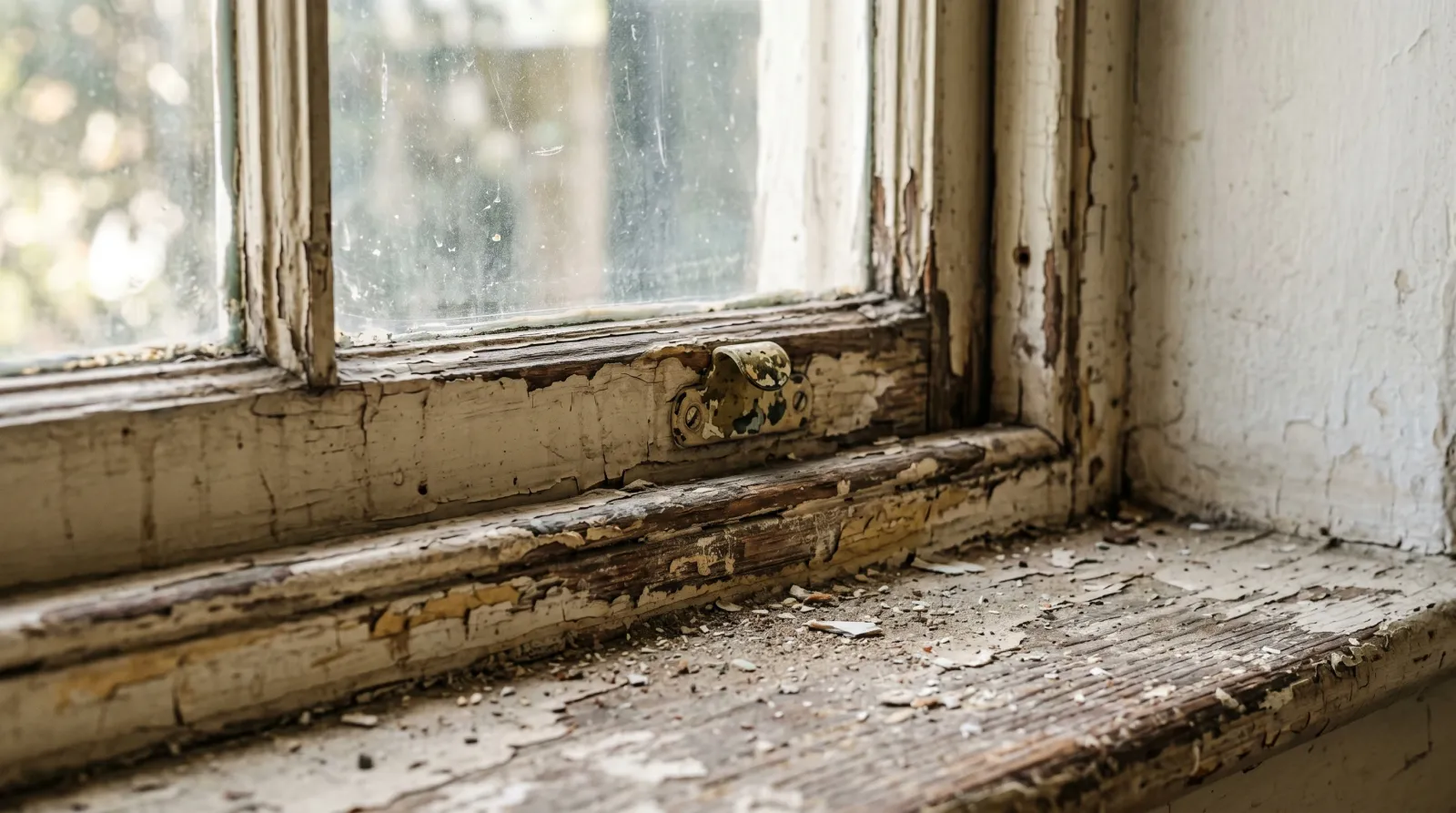
Lead paint on a window or door is worse than lead paint on a wall. The reason is friction. Every time the sash slides or the door swings, the moving parts grind old paint into fine dust, and on a pre-1978 home that dust carries lead. Walls just sit there. Windows and doors are dust factories, and that’s where most childhood lead exposure actually comes from. Test before you touch it.
Does This Match What You’re Seeing?
Friction-surface lead has a look. Check the parts that move and rub, not the flat trim.
- Chalky powder on the windowsill or in the sash channel. Paint ground to dust by the sash. The classic friction signature. Wipe it and it comes back.
- Worn, shiny, paint-thin edges on a door where it meets the jamb. The latch side and the hinge side rub. Paint wears down to bare wood in a vertical strip.
- Chipping and flaking right at the sash meeting rail or the parting bead. Multiple old layers cracking where two painted parts press together.
- Bare wood worn through on a windowsill under the sash. The lower sash has scraped a clean band. Around it, old alligatored paint.
- Tooth-mark height chips, low on a door or window. Old, brittle, sweet-tasting lead paint at a level a small kid can reach. This one is urgent.
If the paint is sound, flat, and on a surface nothing rubs, that’s a different and lower-risk situation. The hazard lives on the parts that move.
How Serious Is This?
High. Higher than almost anything else in the fix section, and not because of the paint film. Because of who gets hurt.
Lead dust is invisible. A window that’s been opened and closed for eighty years has spread fine lead dust into the sill, the floor below, the carpet, and the cracks between boards. Kids crawl, kids put hands in mouths, and lead tastes faintly sweet, so chips get eaten on purpose. There is no safe blood lead level in a child. None.
Three triggers make this a stop-and-get-help job, not a weekend project:
- A child under six or a pregnant person living in the home. Don’t disturb friction-surface lead yourself. Get a certified pro.
- Test comes back positive and the area is large (multiple windows, a whole set of doors). Containment for that scale is past DIY.
- You see chewed chip marks low on a window or door. A kid is already reaching it. Treat the immediate hazard today, even if it’s just damp-wiping and taping plastic over it until you can fix it right.
A single non-essential window in a house with no young kids, paint sound except at the friction points, is a careful one-day DIY job. Know which situation you’re in before you pick up a scraper.
Why This Is Happening (root Cause)
Old paint and movement. That’s the whole mechanism, but the detail matters because it tells you why repainting never fixes it.
Paint sold before the 1978 federal ban used lead as a pigment and a drier. It was good paint by the standards of the day. It held color, resisted moisture, and cured hard. The problem shows up decades later when that hard, now-brittle film sits on a surface that rubs. A window sash and its channel press together and slide. A door edge drags the jamb. Every cycle abrades a little paint off both faces and turns it to powder.
That powder is the hazard. Not the intact film on the wall, the dust at the contact points. EPA and HUD studies pin most residential childhood lead exposure on friction and impact surfaces: windows first, then doors. The flat painted wall is a minor source by comparison.
Repainting does nothing about the friction. Fresh paint over a sash that still rubs gets ground off with the layer underneath, and now you’ve added a new dust source on top of the old one. The paint isn’t the problem to solve. The rubbing is.
On exteriors there’s a second path. Sun and weather chalk old paint, and a chalking window sheds lead dust into the soil right below it, where it stays for decades and gets tracked back inside.
Before You Touch It: Test
You cannot tell lead by looking. Test first, every time, on a pre-1978 house.
Buy 3M LeadCheck swabs at any home center, around $10 a pack. Cut a notch through all the paint layers down to bare wood, because the lead might be in the bottom layer under five newer coats. Press the swab into the cut and rub. Pink or red means lead. Swab each part on its own; the sash, sill, jamb, and casing were often painted in different decades, and one can read clean while the next lights up red. For the full walkthrough see how to test for lead paint, and for which kits actually work, the lead test kit round-up.
If the swab reads positive, or you skip testing and treat it as lead, everything below the safety block applies.
Safety First (read This Before Any Tool Comes Out)
Never dry-sand, dry-scrape, heat-gun, or torch lead paint. Dry sanding throws lead dust into the air you breathe. Heat above roughly 1,100°F vaporizes lead, and most heat guns and all torches blow past that. These are the three fastest ways to poison yourself and your kids. The EPA RRP rule prohibits them on regulated work for exactly this reason.
The rules that keep you safe on a small job:
- Wet everything. Mist the surface with water before and during scraping. Wet paint doesn’t make airborne dust.
- Contain it. 6-mil poly sheeting on the floor and taped to the wall below the work. Catch every chip.
- P100 respirator, not a paper dust mask. Plus gloves and eye protection. An N95 does not stop lead dust.
- HEPA vacuum only. A regular shop vac blows lead-sized particles straight through the filter and into the room. HEPA captures them.
- No food, drink, or kids in the work zone. Change clothes and wash before you go near family. Wash work clothes separately.
Never mix cleaning chemicals. If you wash surfaces, plain water or a dedicated lead-cleanup detergent. Don’t mix bleach with ammonia or vinegar chasing “extra cleaning power.” Toxic gas, and it does nothing for lead anyway.
The full federal framework is the EPA RRP rule, explained here. Read it before you start.
The Fix
The goal on a friction surface is to remove the friction, not to make the paint look new. Four routes, roughly in order of how much lead you disturb. Pick the lowest one that solves your window or door.
Step 1. Decide: Remove Friction, Encapsulate, or Replace
Match the method to the part:
- Moving parts (sash faces, sash channels, door edges, the strike side of a jamb): the friction has to go. Encapsulation fails here. Go to Step 2 or Step 4.
- Static parts (casing, the flat face of the door, the apron under the sill, jamb faces that don’t rub): encapsulate. Go to Step 3.
- Badly deteriorated single window or door, lead confirmed: replacement is often cheaper and safer than fighting it. Go to Step 4.
Step 2. Remove Friction the Low-Dust Way
For a sash that binds and grinds, you want the paint buildup gone from the rubbing faces without making dust.
Set up containment first: poly down, P100 on, mist bottle in hand. Then choose:
- Wet hand-scraping with a sharp carbide scraper, surface misted constantly, scraping toward your containment plastic. Slow, controlled, low airborne dust. Re-wet every few strokes.
- A chemical paint stripper rated for the job, the methylene-chloride-free type (Citristrip, Smart Strip Advanced). Brush it on thick, cover with the supplied laminate or plastic wrap so it stays wet, dwell the full time on the label (often several hours), then scrape the softened paint into your contained waste. Stripper keeps the paint in a gel instead of a dust. It’s the friendliest method for lead on detailed sash work.
Once the rubbing faces are down to a smooth surface, wax the channel with paraffin or a dedicated sash wax so the sash glides instead of grinds. For doors, plane or sand (wet, contained) the dragging edge until it swings free with a 1/8-inch gap, then seal it. No more contact, no more dust. For the broader comparison of strip-versus-encapsulate-versus-replace, see lead paint removal methods compared.
Step 3. Encapsulate the Static Surfaces
For the casing, the door faces, and any trim around the opening that doesn’t rub, a lead encapsulant locks the old paint under a thick, flexible, bonded film. This is not regular paint. Regular paint is not an encapsulant, no matter what the label implies.
Clean the surface (wet, gentle), let it dry, then roll or brush a true encapsulant like Fiberlock LBC or ECOBOND LBP at the wet-film thickness on the data sheet, usually 10 to 14 mils, well over a normal paint coat. Let it cure the full time, then topcoat in your finish color if you want. Encapsulant only works on a sound, non-rubbing surface. Put it on a sash channel and it grinds off like everything else.
Step 4. Replace the Component
Sometimes the right move is a new window or a new door. A single-pane, heavily-leaded, drafty old window that fights you every time it opens is a candidate for replacement on energy grounds alone, and replacing it ends the lead-dust source for good. Same for a door that’s been painted shut and reopened a dozen times.
Removal is still RRP work: wet, contained, HEPA cleanup, debris double-bagged. The new component is paint-and-lead-free from day one. For exterior wood replacements and how to prime and finish bare new wood right, see how to paint exterior wood.
Step 5. Clean Up Like It’s the Whole Job
Cleanup is half the job, not an afterthought. HEPA-vacuum the plastic, the sill, the floor, and three feet out in every direction, then wet-wipe every surface with disposable cloths. Fold your poly inward to trap the chips, double-bag it, and check your local rules for lead-waste disposal. Vacuum and wet-wipe again the next day. Settled dust keeps surfacing.
Recommended Product
There’s no single can that fixes a friction surface. The job is method, not product. What I’d put on the shelf before starting: a box of 3M LeadCheck swabs to confirm it, a methylene-chloride-free gel stripper (Smart Strip Advanced or Citristrip) for pulling paint off detailed sash without dust, a real lead encapsulant (Fiberlock LBC) for the static trim, and a P100 respirator plus a HEPA vacuum, rented if you don’t own one. For respirator selection, see the painting respirator guide.
Spend on the respirator and the HEPA vac. Those two are the difference between a safe job and lead dust in your kid’s bedroom for the next decade.
Prevention
Once the lead is handled, keep new windows and doors out of the friction trap.
- Wax the channels, don’t paint them thick. A waxed or bare-wood sash channel glides. A heavily painted one binds, then grinds. Keep paint off the rubbing faces entirely on a working window.
- Hang doors with a real gap. 1/8-inch reveal at the latch side. A door that drags the jamb wears paint to dust no matter what’s in it.
- Re-test after any future disturbance in a pre-1978 home. Renovation kicks up old paint. Damp-wipe sills weekly if you’ve got crawling kids, even after remediation, until follow-up dust tests come back clean.
- Mind the soil under exterior windows. Old exterior lead paint chalks into the dirt below. Mulch or plant a barrier so that soil doesn’t get tracked inside.
- Use a true encapsulant on static trim, not “thick paint.” Regular paint over old lead trim chips off with it. An encapsulant is engineered to hold the old film down.
When to Call a Pro
- Pre-1978 home with a child under six or a pregnant person. Don’t DIY friction-surface lead. The exposure risk to them is too high to manage on your own.
- Multiple windows or a full set of doors testing positive. That’s beyond home-scale containment.
- You can’t set up real containment, P100, and a HEPA vacuum. No gear, no DIY. Hire a certified RRP contractor.
- Chewed chip marks low on a door or window. Stabilize it today, then get a pro on it fast.
- Any temptation to reach for a heat gun, sander, or torch. If that’s the only way you’d do it, it’s a pro job. Those tools are how people get poisoned.
Find a certified Renovation, Repair and Painting contractor through the EPA’s locator. Lead-safe certification is the credential to ask for, and it’s the law for paid work on pre-1978 homes.
What’ll Bite You in Two Years
Repaint a rubbing sash and walk away, and the new coat grinds off right alongside the old lead paint within a couple of seasons. Now there’s fresh dust on the sill and you think you fixed it. You didn’t. The friction was always the problem, and it’s still there. Solve the rubbing or replace the part. Painting over a moving lead surface just resets the same hazard in a new color.
Ask a Question