How to Seal Cat Urine Before Painting
Cat urine bleeds yellow stains and smell straight through fresh paint. Here is how to clean, neutralize, and seal cat urine before painting so it stays gone.

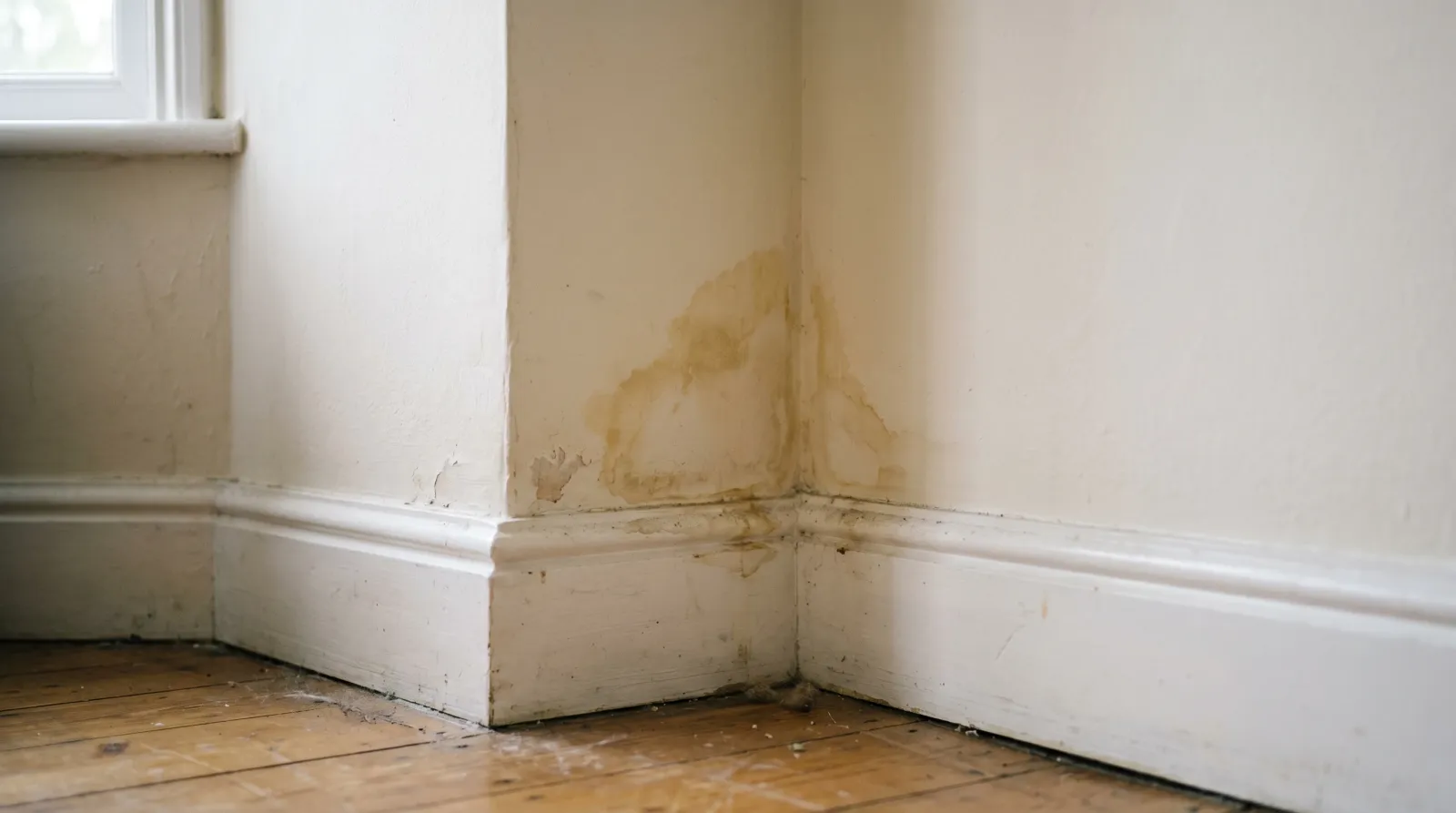
Cat urine isn’t a paint problem. It’s a chemistry problem that ruins your paint. Roll a fresh coat over it and the stain bleeds back through, the smell returns the first humid week, and you’re standing in the same corner with a roller wondering why. Clean it, neutralize it, seal it. In that order, or it comes back.
Does This Match What You’re Seeing?
Confirm what you’re dealing with before you open a can of anything.
- Yellow-brown stain low on a wall or baseboard: urine that wicked up the surface. The classic.
- Faint tide line, darker at the edges: the liquid spread and dried in a ring. The salts concentrate at the rim.
- White or crystalline crust near the floor: dried uric acid salts. These are what reactivate and bleed.
- Smell with no visible stain, worse when humid: the crystals are in the surface even though the color faded. Still has to be sealed.
- Vertical mist pattern on a wall, often near a corner or doorway: spray marking, not a puddle. Stays shallower but stains the same.
- Soft, spongy, or crumbling drywall: the urine soaked the core. This is past a paint fix.
If the wall is soft to a fingernail press, skip ahead to the pro section. Paint won’t save wet gypsum.
How Serious Is This?
Most cat-urine staining is a same-weekend fix. Clean, neutralize, dry, seal, repaint.
Three things push it to high severity:
- The drywall is soft or crumbling. The salts are in the core. Replace the section.
- The smell is strong with no visible source. It soaked into framing, subfloor, or behind the baseboard. You have to reach the soaked material, not just the surface.
- A whole room reeks and you can’t find one spot. Multiple sites, or it’s wicked into the subfloor across a large area. That’s a remediation job, not a touch-up.
A single dried spot on a sound wall is low risk and an afternoon of work. A saturated subfloor under carpet is a different animal.
Why This Is Happening (root Cause)
Cat urine is mostly water, urea, and uric acid, plus salts and bacteria. The water evaporates. The uric acid crystallizes and stays in the surface, and those crystals are the whole problem.
Here’s the trap. Uric acid salts are water-soluble. Every time the room gets humid, the crystals draw moisture, partly dissolve, and migrate. That’s what reactivates the smell on a damp day months later, and that’s what pulls the stain back into water-based paint. Bacteria feeding on the urea throw off ammonia, which is the sharp top note you smell, and they keep working as long as there’s anything left to eat.
So a normal cleaner doesn’t finish the job. Soap and water lift the surface mess but leave the crystals bonded in the material. That’s why an enzyme cleaner matters. Enzymes break the uric acid down into compounds that rinse away, instead of masking them with fragrance. Mask it and you’ve bought a few days. Break it down and it’s gone.
Then there’s the paint itself. Latex and acrylic carry water. Roll water-based paint straight over water-soluble salts and you’ve handed them the exact solvent they need to bleed up into your new film. That’s the yellow ghost coming back through a wall you just painted white. The fix isn’t more paint. It’s a barrier the salts can’t cross.
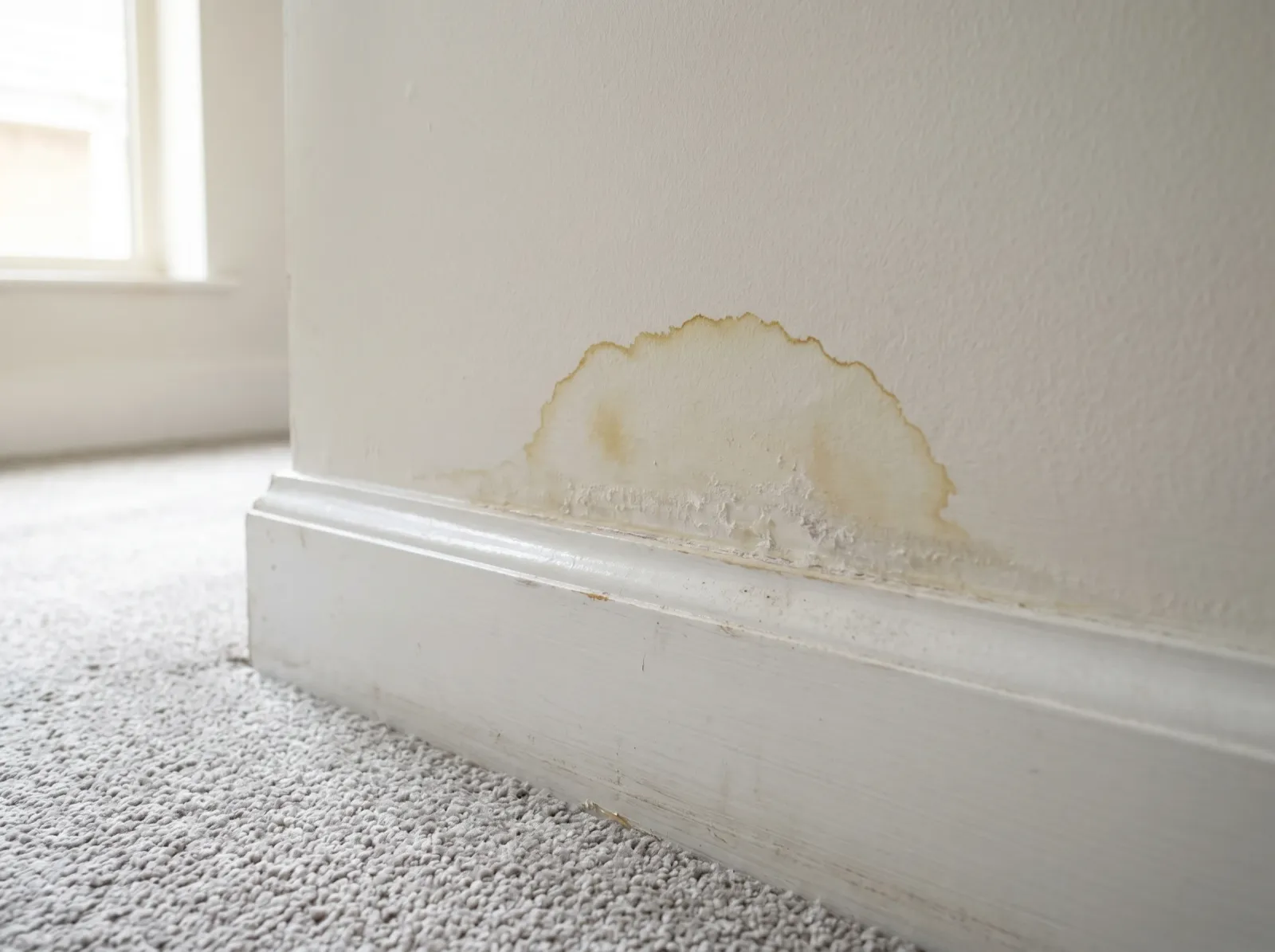 The crystalline crust near the floor is dried uric acid. That residue is what reactivates and bleeds, so it has to come off before anything else goes on.
The Fix
Safety First
Never mix bleach with ammonia, vinegar, or any other cleaner. Cat urine already contains ammonia, and bleach plus ammonia produces toxic chloramine gas. Don’t reach for bleach here at all. Enzyme cleaner does the real work and won’t gas you.
Wear nitrile gloves, eye protection, and an N95. Open windows and run a fan. Dried urine throws fine particulate when you scrub it.
Step 1. Find Every Source
A UV flashlight (blacklight) is the cheapest tool you’ll buy for this. Dried urine fluoresces yellow-green in a dark room. Kill the lights, scan the wall, baseboards, and floor, and mark every spot with tape. People seal the stain they can see and miss the two they can’t. Then the smell never leaves.
Check the wall-to-floor joint, baseboard tops and end-grain, and the back of the baseboard if you can reach it. Urine runs down and pools where the wall meets the trim.
Step 2. Remove Loose Residue
Scrape off any crystalline crust with a putty knife. Vacuum the dust. For glossy or painted surfaces, wipe with a damp cloth first to lift what’s loose. Don’t soak the wall yet. You want the surface clean of crust before the enzyme goes on so it can reach the bonded crystals.
Step 3. Treat with an Enzyme Cleaner
This is the step that decides whether the smell comes back. Use a real enzymatic cleaner: Nature’s Miracle, Rocco & Roxie, or Anti-Icky-Poo. Not a fragranced “pet odor” spray. Enzymes need the surface wet and need dwell time to work.
Saturate the spot, not just mist it. The enzyme has to reach as deep as the urine did. Let it dwell 10 to 15 minutes minimum; on heavy spots, keep it wet for an hour by covering with plastic so it doesn’t dry out. Blot, don’t rinse it away mid-cycle. Follow the bottle’s dwell time, because a fast wipe does nothing.
Step 4. Dry Completely
Let the treated area dry fully. On drywall and trim that means 24 hours minimum, longer if you soaked it or the room is humid. A fan helps. Primer over a damp surface traps moisture and you’ll get blistering on top of your stain problem.
If you pulled the baseboard, leave it off until the wall edge behind it is bone dry.
Step 5. Seal with a Stain-Blocking Primer
This is the barrier. Use a shellac-based primer (Zinsser BIN) or an oil-based stain blocker (Zinsser Cover Stain or KILZ Original oil). These seal against water-soluble stains and lock the odor under the film. Water-based KILZ and standard PVA primer will not hold it; they re-wet the salts and let them bleed.
One full coat over the whole treated area, feathered past the stain edge by a few inches. BIN dries to recoat in about 45 minutes and seals odor better than anything else on the shelf. If a faint shadow still shows through after the first coat, hit it with a second before you topcoat. For more on why this primer does what PVA can’t, see what shellac primer actually seals.
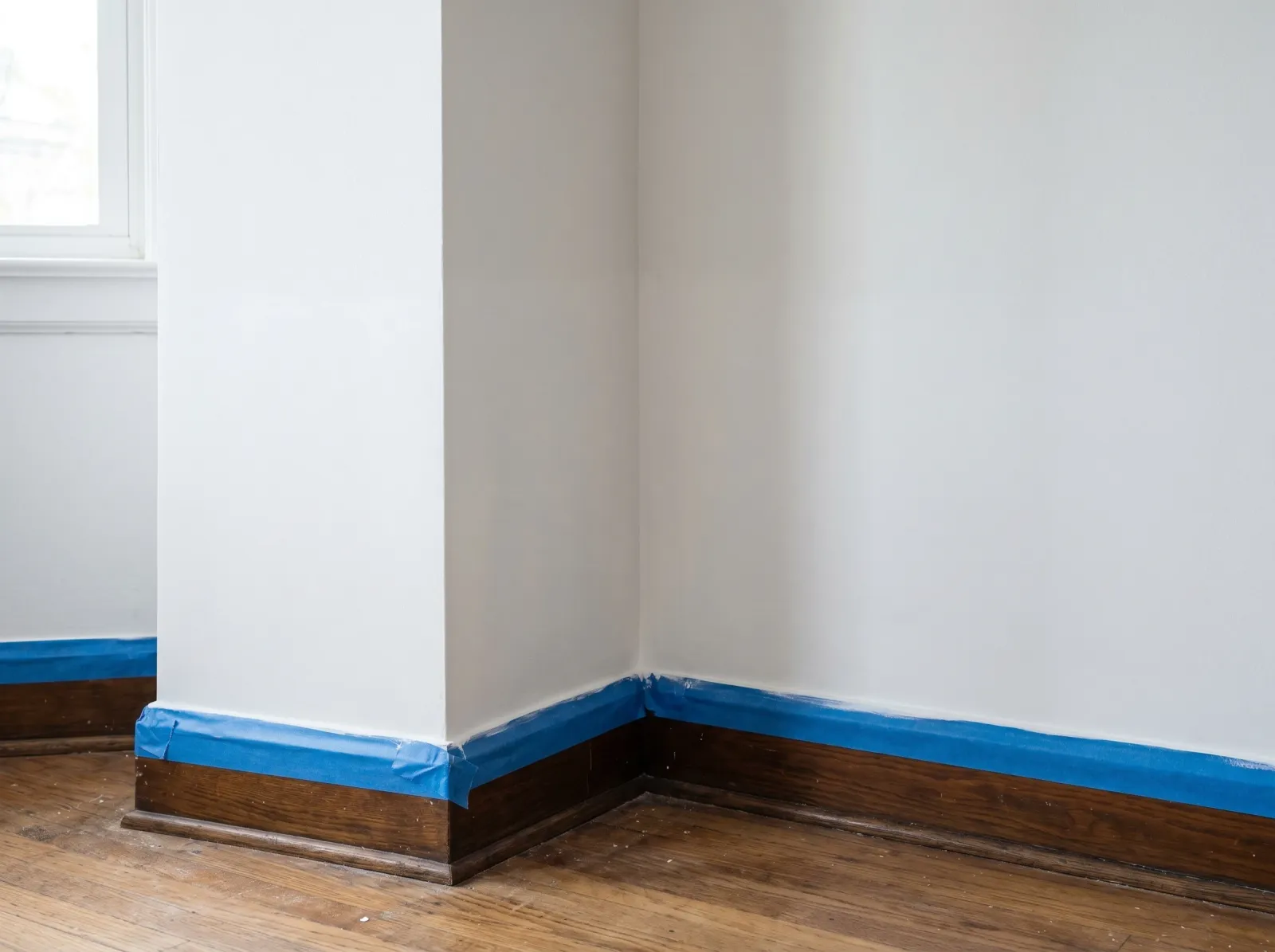 One full coat of shellac primer over the cleaned, dried spot. The stain is gone and the salts are locked under a film that water can’t pull back through.
Step 6. Repaint
Now your normal paint goes on, and it stays clean because the primer is doing the blocking. Two coats over the primed area, feathered into the surrounding wall. Match the existing sheen or you’ll see the patch under raking light.
Spot-priming leaves the primed zone reading slightly different under certain light. If the wall is small or the patch is in an obvious spot, prime and repaint the whole wall corner to corner. For a clean result on the full wall, the drywall painting guide covers cut-in and roll sequence.
 Two topcoats over the sealed spot. No ghost, no shadow, no smell on the next humid day.
Which Primer Seals Cat Urine?
The primer is the whole job. Pick wrong and you redo everything.
| Primer | Base | Seals urine stain? | Seals odor? | Notes |
|---|---|---|---|---|
| Zinsser BIN | Shellac | Yes | Yes, best | Recoats in 45 min, strong smell while wet, denatured-alcohol cleanup |
| Zinsser Cover Stain | Oil/alkyd | Yes | Yes | Slower dry, good on bare wood trim and baseboards |
| KILZ Original (oil) | Oil | Yes | Yes | Solid all-rounder, mineral-spirit cleanup |
| KILZ 2 / KILZ Premium | Water | No, unreliable | No | Re-wets the salts, lets the stain bleed |
| PVA drywall primer | Water | No | No | Wrong tool, water-based on a water-soluble stain |
Shellac is the strongest seal for both stain and odor. Oil-based is a close second and easier to find tinted. Anything water-based belongs on a different job. The difference between a primer and a true sealer matters here; the primer vs sealer breakdown explains why a stain blocker behaves like a sealer over a contaminated surface.
Common Mistakes
- Painting over it with latex and hoping. The single most common one. Water-based paint feeds the water-soluble salts and the stain bleeds right back.
- Using a fragranced “odor” spray instead of an enzyme cleaner. Masking buys a few days. Only enzymes break the crystals down.
- Sealing before it’s dry. Primer over a damp spot blisters. Give it the full 24 hours.
- Treating only what you can see. Scan with a UV light first. The spot you miss is the smell that stays.
- Reaching for bleach. Bleach on ammonia-laden urine makes toxic gas, and it won’t seal anything anyway.
- Spot-priming a visible wall. The patch reads different under side light. Prime the whole wall when the spot is obvious.
Prevention
Sealing the wall fixes the symptom. The cat is the source.
- Find out why the cat went there. Sudden marking or out-of-box urination is often a UTI, kidney issue, or stress. A vet visit comes before another paint job.
- Clean accidents with enzyme cleaner immediately. Fresh urine that never dries into crystals never stains the wall.
- Add or clean litter boxes. The rule is one box per cat plus one, scooped daily. Many marking problems are box problems.
- Block re-marking on the same spot. Cats return to a scent they can still detect. Full enzyme treatment removes the cue; a sealed, repainted wall removes it too.
- Protect the wall-to-floor joint in problem rooms. Semi-gloss or satin on the lower wall and baseboards wipes clean. Flat paint holds urine like a sponge. See the sheen guide for what scrubs.
When to Call a Pro
- Drywall is soft, crumbling, or stays damp. The core is saturated. It needs cutting out and replacing, plus sealing the framing behind it.
- A whole room reeks and you can’t isolate a spot. Likely multiple sites or subfloor saturation under flooring. That’s odor remediation.
- Urine soaked into the subfloor or framing. Sealing the wall does nothing if the smell is coming up through the floor. A remediation contractor seals or replaces the soaked material.
- Pre-1978 home where you’d be sanding old paint. Lead test before any sandpaper touches the wall. See the peeling paint guide for the RRP rules.
What’ll Bite You in Two Years
If you sealed the wall but never figured out why the cat went there, you’ll be sealing it again. And the second time the salts have had longer to soak past the paper face into the gypsum core, where no primer reaches. Treat the spot and the cat in the same week. Paint is the last step, not the fix.