How to Block Nicotine Stains Before Painting
Nicotine stains bleed through latex and even alkyd primer. TSP wash first, then BIN shellac primer in one or two thin coats, then your topcoat. Here's the only sequence that holds.

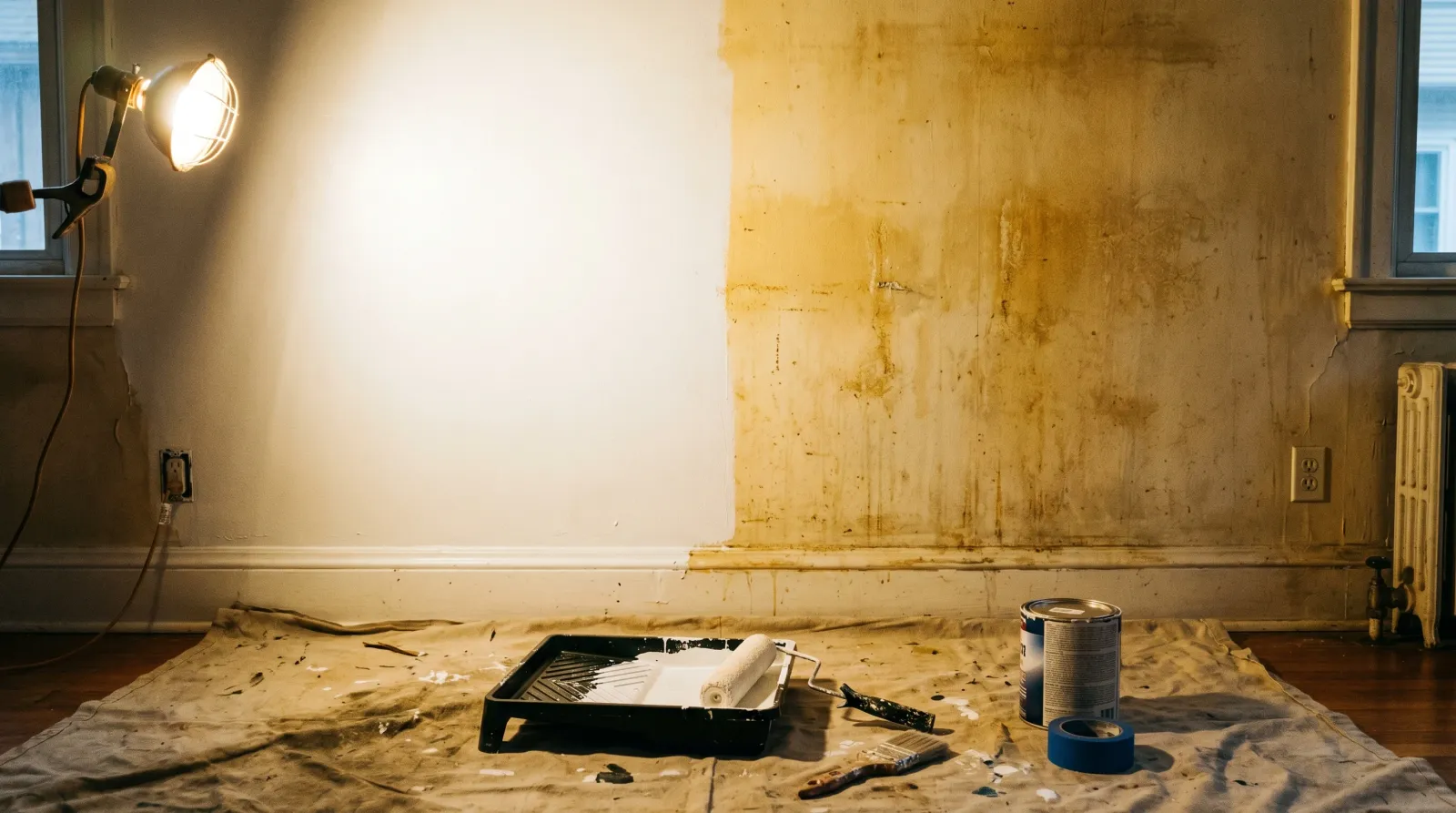
A previous tenant smoked indoors for ten years and now the walls look like a tea bag. Yellow-brown film on every ceiling, the original white paint somewhere underneath. You wipe a finger across it and the finger comes back amber. That’s not a stain. That’s a layer.
Painting over it with latex is the most common mistake on this job. The yellow comes right back through the white. Sometimes inside a day. This page is the sequence that actually holds.
Does This Match What You’re Seeing?
Three things look similar from across the room. They want different fixes.
- Even amber-yellow film across whole walls and ceilings, worst above eye level and around the cold-air return. Wipes off onto a clean rag. That’s nicotine tar.
- Black or grey streaks above radiators, around vents, and on the ceiling near a fireplace. That’s soot from combustion. Different fix. Same primer works, but you also need to find the source.
- A flat amber tone on white trim only, no film on a rag. That’s resin yellowing in old oil paint. Different problem entirely. See the yellowing trim guide.
If a damp microfiber wiped across the wall comes back yellow-brown and sticky, you have nicotine. Move on.
How Serious Is This
Cosmetic and chemical, not structural. The walls aren’t failing. The film is what’s failing the room. You can paint into it the wrong way and the job comes apart in a year. You can paint into it the right way and the room reads white again in a weekend.
One real warning. Heavy nicotine load in a pre-1978 house often sits on top of lead paint, and lead doesn’t care about your respirator if you sand into it dry. If the house is old and the existing paint is chalky or chipping, test for lead before you touch a sander.
Why Nicotine Bleeds Through Latex
Tobacco smoke deposits a thin film of tar and nicotine on every painted surface in line of sight of the smoker. The film is sticky, water-soluble, and chemically active. It dissolves slightly in any water-based coating that lands on top of it, then migrates up into the wet film as the water evaporates. By the time the new paint is dry, the tar has hitched a ride to the surface and the yellow is back.
That’s why latex over nicotine looks fine for an hour and yellow by morning. Two coats don’t fix it either. You’re not painting over the stain. You’re rehydrating it and watching it climb.
Alkyd primer slows it down. The solvent base doesn’t redissolve the tar as aggressively as water does, but nicotine still bleeds through oil primer often enough that most pros won’t warranty the job with anything but shellac. Shellac is the answer because of what it’s mixed with, and that’s worth a quick word from David.
A Note From David Chen on Why Shellac Wins
Most primers fail against nicotine because they share a solvent with the contamination. Water-based primers dissolve the water-soluble half of the tar. Alkyd primers, with their mineral-spirit carrier, partially dissolve the oily fraction. Either way the contamination migrates into the wet film and the stain comes back up.
Shellac is dissolved in denatured alcohol — a solvent neither the water-soluble nor the oil-soluble parts of nicotine tar respond to in the same way. When BIN flashes off, the shellac binder coalesces into a hard, glassy film that the tar molecules can’t pass through. The contamination is physically locked underneath, not chemically engaged with the primer.
The reason for that is partly the binder, partly the solvent. Shellac is a natural resin with very tight cross-linking once cured. Combine that with an alcohol carrier that doesn’t mobilize tar, and you get a sealing layer instead of a bleeding one. It’s the same chemistry that lets shellac seal water rings, knot bleed in pine, and old smoke damage. Different stains, same mechanism. That’s why painters reach for the white can specifically.
Back to Mark.
The Fix
Step 1. TSP Wash, Then Rinse
You can’t prime over sticky tar and expect adhesion. Mix trisodium phosphate at half label strength in warm water, roughly a quarter cup per gallon. Sponge the walls top to bottom, work in three-foot sections, let it sit thirty seconds, then wipe with a clean cloth before it dries. Change the rinse water often. It’ll turn brown fast.
Then a second pass with clean water and a fresh sponge to lift the TSP residue. Let the walls dry overnight before you prime. Twelve hours minimum at 65°F and normal humidity.
Wear gloves and eye protection. Open a window. Never mix TSP or any household cleaner with bleach, ammonia, vinegar, or hydrogen peroxide. Combinations of those produce toxic gas.
Step 2. One Coat of BIN Shellac Primer
Zinsser B-I-N is the white-label can. Shake it hard, pour into a clean tray, roll it on with a 3/8 inch nap microfiber. Cut in first with a synthetic brush, then roll while the cut-in is still wet. Don’t stop in the middle of a wall. Lap marks set fast in shellac.
Touch-dry in 15 minutes, recoat in 45 at 70°F. If the original staining was heavy (full ceilings in a smoking room, brown rag wipes), give it a second thin coat after the first flashes off. Two thin coats hold better than one thick one.
Ventilate. The alcohol fumes are sharp until the film flashes. Wear an organic-vapor respirator if you can’t get cross-flow ventilation. Pets and kids out of the room for the day.
Step 3. Two Coats of Topcoat
Once BIN is dry, anything you want goes on top. Standard interior latex in your chosen sheen, two coats, four hours between. The shellac has locked the tar; the topcoat is purely about color and finish now.
Eggshell on walls, flat on ceilings, semi-gloss on trim if you’re doing trim. Cut in the corners first, roll while the cut-in is still wet, lay off in long vertical strokes. Same rules as any repaint. The hard work is already under the topcoat.
Recommended Product
Zinsser B-I-N Shellac-Base Primer. It’s the only primer most painters will warranty against nicotine bleed-through. One gallon covers about 350 square feet. Buy the can. Don’t substitute.
Find it on Amazon · Zinsser brand review
Prevention
If the room had a smoker and won’t again, you’re done after the topcoat. If smoking continues indoors, no paint job lasts. The film builds back up on the new walls inside a year and you’re back here.
Outside of removing the smoker, the only real prevention is ventilation. A bathroom-style exhaust fan in the room they use, run it during and an hour after. HEPA air purifiers help with airborne particulate but don’t stop deposition on the walls. Wash with a mild TSP solution annually if the habit continues.
When to Call a Pro
- Pre-1978 home where the existing paint is chipping or chalking under the nicotine film. Lead test first; do not dry-sand. EPA RRP rules apply.
- Whole-house jobs over heavy nicotine on textured ceilings or popcorn. Spray-applied BIN on textured ceilings is a different animal than rolling it on flat walls — get a pro with an airless and a respirator setup.
- Smoke damage from a fire, not cigarettes. That’s restoration territory, not a paint job. The protein soot and fire chemistry are different, and the wall substrate often needs to come out.