How to Prevent Bathroom Mold (Vent and Paint Plan)
Bathroom mold prevention starts with a working fan, not a stronger paint. Diagnose the moisture, fix the air, seal the surface, and stop the spots coming back.

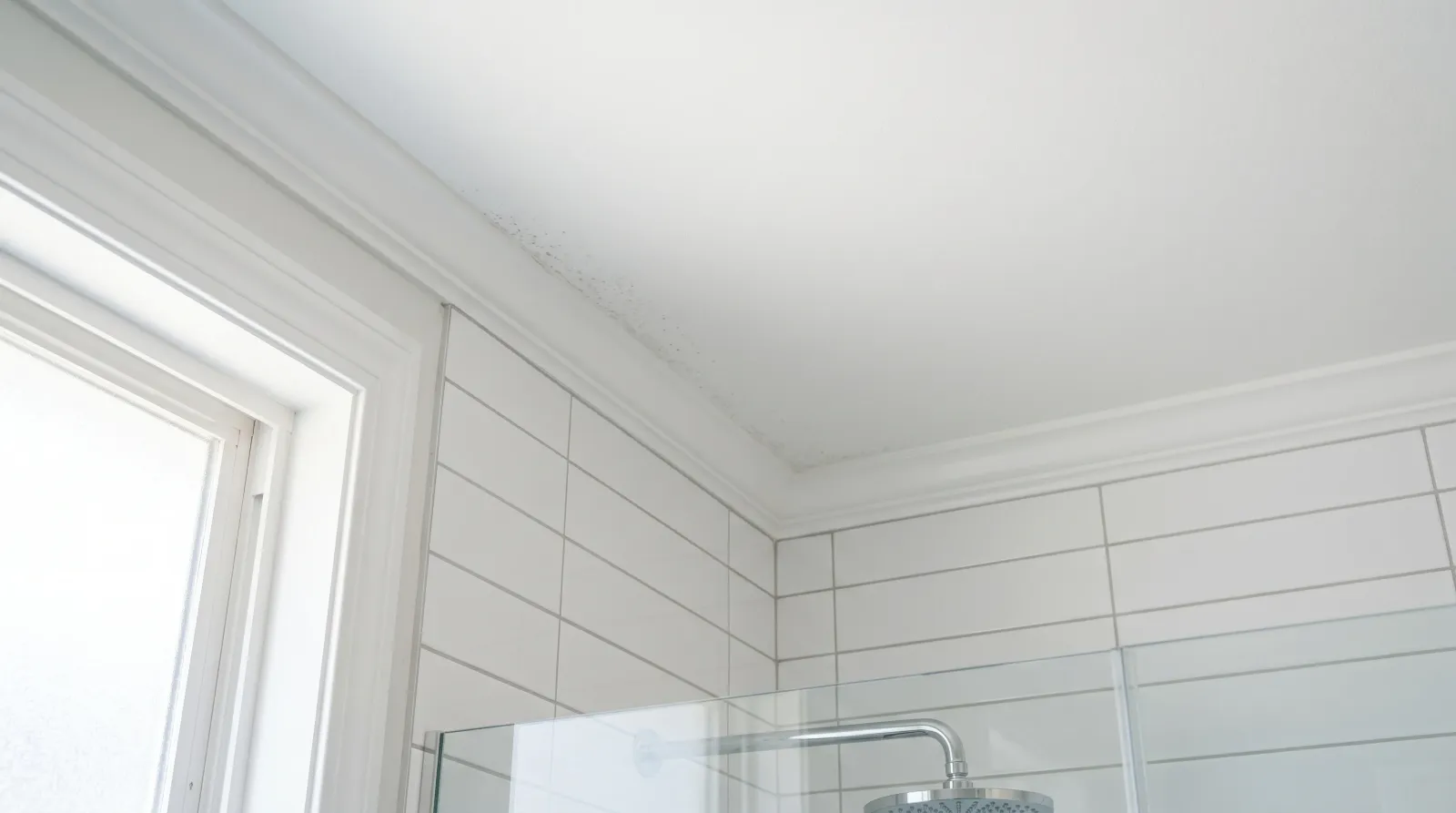
Bathroom mold isn’t a paint failure. It’s wet air the room can’t get rid of fast enough. The spots are the paint showing you a ventilation problem. Move the moisture out, seal the surface right, and the black speckling stops coming back. Buy a fancier paint without fixing the air and you’ll be scrubbing the same ceiling corner next winter.
Does This Match What You’re Seeing?
Bathrooms grow a few different things, and the look-alikes get fixed different ways. Confirm what you’ve got before you grab a sponge.
- Black or gray speckled dots in the ceiling corners or top of the wall: surface mildew. Lives on the paint film. The common one, and the easiest to beat.
- Fuzzy black patches that smear when you wipe them: active mold with a moisture source feeding it. Treatable, but the source has to go too.
- Pink or orange film on the grout and around the drain: that’s Serratia bacteria, not mold. Feeds on soap residue. Wipes off with any bathroom cleaner.
- White crusty powder on a tile or masonry wall: efflorescence, mineral salt, not mold at all. Different fix entirely.
- Spots strictly along the grout lines, none on the paint: trapped water behind tile or failed caulk. The mold is a symptom of the leak.
If the speckling sits only on the coldest exterior corner and nowhere else, that’s condensation doing it. Skip ahead to the root cause section.
How Serious Is This?
Most bathroom mildew is a same-weekend fix. Clean it, kill it, prime it, repaint it. Three things push it past that.
- Patch bigger than 10 square feet: the EPA’s line for calling a remediation pro. A normal ceiling corner is well under that.
- Mold coming back within months of a proper repaint: the moisture source is still active. Stop painting and start hunting for the leak or the dead fan.
- Soft, sagging, or stained drywall: water is inside the board, not just on the surface. Paint won’t save wet gypsum. Cut it out and replace it.
A healthy person cleaning a one-foot patch with PPE on is fine. Anyone with asthma or a weak immune system should hand the cleanup to someone else.
Why This Is Happening (root Cause)
Mold needs three things: a spore, something to eat, and water. Spores are in every house and you can’t keep them out. The food is the dust and soap film and the paper facing on drywall. So the only one you control is the water. In a bathroom, the water is condensation.
Here’s the mechanism. A hot shower dumps a few cups of water into the air as vapor. That warm, loaded air drifts up and hits the ceiling and the upper walls. The coldest surface in the room, usually an exterior corner or the spot above the shower farthest from any heat, drops below the dew point. The vapor condenses into liquid water right there, the same way a cold glass sweats on a summer day. That film of water sits on the paint long enough for spores to root. Do that twice a day for a winter and you’ve grown a colony.
Two things make it worse. A weak or dead exhaust fan leaves the vapor in the room for an hour instead of clearing it in twenty minutes. And missing attic insulation above the ceiling makes that one corner even colder, so it’s always the first to condense. That’s why the mold shows up in the same spot every time. It’s not random. It’s the coldest, wettest square foot in the room.
Flat paint makes a bad situation worse. Flat film is porous, it drinks the condensation in and holds it against the drywall paper. Satin and semi-gloss shed it. The sheen on a bathroom ceiling isn’t about looks.
Safety First
Never mix bleach with vinegar, ammonia, or hydrogen peroxide. It produces chlorine or chloramine gas and people end up in the ER from it every year. Pick one cleaner and stick with it.
Wear an N95 or better, nitrile gloves, and eye protection while you scrub. Disturbing mold throws spores into the air you’re breathing. Run the fan and crack a window the whole time. See the best respirators for painting if you’re doing a larger area or you’re sensitive.
The Fix
Step 1. Kill the Mold
Mix a 1:10 bleach solution, one cup of bleach to a gallon of water, or use Concrobium Mold Control straight from the bottle. Wet the spots and let it sit 10 minutes. Don’t scrub yet. The dwell time is what kills the roots. Bleach hits the color and surface growth; Concrobium crushes the spores down as it dries and leaves no fumes, which is the better call in a small room with poor airflow.
For a stubborn patch, RMR-86 works in seconds on the stain but you still need the dwell time on the living growth.
Step 2. Scrub and Rinse
After the dwell, scrub with a stiff sponge. Rinse with clean water and wipe down. Anywhere the surface feels chalky or there’s old soap film, hit it with a TSP substitute and rinse again. Soap residue is mold food. Leave it and you’ve fed the next colony.
Step 3. Dry It Completely
Run the fan and a space heater or a dehumidifier on the room for 24 hours. Paint or primer over a damp surface traps the moisture and you’ll get blistering and surfactant leaching, those brown sticky drips that bleed out of fresh bathroom paint. If you see those streaks later, here’s why surfactant leaching happens and how to wipe it. The surface has to read bone dry before anything goes on it.
Step 4. Prime the Stain
If the mold left a gray or brown ghost after cleaning, spot-prime it with Zinsser BIN shellac primer. It locks the stain so it can’t bleed through your topcoat. Twenty minutes to dry, then recoat. For a clean surface with no staining, a quality bonding primer is enough. Don’t skip primer over bare patched drywall; the paper and the joint compound drink paint at different rates and you’ll see the difference through the finish.
Step 5. Repaint With a Mildew-Resistant Bathroom Paint
Two coats. Always two coats. One-coat coverage is a label fairy tale in a room this humid.
Use a paint built for wet rooms. Zinsser Perma-White is the workhorse, mildew-resistant satin or semi-gloss with a five-year mold warranty on the film. Benjamin Moore Aura Bath & Spa and Sherwin-Williams Emerald are the higher-end calls if you want a better finish. Satin on the ceiling, satin or semi-gloss on the walls. For the full warranty conversation, see the best mold-resistant paint round-up.
Cut in the corners, roll while the cut-in is still wet, and don’t stop in the middle of a wall.
Prevention (the Part That Actually Matters)
Paint is the last line, not the fix. The fix is the air. Here’s the plan that keeps the ceiling clean.
Size the fan right. You want at least 1 CFM per square foot of bathroom floor, and 50 CFM minimum. A 40-square-foot bath needs a 50 CFM fan; a big master bath needs 80 to 110. Hold a square of toilet paper to the fan grate. If it doesn’t suck and hold, the fan is dead or clogged with lint. Pull the cover and vacuum it, or replace the unit. A Panasonic WhisperCeil moves real air and runs quiet enough that people actually leave it on.
Run it long enough. Twenty minutes after every shower, no exceptions. A timer switch like a Leviton or Lutron solves the forgot-to-turn-it-off problem for about $25. Set it, walk away.
Vent it outside, not into the attic. This is the one that wrecks ceilings from above. A fan dumping moist air into the attic or soffit just relocates the condensation to the underside of your roof and rains it back down onto the ceiling. The duct has to run to a dedicated roof or wall cap. If yours ends in the attic, that’s your whole problem.
Crack the door while the fan runs. A fan can’t push air out if no dry air comes in to replace it. An inch of open door gives it makeup air.
Wipe the cold corners. Until the ventilation is dialed in, a quick wipe of the worst corner with a towel after a shower removes the water before spores root.
Fix the insulation. If one corner is always first to grow, get into the attic and check the insulation above it. A cold spot is a wet spot.
If condensation is showing up on the walls too, not just the ceiling, the room’s whole humidity load is too high and there’s a separate write-up on fixing condensation on walls.
When to Call a Pro
- Mold patch larger than 10 square feet, the EPA threshold.
- Mold returning within months of a proper clean-and-repaint. The source is still live and needs a moisture inspection.
- Soft, sagging, or water-stained drywall. The board is saturated and has to be cut out.
- A musty smell with no visible mold. It’s likely growing inside the wall cavity or under the floor.
- Anyone in the home with asthma, COPD, or a compromised immune system. Don’t do the cleanup yourself.
FAQ
Can I just paint over the mold spots?
No. Paint over live mold and it grows back through the new film within weeks. The additive in mildew-resistant paint slows growth on the surface; it doesn’t kill what’s already rooted underneath. Kill it, scrub it, dry it, prime the stain, then paint. Skip the kill step and you’re repainting the same ceiling twice in one year.
Does running a dehumidifier instead of a fan work?
It helps but it’s slower. A fan exhausts the loaded air outside in minutes. A dehumidifier pulls water out of the room’s air over hours, which is good for overall humidity but too slow to catch the spike right after a shower. Use the fan for the shower, the dehumidifier for a chronically damp room that stays above 60% relative humidity.
Why is my bathroom mold only on the ceiling, not the walls?
Heat rises and so does the vapor. The ceiling is the first cold surface the shower steam reaches, so it condenses there first. Walls usually stay a few degrees warmer and drier. If you’ve got it on both, the room’s humidity is high enough that even the warmer surfaces are dropping below the dew point. That’s a ventilation problem, not a paint one. There’s a dedicated fix for mold on a bathroom ceiling with the ceiling-specific steps.
Ask a Question