Latex vs Oil-Based Primer: Which to Use
A chemist's read on latex vs oil primer: which one blocks stains and tannin, which one bites a glossy surface, and which belongs on your drywall, wood, or metal.

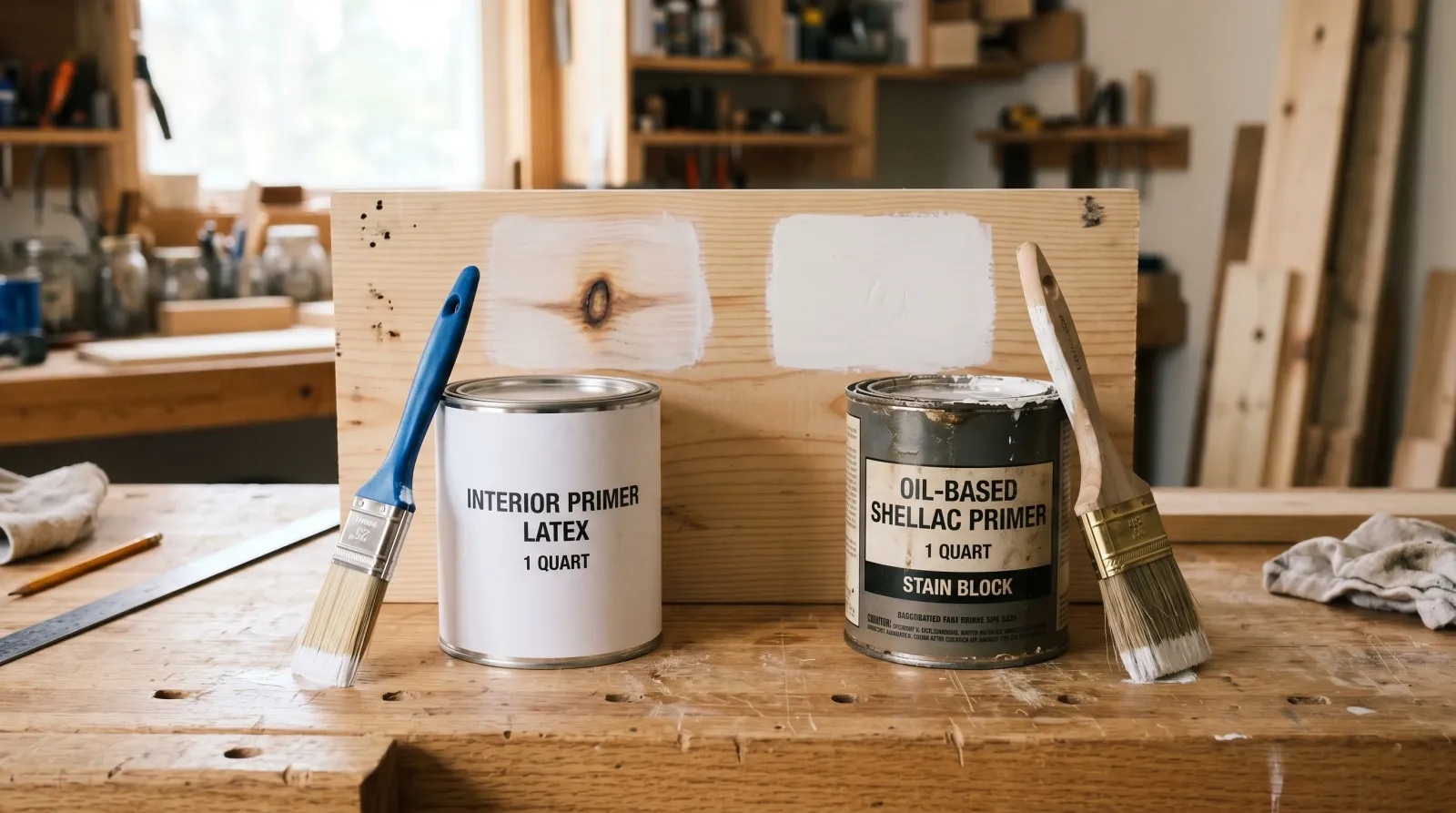
The 30-Second Answer
For new drywall, patched walls, and most clean repaints, use latex primer. It dries fast, cleans up with water, and the modern waterborne formulas grip drywall and old latex paint without complaint. Reach for oil-based primer when the surface is fighting you: knotty pine, cedar or redwood that bleeds tannin, water or smoke stains, bare metal, or a slick existing finish that needs real adhesion. The split comes down to one thing. Latex primer is easier to live with. Oil primer seals and sticks where the water-based film can’t.
At a Glance
| Latex primer | Oil-based primer | |
|---|---|---|
| Stain & tannin blocking | ✓ (light stains) | ✓✓ (water, smoke, tannin) |
| Adhesion to glossy / slick surfaces | ✓ | ✓✓ |
| Drying & recoat speed | ✓✓ (1 hour recoat) | ✗ (overnight) |
| Odor & cleanup | ✓✓ (water, low odor) | ✗ (mineral spirits, strong odor) |
| Flexibility (won’t crack on movement) | ✓✓ | ✗ (cures hard, can crack) |
| Raises wood grain | ✗ (yes, it does) | ✓✓ (no) |
| VOC | ✓✓ (under 100 g/L) | ✗ (300–400+ g/L) |
| Cost (quart, retail) | $ ($12–$20) | $ ($14–$22) |
How to Tell What You’re Priming Over
Most primer mistakes start one step earlier, with the wrong read on the existing surface. Two quick tests sort it out.
If there’s already paint or primer on the wall and you don’t know its chemistry, dab denatured alcohol on a cotton ball and wipe an out-of-the-way spot. Latex softens and tints the cotton. Oil stays put. That tells you what you’re bonding to.
For bare wood, look for knots and color. Pine, fir, cedar, and redwood carry tannins and resins that bleed amber-brown through a water-based film. If you see knots or the wood is a warm reddish species, the substrate is telling you it wants an oil or shellac primer, not latex.
What’s Actually Different in the Can
The word “primer” covers two very different binder systems, and the difference is the whole article.
A latex primer is a waterborne emulsion. The binder is acrylic or vinyl-acrylic resin suspended in water, with the same coalescing chemistry as latex paint. Water evaporates, the resin particles fuse into a continuous film, and the pigment load gives the topcoat a uniform surface to grab. Because the binder rides in water, the carrier is what soaks into porous drywall and raw wood. That’s good for grip on drywall and bad on raw wood, where the water swells the grain and lifts a fuzz you have to sand back down.
An oil-based primer is an alkyd resin dissolved in a petroleum solvent, usually mineral spirits. It doesn’t coalesce. It cures, meaning the alkyd cross-links by reacting with oxygen in the air into a hard, dense film. The reason for that matters here. A cross-linked oil film is far less permeable than a coalesced latex film, so solvent-soluble stains can’t migrate up through it. The same density is why oil primer locks tannin and grips a glossy surface that latex would slide off of. The trade-off is everything that comes with a solvent: the odor, the mineral-spirit cleanup, and a film that keeps hardening until it eventually gets brittle.
There’s a third option worth naming so you can rule it in or out: shellac primer (Zinsser BIN). Shellac is an alcohol-borne resin that flashes off in minutes and out-blocks both latex and oil on the worst stains and pet odor. It’s the specialist. For the full head-to-head, see oil primer vs shellac primer.
Stain and Tannin Blocking
This is the dimension where oil earns its place. A stain bleeds through a primer when the staining compound is soluble in the primer’s carrier or can diffuse through the cured film. Water rings, smoke and nicotine, marker, and the tannins in cedar, redwood, and pine knots are the usual offenders, and they all share a trait: they move through a permeable water-based film and reappear in your finish coat weeks later.
Oil-based primer’s cross-linked alkyd film is dense enough to lock those compounds underneath. One coat handles most water and tannin stains; heavy smoke damage wants two. Latex primer manages light stains and clean drywall fine, but put it over a cedar knot and you’ll watch an amber halo ghost through your white topcoat by the second week.
The one product that beats oil here is shellac (BIN), which seals nicotine and pet odor that even oil struggles with. For everyday tannin and water stains, oil is the workhorse.
Winner: Oil-based primer.
Adhesion to Glossy and Slick Surfaces
Adhesion is mechanical and chemical at once. A primer has to wet out the surface, then form a film that keys into it. On a glossy old enamel, a previously oil-painted trim, or bare metal, latex primer struggles to wet the surface and beads slightly, which leaves a film you can scratch off with a fingernail in a week.
Oil-based primer wets a slick surface better and the alkyd binds tighter to non-porous substrates. On bare steel it also inhibits flash rust, which a water-based primer can actually trigger because the water sits on the metal. For glossy trim, bare metal, and tannin-prone wood, oil bites where latex slides.
The caveat: scuff-sand the gloss first either way. No primer is a substitute for breaking the sheen with 220-grit. Skip that and even oil can let go. If you’ve seen a topcoat let go in sheets, the peeling-paint fix usually traces back to a primer that never bit the surface under it.
Winner: Oil-based primer.
Drying and Recoat Speed
Latex primer is touch-dry in 30 minutes and ready to recoat in about an hour at 70°F. You can prime drywall in the morning and have two finish coats on by evening. That speed is the single biggest reason latex dominates volume repaints, where a contractor pricing a whole house can’t afford to lose a day per coat.
Oil-based primer is touch-dry in 1 to 2 hours but wants to cure overnight before you topcoat, because the cross-linking reaction is slow and recoating too early traps solvent. Plan on an 8-to-24-hour wait. On a multi-room repaint, that gap compounds into real schedule cost.
Winner: Latex primer.
Odor and Cleanup
This is where oil pays a daily tax. Mineral spirits flash off as the alkyd cures, so an oil-primed room reeks for a day and wants ventilation. VOC content runs 300–400 g/L and up, against under 100 g/L for most latex primers. That’s not a footnote in California, New York, and the OTC states, where high-VOC coatings are restricted at retail. The VOC explainer covers what that number actually measures and why it’s regulated.
Cleanup follows the carrier. Latex brushes rinse clean under tap water in 90 seconds. Oil brushes need a mineral-spirit bath, several wring-and-repeat cycles, then soap, and the contaminated spirits go to hazardous-waste disposal, never down the drain. Oil-primed rags can also self-heat as the alkyd oxidizes, so a wadded pile in a garage trash can is a genuine fire risk. Dry them flat outdoors or drown them in a sealed metal can.
Winner: Latex primer.
Cost and Coverage
Per quart, the two are close: latex primer runs $12–$20, oil-based $14–$22, with five-gallon contractor buckets narrowing the gap further. Coverage is comparable, roughly 200–300 square feet per quart on a sealed surface.
Cost isn’t really the deciding axis here, and pretending oil is “expensive” misses the point. The real cost of choosing oil is the time and ventilation it demands, not the shelf price. The real cost of wrongly choosing latex is a re-prime and re-topcoat after a stain ghosts through. On raw dollars per quart it’s a wash.
Winner: Tie. The price gap is too small to decide on.
A Note on Raw Wood
One detail that trips up furniture and trim work: latex primer raises wood grain. The water carrier swells the surface fibers, and they dry standing up as a fine fuzz. You sand it back, sometimes twice, before the topcoat lays smooth. Oil-based primer carries no water, so it leaves bare wood flatter on the first pass and needs less sanding between coats.
For cabinet doors and fine trim where the finish has to read glass-smooth, that single property pushes a lot of people toward oil or a dedicated waterborne wood primer formulated to suppress grain raise. On drywall it’s a non-issue, because there’s no grain to raise.
Verdict by Use Case
- Pick latex primer if: the surface is new or patched drywall, an old latex-painted wall, or any clean general repaint; you want fast recoat, low odor, and water cleanup; you’re working in a VOC-restricted state; you’re priming a high-square-footage job on a schedule.
- Pick oil-based primer if: the surface is knotty pine, cedar, or redwood that will bleed tannin; you’re sealing water, smoke, or marker stains; you’re priming bare metal that could flash-rust; you’re bonding over a glossy existing finish that needs real bite; you want minimal grain raise on bare wood trim.
- Step up to shellac (BIN) instead when: the stain is nicotine, soot, or pet odor, or you need the fastest possible recoat. It out-blocks both, with the strongest smell and the fussiest cleanup. See the oil-vs-shellac comparison.
For the long version of why primer matters at all and which jobs can skip it, start with what primer actually does.
Top Picks by Side
Going with latex? Zinsser Bulls Eye 1-2-3 and KILZ 2 are the two waterborne workhorses for drywall and clean repaints.
Going with oil? Zinsser Cover Stain and KILZ Original are the standard alkyd stain-blockers for wood, metal, and water stains. For the full breakdown by surface, see the best primer round-up.