Latex vs Acrylic for Cabinets: The Right Chemistry
The best paint chemistry for cabinets isn't vinyl-acrylic latex. 100 percent acrylic and waterborne alkyd win on block resistance, hardness, and finger-print recovery.

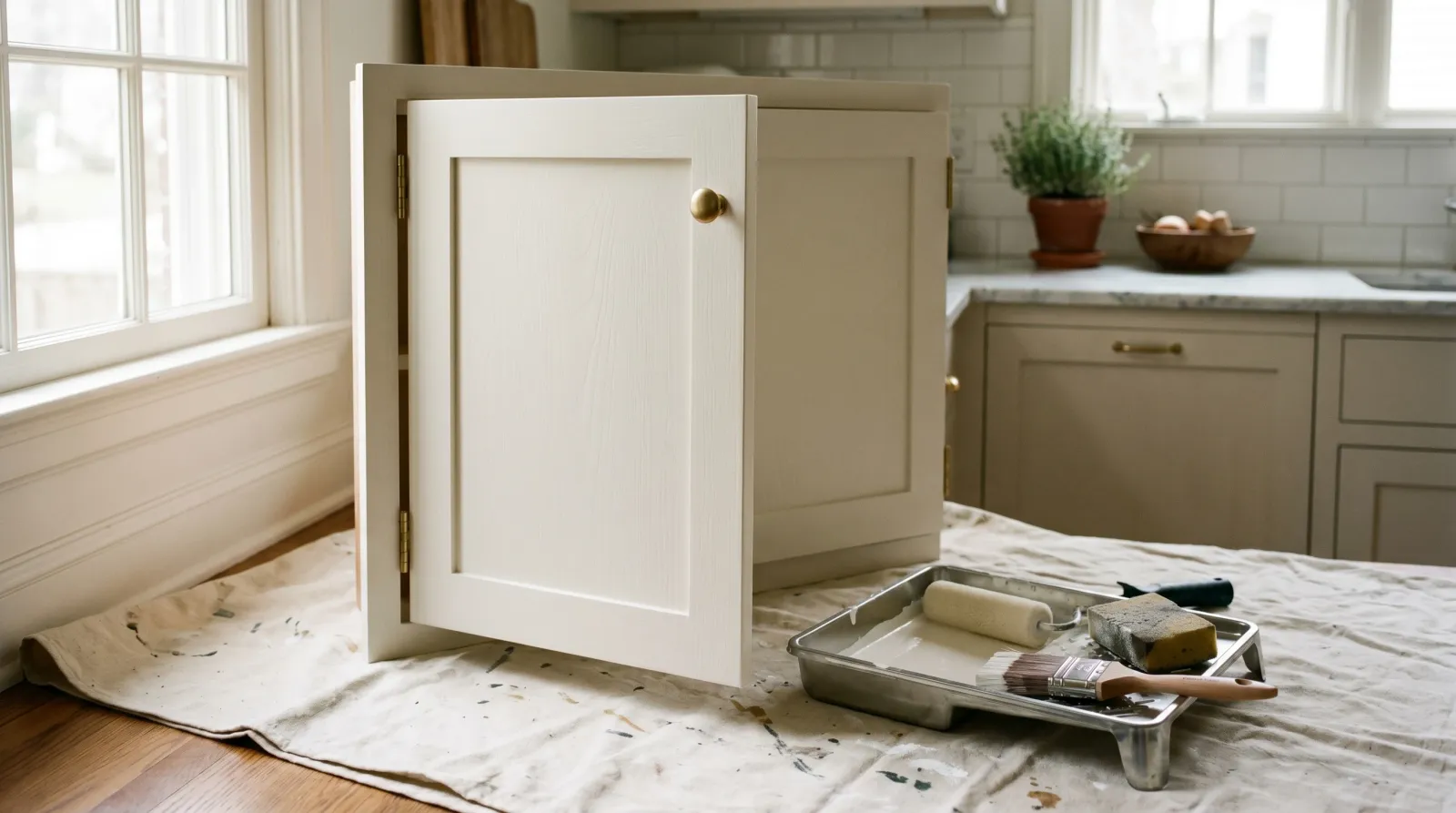
The 30-Second Answer
For cabinets, skip the resin labeled “latex” and buy 100 percent acrylic or a waterborne alkyd enamel. Cabinet doors close against a frame and get touched all day, so the one spec that matters is block resistance — whether the painted surface stays stuck to itself under pressure. Cheap vinyl-acrylic latex stays soft and glues your doors to the cabinet box within weeks. A 100 percent acrylic enamel cures hard and lets go cleanly. Pick latex only for low-touch utility cabinets where budget beats longevity.
The trade-off is real, so let me be precise about it. The word “latex” on a can doesn’t tell you the chemistry. Two cans both stamped “latex” can be a soft wall paint and a hard cabinet enamel. You have to read the resin line, not the marketing.
At a Glance
| Vinyl-Acrylic Latex | 100% Acrylic / Waterborne Alkyd | |
|---|---|---|
| Binder | Vinyl-acrylic copolymer | 100% acrylic or waterborne alkyd |
| Block resistance | ✗ Soft, doors stick | ✓✓ Cures hard, releases clean |
| Final hardness | Stays pliable | Hard, nail-resistant film |
| Full cure | Soft even at 30 days | 7–21 days to hard |
| Leveling / brush marks | Visible stipple | Self-levels, near-spray finish |
| Yellowing (waterborne alkyd) | None | Slight on bright whites |
| Cost (gal) | $25–40 | $45–75 |
| Cleanup | Water | Water |
| Best on | Garage, utility, rentals | Kitchen, bath, daily-use doors |
How to Tell What’s Already on Your Cabinets
Before you fight a sticky door, find out what you’re recoating.
Press a fingernail into a hidden spot, like the inside top edge of a door. If it dents and stays soft, you’re on a wall-grade vinyl-acrylic latex and that’s your sticking problem. If it resists and the mark wipes away, you’re on a hardened enamel — acrylic, waterborne alkyd, or old oil. For the oil-versus-water question, rub a cotton ball wet with denatured alcohol on a hidden spot. If color lifts onto the cotton, it’s water-based. If nothing moves, it’s cured oil and you’ll need a bonding primer before any waterborne enamel will grip it. The deglosser-versus-sanding comparison covers the prep either way.
Block Resistance
This is the dimension that decides the whole comparison, so it goes first.
Block resistance is a paint’s ability to not stick to itself when two coated surfaces press together. On a wall, it never comes up — walls don’t touch other walls. On a cabinet, it’s everything. A door closes against the face frame, a drawer front presses into the box, and they sit there clamped for hours every night. If the film is soft, the two coated faces fuse, and when you open the door in the morning it peels with a tearing sound and lifts paint off the frame.
Vinyl-acrylic latex fails this hard. The copolymer is engineered to stay slightly flexible so wall paint doesn’t crack, and that same flexibility means it never sets up rigid enough to release cleanly. I’ve seen kitchen doors painted in builder-grade wall latex tack up within three weeks and pull paint chips by month two.
A 100 percent acrylic enamel or a waterborne alkyd is formulated for this exact job. The film cross-links into a hard, slick surface that lets go without a fight. Manufacturers publish a “print-free” or “block-free” time on the technical data sheet, usually 7 to 14 days, and they only publish it because the paint actually gets there. Latex cabinet stickiness is the single most common cabinet-paint complaint, and it’s a chemistry problem, not a technique problem.
Winner: 100 percent acrylic / waterborne alkyd. Decisively. This alone settles most kitchens.
Hardness and Cure
Dry and cure are different clocks, and cabinets live on the cure clock.
Both paint types are touch-dry in about an hour and recoat in 4 to 6 hours. That’s dry. Cure is the slow chemical hardening that follows, and it’s where the two formulas split. A 100 percent acrylic enamel keeps hardening for 7 to 21 days until the film reaches its final scratch and impact resistance. A waterborne alkyd cures even harder, closer to old oil enamel, because the alkyd resin oxidizes into a dense film. Benjamin Moore Advance and INSL-X Cabinet Coat are the two waterborne alkyds I reach for most.
Vinyl-acrylic latex has a much shorter, much shallower cure. It reaches its final state fast, and that final state is still soft. Thirty days out, it dents under a fingernail and burnishes where a hand rubs the same spot daily, like the edge beside the sink.
The catch with the harder cure is patience. You get a touch-dry door in an hour, but you cannot stack drawers or close doors against frames for at least a week, or you re-create the blocking problem you paid to avoid. Prop the doors open. Wait it out.
Winner: Waterborne alkyd, narrowly over 100 percent acrylic, with vinyl-acrylic latex a distant third.
Finish and Leveling
Cabinets are inspected from 18 inches away. Walls are seen from across the room. That changes what “good finish” means.
Vinyl-acrylic latex dries fast and holds brush stipple and roller texture. On a wall, the eye forgives it. On a cabinet door catching kitchen light, every drag mark and roller orange-peel shows. To get latex to lay down smooth you’d be thinning it and chasing lap marks across the panel.
A 100 percent acrylic enamel levels better because it’s formulated with a longer open time, so the film keeps flowing after the brush leaves and the marks settle out. A waterborne alkyd levels best of the three. It flows like old oil and dries to a near-sprayed look off a good brush. Pair it with a fine-bristle brush or a foam roller and a light back-brush, and you get a factory-smooth panel by hand. The sheen guide is worth a read here, since satin or semi-gloss is the right cabinet sheen and both enamels deliver it cleanly.
One honest mark against the waterborne alkyd: it ambers slightly over time, most visible on a bright cool white in a dark cabinet interior. A 100 percent acrylic stays whiter. If you’re painting crisp white Shaker doors, the pure acrylic protects the color; if you’re going greige, sage, or navy, the alkyd’s leveling wins and the yellowing never shows.
Winner: Waterborne alkyd on leveling, 100 percent acrylic if non-yellowing white is the priority.
Cost and Coverage
Here’s where latex makes its only real case.
Vinyl-acrylic latex runs $25 to $40 a gallon and covers 350 to 400 square feet per coat. The premium enamels run $45 to $75. A waterborne alkyd cabinet coat like INSL-X Cabinet Coat sits around $55 to $65. So on paper, latex saves you $20 to $35 a gallon.
In practice, a typical kitchen needs about a gallon of finish paint plus primer, so the absolute dollar gap is maybe $25 on the whole job. Against the labor of prepping, priming, and coating every door and drawer front twice, that $25 is rounding error. And if the cheap latex sticks and peels in three months, you repaint the entire kitchen, which is the most expensive outcome on the board. The math only favors latex when the cabinet is low-touch and a repaint wouldn’t hurt — a garage, a laundry utility cabinet, a rental you’ll flip before the doors start sticking.
Winner: Vinyl-acrylic latex on raw price. It’s the one column it wins, and only when longevity doesn’t matter.
Ease of Use and Cleanup
Both clean up in water, so the gap is smaller than people expect.
Vinyl-acrylic latex is the most forgiving to apply. It’s thin, brushes easy, dries fast, and a beginner can move quickly without fighting the paint. A 100 percent acrylic enamel is slightly thicker and wants a steadier hand. A waterborne alkyd is the fussiest of the three: it has a longer open time, which is great for leveling but means you must keep a wet edge and resist over-brushing, or you drag the half-set film. It also has a faint solvent smell where the pure acrylic is nearly odorless, and it needs warmer conditions to cure right. Both premium enamels reward patience.
Cleanup is a tie. All three are soap-and-water, no mineral spirits, low VOC. That’s the quiet advantage of staying waterborne instead of going back to true oil enamel, which still cures hardest of all but yellows badly, smells, and needs solvent cleanup. For most cabinets the waterborne alkyd gets you 90 percent of oil’s hardness without any of oil’s headaches. If you want the VOC context, the VOC explainer lays it out.
Winner: Vinyl-acrylic latex for a first-timer’s ease, tie on cleanup.
Verdict by Use Case
- Pick vinyl-acrylic latex if: the cabinet is low-touch and out of sight — garage storage, a basement utility cabinet, laundry shelving, or a rental flip where the doors won’t see daily abuse before you hand over the keys. It’s cheap, it’s easy, and on a surface nobody slams shut twice a day the softness never bites you.
- Pick 100 percent acrylic if: you’re painting bright white kitchen or bath cabinets and color-true white matters more than the last 10 percent of hardness. It cures hard, releases clean, and won’t amber.
- Pick a waterborne alkyd if: you want the hardest, smoothest, most furniture-like result on real daily-use cabinets and you’re going with a color or off-white that hides slight yellowing. This is the pro default for kitchen cabinets done by hand.
- It’s a tie when: the cabinet sees light use and you’re using a quality 100 percent acrylic either way. Both premium enamels will outlast the kitchen’s next remodel. Pick on color: white leans acrylic, color leans alkyd.
Top Picks by Side
Going with the budget route? The honest pick list for low-prep, no-sand jobs lives in the no-sand cabinet paint round-up, which covers the bonding primers that make a soft surface survivable.
Going with a real cabinet enamel? The best kitchen cabinet paint round-up tests the 100 percent acrylics and waterborne alkyds head-to-head, with the block-resistance numbers that this comparison hinges on.
FAQ
Is latex paint strong enough for kitchen cabinets? Standard wall-grade vinyl-acrylic latex isn’t. It stays soft, dents under a fingernail, and sticks the doors to the frame within weeks. A 100 percent acrylic enamel or a waterborne alkyd is a different formula and holds up fine. The word “latex” on the label tells you almost nothing. Read the resin line and the block-resistance spec.
What’s the difference between latex and acrylic paint? Both are water-based; the binder differs. Cheaper latex uses a vinyl-acrylic copolymer that stays softer. Premium paint uses 100 percent acrylic resin that cures harder and more water-resistant. All acrylic is technically a latex, but not all latex is 100 percent acrylic, and for cabinets that line is the whole decision.
How long before painted cabinets stop sticking? Cure stops the sticking, not dry time. A quality enamel is touch-dry in an hour but takes 7 to 21 days to fully cure and reach block resistance. Prop doors open and don’t stack drawers for at least a week. Soft latex never fully gets there, which is why those doors keep tacking up.
Related
- Best kitchen cabinet paint: the enamels tested head-to-head
- Best no-sand cabinet paint: the budget and low-prep route
- What is latex paint?: the chemistry behind the misnomer
- Latex vs acrylic paint: the general comparison under this one
- Deglosser vs sanding: the prep that decides whether either paint holds