German Smear vs Mortar Wash: What's the Difference?
German smear vs mortar wash, compared on coverage, look, durability, and cost. Which technique softens your brick and which one nearly buries it.

The 30-Second Answer
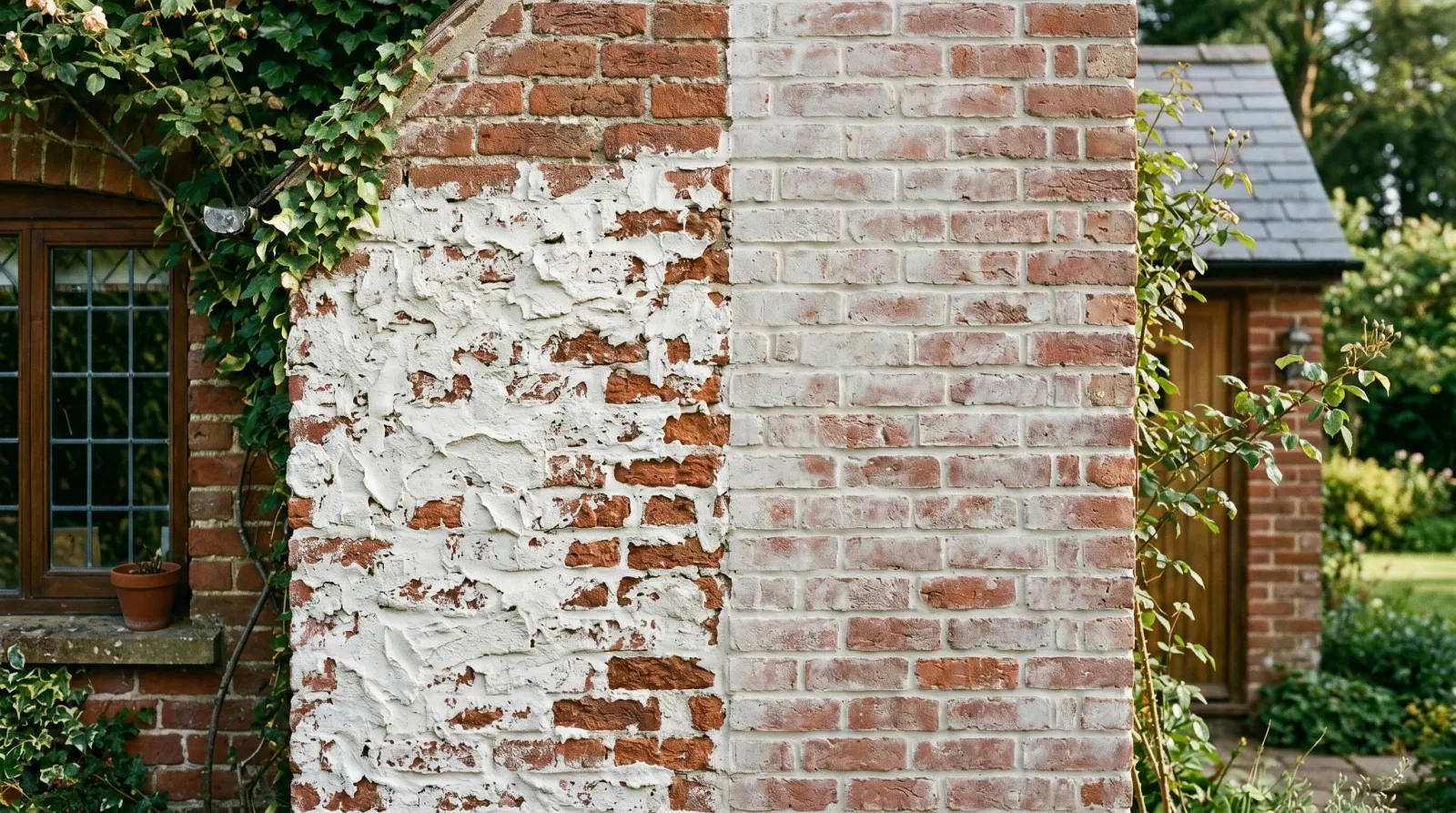
If you want your brick mostly buried under thick, Old-World plaster texture, you want a German smear. If you want to keep the brick visible but softer, calmer, with the color quieted and the joints filled, you want a mortar wash. Both use mortar over brick. The difference is how much you leave on. German smear is troweled and heavy. Mortar wash is thinned and brushed so the brick reads through. That single choice, hide the brick or keep it, decides the whole project.
At a Glance
| German smear | Mortar wash | |
|---|---|---|
| Coverage | ✓✓ heavy, partial-to-full | ✓ thin, brick reads through |
| Look | Rough, troweled, Old-World | Soft, cloudy, color-corrected |
| Durability | ✓✓ thick mortar, very tough | ✓ thinner, can need touch-ups |
| Ease for a beginner | ✗ messy, timing-sensitive | ✓✓ brushed on like thick paint |
| Reversibility | ✗ permanent | ✗ mostly permanent |
| Cost per project | $ (bag of mortar) | $ (bag of mortar) |
How to Tell Which One You’ve Got
Stand back and look at how much brick you can still see. If the brick color barely reads and the wall looks like troweled, textured plaster with stray brick peeking through, that’s a German smear. If the brick still reads clearly under a soft, hazy film and only the color looks muted and the joints look filled, that’s a mortar wash.
Up close, run your fingertips over it. German smear feels lumpy and uneven, with ridges where mortar caught and thin spots where it was wiped back. A mortar wash feels nearly flat, more like a chalky stain that sank into the surface. The thickness tells you which technique was used in about ten seconds.
Coverage & Look
This is where the two part ways before durability even enters the room. German smear leaves a lot of material on the wall. You trowel wet mortar across the brick faces, then wipe some back before it sets, so the finished wall is a moody, irregular mix of buried brick and exposed brick. Some faces vanish under mortar. Others show through. The effect reads like a centuries-old European cottage, rough and tactile and a little romantic.
Mortar wash keeps far more of the brick. You thin the mortar down to a brushable slurry and paint it on, so it settles into the joints and leaves a soft cloudy film over the faces. The brick color quiets but still shows. In north-facing light a mortar wash reads gentle and a touch foggy, the way a faded old wall looks. It softens orange or harsh-red brick without erasing it.
So the question is what you want the wall to do. A wall that should look ancient and heavily textured wants a German smear. A wall whose brick you actually like, but wish were calmer, wants a mortar wash.
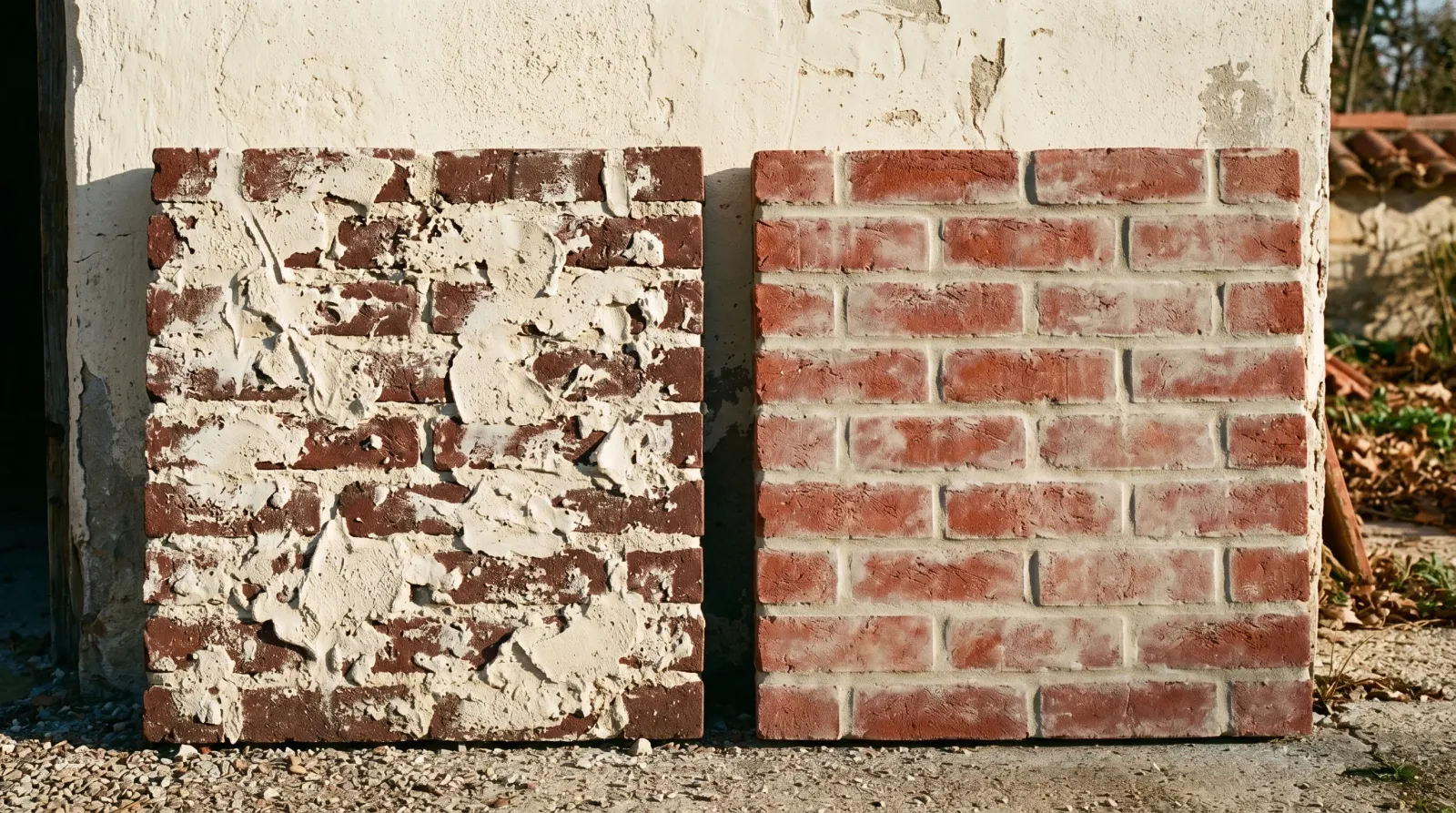 The same mortar on the same brick: German smear on the left buries the faces in troweled texture, mortar wash on the right leaves the brick reading through a soft pale haze.
Winner: German smear for dramatic Old-World texture. Mortar wash for keeping the brick visible and just softening it.
Durability
Both techniques win here against ordinary paint, because both are mineral. They’re made of mortar, the same material already holding your wall together, so they don’t peel off in a plastic sheet the way latex over brick eventually does.
German smear is the tougher of the two by thickness alone. A heavy troweled coat is a thin skim of mortar bonded to the brick and joints, and on a sound exterior wall it holds for decades with little fuss. It shrugs off weather because it is masonry.
A mortar wash is thinner, so there’s less material to wear. It holds well, but on a south or west wall that takes sun and driving rain, a thin wash can chalk or thin out in spots over the years and want a refresh coat. Neither one fails like paint, which is the whole reason people reach for mortar over a roller of masonry paint in the first place.
Winner: German smear, on raw staying power.
Ease & Mess
A mortar wash forgives you. You mix mortar with water (and sometimes a little bonding agent) to a thick-paint consistency, then brush, roll, or sponge it on. An uneven hand still reads as soft and organic, which is the look anyway. It’s the friendliest mortar technique for a first-timer, and the cleanup is mostly a hose and a bucket.
German smear asks more of you. You’re working with stiff, wet mortar, troweling it onto vertical brick, then wiping it back with a sponge or gloved hand before it sets, and that working window is short. Push too long and the mortar grabs hard and you’ve lost the wipe-back. It’s messy, physical, and timing-sensitive, and the result varies a lot with how comfortable you are spreading mortar. Most people botch a section or two learning the rhythm.
Whichever you choose, test on a hidden wall first. Mortar dries lighter than it looks wet, and you can’t really tell your final color until a patch cures. I tell people to smear or wash a two-foot square in a back corner and live with it for a day before committing the front of the house.
Winner: Mortar wash, clearly, for a beginner.
Reversibility
Be honest with yourself before you start: neither of these comes off cleanly. Both bond mortar to porous brick, and brick drinks it in. Once it’s cured, you’re not stripping it back to bare red brick without grinding, blasting, or a lot of regret.
German smear is the more permanent of the two simply because there’s more mortar locked onto the faces. A mortar wash is thinner and, on some brick, a fresh-and-fast pressure wash can lift the worst of it before it fully cures. After it sets, though, it’s there to stay too.
This is the one place I’d slow you down. If you suspect you’ll want the natural brick back someday, do neither, and look at a limewash on brick instead, which sits lighter and reads softer with less commitment. The mortar techniques are a one-way door.
Winner: It’s a tie, and not in a good way. Both are effectively permanent.
Cost
Materials are cheap for both, which surprises people. The whole finish is mortar, and a bag of Type N or Type S mortar mix runs roughly $8 to $15 and covers a generous stretch of wall. Even a full house facade is usually well under $100 in material for either technique. There’s no expensive specialty product to buy.
The real cost is labor and time. German smear takes longer and asks for more skill, so if you hire it out, it costs more per square foot than a mortar wash, and a pro who’s good at it isn’t cheap. A mortar wash goes faster and a confident DIYer can do a wall in a weekend. Coverage for both depends entirely on how thick you go and how rough your brick is, so buy a little extra and expect to mix more than you planned.
Winner: Mortar wash on total project cost, mostly because it eats less labor.
Verdict by Use Case
- Pick German smear if: your brick is rough, mismatched, or just not pretty, and you want it largely hidden under thick troweled texture. You’re after the Old-World, plastered-cottage look, you don’t mind the mess, and you’re sure you’ll never want the bare brick back. Best on exterior walls and big fireplaces where the heavy texture has room to breathe.
- Pick mortar wash if: you actually like your brick but wish it were softer or less orange, and you want to keep it reading through. It’s the easier weekend project, the gentler look, and the right call for an interior brick accent wall or a fireplace where you want subtle, not buried.
- It’s basically a tie when: you want a permanent, durable, mineral finish over raw exterior brick and you’re equally happy with either look. Both will outlast paint by years. At that point, pick by how much brick you want to see, and how much troweling you’re willing to do.
Common Mistakes
Trying either over sealed or painted brick. Both need raw, thirsty, unsealed brick to grip and absorb. On a slick painted face the mortar has nothing to bite, and it flakes. If your brick is already painted, reach for a limewash or masonry paint instead.
Skipping the test patch. Mortar dries far lighter than it looks wet, and the color shifts as it cures. People smear a whole wall, panic at the wet gray, and either over-wipe or quit. Do a cured sample square first, always.
Letting German smear set before you wipe back. The wipe-back is the whole technique, and the window is short. Work in small sections so the mortar is still workable when you go to pull some off.
Going too thick on a mortar wash. Pile a wash on heavy and you’ve accidentally made a sloppy German smear, with none of the deliberate texture. Keep a wash thin and let the brick read through, which is the point of choosing it.
Top Picks by Side
Going with the mortar look but want a lighter touch? Compare it against the other softening options in German smear vs limewash vs whitewash, which lays out how far each one hides the brick.
Going with a brushed finish instead? See the best limewash brands round-up for a mineral wash that’s even more forgiving than mortar and a touch more reversible.
FAQ
Is German smear the same as a mortar wash? No, though both use mortar over brick. German smear is a thick, troweled application that smears wet mortar across the brick faces, leaving heavy texture and partial coverage. Mortar wash is a thinned, paint-like coat brushed on so the brick still reads through. Same material, very different result: one buries the brick, the other just softens it.
Can you do a mortar wash or German smear over painted brick? It’s harder and less reliable. Both techniques want raw, porous, unsealed brick so the mortar can grip and the joints can absorb. Painted or sealed brick has no tooth, so the mortar sits on a slick film and flakes off later. If your brick is already painted, a limewash or masonry paint is a safer route than either mortar technique.
How long does German smear or mortar wash last? On raw exterior brick, a well-applied German smear holds for decades, because it’s almost pure mortar, the same material as the joints. A thinner mortar wash is more fragile at the surface and may want a refresh in spots over the years, especially on a weather-facing wall. Neither peels the way paint does, since both are mineral, not a plastic film.
Which is easier for a first-timer? Mortar wash, by a clear margin. It’s brushed or sponged on more like a thick paint, so a slightly uneven hand still reads as soft and natural. German smear means troweling wet mortar and timing the wipe-back before it sets, which is messier and far less forgiving. Start with a mortar wash on a small back wall before committing to a smear.