FrogTape vs ScotchBlue: Which Tape Pulls a Cleaner Line?
FrogTape vs ScotchBlue tested on bleed control, tack, removal windows, and cost per foot. Which roll pulls the sharper line, and where each one falls short.

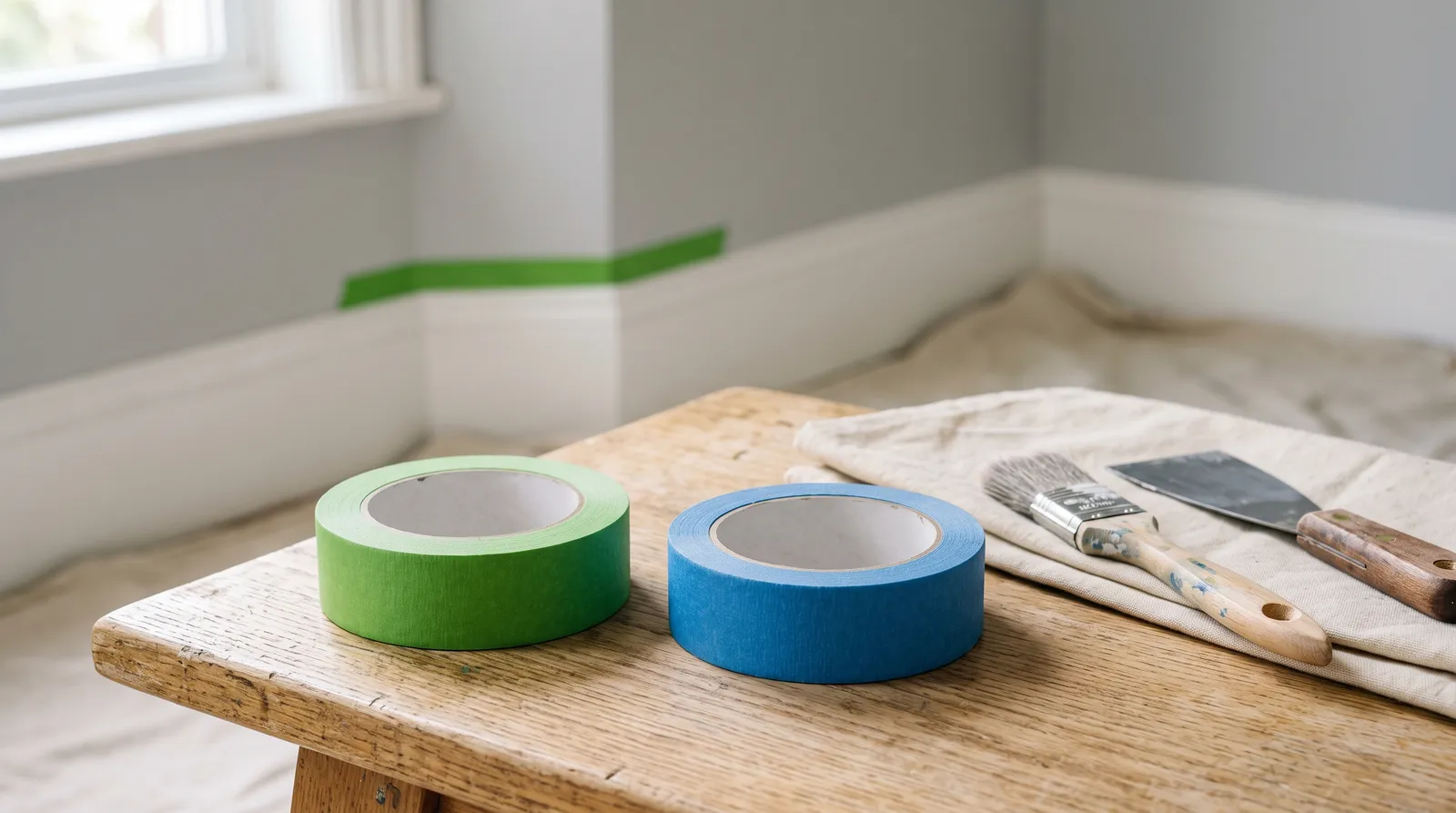
The 30-Second Answer
Top pick for interior latex on smooth walls: FrogTape Multi-Surface. The treated edge gels against water-based paint and shuts down the hairline bleed that makes a taped line look fuzzy. Runner-up, and the better buy more often than the internet admits: ScotchBlue. It handles oil-based paint and stain, it goes outside, it comes in more widths, and it costs less per foot on a long masking run. FrogTape wins the cut line. ScotchBlue wins the job.
At a Glance
| FrogTape (Shurtape) | ScotchBlue (3M) | |
|---|---|---|
| Flagship roll | Multi-Surface, green | Original Multi-Surface 2090, blue |
| Sharp-line roll | Multi-Surface (PaintBlock edge) | Sharp Lines 2093 (Edge-Lock) |
| Bleed control, latex on smooth wall | 🟢 Best in class | 🟡 Good with Sharp Lines |
| Bleed control, oil paint or stain | 🟡 Same as any crepe tape | 🟡 Same as any crepe tape |
| Clean-removal window, indoors | 21 days | 14 days (2090) / 21 days (2093) |
| Delicate option | Delicate Surface, yellow, 60 days | Delicate Surface 2080, purple, 60 days |
| Textured walls | 🟢 Textured Surface, orange | 🔴 No direct equivalent |
| Exterior rated | 🟡 Limited lineup | 🟢 Exterior 2097, UV rated |
| Widths | 0.94, 1.41, 1.88 inches | 0.70 through 2.83 inches |
| Typical price, 1.41 inch by 60 yards | $9-12 | $7-9 (2090), $10-12 (2093) |
| Backing | Stiffer crepe, holds a straight run | Thinner crepe, curves better |
Which Roll the Job Actually Wants
Look at the can before you look at the tape wall.
Water-based paint on a smooth, sealed, previously painted surface is FrogTape territory, and it is the most common home repaint there is. Oil-based enamel, alkyd trim paint, or any solvent-borne stain kills the polymer advantage outright, because PaintBlock needs water to swell. Fresh paint under 24 hours old wants a delicate roll from either brand, no exceptions. Chalky or freshly sanded surfaces are a bad bet for a sharp line with either tape, because the adhesive keys into the loose dust instead of sitting on the wall.
One check that saves a roll: press a two-inch piece down, wait ten seconds, pull it. If it lifts paint chips, you need delicate tape. If it slides off with no resistance, the wall is dirty and needs a wipe-down.
Line Sharpness and Bleed Control
This is the fight FrogTape picked, and it wins it.
PaintBlock is a super-absorbent polymer band along both edges of the tape. Latex paint hits it, the water in the paint swells the polymer, and it gels into a seal in the hairline gap between the tape and the wall. Nothing wicks through, because there is no open path left. On a burnished edge over eggshell, the cut line comes off crisp enough that you can run a fingernail along it and feel a step, not a feather. That is the whole product.
ScotchBlue Sharp Lines 2093 answers with Edge-Lock, a different approach to the same problem: a polymer film layer that presses flatter against the surface instead of chemically sealing the gap. It closes most of the distance. On a good wall with a good burnish, the difference between 2093 and green FrogTape is small enough that a homeowner would not call it. Original 2090 is a step behind both. It is a plain crepe tape with clean-release adhesive, and it will feather on anything but a glass-smooth surface.
Where FrogTape’s advantage evaporates: oil paint, gel stain, spray-applied lacquer, and any texture deep enough that the tape bridges instead of contacting. On a knockdown wall, the polymer is sitting in mid-air over the low spots. It cannot seal what it never touched.
Winner: FrogTape, on smooth surfaces with latex. A tie with Sharp Lines everywhere else.
Tack and Clean Release
ScotchBlue Original 2090 is the gentler roll, and that is a feature.
At 14 days indoors, 2090 comes off cured latex, wallpaper, and finished trim without lifting, and it releases with almost no pull force. FrogTape Multi-Surface runs a firmer adhesive and a 21-day window. It holds better on a hot day, it holds better under an air mover, and it holds better on a slightly dusty baseboard. It also pulls harder coming off, and on a wall painted three weeks earlier with a cheap flat, it can take a little of that flat with it.
Both brands sell the same escape hatch: FrogTape Delicate Surface in yellow, ScotchBlue Delicate Surface 2080 in purple. Both are 60-day, both are rated for paint cured 24 hours, and both belong on fresh two-tone work and wallpaper. I have found no meaningful gap between the yellow and the purple. Buy whichever the store stocks.
Winner: ScotchBlue on gentleness, FrogTape on grip. Pick by whether your problem is holding on or letting go.
Surface Range
ScotchBlue covers more ground, and the exterior line is the reason.
ScotchBlue Exterior 2097 is UV-rated and built for outdoor masking. Sun does not cook the adhesive into the siding inside a week, and rain does not release the run overnight. FrogTape’s outdoor coverage is thinner and harder to find on a shelf. If you are masking window glass for a siding repaint, taping a deck rail before staining, or cutting a line on a garage door, blue is the roll that will still be there Saturday. That job also usually involves stain rather than paint, which strips FrogTape of its one structural advantage. Worth reading alongside the paint versus stain call on a fence before you buy either.
FrogTape takes texture. Textured Surface in orange has a thicker, more conformable adhesive that squashes into orange peel and knockdown instead of bridging it. ScotchBlue has no honest equivalent, and on a heavy-texture wall a blue roll will bleed no matter how hard you press it.
Winner: ScotchBlue overall on range. FrogTape on textured interior walls specifically.
Handling on a Long Wall
FrogTape’s backing is stiffer. On a 16-foot straight run along a baseboard, that stiffness is worth something: the tape wants to stay straight, and it does not stretch and wander the way a thin crepe does. It tears square off the roll with a clean edge nine times out of ten.
ScotchBlue is thinner and more flexible, which loses on the straight run and wins on everything curved. Around an arched doorway, a round window, or the curve of a stair skirt, blue conforms without pleating. FrogTape pleats, and each pleat is a place paint gets in. In a cold garage in February both rolls fight you, and the stiffer green fights harder. Warm it in a pocket for five minutes.
Winner: FrogTape on straight runs, ScotchBlue on curves.
Cost per Roll and per Foot
Green tape costs more, and the gap is bigger than the shelf price suggests.
A 1.41-inch by 60-yard roll of FrogTape Multi-Surface runs about $9-12. The same size in ScotchBlue Original 2090 runs $7-9. On one bathroom, that is a rounding error. On a whole-house repaint that eats eight to twelve rolls, you are $30-40 apart, which buys a decent sash brush.
ScotchBlue also fields the wider formats. The 2.83-inch roll masks a baseboard top and the shoe molding in one pass, cheaper per covered inch than two runs of a narrow roll. FrogTape stops at 1.88 inches. For floor-edge masking, blue plus a pre-taped film or canvas drop cloth is the cheaper system.
The counter-argument is real and I will make it: if FrogTape saves you one round of touch-up with an artist brush across a whole house, it paid for itself three times over. Touch-up is the most expensive hour in painting, because it is slow and it always lands at the end when you are done caring. Cheap tape that bleeds is not cheap.
Winner: ScotchBlue on the receipt. FrogTape on the labor math, if bleed is your actual problem.
Where FrogTape Loses
Three places, and none of them are marginal.
Oil-based and solvent work. The polymer edge is inert without water. Painting alkyd trim enamel, wiping gel stain, or spraying a solvent lacquer, you are paying a premium for a feature that never turns on. Buy blue.
Anything outdoors for more than a day. Sun, dew, and heat are the conditions ScotchBlue Exterior was built for and FrogTape mostly was not.
Money-per-foot on big masking. A whole room’s floor perimeter, window glass, and door hardware is a volume job, and sharp lines barely matter on glass because a razor scraper cleans that in twenty seconds.
The Verdict by Use Case
- Pick FrogTape if: the paint is water-based, the wall is smooth and previously painted, and the taped line is a visible feature people will stand two feet from. Accent walls, two-tone stripes, wall-to-ceiling cut lines, sharp trim edges. Also pick it for any textured interior wall, where the orange roll is the only real answer either brand offers.
- Pick ScotchBlue if: the paint is oil-based or you are staining, the job is outside, the surface is fresh or delicate, the run is curved, or you are buying tape by the sleeve for a big masking job. Sharp Lines 2093 is the roll to reach for when you want a crisp line without the FrogTape premium.
- It is basically a tie when: you are masking window glass, door hardware, or switch plates. The line does not need to be perfect, the razor blade fixes everything, and either roll does the job. Buy the cheaper one.
Top Picks by Side
Going with green? Multi-Surface for painted walls, Delicate Surface for anything fresh or papered, Textured Surface for knockdown and orange peel. Keep all three in the tape drawer rather than buying one roll and forcing it. The full ranked lineup, with the rolls that earn their price and the ones that do not, is in the best painter tape round-up.
Going with blue? Original 2090 is the everyday roll, Sharp Lines 2093 is the upgrade when the cut line shows, Delicate Surface 2080 handles fresh paint, and Exterior 2097 is the one FrogTape has no answer for. Buy 2090 in the 2.83-inch width for floors and the 1.41-inch for trim.
If your real complaint is that paint keeps creeping under the edge regardless of which roll you buy, the tape probably is not the problem. The bleeding-under-tape fix walks the burnish-and-seal method that solves it on any brand. And if you are taping because cutting in freehand scares you, look at a paint edger instead. On a ceiling line it beats both rolls for speed, and it does not care what chemistry your paint is.
FAQ
Does FrogTape really stop bleed, or is PaintBlock marketing? It works, with conditions. The polymer edge swells on contact with the water in latex paint and gels the hairline gap shut. On a smooth, sealed, burnished wall with water-based paint, that is a measurable improvement. With oil paint, solvent stain, or heavy texture, the feature never activates and you have bought expensive crepe tape.
Which tape is better for fresh paint that is only a day old? Neither standard roll. Use FrogTape Delicate Surface in yellow or ScotchBlue Delicate Surface 2080 in purple. Both are 60-day, both are rated for paint cured at least 24 hours. Green FrogTape and blue 2090 have enough tack to peel soft latex off in strips.
Do I still need to burnish the edge if I use FrogTape? Yes. Press the paint-side edge flat with a plastic putty knife before the first coat. The polymer seals a hairline gap, not an open one. Skipped burnishing is the reason behind most “the tape failed” complaints, on both brands.
Which one works on textured or knockdown walls? FrogTape Textured Surface, orange. ScotchBlue has no direct equivalent. Even then, seal the tape edge with a thin pass of the existing wall color, let it dry, then paint the new color over it. That trick beats any tape on texture.
Related
- Best painter tape round-up: every roll ranked, with the picks worth the money
- Paint bleeding under tape: the burnish-and-seal fix that works on any brand
- Best paint edgers: the tapeless route and where it beats a roll
- Best drop cloths: canvas, butyl-backed, and pre-taped film
- Paint tool care economics: what to clean, what to throw away
- Brush vs spray: the masking load changes completely with a sprayer
Frequently asked questions
Does FrogTape really stop bleed, or is PaintBlock marketing?+
Which tape is better for fresh paint that is only a day old?+
Can I leave either tape up overnight, or over a whole weekend?+
Do I still need to burnish the edge if I use FrogTape?+
Which one works on textured or knockdown walls?+
- Best painter tape round-up: every roll ranked, with the picks that earn the price
- Paint bleeding under tape: why it happens and the fix that actually holds
- Best paint edgers: the tapeless option and where it beats a roll
- Best drop cloths: canvas, butyl-backed, and pre-taped film
- Paint tool care economics: what to keep, what to throw away