Painting vs Staining a Fence
Paint vs stain for a fence, settled. Durability, prep, looks, and cost compared, with a clear pick per wood type and a 7-year reality check.

The 30-Second Answer
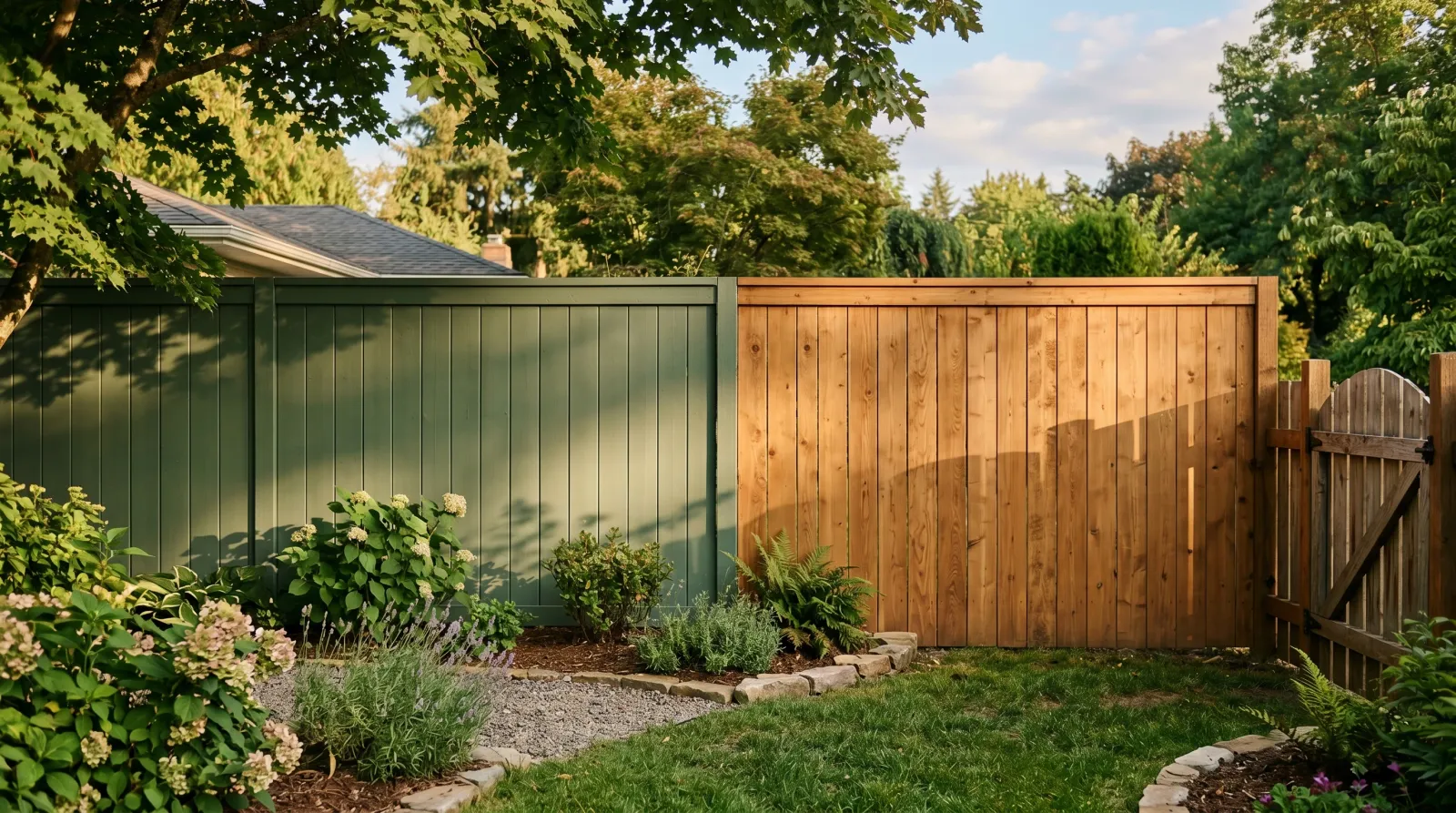
Stain for most fences. It soaks in instead of sitting on top, so it can’t peel, and recoating means clean-and-reapply instead of scrape-and-repaint. Pick paint only when you want a solid color the wood can’t show through, or when you’re covering a gray, blotchy, mismatched fence that’s past the point of looking good with grain showing. Cedar and redwood: stain, every time. Old painted pine: stay with paint.
At a Glance
| Fence paint | Fence stain | |
|---|---|---|
| Durability (years per coat) | ✓✓ (5–7) | ✓ (2–4 semi-transparent) |
| How it fails | ✗ (peels, needs scraping) | ✓✓ (fades, just reclean) |
| Prep on bare wood | ✗ (prime first) | ✓✓ (clean, go) |
| Appearance | Solid color, hides grain | Shows grain |
| Cost per coat | $$ | $ |
| Best wood | Pressure-treated, old fences | Cedar, redwood, new wood |
How to Tell What’s Already on Your Fence
Walk up and look at the grain. If you can see the wood grain through the finish, it’s stain. If the surface is one flat opaque color and the grain is buried, it’s paint. Still unsure? Find a peeling spot. Paint lifts off in sheets or flakes you can peel with a fingernail. Stain doesn’t peel; it just gets thin and faded where the sun hits hardest. That one detail decides your whole next step, because you can recoat paint over paint and stain over stain, but crossing over is a stripping job.
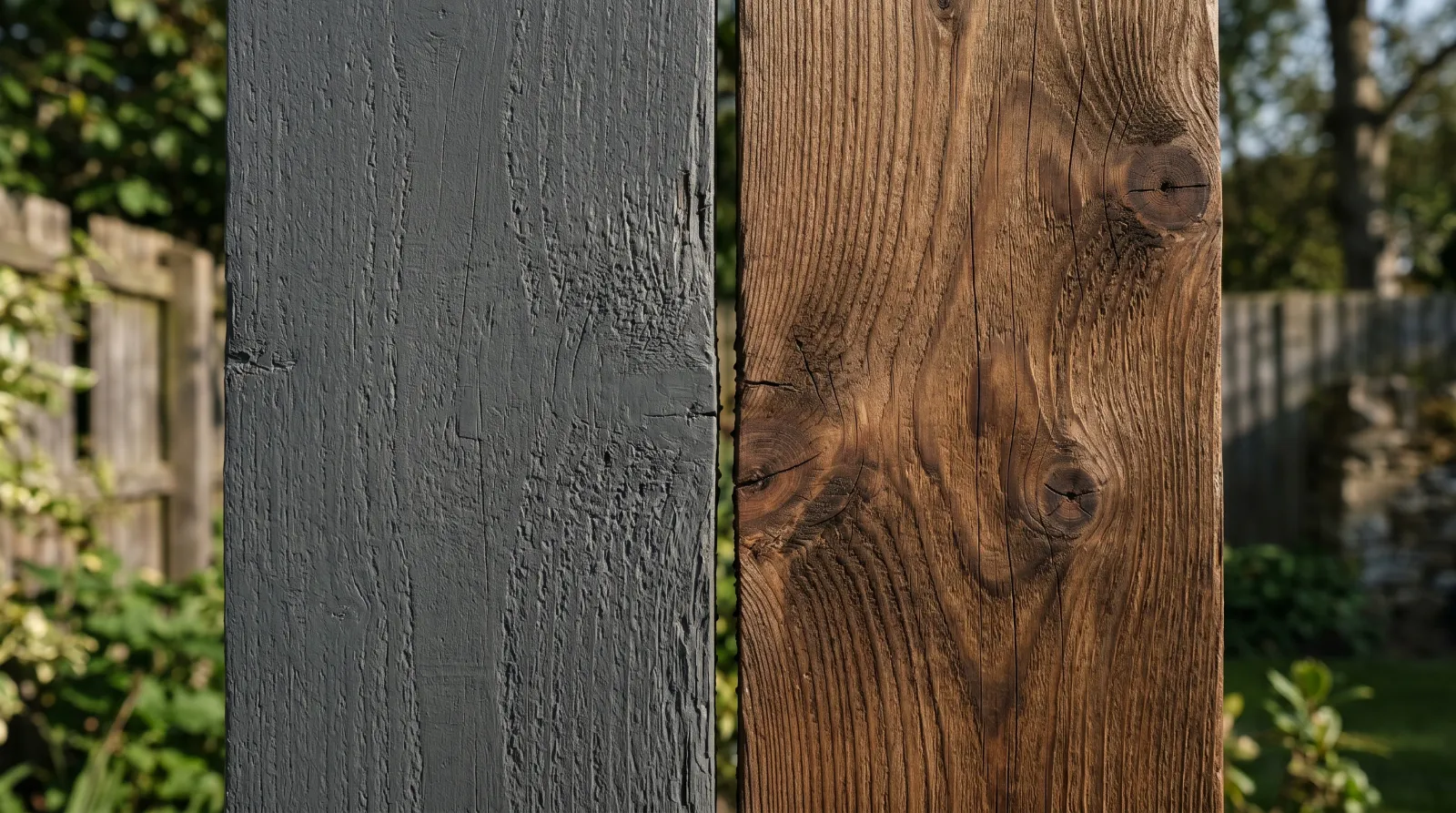 Same wood, two finishes. Paint sits on top as a solid film. Stain soaks in and leaves the grain visible.
Durability & Recoat Cycle
Paint wins the single-coat number. A good exterior acrylic on a properly primed fence holds 5 to 7 years before it needs attention. Semi-transparent stain runs 2 to 4, and the flat side of the boards that takes full sun runs shorter.
Here’s the catch, and it’s the whole reason pros lean toward stain on fences. Paint fails by peeling. Water gets behind the film through a crack or up through the end grain, and the paint lets go in sheets. Now you’re scraping, sanding the edges, spot-priming, and repainting. That’s a weekend, every cycle.
Stain can’t peel because there’s no film to lift. It fades. When it’s faded, you wash the fence and brush or spray on another coat. No scraping. Over ten years, the fence you stain more often is usually less total work than the fence you painted once and then had to scrape.
A fence also takes abuse a house wall never sees. Both faces exposed, base boards wicking ground moisture, sprinklers hitting it, snow piled against it in zones 5 and 6. That environment punishes film finishes. It’s forgiving to finishes that soak in.
Winner: Stain on real-world maintenance. Paint only wins if you count the first coat and ignore year five.
Prep & Application
Bare wood and stain get along. Clean the fence, let it dry, brush or spray the stain on, work it into the grain, wipe back the excess on semi-transparent. That’s the job.
Paint asks for more. Bare or weathered wood needs priming or the topcoat won’t bond and the wood’s tannins bleed through. Spot-prime knots and cut ends with a stain-blocking primer so sap doesn’t ghost through, then prime the field with an exterior latex primer, then two finish coats. On a long fence that’s real time.
Application method is similar for both. A sprayer plus back-brushing (back-rolling’s cousin) is fastest on a tall privacy fence. Spray a section, then brush it in so the finish actually keys into the wood instead of bridging the gaps. Pure spraying without back-brushing looks fine for a season and then fails early where it never bonded. For tools, see the paint sprayer guide and the exterior wood prep walkthrough.
One more prep note that bites people: don’t finish wet wood. New pressure-treated lumber and any fence soaked from rain has to dry first. Water-bead test. If it beads, wait.
Winner: Stain. Less prep, more forgiving of an imperfect surface, no priming step.
Appearance
This one’s a preference, not a verdict, but it usually decides the job.
Stain shows the wood. Semi-transparent lets grain, knots, and color variation read through a tint. On cedar or redwood, that’s the point of buying cedar or redwood. Burying that grain under solid paint is paying for a nice wood and then hiding it.
Paint covers the wood. If your fence is mismatched pressure-treated pine, gray and blotchy from years of weather, or patched with new boards that don’t match the old, a solid color paint or solid-color stain evens it all out. Paint also gives you colors stain can’t, true white, deep navy, a real black, anything off a fan deck.
There’s a middle option people forget. Solid-color (opaque) stain hides grain like paint but soaks in like stain, so it won’t peel. It’s the move for an old fence you want one uniform color on without committing to the scrape cycle.
Winner: Tie. Want grain, pick stain. Want a hide-everything solid color, pick paint or solid-color stain.
Cost & Coverage
Per gallon, they’re close. Decent exterior fence stain and exterior paint both land in the $35–$60 range for the good stuff.
Coverage is where they split. Paint on a primed fence covers more square feet per gallon because it sits on the surface. Stain soaks in, and rough or thirsty wood drinks it, so a gallon of stain covers less, sometimes a lot less on first-coat raw cedar. Budget more stain than you’d think for coat one.
Then add the prep cost paint carries: primer, plus the labor of priming. And the long-game cost: scraping a peeling fence is hours you don’t spend on a faded stained one.
Winner: Stain on total cost over the life of the fence, even though paint can cover more per gallon up front.
Wood Type Fit
The wood under the finish should drive the call as much as anything.
| Fence wood | Pick | Why |
|---|---|---|
| Cedar | Stain | Grain and natural rot resistance are the reason you bought it; let them show |
| Redwood | Stain | Same as cedar, plus the color is the whole point |
| New pressure-treated pine | Stain (after it dries) | Soaks in, no peeling on wood that moves a lot with moisture |
| Old/gray pressure-treated | Paint or solid stain | Hides weathering and mismatched boards |
| Already-painted fence | Paint | Crossing back to stain means stripping every board |
| Spruce/whitewood panels | Solid stain or paint | Bland grain, nothing worth showing through |
Cedar especially rewards stain. For the full rundown on finishing it, see the cedar finishing guide.
Verdict by Use Case
- Pick stain if: the fence is cedar, redwood, or new pressure-treated pine, you want the grain to show, and you’d rather reclean-and-recoat every few years than ever scrape. This is most fences.
- Pick paint if: the fence is already painted, or it’s weathered gray and mismatched and you want one solid hide-everything color, or you need a specific color (true white, black, navy) that stain can’t give you.
- It’s basically a tie when: you want a uniform solid color on bare wood but hate the idea of peeling. Use solid-color (opaque) stain. It looks like paint and maintains like stain.
Top Picks by Side
Going with stain? See the best deck and fence stains for the semi-transparent and solid options that hold up outdoors.
Going with paint? See the best exterior paints for fences and siding that take real weather.
FAQ
Can you stain a fence that’s already been painted? Not without stripping it first. Stain has to soak into bare wood, and paint seals the surface so it can’t. Stripping or sanding a whole fence to raw wood is a brutal job. If it’s painted, keep painting it.
How long does paint last on a fence vs stain? Paint lasts longer per coat, 5 to 7 years vs 2 to 4 for semi-transparent stain. But paint fails by peeling, which means scraping before you recoat. Stain fades and you just reclean and reapply. Over a decade the work often favors stain.
Do you need to prime a fence before painting? Yes, on bare or weathered wood. Spot-prime knots and end grain with a stain-blocking primer, then prime the field with exterior latex primer. Skip it and brown knots ghost through a white fence the first season.
Is stain or paint better for a pressure-treated fence? Stain, once the wood dries out. New treated lumber is wet; if water beads on it, it’s not ready. Then a semi-transparent stain is the easiest long-term call.