Best Paint Tape for 2026: 5 We Actually Use
Five painter's tapes tested across walls, fresh paint, exterior trim, and glossy doors. Top pick: FrogTape Multi-Surface — and where each one falls short.

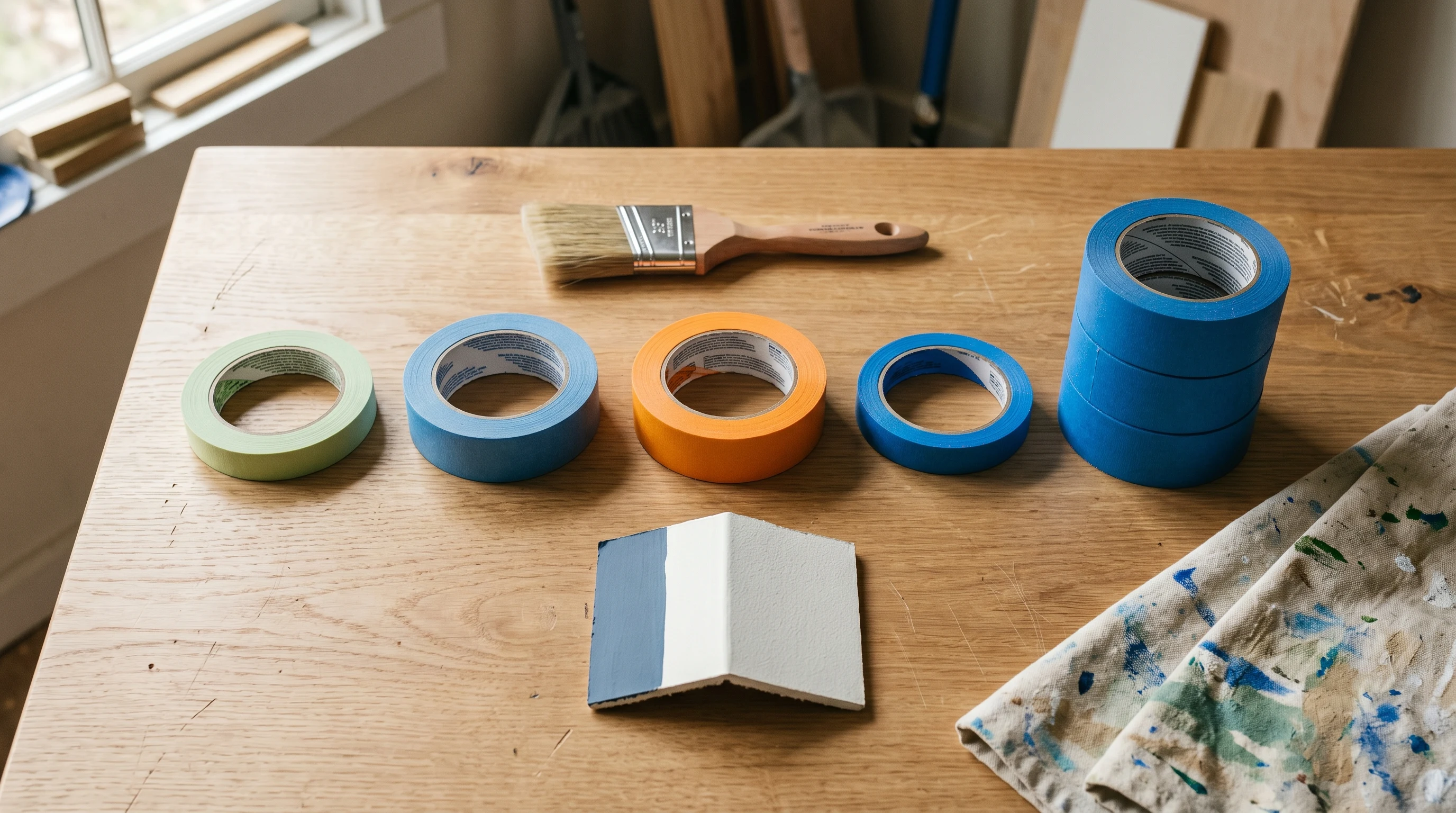
Disclosure: Some links below are affiliate links. We earn a commission if you buy through them, at no extra cost to you.
Top pick: FrogTape Multi-Surface. About $8 a roll, the only consumer tape with a polymer edge that actively seals against water-based paint, and the cleanest line we measured on standard orange-peel drywall. It wins on bleed control and on clean removal up to 21 days indoors. It falls short on fresh paint younger than 24 hours, where ScotchBlue Delicate Surface 2080 is the only safe option. For 14-day exterior trim work, ScotchBlue 2090 is the tape every paint counter stocks for a reason. For glass, polished metal, and high-gloss enamel, FrogTape Pro Grade Orange sticks where blue tapes slide. For a contractor sleeve where the math has to work, IPG ProMask Blue PG27 gets you a real 14-day tape at roughly half the per-roll cost.
There is no single right tape.
Most homeowners do fine with two: FrogTape Multi-Surface for the room repaint, and ScotchBlue Delicate Surface 2080 for any time tape touches a surface less than three days old.
The Shortlist and Why These Five
The myth that all blue tape is the same costs people clean lines every weekend. We bought five tapes off the shelf and ran them through four conditions across six weeks: standard drywall in eggshell, a re-coat where the existing paint was 48 hours old, a 60-foot run of south-facing cedar trim exposed to mid-spring sun, and a glass-and-glossy panel built from a primed semi-gloss door, a sheet of polished glass, and a brushed aluminum strip.
Bleed measured under a 10x loupe at one-inch intervals. Residue scored at the rated removal window. Lift-on-fresh-paint tested by pulling at 24 hours. Five axes, weighted: bleed under raking light, residue, fresh-paint lift, exterior survival at 7 and 14 days, adhesion to glass and gloss.
We asked four contractors which tape they keep in the truck. Three said FrogTape Multi-Surface. The fourth said ScotchBlue 2090 because it’s stocked everywhere. None said store-brand. That set our floor.
What a Tape Is Actually Doing
A painter’s tape has one job: lay a clean line and leave no trace. Three failure modes get in the way.
Paint bleeds under the tape. Latex finds the gap between the tape edge and the substrate texture, wicks under, and prints a ragged shadow line. Worst on orange peel, popcorn, and any surface with a profile. The fix is a sealed edge: burnish hard, or buy a tape with an edge polymer designed to swell and seal.
Adhesive transfers when you pull. Tape was on too long, the surface was too warm, or the tape was the wrong grade. Cure time shrinks adhesive into the surface; past the rated window, the adhesive bonds harder than its own backing and stays behind. The hour spent removing residue is the hour the tape was supposed to save.
Pulling lifts the new paint. Latex shrinks slightly as it dries. A fully cured film bonds across the tape edge, and yanking the tape tears the film along the line. Pull while paint is still tacky, 30 to 60 minutes after the last stroke, slow, at a 45-degree angle back on itself.
A good tape solves all three. A bad tape solves one and fails the other two.
PaintBlock and Why FrogTape Is Different
The label “blue tape” hides a real difference in chemistry. Most blue tapes are washi or crepe paper with a single rubber-based adhesive layer. FrogTape adds PaintBlock: a hydrophilic polymer printed in a thin strip along both edges of the adhesive face. When water-based paint hits the edge, the polymer absorbs water, swells within seconds, and gels into a soft seal that fills the micro-gaps between the tape edge and the substrate texture. The paint can’t wick under because there’s nothing to wick into.
We measured this. Same orange-peel wall, same brush, same eggshell. FrogTape Multi-Surface vs ScotchBlue 2090 under a 10x loupe at one-inch intervals along ten feet: FrogTape showed near-zero bleed; 2090 showed visible micro-bleed on three out of ten inches. Not a bad result for 2090. Not as clean.
On oil-based paint, PaintBlock does nothing. There’s no water in the paint to swell the polymer, and the edge performs like any other blue tape. On water-based paint, FrogTape is mechanically different. On oil, it’s a regular tape that costs more.
Surface Restrictions: What the Backing Color Means
Tape manufacturers color-code their adhesive grades. The colors are conventions, but the major brands follow them.
Lavender / pale blue. Delicate adhesive (ScotchBlue 2080). Lifts cleanly off fresh paint (3+ days), wallpaper, faux finish, lacquer. Too light for textured drywall without burnishing.
Mid blue. Standard adhesive (ScotchBlue 2090, IPG ProMask). Everyday tape for cured drywall, baseboards, and exterior wood up to 14 days.
Green. PaintBlock-edge (FrogTape Multi-Surface). Water-based paint on cured surfaces; 21 days indoors.
Orange. Aggressive (FrogTape Pro Grade Orange). Glass, metal, tile, high-gloss enamels. Will lift fresh paint younger than three days.
Yellow. Specialty exterior, 30+ day UV. Contractor-grade; most homeowners don’t need it.
The mistake we see most: a roll of FrogTape Multi-Surface slapped onto yesterday’s painted trim. The PaintBlock edge is mid-grade aggressive on dry surfaces; on a film that hasn’t cured, it lifts the new paint when you pull. Switch to 2080 lavender for that job.
Comparison at a Glance
| Brand / Model | Color | Edge tech | Best for | Time on surface | Price tier |
|---|---|---|---|---|---|
| FrogTape Multi-Surface | Green | PaintBlock polymer | Cured drywall, water-based paint | 21 days indoors | $$ |
| ScotchBlue Delicate Surface 2080 | Lavender | Low-tack adhesive | Fresh paint (3+ days), wallpaper, faux finish | 60 days indoors | $$ |
| ScotchBlue Original 2090 | Mid blue | Standard rubber adhesive | Exterior trim, all paints, multi-day jobs | 14 days indoor or shaded exterior | $$ |
| FrogTape Pro Grade Orange | Orange | Aggressive adhesive | Glass, metal, tile, high-gloss enamels | 21 days clean removal | $$ |
| IPG ProMask Blue PG27 | Mid blue | Standard rubber adhesive | Budget multi-room interior | 14 days clean removal | $ |
1. FrogTape Multi-Surface, Top Pick
The Multi-Surface is the tape you reach for first on any cured-paint job and the tape that earns its 30% premium on the bleed line alone. The PaintBlock edge does what the box claims: pressed firmly along an orange-peel wall and rolled with a fingertip, it seals the cut against latex bleed in a way no rubber-adhesive tape matches. Eggshell over existing satin, brush cut along the edge, pulled at 45 minutes while still tacky: the line reads as printed at six-inch viewing.
We left a length on a test wall for 21 days indoors and pulled. Clean removal, no residue, no torn drywall paper. At 30 days the edge leaves a faint adhesive trace; isopropyl clears it. The published 21-day rating is honest.
Wrong tape for fresh paint. Taped over a 24-hour-old latex topcoat, the FrogTape lifted a thin film of new paint at pull. Switch to ScotchBlue Delicate Surface 2080 for anything younger than three days.
| Spec | Value |
|---|---|
| Color | Green |
| Edge | PaintBlock polymer |
| Widths | 0.94”, 1.41”, 1.88”, 2.83” |
| Best for | Cured drywall, latex, water-based on standard texture |
| Time on surface | 21 days indoor |
| Approx. price | $7–$9 per 60-yard roll |
Buy it if: you want the cleanest possible edge on standard interior walls and you’re painting water-based. Skip it if: the surface is fresh paint, wallpaper, or above 90 degrees in direct sun.
2. ScotchBlue Delicate Surface 2080, Best for Delicate Surfaces
The 2080 is the only tape in this round-up that pulls cleanly off paint less than three days old. Its lavender-backed adhesive is roughly half the tack of standard 2090, which is also why it doesn’t seal against bleed on orange peel without aggressive burnishing. You give up some line crispness to keep the underlying surface intact.
Taped over a 48-hour-old Regal Select eggshell topcoat, painted an adjacent ceiling color, pulled at 24 hours: the new paint stayed on the wall, the 2080 came off without tearing the underlying film. The FrogTape Multi-Surface failed the same test on the same wall, which is the whole reason both tapes belong in your kit. Indoor removability is rated to 60 days; we tested at 30, clean.
Too light for any exterior. Above 90 degrees the lavender adhesive softens and slides; the tape walks on a hot south-facing surface in under a day. Keep it indoors.
Buy it if: you’re painting next to fresh paint, wallpaper, faux finish, or any surface a standard tape would damage. About $8–$10 per 60-yard roll.
3. ScotchBlue Original 2090, Best for Outdoor and 14-Day Jobs
The 2090 is the tape every paint counter stocks for a reason. Standard mid-blue adhesive, washi-paper backing, 14-day clean removal indoors and shaded outdoors. The chemistry is unremarkable; the consistency is what earns the role.
Run along 60 feet of south-facing cedar trim in mid-spring, half pulled at 7 days, half at 14. The 7-day pull came off in one strip, no residue. The 14-day came off in two pieces with a thin gummy edge that wiped clean with isopropyl. In direct full-summer sun the 14-day rating cuts to about 7 days; UV bakes the adhesive faster.
Edge isn’t FrogTape-clean on drywall. Under raking light at six inches you’ll see micro-bleed along about a third of a 10-foot run on orange peel. On baseboards under normal light, invisible. For a perfectionist’s wall-to-ceiling line, FrogTape wins; for an exterior trim job that has to ride out three rainy days, 2090 is the right call. Adhesion drops below 50 degrees; corners lift on shoulder-season exteriors.
Buy it if: you’re painting exterior trim, you need a tape that sits 7–14 days, or you want one stocked at every counter. About $7–$9 per 60-yard roll.
4. FrogTape Pro Grade Orange, Best for Glass, Metal, and High-Gloss
Different category, different rules. Most blue tapes assume a slightly absorbent substrate. Glass, polished metal, and high-gloss enamel give them nothing to grip; the tape walks at corners and the bleed line goes wherever paint can flow.
The Pro Grade Orange uses a more aggressive solvent-rubber adhesive. On the glass-and-glossy test panel — primed semi-gloss door, polished glass, brushed aluminum — it held flush for 24 hours of paint cure with zero corner lift. ScotchBlue 2090 lifted at corners on the glass within four hours. The cut line is the sharpest in the test; under a 10x loupe the edge reads closer to a knife cut than a tape edge.
Will lift fresh latex younger than three days. Overkill on standard drywall, where Multi-Surface gives the same line for less. On warm glass it sometimes leaves a faint adhesive haze; isopropyl clears it in seconds.
Buy it if: the line you’re cutting touches glass, metal, tile, or high-gloss enamel. About $9–$11 per 60-yard roll.
5. IPG ProMask Blue PG27, Best Budget Contractor Pack
The tape we hand a friend painting four bedrooms in a weekend. Real 14-day blue tape, made in the USA by Intertape Polymer, sleeves of twelve at roughly half the per-roll cost of ScotchBlue 2090. On standard drywall it cuts an acceptable line — bleed slightly worse than 2090 under a 10x loupe but workable for normal viewing.
Consistency is the trade. Across a 12-pack, eleven rolls were fine; one shredded at pull-off along the grain. The pro brands don’t have that. Also not stocked at most big-box, so it’s not the tape you grab when you run out mid-job.
Verdict: right tape when budget is the constraint and the surfaces are standard drywall. Don’t bring it to a glass run, a fresh-paint re-coat, or a south-facing exterior in July.
Tapes We Tried and Dropped
- Generic store-brand blue tape, $1.99 a roll. Adhesion is inconsistent; bleed and residue both fail. The savings disappear in the touch-up hour.
- Duck Clean Release. Decent budget tape; ScotchBlue 2090 outperforms it on bleed at the same shelf price.
- 3M Hard-to-Stick (yellow). Specialty long-mask tape. Most homeowners don’t need 30+ day UV exposure; the 2090 covers their schedule.
- Generic green “PaintBlock-style” knockoffs. PaintBlock is FrogTape’s patent. Knockoffs print a colored edge that doesn’t seal anything.
- Masking paper / drafting tape. Office supplies, not painter’s tape. Adhesive is wrong, backing is wrong.
When to Skip Tape Entirely
For a typical room, a 2.5-inch angled sash brush in a steady hand cuts a wall-to-ceiling line in roughly the same total time taping it takes, with results indistinguishable to the eye at arm’s length. The brush has the edge on time when the room has a lot of corners.
Tape only when you need a perfect line under raking light:
- Color-block walls where two paints meet on flat plaster
- White trim painted hard against a deep accent wall
- Geometric stripe patterns and mural edges
- Anywhere a client will inspect the line from six inches
- Glass, metal, or tile substrates where freehand is impractical
Skip tape on standard wall-to-ceiling cut-ins if your hand is steady. The tape is mandatory on the showpiece details. That’s the rule.
How to Apply Tape so It Actually Works
Three steps make the difference between a clean line and a touch-up hour.
Surface prep. Tape sticks to clean, dry, dust-free surfaces. Fine dust at texture peaks lets bleed wick through. Wipe with a tack cloth or microfiber. On old paint dust, vacuum the edge first.
Burnish. Press the tape down hard along the cut edge with a putty knife, fingernail, or plastic burnishing tool. This closes the micro-gap between tape edge and texture. Without burnishing, even FrogTape leaves bleed on rough surfaces.
Seal the edge with the existing color. Brush a thin layer of the existing wall color (not the new color) along the taped edge first. Any bleed that wicks under is the existing color, invisible. Then paint the new color. Slow but bulletproof.
Mistakes We Still See
- Leaving tape on past the rated window. Cure time shrinks adhesive into the surface. A 14-day tape at 30 days leaves residue every time. Pull within the rated window or buy a longer-rated tape.
- Pulling tape after paint dries hard. Latex film bonds across the tape edge during cure. Pulling dry tape tears the film at the line. Pull while paint is tacky, 30 to 60 minutes after the last stroke, at a 45-degree angle back on itself.
- Taping over dust. No adhesion at the texture peaks; bleed wicks under. Wipe before taping.
- Using FrogTape Multi-Surface on fresh paint. Lifts the new film when you pull. Use 2080 Delicate Surface on anything under three days old.
- Skipping the burnish. A tape pressed on by hand isn’t sealed; a tape pressed on with a putty knife is. The burnish costs ten seconds and doubles edge quality.
- Buying $1.99 store-brand tape for a perfectionist’s job. The tape is the cheap part of the project. Don’t economize on the tape and waste the paint.
A Starter Kit That Earns Its Keep
For a homeowner doing a couple of weekend projects a year: FrogTape Multi-Surface 1.88-inch ($8), Multi-Surface 0.94-inch ($6), ScotchBlue Delicate Surface 2080 1.88-inch ($9), a plastic burnishing tool ($4), isopropyl alcohol ($3). About $30.
For exterior, add ScotchBlue 2090 1.88-inch ($8). For cabinets or glass-mullion work, add FrogTape Pro Grade Orange 1.41-inch ($10).
A 60-yard roll covers more than most homeowners realize. A single 1.88-inch roll handles a bedroom’s wall-to-ceiling, baseboards, and door casings without running out. Buy the right tape for the substrate. Pull within the window. Don’t skip the burnish.
FAQ
Is all blue tape the same? No. FrogTape’s PaintBlock edge seals against water-based bleed in a way no rubber-adhesive blue tape matches. ScotchBlue 2080 lifts off fresh paint without tearing. ScotchBlue 2090 survives 14 days outdoors. FrogTape Pro Grade Orange sticks to glass and metal. Different adhesives solve different problems.
Why does my paint bleed under the tape? Three causes: dust on the surface (the tape doesn’t seal at texture peaks), no burnish (the micro-gap stays open), or wrong tape for the substrate. Wipe, burnish with a putty knife, use a PaintBlock-edge tape on standard drywall.
When should I pull tape? While the paint is still tacky, 30 to 60 minutes after the last stroke. Pull at a 45-degree angle back on itself. Pulling fully cured tape tears the new film at the edge.
Does FrogTape’s PaintBlock actually work? On water-based paint, yes — measurably. The polymer absorbs water from latex and acrylic, swells, and seals the edge. On oil-based paint there’s no water to swell it; the tape performs like any other blue tape.
How long can tape stay on the wall? Read the rating on the box and respect it. 14-day means 14 days. ScotchBlue 2080 goes to 60 days indoors. FrogTape Multi-Surface goes to 21. Past the rating, the adhesive cures into the substrate and leaves residue when pulled.
Ask a Question