Paint Tool Care: When to Clean vs Replace
Clean a good brush or roller, toss a cheap one. The break-even is roughly 8 dollars of brush. Here's the rule on clean vs replace paint brushes.

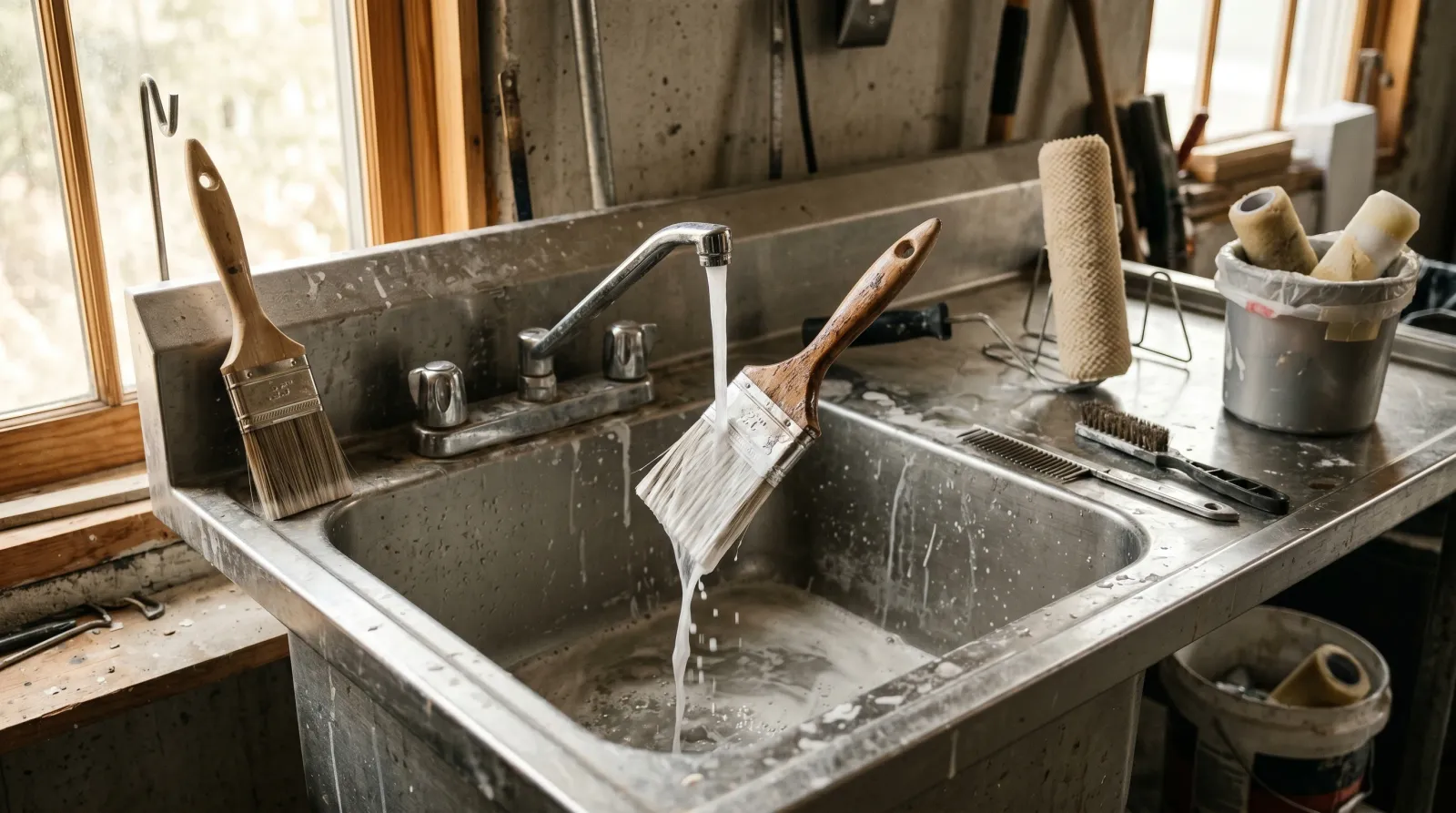
Clean a brush that’s worth cleaning. Toss one that isn’t. The break-even sits around 8 dollars: a 16-dollar Purdy or Wooster angled sash washes out in five minutes with warm water and lasts 200-plus jobs, so cleaning it is free money. A 3-dollar chip brush or a foam brush takes the same five minutes to clean and costs more in water and time than buying a new one. With latex, soap and water does it. With oil-based paint, you’re into mineral spirits and the math shifts hard toward replace. That’s the whole call.
That’s the rule. Everything below is the why.
When to Clean the Tool
Clean it when:
- It’s a quality brush: Purdy, Wooster, a 14-to-20-dollar angled sash. These are built to be washed.
- You used water-based paint. Latex, acrylic, water-based enamel. Warm water and a brush comb, done in five minutes.
- It’s a woven or knit roller cover in the 9-dollar range with real nap, not a 2-dollar foam sleeve.
- You’re mid-job and reaching for it again tomorrow. Wrap it, fridge it, keep going.
- The bristles still come to a point and the heel is clean. A brush with life left earns the wash.
A good brush that gets cleaned the second you set it down outlasts a hundred jobs. The clean has to happen now, though, not after dinner. Latex skins over in 20 minutes on a warm day and sets in the heel within the hour.
When to Replace It Instead
Toss it when:
- It’s a chip brush, foam brush, or a bargain 3-dollar bristle brush. Disposable by design. Cleaning costs more than the brush.
- You used oil-based paint and you’d need a quart of mineral spirits to clean one cheap brush. The solvent costs more than the tool.
- The heel is packed with dried paint and the bristles splay into a fan. That brush won’t hold a line again. No wash fixes a loaded heel.
- It’s a foam roller cover or a bargain knit cover. One use, maybe two, then it mats and sheds lint into your finish.
- The nap is worn flat on one side or the cover stopped springing back. A dead nap leaves a streaky, uneven film.
The honest line: any tool under 5 dollars is a consumable. You buy it to throw it away. Spend the cleaning effort on the 16-dollar brush, not the 3-dollar one.
Clean vs Replace, by Tool and Paint
| Tool | Water-based paint | Oil-based paint |
|---|---|---|
| 16-dollar angled sash | Clean, 5 min, 200+ washes | Clean if you have spirits; else toss |
| 3-dollar chip brush | Toss | Toss |
| Foam brush | Toss | Toss |
| 9-dollar woven roller cover | Clean, 8 to 15 washes | Usually toss; spirits rarely worth it |
| 2-dollar foam roller | Toss | Toss |
| Roller frame and pole | Wipe clean, keep | Wipe clean, keep |
| Paint tray | Use a liner, keep tray | Use a liner, keep tray |
For the brushes that are actually worth washing, see the best paint brushes. The paint rollers round-up covers which covers survive a wash and which die after one use.
How to Clean a Brush So It Lasts
This is the part that decides whether your 16-dollar brush sees its second job.
Step 1. Scrape it out first. Drag the brush across the edge of the can or a 5-in-1 tool to push most of the paint back into the bucket. The less paint in the bristles, the faster the rinse.
Step 2. Rinse under warm water, bristles down. For latex, warm running water. For oil, work it in mineral spirits in a jar, then wash with soap. Point the bristles down so paint flushes out, not up into the heel where it sets.
Step 3. Comb the heel. A metal brush comb, run from the ferrule out to the tips. This is the step everybody skips and it’s the one that matters. Paint hides in the heel, dries there, and that’s what kills the brush.
Step 4. Spin or shake out the water. A brush spinner is 12 bucks and worth it. No spinner, shake it hard, then blot.
Step 5. Reshape and hang to dry by the handle. Slide it back in its cardboard keeper if you saved it. Hang by the handle so water drains out, not into the heel. Never stand a brush on its bristles to dry.
Common Mistakes
- Leaving the brush in a bucket of water “to soak.” Standing on its bristles overnight splays them permanently. The brush dries with a bent fan and never cuts a clean line again. Hang it, don’t soak it.
- Skipping the heel. Rinse the bristle tips, call it clean, and the paint at the ferrule sets like cement over a few jobs. The bristles stiffen and splay outward. Comb the heel every time.
- Cleaning too late. Latex skins in 20 minutes warm. Wait until you’ve eaten and the brush is half-set already. Clean before you do anything else.
- Trying to save a 2-dollar foam roller. It mats, sheds, and never lays a clean coat again. You’ll pick lint out of your wall all afternoon. Toss it and open a new one.
- Using hot water on oil residue. Heat flashes off the spirits and can set the oil film. Warm, not hot, and let the solvent do the work first.
What a Dead Brush Looks Like
The tell is the heel and the tip. A live brush meets at a clean point, bristles parallel, ferrule clean. A dead brush fans out at the tip, has a hard ridge of dried paint at the heel, and the flagged (split) ends are worn blunt and round. Once it fans, no soak brings it back. Side by side, the difference is obvious: the live brush cuts a sharp line, the dead one paints a fuzzy 1/2-inch smear.
A roller cover dies the same plain way. Press the nap and let go. Live nap springs back full and even. Dead nap stays matted and flat on one side, and it’ll print that streak into every coat.
Where to Buy and What to Look For
Buy brushes built to be washed. A 2.5-inch angled sash from Purdy (XL Glide) or Wooster (Ultra/Pro) runs 14 to 18 dollars and survives 200-plus washes if you clean it right. For oil and enamel, a natural-bristle or chinex brush handles the solvent. For roller covers, a woven 3/8-inch or 1/2-inch in the 8-to-10-dollar range washes clean; skip foam if you plan to reuse. Add a brush comb and a spinner once and you’ve got a clean kit for years.
For SKU picks, the best paint brushes and best paint rollers round-ups break down which ones earn the wash. If you’re cleaning a sash brush, you’re probably also cutting in, and a clean brush is the difference between a sharp line and a wobble.
Related
One last thing that’ll bite you in two years: a brush you cleaned but stored bristle-down or jammed in a drawer dries with a kink, and a kinked brush traces a wavy line you won’t notice until the morning sun hits the wall. Hang the good ones by the handle. Toss the cheap ones the same day. That’s the whole economics.
Ask a Question