200F High-Temp Paint: Heat-Resistant Coatings Specifier's Guide (2026)
200F high-temp paint compared by DFT, service temp, and substrate prep. Silicone-modified alkyd vs acrylic vs epoxy for boiler rooms, exhaust runs, and steam pipe, with the SSPC prep spec that decides service life.

Disclosure: Affiliate links to retailers and manufacturer-direct programs. Recommendations are spec-driven, not commission-driven.
Use Case
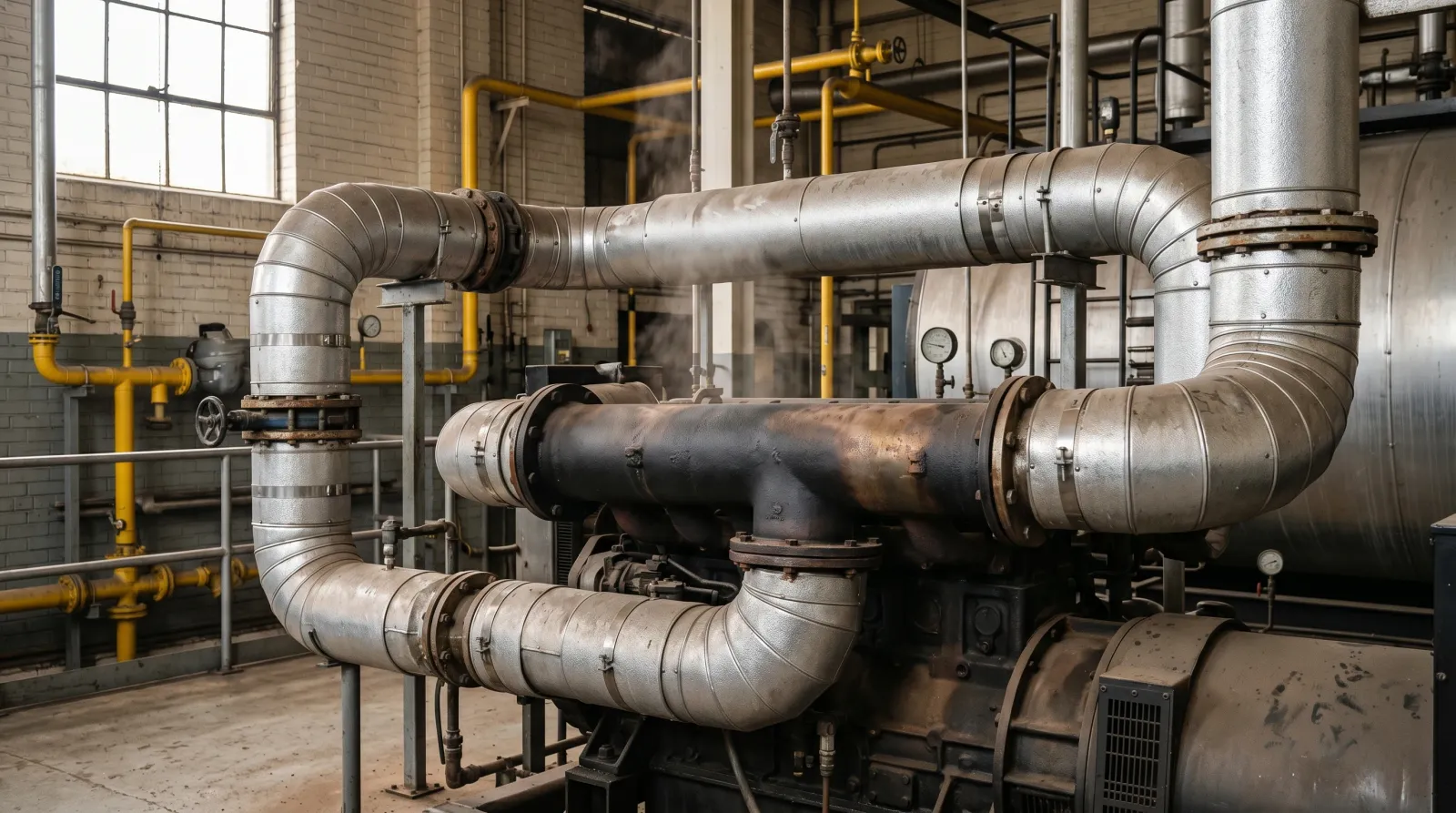
The 200F class of high-temp paint covers ferrous assets that run warm but not red: boiler jackets, steam and condensate piping, hot-water headers, exhaust ducting on commercial kitchen and laundry equipment, compressor housings, economizers, and the cooler sections of flue and stack runs. The job is corrosion protection and a serviceable finish on metal that cycles between ambient and roughly 200°F to 250°F all day, every day, for years. Standard industrial enamel cannot hold that band. It yellows, chalks, embrittles, and releases within a season because its binder was never built to flex through repeated thermal cycling.
What kills a coating in this service is not peak temperature alone. It is the cycle. A steam pipe heats, the steel expands, the film expands with it, then both contract overnight. A binder that cannot accommodate that movement cracks at the bond line and walks off the substrate. The spec calls for a heat-stable binder, a matched prep, and no foreign primer trapped underneath that will carbonize and lift the film. Get those three right and a 200F system delivers 7 to 15 years before recoat on indoor mechanical-room steel.
Service life splits by environment. Indoor, dry, conditioned mechanical room: 10 to 15 years. Outdoor exhaust stack or rooftop boiler flue exposed to UV, rain, and freeze-thaw: 5 to 8 years. Anywhere the steel runs hot under insulation, corrosion under insulation (CUI) is the real enemy, and the coating choice shifts toward an inert multipolymeric matrix product rated for the wet-hot zone between 200°F and 350°F where chloride-driven pitting accelerates. The 200F band is the most-specified high-temp class because it covers the largest population of commercial mechanical equipment, and it is the band where the wrong product (a hardware-store enamel, or a heat paint over a cold primer) fails most often.
Spec Requirements
The spec block before any product name. The numbers move by binder and manufacturer; the categories do not.
| Spec | Value |
|---|---|
| Dry film thickness (DFT) | 2–4 mils per coat; 3–6 mils total for a primer-plus-topcoat system |
| Coverage @ DFT | 100–150 sq ft/gal at 2–3 mils dry; aerosol cans cover 12–18 sq ft each |
| VOC | under 340 g/L water-based and silicone-modified alkyd; 340–420 g/L solvent-borne under SCAQMD Rule 1113 industrial maintenance |
| Standards | ASTM D2485 (heat resistance), D4541 (pull-off adhesion), D3359 (cross-cut), B117 (salt spray), D522 (mandrel bend) |
| Continuous service temp | 200°F–250°F for the 200F class; silicone-modified alkyd carries to 400°F–500°F intermittent |
| Substrate prep — shop or accessible | SSPC-SP6 commercial blast, 1–2 mil anchor profile |
| Substrate prep — field, no blast access | SSPC-SP3 power-tool clean to bright metal; SSPC-SP11 where a profile is required |
| Substrate prep — hot/wet CUI service | SSPC-SP10 near-white blast; inert matrix coating only |
| Primer | Matched heat-rated primer ONLY, or self-priming single-coat enamel — no standard alkyd/epoxy primer |
| Initial cure | First heat cycle to ~400°F crosslinks silicone alkyd; some products air-cure to handle in 1–2 hours |
| Ambient at application | 50°F–90°F; relative humidity <85%; substrate ≥5°F above dew point |
| Recoat window | 30 min–1 hour wet-on-wet for aerosol; up to 7 days before the cure bake on brushed/sprayed enamel |
Two numbers govern the result. The continuous service temperature on the TDS has to match the highest sustained metal temperature, measured at the steel with a contact thermometer or IR gun, not estimated from the room. And the prep grade decides the bond. A 200F coating over SSPC-SP3-cleaned bright steel holds; the same coating over loose mill scale or an oily surface releases on the first heat cycle no matter how good the binder is.
State VOC variation matters here because high-temp paint still sells in solvent-borne form. Standard solvent-borne silicone-modified alkyd runs 340 to 420 g/L and is restricted under SCAQMD Rule 1113 in the South Coast district and comparable OTC-state rules. Water-based and low-VOC silicone-modified formulas land under 340 g/L and pass California review. Verify the specific product SDS against the project’s jurisdiction before bid; the can on the shelf in Texas may not be permitted on a Los Angeles County job.
System Chemistry Compared
Pick the binder against the metal temperature and the corrosion environment, then pick the brand.
| Chemistry | Continuous service temp | Recoat / cure | UV stability | $/sq ft installed | Best for |
|---|---|---|---|---|---|
| Silicone-modified alkyd | 200°F–500°F | Wet-on-wet 30–60 min; cure bake on first burn | Good (chalks slowly outdoors) | $0.40–1.10 | Boiler jackets, exhaust, stacks, steam pipe — the default 200F answer |
| Pure silicone (heat-resistant) | 500°F–1200°F | Air-set; cure bake required | Excellent | $1.20–2.50 | Manifolds and stacks running hotter than the 200F band |
| Acrylic / water-based heat | up to 200°F | Air-cure 1–2 hr | Fair | $0.30–0.80 | Low-temp warm equipment, indoor, color-finish driven |
| Epoxy (standard industrial) | up to 200°F–250°F | Pot-life limited; 24-hr recoat | Fair (yellows) | $0.80–1.80 | Warm tanks and equipment needing chemical resistance, not cycling heat |
| Inert multipolymeric matrix | 200°F–750°F (CUI-rated) | Apply to in-service hot surface | Excellent | $1.50–3.00 | Corrosion under insulation, hot pipe coated without shutdown |
Silicone-modified alkyd is the right answer for most of the 200F population. It cures hard on the first heat cycle, flexes through thermal movement, and costs the least per square foot. Pure silicone is over-spec for 200F; reserve it for the hotter sister class. The trap on this page is standard epoxy: it survives 200°F continuous, so a spec writer reaches for it because they already know epoxy, then it yellows and embrittles under cycling and fails earlier than a cheaper silicone alkyd would have. The inert matrix products earn their premium only where CUI is in play or where the asset cannot be shut down for coating.
Recommended Systems
Three full systems at different price-performance points. All three are real, widely stocked product lines. Verify the exact SKU and color against the manufacturer TDS for your service temperature before ordering.
System A — Rust-Oleum High Heat (Silicone-Modified Enamel)
| Layer | Product | DFT |
|---|---|---|
| Surface prep | SSPC-SP6 blast or SP3 power-tool clean to bright metal | — |
| Primer (bare/pitted only) | Rust-Oleum High Heat Primer | 1.5–2 mils |
| Topcoat | Rust-Oleum High Heat silicone-modified enamel (flat black, aluminum) | 1.5–2.5 mils |
| Total | 3–4.5 mils |
The volume answer for the 200F class. Rated to 1200°F intermittent and built for continuous service through the 200F to 500F band, so it carries comfortable headroom on boiler jackets, exhaust pipe, wood stoves, and BBQ-grade equipment. The flat-black and aluminum cans are the workhorses. On bare clean steel it runs self-priming; reach for the matched High Heat primer only on pitted or previously rusted ferrous metal. Avoid stacking it over any cold primer. Rust-Oleum High Heat product page · Search on Amazon
System B — Sherwin-Williams Heat-Flex / Silicone Alkyd
| Layer | Product | DFT |
|---|---|---|
| Surface prep | SSPC-SP6 commercial blast, 1–2 mil anchor profile | — |
| Primer | ProIndustrial Silicone Alkyd primer or Heat-Flex inert multipolymeric matrix primer | 1.5–2 mils |
| Topcoat | Heat-Flex Hi-Temp 500 / Silicone Alkyd enamel | 1.5–2.5 mils |
| Total | 3–4.5 mils |
The spec’d-project answer with rep support and a documented system. Sherwin’s Heat-Flex line spans the 200F class up through high-temperature stack service, with matched primers so the chain from substrate to topcoat is one manufacturer’s tested system. This is the stack to write into a mechanical spec where a submittal and a warranty are required, and where a facilities engineer wants the manufacturer rep on the pre-coat walkthrough. Sherwin-Williams Heat-Flex page · Search on Amazon
System C — PPG Hi-Temp 1027 (Inert Multipolymeric Matrix, CUI Service)
| Layer | Product | DFT |
|---|---|---|
| Surface prep | SSPC-SP10 near-white blast for hot/wet CUI service | — |
| Primer / single coat | PPG Hi-Temp 1027 inert multipolymeric matrix (apply to in-service hot pipe) | 3–4 mils |
| Topcoat (where finish specified) | PPG Hi-Temp aluminum or color enamel | 1.5–2 mils |
| Total | 4.5–6 mils |
The answer when the steel runs hot under insulation or the line cannot be shut down. Inert multipolymeric matrix coatings are formulated to be applied to surfaces in service across a wide temperature range, which sidesteps the plant outage a conventional enamel would force. PPG Hi-Temp 1027 and the equivalent Carboline Thermaline and Jotun Solvalitt lines are the CUI-mitigation standard from 200°F up into stack temperatures. Specify this stack only where CUI or no-shutdown application is the real constraint; on accessible dry indoor steel it is over-spec. PPG Protective & Marine product catalog · Search on Amazon
Systems Compared
| System | Total DFT | $/sq ft installed | Service life | Best for |
|---|---|---|---|---|
| A — Rust-Oleum High Heat | 3–4.5 mils | $0.40–1.10 | 7–12 years indoor | Boiler jackets, exhaust, stacks, in-house maintenance crews |
| B — SW Heat-Flex / Silicone Alkyd | 3–4.5 mils | $0.90–2.00 | 8–15 years | Spec’d projects, submittal + warranty, rep support |
| C — PPG Hi-Temp 1027 (CUI) | 4.5–6 mils | $2.00–4.50 | 10–20 years | Corrosion under insulation, no-shutdown hot pipe |
Pricing assumes accessible steel coated by an industrial maintenance crew, material plus labor, on a job above a few hundred square feet. Small touch-up scopes and confined-space work run well above these bands. The TCO case favors System B over System A on assets with a 15-year horizon: the matched-primer system costs more up front but skips one mid-life recoat cycle, and a recoat on in-service boiler steel carries shutdown and access costs that dwarf the material delta. On disposable or short-cycle equipment, System A’s lower buy-in wins.
Application & Contractor Path
Small jobs in the 200F class are within reach of a competent in-house maintenance crew. Aerosol or brush-grade silicone-modified enamel on a cool, accessible, well-prepped surface is not a certified-applicator job; this is the one high-temp band where careful DIY-grade application by a facilities team holds up, provided the prep grade and the no-foreign-primer rule are followed. Coat the metal cool, then let the asset’s first heat cycle bake the film. A wood stove, a boiler, an exhaust manifold all reach cure temperature on their own.
The work moves to a contractor when the scope is large, the steel runs hot under insulation, or the line cannot be shut down. For CUI mitigation and in-service hot application (System C), specify a contractor with:
- SSPC-QP1 certification for industrial coatings work on the structure or surface category.
- An AMPP (NACE) CIP Level 2 inspector for DFT and holiday verification on a documented spec.
- Manufacturer applicator standing on the specific inert-matrix product, since application to a hot in-service surface is a product-specific skill.
The manufacturer rep network on Sherwin-Williams Heat-Flex, PPG Hi-Temp, and Carboline Thermaline includes a free pre-coat review: substrate temperature mapping, prep-grade confirmation, and a primer-compatibility check against the project spec. Use it on any spec’d job. The most expensive high-temp failure is a wrong primer discovered after the first burn cycle, and that is exactly what the rep walkthrough catches before a brush touches steel.
A hot-work note for any recoat in service: brushing or spraying a solvent-borne enamel near a hot surface is hot work under OSHA 1910.252 and needs a permit, a fire watch, and the surface confirmed below the solvent’s autoignition margin. Cool the asset, lock it out, or use a water-based or in-service-rated product instead.
Failure Modes & How to Prevent Them
Five failures cover the bulk of 200F high-temp rejections and premature peels.
- Foreign primer carbonizes and lifts the topcoat. The single most common failure. A standard alkyd or epoxy primer, or an old non-heat coating, was left under the new high-temp film; it chars on the first heat cycle and releases the whole system in sheets. Prevention: strip to bare metal, and use only a matched heat-rated primer or a self-priming single-coat enamel. No exceptions. See the workflow for prepping and priming rusted metal before any heat coat goes down.
- Bond failure from under-prep. Coating walks off clean-looking steel on the first cycle because the surface carried oil, mill scale, or a polished sheen below SSPC-SP3. Prevention: SSPC-SP6 blast where you can access it, SP3 power-tool to bright metal where you cannot, solvent-wipe to remove oil, and verify a profile on machined or galvanized surfaces. Galvanized needs its own prep; the galvanized steel prep guide covers the etch step that keeps a heat coat from sliding off zinc.
- No initial cure bake leaves the film soft. Silicone-modified alkyd needs a first heat cycle near 400°F to crosslink. On an asset that only ever reaches 200°F, the film can stay soft and soft-peel or fingerprint indefinitely. Prevention: confirm the product’s cure schedule; if the asset never reaches the bake temperature, specify an air-curing water-based or acrylic heat coating rated for the actual 200°F service instead.
- Corrosion under insulation in the hot-wet zone. Steel between 200°F and 350°F under wet insulation pits fast from chloride concentration, and a conventional enamel cannot survive the wet-hot cycling. Prevention: SSPC-SP10 near-white blast and an inert multipolymeric matrix coating (System C) rated for CUI; never re-insulate over bare or under-coated hot steel.
- Blistering from moisture or solvent entrapment. The film bubbles over isolated spots after the first heat cycle, often where coating went on too thick, too fast, or over a damp or contaminated surface. Prevention: respect the per-coat DFT, let each pass flash before the next, keep the substrate at least 5°F above dew point, and never recoat over a damp surface. The paint blistering diagnosis page walks the cause tree when a blister shows up after cure.
Foreign primer and under-prep account for most of the field failures I review. Both are decided before the first coat and both are free to prevent. The third repeat offender, the missing cure bake, is a spec mismatch: the wrong binder for an asset that does not get hot enough to cure it.
Where to Buy / Spec
| Channel | Best for | Path |
|---|---|---|
| Pro retail (Sherwin-Williams stores) | Local pickup, Heat-Flex spec’d quarts and gallons, contractor pricing | SW Heat-Flex page |
| Manufacturer-direct (PPG PMC, Carboline rep) | CUI and in-service hot-pipe projects, rep support, submittals | PPG PMC catalog |
| Industrial distributor (Grainger, Rawlins Paints US, ICA) | Bulk enamel, matched primers, mixed-system contractor accounts | Distributor account with project pricing |
| Amazon Business | Aerosol-can stocking, small touch-up and maintenance scopes | Search on Amazon |
Manufacturer-direct is the channel for any spec’d or CUI project; the pre-coat review and the matched-primer chain are worth more than any retail discount. Aerosol stocking through Amazon Business or a pro store covers the in-house maintenance touch-up program. For the recommended Rust-Oleum line in detail, see the Rust-Oleum industrial line review.
FAQ
See the frontmatter for the full Q&A. The short version: match the rated continuous service temperature to the hottest metal the asset actually reaches, prep to bright bare metal, use only a matched heat primer or a self-priming enamel, and let the first heat cycle bake the film.