Foam Roof Coating: SPF Specifier's Guide (2026)
Foam roof coating systems for SPF roofs compared by DFT, granule rate, and service life. ASTM D6694, ASTM D6083, recoat rules, and the contractor path that holds warranty.

Disclosure: Affiliate links to retailers and manufacturer-direct programs. Recommendations are spec-driven, not commission-driven.
Use Case
A foam roof coating is the protective wear surface over a sprayed polyurethane foam (SPF) roof. The foam does two jobs at once: it is the insulation and it is the seamless, monolithic waterproofing layer, sprayed in place at 1 to 1.5 inches over the existing deck or roof. The coating does a third job the foam cannot do for itself. SPF has no ultraviolet resistance. Left bare, the foam chalks, erodes, and degrades at roughly 1/16-inch per year under direct sun, and an uncoated foam roof is gone in a few seasons. The coating is the UV barrier and the sacrificial surface. Foam plus coating is one system, and the system is only as durable as the coating on top.
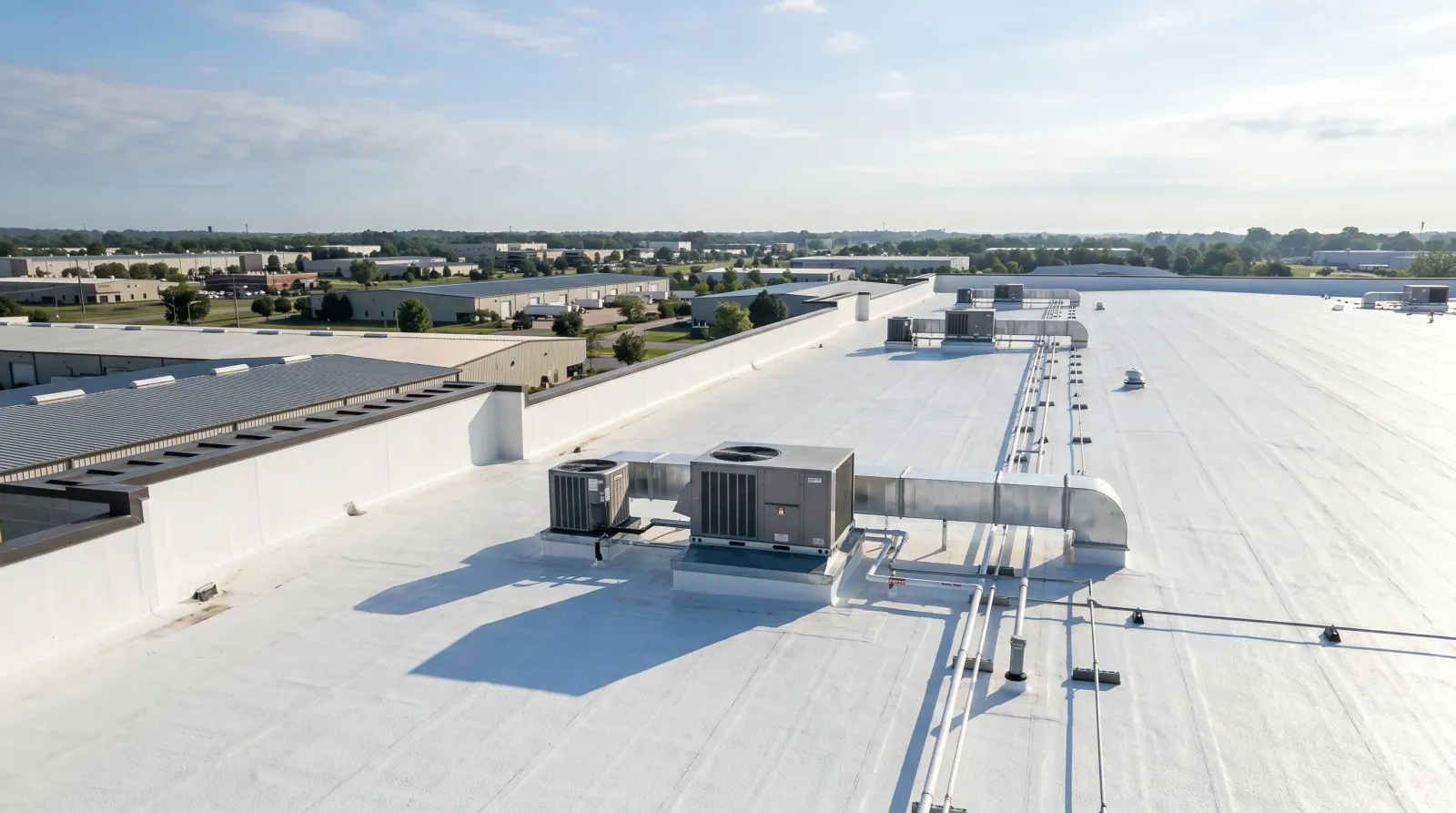
The asset is almost always a low-slope commercial roof: a warehouse, a big-box retail box, a school, a cold-storage facility, a manufacturing plant. SPF is specified where the owner wants insulation gain and a seamless membrane in one pass, often over an existing roof that is structurally sound but at end of service life. The foam fills low spots and self-flashes around penetrations, which is why it competes hard against single-ply tear-off on roofs with bad drainage and a forest of rooftop units.
What the coating brings beyond UV protection is reflectivity and renewability. A white silicone or acrylic topcoat reflects 80 to 85% of incident solar radiation at install, which drops the membrane temperature, cuts cooling load, and qualifies the roof for Energy Star, CRRC ratings, and California Title 24 cool-roof compliance. At end of the coating cycle the owner washes and recoats with a single maintenance coat. The foam and the deck stay in place. That is the capital case for SPF: the insulation is a one-time spend and the coating is a renewable wear item.
Service life expectations run with the coating, not the foam. A properly maintained SPF roof with scheduled recoats lasts 30 to 50 years on the foam itself. The coating cycle is 10 to 20 years between recoats depending on chemistry and DFT. Premature failure traces to coating applied below spec DFT, foam left exposed past the recoat window, or coating put over crushed or wet foam.
Spec Requirements
The spec block, before any product name. Numbers vary by manufacturer data sheet; the categories do not. This block governs the coating over a cured SPF substrate.
| Spec | Value |
|---|---|
| Dry film thickness (DFT) | 20–35 mils dry silicone total; 27–40 mils dry acrylic total; split base plus topcoat |
| Application rate | 2.5–3.0 gal / 100 sq ft silicone; 3.0–3.5 gal / 100 sq ft acrylic, across two passes |
| Coverage @ DFT | 35–60 sq ft / gal per coat at spec’d wet mil over SPF |
| Granule rate (where spec’d) | 40–60 lb / 100 sq ft roofing granules broadcast into the wet topcoat |
| VOC | <50 g/L high-solids silicone; <100 g/L acrylic elastomeric; CARB and SCAQMD Rule 1113 compliant |
| Standards | ASTM D6694 (silicone), ASTM D6083 (acrylic), ASTM C794 (adhesion-in-peel), ASTM D2370 (tensile/elongation), ASTM D7281 (wind-driven rain) |
| Reflectivity | CRRC initial SR ≥0.83 white; 3-yr aged SR ≥0.70; Energy Star / Title 24 compliant white |
| Substrate (SPF) | Closed-cell SPF, 2.5–3.0 lb/cu ft density, smooth or orange-peel texture; cured a minimum of the manufacturer’s stated window before coating |
| Substrate prep | Coat the same day the foam is sprayed where possible; on aged SPF, power-wash, remove chalk and oxidized foam, re-foam any damage, adhesion-test per ASTM C794 |
| Service temp | -40°F to 250°F cured silicone film; -20°F to 200°F acrylic |
| Cure to rain | Silicone skin / wash-off 1–8 hours; acrylic 2–24 hours; full cure 12–48 hours |
| Dew point / humidity | Surface ≥5°F above dew point; suspend if rain falls inside the wash-off window |
Three numbers decide the outcome over foam. The first is the coating DFT, because the foam needs a minimum film to stay UV-protected for the full cycle. The second is the timing: bare foam must be coated before it weathers, and on a same-day spray-and-coat job that window is hours, not days. The third, on aged SPF, is the adhesion test that confirms the new coat bonds to the old. Field crews meter wet mils with a notched gauge per pass because dry-mil readings on a flexible white film over foam are hard to verify in place.
System Chemistry Compared
Pick the chemistry class before the product. Two coatings carry almost every SPF roof. A third (polyurethane) shows up on traffic-bearing foam decks, and bare foam is here only to make the contrast explicit.
| Chemistry | Recoat / cure | Service temp | Ponding water | UV / weather | $/sq ft installed (coating only) | Best for |
|---|---|---|---|---|---|---|
| 100% Silicone over SPF | Moisture-cure; 1–8 h skin | -40°F to 250°F | Excellent; holds film under standing water | Excellent; chalks but does not erode | $1.25–3.00 | Ponding foam roofs, high-UV regions, longest recoat interval |
| Acrylic elastomeric over SPF | 2–24 h recoat | -20°F to 200°F | Poor; re-emulsifies under standing water | Good; erodes slowly, needs more frequent recoat | $0.90–2.25 | Well-draining foam roofs, tighter budget, recoatable surface |
| Polyurethane (aliphatic) over SPF | 4–24 h | -40°F to 200°F | Good | Aliphatic is UV-stable; aromatic is not | $2.00–4.50 | Foot-traffic foam decks, mechanical-impact zones |
| Bare SPF (no coating) | n/a | foam degrades | none | None; erodes 1/16-inch per year | n/a | Never specified as a finished surface |
Silicone wins on ponding and on UV erosion. It chalks but holds its film thickness for the full cycle, which is why it carries the longest recoat interval. Its trade-offs are real over foam: silicone is slick when wet, holds dirt, and the only thing that bonds to cured silicone is more silicone, so the recoat chemistry is locked in for the life of the roof. Acrylic erodes faster and fails under standing water, but it recoats with almost anything and it costs less per square foot. On a foam roof that drains clean in a moderate climate, acrylic is the honest answer. On a foam roof that ponds, or sits under desert UV, the spec calls for silicone.
Recommended Systems
Three full multi-coat stacks at different performance points. Each assumes the SPF is already sprayed and cured, or is being spray-and-coated the same day. Every stack is a base coat plus a topcoat in a contrasting color, so the crew can see full coverage on the second pass. Verify the current product data sheet and warranty terms against your project before bid.
System A — GACO 100% Silicone Over SPF (premium, Ponding-Rated)
| Layer | Product | DFT |
|---|---|---|
| Base coat | GacoFlex S20 / GacoRoof 100% silicone over cured SPF | 12–15 mils |
| Topcoat | GacoRoof 100% silicone, second pass, contrasting color | 8–12 mils |
| Granules (high-traffic / hail) | Roofing granules broadcast into wet topcoat | embedded, 40–60 lb/100 sq ft |
| Total | 20–27 mils |
Service life 15–20 years between recoats with the authorized-applicator warranty. GACO (now under Holcim Elevate) is the default silicone over foam in much of the SPF market and pairs with most major foam lines. The two-pass silicone at 1.5 gal/100 sq ft per pass is the workhorse spec for a 15-year coating cycle over a 30-year foam roof. Broadcast granules into the wet topcoat where the roof sees service traffic or hail; the granules add walkability and impact resistance the smooth film does not have. GACO roof coatings page.
System B — Acrylic Elastomeric Over SPF (value, Recoatable)
| Layer | Product | DFT |
|---|---|---|
| Base coat | Acrylic elastomeric roof coating (BASF MasterSeal Roof, Henry, or equal) | 13–20 mils |
| Topcoat | Same acrylic, second pass, contrasting color | 14–20 mils |
| Granules (optional) | Roofing granules broadcast into wet base | embedded, 40–60 lb/100 sq ft |
| Total | 27–40 mils |
Service life 10–15 years between recoats. Acrylic over foam is the budget-conscious spec on a roof that drains well and does not pond. It needs more total mils than silicone to hit the same protection because acrylic erodes under UV where silicone does not. The payoff is recoatability: at end of cycle the roof takes a fresh acrylic coat without the chemistry lock-in that cured silicone imposes. Acrylic re-emulsifies under standing water, so do not specify it on a foam roof with known ponding. Confirm the product against the elastomeric roof coating specifier guide for the full acrylic spec block.
System C — Sherwin-Williams Silicone Over SPF (pro Retail, Local Support)
| Layer | Product | DFT |
|---|---|---|
| Base coat | Sherwin-Williams 100% silicone roof coating over SPF | 12–15 mils |
| Topcoat | Sherwin-Williams 100% silicone, second pass | 8–15 mils |
| Total | 20–30 mils |
Service life 10–15 years between recoats. The argument for the Sherwin-Williams stack is the store network and the account relationship. A facility manager who already runs a Sherwin-Williams commercial account gets local pickup, rep support, reflectance data, and warranty paperwork through a channel that already exists. Specify a contrasting topcoat color so the second pass shows full coverage; a single-color two-pass silicone on white foam is hard to inspect for holidays and thin spots.
Systems Compared
| System | Total DFT | $/sq ft installed (coating) | Recoat interval | Best for |
|---|---|---|---|---|
| A — GACO Silicone | 20–27 mils | $2.25–3.25 | 15–20 yrs | Ponding foam roofs, high-UV, longest cycle |
| B — Acrylic Elastomeric | 27–40 mils | $1.75–2.75 | 10–15 yrs | Well-draining roofs, budget, recoatable surface |
| C — S-W Silicone | 20–30 mils | $2.00–3.00 | 10–15 yrs | Existing S-W accounts, local support |
Pricing is coating-only, installed through a manufacturer-authorized contractor, with wash, base coat, and topcoat included. It does not include the SPF spray itself, which runs an additional $4.00–7.00 per square foot for new foam at 1.5 inches. On a recoat-only job over existing sound foam, the coating numbers above are the whole cost. Small roofs under 5,000 sq ft run 25–50% higher per square foot on the coating. The total cost of ownership over a 30-year horizon favors the silicone systems: fewer recoats across the life of the foam, even at the higher per-square-foot coating cost, usually beats the acrylic recoat-every-decade schedule.
Application & Contractor Path
The foam is never a DIY product. SPF requires a licensed applicator running plural-component spray equipment, ambient and substrate temperature control, and a documented set ratio. There is no facility-staff path to spraying foam. The coating over an existing, sound SPF roof is more approachable on a small section, and a trained maintenance crew that washes correctly, runs the adhesion test, and meters the wet mils can apply a recoat on a 1,500 sq ft area with no warranty requirement. The skill is in the prep and the mil control, not the rolling or spraying of the coating.
On any roof that carries a manufacturer system warranty (10, 15, or 20 years), the spec calls for a manufacturer-authorized SPF applicator who also holds the coating-line authorization. The warranty ties to three things: the applicator credential, the documented coating DFT, and the granule rate where granules are spec’d. The major foam-and-coating programs run a single authorized-contractor track that covers both the foam and the topcoat, because splitting them across two contractors splits the warranty and nobody owns the failure.
Two questions before signing. First: was the foam sprayed and coated within the manufacturer’s same-day or stated cure window, and if this is a recoat, what is the ASTM C794 adhesion-test result on the aged foam? A contractor who wants to coat weathered SPF without a peel test is guessing whether the new coat will bond. Second: how are the wet mils metered and logged per pass? A notched wet-film gauge reading recorded against the spec is the document that supports the warranty claim if the roof ever fails.
The manufacturer rep network on the major foam systems includes a free pre-bid roof survey: core cuts to check for wet or crushed foam, a coverage calculation that sets the gallon and granule counts, and a same-day-coat schedule for new foam. Use it. A wet-foam finding before the coating goes down saves the job; a wet-foam finding after the coating blisters costs the cut-out, the re-foam, and the recoat.
Failure Modes
Five failures cover the bulk of foam roof coating rejections and warranty claims. Every one is preventable in the prep, timing, and detail phase.
- Foam left bare past the coat window. Cause: the foam was sprayed and not coated the same day, or an aged coating wore through and exposed the foam, which then UV-degraded and chalked. Prevention: coat new SPF within the manufacturer’s stated window, usually same day; track the recoat interval in the capital plan and recoat before the existing film wears to the foam. Bare foam erodes at 1/16-inch per year and the damage is not recoverable by coating alone.
- Coating over wet or crushed foam. Cause: hail or foot traffic crushed the closed-cell foam down to the substrate, or moisture saturated the foam at a breach, and the coating went on without a moisture survey. Prevention: infrared or core-cut survey before bid; cut out and re-spray crushed or wet foam; never coat over a known moisture problem. Trapped moisture blisters the coating within a season.
- Under-applied DFT. Cause: stretching gallons to cut material cost, single-pass application, or one heavy pass that sags and reads thin on the high points of the orange-peel foam texture. Prevention: meter wet mils per pass; apply base plus topcoat in two passes; log the gallon count against the measured roof area. A silicone system rolled at 15 mils instead of 25 loses years off the recoat cycle.
- Recoating silicone with anything but silicone. Cause: a later maintenance crew tops a silicone-coated foam roof with acrylic or asphalt because that is what was on the truck. Nothing adheres to cured silicone except more silicone. Prevention: document the coating chemistry in the O&M manual; specify silicone for every future maintenance coat on a silicone roof; wash and recoat with the same chemistry at end of cycle.
- Granule loss in traffic and impact zones. Cause: smooth coating specified where service traffic, hail, or dropped tools hit the roof, with no granules embedded to take the abuse. Prevention: broadcast roofing granules into the wet topcoat at 40–60 lb/100 sq ft in walk paths, around HVAC units, and in known hail regions. The granules are the impact and walkability layer the smooth film does not provide.
The wet-foam failure is the expensive one, because the fix is cut-out and re-spray, which is the cost the coating was supposed to defer. The bare-foam-past-window failure is the avoidable one, and it traces straight to a missed recoat schedule. Both are caught in the pre-bid survey by a competent applicator.
Where to Buy / Spec
| Channel | Best for | Path |
|---|---|---|
| Manufacturer-direct (GACO/Holcim Elevate, BASF, S-W Commercial) | Spec’d foam-and-coating projects, warranty, rep roof survey | GACO · BASF MasterSeal rep · S-W Commercial rep |
| Roofing / SPF distributor (SRS, Beacon, ABC Supply, IPS) | Bulk coating and granules, contractor accounts | Distributor account with project pricing |
| Pro retail (Sherwin-Williams stores) | Smaller recoats, local pickup, account support | S-W store locator |
| Amazon Business | Small maintenance kits, single-section repair coat | Search by manufacturer (verify spec product, not retail equivalent) |
Manufacturer-direct is the recommended channel on any foam roof above 5,000 sq ft. The rep survey, the warranty paperwork, and the single authorized-contractor match for foam and coating together are worth more than any retail discount on the pail. For a side-by-side of the two roof-coating chemistries on their own, see the silicone roof coatings specifier guide; the chemistry calls there apply directly to the topcoat over foam.
FAQ
The Q&A buyers ask before they spec a foam roof coating is in the structured FAQ block above: contractor requirement, why foam needs a coating at all, silicone versus acrylic over the foam, the recoat interval, and whether a coating fixes an existing leak.