Direct-to-Metal (DTM) Paint: Specifier's Guide (2026)
DTM paint compared by DFT, VOC, and SSPC-SP prep for structural steel, equipment, and metal siding. Acrylic, epoxy, and urethane systems, salt-spray ratings, and the contractor path.

Disclosure: Affiliate links to retailers and manufacturer-direct programs. Recommendations are spec-driven, not commission-driven.
Use Case
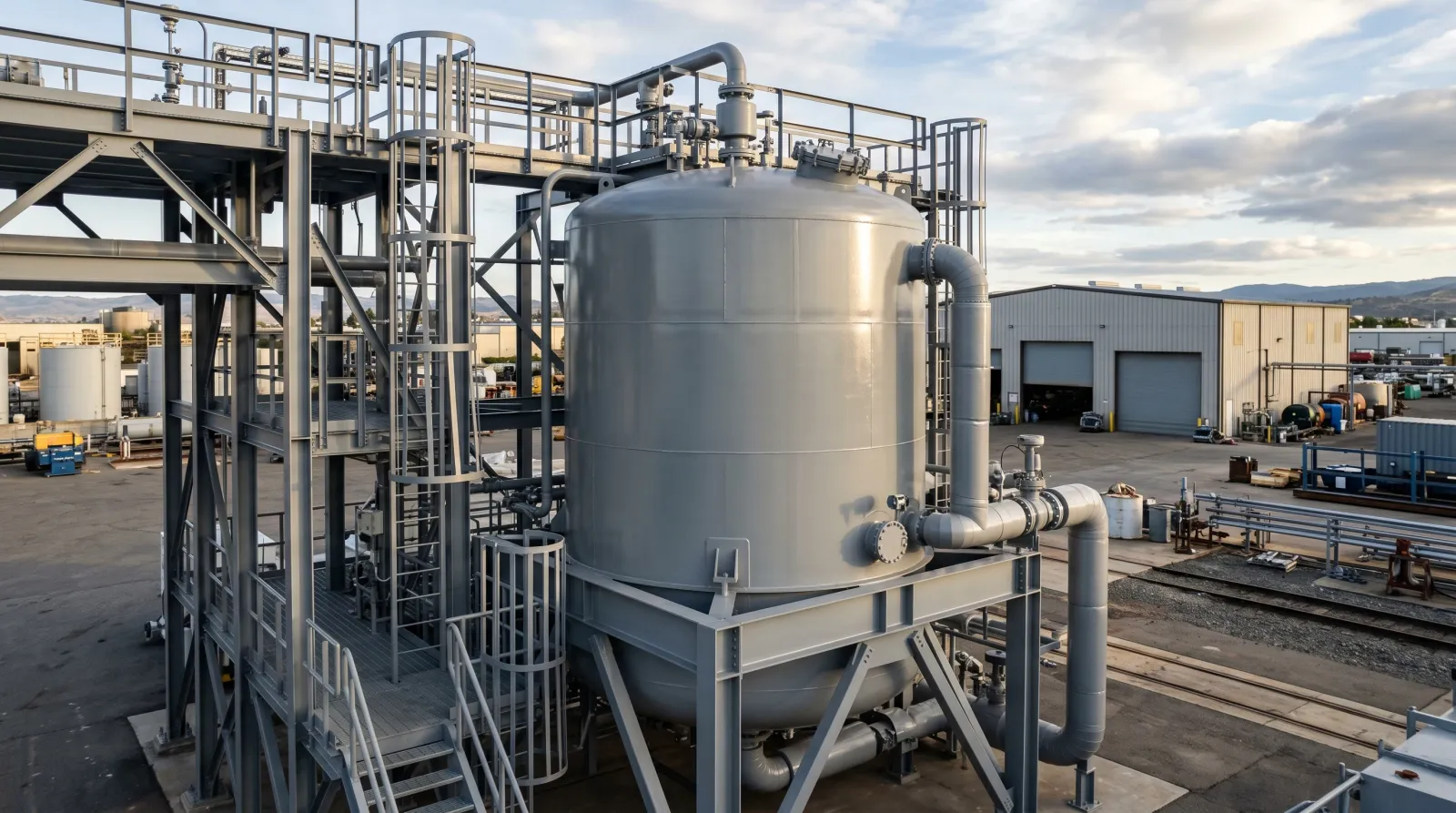
Direct-to-metal paint is a coating engineered to bond to a prepared metal substrate without a separate primer. The spec calls for it where a project needs corrosion protection and a finished appearance in one product: structural steel, process equipment, tanks, pipe racks, handrails, metal siding, light poles, fences, and the thousands of square feet of miscellaneous metal that a facility never wants to coat twice. DTM exists to compress a two- or three-coat industrial system into a one- or two-coat field application. That saves labor, which on an industrial paint job is most of the cost.
The asset is almost always carbon steel, sometimes galvanized or aluminum. The environment defines the chemistry. Interior conditioned steel in a dry plant sits in ISO 12944 corrosivity category C2 and tolerates a thin acrylic DTM. Exterior steel in a normal urban or light-industrial atmosphere is C3. Steel near a coast, a paper mill, a wastewater plant, or a de-icing-salt zone is C4 or C5, and a single-coat DTM will not survive there. Reading the corrosivity category before picking the product is the first job of the spec writer.
Service life follows directly from that category and from the prep. A two-coat DTM acrylic on interior dry steel delivers 15 to 20 years to first maintenance. The same product on exterior C3 steel delivers 8 to 12 years. Move to a C4 coastal atmosphere and a single-product DTM drops under 5 years, while a two-component epoxy under an aliphatic urethane topcoat holds 15 to 25 years. The product names change across that range; the prep discipline does not. Every DTM failure I get called to inspect traces back to one of three things: steel that was not blasted to the spec’d SSPC grade, chloride contamination left on the surface, or coating applied within 5°F of the dew point. Get those three right and DTM does exactly what the data sheet promises.
When DTM Is the Right Spec, and When It Is Not
DTM is a tool with a defined range. The selection comes down to substrate and corrosivity category, not brand.
| Substrate / environment | Corrosivity | DTM call | Why |
|---|---|---|---|
| Interior dry structural steel | C2 | DTM acrylic, two coats | Cost-driven; appearance and mild protection; self-priming |
| Exterior steel, urban/light industrial | C3 | DTM acrylic or DTM urethane, two coats | UV-stable topcoat; 8–12 yr service |
| Equipment, tanks, pipe racks (interior) | C3 | Surface-tolerant epoxy DTM | Tolerates SSPC-SP3/SP11 hand/power prep |
| Galvanized or aluminum | C2–C3 | DTM acrylic (etch or test patch first) | Adhesion to non-ferrous needs verification |
| Coastal, marine-splash, chemical fume | C4–C5 | NOT single-coat DTM — epoxy/urethane system | Single film cannot carry chloride barrier + UV |
| Immersion (tank interiors, water) | Immersion | NOT DTM — tank lining (epoxy/novolac) | DTM is not an immersion-grade barrier |
The two rows that matter most are the last two. DTM is an atmospheric coating. The moment the spec involves immersion, chemical exposure, or a C5 marine atmosphere, the answer is a purpose-built system, and selling a one-coat DTM into that service is how a coating gets stripped at year two. For coastal and marine topside work, see the marine paint system overview instead of a DTM product.
Spec Requirements
The spec block before any product name. The numbers shift by manufacturer and chemistry; the categories are fixed.
| Spec | Value |
|---|---|
| Dry film thickness (DFT) | 4–10 mils total dry; 2–4 mils per coat (DTM acrylic); 5–8 mils total for epoxy/urethane systems |
| Coverage @ spec’d DFT | 200–400 sq ft/gal per coat at 3–4 mils dry (theoretical; apply 25–40% loss for spray) |
| VOC | <100 g/L waterborne DTM acrylic; <250–340 g/L solvent-borne epoxy/urethane under SCAQMD Rule 1113 industrial maintenance category |
| Standards | ASTM B117 salt spray, ASTM D4541 pull-off adhesion, ASTM D3359 cross-cut, ASTM D522 mandrel bend, ASTM D4060 abrasion |
| Substrate prep — new steel | SSPC-SP6 commercial blast (2–3 mil angular profile) minimum for warranty |
| Substrate prep — in-service steel | SSPC-SP3 power tool or SSPC-SP11 power tool to bare metal (surface-tolerant epoxy DTM only) |
| Substrate prep — galvanized/aluminum | Solvent clean (SSPC-SP1) + brush blast or acid etch; adhesion test patch required |
| Soluble salt ceiling | <7 µg/cm² chloride (per SSPC-Guide 15 / ISO 8502-6) for C4–C5 service |
| Service temp (cured film) | -20°F to 200°F continuous (DTM acrylic/urethane); higher needs a high-temp coating |
| Cure to handle | 1–4 hours at 77°F; recoat 4–8 hours; full cure 7 days |
| Ambient at application | 50°F to 100°F; relative humidity <85%; substrate ≥5°F above dew point |
| Dry to service | 24–72 hours for light service; 7 days for full chemical/abrasion resistance |
Three numbers govern the outcome. The SSPC-SP grade sets the adhesion ceiling. The salt-spray hours (ASTM B117) tell you which corrosivity category the film actually survives — 500 hours is a C3 product, 1,000-plus hours with a primer is C4. The dew-point margin during application decides whether the film bonds at all. A DTM that passes B117 in the lab still fails in the field if it went on over flash rust or condensing steel.
System Chemistry Compared
Three chemistries cover nearly every DTM spec. The fourth (alkyd DTM) is legacy and fading under VOC rules.
| Chemistry | Recoat window | Service temp | UV stability | $/sq ft material | Best for |
|---|---|---|---|---|---|
| Waterborne DTM acrylic | 1–4 hr | -20 to 200°F | 🟢 Excellent — holds gloss and color outdoors | $0.30–0.70 | Exterior steel, siding, rails, light equipment (C2–C3) |
| Solvent epoxy DTM (surface-tolerant) | 4–8 hr | -20 to 250°F | 🔴 Poor — chalks under UV, needs topcoat | $0.60–1.20 | Corrosion barrier on marginally prepped steel; needs urethane topcoat outdoors |
| DTM urethane (one- or two-coat) | 4–8 hr | -20 to 250°F | 🟢 Very good | $0.80–1.50 | Equipment, fleet, abrasion + chemical splash, gloss retention |
| Alkyd DTM (legacy) | 8–16 hr | -20 to 200°F | 🟡 Moderate, ambers | $0.25–0.55 | Low-cost interior maintenance where VOC allows |
Acrylic wins on UV and on VOC compliance. Epoxy wins on corrosion barrier and on tolerance for imperfect prep, and it loses outdoors the moment sunlight hits it, which is why epoxy almost always gets a urethane topcoat. Urethane wins on hardness, chemical splash, and gloss retention, at the highest material cost. Alkyd is cheaper and slower, ambers as it ages, and is being pushed out of the South Coast and OTC states by Rule 1113. Pick the chemistry against the corrosivity category, then pick the brand.
State VOC variation matters here more than on most coatings because DTM has both waterborne and solvent versions of nearly every product. Waterborne DTM acrylic ships under 100 g/L and clears CARB and the thirteen OTC states without question. Solvent-borne epoxy and urethane DTM run 250 to 340 g/L and qualify under the SCAQMD Rule 1113 industrial maintenance category, but a contractor bidding California or Northeast work has to confirm the specific SDS against the district limit. Specifying a solvent DTM where only waterborne is legal is a plan-review failure that surfaces after the order is placed.
Recommended Systems
Three full builds at different price-performance points. System A is the everyday two-coat self-priming DTM. System B is the epoxy/urethane upgrade for corrosive exposure. System C is a self-priming urethane for equipment and fleet steel. Verify the current data sheet against your corrosivity category before bid.
System A — Sherwin-Williams Pro Industrial DTM Acrylic (two-Coat Self-Priming)
| Layer | Product | DFT |
|---|---|---|
| Primer/build (coat 1) | Pro Industrial DTM Acrylic over SSPC-SP6 steel | 2.5–4 mils |
| Topcoat (coat 2) | Pro Industrial DTM Acrylic, semi-gloss or gloss | 2.5–4 mils |
| Total | 5–8 mils |
Service life 15–20 years interior C2, 8–12 years exterior C3. This is the workhorse spec for general structural and architectural steel, metal siding, railings, and light equipment. Self-priming over commercial-blasted steel, waterborne under 100 g/L, and the UV stability holds color and gloss outdoors where epoxy would chalk. Recoat runs 1–4 hours, so a two-coat build closes in a single shift on accessible steel. Sherwin-Williams Pro Industrial DTM Acrylic product page.
System B — Sherwin-Williams Macropoxy 646 + Acrolon 218 (epoxy/urethane, Corrosive Service)
| Layer | Product | DFT |
|---|---|---|
| Primer | Macropoxy 646 Fast Cure Epoxy (surface-tolerant, DTM-capable) | 4–6 mils |
| Topcoat | Acrolon 218 HS aliphatic polyurethane | 2–4 mils |
| Total | 6–10 mils |
Service life 15–25 years on C4–C5 industrial and coastal steel. Macropoxy 646 is the surface-tolerant epoxy that carries the corrosion barrier and tolerates SSPC-SP6 or, on in-service steel, SSPC-SP11 power-tool prep. Acrolon 218 is the aliphatic urethane topcoat that gives UV stability and a 10-plus-year gloss life the bare epoxy cannot. This is the spec for a wastewater plant, a coastal tank exterior, a pulp mill, or any C4-plus atmosphere where a single-coat DTM would chalk and undercut inside two years. Macropoxy 646 product page.
System C — Rust-Oleum 9800 System DTM Urethane (two-Coat, Equipment/Fleet)
| Layer | Product | DFT |
|---|---|---|
| Primer (coat 1) | 9800 System DTM Urethane (self-priming) over SSPC-SP3/SP6 | 3–4 mils |
| Topcoat (coat 2) | 9800 System DTM Urethane, gloss | 3–4 mils |
| Total | 6–8 mils |
Service life 10–18 years. The 9800 System is a two-component DTM urethane that builds hard, resists chemical splash and abrasion better than acrylic, and holds gloss outdoors. Specified for process equipment, structural steel that sees solvent or fuel contact, fleet and trailer steel, and any surface where impact and chemical resistance outrank first cost. Pot life is the trade-off: once catalyzed it runs roughly 4–6 hours at 77°F, so mix to the day’s coverage and don’t over-batch. Rust-Oleum 9800 System product page.
A note on Kompozit: their industrial line does not yet carry a US-distributed DTM product with published ASTM B117 and SSPC prep data at the level a facility spec needs, so it stays off this list until that documentation exists. Spec what the data sheet supports.
Systems Compared
| System | Total DFT | $/sq ft installed | Service life | Best for |
|---|---|---|---|---|
| A — SW Pro Industrial DTM Acrylic | 5–8 mils | $2.50–4.50 | 8–20 years (C2–C3) | General structural/architectural steel, siding, rails |
| B — SW Macropoxy 646 + Acrolon 218 | 6–10 mils | $4.50–8.00 | 15–25 years (C4–C5) | Coastal, wastewater, pulp mill, corrosive atmosphere |
| C — Rust-Oleum 9800 DTM Urethane | 6–8 mils | $3.50–6.00 | 10–18 years | Equipment, fleet, chemical/abrasion splash |
Installed pricing assumes SSPC-SP6 blast prep and a 5,000-plus sq ft scope through a certified contractor. Prep is the variable that swings the number: SP6 blast with containment can equal or exceed the coating cost on a tight-access job, and SP10 near-white for a C5 spec adds 30–60% over SP6. On total cost of ownership over a 25-year horizon, System B’s higher install cost beats two full recoats of System A on a C4 asset. Run the lifecycle math before defaulting to the cheaper film.
Application & Contractor Path
DTM is honest about scope. A maintenance crew can hand-apply System A to interior handrails, equipment, and light structural steel if they hit the SSPC-SP grade with power tools and keep the film above dew point. Brush and roller work for cut-in and small members; HVLP or conventional spray for anything over a few hundred square feet. That is the legitimate in-house use, and it is real.
Everything else goes to a contractor. New-construction structural steel, any exterior C3-plus surface, any project carrying a coating warranty, and any C4–C5 epoxy/urethane system should be specified to a painting contractor holding:
- SSPC-QP1 certification for industrial coatings field application (and QP2 if the scope involves hazardous-coating removal of old lead-bearing paint).
- AMPP/NACE Coating Inspector (CIP Level 2) on staff or sub-contracted for DFT and adhesion verification on C4–C5 work.
- A documented abrasive-blast and containment setup. The blast is the part that defeats in-house crews.
Three contractor-qualifying questions before signing:
- What SSPC-SP grade will you achieve, and how will you verify the surface profile? A contractor who cannot name the profile target (2–3 mils angular for SP6) and the replica-tape or comparator method to confirm it is guessing at the adhesion.
- How do you test for soluble salts on C4–C5 steel? The answer should be a Bresle patch or equivalent to SSPC-Guide 15, with a chloride ceiling under 7 µg/cm². No salt test on a coastal asset means a coating that delaminates from osmotic blistering inside two years.
- Who measures DFT and adhesion at closeout, and what gauge? A magnetic pull-off gauge (PosiTector 6000, Elcometer 456) per SSPC-PA2 frequency, plus ASTM D4541 pull-off on C4–C5 work. A signed DFT report keyed to the spec is the closeout document.
The manufacturer rep network on all three systems (Sherwin-Williams ProIndustrial, Rust-Oleum Industrial) runs a free pre-bid review: corrosivity category confirmation, system selection against the exposure, and a prep-spec check. Use it. Catching a C5-into-DTM-acrylic mismatch at the spec stage costs an email; catching it after the steel is coated costs a full strip and recoat.
Failure Modes & How to Prevent Them
Five failures cover the bulk of DTM field rejections and warranty claims.
- Adhesion failure from under-prepped steel. The coating peels in sheets or fails a cross-cut test; the back of the chip carries mill scale or rust. Cause: steel cleaned to SSPC-SP2 hand-tool when the product needed SP6 blast, or mill scale left intact. Prevention: write the SSPC-SP grade into the spec, verify the profile with replica tape, and reject any surface that does not hit it. DTM does not forgive prep.
- Osmotic blistering on salt-contaminated steel. Blisters appear within months on coastal or de-icing-salt steel, often full of liquid. Cause: residual chloride left on the surface drives osmotic water through the film. Prevention: a Bresle soluble-salt test to under 7 µg/cm² and a fresh-water pressure wash before coating any C4–C5 asset.
- Flash rust under the first coat. Rust ghosts appear through the film within days of application on blasted steel. Cause: blasted steel left overnight in humid air, or coating applied over a surface that flashed before the holdback window closed. Prevention: coat blasted steel the same shift; control humidity in the work area; re-blast any surface that flashed.
- Chalking and gloss loss on epoxy outdoors. A bare epoxy DTM goes from gloss to a powdery, faded surface within a year of UV exposure. Cause: epoxy used as a topcoat outdoors instead of as a barrier coat. Prevention: topcoat exterior epoxy with an aliphatic urethane (Acrolon 218, Carbothane 134); never leave epoxy as the finish coat in sunlight. The chalking diagnosis and the fix are the same as on architectural surfaces; see the chalking paint guide.
- Dew-point and low-temperature application failures. The film dries soft, blushes, or never reaches full hardness. Cause: coating applied within 5°F of the dew point, below the product’s minimum substrate temperature, or recoated outside the window so the second coat won’t bond. Prevention: a sling psychrometer or surface thermometer in continuous use; abort when the substrate-to-dew-point margin drops under 5°F; respect the minimum recoat and maximum recoat windows on the data sheet.
Prep failures account for most of the DTM rejections I review, and the salt test is the single most-skipped step on coastal jobs. Both are caught in the field for the price of a gauge and an hour, or paid for at full strip-and-recoat cost two years later.
Where to Buy / Spec
| Channel | Best for | Path |
|---|---|---|
| Sherwin-Williams ProIndustrial rep | Spec’d structural and corrosive-service projects; Pro Industrial DTM, Macropoxy 646, Acrolon 218 | SW Pro Industrial DTM Acrylic |
| Rust-Oleum Industrial distributor | Equipment, fleet, and maintenance scopes; 9800 System DTM urethane | Rust-Oleum 9800 System |
| Industrial distributor (Rawlins Paints US, ICA, KTA-Tator) | Multi-manufacturer projects, mixed-system bids, bulk 5-gal | Distributor account with project-specific pricing |
| Pro retail (Sherwin-Williams stores) | Local pickup, small maintenance scopes, contractor pricing | Local SW commercial store |
| Amazon Business | Quart and gallon stocking for in-house maintenance touch-up | Search the product line by name |
Manufacturer-direct is the recommended channel on any spec’d project above a few thousand square feet. The rep’s pre-bid review (corrosivity category, system selection, prep spec) is worth more than any retail discount on the can, because the most expensive DTM mistake is the wrong system for the exposure, and that gets decided before the order is placed.
FAQ
See the frontmatter faq block for the buyer questions answered above (separate primer, prep on rusted steel, exterior UV, service life, contractor path).