BBQ Grill and Smoker High-Temp Paint: Specifier's Guide (2026)
BBQ high temp paint specified for grills, smokers, and commercial cookline steel. Service temp by chemistry, DFT, VOC, prep grade, and the full recoat and cure schedule.

Disclosure: Affiliate links to retailers and manufacturer-direct programs. Recommendations are spec-driven, not commission-driven.
Use Case
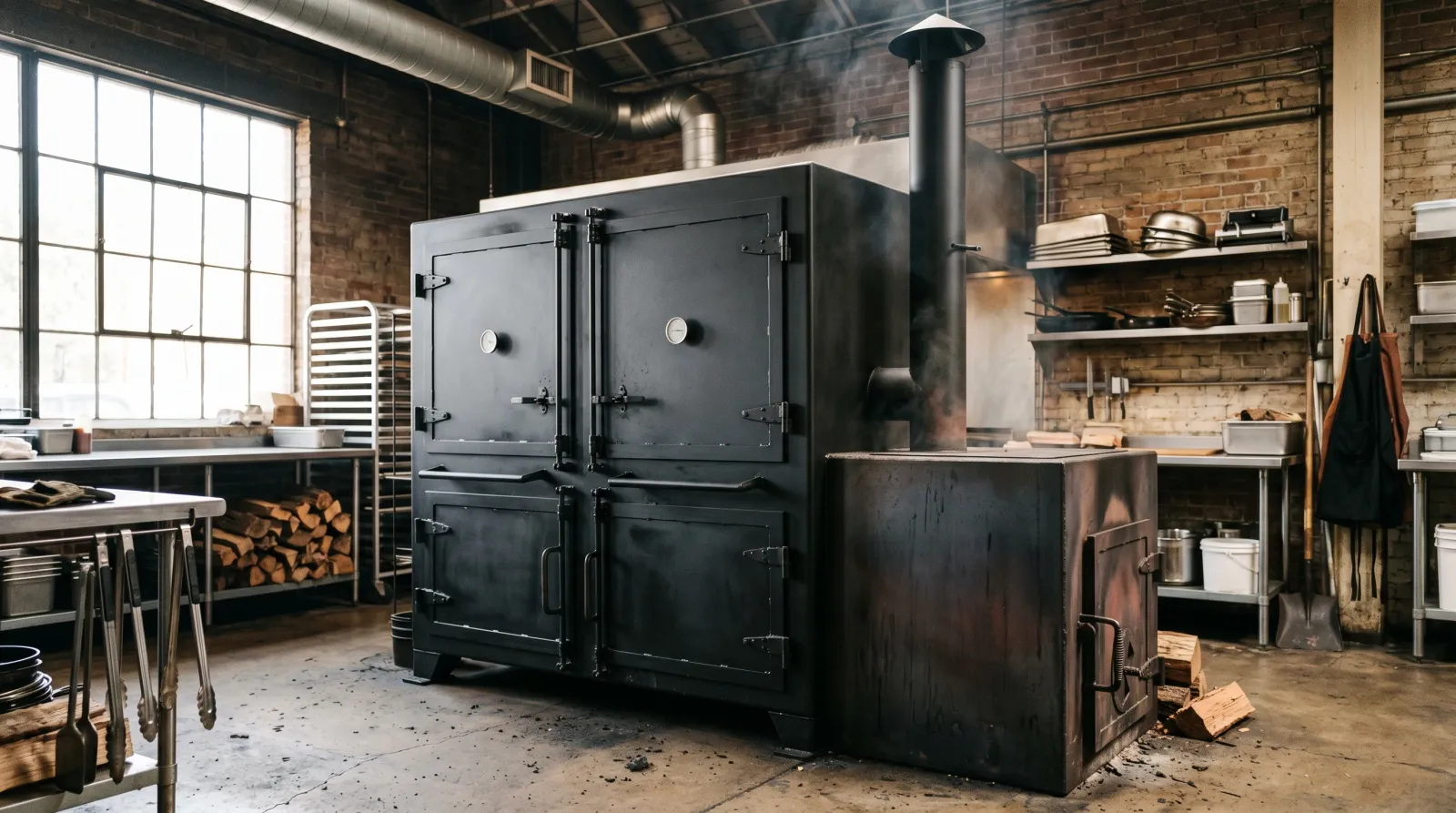
High-temp paint on a barbecue grill or smoker is a heat-resistant silicone coating that protects bare steel from corrosion and oxidation while surviving the thermal cycling of repeated firing. The asset is the firebox, cook chamber, smokestack, and exterior cabinet of a smoker, the lid and body of a grill, or the steel shell of a commercial cookline rotisserie or charbroiler housing. None of these is a cooking surface. The coating protects the structural and cosmetic steel that sits next to the heat, not the grate that touches food.
The spec gets written for fabricators building offset smokers and grills, food-truck and restaurant operators recoating a worn firebox, commercial-kitchen-equipment refurbishers, and industrial buyers stocking maintenance coatings for a fleet of cooking equipment. The thermal load is the whole problem. An offset firebox exterior runs 500°F to 800°F at the steel under a hardwood fire; the cook chamber and stack run 250°F to 500°F; the exterior cabinet of a well-insulated cabinet smoker may never break 300°F. A single coating rarely covers that whole range at its best, which is why the spec gets zoned by surface temperature rather than written as one product across the unit.
Standard architectural and industrial maintenance coatings fail immediately at these temperatures. Alkyd and acrylic enamels carbonize and burn off below 400°F. The chemistry that survives is silicone resin, sometimes modified with aluminum or ceramic pigment, which cross-links under heat into a film stable to 1200°F intermittent. That stability comes with a tradeoff the spec has to account for: most high-temp silicones offer a narrow color range (black, silver, and a few grays), thin film builds, and a mandatory heat cure before the coating reaches full performance.
Service life on a commercial firebox in daily-fire service is 2 to 4 years before a recoat. The cooler cook chamber and exterior cabinet hold 4 to 7 years. The firebox is a wear surface; budget the recoat into the maintenance cycle rather than treating the first coat as permanent.
Zoned Recommendation Matrix
A smoker is not a single thermal environment. Spec the coating by the surface temperature each zone actually sees, not by one number for the whole unit.
| Zone / surface | Peak steel temp | Recommended rating | System | Notes |
|---|---|---|---|---|
| Offset firebox shell (exterior) | 500–800°F | 1000–1200°F intermittent | System A or C | Hottest exterior surface; the wear zone |
| Cook chamber body | 250–500°F | 600–1000°F | System A or B | Wider color range available at this temp |
| Smokestack / flue | 300–600°F | 1000°F | System A or C | Cycles hot and cold; flexibility matters |
| Exterior cabinet (insulated unit) | <300°F | 500–600°F | System B | Cosmetic finish; corrosion is the real risk |
| Legs, frame, trailer steel | Ambient–200°F | Standard DTM industrial enamel | Not a high-temp product | Use a normal industrial coating, not silicone |
| Grates, interior cook surface, flame-contact steel | Direct flame | Do not paint | None | Bare seasoned steel or stainless only |
The most common spec error is painting the whole unit with one 1200°F product to be safe. The high-temp silicones are thin, narrow in color, and overkill on the cool legs and frame, where a standard direct-to-metal industrial enamel gives better corrosion protection, a real color range, and a thicker film. Match the chemistry to the zone.
Spec Requirements
The spec block before any product name. Numbers vary by manufacturer; the categories do not.
| Spec | Value |
|---|---|
| Dry film thickness (DFT) | 1.5–2.5 mils per coat; 3–4 mils total in two light passes |
| Coverage @ spec’d DFT | 100–150 sq ft per quart bulk; aerosols cover 8–12 sq ft per can at spec DFT |
| VOC | Aerosol silicone 350–650 g/L; bulk brush/spray silicone enamel 250–420 g/L |
| State VOC limit | SCAQMD Rule 1113 caps high-temperature industrial maintenance coating at 420 g/L; CARB suggested control measure aligns |
| Standards | ASTM D2485 heat resistance to 700°F; ASTM D3359 cross-hatch adhesion; ASTM D522 mandrel bend |
| Food-contact | NSF/ANSI 51 splash-zone or FDA 21 CFR 175.300 incidental only; never a cook-surface coating |
| Substrate prep | SSPC-SP6 commercial blast preferred; SSPC-SP3 power-tool minimum; remove all mill scale, rust, and old coating |
| Substrate cleanliness | Solvent-wipe to remove oil, grease, and cooking residue; no silicone contamination from prior products |
| Service temp | 500°F, 600°F, 1000°F, or 1200°F intermittent per product; spec to the hottest zone surface |
| Ambient at application | 50°F to 90°F; relative humidity <85%; substrate ≥5°F above dew point |
| Recoat window | Within 1 hour (wet-on-tacky) OR after full cure; never recoat during the partial-cure window of 1–48 hours |
| Cure to service | Air-dry 1 hour, staged heat cure per TDS (250–300°F burn-in, then ramp to service temp) |
Three numbers govern the result: the service-temp rating relative to the hottest zone, the prep grade on bare steel, and the heat-cure schedule. Mill scale left on the steel is the single most common cause of premature failure, because the coating bonds to the loose scale rather than to the steel and lifts the first time the firebox cycles hot and cold.
The recoat window is a real trap on silicone high-temps. These coatings either recoat wet-on-tacky within the first hour or after a full heat cure. Recoat anywhere in the long partial-cure window between, and the solvent in the second pass lifts and wrinkles the first. Read the technical data sheet for the exact window; it is shorter and stricter than a standard enamel.
System Chemistry Compared
Three chemistry classes cover the cooking-equipment market. Service temperature is the dividing line.
| Chemistry | Service temp | Color range | Film build | UV / weather | $/sq ft band | Best for |
|---|---|---|---|---|---|---|
| Straight silicone enamel | 1000–1200°F intermittent | Black, silver, gray only | Thin (3–4 mils total) | Good after cure | $0.40–1.20 | Fireboxes, stacks, any high-heat exterior steel |
| Modified silicone (silicone-acrylic / silicone-alkyd) | 400–600°F | Wider; some colors | Moderate | Good | $0.30–0.90 | Cook chambers, cabinets, sub-500°F zones |
| Ceramic-filled / aluminum silicone | 1200–2000°F intermittent | Aluminum, black | Thin | Excellent | $0.80–2.50 | Extreme-heat fireboxes, exhaust, manifolds |
Straight silicone is the default for any surface that breaks 500°F. Modified silicone buys a wider color range and a thicker film for the cooler cook chamber and exterior cabinet at the cost of peak temperature. Ceramic and aluminum-filled silicones reach the highest service temps and resist thermal shock best, which matters on a firebox that goes from ambient to 700°F in twenty minutes. Cost climbs with temperature rating, so spec the rating the hottest zone needs and no higher.
Recommended Systems
Three real high-temp silicone systems at different price-performance points. None uses a conventional primer; the silicone goes direct to clean bare steel. Verify the current service-temp rating and cure schedule on each manufacturer’s technical data sheet before bidding, since formulations and ratings change.
System A — Sherwin-Williams HeatFlex 3500 (Industrial Silicone)
| Layer | Product | DFT |
|---|---|---|
| Surface prep | SSPC-SP6 commercial blast (or SP3 power-tool); solvent wipe | — |
| Coat 1 | HeatFlex 3500 modified silicone, 500–1000°F service | 1.5–2 mils |
| Coat 2 | HeatFlex 3500, cross-coat light pass | 1.5–2 mils |
| Total | 3–4 mils |
Service life 3 to 6 years on cook-chamber and cabinet steel; 2 to 4 years on a firebox shell. HeatFlex is Sherwin-Williams’ industrial high-heat line, sold through the commercial Protective and Marine network rather than the retail store, which matters for a fabricator buying in volume with rep support on the spec. The 500–1000°F band covers most of a smoker outside the offset firebox. Confirm the exact grade and color against the Sherwin-Williams Protective and Marine catalog.
System B — Rust-Oleum Industrial High Heat (750°F Silicone)
| Layer | Product | DFT |
|---|---|---|
| Surface prep | Wire-brush to SSPC-SP3, degrease, remove loose scale | — |
| Coat 1 | High Heat silicone enamel, 750°F continuous service | 1–1.5 mils |
| Coat 2 | High Heat silicone enamel, cross-coat | 1–1.5 mils |
| Total | 2–3 mils |
Service life 3 to 5 years on cabinet and cook-chamber steel. Rust-Oleum’s High Heat is the most available high-temp silicone in the US, stocked at industrial distributors and big-box pro counters in aerosol and bulk. The 750°F grade covers the cook chamber, stack, and exterior cabinet; for the offset firebox, step up to a 1200°F intermittent grade or to System C. A matched Rust-Oleum High Heat Primer is available for the sub-600°F band on bare outdoor steel where extra corrosion protection earns its place. Rust-Oleum High Heat product page.
System C — Stove Bright 1200°F High-Temp (Forrest Technical Coatings)
| Layer | Product | DFT |
|---|---|---|
| Surface prep | Abrasive blast or sand to bare metal; acetone wipe | — |
| Coat 1 | Stove Bright 1200°F silicone, light pass | 1 mil |
| Coat 2 | Stove Bright 1200°F silicone, light pass | 1 mil |
| Total | 2 mils |
Service life 2 to 4 years on a daily-fire firebox; longer on cooler surfaces. Stove Bright is the wood-stove and high-heat-appliance standard from Forrest Technical Coatings, with the widest color selection in the true 1200°F class (it sells in metallic black, charcoal, and several metallics that survive the cure). This is the firebox answer when color matters and the surface genuinely breaks 800°F. Thin film, multiple light passes, strict cure schedule. Stove Bright high-temp coatings.
Systems Compared
| System | Total DFT | $/sq ft installed | Service life | Best for |
|---|---|---|---|---|
| A — S-W HeatFlex 3500 | 3–4 mils | $0.60–1.40 | 3–6 yr (cooler); 2–4 yr firebox | Fabricators buying in volume with rep support |
| B — Rust-Oleum High Heat 750°F | 2–3 mils | $0.40–1.00 | 3–5 yr | Most-available; cook chamber, stack, cabinet |
| C — Stove Bright 1200°F | 2 mils | $0.80–1.80 | 2–4 yr firebox | True 1200°F firebox with a color requirement |
Pricing is material plus shop labor for a self-applied or fabricator-applied finish, the normal channel for cooking equipment. There is no certified-applicator premium here as there is on a tank lining or an intumescent system. The cost driver is prep labor, not the can; a properly blasted SSPC-SP6 surface runs more in labor than the coating costs in material.
Application and Contractor Path
High-temp BBQ and smoker coating is one of the few commercial coatings where self-application by a competent fabricator or maintenance crew is the normal path, not a compromise. The film is thin, the products are forgiving on technique, and there is no UL listing or certified-applicator requirement to satisfy. The discipline lives in the prep and the cure, not in the application skill.
Self-apply when the unit can be taken out of service, prepped to bare steel, and put through a controlled cure. The sequence:
- Strip to bare metal. Blast to SSPC-SP6 where a cabinet is available; power-tool to SSPC-SP3 with a wire wheel and grinder in the field. Every trace of mill scale, rust, old coating, and cooking grease has to go. Solvent-wipe with acetone or a dedicated degreaser as the last step.
- Apply two light coats, not one heavy coat. Silicone high-temps sag and wrinkle if built too thick in a single pass. Hold the gun or can 10 to 14 inches off the surface and cross-coat.
- Respect the recoat window. Recoat wet-on-tacky inside the first hour, or wait for the full cure. Never recoat in the partial-cure window.
- Run the heat cure. Air-dry 1 hour, then stage the bake per the technical data sheet (typically a 250–300°F burn-in, then ramp to service temp). On a smoker, a controlled low-and-slow first fire serves as the cure if you follow the manufacturer’s ramp.
Spec a coatings contractor when the scope is a fleet of commercial cooking equipment, when the steel needs corrosion repair before coating, or when the unit cannot be moved to a blast cabinet and field abrasive blasting is required. An SSPC-QP1 industrial coatings contractor handles the prep-and-coat on a fleet refurbishment cleanly. For corrosion-compromised firebox steel, the prep is the entire job, and a contractor with blast capability is worth the line item.
The manufacturer rep path matters most for the volume buyer. Sherwin-Williams Protective and Marine and Rust-Oleum Industrial both field reps who will confirm the service-temp grade against the hottest zone, supply the correct cure schedule, and set up a distributor account. For a single grill, the retail aerosol off the pro shelf is the answer; the rep path is for the fabricator and the multi-unit operator.
Failure Modes and How to Prevent Them
Five failures cover the bulk of high-temp coating rejections on cooking equipment.
- Coating burns off in patches on first firing. Cause: the heat cure was skipped, so the film never cross-linked. Prevention: run the staged cure before the unit goes into service. Air-dry then burn-in then ramp; the first low-and-slow fire is the cure cycle on a smoker.
- Film lifts and flakes off the firebox after a season. Cause: mill scale or old coating left on the steel; the silicone bonded to the loose layer, not the steel, and thermal cycling sheared the bond. Prevention: prep to bare bright steel, SSPC-SP6 where possible, SSPC-SP3 minimum. This is the most common failure and it is entirely a prep failure.
- Second coat wrinkles and lifts the first. Cause: recoated in the partial-cure window, and the fresh solvent attacked the half-cured film below. Prevention: recoat wet-on-tacky within the first hour, or wait for the full heat cure. The window is on the technical data sheet.
- Rust blooms through the coating from underneath. Cause: a pinhole or thin spot in a thin film, plus outdoor or coastal exposure driving corrosion under the coating. Prevention: two full passes for continuous film, a matched high-heat primer on sub-600°F outdoor steel, and a cover or shelter on outdoor units. See the failure analysis on why exterior coatings peel for the corrosion-under-film mechanism.
- Coating contaminated and fish-eyes during application. Cause: silicone residue from a prior product, or cooking grease not removed in prep. Prevention: full solvent degrease as the last prep step; never apply over a surface that has seen a silicone cleaner or release spray without stripping it.
Prep failures account for the majority of the firebox rejections I see. The cure failures show up on the first fire and are obvious. The corrosion-under-film failures take a season to appear and are the reason outdoor units need either shelter or a primer in the cooler zones.
Where to Buy / Spec
| Channel | Best for | Path |
|---|---|---|
| Amazon Business | Single units, aerosol stocking, fleet maintenance kits | Rust-Oleum and Stove Bright aerosols, business pricing |
| Manufacturer-direct | Fabricator volume, spec support, distributor account | S-W Protective and Marine, Rust-Oleum Industrial |
| Industrial distributor | Bulk silicone enamel, mixed-product orders | Grainger, Fastenal, industrial coatings distributors |
| Specialty (wood-stove / appliance) | True 1200°F color range | Stove Bright / Forrest Technical Coatings |
Manufacturer-direct is the channel for any fabricator or multi-unit operator. For a single grill or smoker recoat, the retail aerosol off the pro shelf or Amazon Business covers it. The volume buyer gets the rep, the spec confirmation, and the distributor pricing; the one-off buyer gets the can.
FAQ
Can I apply high temp paint without a contractor? Yes, for most grill and smoker work. This is a self-apply coating for a competent fabricator or maintenance crew. The film is thin and forgiving; the discipline is in prepping to bare steel and running the heat cure. Spec a contractor only for a fleet refurbishment or when corroded firebox steel needs blast prep and repair before coating.
What’s the warranty? High-temp silicone coatings carry limited material warranties only, typically against manufacturing defect, not against service-life performance. There is no installed-system warranty as there is on a tank lining, because the coating is a self-applied wear surface. Service life is a function of prep and thermal cycling, and the manufacturer cannot warrant your prep.
Does this need a specific surface prep? Yes. Bare bright steel is the spec. SSPC-SP6 commercial blast is preferred; SSPC-SP3 power-tool cleaning is the field minimum. All mill scale, rust, old coating, and cooking grease must be removed, with a solvent wipe as the final step. Inadequate prep is the leading cause of firebox coating failure.
Is BBQ high temp paint food safe for a commercial kitchen? The cured exterior coating is inert and not a food-contact concern; some products carry NSF/ANSI 51 splash-zone or reference FDA 21 CFR 175.300 incidental contact for exterior cabinet surfaces. The coating is never applied to grates, the interior cook surface, or anything touching food. Cooking surfaces stay bare seasoned steel or stainless.
What temperature rating do I spec for an offset firebox? Spec by the hottest surface, which on an offset firebox exterior is 500–800°F at the steel. A 1000°F or 1200°F intermittent-rated silicone (System C) is the firebox spec. The cooler cook chamber and exterior cabinet take a 500–750°F grade with a wider color range.
Related
- Prepping and priming rusted metal before high-temp coating
- Painting galvanized steel on cooking-equipment frames
- High-temp paint for exhaust and process steel on the industrial side
- Why exterior coatings peel and the corrosion-under-film mechanism
- Rust-Oleum industrial line review