Sherwin-Williams Tricorn BlackvsSherwin-Williams Caviar
Why this comparison: Both SW blacks; Caviar is a hair softer and warmer than Tricorn. Tricorn Black and Caviar are visually nearly identical (ΔE 0.77). Most eyes can't tell them apart on a wall — pick whichever is easier to source.

Built from our full reviews of both colors — same measured data, same real-room photos. About the testing process →
The Numbers
LRV is essentially equal (3 vs 3) — both reflect light the same.
What Each Color Really Is
A black with no story. Most "blacks" in a fan deck are really very dark something — a very dark brown, a very dark navy, a very dark green-gray — and they show it the moment sunlight lands on them. Tricorn Black carries almost no color pigment steering it anywhere, so it does not perform in the light. That sounds boring until you have lived with a black door that turns eggplant at 5 p.m. Choosing a color with no undertone is a real design decision, not a lack of one: it means the black stays the frame and lets your siding, counter, or wood do the talking.
At LRV 3 it is about as dark as mixed house paint gets. The useful comparison is Iron Ore (SW 7069) at LRV 6 — on paper a small gap, in a room a big one. Iron Ore reflects roughly twice as much light and reads as charcoal in daylight, softening on siding and on a full wall. Tricorn Black does not soften. It holds the same depth at noon and at dusk, which is the whole point on trim and doors and the whole problem on four walls of a dark room.
Caviar sits in the crowded back corner of Sherwin-Williams' black lineup, next to Tricorn Black and Iron Ore, and the number that separates it from its neighbors is buried in its own hex code. Its RGB reads 35, 39, 42 — the blue channel highest, green a close second, red the lowest. That is a genuinely cool, graphite-leaning black, not the dead-neutral black most people picture when they hear the word. Tricorn Black, by comparison, is nearly R-G-B equal, a true neutral. Caviar is the pick for someone who wants black with a whisper of blue-gray depth instead of flat ink.
At LRV 3 it sits at the very bottom of the deck, essentially tied with Tricorn Black for how little light it reflects — this is not a soft, forgiving black, it is a real one. That number is the whole practical story: a surface in Caviar absorbs almost everything the room's light throws at it, which is exactly why it works so well in small doses — a door, an island, a single wall — and turns punishing in large ones, like four walls in a room with one small window.
Specs Side by Side
| Spec | Tricorn Black | Caviar |
|---|---|---|
| Brand | Sherwin-Williams | Sherwin-Williams |
| SKU | SW 6258 | SW 6990 |
| Hex | #2F2F30 | #313031 |
| RGB | 47, 47, 48 | 49, 48, 49 |
| LRV | 3 | 3 |
| Undertone | true neutral | true neutral |
| Family | Black | Black |
How Light Changes Them
Cool even light makes it look its most velvety and matte. Beautiful on doors, heavy on four walls.
Strong sun lifts the sheen and reveals brush marks and roller texture. Spray or lay off carefully.
Warm 2700K bulbs keep it inky and soft. Away from a lamp it flattens into a solid shape with no depth.
Reads slightly lifted and chalkier over the years, and the surface runs hot. Satin and a quality exterior line matter here.
Full sun on a cabinet door or front door brings out the cool graphite-blue depth instead of flattening it to a void — this is where Caviar looks intentional, not just dark.
Without strong daylight, LRV 3 reads as a flat black hole rather than a color — the classic 'the walls feel like they're closing in' complaint.
Cool morning light sharpens the blue-gray edge; warm afternoon sun softens it slightly, though at this depth the shift is subtle, not dramatic.
2700K warm bulbs pull it toward a softer charcoal-black; cool white LEDs keep the graphite-blue edge crisp. Either works — match it to the room's other warm or cool notes.
Both Colors in Real Rooms
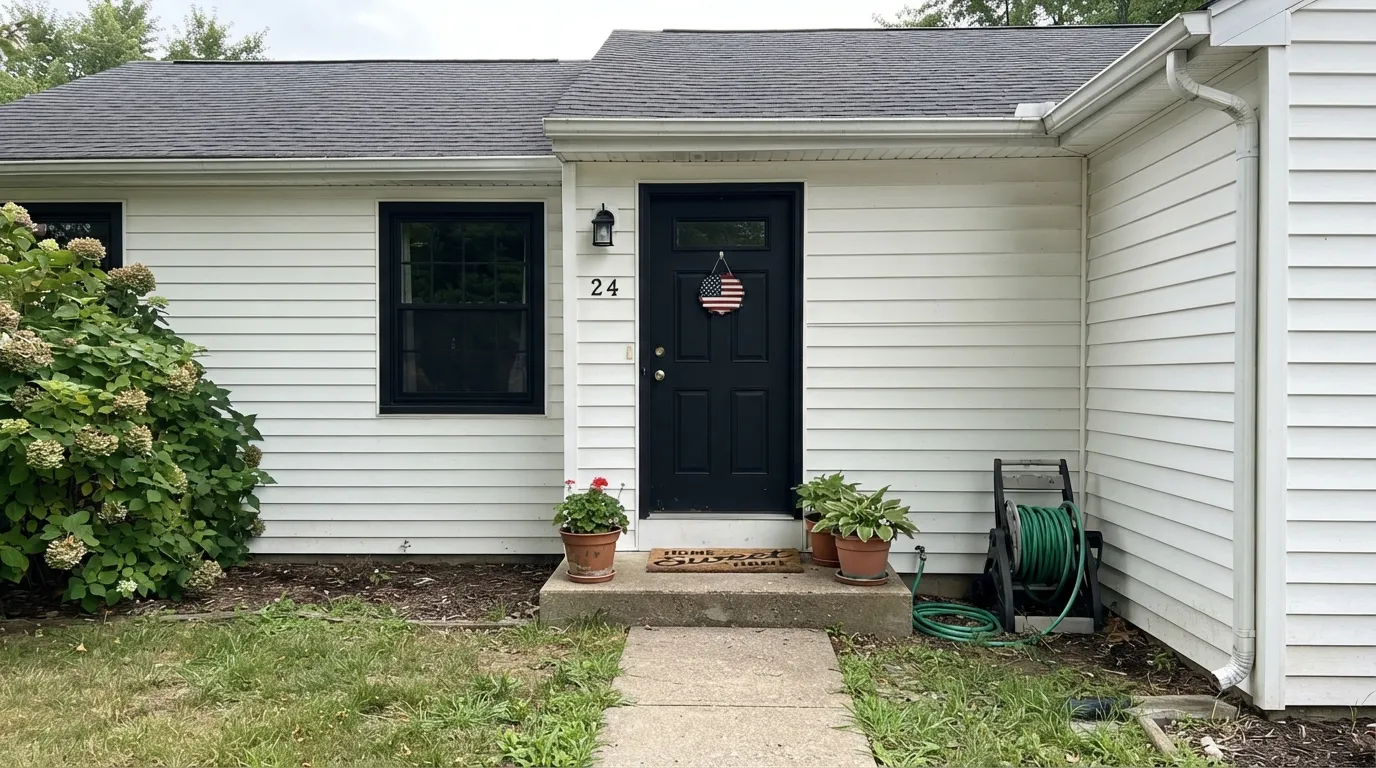
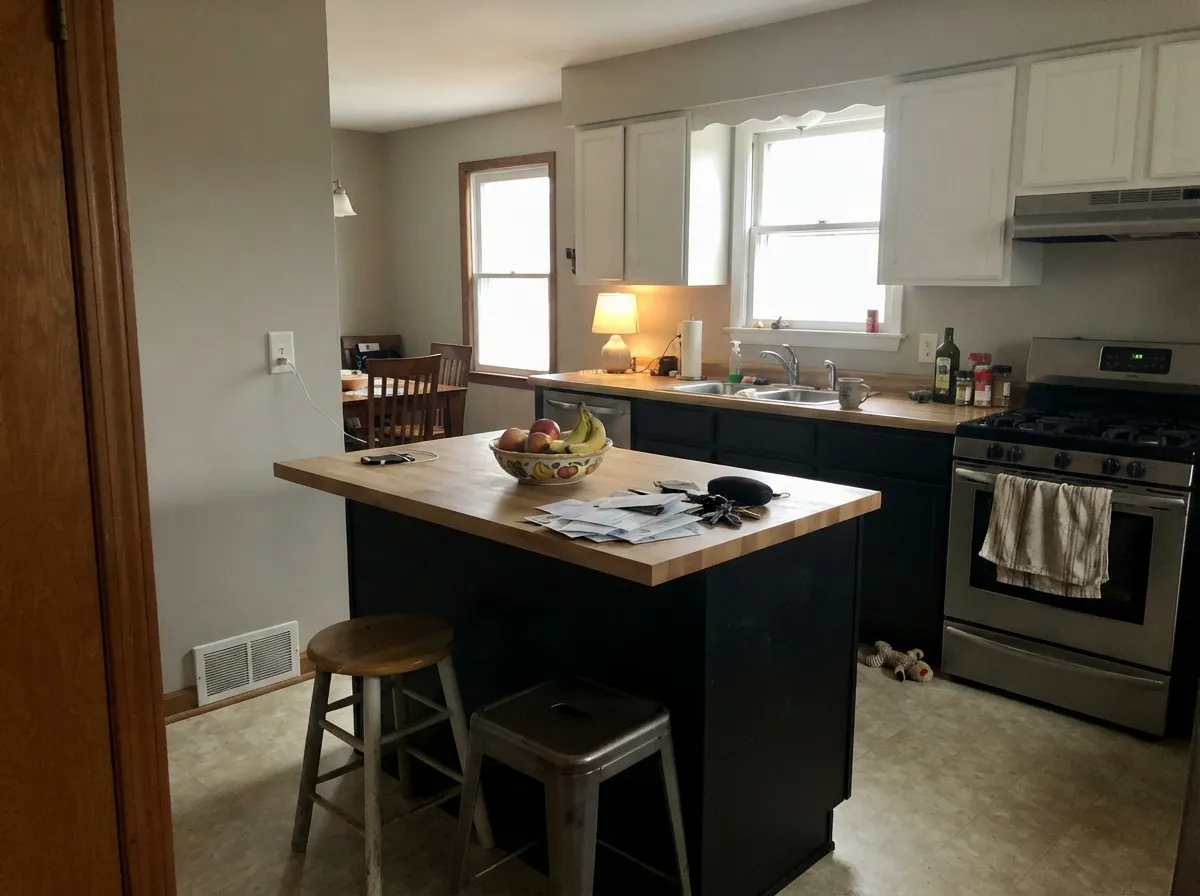
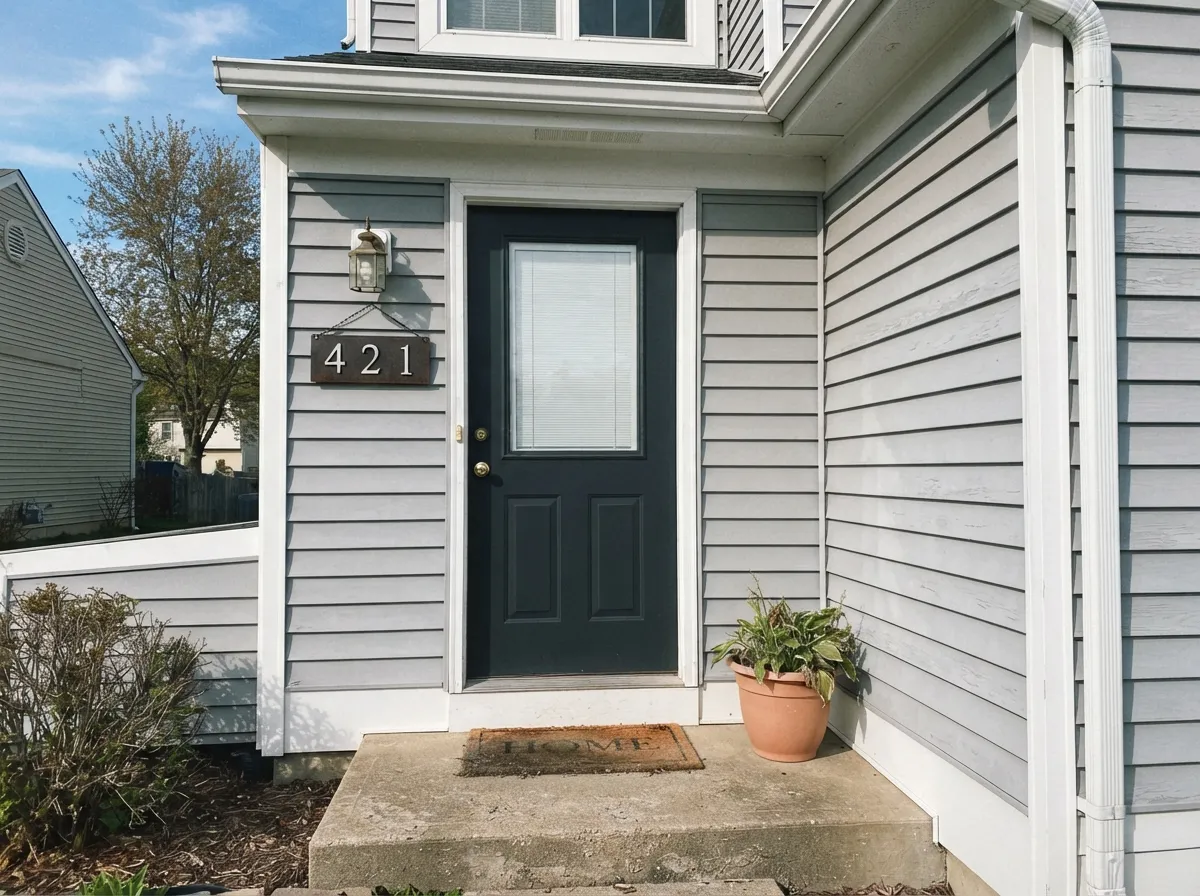
Photos from our full reviews — the same rooms and captions, so you can judge each color where it actually lives, not on a chip.

When to Pick Which
Front doors, shutters and window sash · kitchen islands and cabinet bases · interior doors, trim and built-ins · anyone who wants black with zero color agenda
Your room is small, dim and has one window · your walls are wavy old drywall · black factory windows or appliances sit right next to it · you want a softer near-black that forgives touch-ups
Kitchen islands and cabinetry · front doors and exterior trim · a single accent wall in a room with real daylight · anyone who wants a black with a cool graphite edge instead of a dead-neutral one
You want a warm, brown-based dark (that's Urbane Bronze or Wrought Iron) · your room runs on one small window and no real daylight · you're painting all four walls without living with a big sample first · you actually want the industry-reference black, not a cooler variation on it
No comparison page can see your light. Upload one photo of your room and try both colors on the same walls, seconds apart.
Tricorn Black vs Caviar FAQ
Which is lighter, Tricorn Black or Caviar?
They are practically the same lightness — LRV 3 vs 3. Neither will make the room brighter than the other.
Which is warmer, Tricorn Black or Caviar?
They share the same undertone family — both read true neutral. The difference between them is lightness and depth, not temperature.
How similar are Tricorn Black and Caviar?
Tricorn Black and Caviar are visually nearly identical (ΔE 0.77). Most eyes can't tell them apart on a wall — pick whichever is easier to source. The only reliable test is seeing both in your own room and light — a side-by-side on a screen or chip flattens the difference.
Can I use Tricorn Black and Caviar together in one house?
Not in the same room, and be careful in the same house. At ΔE 0.77 they are so close that two walls in each will read as a tinting mistake, not a design choice. Pick one, or keep them on different floors where they are never seen together.
Ask a Question