Sherwin-Williams Pure WhitevsSherwin-Williams High Reflective White
Why this comparison: High Reflective White is SW’s brightest white; Pure White softens it just enough for trim that flatters. Pure White and High Reflective White are very close (ΔE 2.3). The difference shows up most in side-by-side comparison and under specific light.

Built from our full reviews of both colors — same measured data, same real-room photos. About the testing process →
The Numbers
High Reflective White is slightly lighter (LRV 93 vs 84, 9-point delta).
What Each Color Really Is
A soft white with the smallest possible drop of warmth in it, and the reason it works is how little of that warmth there is. Most warm whites are built on a yellow oxide base you can see on the chip; Pure White carries a trace of yellow cut with a touch of gray, so on a wall it reads as white first and warm second. Painters describe it as the least warm of the warm whites, and that is exactly right. It is the white you pick when cream would be too much and a cool white would be too cold.
At LRV 84 it puts most of the light back into the room, but it is not a bright white and it does not pretend to be. Stand it next to High Reflective White (LRV 93) and Pure White suddenly shows its body: you can see the color sitting in it. Even Extra White, only two points higher on paper, looks noticeably cleaner and cooler beside it. That small gap is the useful part. On trim it reads as painted woodwork instead of plastic, and on a wall it softens shadows in a way a bright white cannot.
The brightest color Sherwin-Williams sells, and it gets there the honest way — by leaving the colorant out. At LRV 93 there is nothing above it in the deck, and that number is not marketing: put a High Reflective White sample card next to any other white in the fan and the others suddenly look like they have something mixed into them, because they do. This is the reference white the rest of the SW whites are measured against.
The brightness gap is bigger than it sounds. Extra White sits at LRV 86 and Pure White at 84 — seven and nine points down — and on a trim board that difference is instantly visible. Cross-brand, its real twins are Benjamin Moore Chantilly Lace and Behr Ultra Pure White, both at LRV 92, and all three share the same personality and the same weakness: brilliant on a finished wall, thin in the can. Painters who dislike High Reflective White are not complaining about the color. They are complaining about coat three.
Specs Side by Side
| Spec | Pure White | High Reflective White |
|---|---|---|
| Brand | Sherwin-Williams | Sherwin-Williams |
| SKU | SW 7005 | SW 7757 |
| Hex | #EDECE6 | #F7F7F1 |
| RGB | 237, 236, 230 | 247, 247, 241 |
| LRV | 84 | 93 |
| Undertone | yellow / warm | near-white |
| Family | White | White |
How Light Changes Them
Warm sun all day keeps it soft and glowing. It creams up slightly, never yellow.
Cool daylight cancels the small warm lean. It can go flat or faintly blue — sample first.
2700K lamps make it soft cream. 3500–4000K keeps it a true white. Swap bulbs, not paint.
LRV 84 does the work — a powder room or hall still reads bright and open.
The one exposure bright whites win. Cool grey daylight leaves it clean and luminous where softer whites go dingy.
Full south sun turns LRV 93 into glare, and the bounce rakes across every seam and roller lap.
It reports whatever the window sees: green off a lawn in the morning, warm gold in the last hour of sun.
2700K lamps push it to ivory and cancel the crispness; 4000K LEDs read hospital-blue. 3000K is the honest middle.
Both Colors in Real Rooms
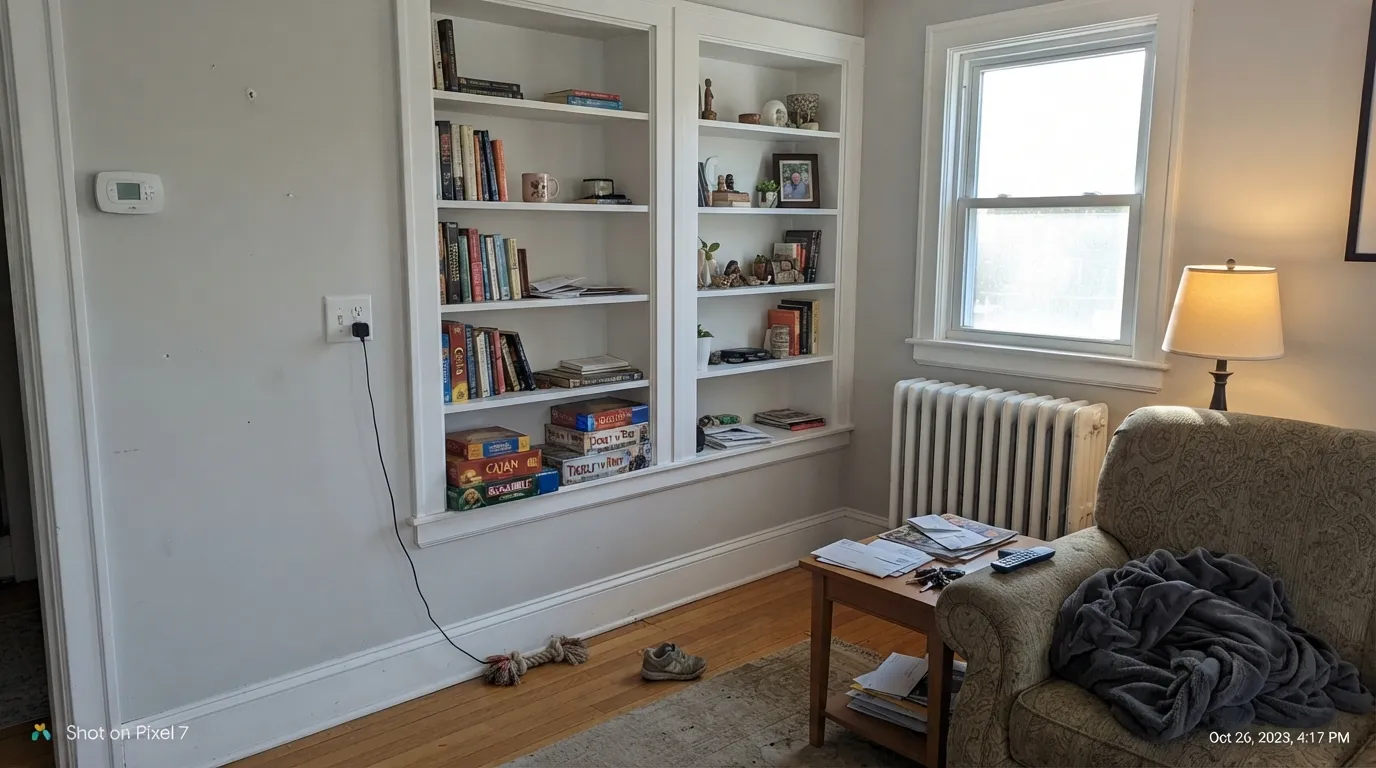
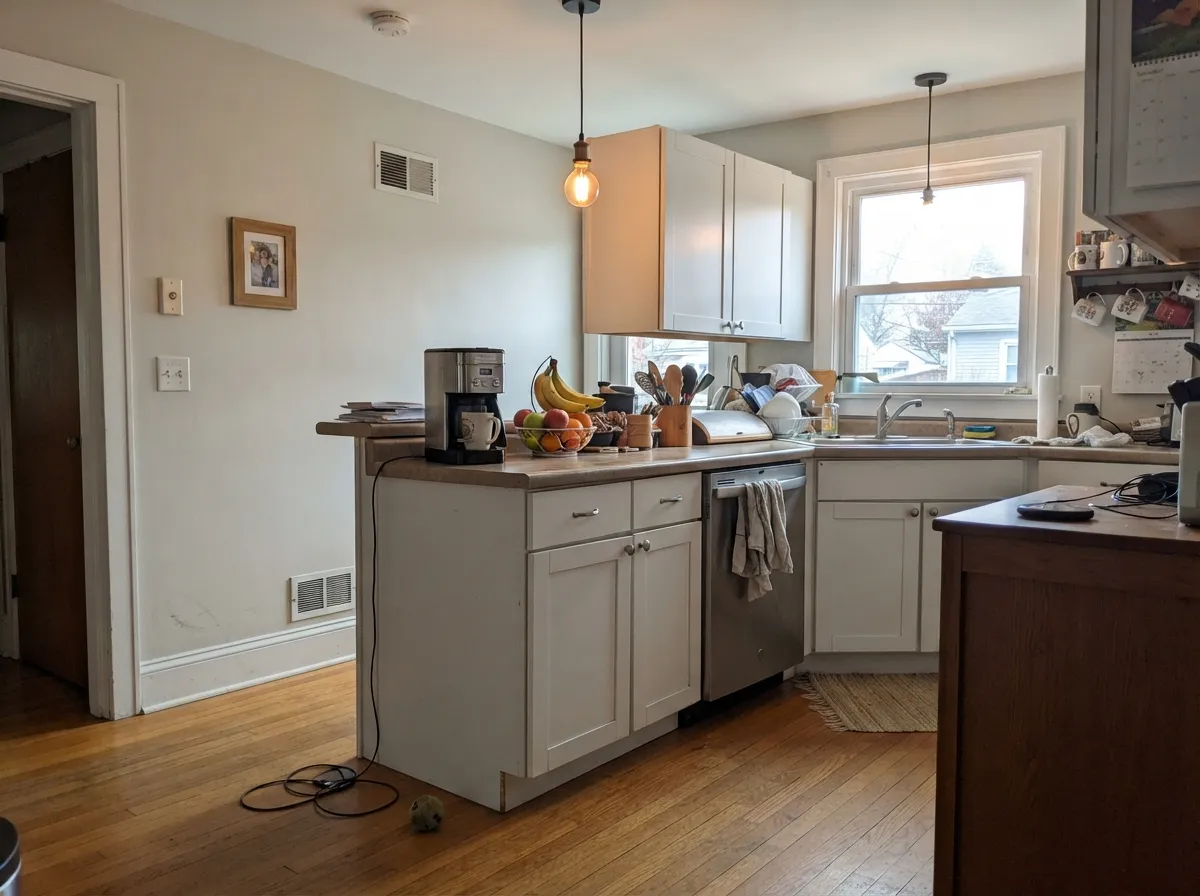
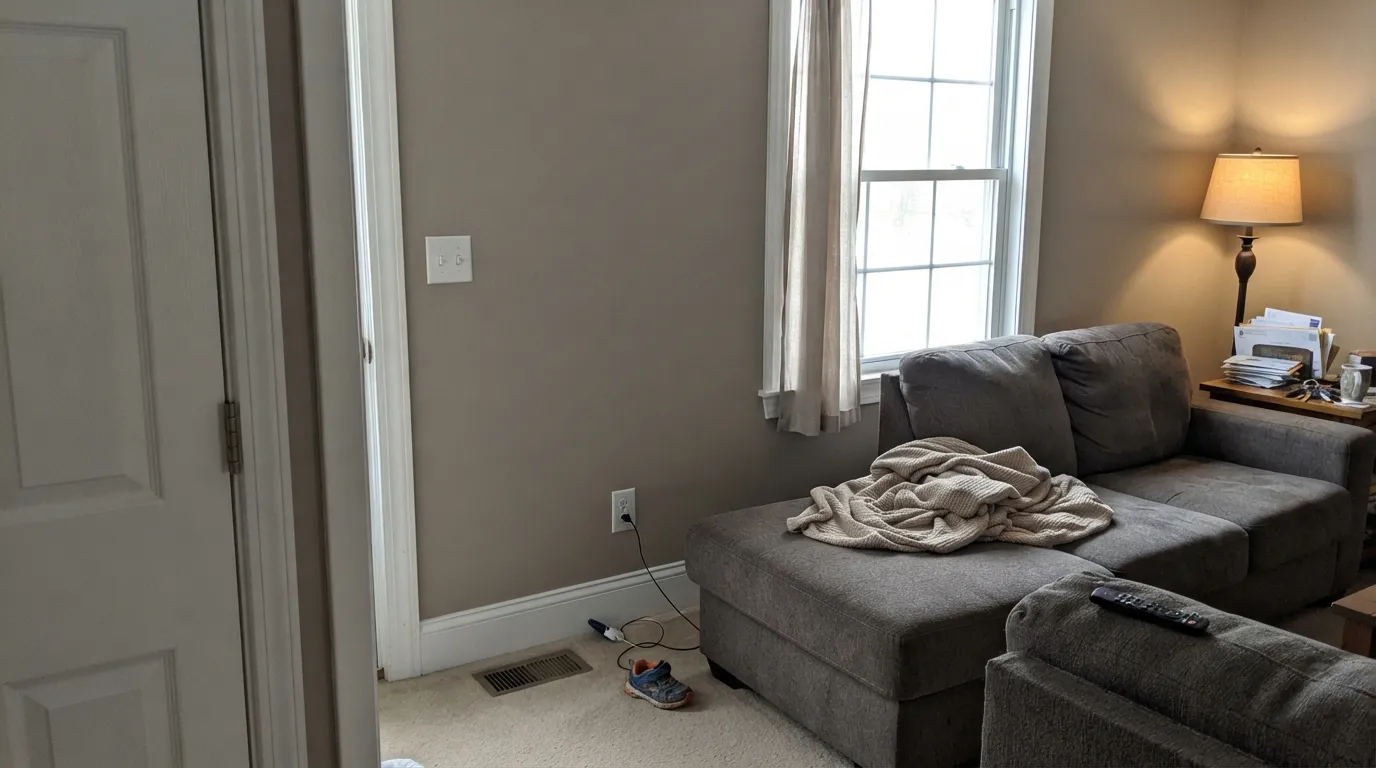
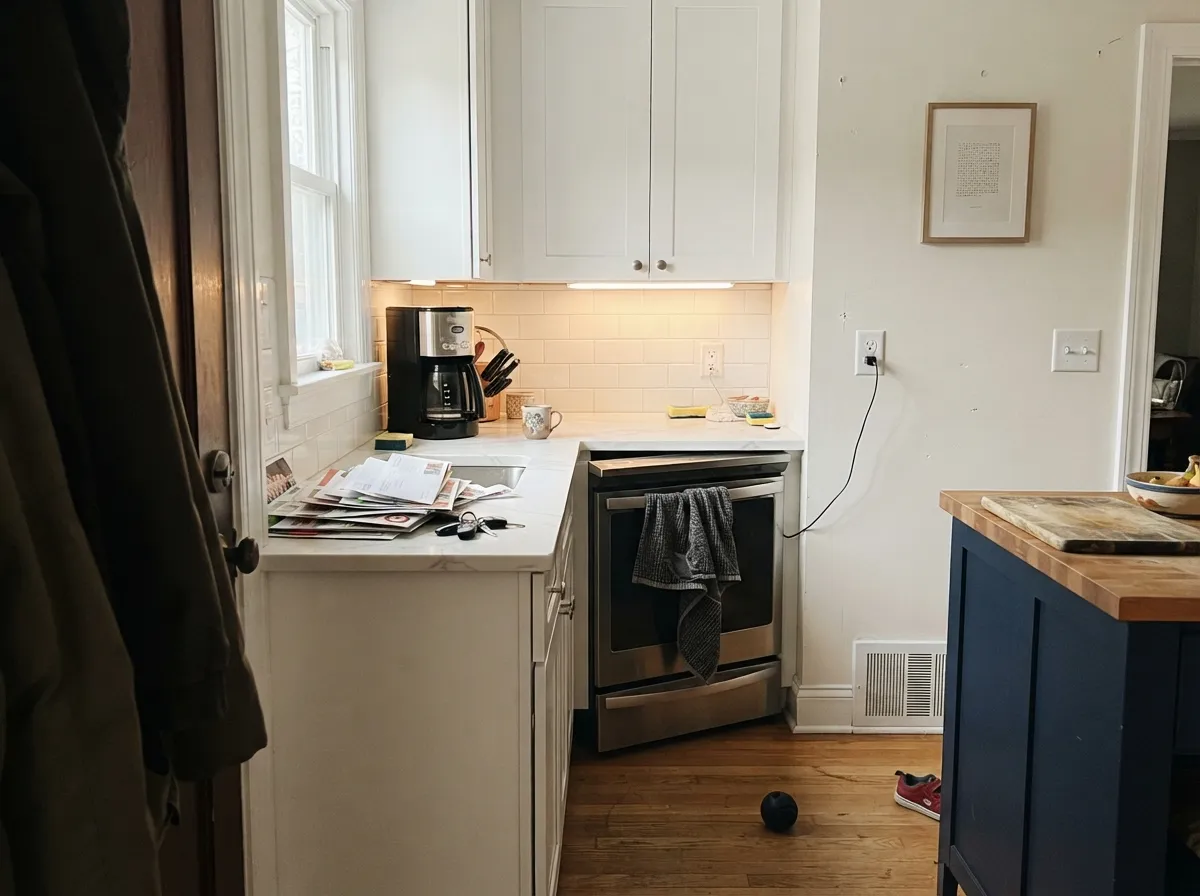
Photos from our full reviews — the same rooms and captions, so you can judge each color where it actually lives, not on a chip.
When to Pick Which
Trim, doors, and built-ins in a warm home · kitchen and bath cabinets · whole-house walls with decent daylight · warm-white exteriors with black windows
A brighter builder white is staying on trim or ceiling · the room is dim and faces north · your windows have blue-tinted low-E glass · you want a sharp gallery-white look
Trim, doors and molding that must read crisp · ceilings that need maximum bounce · cabinets next to white marble or quartz · closets, pantries and laundry rooms with no window
Your house runs on honey oak, beige and cream · you are covering a dark color on a tight budget · you want a soft, forgiving whole-house white · you are painting siding or a garage door
No comparison page can see your light. Upload one photo of your room and try both colors on the same walls, seconds apart.
Pure White vs High Reflective White FAQ
Which is lighter, Pure White or High Reflective White?
High Reflective White is lighter: LRV 93 vs 84. High Reflective White is slightly lighter (LRV 93 vs 84, 9-point delta).
Which is warmer, Pure White or High Reflective White?
Pure White is the warmer of the two (yellow / warm); High Reflective White reads near-white.
How similar are Pure White and High Reflective White?
Pure White and High Reflective White are very close (ΔE 2.3). The difference shows up most in side-by-side comparison and under specific light. The only reliable test is seeing both in your own room and light — a side-by-side on a screen or chip flattens the difference.
Can I use Pure White and High Reflective White together in one house?
Not in the same room, and be careful in the same house. At ΔE 2.3 they are so close that two walls in each will read as a tinting mistake, not a design choice. Pick one, or keep them on different floors where they are never seen together.
Ask a Question