Farrow & Ball PigeonvsFarrow & Ball French Gray
Why this comparison: F&B’s two gray-greens; Pigeon leans bluer, French Gray greener. Pigeon and French Gray are close but distinct (ΔE 6.5). Visible difference on the wall, especially in flat daylight.

Built from our full reviews of both colors — same measured data, same real-room photos. About the testing process →
The Numbers
French Gray is slightly lighter (LRV 42 vs 34, 8-point delta).
What Each Color Really Is
Farrow & Ball's own card files Pigeon as a gray, but the paint on the wall rarely agrees. It's built on a green-gray base with a blue-gray undercurrent, and which one shows depends entirely on the light: strong, indirect daylight pulls the green forward until it reads close to a soft sage; dim corners and north-facing rooms drain that green out and leave a cooler, smokier blue-gray behind. Named for the color of London street pigeons, it has been in the F&B deck for decades and is one of the brand's most consistently recommended neutrals for exactly this reason — it never looks flat.
At LRV 35 it sits solidly in the mid-tone range: light enough to work on walls without swallowing a room, dark enough that it reads as a real, considered color rather than a whisper of one. That depth is also why the shift is so noticeable — a paler green-gray would just look pale in poor light, but Pigeon has enough saturation to visibly change character rather than merely dim.
French Gray is one of Farrow & Ball's oldest and most-reached-for colors, and it is built on a lie its own name tells: this is a green-gray, and in real light the green usually wins. Farrow & Ball's chalky, pigment-heavy base gives it a soft, almost powdery depth that flat modern paints don't have — it reads less like "gray with a tint" and more like a genuine, complex sage that happens to lean gray in low light. At LRV 42 it sits solidly in mid-tone territory: not a pale wash, not a moody deep color, but enough depth to hold its own on four walls.
The light behavior is the whole story with this color, and it's consistent across every review that has actually lived with it: morning light reads it cooler and closer to true gray, while afternoon and south-facing light pulls the green forward until it's unmistakable. North-facing rooms keep it muted and quiet all day; south-facing rooms let the sage side come out in full. None of this is a flaw — it's exactly what a genuinely mixed pigment does — but it means the same tin of paint can look like two different colors in two different rooms of the same house.
Specs Side by Side
| Spec | Pigeon | French Gray |
|---|---|---|
| Brand | Farrow & Ball | Farrow & Ball |
| SKU | No. 25 | No. 18 |
| Hex | #9A9F94 | #B0AF9B |
| RGB | 154, 159, 148 | 176, 175, 155 |
| LRV | 34 | 42 |
| Undertone | green / cool | yellow / warm |
| Family | Gray | Neutral |
How Light Changes Them
The green comes forward and the color reads soft, sage-leaning and alive. This is the light Pigeon was built for.
The green drains out and it flattens toward a cool, slightly lifeless blue-gray. Readers call it "muddy" here. Test before committing a dark room to it.
Bluer in morning shade, greener at midday, plain warm gray in between. Most owners come to like the movement rather than fight it.
2700K lamps pull it toward a smoky, blue-leaning gray. Cool LEDs flatten it further and cancel the green almost entirely — swap bulbs before you swap paint.
The green comes forward and the color reads as a genuine, confident sage. This is French Gray at its most honest.
Cool, low daylight mutes the green almost completely and can leave the wall looking flat and slightly murky. Test before committing if this is your only light source.
Mornings read cooler and closer to true gray; by mid-afternoon the sage side is unmistakable. Same paint, two different moods in one day.
Warm 2700K bulbs settle it into a muted, khaki-leaning green-gray — cozy, not gray at all. Cool white LEDs flatten it back toward gray and can look slightly dull.
Both Colors in Real Rooms
Photos from our full reviews — the same rooms and captions, so you can judge each color where it actually lives, not on a chip.
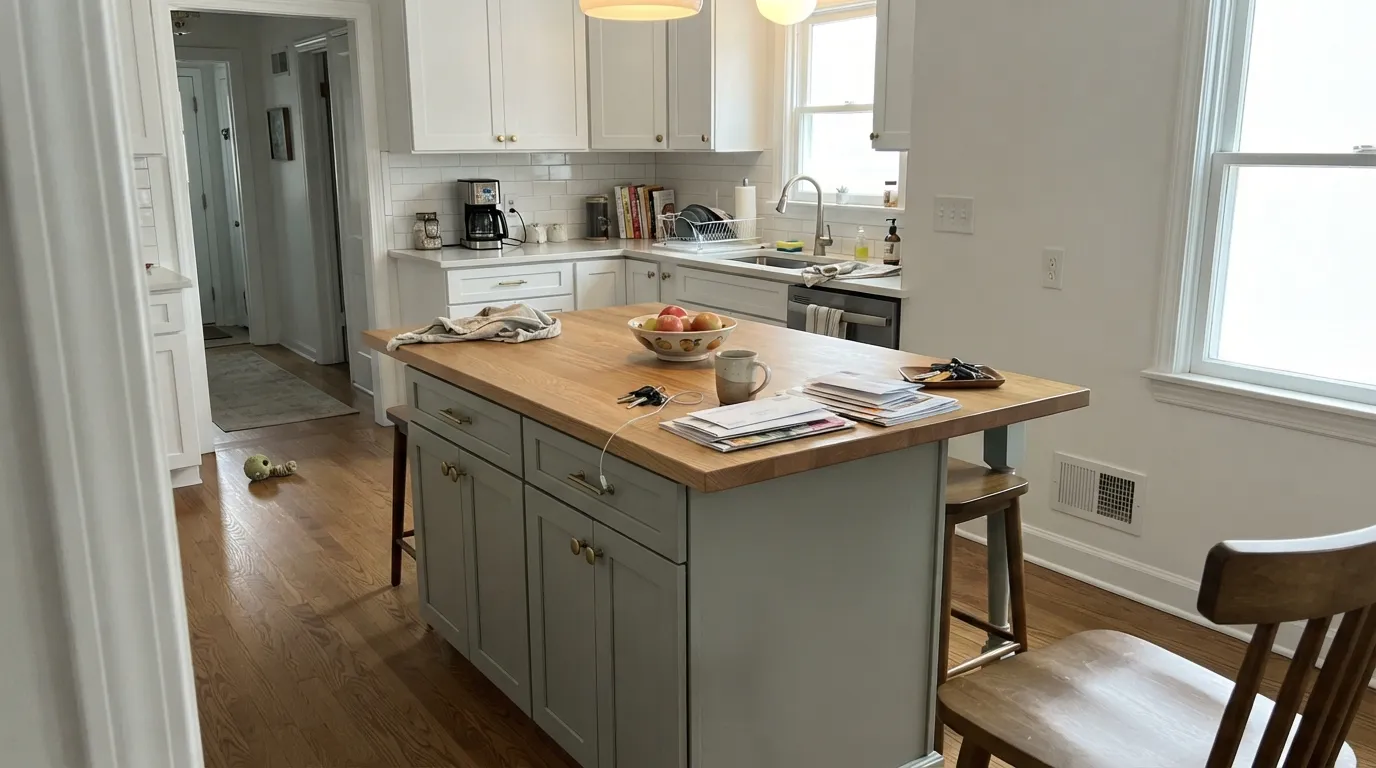
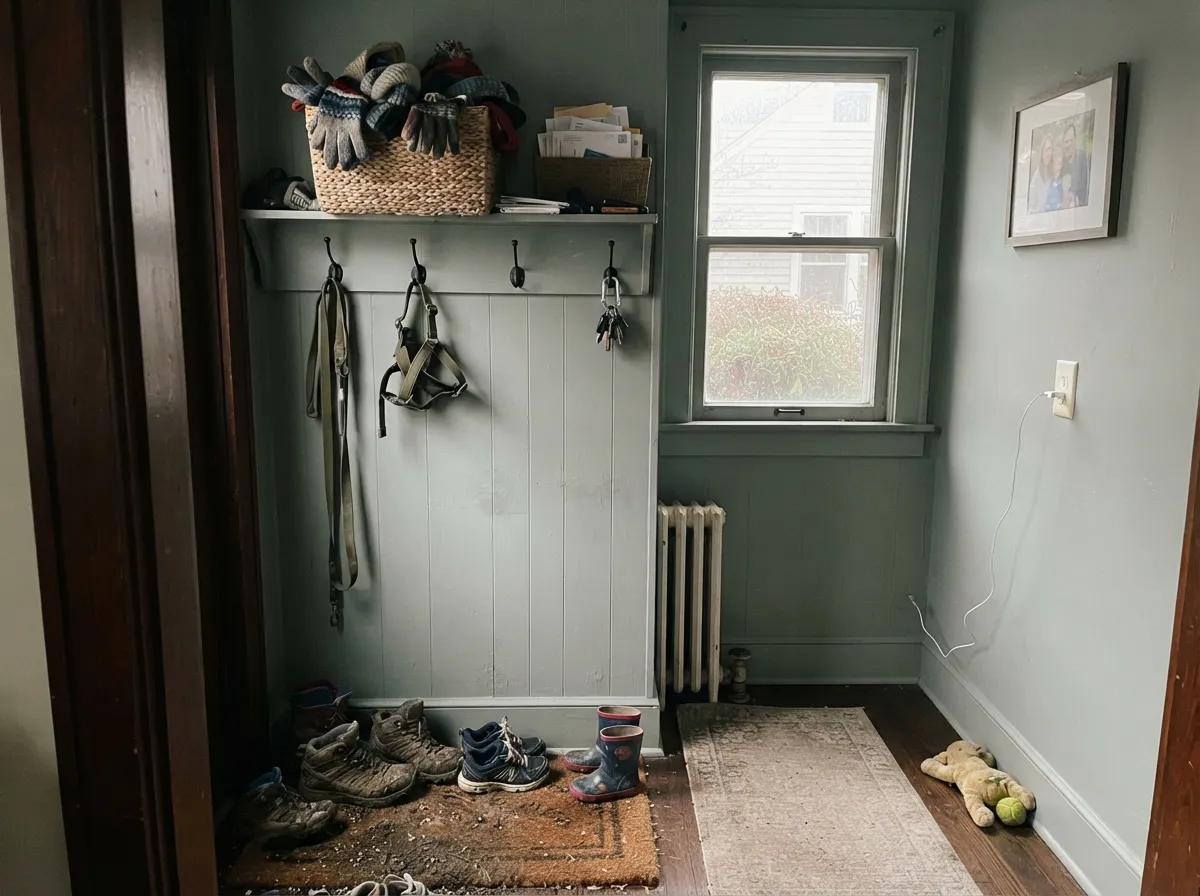
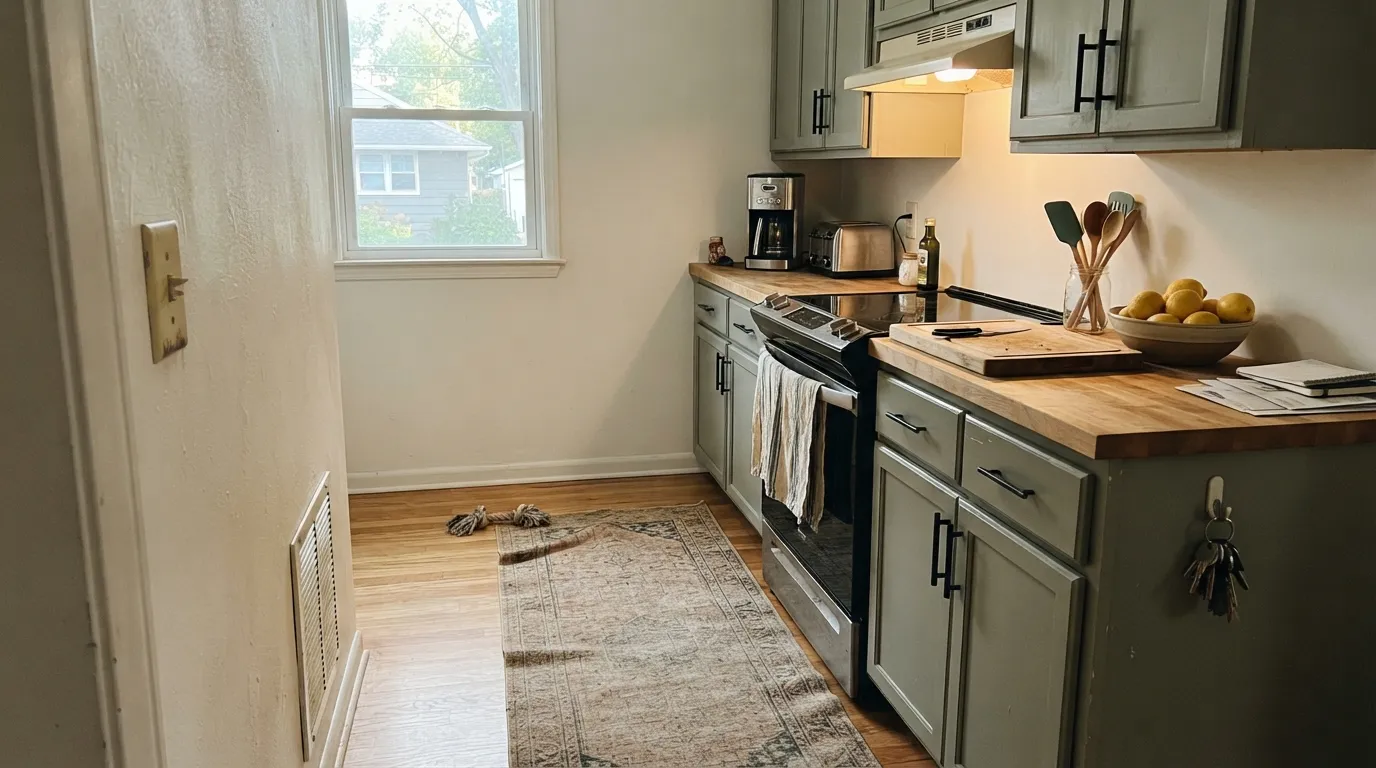
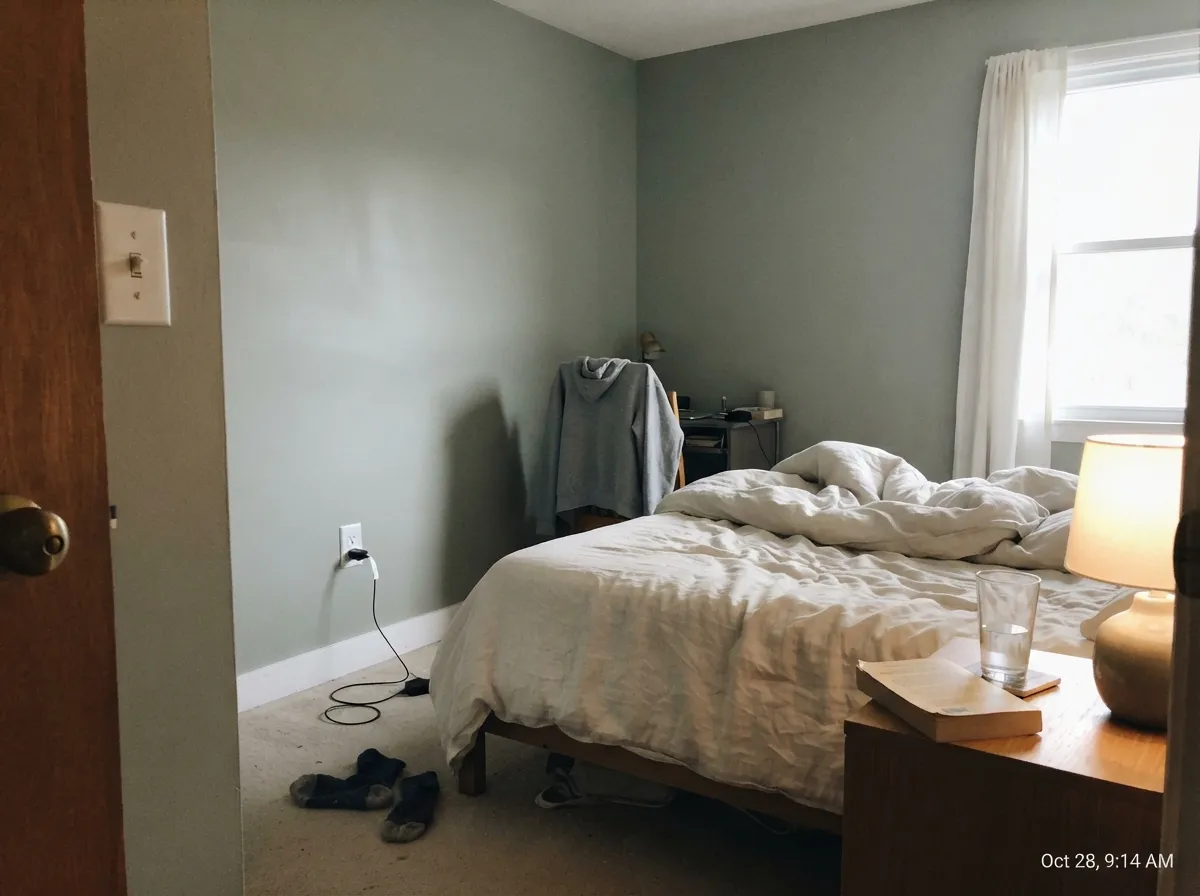
When to Pick Which
Kitchen islands and cabinets · boot rooms, mudrooms and entryways · powder rooms and small baths · studies, dens and panelled rooms · front doors · anyone who wants a neutral with more personality than gray but less commitment than green
You want a color that reads the same in every room of the house · your space only gets dim, indirect light · you're painting an entire small kitchen wall-to-wall in it · you need a guaranteed-stable gray for a resale flip
Kitchens and cabinets in decent daylight · bedrooms and bathrooms with a real window · hallways and entryways that need one calm color throughout · anyone who actually wants a soft green, not a true gray
You want a true, flat gray with zero green cast · your room is north-facing and genuinely dim · you're pairing it with a stark bright white trim · your floors and hardware are already fighting for attention
No comparison page can see your light. Upload one photo of your room and try both colors on the same walls, seconds apart.
Pigeon vs French Gray FAQ
Which is lighter, Pigeon or French Gray?
French Gray is lighter: LRV 42 vs 34. French Gray is slightly lighter (LRV 42 vs 34, 8-point delta).
Which is warmer, Pigeon or French Gray?
French Gray is the warmer of the two (yellow / warm); Pigeon reads green / cool.
How similar are Pigeon and French Gray?
Pigeon and French Gray are close but distinct (ΔE 6.5). Visible difference on the wall, especially in flat daylight. The only reliable test is seeing both in your own room and light — a side-by-side on a screen or chip flattens the difference.
Can I use Pigeon and French Gray together in one house?
Yes, in separate rooms. They are close enough to feel related but different enough to notice, so give each its own room and connect them with a shared trim white. Avoid putting them on adjoining walls.
Ask a Question