Benjamin Moore Kendall CharcoalvsFarrow & Ball Down Pipe
Two dark grays at nearly the same depth, pulling in opposite directions. Kendall Charcoal HC-166 has a whisper of warm olive under it; Down Pipe No.26 is built on blue and stays cool no matter what you put beside it.

Built from our full reviews of both colors — same measured data, same real-room photos. About the testing process →
The Numbers
LRV is essentially equal (15 vs 13) — both reflect light the same.
The Real Difference on a Wall
Side by side on a board the difference is obvious even to people who claim they cannot see undertones. Kendall Charcoal is very nearly neutral with the smallest possible lean toward warm, and it is never blue — that is the whole point of the color. Down Pipe is a lead gray with a definite blue base, the color of old cast-iron drainpipes, which is where the name comes from. Next to each other Kendall looks soft and faintly brown-olive, and Down Pipe looks like metal.
How each behaves through the day follows from that. Kendall Charcoal is waiting on daylight. Give it a real window and the warm character comes out and it reads as a charcoal you can live in; take the daylight away and it flattens into an indistinct near-black, which is the number one complaint about it. Outdoors it also lightens dramatically in full sun, so the sunny elevation and the shaded elevation of the same house can look like two different colors. Down Pipe is more even-tempered — it is not promising warmth, so a dark room takes nothing away from it. What you give up is coziness. At night under 2700K lamps Kendall goes rich and inviting while Down Pipe stays cool and can read blue-black.
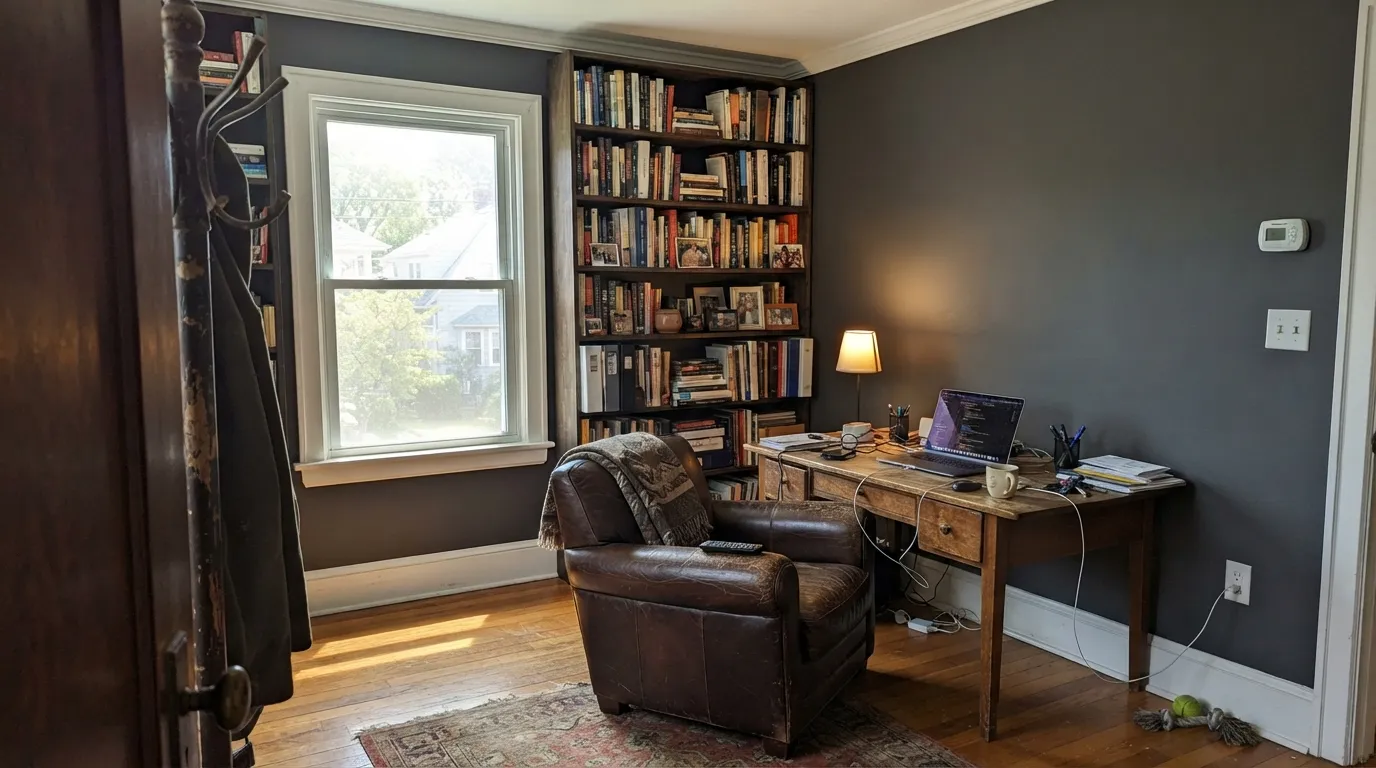
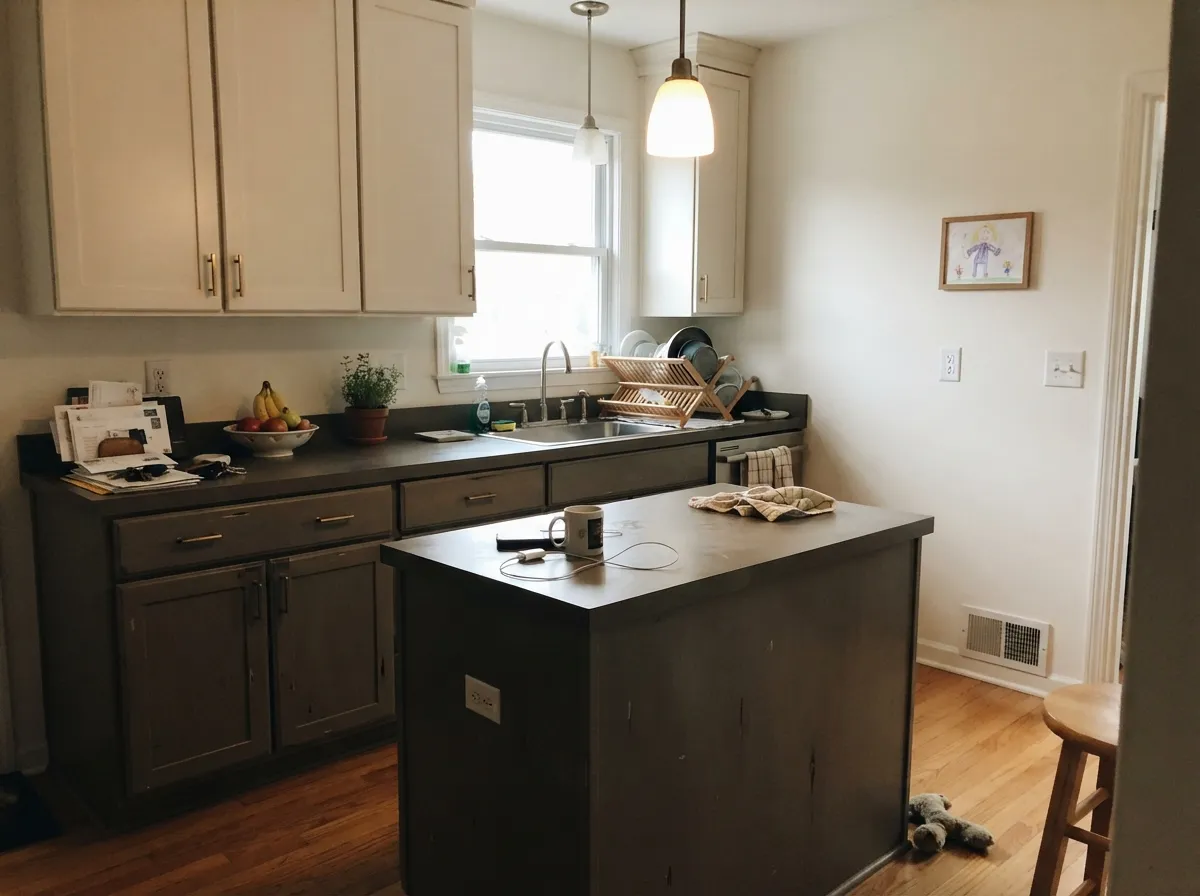
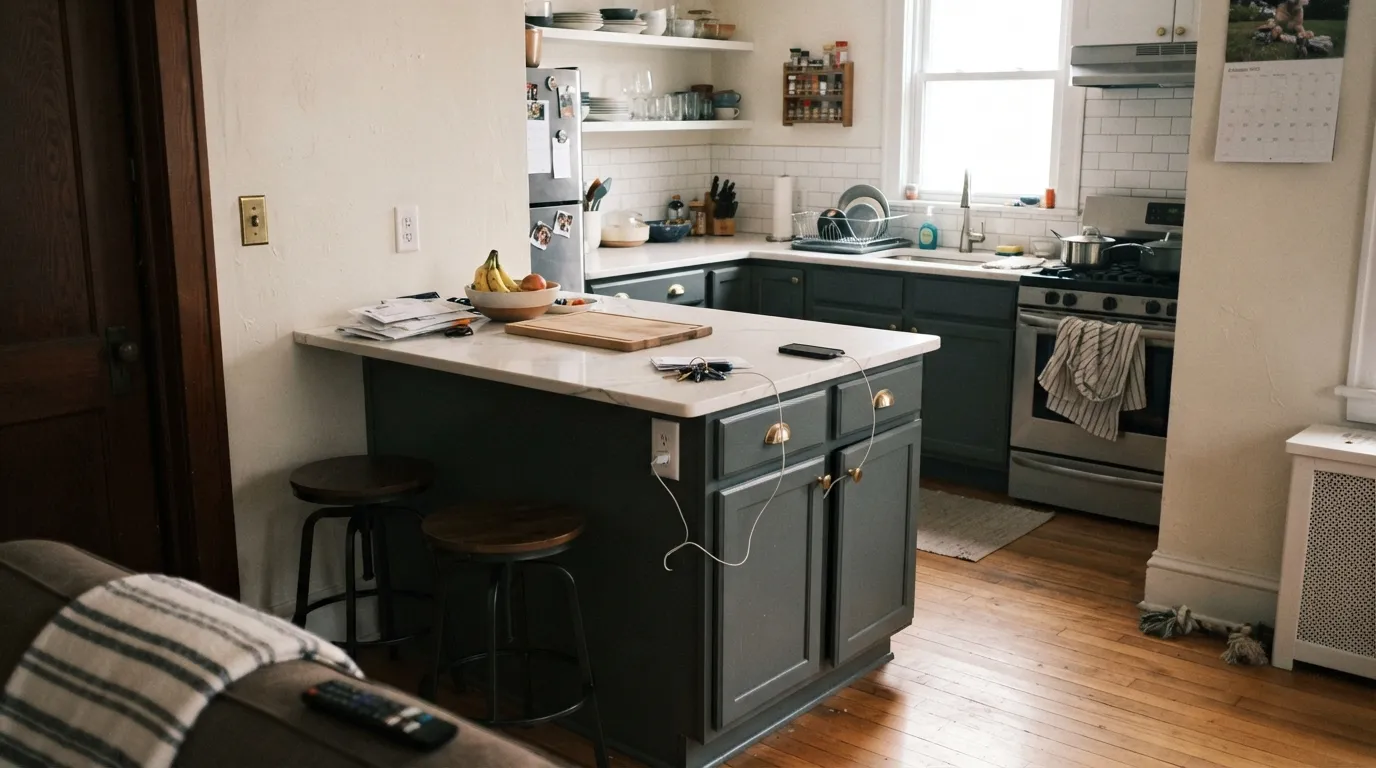
The company each keeps is where most people should actually decide. Kendall Charcoal makes oak, walnut, brass and cream look intentional, which is why it works so well in studies and on islands in warm kitchens. Down Pipe belongs with nickel, cool stone, white marble, blue-grays and Farrow and Ball whites. Put them in the wrong room and both go wrong in a predictable way: Kendall beside cool marble and black window frames reads dusty and faintly green, and Down Pipe beside honey oak and brass reads cold and a little institutional. There is a practical split too — Kendall is a standard Benjamin Moore color available in every product line at any store, while Down Pipe comes in Farrow and Ball finishes whose flatness makes it look deeper and more velvety than a matte at the same light level.
Kendall Charcoal is the one that shifts: strong sun and cool stone bring out a drab greenish cast, and 4000K LEDs push it toward hard greenish slate. Down Pipe does not surprise you with a second hue — it just reads bluer and colder in person than it does in the photos that sold you on it.
What Each Color Really Is
A dark gray that is very nearly neutral, with the smallest possible lean toward warm. The saturation is only about 4 percent, which is far too little to call it a brown or a greige — but the hue underneath sits in the yellow-tan range, and that is enough to change how it behaves. In practice that faint warmth shows up as a soft, drab, almost olive quality in bright light. That is why you will read people say it looks green: they are not wrong, they are just seeing the warm base in strong sun. It is never blue, and that is the point of the color.
At LRV 15 it reflects almost nothing back at you, and the number matters more here than it does for a mid-tone. Put it beside Chelsea Gray HC-168 at LRV 22 and Kendall looks like a different family — Chelsea is a gray you can live in, Kendall is a gray that surrounds you. Put it beside Wrought Iron 2124-10 at LRV 6 and the opposite happens: Kendall suddenly reads soft, gray, almost gentle. It lives in the narrow band where a color is dark enough to feel dramatic but still light enough to show its color instead of just reading as a shadow.
Down Pipe takes its name literally — Farrow & Ball built it as the grey once used to paint metal guttering and downpipes on the outside of British houses, a utilitarian color meant to blend into brick and disappear. Brought indoors, it became one of the brand's most enduring darks: a genuine lead-gray with a cool blue undercurrent running through it, not a warmed-up charcoal and not a true black.
At LRV 13 it is a legitimately dark color — dark enough to anchor a room on its own — but it is not the near-black many buyers expect from the swatch. That gap between reputation and reality is Down Pipe's most common surprise: next to Farrow & Ball's actual near-blacks, Railings (No. 31, LRV 6) and Off-Black (No. 57, LRV 7), Down Pipe reads noticeably lighter and unmistakably blue. Buyers hunting for pure black end up disappointed; buyers who wanted a sophisticated dark gray-blue end up converts.
Specs Side by Side
| Spec | Kendall Charcoal | Down Pipe |
|---|---|---|
| Brand | Benjamin Moore | Farrow & Ball |
| SKU | HC-166 | No. 26 |
| Hex | #676662 | #626664 |
| RGB | 103, 102, 98 | 98, 102, 100 |
| LRV | 15 | 13 |
| Undertone | true neutral | true neutral |
| Family | Gray | Gray |
How Light Changes Them
Warm sun lifts it and the soft greige character comes out. The version of this color people fell in love with.
Cool, weak light drains it toward near-black and flattens the depth. The one exposure to test properly.
2700K lamps make it rich and warm. Cool daylight LEDs push it toward hard, greenish slate — change bulbs, not paint.
Reads several steps lighter than indoors, and the shaded elevation reads several steps darker. Sample every side.
South or west sun, or 2700K bulbs after dark, bring the lead-gray warmth forward and keep the blue from reading cold. This is the light the color photographs best in.
Without warmth to counter it, the blue takes over and Down Pipe flattens into a steely, almost institutional gray. Fine if you wanted something cooler; disappointing if you wanted the famous moody lead look.
Low or artificial light settles it into a soft charcoal; strong daylight pushes the blue forward enough that some rooms read distinctly steel or faintly teal by midday. Sample it at both ends before committing a whole room.
2700K warm bulbs deepen it toward near-black at night — the effect most people are chasing. Cool white LEDs do the opposite: they exaggerate the blue and can make it look almost cold-toned after dark.
Both Colors in Real Rooms
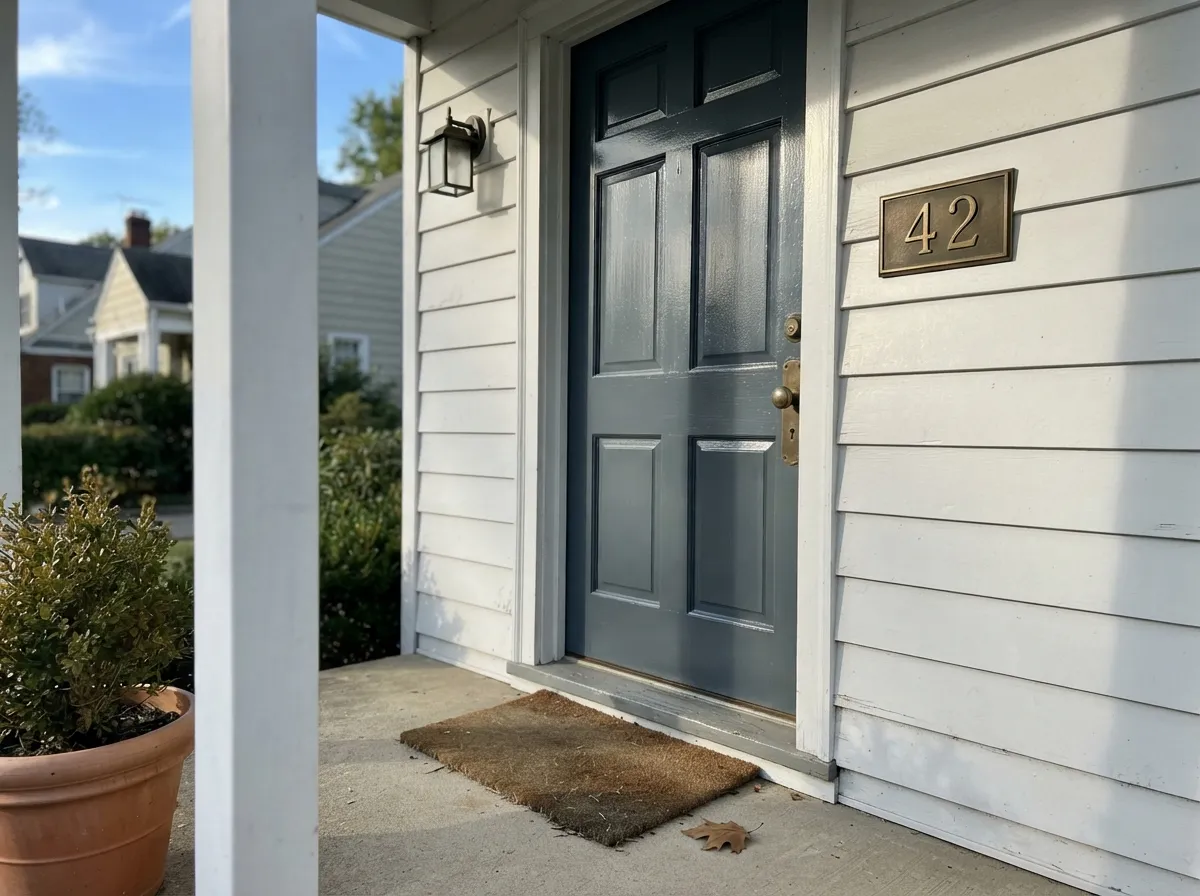
Photos from our full reviews — the same rooms and captions, so you can judge each color where it actually lives, not on a chip.
When to Pick Which
Choose Kendall Charcoal if your room is warm — oak or walnut floors, brass, cream millwork — and you want dark without the cold slate edge. It is the better study, library and warm-kitchen island of the two, and you can buy or match it anywhere. Skip it if your only window faces north and the room stays dim.
Choose Down Pipe if your fixed finishes are cool and you want a gray that is honestly, deliberately blue-lead rather than trying to stay neutral. It holds up better in a dim room because you are not waiting on warmth to appear, and it is a proven color for joinery, front doors and window frames. Skip it if the room is full of honey oak and brass.
No comparison page can see your light. Upload one photo of your room and try both colors on the same walls, seconds apart.
Kendall Charcoal vs Down Pipe FAQ
Which one is safer in a north-facing room?
Down Pipe. Cool light is its native condition, so it stays a readable blue-gray instead of collapsing. Kendall Charcoal in a dim north room turns into flat near-black and people end up asking why they did not just paint it black. If you want Kendall's warmth in a dim room, step up to Chelsea Gray HC-168 instead.
Which is better on kitchen cabinets?
It comes down to the counters and metals, not the paint. Kendall Charcoal with warm quartz, butcher block and brass; Down Pipe with white marble, cool stone and nickel or chrome. Down Pipe on cabinets needs Modern Eggshell or a color match into a real cabinet enamel — do not use a wall emulsion on doors.
Which holds up better on an exterior?
Down Pipe holds its identity more evenly across elevations, which is why it is such a common window, door and joinery color. Kendall Charcoal lightens a lot in full sun, so the south side reads medium warm gray while the shaded side reads near-black. If you want a dark body color that stays put in full sun, look at Iron Mountain 2134-30 or Peppercorn SW 7674 instead.
What trim white goes with each?
Kendall Charcoal wants a warm white — White Dove OC-17 or Simply White OC-117. A stark blue-white beside it pulls the olive base forward and the wall starts looking dusty. Down Pipe takes All White for a clean modern edge or Strong White if you want the room to feel slightly softer without going warm.
Can I use either through a whole house?
Not as the main wall color in most homes — both are dark enough that every dim hallway and small bathroom will fight you. Use one as the house's dark note and repeat it: doors, an island, built-ins, a study, the front door. Repeating one dark across a house reads as a scheme; alternating two of them at the same depth reads as indecision.
Ask a Question